Beatrice Lerma is an Associate Professor at the Polytechnic University of Turin , affiliated with the Department of Architecture and Design and serving as Deputy Coordinator of the Doctoral School of Design and Technology: People, Environment, Systems . Research focuses on Innovative Materials , Sensory Design , and Design for Cultural Heritage Key skills in Environmental Engineering , Industrial Design , and Circular Economy Her recent work explores the intersection of Artificial Intelligence and Material Innovation , particularly in sustainable polymer systems and transparent wood technology. She leads the BIOMAPS (2025-2028) and AI-TRANSPWOOD (2024-2026) projects. 2025: AI applications in biobased materials 2024: Cultural heritage signage solutions 2024: Circular material taxonomic frameworks Scientific recognitions include ADI Design Index Selection Award (2015) and Young & Design (2013). She supervises PhD candidates Noemi Emidi and Eva Vanessa Bruno , and serves on the OFFICINA Scientific Committee since 2014.
Vatsal Sharan is an Assistant Professor in the Thomas Lord Department of Computer Science at the University of Southern California's Viterbi School of Engineering. He maintains affiliations with the Theory Group, Machine Learning Center, and the Center for AI in Society at USC. Education: Ph.D. in Computer Science from Stanford University, advised by Greg Valiant Postdoctoral research at MIT, hosted by Ankur Moitra Vatsal Sharan's research centers on the theoretical foundations of machine learning, positioned at the intersection of machine learning, theoretical computer science, and statistics. His work investigates fundamental limits for solving learning and estimation tasks under computational and information-theoretic constraints, with the goal of developing practical algorithms that are efficient, fair, and robust. His research spans memory-efficient learning, algorithmic fairness, robustness in deep learning, and the theoretical underpinnings of transformers and large language models. A significant portion of his work explores how memory constraints affect learning algorithms and whether memory can serve as a distinguishing factor between 'efficient' and 'expensive' techniques in machine learning. His recent publications demonstrate a strong focus on multicalibration, transformer interpretability, and trustworthy AI systems. Scientific Awards: Amazon Research Award (2021 and 2023) SoCal NLP Symposium 2023 Best Paper Award COLT 2022 Best Paper Award Vatsal Sharan advises a diverse group of Ph.D. students including Siddartha Devic, Bhavya Vasudeva, Julian Asilis, Deqing Fu, Devansh Gupta, Spandan Senapati, and Tianyi Zhou. His research is supported by multiple prestigious grants from the NSF, Amazon Research, Google Research, and the Okawa Foundation. He is an active participant in the Learning Theory Alliance (LeT-All), a community-building and mentorship initiative for the learning theory community. His teaching portfolio includes advanced courses on machine learning theory and trustworthy machine learning at USC, where he shapes the next generation of researchers in theoretical aspects of artificial intelligence.
Hans Bihs is a Professor in the Department of Civil and Environmental Engineering, Faculty of Engineering. His research focuses on computational fluid dynamics (CFD), wave hydrodynamics, and wave-structure interaction using the open-source framework REEF3D. Key Research Areas: CFD simulations, wave modeling, floating body dynamics, ocean wave energy, aquaculture hydrodynamics, sediment transport, and high-performance computing. Projects: ERC Consolidator Grant PARTRES (2023-2028), EEA Grants Portugal SurfWave (2023), NFR KPN IPIRIS (2021-2025), EEA Baltic SolidShore (2021-2024), NTNU's MAPLE (2022-2025), and DigiCoast (2021-2024). Email: hans.bihs@ntnu.no His recent publications (2025-2020) analyze fluid-structure interaction, ship-induced waves, floating offshore wind turbines, submerged vegetation, and coastal structures using advanced CFD techniques. Topics include wave hydrodynamics, turbulence, and numerical modeling for marine and aquaculture systems.
Erick Guerra is a Professor and Associate Dean for Research at the Stuart Weitzman School of Design , University of Pennsylvania, specializing in transportation planning and urban development. He teaches courses on transportation planning, multimodal systems, and studio projects focused on transit-housing integration in Latin America. Education: Ph.D. in City and Regional Planning, University of California Berkeley Master of Urban Planning, Harvard University B.A. from University of Pennsylvania Guerra’s research examines the interconnections between transportation systems, land use patterns, and travel behavior, particularly in developing cities. His work addresses transportation equity, technology adoption, and public health impacts in urban environments. Recent publications analyze highway expansion economics ( Overbuilt: The High Costs and Low Rewards of US Highway Building , 2025), automated vehicle impacts on pedestrian behavior, speed camera effectiveness, and comparative studies of low-income commuting patterns in the U.S. and Mexico. Research trends highlight his focus on sustainable mobility, policy evaluation, and cross-cultural urban dynamics.
Dr. FARKAS Dávid is an Assistant Professor in the Department of Hydraulic and Water Resources Engineering, Faculty of Civil Engineering, Budapest University of Technology and Economics (BME). His office is located in Building K, basement level, room 12/7, and he holds weekly consultation hours on Mondays from 1–3 pm. Educational contributions include teaching core courses in hydrogeology and groundwater engineering: Groundwater (BMEEOVVMV63) Hydrogeology (BMEEOGMMG62) Infrastructural Design Project (BMEEODHAI41) Research activities concentrate on quantitative hydrogeology, with a special emphasis on karstic groundwater systems, seepage hydraulics, and the safety of flood-protection levees. He couples field investigations in iconic Hungarian cave systems (Buda Castle Cave, Molnár János Cave) with laboratory sandbox experiments and numerical modelling to advance understanding of flow and transport processes in fractured carbonates. Over the past decade his work has evolved from fundamental hydrogeological mapping toward the design and deployment of automated monitoring networks that integrate classical hydrological instruments with modern sensor technologies. This progression is evident in his most recent publications (2024-2025) that document the establishment of high-resolution cave monitoring systems capable of capturing rapid responses to precipitation events. Scientific awards currently listed: none. Advising and grants: no specific student names, grant numbers, or funded project titles are provided in the supplied text. Laboratories and teams: while no dedicated laboratory name is stated, his affiliation with the Department of Hydraulic and Water Resources Engineering implies access to the faculty’s hydraulics and hydro-environmental laboratories, including sandbox and seepage modelling facilities.
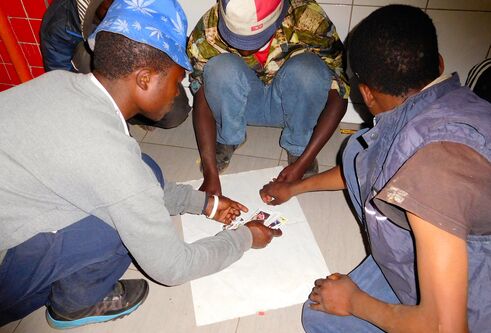
Lorraine van Blerk is a Professor of Human Geography at the University of Dundee's School of Humanities, Social Sciences and Law. She serves as Chair of Human Geography and leads the Research Centre for Transformative Change: Educational & Life Transitions (TCELT) in Education and Society. Her work focuses on street children/youth, refugees, and global inequalities. Academy of Social Sciences Fellow (2021) Stephen Fry Awards - Public Engagement Project of the Year (2017) Market Research Society President’s Medal (2015) Research interests include: Street youth resilience mapping Intergenerational partnerships Transitions to adulthood in crises Policy development for marginalized groups Coastal socio-ecological systems Cultural geographies of homelessness Recent publications address global street youth resilience frameworks (2REST project) and cinema's role for Harare street youth. Key collaborations include universities in Pretoria, Cape Town, Makerere, and Ryerson University. Scientific contributions recognized through: 6 major research prizes 16 funded projects 149+ research outputs International visiting appointments (Toronto Metropolitan University, National University of Singapore)
Katherine McDonough is a Lecturer in Digital Humanities at the School of Global Affairs, Lancaster University . She specializes in eighteenth-century French history and spatial digital humanities, focusing on historical maps and computational methods for analyzing infrastructure and socio-political reforms. PhD, Early Modern French History, Stanford University (2013) BA, History and French Literature, Johns Hopkins University (2006) Her research bridges Enlightenment history , infrastructure development , and digital methodologies such as computer vision and text analysis. She explores how historical actors contested coercive labor systems and reimagined governance through spatial data. Her recent work includes the MapReader software library (2023 Roy Rosenzweig Prize) and collaborations with the GEODE project in Lyon. She contributes to Living with Machines and Machines Reading Maps , analyzing 57,000 digitized maps. Roy Rosenzweig Prize (2023) Fellow, Royal Historical Society Software Sustainability Institute Fellow Collegium de Lyon Fellowship She co-leads the AHRC-funded Data/Culture project and previously served as UK PI for the AHRC-NEH Machines Reading Maps initiative. Her teaching includes undergraduate courses on eighteenth-century French history and MA-level modules on text/spatial analysis.
Dr Ruth Craggs is a Professor of Political and Historical Geography at King's College London's Department of Geography, School of Global Affairs. Her work bridges critical historical, political, and development geographies with a focus on North-South relations and decolonisation processes. Reader in Political and Historical Geography since 2013 Previous appointments at University of Hull and St Mary's University College Research spans postcolonial geopolitics, disciplinary histories of geography, urban planning legacies, and Commonwealth networks. She leads the Training Diplomats of Postcolonial African States project (2021-2024) funded by the Leverhulme Trust and contributes to the Empires and Decolonizations Research Hub at King's. Her work intersects with UN Sustainable Development Goals through decolonial lenses. Recent publications examine diplomatic training as anticolonial practice (2025), postcolonial pedagogies (2024), and disciplinary histories (2023). She supervises research on geographies of empire, urban policy mobility, and geopolitical performance at Commonwealth conferences. Scientific Awards Leverhulme Trust Research Grant (2021) Supervision Principal supervisors: Dimitris Venizelos, Nirali Joshi, Jacob Fairless-Nicholson Secondary supervisors: Peter Waring, Lee Butcher
Dr. Ronita Bardhan is Associate Professor of Sustainable Built Environment at the University of Cambridge , where she leads the Cambridge Sustainable Design Group and serves as Director of Research & Deputy Head of the Department of Architecture . She holds courtesy roles at Cambridge Public Health and the Department of Computer Science and Technology , and is a Fellow at Selwyn College . Education: BArch, MCP, MA, PhD (Urban Engineering) Her research intersects built environment , climate change , and public health , focusing on data-driven strategies for precision prevention of health and energy burdens. She pioneers algorithmic approaches to identify decarbonisation potential in buildings and urban areas, with a particular emphasis on gender-inclusive climate adaptation in the Global South. The 15 most recent articles span topics such as urban cooling with tree canopies , heatwave impacts on social systems , and machine learning applications for building energy efficiency . Her work addresses climate justice , hybrid workspace design , and thermal comfort in low-income housing . Awards: Top 50 Finalist Women in Engineering, UK 2024 Exceptional Woman of Excellence, Women Economic Forum Felicitated by Ministry of Health, Maharashtra, India She advises World Bank and ADB on affordable housing and climate resilience, and chairs the Research Ethics Committee at the Department of Architecture. Her lab, the Sustainable Design Group , develops solutions for health and low-carbon potential in built environments.
Dr. Bill Davies is a historian specializing in the European Union's constitutional and legal system at American University , where he teaches courses such as JLC-110 Western Legal Traditions and JLC-411 Great Trials in Legal History . His expertise spans Constitutional Law, European Union Law, and Legal History, with a focus on the historical development of European legal frameworks.
SangHyung Ahn is a Lecturer at the School of Civil Engineering , University of Queensland (UQ), since 2017. He joined UQ as a postdoctoral research fellow in 2015 after earning his PhD in Civil Engineering (Construction Engineering and Management) from Purdue University, USA. Prior to his academic career, he worked as an assistant manager at Hyundai Engineering and Construction Co., Ltd. (2003-2007) and holds an MBA in international business from Hanyang University and a B.Sc in Civil Engineering from Korea University. Research Focus: Construction process modelling with virtual reality, decision support systems for construction, automation of data-driven simulation modelling, sensor-based operations analysis, and integration of Building Information Modelling (BIM). Teaching: Coordinates undergraduate courses Introduction to Project Management (CIVL3510) and Construction Engineering Management (CIVL4522) . Research Trends: His recent publications highlight interdisciplinary work in transportation engineering, structural design, and AI-driven simulation tools. Key themes include application of machine learning to car-following models, drone-based vehicle identification, and optimization of public transport systems using agent-based simulations. Supervision: Available for supervision, with completed supervision of PhD and Master’s theses on topics such as BIM-LCA integration, pedestrian trajectory analysis, and AI-driven driving behavior models.
Nathaly Carolina Pinto Torres is a Doctoral Researcher at Aalto University's Department of Design, working on critical design interventions for marginalized communities. Since 2020, she has led the "Emergencia de Educación en la Amazonía Ecuatoriana" project, collaborating with indigenous students and Confeniae to develop pictographic communication systems challenging social exclusion. Her research spans: Participatory design with indigenous communities Gender justice in education during crises Epistemic justice in plurinational contexts Visual resistance strategies in Amazonian regions Postcolonial educational frameworks Design for socio-environmental transformation Publication trends show focus on: Visual communication systems for marginalized groups Crisis-driven educational design Decolonial methodologies Intersectional analysis of exclusion Epistemic justice in academia Collective resilience building Scientific recognition includes: Best Demo Award (2021) SENESCYT International Graduate Scholarship (2019) Netherlands Fellowship Programmes (NFP) (2010)
Jennifer J. Baker is an Associate Professor in the Department of English at New York University's College of Arts and Science. Holding a Ph.D. in English from the University of Pennsylvania (2000), her academic focus spans 18th- and 19th-century American literary, cultural, and intellectual history. Key research areas include literature and science, environmental literature, transatlantic Romanticism, and Civil War literature. She is currently working on a reception history of Herman Melville’s Moby-Dick , examining its rise to canonical status through Cold War politics and academic culture. Education: Ph.D. in English, University of Pennsylvania (2000) Her upcoming book American Romanticism and the Evolutionary Idea (Stanford UP, 2026) investigates how evolutionary theories intersected with Romantic concepts in 19th-century American literature. Previous publications include Securing the Commonwealth: Debt, Speculation, and Writing in the Making of Early America (Johns Hopkins UP, 2006). Recent research includes articles on Herman Melville, Emerson, Nathaniel Hawthorne, and Judith Sargent Murray, reflecting her interdisciplinary approach combining literary analysis with financial history, scientific thought, and cultural studies. Faculty Fellowship, NYU Center for the Humanities (2014-15) Heyman Prize, Yale University (2004) Morse Fellowship, Yale University (2005) Andrew W. Mellon Dissertation Fellowship (1997-98) She serves on the Board of the Melville Society Cultural Project and has held academic appointments at Yale University and the McNeil Center for Early American Studies.
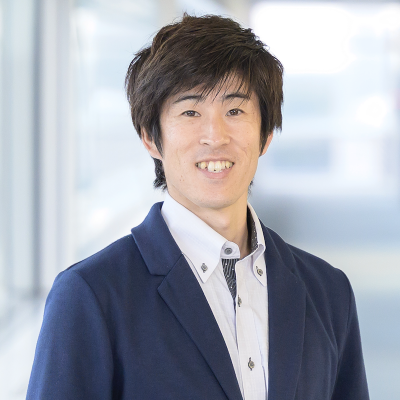
Hirokatsu Kataoka serves as Chief Senior Researcher at the National Institute of Advanced Industrial Science and Technology (AIST) in Japan, with multiple academic affiliations including Academic Visitor at the Visual Geometry Group (VGG) at University of Oxford, Visiting Associate Professor at Keio University, and Adjunct Associate Professor at Tokyo Denki University. He is Principal Investigator of both cvpaper.challenge and LIMIT.Lab, and serves as Research Advisor for SB Intuitions. Dr. Kataoka earned his Ph.D. in Engineering from Keio University (April 2011 - March 2014), where he received the Fujiwara Prize in 2014 as valedictorian equivalent. His research primarily focuses on innovative pre-training methodologies that eliminate dependency on natural image datasets, with his Formula-Driven Supervised Learning (FDSL) framework being particularly influential in the field. Kataoka's research interests center around representation learning with limited data resources, including zero-shot, unsupervised, and synthetic learning approaches. His work explores how visual/multimodal models can be effectively trained with minimal real-world data, addressing critical ethical concerns related to large-scale datasets. He has pioneered methods using fractal geometry, mathematical formulas, and procedural generation to create effective pre-training frameworks that rival traditional ImageNet-based approaches. His publication record shows a clear trajectory toward solving the challenges of learning with limited resources, with recent work expanding FDSL to audio processing, microfossil analysis, and visible-to-infrared translation. His papers consistently address the core challenge of building robust visual recognition systems without relying on massive annotated datasets, with increasing focus on practical applications across diverse domains. Scientific Awards & Recognition ACCV 2020 Best Paper Honorable Mention Award for 'Pre-training without Natural Images' AIST Best Paper Award (2019, 2022) BMVC 2023 Best Industry Paper Finalist Featured in MIT Technology Review His 3D ResNets paper ranks among the top 0.5% most-cited CVPR papers over a five-year period Dr. Kataoka actively advises numerous researchers across multiple institutions, with his research team comprising Ph.D. and Master's students from various universities. He has served as Area Chair for CVPR 2024 and 2025, will serve as IEEE TPAMI Associate Editor beginning in 2025, and organizes the LIMIT Workshop series at major computer vision conferences. His LIMIT.Lab, established in June 2025, serves as a collaboration hub focused on building multimodal AI models under constrained resources including compute, data, and labels.
Joy S. Kaufman is a Professor in the Department of Psychiatry at Yale School of Medicine. She serves as Deputy Chair for Career Development, Director of the Yale Consultation Center, and Director of YaleEVAL. Her work focuses on large-scale evaluations of health service delivery systems in under-resourced communities, emphasizing community-based participatory research and stakeholder training. Education: PhD in Clinical and Community Psychology, DePaul University (1994) Postdoctoral Fellow, Yale University (1993) MA in Psychology, DePaul University BA in Psychology, Assumption College Dr. Kaufman specializes in health equity , trauma exposure in children , and program evaluation . Her research bridges public health , social justice , and behavioral health policy through rigorous methodologies. Recent publications highlight her work on opioid use disorder in obstetric care , perinatal substance use reporting , and system-level mental health evaluations . She employs latent class analysis and CBPR frameworks to address disparities. Scientific Awards: Fellow, American Psychological Association Fellow, Society for Community Research and Action Gold Medal, Substance Abuse and Mental Health Services Administration Exemplary Evaluation, American Evaluation Association As principal investigator, she has secured funding from the National Institute of Justice , PCORI , and Connecticut state agencies . Her leadership extends to training community members in evaluation methods and developing trauma-informed healthcare systems .