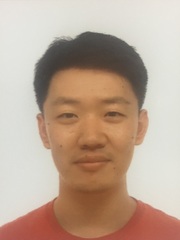
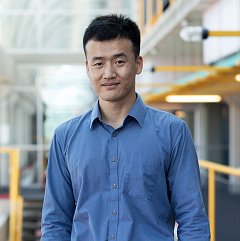
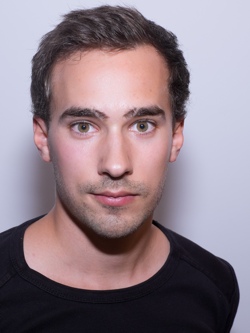
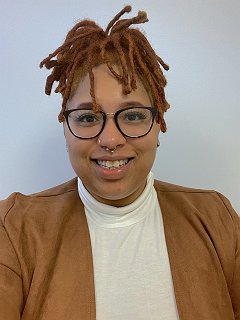
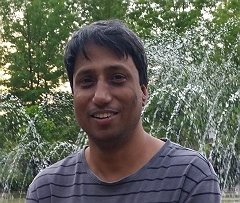
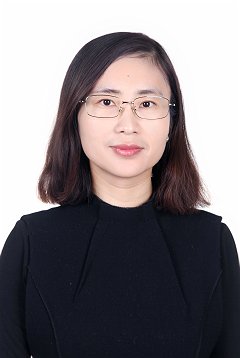
Fuyuan Zhang is a Postdoctoral Researcher at the Max Planck Institute for Software Systems, specializing in advanced software testing methodologies and formal verification techniques. His research focuses on improving the reliability and security of AI systems, quantum computing frameworks, and concurrent systems through innovative testing criteria, adversarial attacks, and compositional reasoning. Key areas of expertise include: Large Language Model (LLM) testing and validation Quantum program analysis and security Adversarial machine learning and neural network robustness Formal verification of concurrent and cyber-physical systems Automated bug detection in complex software systems His work bridges theoretical foundations with practical applications, addressing critical challenges in AI safety, quantum software reliability, and system-wide security certification.
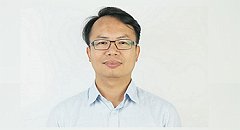
Hoa Khanh Dam is Professor and Deputy Head of School (Research) & Head of Postgraduate Studies in the School of Computing and Information Technology at the University of Wollongong, Australia. He serves as Co-Director of the Decision System Lab where he leads research at the intersection of Software Engineering and Artificial Intelligence. His research focuses on developing AI-driven solutions for software quality, cybersecurity, and productivity enhancement. Key interest areas include: AI/IoT autonomous and cyber resilient systems Software Analytics and Mining Software Repositories Large Language Models for software engineering tasks Defect prediction and vulnerability analysis Agile project management optimization Analysis of Dam's 12 publications from 2018-2025 reveals consistent application of machine learning to software engineering challenges. His work shows progressive evolution from traditional ML techniques toward LLM-based frameworks, with major contributions in defect prediction (DeepJIT), vulnerability analysis, microservice recommendation, and agile effort estimation. The research demonstrates strong industry relevance through practical implementations in code review, component prediction, and security systems. Dam co-leads the Decision System Lab at UOW, which develops intelligent decision support systems using AI and data analytics. The lab's work bridges theoretical AI advancements with real-world software engineering applications, particularly in cybersecurity and autonomous systems development.
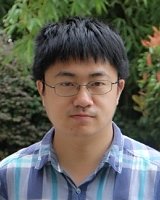
Dr. Jifeng Xuan is a Professor and Deputy Dean at the School of Computer Science, Wuhan University, China. He founded the CSTAR (Centre of Software Testing, Analysis and Reliability) and holds editorial roles at Empirical Software Engineering and PLOS One . Previously, he was a postdoctoral researcher at INRIA Lille-Nord Europe (France) and earned his PhD from Dalian University of Technology. Research Interests: His work focuses on software testing, debugging, automated program repair, software data analysis, and search-based software engineering. He integrates AI/ML techniques for tasks like log analysis, fuzz testing, and vulnerability detection, with applications in robotics, microservices, and Android development. Publication Trends: Recent articles (2022–2025) emphasize AI-driven software engineering, including LLM-based repair, reinforcement learning for testing, and deep learning surveys. Security (vulnerability logs) and empirical studies on industrial challenges (e.g., C program repair) are recurring themes. Awards & Honors: ACM SIGSOFT Distinguished Paper Award (2025) IEEE TCSE Distinguished Paper Award (2025) CCF NASAC Youth Software Innovation Award (2024) Outstanding Doctoral Dissertation Award, China Computer Federation (2014) Luojia Young Scholar (2015) Student Advising & Labs: Actively recruits PhD and master students for CSTAR Lab. Research areas include automated debugging, testing tools (e.g., Mergebot, FastLog), and AI-generated code assessment. No specific grants listed.
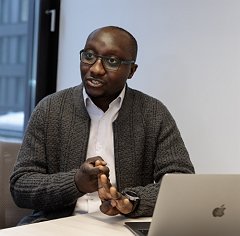
Prof. Tegawendé F. Bissyandé is a Chief Scientist in the Professor category at the Interdisciplinary Centre for Security, Reliability and Trust (SnT) at the University of Luxembourg. He holds the prestigious position of ERC Fellow and serves as Principal Investigator of the NATURAL project focused on Artificial Intelligence for Program Repair. His research spans software engineering, cybersecurity, and artificial intelligence, with particular emphasis on applying machine learning techniques to software development and security challenges. Dr. Bissyandé's research interests include: Software Debugging (especially bug localization and program repair) Software Security (especially malware detection and analysis) Code Search (both free-form and semantic code-to-code) Machine Learning and Natural Language Processing for software engineering Cyber-security applications in mobile and cloud environments His recent work demonstrates a strong focus on leveraging Large Language Models (LLMs) for various software engineering tasks. Analysis of his 15 most recent publications reveals several key trends: extensive application of LLMs to program repair and code generation; innovative approaches to Android security and malware detection; development of novel techniques for code search and understanding; and exploration of the intersection between natural language processing and software engineering. His research increasingly bridges theoretical software engineering with practical applications in mobile security and developer productivity tools, with a significant portion of his work focusing on Android ecosystem security and program repair technologies. Dr. Bissyandé has received numerous prestigious awards throughout his career: APSEC Best ERA Paper Award (2018) for 'LSRepair: Live Search of Fix Ingredients for Automated Program Repair' IPSJ SIG SE Excellent Research Award (2018) for 'FaCOY: a Code-to-Code Search Engine' FOSS Impact Paper Award (2018) for 'Characterizing Deprecated Android APIs' SANER Best ERA Paper Award (2016) for 'Parameter Values of Android APIs: A Preliminary Study on 100,000 Apps' ASE Best Paper Award (2012) for 'Diagnosys: automatic generation of a debugging interface to the Linux kernel' As an active member of the software engineering research community, Dr. Bissyandé serves on program committees for major conferences including ICSE, ASE, and ISSTA, and has been an Area Chair for ICSE 2024. His industry partnerships include significant collaborations with BGL BNP Paribas (since January 2019), Luxembourg Stock Exchange (since January 2018), and Paul Wurth (January 2015 to 2018), demonstrating the practical impact of his research. He leads the SerVAL lab at SnT, which focuses on software validation and analysis, with particular expertise in mobile security and program repair technologies, and actively mentors PhD candidates through FNR research grants.
Chengnian Sun is an Associate Professor at the Cheriton School of Computer Science , University of Waterloo, Canada. His research focuses on software engineering and programming languages with an emphasis on software reliability and programming productivity. Education : Ph.D. in Computer Science from National University of Singapore (2013) His work spans compiler testing (EMI, Dfusor, Kitten), program reduction (Perses, Vulcan, PPR), Android testing, and DNN testing. He has received multiple grants including Google Research Scholar Program (2025) and NSERC Discovery Grants (2024-2029). His recent publications focus on LLM-based compiler testing, weighted delta debugging, and ransomware resilience. Scientific Awards : Most Influential Paper Award at SANER (2022) NUS Research Scholarship (2008-2012) ACM SIGSOFT Distinguished Paper Award at ASE (2012) IBM Cup Campus Innovation Contest First Prize (2005) He advises Ph.D. and MMath students in software engineering, compiler testing, and program analysis, including several who have contributed to top-tier conferences like ICSE, ISSTA, and ASPLOS. His service includes program committee roles in ICSE, OOPSLA, and ISSTA.
Thomas Lemberger is a researcher in the Department of Computer Science at Ludwig-Maximilians-Universität München (LMU Munich), contributing to the Software and Computational Systems Lab. He specializes in software verification, formal methods, and automated testing, with a focus on improving tool efficiency and scalability. His work includes extensions to CPAchecker, such as distributed summary synthesis and cooperative verification approaches, as well as developing user-friendly tools like CoVeriTeam GUI. His research interests involve integrating verification into build systems and IDEs, optimizing verification workflows, and exploring hybrid techniques that combine testing and formal methods. He has actively participated in competitions like SV-COMP and Test-Comp, contributing tools like PRTest and Nacpa. His projects aim to reduce tool restarts, enhance fault localization, and streamline verification processes through parallel portfolio analyses. Thomas mentors students on topics related to verification tool development, test-case generation, and open-source software. His contributions are supported by grants from the DFG (CONVEY, COOP, IDEFIX), emphasizing cooperative verification and scalable analysis. Recent work focuses on enabling developers to use verification tools seamlessly within their existing workflows.
Mahmoud Alfadel is an Assistant Professor at the University of Calgary, Canada, actively contributing to software engineering research through program committee roles at ASE, ICSE, and ESEC/FSE conferences from 2021-2025. His research centers on Software Ecosystems, Release Engineering, and Empirical Software Engineering, with specific focus on build systems, continuous integration pipelines, dependency management, and software quality metrics in open-source environments. Methodologically, he employs large-scale empirical studies of real-world development practices. Analysis of his 2021-2025 publications reveals consistent investigation into build technology evolution (particularly Bazel), dependency-induced waste in NPM, and testing practices like fuzzing adoption. His work bridges theoretical software engineering concepts with practical industry challenges, often through case studies of major open-source projects like Kubernetes.
Brittany Johnson-Matthews is an Assistant Professor in the Department of Computer Science at George Mason University, where she directs the INSPIRED Lab (INterdisciplinary Software Practice Improvement REsearch and Development). Her work bridges software engineering, human-computer interaction, and machine learning to address sociotechnical challenges in software development. Her educational background includes: Ph.D. in Computer Science from North Carolina State University (2017) B.A. in Computer Science from the College of Charleston (2011) Dr. Johnson-Matthews' research centers on sociotechnical problems in software development, with emphasis on developer productivity, tool support, work environments, ethics, and software for social good. She employs interdisciplinary approaches to study how developers interact with tools and environments, particularly in the context of emerging technologies like AI. Her work often involves empirical studies and tool development to promote fairness, inclusivity, and well-being in software engineering. Analysis of her recent publications (2023-2026) reveals a consistent focus on the human aspects of software engineering. Key themes include the impact of AI-assisted tools on developer well-being, fairness in machine learning toolkits, and ethical considerations in software development. Her research frequently involves building and evaluating tools (e.g., for detecting harmful terminology or causal testing) and conducting empirical studies across open source and industrial settings. She leads the INSPIRED Lab, which fosters interdisciplinary collaboration to improve software practices through research in human-centered computing, empirical software engineering, and ethical AI.
Shin Hong is an Associate Professor at the School of Computer Science, Chungbuk National University (CBNU) in South Korea. He leads the SDEV lab (소프트웨어 개발검증 연구실) and maintains active roles in major software engineering conferences including ASE 2025 (Local Arrangement Co-Chair), ICST 2026 (General Co-Chair), and SSBSE 2025 (General Chair). His research focuses on Software Testing, Automated Debugging, and Program Analyses , with specific expertise in test case generation, debugging automation, and static/dynamic/neural program analysis techniques. Dr. Hong's work bridges theoretical advances with practical applications, as evidenced by his industrial case study with SAP HANA. Analysis of his recent publications reveals strong trends in fuzzing techniques (ZigZagFuzz, BUGOSS), regression bug benchmarking, mutation analysis, and GUI test case repair. His research demonstrates increasing sophistication in combining traditional software engineering approaches with machine learning methods for test optimization and fault diagnosis. Research Focus Areas: Advanced test generation techniques Automated debugging and fault localization Machine learning applications in software testing Empirical evaluation of testing techniques Dr. Hong actively contributes to the academic community through program committee service at top conferences and mentorship of graduate students at CBNU. His leadership roles in major conferences reflect his standing in the software engineering research community.
Dr. Dominik Helm is an interim professor for Software Engineering at the University of Duisburg-Essen . His research focuses on modularization and automatic parallelization of collaborative static analyses, particularly through the OPAL framework for Java VM bytecode. He is the lead maintainer of OPAL, which aims to enhance precision, soundness, and scalability in static analysis for bug and security vulnerability detection. Helm has also received the Ernst Denert Software-Engineering-Preis (2024) for his contributions. Education : Helm earned his PhD in Computer Science from Technische Universität Darmstadt in 2023, with his thesis titled Modular Collaborative Program Analysis . His academic background includes extensive work on purity analysis, call graphs, and modular static analysis techniques. Research Interests : Helm's work bridges theoretical advancements in program analysis with practical tools. His key areas include cross-language analysis (e.g., AXA framework), modular call-graph algorithms (Unimocg), and soundness theory for analysis architectures. He emphasizes improving static analysis tools to handle complex language features and ensure robust software quality. Publications & Awards : Helm has authored/co-authored over 15 papers in top-tier conferences like ASE, ISSTA, and ESOP. His 2024 work on AXA and Unimocg showcases cross-language interoperability and modular consistency. The Ernst Denert Preis recognizes his impactful contributions to software engineering research. Technical Leadership : As OPAL's lead maintainer, Helm drives collaborative research in static analysis frameworks. His projects often involve interdisciplinary teams, reflecting his commitment to practical software engineering solutions.
Chuanyi Li is an Assistant Professor at the Software Institute, Nanjing University, affiliated with the State Key Laboratory for Novel Software and Technology. His office is located in Room 917, Fei Yimin Building, 22 Hankou Road, Gulou District, Nanjing, China. Education: Ph.D. in Computer Science, Nanjing University (2012-2017), supervised by Professor Bin Luo Visiting Scholar at Southern Methodist University, Dallas, Texas (2016-2017), collaborating with Associate Professor Liguo Huang B.Sc. from Nanjing University (2008-2012) Research Focus: Dr. Li's work bridges Software Engineering, Natural Language Processing, and Business Process Management. He specializes in applying NLP and machine learning techniques to software engineering challenges including code summarization, program repair, code completion, and software maintenance. His research emphasizes empirical validation and practical tool development for real-world software systems. Publication Trends: Recent work (2021-2025) demonstrates strong focus on large language model applications in software engineering, including code generation, program repair, and benchmarking. Publications frequently involve empirical comparisons, dataset creation, and efficiency optimization techniques for code-related tasks. Professional Service: Active contributor to top software engineering venues (ASE, ICSE, ESEC/FSE) as author and committee member. Recent roles include Program Committee membership for ICSE 2025 Research Track and SANER 2025 Research Papers track.
Ajay Jha is an Assistant Professor in the Department of Computer Science at North Dakota State University (NDSU), where he leads the Software Testing and Maintenance (STAM) Lab. His academic journey began with industry experience, followed by graduate studies and postdoctoral research that shaped his current focus on software engineering research. His educational background includes: Ph.D. in Computer Science from Kyungpook National University (2017) Master's degree from Kyungpook National University (2013) Over five years of industry experience before graduate studies, including co-founding two startups Postdoctoral research at University of Alberta (over two years) and Kyungpook National University (three years) Dr. Jha's research focuses on software engineering, particularly in the areas of software testing, maintenance, and evolution. His work centers on mining large-scale software repositories to uncover real-world issues in software quality, reliability, and maintainability. He develops innovative tools and techniques to address challenges in regression testing, library migration, and mobile application development. His research has significant practical implications for improving software development processes and enhancing the reliability of modern software systems, particularly in mobile and Python environments. His publication record shows a clear progression from Android-focused research to broader software engineering challenges, with recent work emphasizing Python library migration and large language models for software engineering tasks. His research methodology typically involves empirical studies of real-world software repositories combined with tool development to address identified challenges. Dr. Jha is actively involved in academic service, serving on program committees for major software engineering conferences including MSR, ICSME, SANER, ASE, and ICSE. He also reviews for prestigious journals such as IEEE Transactions on Software Engineering and ACM Transactions on Software Engineering and Methodology. At NDSU, he teaches a range of courses from undergraduate to graduate level, including Mobile Software Engineering, Software Development Processes, and Software Project Planning and Estimation. He also leads graduate seminars on specialized topics like 'LLMs for Software Testing and Maintenance' and 'Code Smell and Refactoring.' He leads the Software Testing and Maintenance (STAM) Lab at NDSU, which focuses on mining software repositories to identify quality issues and developing practical tools to address software maintenance challenges. The lab's research has produced several benchmarks (PyMigBench, JTestMigBench) and tools (TRec) that have been shared with the research community.
Xiang Chen is an Associate Professor at the Department of Software Engineering, School of Artificial Intelligence and Computer Science, Nantong University, China. He received his B.Sc. degree from Xi'an Jiaotong University in 2002 and his M.Sc. and Ph.D. degrees in computer software and theory from Nanjing University in 2008 and 2011 respectively. He is an editorial board member of Information and Software Technology and serves as a program committee member for prestigious conferences including FSE 2026 and ASE 2025. Chen is also a senior member of the China Computer Federation (CCF) and active in various academic committees. Chen's research focuses on empirical software engineering, mining software repositories, and software testing and maintenance, with particular emphasis on applying AI techniques to software engineering problems. His work spans large language models for software engineering, security vulnerability analysis, code change representation, and regression testing. He has published over 110 papers in top-tier journals and conferences including IEEE Transactions on Software Engineering and ACM Transactions on Software Engineering and Methodology. His recent publications demonstrate a strong trend toward integrating AI techniques, particularly large language models, with traditional software engineering practices. The research spans code generation evaluation, deep learning framework testing, vulnerability detection, and automated program repair, showing a consistent focus on improving software quality through innovative testing and analysis techniques. ACM SIGSOFT Distinguished Paper Award (ICSE 2021) ACM SIGSOFT Distinguished Paper Award (ICPC 2023) Top 1% CNKI Highly Cited Scholar (2024) Top 2% Scientist by Stanford University (2023-2025) NASAC 2019 Prototype Competition First Prize Chen has successfully advised numerous graduate and undergraduate students who have gone on to prestigious institutions including Nanjing University, Tsinghua University, and Zhejiang University. Many of his students have won national programming competitions and received scholarships. His research group, smartSE, actively works on projects funded by the Natural Science Foundation of China and various provincial research programs. Chen also serves as a reviewer for top journals including IEEE Transactions on Software Engineering and ACM Transactions on Software Engineering and Methodology.
Professor Dan Hao is a distinguished faculty member at the Institute of Software, School of Computer Science, Peking University, where he has established himself as a leading researcher in software engineering. His extensive service to the academic community includes membership on the Steering Committee for The International Conference on Automated Software Engineering (ASE) since 2021, The ACM SIGSOFT International Symposium on Software Testing and Analysis since 2025, and The International Systems and Software Product Line Conference (SPLC) from 2018-2022. He has served as Program Co-Chair for multiple major conferences including ISSTA 2027, ICSME 2025, ICST 2023, SANER 2022, and ASE 2021. Professor Hao received his Bachelor's degree from Harbin Institute of Technology in 2002 and completed his Ph.D. at Peking University in 2008, followed by post-doctoral research at the same institution until 2009. His academic journey reflects a deep commitment to advancing software engineering research and education in China. Professor Hao's research primarily focuses on software testing and debugging, program comprehension, and software maintenance. His work has significantly contributed to compiler testing, fault localization, regression testing, and automated program repair. He has pioneered approaches in compiler auto-tuning, test-case prioritization, and history-guided testing techniques. His research bridges theoretical foundations with practical applications, addressing real-world challenges in large-scale software systems, particularly in online service environments. His publication record demonstrates a consistent trajectory of high-impact research in top-tier software engineering venues. Professor Hao's work shows increasing integration of machine learning techniques with traditional software engineering problems, particularly evident in his recent publications on LLM applications for code generation, neural theorem proving, and contrastive learning for vulnerability detection. His research maintains strong connections between theoretical rigor and practical applicability in industrial settings. ACM SIGSOFT Distinguished Paper Award for PDCAT: Preference-Driven Compiler Auto-Tuning at FSE 2025 Distinguished Paper Award for Formalizing, Mechanizing, and Verifying Class-Based Refinement Types at ECOOP 2024 ACM SIGSOFT Distinguished Paper Award for History-Guided Configuration Diversification for Compiler Test-Program Generation at ASE 2019 ACM SIGSOFT Distinguished Paper Award for History-driven Build Failure Fixing: How Far Are We? at ISSTA 2019 As an advisor, Professor Hao has mentored numerous graduate students, currently supervising 9 Ph.D. students and 7 Master's students. His former students have gone on to prestigious positions at institutions including King's College London, Tianjin University, Fudan University, and major technology companies like Huawei and China Construction Bank. His academic leadership extends through editorial roles as Deputy Editor-in-Chief of Software Testing, Verification and Reliability (STVR) and membership on the editorial boards of several premier journals including ACM Transactions on Software Engineering and Methodology, ACM Computing Surveys, and Empirical Software Engineering. Professor Hao leads a vibrant research group at Peking University's Institute of Software, focusing on cutting-edge problems at the intersection of traditional software engineering and artificial intelligence. His team actively collaborates with both academic institutions and industry partners to address practical challenges in software development and maintenance processes.
Omar I. Al-Bataineh is a Research Scientist at Gran Sasso Science Institute (GSSI) in Italy, specializing in software engineering and formal methods. His work bridges theoretical foundations with practical applications in automated program repair and software verification. Education: Ph.D. in Computer Science, University of Western Australia Additional degrees from University of New South Wales and Jordan University of Science and Technology His research centers on three interconnected themes: (1) Multi-fault Automated Program Repair addressing complex bug interactions, (2) Formal Methods for Reliable Repair ensuring provable correctness, and (3) Termination-Aware Repair integrating performance considerations. He develops lightweight test oracles and context-sensitive repair techniques to overcome patch overfitting and scalability limitations in real-world systems. Recent publications reveal strong focus on multi-fault scenarios (60% of 2025 output), with growing emphasis on formal verification (30%) and performance-aware repair (10%). Key venues include ASE, ICSME, and SANER where he explores program slicing, oracle design, and fault interaction analysis. Awards: Best Paper Award at QRS 2022 for advancing automated program repair capabilities Prior to GSSI, he held research positions at Simula Research Laboratory, National University of Singapore, and Nanyang Technological University. His teaching experience includes Advanced Computer Security at UNSW and Java Programming at UWA, though current academic instruction isn't emphasized in recent activities. He maintains active contributions to workshops like APR@ICSE and FASE, focusing on practical tool development.