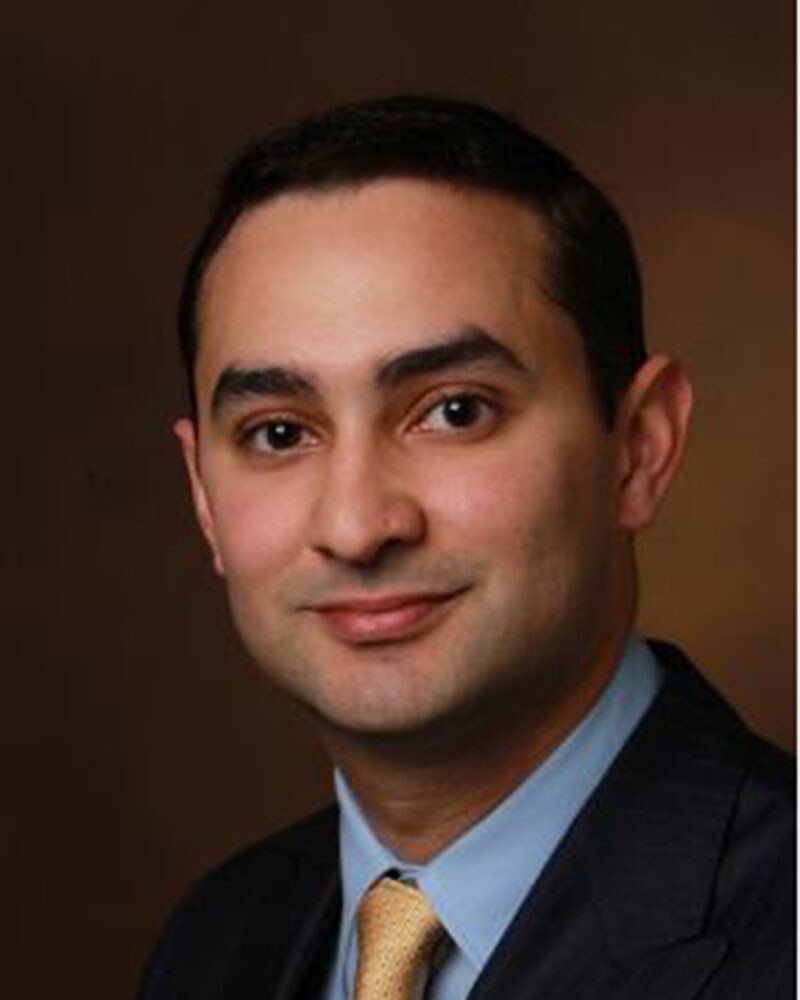
Kaki Ryan is a Teaching Assistant Professor at the Department of Computer Science, University of North Carolina at Chapel Hill. She holds a Ph.D. (2025), M.S. (2021), and B.S. (2020) from UNC, with a minor in AAAD. Her research focuses on hardware security, symbolic execution, and computer science education. Education Ph.D., 2025, UNC-Chapel Hill M.S., 2021, UNC-Chapel Hill B.S., 2020, UNC-Chapel Hill (Computer Science and Mathematics) Ryan's research centers on hardware security, particularly using symbolic execution to identify bugs and vulnerabilities in hardware designs. She also emphasizes broadening participation in computing and improving pedagogical strategies in computer science education. Her recent publications (2023-2025) explore symbolic execution techniques for hardware security verification, including query caching, information flow analysis, and path explosion mitigation. These works span conferences like ASPLOS, VTS, FMCAD, and workshops such as HASP. Scientific Awards John M. Glotzer Graduate Teaching Assistant Award (2020-2021) Tanner Award for Excellence in Undergraduate Teaching (2022) As an educator, Ryan has served as Instructor of Record for COMP 435 (Computer Security Concepts) and COMP 311 (Computer Organization) in Fall 2025. She has extensive teaching experience as a Graduate Teaching Assistant, Head Teaching Assistant, and Undergraduate Teaching Assistant for courses like COMP 210, COMP 110, and COMP 435, with a focus on data structures, security concepts, and programming fundamentals.
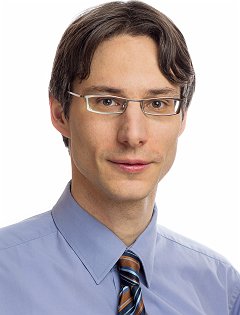
Benjamin Carrison-Schafer is an Associate Professor and Assistant Dean for Graduate Student Success at the Department of Electrical and Computer Engineering, Erik Jonsson School of Engineering and Computer Science, University of Texas at Dallas. He leads the Design Automation and Reconfigurable Computing Laboratory (DARClab), focusing on systems, high-level design, and programming methodologies for VLSI computing systems and FPGAs. Education: MBA from McGill University, Canada (2012) PhD in Electrical and Electronic Engineering from University of Birmingham, UK (2003) Research Interests: His work spans modeling, analysis, synthesis, optimization, and implementation of VLSI systems. Current projects include: Approximate Computing, High-Level Synthesis Design Space Exploration, Hardware Security, Behavioral MPSoC Optimization, and Automatic Fault-Tolerant System Generation. His research blends theory and practice, using analytical and experimental techniques to solve real-world problems. Publication Trends: Recent publications demonstrate strong focus on hardware security, FPGA optimization, and automated design methodologies. Key themes include High-Level Synthesis innovations, hardware acceleration techniques, and cross-disciplinary applications of reconfigurable computing. His work frequently addresses challenges in hardware trustworthiness, energy efficiency, and design automation scalability. Professional Activities: Associate Editor: IEEE Transactions on Sustainable Computing (2022-present) Conference Chair: ICCD 2024, DCAS 2024 Program Committee: ASP-DAC, DATE, FCCM, GLSVLSI Advising & Labs: Supervises multiple PhD and Master's students at DARClab. Current research includes domain-specific architecture design, hardware security, sustainable computing, and ML for VLSI design. The lab collaborates with industry partners like Renesas Electronics and develops commercial tools through spin-off company highX Technologies.
Xiangyu Zhang is the Samuel D. Conte Professor of Computer Science at Purdue University. He specializes in AI security, software analysis, and cyber forensics, with a focus on detecting vulnerabilities in traditional software and AI systems. His research includes dynamic slicing, program profiling, and securing AI models against backdoors. He has led projects funded by DARPA, IARPA, NSF, and industry, securing over $13 million in grants. He has mentored 30+ PhD students and postdocs, many of whom hold academic positions or industry roles. His work has been recognized with awards like the ACM SIGPLAN Distinguished Dissertation Award and NSF Career Award. Education: PhD, Computer Science, University of Arizona (2006) MS & BS, Computer Science, University of Science and Technology of China (2000 & 1998) Research Interests: AI Security: backdoor detection, adversarial attacks, model integrity Program Analysis: dynamic slicing, static/dynamic debugging Cyber Forensics: log analysis, attack investigation Software Reliability: fault localization, vulnerability detection Key Projects: DARPA V-SPELLS: domain-specific program analysis IARPA TrojAI: AI backdoor detection competitions NSF-funded research on model debugging and co-reasoning of software/NL artifacts Awards & Recognition: Top performer in IARPA TrojAI competitions (13/18 rounds) ACM SIGPLAN Distinguished Dissertation Award (2006) NSF Career Award (2009) Ranked 8th globally in systems research productivity (2024) Career Contributions: Secured over $13M in research funding Guided 25 PhDs and 8 postdocs Published 89+ top-tier papers (2014–2024)
Rajeev Alur is the Zisman Family Professor in the Department of Computer and Information Science at the University of Pennsylvania, leading the School of Engineering and Applied Science. He is the Founding Director of the ASSET Center for Trustworthy AI and a member of the PRECISE Center. His research focuses on formal methods for system design, integrating AI, cyber-physical systems, and machine learning with logical reasoning to ensure safety in autonomous systems. Alur has held leadership roles in major NSF projects like ExCAPE and has directed the Embedded and Multi-Scale Systems (EMBS) program. His research interests span formal verification, temporal logics, programming abstractions, and synthesis techniques. Notable contributions include the development of Nested Words (visibly pushdown languages), streaming string transducers, and tools like AutomataTutor for education. He has advised over 60 PhD students and postdocs, many of whom now hold academic and industry leadership positions. Alur’s awards include the 2024 Knuth Prize and the 2016 Alonzo Church Award. His work on Verisig and compositional verification of neural networks has advanced safety-critical AI applications. He teaches foundational courses like CIS 2620 and develops educational tools, emphasizing both theoretical rigor and practical impact. Key projects include the ASSET Center’s focus on trustworthy AI, integration of logical specifications in reinforcement learning, and formal verification of closed-loop systems with neural components. His publications span over 350 papers, with recent work addressing neurosymbolic learning, security in large language models, and efficient neural network verification.
Gail E. Kaiser is a Professor of Computer Science and the Director of the Programming Systems Laboratory (PSL) in the Computer Science Department at Columbia University. She has been with Columbia University since 1985, becoming a full Professor in 1998. Prof. Kaiser's research spans software engineering, program analysis, software testing, and software security, with recent focus on addressing challenges in AI/ML systems testing and security. Prof. Kaiser received her PhD in Computer Science from Carnegie Mellon University in 1985 and her ScB in Computer Science and Engineering from MIT in 1979. Her dissertation at CMU was titled "Semantics for Structure Editing Environments" under advisor Nico Habermann, and at MIT she completed "Automatic Extension of an Augmented Transition Network Grammar for Morse Code Conversations" under advisor Al Vezza. Prof. Kaiser's research interests primarily focus on software engineering following a systems building approach, with recent emphasis on static and dynamic program analysis techniques to improve software reliability and security. Since 2005, she has investigated testing "non-testable" programs, particularly in machine learning, data mining, and scientific computing applications where traditional testing oracles are insufficient. She has developed novel techniques and tools for detecting bugs and verifying repairs in complex systems. Concurrently, she has worked on collaboration environments for computational scientists, creating knowledge sharing and domain-aware environments to support scientific workflows. Prof. Kaiser's recent publications demonstrate a strong focus on the intersection of software engineering and artificial intelligence. Her work addresses critical challenges in testing AI systems, code understanding through deep learning, vulnerability detection, and educational tools for computational thinking. There's a clear evolution from traditional software engineering topics toward AI/ML applications, with particular emphasis on metamorphic testing for non-testable systems, code similarity analysis, and educational applications. Prof. Kaiser has received numerous prestigious awards throughout her career: Distinguished Journal Award (10 Years) from 18th IEEE International Conference on Software Testing, Verification and Validation (ICST), April 2025 Best Research Paper Award at 24th IEEE International Conference on Source Code Analysis & Manipulation (SCAM), October 2024 Distinguished Reviewer Awards for ASE 2024 and FSE 2024 ACM SIGSOFT Distinguished Paper Award for "CONCORD: Clone-aware Contrastive Learning for Source Code", July 2023 Best Student Paper Award at ICCE 2021 Multiple ACM SIGSOFT Distinguished Paper Awards dating back to 2014 Presidential Young Investigator in Software Engineering and Software Systems from NSF (1988-1993) Prof. Kaiser has chaired Columbia's doctoral program since 1997 and served on editorial boards including IEEE Internet Computing and as a founding associate editor of ACM Transactions on Software Engineering and Methodology. Her lab has been continuously funded by major agencies including NSF, NIH, DARPA, ONR, NASA, and numerous companies. Current grants include significant NSF funding for secure containers architecture, learning semantics of code for software assurance, and finding semantic security bugs. As Director of the Programming Systems Laboratory (PSL), Prof. Kaiser leads research in software systems, program analysis, and software testing. The lab has developed numerous tools and techniques for software reliability and security, with recent focus on challenges in AI/ML systems. Her work bridges theoretical foundations with practical applications, often resulting in deployable tools that address real-world software engineering challenges.
Karthik R. Narasimhan is a Professor at Princeton University's School of Engineering and Applied Science in the Department of Computer Science. Previously, he earned his PhD from MIT under Regina Barzilay and served as a visiting research scientist at OpenAI during 2017-18. His research focuses on the intersection of language and decision-making, building autonomous agents that learn from both experience and human knowledge. His research spans multiple high-impact areas including language agents (Text-DQN, CALM, ReAct, Tree of Thoughts), reinforcement learning (h-DQN, Multi-Objective RL), and AI safety (Toxicity in ChatGPT, DataMUX). He has developed critical datasets and benchmarks such as WebShop, InterCode, SWE-bench, and SILG that have become standard evaluation tools in the field. Current work emphasizes agent capabilities, software engineering automation, and multimodal interaction. His publication trends show strong focus on practical agent deployment (SWE-agent, Tree of Thoughts), safety evaluation (Probing AI Safety), and efficiency improvements (DataMUX). Recent work increasingly addresses real-world challenges in software engineering, security, and human-AI collaboration through rigorous benchmarking. Co-author of foundational GPT (2018) paper Key developer of Text-DQN (2015), CALM (2020), ReAct (2022), Tree of Thoughts (2023) Creator of influential benchmarks: WebShop (2022), SWE-bench (2023), InterCode (2023) He actively advises students through Princeton's computer science program, with research supported by multiple grants focused on autonomous agent development and language-based decision systems. His GitHub repositories (nlp-datasets, text-world-player) demonstrate strong community engagement in open-source research tools. Current projects include advancing language agent capabilities through Reflexion (2023) and Tree of Thoughts (2023) frameworks while addressing critical safety and efficiency challenges.
Qi Alfred Chen is an Assistant Professor in the Department of Computer Science at the University of California, Irvine (UCI), within the Donald Bren School of Information and Computer Sciences. He also holds affiliations with the Department of Electrical Engineering and Computer Science (EECS), the Institute of Transportation Studies at UC Irvine (ITS-Irvine), the Center for Embedded and Cyber-physical Systems (CECS), the Institute for Software Research (ISR), and the UC Irvine Cybersecurity Policy & Research Institute (CPRI). His research focuses on network and systems security, with particular emphasis on autonomous vehicle and IoT security. Dr. Chen received his Ph.D. from the University of Michigan in 2018. His educational background has prepared him for his current research in security of critical computer systems. His work bridges theoretical security principles with practical implementations in real-world systems. Chen's research interests center on network and systems security , with a major focus on smart systems and IoT security , particularly in transportation and autonomous vehicle systems . His work addresses security challenges through systematic problem analysis and mitigation, discovering and mitigating security problems in next-generation transportation systems, smartphone OSes, network protocols, DNS, GUI systems, and access control systems. His research has high impact in both academic and industry contexts, with over 10 top-tier conference papers, a DHS US-CERT alert, multiple CVEs, and coverage in major news media like Fortune and BBC News. His publication record shows a clear evolution from foundational work on network protocols and smartphone security toward increasingly sophisticated security analyses of autonomous vehicle systems and AI-powered transportation technologies. The research trajectory demonstrates growing technical sophistication and real-world impact, with recent work focusing on physical-world adversarial attacks against autonomous driving perception systems, LiDAR spoofing, and security of multi-sensor fusion in autonomous vehicles. NSF CAREER Award (2022) on securing the AI stack in emerging autonomous and connected CPSs Chancellor's Award for Excellence in Undergraduate Research Mentorship, UC Irvine (2021) 5th place nation-wide at National CCDC competition (2021, as faculty advisor) 1st place (Gold Medal) at CCDC Western Regional competition (2021) ProQuest Distinguished Dissertation Award, University of Michigan (2019) Dr. Chen has mentored numerous successful students, including PhD candidates and undergraduates who have gone on to positions at major tech companies like Meta, Uber, Amazon, and Intel. His research group has secured significant funding, including an NSF CAREER award, and has made substantial contributions to the field through high-impact publications and vulnerability disclosures. He is also the co-founder of the ISOC VehicleSec Symposium and has organized the AutoDriving CTF contest at DEF CON. Chen leads the AV & IoAT Security Research Group at UCI, focusing on security challenges in autonomous vehicles and the broader Internet of Autonomous Things. His team has developed numerous attack demonstrations and security analyses that have received significant media attention and influenced industry practices. The group maintains an active YouTube channel showcasing their security research.
Mariano Scazzariello is a Lecturer at KTH Royal Institute of Technology, Sweden, affiliated with the School of Electrical Engineering and Computer Science and the Department of Network and Systems Engineering. He teaches the course 'Network Systems with Edge or Cloud Datacenters (IK2227)'. His research focuses on advanced networking topics including machine learning in networks, high-speed packet processing, network emulation, and software-defined networking innovations. His work spans contributions to network emulation tools like Kathará and Megalos, stateful packet processing at terabit scales, and leveraging large language models (LLMs) for network configuration and vulnerability detection. Recent research emphasizes low-latency protocols (e.g., SRv6/DetNet integration) and GPU-centric networking on commodity hardware. Mariano’s publications (2020–2025) highlight expertise in network function virtualization, ASIC-based switching, and optimizing network configurations through AI-driven approaches. He has pioneered frameworks for evaluating routing protocols and virtualizing large network scenarios at scale.
Kaveh Razavi is an Assistant Professor at ETH Zurich in the Department of Information Technology and Electrical Engineering, supervising the Computer Security Group. He is also affiliated with the Department of Computer Science. Research focuses on commodity hardware and operating systems security Teaching: Computer Engineering (BSc 2022–2025), Hardware Security (MSc 2016–2025), Advanced Operating Systems (MSc 2016–2019) Research Interests: Razavi's work bridges computer systems and security, emphasizing microarchitectural vulnerabilities, hardware exploitation, and security verification. His group develops tools for analyzing hardware-software interactions and mitigating memory attacks like Rowhammer. Scientific Awards: Distinguished/Best Paper Awards at IEEE S&P, USENIX Security, MICRO Five Pwnies Awards for innovative research Dutch Veni Grant, ERC Starting Grant Jochen Liedtke Young Researcher Award Golden Owl Teaching Award (2022) ETH Medal, Intel Bounty Reward, BlackHat USA Recognition
Ari Juels is the Weill Family Foundation and Joan and Sanford I. Weill Professor at Cornell Tech (Cornell University) and a faculty member in the Department of Computer Science. He co-founded and co-directs the Initiative for CryptoCurrencies and Contracts (IC³) and serves as Chief Scientist at Chainlink Labs. His research focuses on blockchain technology, cryptocurrency, smart contracts, applied cryptography, authentication, and privacy. Juels holds a Ph.D. in Computer Science from UC Berkeley and previously held roles as Chief Scientist and Director of the RSA Laboratories at EMC/Dell EMC until 2013. His work spans foundational contributions to decentralized systems, including Chainlink’s oracle networks and Ekiden’s privacy-preserving smart contracts. Juels has authored influential books like *The Oracle* (2024) and *Tetraktys* (2009), blending cryptography with thriller narratives. He advises numerous students and alumni, many of whom have joined prominent blockchain firms like Chainlink Labs, Mysten Labs, and Espresso Systems. Recent publications explore topics such as liquidity in blockchain assets, oracle network security, and economic analysis of smart contracts. His research emphasizes practical applications of cryptographic principles to real-world challenges in digital systems and decentralized finance. Juels’ lab collaborates on projects like HyDRA (automated bug bounty systems) and Lanturn (economic security metrics). He actively participates in academic and industry partnerships, bridging theoretical computer science with applied blockchain innovation.
Deian Stefan is an Associate Professor at the University of California San Diego (UCSD) in the Department of Computer Science and Engineering . His research spans security , programming languages , and systems , with a focus on building principled and practical secure systems. He has served as a co-founder and Chief Scientist at Intrinsic (acquired by VMWare) and contributed to standards bodies like the W3C WebAppSec and Node.js Security Working Groups . His research interests include: Secure Systems : Web frameworks, browser designs, sandboxing, runtime systems Language-Based Security : Constant-time programming, memory safety, information flow control Verification : Security verification, static/symbolic analysis tools WebAssembly and JavaScript JITs security Deian Stefan has received multiple scientific awards , including several Distinguished Paper Awards at venues like POPL, ICFP, and USENIX Security, as well as the IEEE Cybersecurity Award for Practice (2022) and CSAW 2020 First Place for Applied Research. He has taught courses on Computer Security (CSE 127, CSE 227) and advanced topics in Building Secure Systems (CSE 291) using Rust, WebAssembly, and blockchain security. His work has been supported by collaborations with industry and academia, including projects like RLBox and COWL .
Ardalan Amiri Sani is an Associate Professor in the Computer Science Department at the University of California, Irvine (UCI), affiliated with the Donald Bren School of Information & Computer Sciences. He leads the Trustworthy Systems Lab (TrussLab), focusing on secure and reliable mobile systems, operating systems, and virtualization. His research bridges mobile computing, security, and OS design, addressing challenges in I/O devices, kernel hardening, and verifiable provenance. Education: Ph.D. and M.Sc. from Rice University (ECE), B.Sc. from Sharif University of Technology. Awards include the NSF CAREER Award, Google ASPIRE Award, and UCI Dean's Mid-Career Research Award. He has advised numerous graduate and undergraduate students, many of whom now work in academia and industry. Research highlights include Tabellion (secure legal contracts on mobile devices), ProvCam (verifiable video provenance), and work on minimizing smartphone TCBs via hardware isolation. His grants include NSF funding for OS kernel security and NSA support for provenance systems. Education: Ph.D., Electrical and Computer Engineering, Rice University, 2014 B.Sc., Electrical Engineering, Sharif University of Technology Grants: $500K NSF Award (with UCR) for OS kernel security (2020) NSF SaTC Award for GPU security in browsers Google ASPIRE Award for Android system call filtering Labs/Teams: Trustworthy Systems Lab (TrussLab), collaborating with industry partners like Intel and Broadcom.
Juan Zhai is an Assistant Professor in the Manning College of Information and Computer Sciences (CICS) at the University of Massachusetts Amherst. She co-directs the Laboratory for Advanced Software Engineering Research (LASER) and is a member of the UMass NLP group. Her research advances software engineering through automated techniques for building high-quality systems with emphasis on behavioral specifications, AI safety, and trustworthy AI. Her work addresses the fundamental challenge of aligning software behavior with intended specifications through two main directions: automated specification synthesis (translating natural language comments to formal specifications via tools like C2S and LLMCup) and defect detection/repair (developing frameworks for AI system testing, bias mitigation, and training diagnostics). Her vision integrates these into end-to-end assurance systems that continuously validate, repair, and audit evolving software in dynamic environments. Recent publications (2024-2025) reveal dominant trends at the software engineering/AI intersection: formal specification synthesis for IoT and code generation, comment maintenance using LLMs, deep learning framework testing (DevMuT, Citadel), bias detection in LLMs, and automated training repair (AutoTrainer, DREAM). These contributions appear in top venues including ICSE, FSE, ASE, ISSTA, and ACL. Professor Zhai currently advises PhD student Gehao Zhang (focusing on Software Engineering and AI Safety) and actively recruits new PhD/Master's students. Her LASER lab develops practical tools for specification inference, LLM-driven synthesis, and trustworthy AI, while collaborating with the UMass NLP group on language-centric software analysis. The LASER lab, co-directed by Zhai, pioneers techniques for behavioral specification enforcement across traditional and AI-powered systems. Key projects include CPC for bidirectional code-comment analysis, ModelMeta for deep learning framework testing, and frameworks for bias mitigation across the ML lifecycle. The lab emphasizes practical, scalable tools that enhance correctness, robustness, and fairness in critical AI applications.
Daniel Balasubramanian is an Adjunct Associate Professor of Computer Science and Research Scientist at Vanderbilt University's School of Engineering. His research focuses on cybersecurity, software verification, and cyber-physical systems, with expertise in symbolic execution, code analysis, and formal methods. He contributes to advancing secure systems through frameworks like RAMPART for adversarial defense and Syntheto for formal verification. His work intersects edge computing, hardware security, and autonomous systems resilience. Research Interests: Cybersecurity (including ethical hacking, network defense), formal methods (verification, theorem proving), edge computing (tinyML, cloud integration), and cyber-physical systems (emulation, testbeds). His recent work emphasizes assurance provenance in software documentation and adversarially robust autonomous systems. Publications since 2019 highlight contributions to cybersecurity testbeds, reinforcement learning for penetration resistance, and hardware security against rowhammer attacks. He has explored domain-specific languages (Syntheto), incremental modeling techniques (differential-formula), and cloud-edge service resilience against adversarial perturbations. Labs/Teams: Affiliated with the Institute for Software-Integrated Systems (ISIS), focusing on integrating software with physical systems through model-driven approaches and cybersecurity innovations.
Daniel Varro is a Professor affiliated with McGill University (Faculty of Engineering, School of Computer Science), with strong ties to Budapest University of Technology and Economics and Linköping University. He is a leading researcher in model-driven engineering, cyber-physical systems, and software engineering, actively contributing to top-tier conferences such as MODELS, ICSE, and ASE. His research focuses on model-based systems engineering (MBSE) , automated model generation , model transformations , and constraint-based consistency checking . Recently, his work has expanded into integrating large language models (LLMs) and machine learning into modeling workflows, including model querying, domain modeling, and bug detection. The recent publications reveal a strong trend toward AI-augmented modeling, logic-based solvers (e.g., Refinery), and safety assurance of autonomous systems (e.g., COLREGs compliance). His work bridges formal methods with practical software engineering challenges in industrial and safety-critical domains. Scientific Awards: No specific awards mentioned in the text. Advising and Grants: While no explicit list of students or grants is provided, his mentorship in the Doctoral Symposium and repeated leadership roles suggest active supervision and likely grant funding. He has led projects on automated model generation, model quality, and AI integration in modeling. Labs and Teams: Daniel Varro is associated with research groups focused on model-driven engineering and software evolution, likely leading or co-leading teams working on the VIATRA and Refinery frameworks for model transformation and solving.