Paul Harrison is the George Edwin Burnell Professor of Religious Studies at Stanford University , with a courtesy appointment in East Asian Languages and Cultures. He serves as Co-Director of the Ho Center for Buddhist Studies , focusing on Buddhist literature, history, and manuscript analysis across Mahāyāna and Mainstream traditions. Specializes in Buddhist manuscripts in Sanskrit, Chinese, and Tibetan Current projects: Editions of the Vajracchedikā (Diamond Sutra) and Vimalakīrtinirdeśa Research emphasizes textual authority, transmission, and innovation in Mahayana Buddhism Contact: paulh1@stanford.edu | Office: Building 70, Room 72E
Melissa McCormick, Andrew W. Mellon Professor of Japanese Art and Culture at Harvard University, holds a Ph.D. in Japanese Art History from Princeton University (2000) and a B.A. in art history and Japanese from the University of Michigan (1990). She has taught at Columbia University as the Atsumi Assistant Professor of Japanese Art (2000-05) and at Harvard since 2005, where she was promoted to Professor with tenure in 2009. She has held visiting professorships at the University of Zurich and Universidade Estadual de Campinas, Brazil. Education : University of Michigan (B.A.), Princeton University (Ph.D.), Gakushūin University (1996-98) Affiliations : Harvard Art Museums, Metropolitan Museum of Art, NHK Documentaries, Getty Foundation Her research explores the interplay of text and image in Japanese art, focusing on emaki (narrative scrolls), The Tale of Genji , and Buddhist themes. Her 2018 monograph The Tale of Genji: A Visual Companion and 2009 book Tosa Mitsunobu and the Small Scroll in Medieval Japan established new frameworks for analyzing scroll format and narrative. Current projects examine Buddhist nun-artist Ōtagaki Rengetsu and bridal manuscript traditions. Selected articles highlight her work on Hakubyō (ink-line painting), medieval Genji genealogies, and the poetics of chigo (novice) tales. She has contributed to exhibitions at the Metropolitan Museum of Art and Dartmouth College’s Hood Museum. Scientific Awards : Mellon Fellowship in the Humanities (1990) At Harvard, McCormick teaches courses ranging from introductory surveys ( Arts of Japan ) to advanced seminars on gender, tea culture, and museum research. She co-curated the 2019 Tale of Genji exhibition at the Met, which received critical acclaim, and developed an edX course with over 20,000 enrollments. Her consultancy work extends to opera and dance companies, including Japan Society and Asia Society of Texas.
Michael Como Tōshū Fukami is an Associate Professor of Shinto Studies at Columbia University's Department of East Asian Languages & Cultures. He holds a BA from Harvard University (1985) and a PhD from Stanford University (2000). His research focuses on the transmission of rituals, deities, and technologies to Japan, particularly during the Asuka to Heian periods. Current projects include a monograph on urbanization and materiality of religious performance in 8th–9th century Japan. His teaching includes courses such as the Colloquium on Major Texts in East Asia and Graduate Seminar in Japanese Religion. Research interests span cultural transmission, local religious traditions, and theological innovation tied to urbanization. Recent publications examine medieval Shintō, immigrant deities in ancient Japan, and the role of violence in Buddhist formation. He has held office at Columbia’s 307 80 Claremont and is listed among faculty in the department. No awards are explicitly mentioned in the provided text.
Mark Halperin is a Professor of Chinese and Department Chair of East Asian Languages and Cultures at the University of California, Davis. He holds a Ph.D. from the University of California, Berkeley (1997). His research focuses on Medieval Chinese literature, religion, and literati culture, with particular emphasis on Chinese conceptions of fatherhood and interreligious dynamics in pre-modern China. Education: Ph.D., University of California, Berkeley (1997). Research interests encompass: Medieval Chinese literature and its religious contexts Buddhist and Daoist traditions in literati culture Gender and religious practice in Song China Confucian and Daoist textual traditions His publications explore themes such as Buddhist hagiographies, Song Dynasty religious interactions, and Daoist movements. Recent work includes a translation of Lu Rong's Ming Confucian's World (2022) and articles on medieval Chinese religious narratives. No scientific awards listed. No advising/grant details provided. No labs or teams explicitly mentioned in the profile.
Hsueh-man Shen is the Director of Masters Studies and Ehrenkranz Associate Professor in World Art at New York University’s Institute of Fine Arts. She holds a D.Phil. from Oxford University in Archaeology, an M.A. in Art History from National Taiwan University, and an LL.B. in Law from the same institution. Her research focuses on medieval Chinese art and archaeology, particularly how cross-cultural exchanges shaped artistic practices through translation, replication, and hybridization. She has curated major exhibitions such as Gilded Splendor: Treasures of China’s Liao Empire (2006) and contributed to the Cave Temples of Dunhuang project (2016), emphasizing Silk Road cultural networks. Her current book project explores maritime activities’ impact on Buddhist art during the 10th–14th centuries. Shen’s work bridges art history, archaeology, and material culture studies, addressing topics like relic deposits, shipwrecks, and cross-cultural curatorial practices. She has held prestigious fellowships, including the Leiden University Hulsewé-Waznieski Professorship (2019) and a Wissenschaftskolleg zu Berlin residency (2008–2009). Education: D.Phil., Archaeology, University of Oxford M.A., Art History, National Taiwan University LL.B., Law, National Taiwan University Her research interests include Buddhist art’s transformation across dynasties, the role of replication in devotion, and maritime trade’s influence on cultural boundaries. She teaches courses such as Colors in the Visual Culture of Medieval China and Shipwrecks and the ‘Other’ Silk Road , integrating theoretical and material perspectives. Shen’s awards reflect her global academic contributions, including the EURIAS Senior Fellowship (2018–2019) and Progress 100 Visiting Professorship at Kyushu University (2017). Her publications span exhibition catalogues, monographs like Authentic Replicas: Buddhist Art in Medieval China (2019), and peer-reviewed articles analyzing Silk Road networks, Liao dynasty funerary practices, and cross-cultural material exchanges.
Mark Allon is an Associate Professor and Chair of Discipline in South Asian Buddhist Studies at the University of Sydney. He holds a PhD from the University of Cambridge and a BA (Honours) from the Australian National University. His research focuses on early Buddhist literature, Gandhari manuscripts, and the textual traditions of South and Southeast Asia. Allon leads major projects, including the study of the Senior Kharosthi manuscripts and the conservation of the Kuthodaw Pagoda inscriptions in Myanmar. Education: PhD (Buddhist Studies, Cambridge), BA (Asian Studies, ANU; Hons 1), Dip. Arts (City Art Institute) Key Roles: President of the Australasian Association of Buddhist Studies, Board Member of the International Association of Buddhist Studies, and member of the Sydney Southeast Asia Centre His research interests include the composition and transmission of early Buddhist texts, Gandhari and Pali languages, and the cultural heritage of Gandhara. Current projects involve digital humanities initiatives for Buddhist manuscripts and the study of marble stelae inscriptions in Mandalay. Allon has received grants such as the Robert H. No Ho Family Foundation Grant (2019) and the Australian Nuclear Science and Technology Organisation award (2019). He advises on the Dhammakaya Tipitaka Project and collaborates with institutions globally on manuscript preservation.
Dominic Goodall is a Director of Studies at the French School of Asian Studies (École française d'Extrême-Orient), specializing in Sanskrit Philology, History of Śaivism, and Epigraphy. Based at the Pondicherry Research Center in India, he has been a member of the EFEO since 2000 and previously served as Director of the Pondicherry Center from 2002 to 2011. His academic journey began with studies in Greek and Latin at Pembroke College, Oxford, followed by Sanskrit (BA with Pali, 1990), and medieval Tamil at the University of Hamburg (1990-1991). He completed his doctorate at Wolfson College, Oxford under Professor Alexis Sanderson on the theological school of Śaivasiddhānta in 10th-century Kashmir. Goodall's research focuses on the critical edition and translation of previously unpublished Śaiva scriptures and theological commentaries, particularly from South India. His scholarly work bridges Sanskrit philology with epigraphic studies of Southeast Asia, especially Cambodia. He has made significant contributions to understanding the transmission of Śaiva Siddhānta traditions across South and Southeast Asia through textual analysis of both manuscripts and inscriptions. His publication record demonstrates a consistent focus on early Śaiva Tantric literature, particularly the Niśvāsatattvasaṃhitā as the earliest surviving Śaiva Tantra. Goodall has pioneered the study of Cambodian inscriptions in Sanskrit, revealing important connections between Indian religious traditions and Khmer civilization. His work shows a methodological commitment to rigorous textual criticism combined with historical and religious analysis. Foreign Corresponding Member of the Academy of Inscriptions and Belles-Lettres (2016) Co-editor of Tāntrikābhidhānakośa (Viennese dictionary of Hindu tantric terminology) Contributor to Encyclopaedia of Manuscript Cultures in Asia and Africa Goodall has supervised numerous research projects on South Asian manuscript cultures and epigraphy. His leadership in the Pondicherry manuscript project has been instrumental in preserving and making accessible important Sanskrit textual traditions. He has organized multiple international workshops on early Tantric traditions and regularly collaborates with scholars across Europe and Asia. Based at the Pondicherry Research Center, Goodall continues to direct the EFEO's efforts in documenting and analyzing South Asian religious traditions, with particular emphasis on Śaiva Siddhānta traditions as reflected in both manuscript and inscriptional evidence from India and Southeast Asia.
Robert Mayer is a Faculty Associate at the Faculty of Asian and Middle Eastern Studies, University of Oxford, and a Fellow at the Oxford Centre for Buddhist Studies. Affiliated with Wolfson College, he specializes in Tibetan Buddhist studies with a focus on early Nyingma tantric traditions and scriptural revelation practices. His research centers on rNying ma tantric traditions , gTer ma (treasure) literature , the rNying ma'i rgyud 'bum (NGB) , Dunhuang tantric manuscripts , Tibetan ritual systems , and phur pa (kīla) traditions across both Buddhist and Bon contexts. Mayer examines textual transmission mechanisms, ritual innovation, and the historical formation of Tibetan Buddhism from the 10th-12th centuries, with particular attention to how revelation practices challenge conventional notions of authorship and originality. Analysis of his recent publications reveals a consistent trajectory exploring treasure literature's relationship to Indian Buddhist antecedents, comparative studies of Bon and Buddhist tantric systems, and critical editions of foundational texts like the Ancient Tantra Collection. His work demonstrates increasing interdisciplinary engagement with cultural history, myth-making processes, and the sociology of religious knowledge production in Tibetan contexts. Mayer directs the Treasure Seminar Series and has secured major funding from the AHRC, John Fell Fund, and DFG for projects including authorship studies in Tibetan scriptural revelations, comparative analyses of Bon/Buddhist phur pa traditions, and restoration of ancient tantric manuscripts. He teaches courses on Early Tantric Traditions in Tibet and Early Bon Tantric Literature, while maintaining the research blog kīli kīlaya documenting discoveries in Tibetan Buddhist studies.
John Nemec is a Professor of Religious Studies at the University of Virginia, specializing in Indian religions, Tantric studies, and Sanskrit literature. He holds a PhD from the University of Pennsylvania (2005), an MPhil from the University of Oxford (2000), an MA from the University of California, Santa Barbara (1997), and a BA from the University of Rochester (1994). His research focuses on the philosophy and religious literatures of Kashmir (9th–12th centuries), particularly the non-dual Śaivism of Somānanda and the Pratyabhijñā School. He has authored three books, including *The Ubiquitous Śiva*, and numerous articles on topics such as Sanskrit narrative literatures, religion-politics interfaces, and premodern South Asian intellectual history. His work explores the interplay between religious thought, cultural production, and social institutions in Kashmir, with a focus on textual analysis and historical context. Nemec’s scholarship bridges textual studies, philosophy, and cultural history, emphasizing the legacy of Kashmiri intellectual traditions in broader South Asian contexts.
Carmen Meinert holds the Chair for Central Asian Religions and serves as Deputy Director of the Center for Religious Studies (CERES) at Ruhr University Bochum. She is Principal Investigator of the ERC-funded BuddhistRoad project and coordinates the Climate and Culture publication series. Her academic foundation includes research and studies at universities in Bonn, Hamburg, Beijing, Chengdu, Vienna, and the Institute of Advanced Study in the Humanities, Essen. Research Focus: Meinert's scholarship centers on the transfer of Buddhism across Central Asia, with emphasis on Tantric rituals, manuscript traditions (Dunhuang/Kharakhoto), and religious syncretism. Key themes include: Medieval religious networks and sacred space formation Buddhist-Daoist/Tibetan-Chinese doctrinal exchanges Ritual adaptation and esoteric practices Buddhism's intersections with art, violence, and human rights Cultural dimensions of climate change Publications: Her extensive corpus examines Buddhist transmission along Silk Road networks, with recent works analyzing Tantric ritual texts, sacred geography under Tangut rule, and cross-cultural religious encounters. Publications demonstrate consistent focus on manuscript evidence and comparative frameworks. Awards & Fellowships: Käte Hamburger Kolleg Visiting Research Fellowship Research Leadership: Meinert directs multiple initiatives: ERC project BuddhistRoad (dynamics of religious transfer) CRC 1475 'Metaphors of Religion' Subproject A03 (ritual-textual networks) Climate and Culture publication series (6 volumes) She previously led projects on Dzogchen tradition development and rNying ma codification. Current work integrates Central Asian religious studies within global comparative frameworks.
Professor Imre Hamar, holding a Doctor of Science (DSc) degree, serves as Director of the Institute of East Asian Studies and Head of the Department of Chinese Studies at Eötvös Loránd University (ELTE). He earned his PhD in 1997, habilitated in 2004, and became a full professor in 2008. His academic leadership spans multiple institutions, including directing the ELTE Confucius Institute since 2006. Doctor of Science (DSc) - Institute of East Asian Studies Professor - Department of Chinese Studies Director - Confucius Institute (since 2006) A leading scholar in Chinese Buddhism with a specialization in Huayan philosophy, Hamar has dedicated decades to studying Tang Dynasty religious thought, Buddhist exegesis, and classical Chinese texts. His research traces the development of Buddhist doctrines in China and their cross-cultural transmission through Central Asia. He has taught Chinese religious history, classical Chinese texts, and Buddhist philosophy across undergraduate and postgraduate levels at ELTE. His academic publications focus on the Huayan tradition , Avatamsaka-sutra interpretations, and Yogacara-Huayan synthesis . Recent works examine syncretism in Chinese Buddhist commentaries and the cult of Mount Wutai, reflecting his ongoing engagement with Buddhist sacred geography. Scientific recognition includes: Pro Universitate Award (Gold Level, 2010) Excellent Confucius Institute Director Award (2011) Fulbright Fellowship (University of Virginia, 2008-2009) Numata Guest Professorship (Hamburg University, 2010) He has received multiple research grants from the Japan Foundation, DAAD, and Chiang Ching-kuo Foundation. His editorial work includes co-editing Reflecting Mirrors: Perspectives on Huayan Buddhism (2007) and several volumes in the ELTE Sinological Workshop series.
Manuel Pachurka is a Lecturer at the University of Münster, affiliated with the Department of Educational Science and Social Sciences. He is part of the Cluster of Excellence 'Religion and Politics: Dynamics of Tradition and Innovation.' His research focuses on cultural sociology, sociology of religion, Islam (Sufism, Jihadism), and Buddhism (Theravada and Zen Buddhism). He holds a dual MA and BA in Religious Studies and Oriental Studies from Ruhr University Bochum. Teaching responsibilities include seminars on topics like the political religions, theories of the gift, and Max Weber's sociology of religion. He has taught since 2019, including recent courses in the 2024/25 and 2025 terms. His doctoral research examines asceticism as a cultural and social phenomenon under Prof. Astrid Reuter and Prof. Levent Tezcan. No scientific awards are listed. He is involved in interdisciplinary projects and has presented at conferences on topics such as Buddhist meditation, Islamic State analysis, and ressentiment theory.
Robert Sharf is the D.H. Chen Distinguished Professor of Buddhist Studies in the Department of East Asian Languages and Cultures at the University of California, Berkeley . He also serves as Chair of the Numata Center for Buddhist Studies and Head Graduate Advisor for the Group in Buddhist Studies . With a PhD in Buddhist Studies from the University of Michigan (1995), he previously taught at McMaster University (1989-1995) and the University of Michigan (1995-2003). Research Interests: Medieval Chinese Buddhism (especially Chan) Japanese Buddhism Buddhist Art and Archaeology Ritual Studies Buddhist Modernism Philosophical Paradoxes Methodology in Religious Studies Critical Buddhist Discourse Publications & Collaborations: Author of Coming to Terms with Chinese Buddhism: A Reading of the Treasure Store Treatise (2002) Co-editor of Living Images: Japanese Buddhist Icons in Context (2001) Co-author of What Can’t Be Said: Contradiction and Paradox in East Asian Thought (2021) Co-author of How to Lose Yourself: An Ancient Guide to Letting Go (2025) Editor of Chinese translations of his works: Xiafu Chanxue zixuan ji and Xiafu Mijiao Yanjiu zixuan ji (2022) Academic Leadership: Director of the Group in Buddhist Studies Director of Religious Studies Chair of the Center for Buddhist Studies
Eric Greene is an Associate Professor in the Department of Religious Studies at Yale University, specializing in medieval Chinese Buddhism. He has held academic positions since 2015, including Director of Graduate Studies at the Council on East Asian Studies. His research focuses on the transmission of Indian Buddhism to China, Chan/Zen Buddhism, and Buddhist meditation practices. He earned his Ph.D. in Buddhist Studies from UC Berkeley in 2012, with additional research at Kyoto University. Greene's work bridges historical analysis and textual criticism, particularly in early Chinese Buddhist texts such as the Vimalakīrti Sutra commentaries and meditation manuals. His publications include Chan Before Chan (2021) and The Secrets of Buddhist Meditation (2021), exploring meditation’s role in Chinese Buddhist identity and ritual. He has delivered invited lectures globally, addressing topics like Buddhist image worship, repentance practices, and comparative visions of meditation in medieval China and 19th-century psychology. Greene’s current research examines early Chinese Buddhist translation and commentary practices (150–350 CE), emphasizing how textual interpretation shaped Buddhist sinicization. His affiliations include the Yale Buddhist Studies Initiative and the Department of East Asian Languages and Literatures.
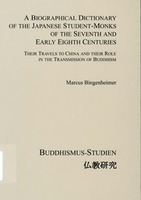
Marcus Bingenheimer is an Associate Professor in the Department of Religion at Temple University, Philadelphia. His academic journey includes an MA in Sinology and a Dr.phil in History of Religions from Würzburg University, Germany, along with an MA in Communication Studies from Nagoya University, Japan. He has held teaching and research positions at institutions across Asia and Europe, including Dharma Drum in Taiwan (2005–2011) and visiting roles at universities in Korea, Japan, Thailand, France, and Singapore. His research focuses on Buddhist Studies and Digital Humanities, with specializations in the history of East Asian Buddhism, early Buddhist sutra literature (Āgama/Nikāya), and computational methods in religious studies. Key projects include the digitization of Buddhist temple gazetteers, historical social network analysis of Chinese Buddhism, and the digital edition of the Song Gaoseng Zhuan. He has also pioneered the application of GIS and stylometric analysis to religious texts. Dr. Bingenheimer has authored or edited over 20 books and numerous articles, including Island of Guanyin (2016) and Studies in Āgama Literature (2011). He directs major research initiatives like the Database of Medieval Chinese Syntax and co-leads the FROGBEAR research cluster on Religion and Technology. His work bridges traditional scholarship with cutting-edge digital tools, emphasizing open access and collaborative projects in Buddhist cultural heritage preservation. Grants and fellowships include a Temple University Presidential Grant for the Sutra2DNA project and an ACLS Translation Grant for his work on Wang Rixiu’s Pure Land essays. His lab activities involve projects like the Nanyang GIS data pool for Southeast Asian Chinese sites and the Digital Archive of Buddhist Temple Gazetteers.