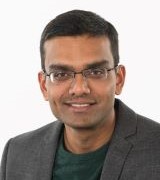
Yuanbo Xiangli is a postdoctoral researcher at Cornell University , advised by Prof. Noah Snavely. Previously, he obtained his Ph.D. from the Multimedia Lab in the Department of Information Engineering at the Chinese University of Hong Kong (CUHK) , supervised by Prof. Dahua Lin. His research focuses on 3D computer vision and deep generative modeling for urban scene reconstruction. 3D scene reconstruction from sparse images Neural rendering and Gaussian splatting Deep generative modeling for urban environments Multi-source geospatial data processing City-scale modeling and synthetic datasets His recent work includes advanced NeRF extensions (BungeeNeRF, GridNeRF), Gaussian splatting enhancements (GSDF, Scaffold-GS), and urban scene datasets (MatrixCity, OmniCity). A pioneer in combining classical vision techniques with modern deep learning approaches. ICLR 2020 Spotlight Award Collaborates with leading researchers in photorealistic rendering, including Noah Snavely and Dahua Lin. Develops systems enabling efficient 3D reconstruction from diverse data sources like satellite imagery and street-level panoramas.
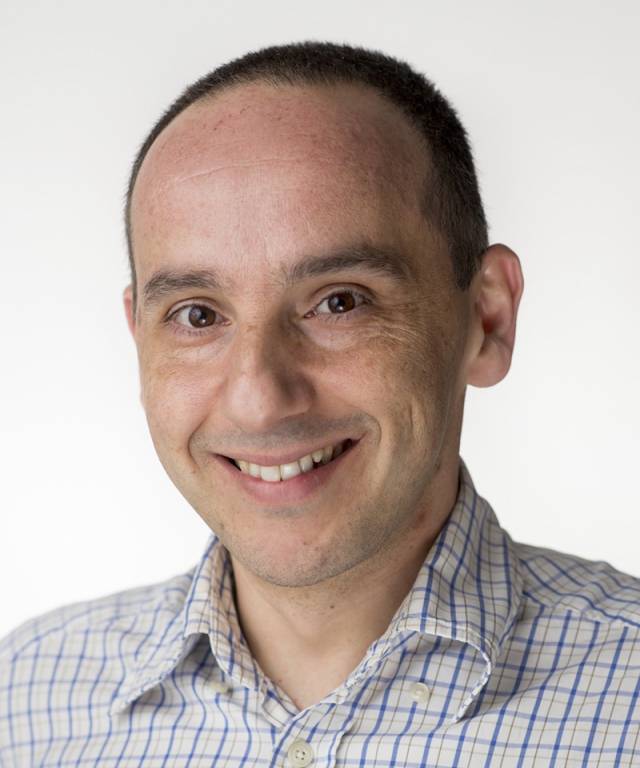
Dr. Mike Tehranchi is a faculty member at the University of Cambridge, affiliated with the Statistical Laboratory within the Department of Pure Mathematics and Mathematical Statistics (DPMMS) . His research focuses on mathematical finance, stochastic processes, and probability theory. He holds a Lecturer position and is actively involved in academic research, with notable contributions to financial models, term structure analysis, and stochastic calculus. His work bridges theoretical probability and applied finance, addressing topics such as interest rate modeling, implied volatility, and optimal investment strategies. Tehranchi’s research often intersects with optimization, statistical methods, and interdisciplinary applications in astrophysics and fluid dynamics. He maintains an active publication record and contributes to the academic community through his role in the Statistical Laboratory. Key research trends in his articles include the analysis of financial derivatives, stochastic processes in market dynamics, and the application of advanced mathematical techniques to real-world financial problems. His work emphasizes rigorous theoretical foundations while addressing practical challenges in quantitative finance. Dr. Tehranchi has no listed students or academic awards in the provided texts. He can be reached via email and is based in Room D1.04 at the Statistical Laboratory.
Jason Schweinsberg is a Professor in the Department of Mathematics at the University of California, San Diego (UCSD), where he has been a faculty member since Fall 2004. His academic journey began with a Ph.D. in Statistics from the University of California, Berkeley in 2001, followed by a three-year NSF Postdoctoral Fellowship at Cornell University. His research focuses on probability theory with applications to evolutionary biology and population genetics. Schweinsberg's work centers on stochastic processes involving coalescence, branching Brownian motion, and their connections to biological phenomena. He has made significant contributions to understanding population models undergoing selection, cancer evolution, and spatial mutation processes. Recent publications reveal a strong emphasis on coalescent theory (particularly Λ-coalescents and nested coalescents), branching processes with absorption, and spatial evolutionary models. His work often bridges rigorous mathematical analysis with biological applications, especially in population genetics and cancer modeling. The 15 most recent articles demonstrate consistent focus on asymptotic analysis of stochastic processes, genealogical structures, and mutation dynamics in evolving populations. Scientific Awards: Fellow of the Institute of Mathematical Statistics NSF Postdoctoral Research Fellowship While specific student names aren't listed in the source material, Schweinsberg has delivered numerous lecture series at international institutions including the Indian Institute of Science (Bangalore), Centre de Recherches Mathématiques (Montreal), and the Isaac Newton Institute (Cambridge), indicating active mentorship and academic leadership. His collaborations span multiple institutions, with frequent co-authorship with researchers like Julien Berestycki, Nathanaël Berestycki, and Rick Durrett. Though no formal lab structure is mentioned, Schweinsberg participates in interdisciplinary research communities through workshops at institutions like BIRS (Banff International Research Station), where he presented on mutation patterns in spatially structured populations in May 2025. His work connects probability theory with biological applications through sustained collaborations across mathematics, statistics, and computational biology fields.
Anne Berit C. Samuelsen serves as Associate Professor at the Department of Pharmacy, University of Oslo, where she also holds the position of Head of Education. Her academic foundation includes a Cand.pharm. degree and Dr.scient. doctorate, establishing her expertise in pharmaceutical sciences. Her research centers on polysaccharides from natural sources—particularly higher plants, cereals, and fungi (Basidiomycota)—with specialized focus on β-glucans. Key interests include carbohydrate chemistry, pharmacognosy, and the development of biopolymer-based pharmaceutical applications. Her work bridges fundamental structural characterization with practical drug delivery solutions, notably through liposome coating technologies and immunomodulatory compound development. Recent publications reveal a strong trajectory in fungal polysaccharide research, particularly with Pleurotus eryngii and Albatrellus ovinus species. Her team employs advanced techniques like diffusion-ordered NMR spectroscopy to analyze polysaccharide structures while investigating biological activities related to immune receptor binding (Dectin-1, Toll-like receptors) and therapeutic applications. This work demonstrates consistent output in high-impact journals including Carbohydrate Polymers and ACS Applied Bio Materials . She actively contributes to academic instruction through courses such as FARM1150 (Pharmaceutically Oriented Biochemistry), FARM3100 (Pharmacognosy), and FARM5200 (Use of Biopolymers in Pharmaceuticals). Her leadership extends to the Bioactive Natural Substances and Health Effects (BioNatH) research group and the Glyconor Consortium, where she investigates natural product applications for health improvement.
Lionel Levine is a Professor in the Department of Mathematics at Cornell University, affiliated with the College of Arts and Sciences. His academic research focuses on abelian networks, interacting particle systems, and the emergence of complex patterns from simple rules. He has held prestigious fellowships, including the Simons Fellowship and Sloan Research Fellowship, and has been honored with an endowed professorship. Levine's work bridges probability theory, combinatorics, and statistical physics, with notable contributions to the study of sandpile models and internal diffusion-limited aggregation (IDLA). Education: Ph.D. in Mathematics (2007), University of California, Berkeley. Research Interests: Applied Mathematics, Combinatorics, Probability, Abelian Networks, Sandpile Models, and their intersections with computer science and statistical physics. His research explores how local rules generate large-scale structures, such as in abelian networks and sandpile models. Awards and Honors: Simons Fellowship, Sloan Research Fellowship, Endowed Professorship in the College of Arts and Sciences. Teaching: Courses include Probability Theory (MATH 6710/6720), Topics in Probability: Math for AI Safety (MATH 7710), and undergraduate mathematics courses like Strategy, Cooperation, and Conflict (MATH 1340). Grants and Funding: Supported by the National Science Foundation (NSF), Simons Foundation, Sloan Foundation, and Institute for Advanced Study. Collaborations: Collaborates with prominent researchers such as Yuval Peres, Cris Moore, and Jim Propp. His work has been published in leading journals like the Annals of Probability and Duke Mathematical Journal. Future Work: Continues investigating AI safety, causal models, and multi-agent learning, including research on mathematical frameworks for transformer circuits and hidden incentives in AI systems.
Ankush Agarwal is an Associate Professor in the Department of Statistical and Actuarial Sciences at the University of Western Ontario. His research focuses on mathematical finance, financial statistics, and Monte Carlo methods, with applications to risk management and derivatives pricing. He supervises PhD students in quantitative finance and has taught courses on Monte Carlo methods and advanced financial modeling at Western University. Education: PhD in Mathematics from Tata Institute of Fundamental Research (2015) Research interests span regime-switching models, longevity risk hedging, stochastic differential equations, and rare event simulation. His work combines theoretical probability with computational techniques for financial applications. Recent publications include studies on McKean-Vlasov SDEs, implied Sharpe ratio estimation, and optimal portfolio strategies under stochastic volatility. These works demonstrate his expertise in stochastic processes and financial engineering. Supervision: Current PhD advisees include Ying Liao, Buchun Wang, and Shuya Zhang at the University of Glasgow. Former advisees include Yongjie Wang and Yihan Zou.
Professor Vitali Wachtel of Bielefeld University's Faculty of Mathematics specializes in advanced stochastic processes, probability theory, and their applications in mathematical modeling. Since 2021, he holds a W3 Professorship and serves as Principal Investigator in CRC 1283 'Taming uncertainty and profiting from randomness and low regularity in analysis, stochastics and their applications' since 2023. Chaired Examination Boards for Bachelor & Master Business Mathematics Member, Bielefeld Graduate School in Theoretical Sciences Research focus: Markov processes, random walks in cones, branching processes Research Trends: His recent work spans critical multitype branching in random environments (2025), asymptotic expansions for conditioned random walks (2024), and invariance principles for integrated processes. He explores connections between stochastic processes, combinatorial structures, and risk modeling with level-dependent premiums. Awards: Feodor Lynen Research Fellowship (2017), Alexander von Humboldt Foundation Teaching: Coordinates modules including 'Stochastic Processes' (24-M-PT-STP) and 'Introduction to Probability Theory' (24-B-EW-5). Active in curriculum development and academic governance through multiple university committees.
Fima Klebaner is Professor in the School of Mathematics at Monash University and Director of the Centre for Modelling of Stochastic Systems. His research spans stochastic processes, financial mathematics, and population biology, with emphasis on limit theorems, branching processes, and diffusion models. Current projects include ARC-funded work on stochastic population dynamics and financial derivatives pricing. Key research areas: 1) Population-dependent stochastic systems; 2) Large deviation principles; 3) Financial mathematics (Dupire formula, volatility); 4) Approximation methods for complex processes. Recent publications (2018-2025) show balanced focus on theoretical probability (45%) and applied modeling (55%), particularly in ecology and finance. Article analysis reveals advanced methodologies in: 1) Stochastic calculus applications (33% of recent works); 2) Limit theorems for interacting systems (27%); 3) Financial mathematics innovations (20%). Theoretical contributions frequently interface with biological and financial applications.
Víctor Rivero is a Professor in the Department of Probability and Statistics at the Center of Research in Mathematics (CIMAT) in Guanajuato, Mexico. He previously served as Director of CIMAT from January 2017 to December 2022 and spent a sabbatical year (August 2023-July 2024) at the Probability Group of the Department of Statistics at the University of Warwick, UK. Starting in 2025, he will serve as Editor of ALEA - Revista Latinoamericana de Probabilidad y Estadistica and is part of the Scientific Committee for the 11th International Conference on Lévy Processes to be held in Sofia, Bulgaria in 2025. He also serves on the steering committee of the CIMAT-UNAM-Warwick-Bath research platform for UK-Latin America engagement in probability. Rivero's research focuses on probability theory and stochastic processes, with particular expertise in Lévy processes, Markov processes, and self-similar processes. His work spans fluctuation theory of real-valued Lévy processes and Markov additive processes, stable processes, excursion theory, local times as stochastic processes, branching processes, and regenerative sets. He has developed deep connections between these areas, often using the Lamperti transform to relate self-similar Markov processes to Lévy processes. An analysis of his recent publications reveals a continued focus on foundational aspects of probability theory with applications to various mathematical models, particularly examining how scaling properties and self-similarity manifest in complex systems with increased attention to multidimensional settings and connections to biological models. Rivero actively mentors graduate students at institutions including CIMAT, University of Warwick, and University of Bath, frequently collaborating with other researchers like Andreas Kyprianou on student supervision. He has been a frequent visitor to leading probability research centers worldwide, including institutions in France (Université Sorbonne Paris Nord, Angers) and the UK (Bath, Warwick, Manchester). His teaching includes courses on Lévy processes and self-similar Markov processes, with lecture notes available for students. He is also part of the Network of Creative Teaching in Mathematics, which aims to promote mathematics as an activity that stimulates creative, conceptual, and emotional development.
Professor Tim Rogers is affiliated with the University of Bath as a faculty member in the Department of Mathematical Sciences . He is actively involved in research spanning complex systems, network theory, and stochastic processes. PhD in Random Matrix Theory from King's College London (2010) His research focuses on emergent behavior in random systems , including: Collective Behavior : Crowd dynamics, lane formation, and noise-enhanced synchronization Epidemics & Networks : Spread prediction, node risk assessment, and misinformation impacts Ecology & Evolution : Trait emergence, species boundaries, and demographic noise effects Random Matrix Theory : Spectral analysis and applications to complex systems Publication trends reflect interdisciplinary work bridging Physics, Biology, and Mathematics , with a focus on network structures , stochastic modeling , and emergence phenomena . Scientific awards include: 2015 : Editor's Choice for Europhys. Lett. 109, 28005 2016 : Highlight of Journal of Physics A 2017 : Editor's Suggestion for Phys. Rev. E 92, 032708 He has supervised numerous PhD students and postdocs on projects related to stochastic dynamics , network modeling , and mathematical biology , with ongoing grants from agencies like EPSRC and The Leverhulme Trust .
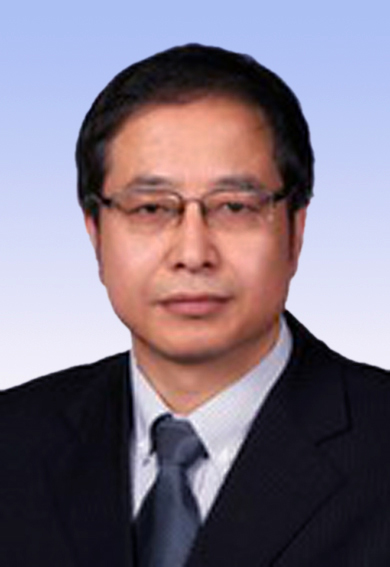
Professor Mou Bozhong is a full Professor and Doctoral Supervisor at the School of Chemistry and Molecular Engineering, East China University of Science and Technology (ECUST) . He serves as Director of the Engineering Research Center for Biorecovery, Ministry of Education and heads the Institute of Applied Chemistry . Recognized as a Foreign Academician of the Russian Academy of Engineering , he also sits on the editorial boards of five leading journals and is a member of key professional committees of the Chinese Chemical Society and Chinese Society of Microbiology. Education & Career Path B.Sc. (1982), Chengdu University of Technology M.Sc. (1989), China Coal Research Institute (Xi’an) – Geodrilling Fluid Chemistry Laboratory Ph.D. (1998), Southwest Petroleum University – Applied Chemistry/Interfacial Chemistry Postdoctoral Research (1998–2000), Ocean University of Qingdao Visiting Scholar, University of Wyoming, USA – Microbial Enhanced Oil Recovery (MEOR) Joined ECUST as Full Professor (January 2001–present) Research Interests Professor Mu’s interdisciplinary research integrates microbiology, interfacial chemistry, and petroleum engineering . He investigates microbial life in extreme reservoir environments , focusing on: Structure and function of biosurfactants and bio-based surfactants Anaerobic biodegradation pathways of petroleum hydrocarbons and associated biomarkers Microbial community dynamics in high-temperature, high-pressure reservoirs CO₂ biotransformation and biofixation by reservoir microorganisms for CCUS applications Microbially influenced corrosion (MIC) and mitigation strategies in oilfield systems Publication & Patent Trends His 200+ SCI-indexed articles and 50+ invention patents (32 authorized) reveal a trajectory from fundamental molecular simulation of lipopeptide surfactants to large-scale field demonstrations of MEOR and CO₂-EOR technologies. Notable themes include in-situ microbial community engineering, metabolic pathway reconstruction via multi-omics, and development of eco-friendly surfactants for enhanced energy recovery . Scientific Awards & Honors Foreign Academician, Russian Academy of Engineering Second Prize, National Science and Technology Progress Award (2010) First Prize, Shanghai Science and Technology Progress Award (2008) First Prize, China Industry-University-Research Cooperation Innovation Achievement Award Baosteel Outstanding Teacher Award National Teaching Achievement Award (Second Prize) Enjoys Special Government Allowance from the State Council Member, 11th & 12th Shanghai CPPCC Teaching & Mentoring Professor Mu delivers core undergraduate courses in Physical Chemistry and graduate courses in Biophysical Chemistry and Energy Biotechnology . He pioneered the nation’s first bilingual Physical Chemistry demonstration course and mentors students in chemistry, microbiology, and bioengineering, actively recruiting Ph.D. and Master’s candidates. Laboratory & Teams His laboratories (Room 225, Laboratory Building 3) house the Engineering Research Center for Microbial Enhanced Oil Recovery , equipped for molecular microbiology, interfacial chemistry, and pilot-scale bioprocess testing. The group collaborates with PetroChina, SINOPEC, and international partners to translate fundamental discoveries into field applications.
Dr. Vicente Valero is a Professor and Deputy Chairman in the Department of Breast Medical Oncology at The University of Texas MD Anderson Cancer Center. He has been affiliated with MD Anderson since 1991, with expertise in breast cancer, particularly inflammatory breast cancer (IBC) and HER2-positive cancers. His academic credentials include an M.D. from Universidad Autonoma de Nuevo Leon, followed by postgraduate training in Internal Medicine at St. Elizabeth Hospital and Northeastern Ohio University College of Medicine, and fellowships in Hematology-Medical Oncology at the University of Cincinnati and The University of Texas Medical Branch in Galveston. Board-certified in Internal Medicine, Medical Oncology, and Hematology, Dr. Valero is a leading researcher in neoadjuvant therapies, molecular residual disease, and IBC treatment protocols. His research focuses on improving outcomes for metastatic breast cancer patients, optimizing surgical de-escalation strategies, and advancing immunotherapy and targeted therapies. He leads multiple clinical trials, including NRG-BR004 and NRG-BR003, and has authored over 150 peer-reviewed articles. Dr. Valero is recognized for his dedication to education, having received the Division of Medicine Teacher of the Year award twice and the Educator of the Month honor. He actively contributes to multidisciplinary quality assurance conferences and serves as a primary investigator for several funded research protocols. Key achievements include developing the R-IBC residual tumor burden calculator and pioneering studies on eliminating breast surgery for exceptional responders to systemic therapy. His work emphasizes translating research into clinical practice to enhance early detection, prevention, and treatment efficacy in breast cancer.
Vincent Vargas is a French mathematician and Associate Professor at the University of Geneva, where he joined in 2021 after holding a research position at CNRS. He completed his PhD in mathematics at Paris-Diderot University under the supervision of Francis Comets. His primary research interests include: Probability Mathematical Physics Statistical Mechanics Quantum Field Theory Gaussian Multiplicative Chaos Liouville Quantum Gravity Vargas has made significant contributions to the rigorous probabilistic construction of Liouville field theory and the proof of the DOZZ formula, work that was featured in Quanta Magazine. His research bridges mathematics and theoretical physics through probabilistic methods applied to quantum gravity. Analysis of his recent publications reveals a strong focus on mathematical structures underlying conformal field theory, with particular attention to Liouville quantum gravity across various geometries and the connections between probability and quantum physics. His notable scientific achievements have been recognized with prestigious awards: Marc Yor Prize (2019) George Pólya Prize (2022) Vincent Vargas has mentored several PhD students including Romain Allez, Yichao Huang, Guillaume Rémy, and Tunan Zhu. He has been actively involved in the academic community through organizing conferences and workshops, including a trimester at the Institut Henri Poincaré in 2015 and a conference on 'Probability and quantum field theory' in 2019. His professional activities extend to industry applications through his previous consultancy with Capital Fund Management (2007-2013) and his current role on the board of their research foundation.
Aleksandar Mijatović is a Professor of Probability at the Department of Statistics, University of Warwick, and Deputy Head of Department for Research. He was previously Chair in Probability at King's College London and Reader in Probability at Imperial College London. His research focuses on probability theory, stochastic processes, mathematical finance, numerical stochastics, and data science. He holds a Ph.D. in low-dimensional topology from Trinity College Cambridge and worked as a quantitative analyst in foreign exchange derivatives before academia. Research interests include stochastic analysis of processes with jumps, simulation methods (e.g., Monte Carlo), stochastic control, and applications in finance. He is a Fellow of the Alan Turing Institute and maintains a YouTube channel, Prob-AM, explaining his research. His work often bridges theoretical probability with practical applications in finance and data science. Key publications explore topics like reflected Brownian motion, Lévy processes, branching processes, and stochastic gradient descent. Collaborations with institutions like King’s College London and Imperial College London highlight his academic networks. His contributions span theoretical advancements and computational methodologies, with applications in risk management, option pricing, and algorithm development.
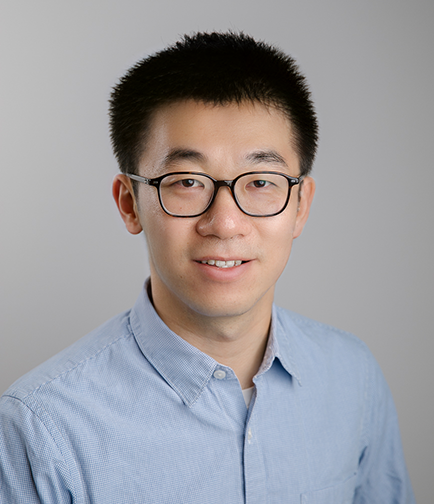
Dr. Dong Gong is a Senior Lecturer and ARC DECRA Fellow (2023-2026) at the School of Computer Science and Engineering (CSE), UNSW. He holds an adjunct position at the Australian Institute for Machine Learning (AIML), University of Adelaide. His research focuses on machine learning challenges in dynamic environments, including continual learning, foundation models, generative models, and applications in interdisciplinary areas like mining and agriculture. Research interests include learning with non-ideal supervision, foundation model adaptation, generative models, and interdisciplinary problems combining CV/ML with domain-specific applications. His work often addresses real-world scenarios such as mineral exploration and soil trait analysis using CV/ML technologies. Outstanding Reviewer: NeurIPS 2018 Outstanding Area Chair: ACM MM 2024 ARC DECRA Fellowship (2023-2026) Advising and grants: Actively supervises PhD/MPhil students in computer vision and ML. Collaborates with industry and government on research projects. Utilizes advanced infrastructure like UNSW's Katana supercomputing cluster and Gadi (NCI). Labs/Teams: Involved in interdisciplinary research groups at UNSW CSE and AIML, focusing on dynamic learning paradigms and real-world applications of AI.