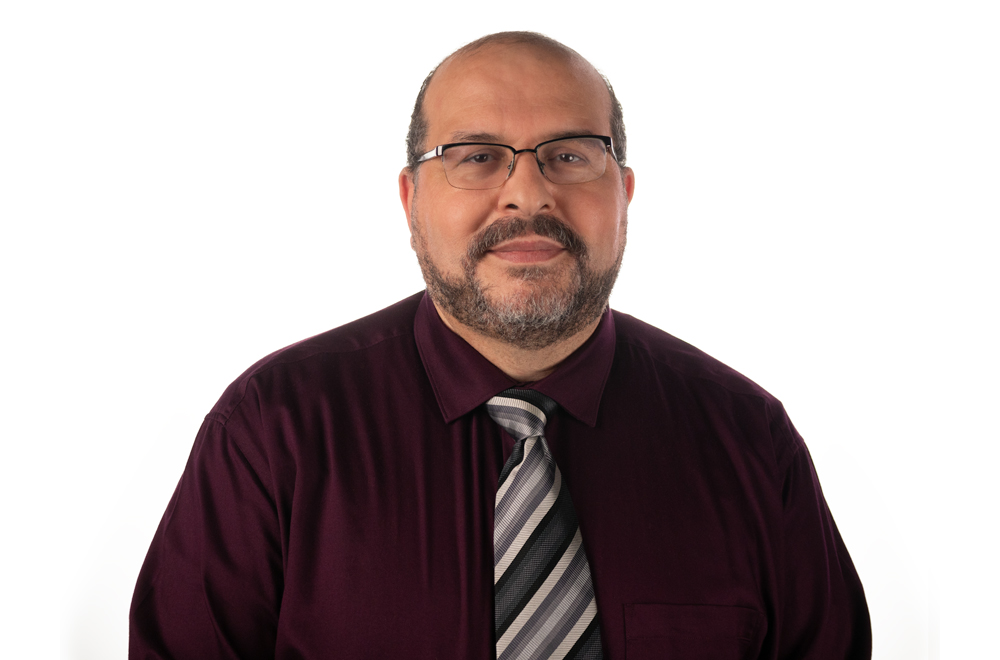
Viola PriesemannView profile
Professor
Viola Priesemann is a Professor of Theoretical Neural Systems at the University of Göttingen and leads a research group at the Max Planck Institute for Dynamics and Self-Organization. She is also an External Faculty member of the Complexity Science Hub and a board member of the Campus Institute for Data Science. Her work bridges physics, neuroscience, and societal dynamics. Education: PhD in Physics, University of Frankfurt (2013) Diploma (Master) in Physics, Technical University Darmstadt (2008) Research at Caltech, MPI for Brain Research, FIAS Summer School, Marine Biological Laboratory, Woods Hole Her research focuses on collective information processing in neural and social networks, aiming to uncover universal principles of self-organization and learning. She applies statistical physics and information theory to understand how intelligence emerges in adaptive systems, from brains to societies. During the COVID-19 pandemic, she became a leading voice in modeling infection dynamics and advising public policy, serving on the German government’s Corona Expert Council. Her recent work explores predictive coding, curiosity, and the neural basis of cognition. Her publications reveal a strong trend toward interdisciplinary modeling, combining epidemiology, neuroscience, and social dynamics. She frequently employs Bayesian inference, dynamical systems theory, and computational simulations to analyze complex phenomena across scales. Scientific Awards: Communitas Award, Max-Planck-Society Wissenschaftspreis Niedersachsen Medaille für naturwissenschaftliche Publizistik, DPG Dannie-Heineman-Award Arthur-Burkhardt-Preis Lise-Meitner-Lecture Young Scientist Award for Socio- and Econophysics She actively mentors students and leads a vibrant research group investigating curiosity, neural dynamics, and societal information spread. She has secured significant research funding, including a German-Israel Foundation Young Investigator Grant and leadership in the Physics to Medicine Initiative. Her lab collaborates internationally and is involved in major centers such as the Max Planck–University of Toronto Centre for Neural Science and Technology. She leads the Collective Information Processing group at MPI-DS, which investigates self-organization in living systems, with projects spanning neural networks, AI, and social dynamics. The lab fosters interdisciplinary collaboration and open science, with code and models publicly available.