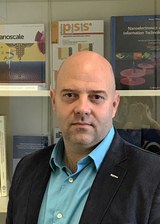
John E. DesmondView profile
Professor
John E. Desmond, Ph.D. , is a Professor of Neurology at the Johns Hopkins University School of Medicine , where he serves as the Director of the Neuroimaging and Modulation Lab (NIMLAB) within the Department of Neurology and the Division of Cognitive Neuroscience . His research integrates advanced neuroimaging and neuromodulation techniques to explore the neural basis of cognition. Education: Ph.D. in Psychology , University of Massachusetts, Amherst (1985) M.S. in Psychology , University of Massachusetts, Amherst (1982) B.A. in Psychology, Summa Cum Laude , University of South Florida, Tampa (1978) Research Interests: Dr. Desmond’s research lies at the intersection of cognitive neuroscience and neuroimaging. He investigates: The role of the cerebellum and cerebro-cerebellar circuits in cognition, particularly in verbal working memory . The impact of chronic alcohol consumption on brain structure, functional connectivity, and cognition. Aging effects on associative learning and neural systems involved in awareness, focusing on classical eyeblink conditioning and parietal lobe function. The integration of transcranial magnetic stimulation (TMS) with functional MRI (fMRI) to study brain connectivity and causal neural relationships. His work has significantly advanced understanding of non-motor cerebellar functions and the neural mechanisms underlying cognitive disorders. Publication Trends: His recent publications (2019–2024) reflect a sustained focus on cerebellar contributions to cognition , with increasing emphasis on alcohol use disorders, aging, internet gaming disorder, and neuromodulation (TMS/tDCS) . The integration of fMRI with stimulation techniques remains a central methodological theme. His work frequently appears in high-impact journals such as Cerebral Cortex , Human Brain Mapping , and Alcoholism: Clinical and Experimental Research . Scientific Awards: No specific awards mentioned in the provided text. Advising and Grants: Dr. Desmond mentors numerous graduate students and researchers, as evidenced by consistent co-authorship on publications. His lab, NIMLAB, is actively funded and produces high-impact research in cognitive neuroscience, neuroimaging, and addiction science. He collaborates with researchers across institutions and disciplines, particularly in studies involving fetal alcohol spectrum disorders and neuromodulation. Labs and Teams: He leads the Neuroimaging and Modulation Lab (NIMLAB) , which specializes in fMRI and TMS methodologies. The lab investigates brain function in health and disease, with a focus on cerebellar networks, cognitive control, and the effects of substance use and aging. NIMLAB is affiliated with the Kennedy Krieger Institute and the Kirby Center for Functional Brain Imaging , enabling access to advanced neuroimaging resources.