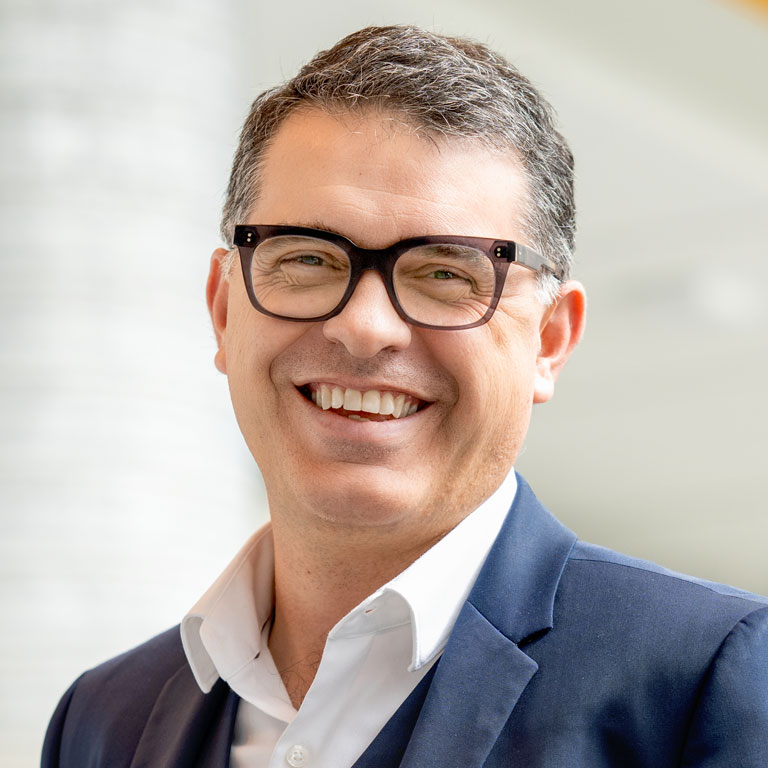
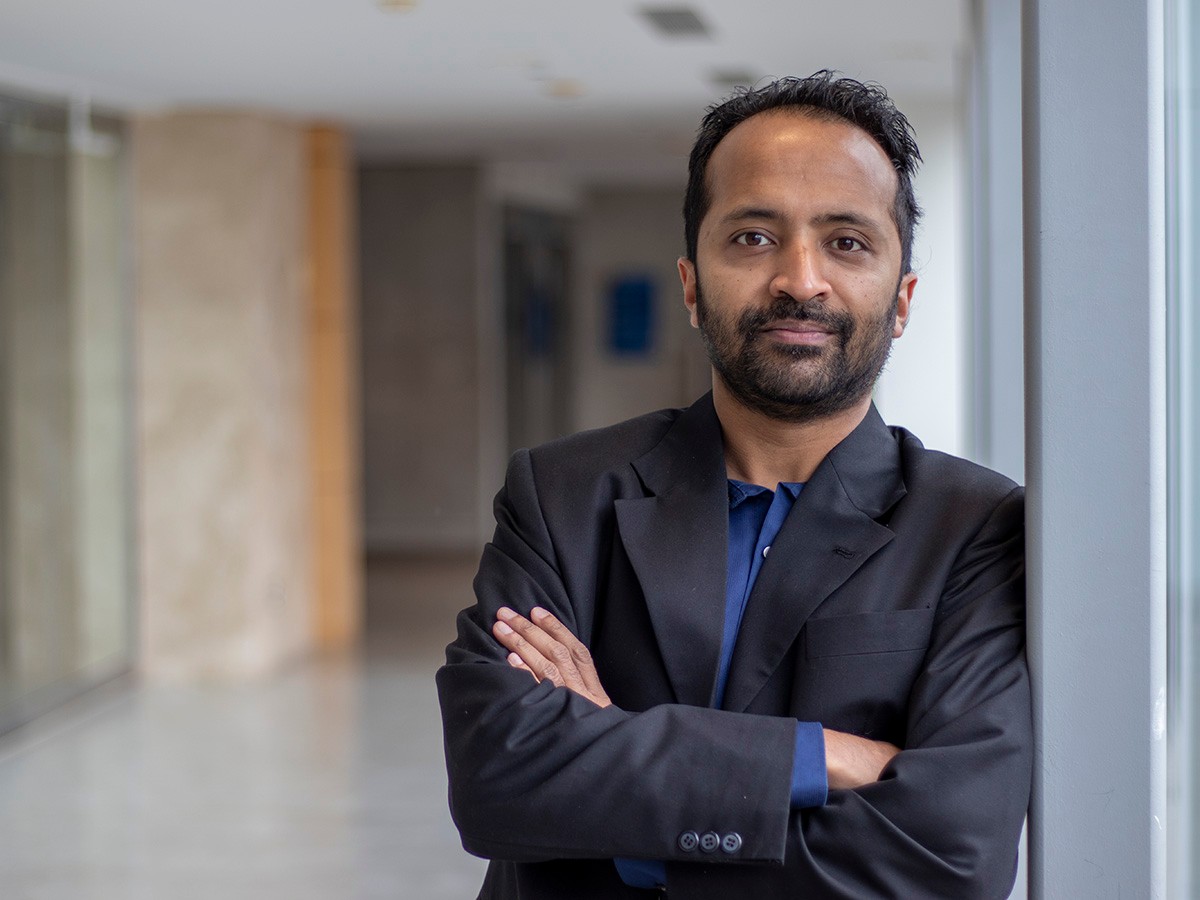
Guillaume Dumas is a Professor at the Faculté de médecine of Université de Montréal, specializing in computational psychiatry and social neuroscience. He leads the Laboratoire de Psychiatrie de Précision et de Physiologie Sociale at the CHU Sainte-Justine Research Center. His work bridges neuroscience, AI, and clinical practice, focusing on social cognition, brain synchronization, and neurodevelopmental disorders. Education includes a PhD in Cognitive Neuroscience from Sorbonne Université and an HDR in Clinical Neurosciences from Université de Paris. He has held roles at Institut Pasteur and Florida Atlantic University. Research interests span computational psychiatry, interbrain connectivity, and AI-driven diagnostic tools. Notable projects include the SCALE initiative studying autism across levels and InterBrain Synchronization mechanisms. His lab develops serious games for clinical assessment and biomarker discovery. Recipient of FRQS J1/J2 awards, IVADO affiliation, and grants from CIHR and FRQNT. Supervised 7 Master’s students recently, focusing on EEG, genomic variants, and AI models.
Dr. Vincent Taschereau-Dumouchel is an Associate Professor in the Department of Psychiatry and Addictology at the Faculty of Medicine, University of Montreal. His research focuses on integrating real-time neuroimaging with machine learning to develop novel interventions in mental health, particularly targeting anxiety and fear-related disorders. He pioneered the use of decoded neurofeedback (DecNef), a method combining machine learning with fMRI to enable voluntary control over specific brain activity patterns. His work explores the neural basis of emotional experiences, aiming to create personalized mental health treatments through closed-loop systems. Key affiliations include the Centre de recherche de l'Institut universitaire en santé mentale de Montréal (CR-IUSMM) and the UNIQUE initiative, a Quebec-based neuroscience-AI collaboration. Taschereau-Dumouchel leads grants from agencies like FRQNT, CRSNG, and FRSQ, focusing on AI-driven brain activity modulation and mental health innovation. Research highlights include studies on fear dissociation mechanisms, anhedonia in anxiety, and the development of neurofeedback tools for PTSD and specific phobias. He actively collaborates with institutions like CIUSSS de l'Est-de-l'Île-de-Montréal and has supervised students such as Shawn Manuel in applying AI to predict psychiatric symptoms through individual differences analysis. His lab's innovations include a real-time fMRI platform (CLIP), generative AI for neuroimaging feedback, and longitudinal biopsychosocial studies of psychiatric emergencies (Signature Biobank). Taschereau-Dumouchel maintains an active presence in academic networks, bridging clinical psychiatry with cutting-edge neurotechnology.
Professor Jennifer Chandler is a Professor of Law at the Centre for Health Law, Policy and Ethics and is cross-appointed to the Faculty of Medicine at the University of Ottawa, Canada. She holds the Bertram Loeb Research Chair and serves as Vice-Dean of Research for the Faculty of Law. Additionally, she is an Affiliate Investigator at the Bruyère Research Institute in Ottawa. Professor Chandler leads interdisciplinary research at the intersection of law, ethics, neuroscience, and biomedical technologies, with particular focus on neuroethics and organ donation/transplantation policy. Professor Chandler's research spans several critical areas in bioethics and health law. Her work examines the legal and ethical implications of emerging neurotechnologies, including brain-computer interfaces, deep brain stimulation, and cognitive enhancement technologies. She investigates how these technologies challenge existing legal frameworks related to privacy, autonomy, and personhood. In the realm of organ donation and transplantation, she explores ethical and legal issues surrounding death determination, organ allocation policies, and innovative donation procedures. Her scholarship also addresses mental health law, medical assistance in dying, and the application of biomedical technologies in criminal justice contexts. Professor Chandler's recent publications reveal a strong focus on the ethical, legal, and social implications of neurotechnologies. Her work increasingly examines how artificial intelligence intersects with neural interfaces, the legal conceptualization of human-technology integration, and the protection of cognitive liberties. She has made significant contributions to understanding the regulatory frameworks needed for emerging neurotechnologies and has been instrumental in shaping policy discussions around brain-computer interfaces and neurosurgical interventions for psychiatric conditions. Her interdisciplinary approach combines legal scholarship with insights from neuroscience, philosophy, and social sciences to address complex bioethical challenges. 2024 Steven E. Hyman Award for Distinguished Service to the Field of Neuroethics from the International Neuroethics Society Bertram Loeb Research Chair at the University of Ottawa Professor Chandler actively mentors graduate students and postdoctoral fellows working at the intersection of law, neuroscience, and biomedical ethics. She supervises research on topics including the legal conceptualization of advanced prostheses, lived experiences of brain-computer interface users, and ethical implications of neurotechnology. Her research is supported by multiple grants, including ERA-NET Neuron/CIHR funding for the "Hybrid Minds" project investigating intelligent neuroprostheses. She leads the Bertram Loeb Organ & Tissue Donation Institute research stream and participates in numerous policy initiatives including the Canadian Society of Transplantation Ethics Committee and the Pan Canada Neurotechnology Ethics Collaboration. Professor Chandler directs several major research projects including "Hybrid Minds: Experiential, Ethical and Legal Investigation of Intelligent Neuroprostheses," "The Laws of Neurosurgery for Psychiatric Disorders," and studies on Ulysses contracts related to deep brain stimulation. She also leads important work on organ donation after cardiac death, premortem interventions in donation, and the neurophysiology of the dying process. Her collaborative approach brings together clinical experts, policy-makers, and diverse scholars from multiple disciplines to address complex bioethical challenges.
Pierre-Majorique Léger is a Full Professor at the Department of Information Technology , HEC Montréal. He serves as Director of the ERPsim Laboratory , Co-Director of Tech3Lab , and holds the Chair in User Experience IVADO . His research focuses on User Experience (UX) , Human-Computer Interaction , Human-Centered AI , NeuroIS , and Serious Games for Learning . M.Sc.A. (Industrial Engineering), Polytechnique Montréal Ph.D. (Electrical Engineering), Polytechnique Montréal Postdoctoral Fellowship (Information Technology), HEC Montréal His research interests combine neuroscience with information systems, examining: Cognitive load measurement in digital environments Human-AI collaboration dynamics Neuroadaptive interfaces User behavior in e-commerce Technostress mitigation UX evaluation in VR/AR Recent research trends show: Systematic reviews on AI ethics in industry/education Neurophysiological studies using EEG/fNIRS Experiments on multimodal interfaces Gamification effectiveness analysis Scientific Awards : IVADO Chair in User Experience Grand Prix de recherche (2024) Multiple best paper nominations (2020-2022) Advising & Grants : Directed 3 PhD theses and 74 MSc theses (2020-2025) Secured funding for ERPsim Lab's $2M research grant Collaborated with Tech3Lab on international projects Laboratories : Co-Director, Tech3Lab Director, ERPsim Laboratory IVADO-affiliated researcher
Eli Kinney-Lang serves as an Azrieli Accelerator Professor within the Department of Biomedical Engineering at the Schulich School of Engineering, University of Calgary. They also hold appointments as Engineering Core Director and Child Health and Wellness Researcher at the Alberta Children's Hospital Research Institute, Owerko Centre. Their primary research focus is developing inclusive brain-computer interface systems for pediatric applications. Educational background: PhD in Digital Signal Processing (Brain-computer Interfaces), University of Edinburgh, UK BSc in Mathematics, University of Wyoming, USA Kinney-Lang's research specializes in Pediatric Brain-Computer Interfaces, addressing the critical gap in BCI technology for children with complex needs. They investigate adaptations across the entire BCI pipeline - from signal acquisition and processing to machine learning classification and feedback - ensuring inclusivity for diverse pediatric populations. This work bridges biomedical engineering, child health, and assistive technology development. They participate in multiple university strategic initiatives including Brain and Mental Health (2015-2021), Child Health and Wellness (2020-2025), Engineering Solutions for Health (2015-2021), and Human Dynamics in a Changing World (2015-2021). Award: Azrieli Accelerator Professorship in Inclusive Engineering Technologies for Neurodevelopment Kinney-Lang directs the BCI4Kids initiative, which develops brain-computer interface technologies specifically for children. Their work integrates engineering solutions with child health research to create accessible neurotechnology, supported by their dual affiliations with the university's engineering school and children's hospital research institute.
Naimul Khan is an Associate Professor and Associate Chair in Graduate Studies at Toronto Metropolitan University's Department of Electrical, Computer, and Biomedical Engineering. His research focuses on practical applications of machine learning, medical imaging, computer vision, and augmented/virtual reality technologies to solve real-world healthcare and multimedia challenges. PhD (Toronto Metropolitan University, 2014) MSc (University of Windsor, 2010) BSc (Bangladesh University of Engineering and Technology, 2008) His research interests span medical imaging automation, virtual reality systems for healthcare applications, and machine learning techniques for biomedical signal processing. He has developed innovative algorithms for ultrasound analysis, emotion recognition systems using EEG data, and segmentation approaches for diabetic foot ulcers. Publications demonstrate consistent focus on practical implementations across computer vision, medical diagnostics, and extended reality (XR) technologies. Scientific contributions include a Best Paper Award at the IEEE International Symposium on Multimedia (2017) and prestigious postdoctoral and graduate scholarships. He actively collaborates with industry partners through the TMU Multimedia Research Laboratory, teaching graduate courses like ELE 725 (Basics of Multimedia Systems) and COE 318 (Software Systems). Best Paper Award, IEEE International Symposium on Multimedia (2017) OCE TalentEdge Postdoctoral Fellowship (2014-2016) Ontario Graduate Scholarship (2013-2014) Queen Elizabeth II Scholarship in Science & Technology (2012-2013) As co-director of the TMU Multimedia Research Laboratory, Khan bridges academic research with industry applications through practical implementations of machine learning and extended reality technologies in healthcare domains.