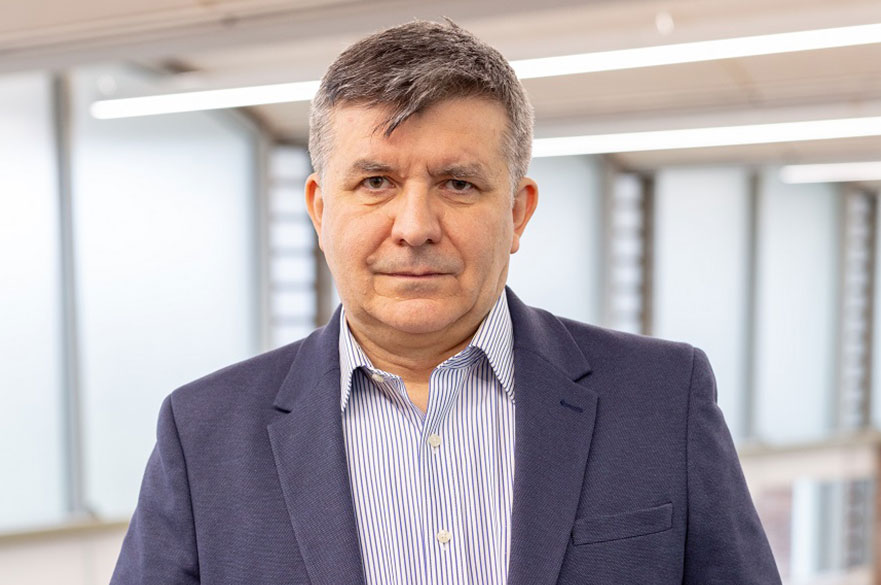
Magdalena Wróbel-Lachowska is a researcher at the Institute of Applied Computer Science within Łódź University of Technology's Faculty of Electrical, Electronic, Computer and Control Engineering. Her interdisciplinary work bridges human-computer interaction, ergonomics, and industrial logistics. Research domains include: Wearable technology for health monitoring and sensory augmentation Ergonomic workplace design and assessment methodologies HCI innovations for neurodiverse populations Logistics education in Industry 4.0 contexts Recent publications demonstrate: Expanding focus on health technologies (2021-2023) Sustained engagement with ergonomic principles Consistent interdisciplinary approach across domains Laboratory work involves developing interactive systems and sensor technologies with applications in healthcare, accessibility, and industrial settings.
Dr. Paul von Bünau serves as Managing Director (CEO) of IDALab, a strategic advisory firm focused on artificial intelligence in healthcare and biotechnology. He concurrently holds an adjunct academic role at Europa-Universität Viadrina Frankfurt (Oder), where he teaches courses on AI strategy and regulatory compliance in healthcare. His educational background includes a PhD in Machine Learning (TU Berlin), M.Sc. in Pure Mathematics (University of St Andrews), and B.Sc. in Computer Science (University of Potsdam). **Professional Background**: Paul provides strategic AI guidance to multinational healthcare companies, biotech startups, and medical device manufacturers. Key engagements include building AI innovation units for a medtech company, accelerating drug discovery through AI-driven R&D, and developing AI tools for healthcare market access under EU regulations. His approach emphasizes aligning technical solutions with organizational needs and regulatory landscapes. **Research & Teaching**: At Viadrina, he delivers seminars on AI strategy (2024) and regulatory compliance in healthcare AI (2025). His research focuses on non-stationary data analysis, clinical data harmonization, and AI applications in neuroscience. Recent work includes a validated clinical data pipeline for scalable AI deployment (JMIR Medical Informatics, 2023) and algorithms for stationary subspace analysis (Physical Review Letters, 2009). **Key Takeaways from Projects**: Companies with strong engineering cultures often underestimate the cultural and structural changes required for AI integration. Rapid prototyping, talent alignment, and cross-disciplinary teams (e.g., AI + healthcare experts) are critical for success. His work highlights the transformative potential of AI in healthcare while emphasizing ethical and regulatory considerations.
Cory Gloeckner is an Assistant Professor in the Department of Physics and Engineering at John Carroll University (JCU). Previously, he served as an instructor in neural engineering at the University of Minnesota and as an Assistant Professor of Mechanical Engineering at the University of Minnesota Duluth. His expertise spans engineering disciplines, physics, and theology. He holds a Ph.D. in Biomedical Engineering from the University of Minnesota, a B.S. in Chemical Engineering from the University of Cincinnati, a Ph.D. in Theology from the University of Pretoria, and an M.A. in Theology from Saint Leo University. His research focuses on Brain-Computer Interface (BCI) systems, leveraging neuroscience, electrical engineering, biomedical engineering, and signal processing to enable non-invasive control of external devices. He also explores evidence-based theological approaches and ethics, intersecting with science and engineering. Cory teaches courses in Engineering Physics, emphasizing liberal arts integration with natural sciences and engineering. No scientific awards or grants are explicitly mentioned in the provided text. His academic journey reflects a unique blend of engineering and theological studies, contributing to interdisciplinary research and education.
Yih-Choung Yu is an Associate Professor and Acting Department Head of Electrical and Computer Engineering at Lafayette College. He holds a Ph.D. in Electrical Engineering from the University of Pittsburgh, an M.S. from SUNY Binghamton, and a B.S. from Chinese Culture University. His research focuses on interdisciplinary applications of control systems in bioengineering, including cardiovascular modeling, brain-computer interfaces (BCI), and medical device development. He has pioneered work in dyslexia classification using machine learning and BCI-based robotic navigation. Dr. Yu’s teaching philosophy emphasizes mentorship and student-driven projects, reflecting his third-generation teaching heritage. Notable honors include the B. Vincent Viscomi Engineering Prize for mentoring excellence. Education: Ph.D., Electrical Engineering, University of Pittsburgh M.S., Electrical Engineering, SUNY Binghamton B.S., Electrical Engineering, Chinese Culture University His work bridges electrical engineering with healthcare, addressing challenges in cardiac function monitoring, assistive robotics, and neurodevelopmental diagnostics. Recent projects include developing affordable BCI systems for robotic navigation and non-invasive cardiac monitoring algorithms. Dr. Yu collaborates with Easton Area High School to promote engineering education and mentors students in Lafayette’s robotics initiatives. Publications highlight innovations in cardiovascular modeling (e.g., rotary blood pump interactions), BCI applications (quadcopter control, dyslexia classification), and biomedical signal processing. His research trends emphasize interdisciplinary problem-solving, leveraging control theory and machine learning to advance healthcare technologies. Awards: B. Vincent Viscomi Engineering Prize for Excellence in Mentoring and Teaching Dr. Yu’s advising style emphasizes building student confidence and fostering creativity, with many projects arising from independent studies and collaborations. Grants and funding support his work in assistive technology and bioengineering. He leads Lafayette’s efforts in regional STEM outreach, connecting undergraduates with high school students through robotics teams and educational partnerships. Active in Lafayette’s Engineering Division, he oversees facilities and curriculum development, maintaining ABET accreditation. His lab focuses on cardiovascular system modeling, BCI development, and educational robotics, with ongoing projects in dyslexia biomarkers and low-cost medical devices.
Loknath Sai Ambati serves as the Ronnie K. Irani Data Analytics Assistant Professor for Data Analytics and Artificial Intelligence within the Department of Data Analytics & Economics at Oklahoma City University's School of Business. His academic foundation includes a Ph.D. in Information Systems specialized in Artificial Intelligence, an M.S. in Data Analytics, and a B.Tech. in Electronics and Communication Engineering. His research portfolio spans critical domains including Health Information Technology, Population Health, Health Informatics, Social Media Mining, and Data Analytics. Ambati focuses on integrating AI and analytics to solve healthcare challenges, particularly in telemedicine security, IoT healthcare systems, and population health management. His work consistently addresses data privacy, security frameworks, and the societal implications of digital health technologies. Analysis of his 15 most recent publications (2022-2025) reveals a dominant focus on healthcare technology convergence. Key thematic clusters include blockchain-enhanced telemedicine security (4 articles), AI-driven IoT healthcare systems (3 articles), and social media mining for public health insights (2 articles). Secondary themes encompass network security protocols, biomechanics applications, and gender bias analysis in digital marketplaces, demonstrating interdisciplinary rigor across computer science, healthcare, and social informatics. Scientific recognition includes publication in high-impact venues such as BMC Medical Informatics and Decision Making, Journal of Intelligent and Fuzzy Systems, and IEEE Transactions. His peer review contributions span over 25 prestigious outlets including IEEE Transactions on Industrial Informatics, International Journal of Environmental Research and Public Health, and HICSS. Ambati maintains active academic service as a referee for major conferences (AMCIS, HICSS) and journals across computing and healthcare domains. His departmental role emphasizes bridging theoretical data analytics with practical business applications, particularly in healthcare innovation. No laboratory or team affiliations were specified in source materials.
Dr. Kat Agres is an Assistant Professor in Contextual Studies – Music Cognition at the Yong Siew Toh Conservatory of Music, National University of Singapore, and a Research Scientist & founder of the Music Cognition group at A*STAR’s Institute of High Performance Computing (IHPC). Her work bridges cognitive science, music technology, and healthcare, focusing on music perception, computational creativity, and music-based MedTech solutions for health and well-being. She holds a PhD in Experimental Psychology from Cornell University and conducted postdoctoral research at Queen Mary University of London, supported by an EU grant. Her research explores auditory statistical learning, music-brain interfaces (BCIs), and the therapeutic applications of music for special populations. Key grants include NIH and NIMH fellowships. Agres actively collaborates across disciplines, presenting globally and publishing in journals like Cognitive Science and Neural Computing and Applications . Beyond academia, she is a cellist with professional orchestral experience and integrates jazz and rock performance into her creative practice. Educational Background PhD in Experimental Psychology, Cornell University (with minor in Cognitive Science) Bachelor’s in Cognitive Psychology & Cello Performance, Carnegie Mellon University Postdoctoral Fellowship, Queen Mary University of London Research Interests Music cognition mechanisms (e.g., memory, expectation) Computational models of creativity and emotion in music Music technology for healthcare (e.g., stroke rehabilitation, dementia therapy) Music’s role in mental health and social connection Grants & Awards Fellowship from the National Institute of Health (NIH) Fellowship from the National Institute of Mental Health (NIMH) Labs & Teams Founder of the Music Cognition group at IHPC/A*STAR
Jan Ehlers is affiliated with the Faculty of Health at Witten/Herdecke University. His research focuses on Human-Computer Interaction (HCI), Cognitive Science, Eye Tracking, and Biomedical Engineering. He has collaborated extensively with institutions like Bauhaus University Weimar and Ulm University. Key research interests include developing assistive technologies for mental workload assessment, designing interfaces for special needs populations (e.g., dyscalculia training systems), and exploring novel input methods such as eye tracking, head gestures, and wearable devices. His work bridges cognitive science principles with engineering solutions. Recent publications (2023-2025) investigate pupil dynamics in noisy environments, social VR interaction for older adults, and automated decision-making in dating apps using biometric data. His methodologies often combine experimental psychology with advanced sensor technologies. Ehlers' contributions span over 15 peer-reviewed articles in venues like CHI, ETRA, and INTERACT. His interdisciplinary approach integrates neuroscience, engineering, and computer science to create user-centered solutions for real-world challenges.
Pattie Maes is a Professor affiliated with the Massachusetts Institute of Technology (MIT), known for pioneering work in human-computer interaction, wearable technology, and AI systems. Her research focuses on augmenting human capabilities through innovative interfaces and AI-driven solutions, emphasizing ethical and user-centered design. Her extensive academic contributions span over four decades, with publications in top-tier journals such as ACM Transactions on Computer-Human Interaction , Nature Machine Intelligence , and IEEE Transactions . She has collaborated with institutions globally, advancing fields like affective computing, virtual/augmented reality, and bio-integrated systems. Key research themes include: AI-generated companions and personalized learning systems Wearable devices for health monitoring and subconscious interaction Immersive technologies (VR/AR) for memory enhancement and social interaction Ethical implications of AI and human-AI collaboration Notable projects include: AttentivU: EEG-based learning engagement system ReLive: VR-based autobiographical memory tool Living Memories: AI-generated digital mementos Her work bridges computer science, cognitive science, and design, aiming to create technology that enhances human potential while addressing societal challenges like accessibility and mental well-being.
Professor Christopher James is Chair of Biomedical Engineering at the University of Warwick's School of Engineering, leading the Biomedical Engineering Institute. He holds roles as Editor-in-Chief of IET Healthcare Technology Letters and chairs IEEE UKRI Sections. With over 160 publications, his research focuses on neural engineering, BCI systems, and healthcare technology innovation. Educated at the University of Malta (B.Elec.Eng., 1992) and the University of Canterbury (Ph.D., 1997), he has held positions at Montreal Neurological Institute, Aston University, and the University of Southampton. His work emphasizes low-cost BCI solutions for locked-in syndrome patients and integrates wearable technologies for health monitoring. Key awards include the IET Sir Monty Finniston Medal (2013). He leads projects like the £2.4M AART-BC EPSRC grant (2015–2018), exploring assistive technology beyond clinical settings. His grants span biomedical signal processing, smart environments, and mental health monitoring through activity tracking. Prof James organizes the IEEE EMBS student conference series (PGBIOMED) and advises on IET healthcare initiatives. His work bridges engineering and medicine, advancing technologies for independent living and clinical care.
Ahmet Omurtag is a Senior Lecturer in the Department of Engineering at Nottingham Trent University's School of Science & Technology. He holds a Ph.D. in Mechanical Engineering from Columbia University and postdoctoral training in computational neuroscience. His research focuses on multimodal neuroimaging techniques (EEG and fNIRS) to study human performance, neurovascular coupling, and skill assessment in surgical contexts. He leads the Human Factors and Performance research group and oversees the Biomedical Engineering course. Dr. Omurtag's career includes roles at Bio-Signal Group (biomedical device development) and the University of Houston. He is a Chartered Scientist and Fellow of the Higher Education Academy. His work bridges academia and industry, with collaborations in neuroimaging applications for smart manufacturing and surgical training. He serves as an Associate Editor for a bioengineering journal and reviews grants for national funding bodies. Key research themes include: (1) EEG-fNIRS fusion for cognitive workload monitoring, (2) neurophysiological markers of skill acquisition in surgery, and (3) non-invasive diagnostic tools for Alzheimer's and neurological disorders. His >45 publications span neuroergonomics, medical device innovation, and emergency EEG interpretation.
Marc Fredette is a Professor in the Department of Decision Sciences at HEC Montréal. His roles include academic supervision of the Master of Science (MSc) - User Experience in a Business Context and the Short Graduate Program in User Experience. He is also a board member of Tech3Lab, a member of CIRRELT (Interuniversity Research Centre on Enterprise Networks, Logistics and Transportation), and GERAD (Group for Research in Decision Analysis). Education: M.Sc. in Statistics from Université de Montréal and Ph.D. in Statistics from the University of Waterloo. Research interests focus on longitudinal data analysis, biostatistics, Bayesian statistics, and random effects models. His work also explores human factors, UX design, and neuroIS applications, including studies on pedestrian safety, multitasking with IT systems, gamification, and neurophysiological correlates of collaborative tasks. Recent publications emphasize IT-related multitasking effects, gamification in workplaces, and neurophysiological studies of collaborative tasks. He has been recognized for contributions to UX evaluation methodologies and neuroIS research. Supervision includes 3 PhD dissertations and 7 MSc theses, along with 18 supervised projects on data analysis and business applications. His teaching includes courses on database analysis and project-based data analysis. Labs/Teams: Active in Tech3Lab, CIRRELT, and GERAD, focusing on interdisciplinary research in decision sciences and user experience innovation.
Prof. Alessandro Freddi is an Associate Professor at the Department of Information Engineering, Polytechnic University of Marche. His research focuses on advanced control systems, robotics, and human-machine interaction, with a strong emphasis on fault detection, autonomous systems, and assistive technologies. Key research areas include: Fault-tolerant control for UAVs and remotely operated vehicles Human-in-the-loop systems using EEG and brain-computer interfaces Smart wheelchair navigation and assistive robotics Data-driven approaches for industrial and robotic applications His recent work explores cognitive workload estimation, cybersecurity for autonomous systems, and real-time monitoring techniques. He has contributed to datasets like UAV-FD and pioneered cooperative robotic systems for assisted living environments.
Dylan Gaines is a Research Professor in the Department of Computer Science at Michigan Technological University (MTU), affiliated with the Institute of Computing and Cybersystems (ICC). He holds a PhD, MS, and BS in Computer Science from MTU (2023, 2021, 2019). His research focuses on Human-Computer Interaction (HCI), Natural Language Processing (NLP), and Accessible Computing, with an emphasis on Ambiguous Text Input and Brain-Computer Interfaces (BCI). He is a core member of the Consortium for Accessible Multimodal Brain-Body Interfaces (CAMBI), advancing assistive technologies for users with disabilities. Dr. Gaines has secured significant funding, including a $40K Michigan Tech Research Excellence Fund (2024) for Ambiguous Text Entry in BCI systems. His work has been recognized by awards such as the National Science Foundation Graduate Research Fellowship (2020). His research spans innovations in non-visual text entry, EEG-based interfaces, and improving accessibility through adaptive input systems. His recent articles explore multimodal typing interfaces combining EEG and switch input, character prediction with large language models, and perceptual studies for users with visual impairments. These contributions highlight his dedication to making computing more inclusive and efficient for diverse populations. Awards: NSF Graduate Research Fellowship (2020) Grants: Michigan Tech Research Excellence Fund (2024, PI) Labs/Teams: Consortium for Accessible Multimodal Brain-Body Interfaces (CAMBI)
Dr. Julien Cordry is a Senior Lecturer in the School of Computing at the University of Teesside, affiliated with the Department of Computing & Games and the Centre for Digital Innovation. He holds a PhD from CNAM in Paris (2009), focusing on smart card performance measurement. His research spans mobile and ubiquitous computing, embedded systems, cybersecurity, and formal methods. Education: PhD in Computer Science, CNAM, Paris (2009) Research Interests: Mobile and ubiquitous computing Security protocols and password policies Embedded systems performance optimization Virtual reality applications in healthcare education Research Trends: Focus on cybersecurity, including password composition policies and privacy-preserving techniques Development of mobile health applications for posture and pain monitoring Pioneering work on Java Card benchmarking tools and embedded systems evaluation Collaborations: Engages in interdisciplinary projects involving health informatics, game development, and neurotechnology through partnerships with institutions like the European Journal of Integrative Medicine and ACM. Labs/Teams: Active in the Centre for Digital Innovation, collaborating on projects blending technology with real-world applications in education, healthcare, and gaming.
Grace Leslie is an Associate Professor at the University of Colorado's ATLAS Institute and College of Music. Her work focuses on brain-music interfaces, combining neuroscience, music technology, and biofeedback systems. She holds a PhD in Music and Cognitive Science from UCSD and previously served as an Assistant Professor at Georgia Tech. Her research explores physiological sensors to reveal cognitive and affective states, with projects such as the Brain Music Lab and collaborations with institutions like MIT Media Lab and Dartmouth College. Education: PhD in Music and Cognitive Science (UCSD), Master's and Undergraduate in Music, Science, and Technology (Stanford University). Key Research Areas: Neurological music interfaces, affective computing, EEG-based systems, and music's role in therapy and cognition. Awards: NSF CAREER Award (2022). Publications: Over 20 peer-reviewed articles, including studies on emotional memory modulation and physiological arousal analysis. Projects: Brain-Body Music performance, MoodMixer neurofeedback system, and Gamma-Frequency Audio Neurostimulation for epilepsy therapy.