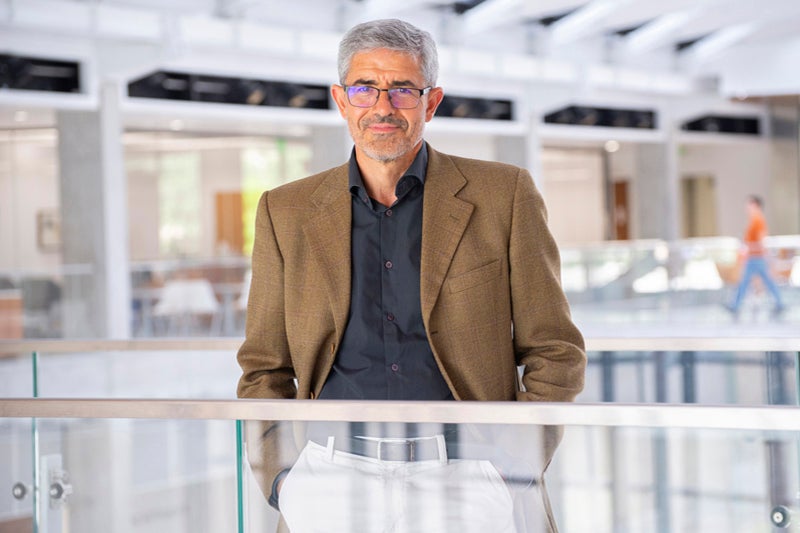
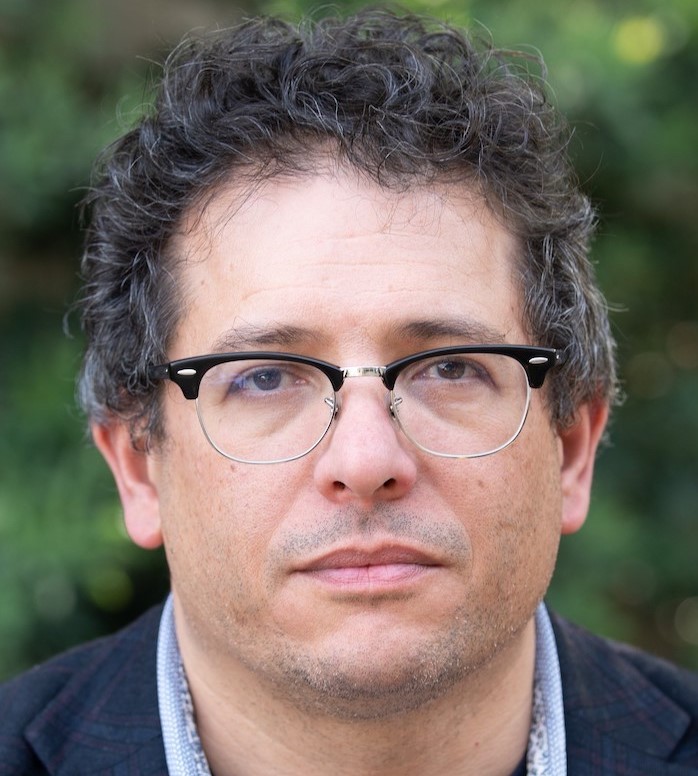
Byron Yu is a Professor in Electrical & Computer Engineering and Biomedical Engineering at Carnegie Mellon University, with affiliations to the Neuroscience Institute and Robotics Institute. He is a core faculty member of the Center for the Neural Basis of Cognition. Research focuses on computational neuroscience , neural dynamics , and brain-machine interfaces . Key contributions include dimensionality reduction techniques and neural population activity analysis. Recent publications explore topics such as neural dynamics during motor imagery, BCI optimization, and attentional processing. His work has appeared in Nature Neuroscience , Neuron , and eLife , often as cover articles. Awardees include the Gerard G. Elia Career Development Professorship and AIMBE Fellowship . His lab has mentored numerous PhD and postdoctoral researchers, many now in academic and industry leadership roles.
Steve Chase is a Professor at Carnegie Mellon University , affiliated with the Biomedical Engineering , Electrical and Computer Engineering , Neuroscience Institute , and Robotics Institute departments. His research spans Computational Neuroscience , Neural Engineering , and Systems Neuroscience , with a focus on neural circuits, motor control, and brain-computer interfaces (BCI). Research Areas: Sensation & Perception, Methods Development, Diseases & Disorders, Physiological & Anatomical Methods. Lab Highlights: Development of the RotaWheel, memory trace studies in the motor cortex, and investigations into BCI stabilization and learning dynamics. Scientific Contributions: His lab has published extensively in journals like Neuron , Nature Computational Science , eLife , and PNAS , with notable works on neural activity patterns, dimensionality reduction in calcium imaging, and sensory constraints on motor cortex modulation. Students and postdocs in his lab have received awards, including the CNBC best paper award.
Chang S. (CS) Nam is a Professor of Industrial and Systems Engineering at North Carolina State University, with affiliations in the UNC/NCSU Joint Department of Biomedical Engineering and the Department of Psychology. He holds editorial roles as Editor-in-Chief of Brain-Computer Interfaces journal and is a Fellow of the Human Factors and Ergonomics Society. His research focuses on advancing human-centered technologies through neuroergonomics, brain-computer interfaces (BCIs), and rehabilitation engineering, supported by grants from NSF, AFRL, AFOSR, and the Laboratory for Analytic Sciences. Education: Ph.D. in Industrial Engineering, Virginia Tech (2003) MSIE in Industrial Engineering, State University of New York at Buffalo (2000) Research Interests: His work spans neurorehabilitation, haptic interaction design, and BCI applications, aiming to bridge human cognitive and neural processes with technological systems. Key areas include adaptive human-computer interaction, EEG-based emotion recognition, and spatial augmented reality for skill training. Grants & Awards: Recipient of NSF CAREER Award (2010), Air Force Summer Faculty Fellowship (2018), and the Leland S. Kollmorgen Spirit of Innovation Award (2019) Editor of Brain-Computer Interfaces Handbook: Technological and Theoretical Advances (CRC Press) Advising & Labs: Advises students like Lingchao Mao and Priscille Koutouan Leads the Brain-Computer Interface and Neuroergonomics Lab, developing BCI systems for communication in vegetative states and neurorehabilitation
Dr. José del R. Millán is a Professor and holds the Linda Steen Norris & Lee Norris Endowed Chair in Neuroengineering at The University of Texas at Austin's Chandra Family Department of Electrical and Computer Engineering. He also serves as a Professor in Dell Medical School's Department of Neurology, a courtesy Professor in Biomedical Engineering, and is affiliated with the Mulva Clinic for the Neurosciences, Institute for Neuroscience, Texas Robotics, and the UT CARE Initiative. His work focuses on brain-machine interfaces (BMI), neuroprosthetics, and translating BMI technologies for individuals with motor/cognitive disabilities and able-bodied users. Education: PhD in Computer Science (1992, Technical University of Catalonia). Previous roles include Defitech Foundation Chair in Brain-Machine Interface at EPFL (Switzerland) and visiting scholar positions at Berkeley, Stanford, and the International Computer Science Institute. Research Interests: Neuroengineering, BMI applications in healthcare and assistive robotics, statistical machine learning for neural signals, and neurorehabilitation. Key contributions include EEG-based BMI systems, closed-loop neurostimulation, and wearable neurotechnology. Awards: IEEE Fellow (2017), Norbert Wiener Award (2011), and Fellow of the International Academy of Medical and Biological Engineering (2020). Grants & Labs: Co-director of UT CARE, leader in clinical neuroprosthetics and neurorobotics. Active in developing BMI-driven wheelchairs, VR integration for BCI, and EEG-based speech prosthetics. Research outputs emphasize translational neurotechnology, with projects funded by industry and governmental agencies. Labs/Teams: Clinical Neuroprosthetics & Brain Interaction Lab, Texas Robotics, Wireless Networking and Communications Group (WNCG).
Professor Kunal Mankodiya is a faculty member in the Department of Electrical, Computer and Biomedical Engineering at the University of Rhode Island. He holds the rank of Professor and is affiliated with the College of Engineering. His research focuses on wearable technologies, smart textiles, and medical IoT systems, with notable contributions in neural engineering and body sensor networks. Education Ph.D., University of Luebeck, Germany (2010) M.S., Biomedical Engineering, University of Luebeck, Germany (2007) B.S., Biomedical Engineering, Saurashtra University & C.U. Shah College (2003) Postdoctoral Researcher, Carnegie Mellon University (2011-2014) Postdoctoral Researcher, University of Pittsburgh (2011) Research Interests Mankodiya’s work emphasizes innovative wearable sensor systems for healthcare applications, including smart textiles for medical monitoring and IoT-enabled telemedicine solutions. His research integrates electrical engineering, biomedical engineering, and computer science to address challenges in neurological disorders, neonatal care, and movement disorders. Grants & Awards 2017 NSF CAREER Award 2017 40 under 40 Award, Providence Business News Lead PI on grants totaling over $5M, including NSF CAREER and NIH-funded projects Labs & Teams Mankodiya leads the Smart Wearable and IoT Lab at URI, focusing on interdisciplinary research in healthcare technology. His team collaborates with clinical partners on projects like neonatal monitoring systems and Parkinson’s disease tele-assessment tools.
Swati Aggarwal is a Professor in Artificial Intelligence at the Faculty of Logistics, Molde University College (HiMolde). Her research focuses on AI applications in healthcare, ethics, cognitive development, and neural networks. She holds a PhD in Neutrosophic Neural Networks, a Master's in Information Technology, and a Bachelor's in Computer Science and Engineering. Previously, she was a Marie Curie Postdoc Fellow at NTNU, working on AI models for cognitive assessment in infants (AIM_COACH project). Research Interests - AI in Health/Medicine - Ethics in AI and Societal Impact - EEG/BCI for Cognitive Assessment - Machine Learning and Deep Learning Publications Her recent work spans AI ethics, BCI applications, adversarial attacks, and healthcare diagnostics. Notable contributions include EEG-based infant perceptual monitoring (2025) and malaria detection via EfficientNet (2023). She also explores cross-lingual adversarial robustness and blockchain in hospitality systems. Labs/Teams - ABC-AI: Applied, Basic, and Conscientious AI Group - Virtual Technologies and Learning Research Group
Florian 'Floyd' Mueller is a Professor of Future Interfaces at Monash University in Melbourne, Australia, where he directs the award-winning Exertion Games Lab within the Department of Human-Centred Computing (ranked among the top 20 HCI departments globally). Previously, he held positions at RMIT University, Stanford, University of Melbourne, Microsoft Research, MIT Media Lab, Fuji-Xerox Palo Alto Labs, Xerox Parc, and Australia's CSIRO. Mueller is a member of the prestigious ACM SIGCHI Academy, an honorary group recognizing leaders who have made substantial contributions to Human-Computer Interaction (HCI). Professor Mueller's research focuses on the intersections between technology, the human body, and play. He originated the concept of "Exertion Interface," arguing that we should not just design "easy-to-use" interactions when "hard-to-use" interactions can also be beneficial. His work spans movement-based interactions, whole-body interfaces, uncomfortable interactions, somaesthetics, and exertion games. Mueller's research methodology often employs research through design, design ethnography, and autoethnography to explore these novel interaction paradigms, incorporating mixed-reality, augmented reality, virtual reality, electronic muscle stimulation, biosensors, wearables, and drones. His recent publications demonstrate a continued focus on bodily interactions and human-computer integration, with particular emphasis on emerging subfields like WaterHCI and SportsHCI, brain-computer interfaces, and gustosonic (taste and sound) experiences. Mueller's work has evolved from foundational exertion game concepts to more sophisticated explorations of human-computer integration where technology becomes seamlessly woven into the fabric of human experience. Professor Mueller's contributions have been widely recognized with numerous awards including: Inaugural honouree of the Australian Design Centre's Design Honours Tall Poppy award for "intellectual and scientific excellence" 10 "Best Paper Honorable Mentions" (top 5%) from premier HCI conferences 2 "Best Paper" awards (top 1%) at CHI PLAY and CHI Shortlisted for the European Innovation Games Award (alongside Nintendo's WiiFit) Nokia Mindtrek Ubimedia Award Mueller has successfully secured some of Australia's largest and most competitive research grants, achieving a remarkable 14% success rate on Australian Research Council Discovery Project applications. He has served as General co-Chair for CHI PLAY'18 and CHI'20, becoming the first Australian-based researcher to spearhead HCI's highest-ranked publication outlet, and is currently General co-Chair for CHI'24. He is Associate Editor for tier A journals including Elsevier's IJHCS (International Journal of Human-Computer Studies) and ACM's IMWUT (Interactive, Mobile, Wearable and Ubiquitous Technologies). As director of the Exertion Games Lab, Mueller leads a research team whose innovations have been experienced by over 20,000 users across 3 continents and featured on the BBC, ABC, Discovery Science Channel, and Wired magazine. The lab has produced groundbreaking work in bodily interfaces, co-founding the CHI PLAY conference series and establishing new research directions in SportsHCI and WaterHCI through recent "Grand Challenges" papers. Mueller's lab continues to push boundaries with projects exploring brain-to-brain interfaces, lucid dreaming induction, and novel gustosonic experiences.
Dr. Andrew Cornwell is an Adjunct Assistant Professor in the Department of Biomedical Engineering at Case Western Reserve University’s Case School of Engineering. He serves as the Associate Director of the Case-Coulter Translational Research Partnership (CCTRP) and Director of the Case-Cleveland Incubator in the Office of Strategic Partnerships. Additionally, he holds the role of Director for Industrial and Strategic Collaborations at the Cleveland FES Center, bridging academic research with industry and clinical applications across the School of Medicine and School of Engineering. Dr. Cornwell earned his PhD in Biomedical Engineering from Case Western Reserve University. His early research focused on brain recording and neurotechnology, later transitioning to advancing technology transfer and translational research strategies. His research interests center on neurotechnology, particularly functional electrical stimulation (FES) systems for rehabilitation and clinical applications. He specializes in accelerating the translation of academic innovations into practical healthcare solutions, focusing on aligning clinical needs, market demands, and research priorities. Key areas include neuroprosthetics, assistive technologies for paralysis, and strategic partnerships to enhance technology commercialization. Dr. Cornwell’s publications highlight advancements in neurotechnology, including studies on FES systems, brain-computer interfaces, and clinical assessment tools. His work from 2010–2013 emphasizes improving arm mobility for individuals with paralysis, while earlier research (e.g., 2004) explores neural network approaches to predict movements using electrocorticography (ECoG). While no scientific awards were listed in the provided information, his roles involve managing grants and strategic collaborations through the CCTRP and Cleveland FES Center to fund translational research projects. He is affiliated with the Cleveland FES Center and the Case-Coulter Translational Research Partnership, leading initiatives to commercialize neurotechnology and biomedical innovations.
C. S. George Lee is a Professor of Electrical and Computer Engineering at Purdue University's Elmore Family School of Electrical and Computer Engineering, located in West Lafayette. His research focuses on Robotics, Transfer Learning, Neuro-fuzzy Systems, Automatic Controls, and Computer Engineering. He holds a BSEE (1973), MSEE (1974) from Washington State University, and a PhD (1978) from Purdue University. His work integrates computational intelligence with AI, robotics, and education technology, emphasizing human-machine co-learning models and bilingual systems. His contributions span domains like quantum computing, generative AI, and knowledge graph applications. He leads the Art Lab at Purdue and has published extensively on topics ranging from humanoid robotics to cross-cultural educational platforms. His research areas include developing intelligent agents for edutainment, robotic assistants for student learning, and advanced machine learning techniques. Notable trends in his publications involve computational intelligence applied to bilingual language models (e.g., Taiwanese/English co-learning), quantum-based AI systems, and human-centric robotics. He has explored applications in healthcare (e.g., blood donor analysis), autonomous navigation, and game AI (e.g., Go). His work often bridges theoretical advancements with real-world implementations, such as Java software tools for motor activity assessment (JKinect) and AI-driven platforms for skill evaluation. Lee's research emphasizes interdisciplinary collaboration, with contributions to IEEE conferences and cross-institutional projects. His lab develops tools for adaptive e-learning, robotic task performance evaluation, and human pose estimation using neural networks. Despite prolific publishing, no specific grants or awards are explicitly mentioned in the provided text. His work continues to explore the intersection of human intelligence and smart machines through platforms like Metaverse integration and BCI (Brain-Computer Interface) applications.
Professor Guan Cuntai serves as Deputy Dean of the College of Computing & Data Science and holds the President's Chair in Computer Science and Engineering at Nanyang Technological University (NTU), Singapore. He also maintains a courtesy appointment as Professor at the Lee Kong Chian School of Medicine. His leadership extends to multiple research institutes including serving as Director of the Artificial Intelligence Research Institute (AI.R) and Co-Director of both S-Lab for Advanced Intelligence (2020-2025) and the Rehabilitation Research Institute of Singapore (2015-2018 & 2024-2025). Professor Guan's research focuses on Brain-Computer Interfaces (BCI), Machine Learning, Neural Signal & Image Processing, and Artificial Intelligence. His work at the Centre for Brain-Computing Research (CBCR) investigates deep learning algorithms for motor activity decoding, cognitive mechanism understanding, and explainable AI for brain decoding modeling. His research spans applications in motor decoding, attention and emotion detection, silent speech decoding, and olfactory response analysis from brain signals. His significant contributions to the field have been recognized through numerous awards: Annual BCI Research Award (First Prize) King Salman Award for Disability Research Nanyang Research Award IES Prestigious Engineering Achievement Award Achiever of the Year (Research) Award Finalist of the President Technology Award Professor Guan has delivered over 100 keynote speeches and invited talks globally, including at the opening ceremony of the 7th International BCI Meeting and IEEE International Conference on Rehabilitation Robotics. His extensive publication record includes 420 refereed journal and conference papers, and he has secured significant research funding resulting in 26 granted patents and patent applications, with 17 technologies licensed to six companies across Singapore and USA. He leads the Centre for Brain-Computing Research (CBCR) which focuses on fundamental and applied BCI research, and previously established the Brain-Computer Interface research program and founded the Department of Neural & Biomedical Technology at the Institute for Infocomm Research, A*STAR before joining NTU in 2016.
James Tung is an Associate Professor at the University of Waterloo’s Faculty of Engineering, Department of Mechanical and Mechatronics Engineering. His research focuses on assistive technology, rehabilitation engineering, and mobility solutions for individuals with disabilities. He leads the Neural and Rehabilitation Engineering (NRE) Lab, which develops wearable sensors, robotics, and machine learning tools to enhance mobility and monitor motor rehabilitation. He teaches courses including BME 355 (Physiological Systems Modelling), BME 540 (Neural and Rehabilitation Engineering), and ME/MTE engineering modules. The lab collaborates with clinical and industry partners to translate research into practical solutions, addressing real-world mobility challenges and aging demographics. His research spans real-world gait analysis, fall risk assessment, and prosthetic design, with a focus on pediatric neurodevelopmental disorders and elderly mobility. The NRE Lab emphasizes interdisciplinary work, combining biomechanics, robotics, and data science to improve healthcare outcomes. Lab Alumni: Includes researchers like Robin Murdock (Myant Inc.), Andrew Hart, and Raj Senthilkumar, contributing to prosthetics and gait analysis. Partnerships: Engages clinical and industry stakeholders for knowledge translation and commercialization. Current projects include developing smart rollators, biofeedback prosthetics, and sensor-based assessment tools to address mobility limitations in aging populations and individuals with disabilities.
Kamal Sen is an Associate Professor in the Department of Biomedical Engineering at Boston University, serving as Director of the Natural Sounds and Neural Coding Laboratory and Director of Admissions and Recruitment for Master’s Programs. He holds a PhD and MA in Physics from Brandeis University and a BA in Physics from Bates College. His research focuses on understanding how neurons encode natural sounds, particularly in the auditory cortex. Key areas include neural coding efficiency, hierarchical auditory processing, and the role of learning in shaping receptive fields. He developed the BOSSA algorithm to address sound segregation challenges in noisy environments, with applications for hearing aid technology. Sen’s work integrates electrophysiological techniques with theoretical approaches from signal processing, information theory, and systems theory. His lab explores neural discrimination of behaviorally relevant sounds and models cortical processing dynamics using computational frameworks. Recent studies investigate parvalbumin neuron contributions to temporal coding and cortical noise reduction in complex auditory scenes. His publications span neural circuit modeling, fNIRS applications in BCI, and biomimetic algorithms for auditory scene analysis. Research highlights include exploring schizophrenia-related gene effects on neural circuits and developing 3D neurosphere models for Parkinson’s disease.
Luca Carloni is a Professor of Computer Science and Department Chair at Columbia University's Columbia Engineering. He leads the System-Level Design Group, focusing on heterogeneous system-on-chip (SoC) architectures, networks-on-chip (NoC), and embedded systems. Carloni holds a Laurea Summa Cum Laude in Electronics Engineering from the University of Bologna and a PhD in Electrical Engineering and Computer Sciences from UC Berkeley. His work emphasizes specialized hardware design, energy-efficient computing, and FPGA-based prototyping. Research interests include system-level design methodologies for SoCs, embedded accelerators, and quantum computing hardware. He has pioneered frameworks like Embedded Scalable Platforms (ESP) and tools like MosaicSim for rapid SoC prototyping. Carloni has received numerous awards, including the NSF CAREER Award (2006), IEEE Fellow (2017), and multiple best paper awards at DATE and CloudCom conferences. He has served on editorial boards of IEEE Transactions on CAD and ACM Transactions on Embedded Computing , and chaired key conferences like EMSOFT and ESWeek. His research addresses challenges in heterogeneous architectures, power management, and the intersection of machine learning with embedded systems. Current projects explore quantum control systems, brain-computer interfaces, and energy-efficient datacenter computing.
Dr. Yar Muhammad is a Principal Lecturer in Computer Science at the University of Hertfordshire's School of Physics, Engineering & Computer Science. His research develops Brain-Computer Interface applications using AI/ML techniques for healthcare. He holds a PhD in ICT (Tallinn University of Technology) and dual master's degrees. Research Leadership: Supervised PhD students: Nimra Memon (fault-tolerance in web services), Dmytro Zabolotnii (agent behavior prediction), Mahir Gulzar (context-aware modeling) Accepts self-funded PhD candidates in BCI/AI applications Awards: Young Investigator Award (Springer/IFMBE, 2014) Best Paper Award Runner-up (26th ISSC 2015) Professional Recognition: Fellow of Higher Education Academy IEEE Senior Member Editorial board member for multiple journals
Dr. Aaron Schurger is an Assistant Professor in the Psychology Department at Chapman University’s Crean College of Health and Behavioral Sciences. He is also a member of the Institute for Interdisciplinary Brain and Behavioral Sciences. Schurger holds a BA from Indiana University, and MA and PhD from Princeton University. His research focuses on the neuroscience of volition, consciousness, and decision-making, particularly exploring the readiness potential (RP) and its implications for free will debates. His work challenges classical interpretations of the RP using computational models, suggesting it reflects stochastic neural processes rather than preconscious decisions. Recent contributions include studies on the origins of the RP in spiking neural networks, critiques of causal structure theories of consciousness, and interdisciplinary analyses of free will. His findings emphasize that the RP may not indicate preconscious decision-making but instead arise from natural neural fluctuations during decision thresholds. Schurger collaborates across neuroscience, philosophy, and cognitive science, contributing to debates on consciousness, action initiation, and neural correlates of subjective experience. His research also addresses methodological rigor in studying unconscious processing and integrates computational models with empirical data, as seen in studies on movement timing and neural stability during perception. While no specific grants or labs are explicitly listed, his affiliations suggest involvement in interdisciplinary projects at Chapman.