Abbas Kouzani is a Professor of Engineering at the Deakin University School of Engineering , with a focus on cutting-edge biomedical engineering and AI applications. His work bridges 3D/4D printing and clinical challenges , particularly in dysphagia management and neurological disorders.
Nandini Sidnal serves as Senior Learning Facilitator and National Academic Course Coordinator for Torrens University's Master of Software Engineering program through the Centre for Artificial Intelligence Research and Optimisation (AIRO). With over 20 years of international teaching experience in Computer Science, Engineering, and Networking, she has established herself as a key academic figure in AI and blockchain applications. Her educational foundation includes: PhD in Computer Science and Engineering (Cognitive Computing using Intelligent Agents) from Visvesvaraya Technological University (2012) M.Tech in Computer Science and Engineering (Parallel and Distributed Computing using Intelligent Mobile Agents) (2003) Bachelor of Engineering (1993) Nandini's research spans Artificial Intelligence, Blockchain Security, and Cognitive Computing , with strong emphasis on practical implementations in agriculture and healthcare. Her work integrates intelligent agents with distributed systems to solve real-world problems like food supply chain security and medical diagnostics, demonstrating consistent innovation from her early best paper award-winning thesis to current cutting-edge applications. Recent publications reveal a pronounced trend toward AI-driven agricultural optimization (dairy quality, aeroponics, nut farming) and healthcare diagnostics (epilepsy detection), alongside critical work in edge security. These outputs consistently bridge theoretical frameworks with tangible industry solutions, particularly in blockchain-secured IoT systems and deep learning applications. Her scientific recognition includes: Best Paper Award at an international conference for distributed computing research Nandini actively mentors high-impact projects including 'Strengthening Mobile-Based Services for Agriculture' and 'Enhancing VANET Performance with Cloud and Edge Technology.' Her industry collaborations with Intel (Parallel Programming integration) and Nokia (Mobility Research Lab establishment in Finland) demonstrate exceptional academic-industry synergy. The AIRO Centre serves as her primary research hub where she guides PhD candidates in blockchain-secured agri-supply chains and semantic recommender systems. Her Mobility Research Lab in Finland remains a cornerstone of her practical innovation legacy, focusing on next-generation mobile application development that continues to influence current VANET and edge computing research directions.
Dr Theo Teo is a Research Fellow at the University of South Australia , specializing in Virtual Reality , Augmented Reality , and Human-Computer Interaction . He is affiliated with the UniSA STEM division and actively supervises research degrees. His research explores multimodal interaction , virtual embodiment , and remote collaboration in immersive environments. Recent work focuses on EEG-based preference decoding , gaze-oriented parallel views , and haptic feedback systems . Theo's publications span VR collaboration techniques , AR input interfaces , and embodiment experiments , emphasizing sensory feedback , social interaction , and task optimization in virtual environments.
Overview Amr Al Abed is a Senior Lecturer at the Graduate School of Biomedical Engineering, University of New South Wales . He specializes in computational modeling, biomedical instrumentation, and electrophysiology with a focus on cardiac and neural systems. His work bridges biocomputational simulations with experimental validation, emphasizing translational applications like gene therapy delivery, medical devices, and brain-machine interfaces. Education PhD in Biomedical Engineering (UNSW, 2012) Masters in Biomedical Engineering (UNSW, 2006) Bachelor of Medical Sciences (1st Class Honours, UNSW, 2004) Research Interests His research spans: Optrode Technology: Development of liquid crystal-based optrodes for neural and cardiac sensing. Gene Electrotransfer: Novel methods for targeted DNA/RNA delivery using conductivity-clamped electric fields. Computational Cardiology: Multi-physics models of heart mechanics and fluid dynamics for surgical planning and device design. Neural Interfaces: Bidirectional stimulation/detection systems for retinal and neural prosthetics. Publications His 2023-2025 work highlights advancements in flexible electrode arrays , motorless robotic systems , and deep tissue gene delivery . Key themes include biomedical device innovation, computational modeling of cardiovascular systems, and neurotechnology. Grants & Labs Leads projects on liquid crystal optrodes and electrotransfer systems. Collaborates with labs focused on neural interfaces and cardiac electrophysiology. Active in IEEE and SPIE conferences with over 70 peer-reviewed publications.
Shayne Loft is a Professor at the School of Psychological Science, University of Western Australia (UWA), affiliated with UWA Data Institute and UWA Defence and Security Institute. He holds an ORCID identifier (0000-0002-5434-0348) and has extensive expertise in cognitive psychology, applied cognitive psychology, and human factors. His research focuses on automation transparency, decision-making, situation awareness, and prospective memory in safety-critical environments like aviation, maritime operations, and air traffic control. Education: PhD from The University of Queensland (funded by Australian Research Council and industry grants exceeding $6 million). Teaching includes Masters-level courses in Industrial/Organisational Psychology and Fourth-Year Statistics. Research interests emphasize cognitive processes in complex systems, particularly how humans interact with automated systems. Key themes include automation reliability perception, multitasking under pressure, and team performance in control room environments. His work addresses challenges in human-automation teaming, transparency design, and error detection in safety-critical tasks. Publications (135+ articles) explore topics like automation failure detection, decision support systems, and neurocognitive aspects of memory. Recent trends show focus on submarine control systems, air traffic management, and adaptive automation interfaces. Scientific Awards: School of Psychological Science Senior Research Award (2023) Grants: Over 37 projects including ARC grants (>$3M) and US Office of Naval Research collaborations Advising involves supervising 16 graduate students. Current lab focuses include cognitive modeling of automation interactions and developing human-centered interfaces for defense applications.
Dr. Asangaedem Akpan is an Adjunct Associate Professor at the University of Western Australia (UWA) within the UWA Medical School's Internal Medicine department. His research focuses on aging-related health challenges including frailty mechanisms, atrial fibrillation management in elderly populations, and neurotechnology applications for cognitive enhancement. He has contributed to systematic reviews on brain-computer interfaces and led studies on healthcare pathway adherence in elderly care homes. His work intersects cardiology, gerontology, and biomedical engineering, with notable contributions to understanding inflammageing through metabolomics. Dr. Akpan collaborates internationally on aging-related research, addressing both clinical and public health dimensions of aging populations. His recent studies emphasize translational applications of metabolomics data and the development of frailty intervention strategies aligned with UN Sustainable Development Goals. No scientific awards have been explicitly listed in the provided profile. His research activities involve multidisciplinary teams focusing on global health challenges, with publications spanning peer-reviewed journals like BMC Geriatrics and Frontiers in Aging. His current work continues to explore innovative solutions for aging-related healthcare through cutting-edge methodologies in systems biology and medical technology.
Professor Xiaohui Tao is a distinguished academic at the University of Southern Queensland's School of Mathematics, Physics and Computing, leading the Computing Discipline Team and chairing the ICT Programs Governance Committee. He holds a PhD in Information Technology from Queensland University of Technology (2009). His research focuses on artificial intelligence, machine learning, and health informatics, with over 200 publications in top journals like IEEE TKDE and conferences such as AAAI and IJCAI. He has mentored 10 doctoral students and leads a research group developing real-world AI applications. Education: PhD in Information Technology, Queensland University of Technology, 2009 Research Interests: Dr. Tao's work spans AI-driven health informatics, machine learning algorithms, natural language processing, and privacy-preserving technologies. His projects address critical challenges like mental health monitoring, smart healthcare systems, and privacy in 5G/IoT environments. Recent advancements include federated learning for unlearning mechanisms and multimodal fusion for medical decision support. Grants & Awards: Awarded Australia Research Council grants (DP220101360), Australian Endeavour Fellowships, and multiple best paper awards at conferences like BESC’22 and WI-IAT’20. Recognized for contributions to remote patient monitoring and AI in depression treatment. Labs & Teams: Leads a research group focused on AI applications in healthcare and data science, collaborating on projects like computational social science for mental health and privacy-preserving IoT systems.
Associate Professor Rifai Chai is a faculty member in the Department of Biomedical Engineering at the School of Engineering, Swinburne University of Technology. He serves as the Academic Director (Partnerships), reflecting his leadership in academic-industry collaboration. His research focuses on the intersection of biomedical engineering and artificial intelligence, with applications in brain-computer interfaces, medical technologies, robotics, and embedded systems. University: Swinburne University of Technology School: School of Engineering Department: Biomedical Engineering Position: Associate Professor Email: rchai@swin.edu.au His educational and professional background includes over a decade of experience in product development in hardware, firmware, and software design in Indonesia and Australia from 2000 to 2011. His research interests are extensive and include: Artificial Intelligence and Machine Learning Brain-Computer Interfaces Medical Device Design Assistive Technology (e.g., smart wheelchairs, exoskeletons) Cognitive Fatigue and Workload Monitoring Back Pain Assessment and Rehabilitation Embedded Systems EEG and Physiological Signal Processing Rifai Chai's recent publications demonstrate a strong focus on AI-driven healthcare solutions. His work spans advanced computational intelligence in medical imaging (e.g., lung cancer and thyroid cancer detection), EEG-based systems for driver fatigue and emotion classification, rehabilitation technologies using exoskeletons, and cybersecurity in industrial IoT. He employs deep learning, hybrid models (e.g., MLP-BiLSTM), and advanced signal processing techniques to solve real-world biomedical problems. His research consistently targets practical, non-invasive, and real-time applications in clinical and industrial settings. His scientific contributions include numerous high-impact publications in journals such as IEEE Access, Sensors, and Medical & Biological Engineering & Computing, as well as book chapters with Elsevier and Springer. He has secured multiple research grants from industry partners and the Australian Research Council, supporting projects in breast electromagnetic scanning, solar-powered charging poles, and haptically-enabled motion simulation. Rifai Chai actively supervises PhD and Master’s students, with current HDR projects covering areas such as brain-computer interfaces for prosthetics, cognitive workload monitoring, distracted driving detection, and AI in medical imaging. He leads a multidisciplinary research team working at the forefront of biomedical innovation. His lab integrates AI, robotics, and physiological sensing to develop technologies that improve health outcomes and human performance.
Dr. Ben Ross is a Senior Lecturer at the School of Pharmacy and Pharmaceutical Sciences , Faculty of Health, Medicine and Behavioural Sciences , University of Queensland. With a background in medicinal chemistry and synthetic chemistry, his research focuses on computer-aided drug design for cancer , viral infections , and neurodegenerative diseases like Alzheimer’s. His team employs biochemical , biophysical , and cell-based assays , alongside animal models , to evaluate novel drug candidates, emphasizing ADMET properties for clinical translation. Education : BSc (First-Class Honours), University of Queensland (1999) PhD in Medicinal Chemistry, University of Queensland (2004) Research Themes include virtual screening, enzyme inhibition, ion channel modulation, and nanoparticle-based drug delivery systems . His work spans computer-aided design of acetylcholinesterase inhibitors , Orai1 calcium channel modulators , and antiviral nanoparticles . Recent projects highlight 3D-printed tablets for personalized prednisone dosing and pH-responsive nanocarriers for colon-targeted therapy. Publications demonstrate expertise in medicinal chemistry (75 total), with high-impact work in Journal of Medicinal Chemistry , ACS Applied Materials & Interfaces , and Nanoscale . Themes include virtual screening , nanoparticle drug delivery , and multi-target inhibitors for neurodegeneration and cancer. Collaborations with local and international researchers enhance translational impact. Supervision & Funding : Actively mentors PhD students in oral drug delivery , Alzheimer’s therapies , and 3D printing , with support from UQ Scholarships , NHMRC , and international programs (MOHE, Saudi Arabia, CSC). Leads the RossChemLab , emphasizing drug-likeness and collaborative discovery .
Ayman Gh. serves as a Postdoctoral Research Fellow at the Australian National University's Biological Data Science Institute (BDSI) and concurrently as a Visitor Scientist at CSIRO Bioprediction, Agriculture and Food Division, Crops Integrated Analytics. His academic foundation includes a 2022 PhD in Advanced Machine Learning from the University of Technology Sydney (UTS) and prior Biomedical Engineering degrees from Cairo University, Egypt. Education: PhD in Advanced Machine Learning, School of Computer Science, Faculty of Engineering and Information Technology, University of Technology Sydney (UTS), Australia (2022) Master of Biomedical Engineering, Faculty of Engineering, Cairo University, Egypt Bachelor of Biomedical Engineering, Faculty of Engineering, Cairo University, Egypt Research Focus: Gh.'s work centers on neural network applications for BioSignal processing, Bioinformatics, and Preference Learning. His expertise spans computational genomics, brain-computer interfaces, and novel machine learning algorithms, addressing complex challenges in biomedical image processing and neural decoding through deep learning architectures. Publication Analysis: His 2012-2024 publications reveal an evolution from ECoG-based finger movement decoding to advanced image generation techniques. Consistently leveraging neural networks, his research bridges biomedical engineering and computer vision, with increasing emphasis on generative models and robust computational solutions for biological data. Scientific Recognition: No specific awards or fellowships are documented in the provided materials. Mentorship: Registered for research student supervision though no advisees are listed, with no grant funding details disclosed in the available information. Collaborative Infrastructure: Operates within ANU's Biological Data Science Institute while maintaining active collaboration with CSIRO's Bioprediction team in agricultural analytics.
Professor Xiaohui Tao is a leading academic at the University of Southern Queensland (UniSQ) within the School of Mathematics, Physics and Computing. He serves as Computing Discipline Team Leader and Chair of the ICT Programs' Governance and Leadership Committee. With a PhD in Information Technology from Queensland University of Technology (2009), he has over 200 publications in top-tier journals and conferences like TKDE, AAAI, and SIGIR. His research spans Artificial Intelligence, Natural Language Processing, Machine Learning, Health Informatics, and Data Mining. He leads a prominent research group focused on real-world applications of innovative algorithms and systems. Recent articles include works on automatic summarization, brain computing, and machine unlearning His 2024 publications demonstrate leadership in Explainable AI, Recommender Systems, and Healthcare Applications Awarded the Australia Research Council Grant and Endeavour Research Fellowship, he actively contributes to academic governance as acting Head of School and editorial roles in journals like Elsevier's Natural Language Processing Journal. His mentorship has guided 10+ doctoral candidates to completion.
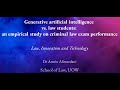
Dr. Armin Alimardani is a Senior Lecturer in Law and Emerging Technologies at the School of Law, University of Wollongong (UOW), where he has been employed since January 2022. His interdisciplinary research sits at the intersection of law, technology, science, and philosophy, with a focus on the social, ethical, and legal impact of emerging technologies such as artificial intelligence (AI), brain-computer interfaces, neuroscience, and genetics. He actively contributes to the UOW AI Expert Group, advising the University on AI policies, and has developed innovative courses including 'Law and Emerging Technologies' (LLB3309) and 'Artificial Intelligence and the Law' (LLB3373). His educational background includes a PhD from UNSW Sydney (2015-2019). Prior to joining UOW, he worked with the Faculty of Transdisciplinary Innovation at UTS developing ethics and AI teaching materials, and with the Australian Neurolaw Database Project archiving and analyzing Australian court cases involving neuroscience. Dr. Alimardani's research spans several critical domains at the intersection of law and technology: Law and Emerging Technologies, with particular focus on AI applications in legal contexts Neurolaw and the use of neuroscience in criminal proceedings and sentencing Legal implications of brain-computer interfaces and neurotechnology Genetic genealogy and its legal ramifications Ethical frameworks for AI deployment in high-risk settings The future of the legal profession in the age of automation His research demonstrates a consistent pattern of examining how emerging technologies challenge traditional legal frameworks and processes, particularly in criminal law contexts. He has conducted empirical studies on AI performance in legal education and practice, neuroscience applications in sentencing, and the ethical implications of using genetic data in criminal justice. Scientific Awards and Recognition Faculty of Business and Law Award for Outstanding Contribution to Teaching and Learning (OCTAL) (2021) Fellow, Wollongong Academy for Tertiary Teaching & Learning Excellence (WATTLE) (2021) Vice Chancellor's Award for Outstanding Contribution to Teaching and Learning (OCTAL) - Nominee (2022) PhD Excellence Award, School of Law, Society & Criminology, UNSW Sydney (2020) Monash Criminology Postgraduate Prize, ANZSOC Postgraduate Conference (2018) Best Presentation Award, Law, Technology and Innovation Junior Scholars Forum (2017) Dr. Alimardani serves as a supervisor for PhD and Master's students, with current research projects examining topics such as the impact of digitalization on the right to health care, feminist approaches to deepfake image-based sexual abuse, and AI's role in patent law. His collaborative projects include work with the University of Brawijaya on AI in sentencing and with UNSW Sydney colleagues to build research and educational tools using natural language models. In 2024, he expanded his scholarly reach by consulting for OpenAI projects. He is actively involved in public discourse on law and technology issues, having appeared as an expert on ABC Radio, 9NEWS, WIN TV, and The New Daily. His research has been picked up by 6 news outlets, blogged about, and referenced in Wikipedia pages, demonstrating significant impact beyond academia.
Prof Francesca Iacopi is an Adjunct Professor at the Faculty of Engineering & Information Technology , University of Technology Sydney (UTS). She also holds an adjunct position at Purdue University, IN, USA, and serves as Imec Fellow & Director of the Indiana R&D Center for Imec USA. With a PhD in Electrical Engineering/Materials Science from Katholieke Universiteit Leuven (2004) and MSc in Physics (1996) from Sapienza University of Rome, she has 20+ years of leadership in semiconductor R&D and academic innovation. IEEE Fellow & Elected Board of Governors Member (2021-2026) Inaugural Editor-in-Chief, IEEE Transactions on Materials for Electron Devices Chief Investigator & Industry Liaison Chair, ARC Centre of Excellence for Transformative Meta-Optical Systems Research Focus spans graphene electronics , additive manufacturing for microwave components , and energy-efficient nanodevice design . Her work bridges semiconductor industry experience (GlobalFoundries, IMEC) with academic breakthroughs in epitaxial graphene integration , nanoscale thermal emitters , and brain-machine interface sensors . Key Trends in her recent publications: 3D-printed metasurfaces for wireless communication, Fermi level tuning in graphene devices, and high-temperature operando characterization of graphene growth mechanisms. These align with her broader vision of multi-functionality on silicon platforms. Scientific Recognition : Australian Research Council Future Fellowship (2012-2016) Gold Graduate Student Award (2003, Materials Research Society) Global Innovation Award (2014) IEEE Fellowship (2024) Leadership & Education : Founded UTS's Bachelor of Engineering (Hons) Major in Electronics. Serves on UTS Academic Board (2021) and leads the Integrated Nano Systems Lab . Her teaching spans semiconductor physics, nanofabrication, and IoT component design, emphasizing cross-domain integration of CMOS, photonics, and energy storage systems.
Dr. Thomas Do is a Senior Lecturer at the School of Computer Science, University of Technology Sydney (UTS), where he also serves as Co-Director of the Human-centric AI (HAI) Centre since March 2023. His academic appointments at UTS include Senior Lecturer (November 2023-present), Research Fellow (November 2021-October 2023), and Research Associate (October 2020-October 2021). He is a member of the Faculty of Engineering and Information Technology, the Australian Artificial Intelligence Institute (AAII), and the School of Computer Science at UTS. Dr. Do's educational background includes: PhD in Computer Science from the University of Technology Sydney (2020) Master's degree in Human-Computer Interaction and Robotics from the Korea Institute of Science and Technology (2016) Dr. Do's research spans the intersection of artificial intelligence, neuroscience, and human-computer interaction. His primary focus is on Brain-Computer Interfaces (BCIs), where he investigates how to integrate BCI technology into everyday applications. He explores the convergence of AI, data science, neural engineering, and human-computer interaction to unlock the full potential of BCIs. His current projects include Human-centric AI technologies (funded by GrapheneX), Brain-Robot Interfaces (funded by Australian Defence), and Human-AI teaming (funded by ARC DP). His work often involves EEG analysis, spatial navigation studies, and object recognition systems. Dr. Do's recent publications demonstrate a strong focus on advancing Brain-Computer Interface technology through innovative approaches to signal processing, multimodal integration, and practical applications. His work spans from fundamental neuroscience research on brain connectivity patterns to applied AI systems for real-world problems in healthcare, transportation, and security. A notable trend in his research is the integration of explainable AI methods with neuroscience to create more transparent and trustworthy BCI systems. Dr. Do is actively involved in teaching and supervision at UTS, where he has taught courses including Data System, AI/Analytics Capstone Project, Technology Research Methods, and Interactive Media. His current research is supported by an ARC Discovery Project grant titled "Mind-reading AI to translate silent speech into words" (2025-2027). Dr. Do maintains active collaborations with institutions worldwide, having previously worked with the Technical University of Berlin, Germany, the University of California San Diego, USA, and the US Army Research Lab. His research has practical applications in medical, defense, and consumer technology sectors.
Professor David Lloyd is a distinguished academic at Griffith University's School of Health Sciences, specializing in Exercise Science. With over 35 years of research experience in Biomechanical Engineering, he is recognized as an international leader in neuromusculoskeletal biomechanics and rehabilitation engineering. His academic journey began with a BSc-Merit in Engineering from UNSW in 1984, followed by a PhD in Biomechanical Engineering from UNSW in 1993, and an NIH Fogarty International Postdoctoral Fellowship from 1993-1995. Professor Lloyd has held significant leadership positions including serving as founding director of the Griffith Centre for Biomedical and Rehabilitation Engineering (GCORE) from November 2015 until February 2024, which evolved into the Australian Centre of Precision Health and Technology (PRECISE). He continues as a Member of PRECISE (2025-present) and leads the Medical Devices Advanced Design and Prototyping Technologies Institute (ADaPT) since 2018. He also holds adjunct professorships at the University of Western Australia and University of Delaware. His research interests span neuromusculoskeletal biomechanical modeling, assistive devices for the neuromusculoskeletal system, surgical planning and implant design, and the causes, prevention, and management of neuromusculoskeletal conditions. Professor Lloyd and his team are pioneers in neuromusculoskeletal research, combining experimental studies with biophysical and AI-driven digital twin simulations that integrate laboratory instrumentation, medical imaging, computer vision, and wireless wearables. His extensive publication record includes over 300 peer-reviewed articles with more than 28,000 citations (h-index 88), demonstrating significant impact in biomechanics, rehabilitation engineering, and biomedical engineering. His recent work focuses on EMG-informed neuromusculoskeletal modeling, digital twins for personalized medical applications, brain-computer interfaces, and advanced computational techniques for orthopaedic engineering. Fellow of International Society of Biomechanics Recipient of 2020 Geoffrey Dyson Award by International Society of Biomechanics in Sport The Australian's 2019 Field Leader in Biophysics Ranked as world's 29th biomechanist (top 0.017%, Expertscape, Nov 2024) Ranked in top 0.3% of published biomedical engineers (Stanford University's World's Top 2% Scientists, Aug 2024) Professor Lloyd has secured over AUD $42 million in research funding as Chief or Co-Chief Investigator, demonstrating his ability to lead large-scale research initiatives. He has supervised 53 PhD completions and continues to mentor numerous doctoral students in areas including 3D printing applications in medical implant technologies, neural control of exoskeletons, and spinal cord injury rehabilitation. His research group collaborates extensively with hospitals (Gold Coast University Hospital and Queensland Children's Hospital) and industry partners including Orthocell, VALD, Materialise, OrthoPediatrics, Stryker, Adidas, and Philips.