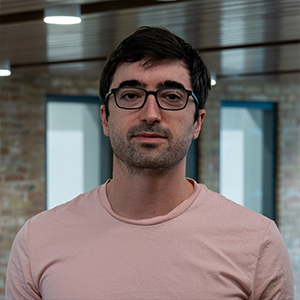
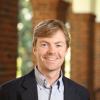
Arthur Bousquet is an Associate Professor of Mathematics at Lake Forest College, affiliated with the Math and Computer Science department. He holds a PhD in Applied Mathematics from Indiana University (Bloomington, IN) and a MS in Engineering in applied mathematics and scientific computing from SuP Galilee Engineering School (Paris, France). His research focuses on numerical methods for partial differential equations, including finite volume and finite element techniques, with applications to geophysical fluid dynamics, climate modeling, and biomedical problems like viral shell mechanics. Notable areas include shallow water equations, phase field modeling, and computational methods for atmospheric dynamics. Bousquet has published extensively on topics such as numerical weather prediction, electrokinetic equations, and virus nanoindentation modeling. His work often combines theoretical analysis with computational simulations to address complex systems in fluid dynamics and materials science. He has received the Rothrock Award for teaching excellence (2014) and held research fellowships including an NSF Graduate Fellowship (2009-2013). His teaching includes courses like Computational Mathematics, Multivariable Calculus, and Real Analysis.
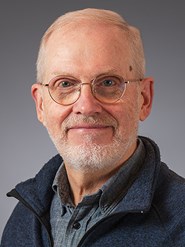
Martin Berggren is a Professor at the Department of Computing Science , Umeå University , Sweden. His work focuses on Computational Design Optimization , combining computer simulations and numerical optimization to enhance engineering designs for devices like antennas, microwave components, and loudspeakers. Berggren is also active in mathematical modeling of physical phenomena, particularly wave propagation and fluid mechanics, with a strong emphasis on finite-element methods . His research addresses large-scale conceptual design problems using thousands to millions of design variables, relying on gradient-based algorithms and adjoint-based computations of design sensitivities—similar to back-propagation in deep learning. Key application areas include acoustic and electromagnetic devices, where he investigates damping mechanisms, boundary conditions, and material distribution. Other interests, though less active, involve flow control and unsteady fluid–structure interaction . Berggren collaborates extensively on projects such as Structured Regularization , Topology Optimization of Acoustic Black Holes , and Design of Microstrip-to-Waveguide Transitions . His publications span journals like Journal of Computational Physics , Pattern Analysis and Applications , and IEEE Transactions on Antennas and Propagation , often co-authored with researchers like Linus Hägg , Eddie Wadbro , and Disi Lin .
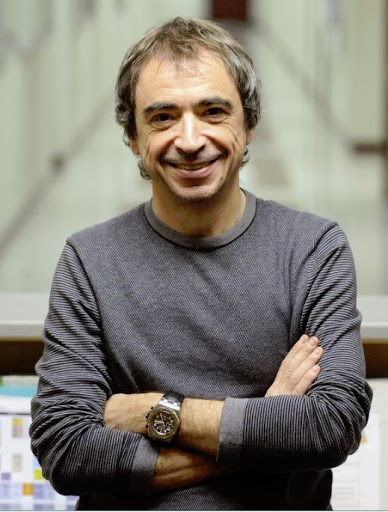
Jacob Fish is the Robert A.W. and Christine S. Carleton Professor and Chair of the Department of Civil Engineering and Engineering Mechanics at Columbia University. He directs the Multiscale Science and Engineering Center and leads Columbia's Computational Science and Engineering initiative (iCSE), coordinating 65+ faculty. With 35 years of pioneering research, he specializes in multiscale computational methods bridging aerospace, automotive, and healthcare industries. His research integrates multiscale computational science with applications in: Homogenization and reduced-order methods for complex materials Stochastic modeling of heterogeneous systems Coupled thermo-chemo-electro-mechanical processes Data-physics driven frameworks for industrial processes Recent work emphasizes AI-enhanced modeling for composites, porous media, and environmental systems. His 15 most recent publications (2023-2025) demonstrate strong trends toward: Data-physics integration in manufacturing (e.g., resin transfer molding) Multiscale environmental applications (canopy flows, CO2 mineralization) Advanced numerical methods (discontinuous Galerkin, solver-free homogenization) Digital twin development for composite lifecycle management Scientific Awards & Honors: 2018 JSCES Grand Prize 2010 IACM Computational Mechanics Award 2005 USACM Computational Structural Mechanics Award 2003 Rensselaer Research Award Fellowships: AAM, USACM, IACM Two Best Paper awards He founded the commercial Multiscale Designer software suite (250+ global clients) and secured major grants including an NSF-DFG collaboration on thermoplastic interfaces. His textbooks are used in 200+ universities worldwide. Leads the Multiscale Science and Engineering Center focusing on industrial-scale computational challenges and mentors researchers through Columbia's iCSE initiative. Former President of USACM and current IACM Vice-President for the Americas.
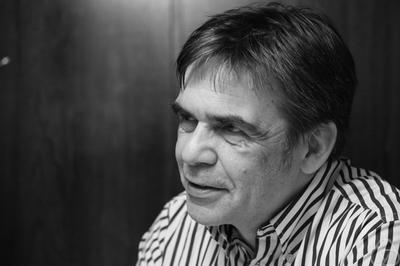
Matthias Schlottbom is an Associate Professor specializing in Mathematics of Computational Science, with a focus on numerical methods and their applications in physics, biology, and engineering. His research integrates advanced computational techniques with interdisciplinary problems, including radiative transfer, photonic crystals, and chemotaxis modeling. Research Interests: Schlottbom’s work spans numerical analysis, finite element methods, and machine learning. He develops high-order discretization schemes, iterative solvers for anisotropic transport, and mathematical frameworks for biological network formation. Publications: Recent articles highlight his contributions to accelerating radiative transfer simulations, extending component mode synthesis for Helmholtz equations, and analyzing diffusion limits in kinetic models. His work often bridges computational mathematics with practical applications in photonics and multiscale systems. Collaborations: He actively collaborates on datasets for optical simulations, radiative transfer algorithms, and photonic crystal modeling, contributing to open-access repositories like 4TU.Centre and Zenodo. Activities: Schlottbom has organized workshops such as the Kinetic Theory Workshop in the Netherlands and delivered keynotes on residual minimization and data-driven methods for transport equations. Scientific Awards: No specific awards or fellowships are mentioned in the provided materials. Advising & Grants: Details about students, advising roles, or grant funding are not included in the available data.
Dr. Burkhard Maess is a Research Professor and Group Leader at the Max Planck Institute for Human Cognitive and Brain Sciences, leading the Methods and Development Group Brain Networks. His research focuses on auditory and language processing, signal analysis, and dynamic modeling of neuronal networks. He holds a Diploma in Physics (University of Leipzig, 1987) and a PhD in Physics (University of Leipzig, 1990). His career includes postdoctoral positions at the Academy of Sciences of the GDR and the Free University of Berlin before joining the MPI in 1995. Since 2000, he has led research groups on MEG/EEG signal analysis and cortical network dynamics. His work integrates advanced neuroimaging techniques like MEG and EEG to study sensory processing, neural network dynamics, and the effects of aging on auditory attention. Key contributions include developing high-resolution BEM-FMM methods for source localization and analyzing cross-frequency coupling in neuroscience data. His group also explores spinal cord electrophysiology and the neural underpinnings of perceptual decision-making. Dr. Maess’ research spans cognitive neuroscience, biomedical engineering, and computational modeling, with a focus on bridging empirical findings with theoretical frameworks in neuroscience.
Maria K. E. Lahman is a Professor in the Department of Applied Statistics and Research Methods within the College of Education and Behavioral Sciences at the University of Northern Colorado. She holds a Ph.D. in Child Development from Virginia Polytechnic Institute and State University (2001) and serves as Co-Chair of the Institutional Research Board at UNC. Her academic work bridges qualitative methodology with ethical research practices and creative representation. Dr. Lahman's research focuses on culturally responsive qualitative research, research ethics, early childhood education, and the aesthetic representation of research through poetry and other creative forms. Her scholarship addresses creating ethical solutions for culturally complex methodological situations, diversity issues, young children, mothering experiences, and qualitative writing representation. As a Mennonite, she integrates social justice and peacebuilding into her pedagogy and scholarship. Her recent publications show a clear trajectory toward innovative research representation, with a particular emphasis on research poetry and culturally responsive methodologies. The 15 most recent articles reveal a consistent focus on ethical research practices, creative representation forms, and culturally responsive approaches to qualitative inquiry, with increasing attention to poetry as a legitimate research method and representation form. Outstanding Advisor Award, College of Education and Behavioral Sciences, UNC (2008-2009) Outstanding Scholar Award, College of Education and Behavioral Sciences, UNC (2007-2008) Service Provider Award, University of Northern CO (2006-2007) Outstanding Teacher Award, College of Education, UNC (2002-2003) Dr. Lahman has advised numerous graduate students in qualitative methodology and has been recognized for her exceptional mentorship. Her research program has generated multiple textbooks including Ethics in Social Science Research: Becoming Culturally Responsive (2017) and Writing and Representing Qualitative Research (2021), which have become influential resources in the field. She maintains an active research agenda focused on advancing ethical research with diverse groups and developing innovative methods for representing qualitative findings. Her work centers around creating spaces for culturally responsive research practices, with particular attention to vulnerable populations and ethical dilemmas in fieldwork. Dr. Lahman's scholarship challenges traditional research boundaries through her exploration of research poetry and other aesthetic forms of representation that maintain academic rigor while embracing creative expression.
Marco Paggi is a Full Professor of Structural Mechanics at the IMT School for Advanced Studies Lucca, Italy, since 2017. He previously held academic roles at Politecnico di Torino (Assistant Professor, 2007-2013) and has been an Alexander von Humboldt Fellow at Leibniz University Hannover. His research focuses on fracture mechanics, contact mechanics, and computational methods applied to renewable energy systems, composite materials, and multi-scale modeling. Key Themes: Fracture propagation, contact interfaces, phase field modeling, photovoltaic durability, and material heterogeneity. Awards: Stanford Top 2% Scientists (2020-2024) Research.com Top Scientists (2022-2024) European Structural Integrity Society Young Scientist Award (2010) Publications: His work spans tribology, computational fracture mechanics, and material degradation, with recent emphasis on phase field modeling for quasi-brittle materials and photovoltaic systems. He has pioneered methods for multi-scale and multi-physics analysis of structural systems. Mentorship: Supervised 17 PhD graduates and 14 postdocs, including award-winning researchers like Pietro Lenarda and Zeng Liu.
Alireza Yaseri serves as an Adjunct Assistant Professor in the Department of Civil Engineering within Smith Engineering at Queen's University. He maintains a dual affiliation with the GeoEngineering Centre, a leading research institute at Queen's specializing in geotechnical and geoenvironmental challenges, where he contributes to advanced computational modeling initiatives. Education: PhD in Geotechnical Engineering, Université Laval (2021) MSc in Geotechnical Engineering, Shiraz University (2012) Dr. Yaseri's research program centers on computational geomechanics with emphases on seismic soil-structure interaction, railway-induced vibrations, and constitutive modeling of granular materials. His work bridges theoretical mechanics and practical infrastructure challenges through advanced numerical techniques, particularly hybrid FEM-SBFEM implementations for dynamic analysis of earth dams, canyon systems, and transportation corridors. He investigates nonlinear soil behavior under monotonic/cyclic loading and develops predictive models for vibration propagation in complex geological settings. Analysis of his publication trajectory (2014-2024) reveals consistent innovation in computational geotechnics, with recent work focusing on 2.5D/3D modeling of train-induced vibrations and sophisticated sand constitutive frameworks. His 2024 publications demonstrate dual expertise in railway vibration prediction methodologies and critical-state soil mechanics, while his earth dam-canyon system analyses from 2020-2022 established foundational approaches for seismic amplification in flexible geological formations. As an active member of Queen's GeoEngineering Centre, Dr. Yaseri collaborates on interdisciplinary projects addressing infrastructure resilience, with particular relevance to dam safety and transportation geotechnics in seismic zones. His technical leadership in scaled boundary methods contributes to the center's reputation for computational innovation in geomechanics.
Yan Delaure is Associate Professor of Fluid Mechanics at Dublin City University's School of Mechanical and Manufacturing Engineering and Deputy Director of the DCU Water Institute. His research focuses on multiphase flows, environmental hydraulics, and computational fluid dynamics applications in wastewater treatment and marine systems. Research includes microbubble dynamics for aeration, fluid-structure interactions in deformable systems, and biomimetic antifouling solutions. Recent publications explore advanced simulation methods for turbulent flows and additive manufacturing process optimization.
Professor Yanghua Wang is a leading academic in Geophysics at Imperial College London's Faculty of Engineering. He serves as Principal of the Resource Geophysics Academy and Director of the Centre for Reservoir Geophysics. His career spans over four decades, with roles including Research Manager at Robertson Research and a PhD from Imperial College London (1995–1997). He holds prestigious awards such as Fellow of the Royal Academy of Engineering (2021) and membership in the Chinese Academy of Engineering (2023). Education highlights include a BSc (1983) and MSc (1994) in Geophysics, followed by a PhD in Geophysics (1997). His research focuses on seismic inversion, reservoir geophysics, and time-frequency analysis, with notable monographs on seismic inversion and signal processing. He leads interdisciplinary projects combining machine learning with geophysical modeling, addressing challenges in reservoir characterization and seismic data processing. Research interests emphasize geophysical inversion techniques, anisotropic media analysis, and applications in energy exploration. He has pioneered methods like the W transform for seismic signal analysis and contributed to advancements in physics-informed neural networks. His work bridges theoretical geophysics with practical reservoir engineering solutions. Prof. Wang’s lab, the Resource Geophysics Academy, focuses on innovative geophysical methodologies for subsurface characterization. His recent projects include AI-driven data assimilation for large-scale systems and high-resolution seismic imaging techniques. Collaborations span academia and industry, addressing global energy and resource challenges.
Juan Manuel Pérez Pardo is an Associate Professor in the Department of Mathematics at Universidad Carlos III de Madrid, where he has been a faculty member since 2019, progressing from Assistant Professor to his current position as Associate Professor since December 2022. His academic journey includes postdoctoral research at prestigious institutions including the Istituto Nazionale di Fisica Nucleare in Naples, Italy, and the Instituto de Ciencias Matemáticas in Madrid. Dr. Pérez Pardo earned his PhD in Mathematics from Universidad Carlos III de Madrid in 2013, following a Master's degree in Mathematical Engineering from the same institution and a Master's degree in Theoretical Physics from Universidad Complutense de Madrid. His undergraduate studies were in Physics at Universidad Complutense de Madrid. His research focuses on the intersection of functional analysis and quantum physics, particularly in three main areas: Functional Analysis : Applying functional analytical tools to quantum systems, with emphasis on quadratic forms associated with differential operators and evolution equations in Hilbert spaces. Quantum Systems with Boundary : Studying quantum dynamics when boundaries are present, combining operator theory, spectral theory, and differential geometry. Quantum Control on Infinite Dimensional Systems : Developing mathematical theory for controlling quantum systems that are infinite dimensional in nature, relevant to quantum computation technologies. His publication record shows a strong focus on quantum control theory, self-adjoint extensions of differential operators, and the mathematical foundations of quantum mechanics. Recent work (2022-2025) has concentrated on stability of non-autonomous Schrödinger equations, quantum controllability, and relativistic quantum systems. Dr. Pérez Pardo has received several prestigious awards including the Juan de la Cierva Fellowship and the QUITEMAD+ Postdoctoral Fellowship. His work on boundary dynamics driven entanglement was highlighted in Europhysics News and tagged as IOPselect by the Institute of Physics. He actively mentors students at all levels, currently supervising PhD candidate Ángel Aitor Balmaseda Martín on "Quantum Control at the Boundary." He has also supervised numerous Master's and Bachelor's students on topics ranging from numerical solutions of quantum control problems to modeling Josephson junctions. Dr. Pérez Pardo is a key member of the Q-Math Research Group at UC3M and has organized multiple international workshops on Information Geometry, Quantum Mechanics, and Applications. He also serves on the editorial board of the International Journal of Geometric Methods in Modern Physics.
Endre Süli is Professor of Numerical Analysis at the University of Oxford, where he has maintained a distinguished academic career since 1985. He currently serves as Fellow and Tutor in Mathematics at Worcester College and Supernumerary Fellow at Linacre College. His progression at Oxford includes University Lecturer in Numerical Analysis (1985-1996), Reader in Numerical Analysis (1996-1999), and Professor of Numerical Analysis (1999-present). Süli completed his B.Sc. in Mathematics at the University of Belgrade (1974-1978), followed by an M.Sc. in Mathematics (1978-1980). As a British Council Visiting Student, he studied at Reading University and Oxford University in 1983/84, earned his Ph.D. from the University of Belgrade in 1985, and received his M.A. from Oxford University in the same year. Professor Süli's research centers on numerical analysis of nonlinear partial differential equations with applications across multiple scientific domains. His work spans free-discontinuity problems and computational modeling of fracture; finite element methods; Navier-Stokes-Fokker-Planck systems; adaptive algorithms with a-posteriori error control; implicitly constituted material models; and discontinuous finite element methods. His research bridges theoretical mathematics with practical computational approaches for complex physical phenomena. Recent publications (2024-2025) demonstrate Süli's continued leadership in numerical analysis, with focus areas including fractional calculus, stochastic PDEs, and advanced finite element techniques. His work shows strong interdisciplinary connections between mathematical analysis, fluid dynamics, and materials science, addressing challenging problems in polymeric fluids, porous media, and capillary flow modeling. Professor Süli's distinguished career has been recognized with numerous prestigious honors: Invited Speaker at the International Congress of Mathematicians, Madrid (2006) Fellow of the Institute of Mathematics and its Applications (2007) Foreign Member of the Serbian National Academy of Sciences and Arts (2009) Fellow of the European Academy of Sciences (2010) IMA Service Award (2011) SIAM Fellow (2016) Member of the Academia Europaea (2020) London Mathematical Society Naylor Prize and Lectureship (2021) Fellow of the Royal Society (2021) As an educator, Süli has received the Oxford University Teaching Excellence Award (2009) and the Mathematical Institute Teaching Award (2013). He has supervised numerous PhD students and postdoctoral researchers throughout his career, though specific names aren't documented in the available materials. His research has been supported by various grants enabling work on computational methods for partial differential equations. Süli maintains active service to the mathematical community through editorial boards and professional organizations. Professor Süli is affiliated with the Numerical Analysis research group and the Oxford Centre for Nonlinear PDE at the Mathematical Institute. These research centers provide a collaborative environment for theoretical and applied work on partial differential equations. His research often involves interdisciplinary collaborations with physicists, engineers, and computational scientists to develop and analyze numerical methods for complex physical phenomena.
Ethan A. Scott is a Research Assistant Professor in the Department of Mechanical and Aerospace Engineering at the University of Virginia. He holds a B.S. (2015) and Ph.D. (2021) in Mechanical and Aerospace Engineering from UVA, followed by a postdoctoral research associate position at Sandia National Laboratories. His research focuses on experimental techniques for analyzing heat and energy transfer in extreme material conditions, including micro- and nanoscale phenomena. He serves as Deputy Director of the EXSiTE Lab led by Professor Patrick Hopkins. Education: B.S., Mechanical Engineering, University of Virginia (2015) Ph.D., Mechanical and Aerospace Engineering, University of Virginia (2021) Postdoctoral Research Associate, Sandia National Laboratories (2021–2023) Research Interests: Ethan explores advanced thermal transport phenomena using electro- and optothermal methods. Key areas include micro/nanoscale heat transfer, microfabrication, and infrared thermal detection. His work addresses challenges in material size extremes (e.g., nanoscale thin films) and environmental extremes (e.g., high-energy ion irradiation effects). Publications: His recent work emphasizes thermal conductivity manipulation through ion irradiation, optothermal sensor development, and novel material characterization. Themes include defect engineering in crystalline systems and optimizing thin-film thermometry for high sensitivity. Awards: Editor’s Pick, Applied Physics Letters (2021) Nuclear Regulatory Commission Fellowship (2017) Labs & Teams: Deputy Director of the EXSiTE Lab, focusing on experimental studies of thermal and mechanical properties of materials under extreme conditions.
Associate Professor Chengguo Zhang is a researcher at the University of New South Wales (UNSW Sydney) specializing in Mining Engineering and Geomechanics . His work focuses on improving mining safety and sustainability through fundamental and applied research on dynamic rock mass failures , groundwater-mining interactions , and data-driven visualization technologies . He currently serves as the Postgraduate Research Coordinator for the School of Mining Engineering. PhD in Mining Engineering from UNSW Sydney (2015) Coordinates postgraduate research programs Recipient of multiple teaching and research awards Research Interests: Zhang's work addresses critical mining industry challenges through: Quantification of energy sources and dissipation in rock masses for rockburst management Integration of AI data analytics and 3D visualization for geotechnical risk assessment Mine subsidence and coupled hydro-mechanical behavior of rock discontinuities Development of digital ground control management systems Article Trends: His recent publications demonstrate expertise in: Numerical modeling of rock fracturing mechanisms Nonlinear fluid flow analysis in fractured rock masses Shotcrete and ground support system evaluation Hydro-mechanical coupling during shear processes Energy-based coal burst risk classification Scientific Awards: Tim Shaw Award for Innovation in Teaching (2024) International Outstanding Young Scholar Award (2023) UNSW Education Excellence Award (2021) UNSW Research Excellence Award (2018) Research Supervision: Supervises 12 active PhD students (9 as primary/joint supervisor) and has guided 11 PhD completions (7 as primary/joint supervisor), including 3 Dean's Award recipients. Focuses on numerical modeling, data visualization, and machine learning applications in mining geomechanics.
Grethe Winther is a Professor and Head of Section in the Department of Civil and Mechanical Engineering at the Technical University of Denmark (DTU), specializing in Materials and Surface Engineering. Her research is centered on the analysis and modeling of microstructure and mechanical properties of metals, with a strong emphasis on dislocation structures, deformation textures, and recrystallization processes. Her research interests include: Dislocation structures and boundary analysis in deformed metals Crystal plasticity modeling using synchrotron data (3DXRD) Orientation relationships in recrystallization Prediction of mechanical properties in industrial metal forming Multiscale modeling of plastic deformation and surface roughening The recent articles (2025) highlight a consistent focus on advanced characterization techniques like dark-field X-ray microscopy and discrete dislocation dynamics simulations. These works explore the formation of geometrically necessary boundaries, dislocation cell evolution, and multiscale surface deformation, reflecting a strong integration of experimental and computational methods in materials science. Key themes include plastic deformation mechanisms, microstructure evolution, and predictive modeling in metallic systems. Grethe Winther actively supervises multiple PhD projects, including those on dislocation dynamics, X-ray microscopy, and ductile failure simulations. She collaborates extensively with researchers such as H.F. Poulsen and C.V. Nielsen. Her work is supported by ongoing research projects at DTU, focusing on fundamental and applied aspects of metal deformation and microstructure. She is affiliated with the Materials and Surface Engineering section at DTU, where she leads research efforts combining advanced experimental techniques with theoretical modeling to understand and predict metal behavior under deformation.