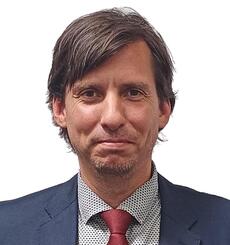
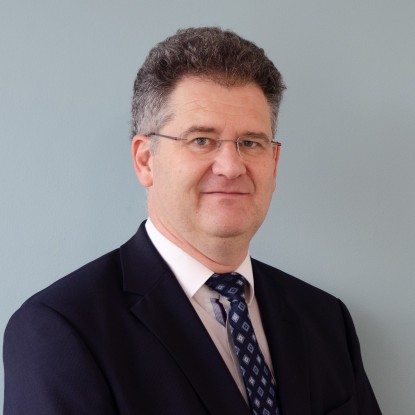
Tito Andriollo is a Tenure Track Assistant Professor at the Department of Mechanical and Production Engineering Mechanics and Materials within College of Engineering at Aarhus University . His work focuses on computational mechanics, fracture analysis, and microstructural modeling of advanced materials. Primary research areas: Materials Science, Computational Mechanics, Fracture Mechanics Recent methodological contributions: Physics-Informed Neural Networks, Digital Volume Correlation Key applications: Additive Manufacturing, Fatigue Analysis, Composite Materials His publications demonstrate expertise in modeling irreversible deformation, strain localization, and vibration damping optimization. Collaborative activities include participation in international conferences like the Risø Symposium and European Mechanics of Materials Conference.
Dr.-Ing. Michael Selzer is a Group Leader in Research Data Management at the Karlsruhe Institute of Technology (KIT), specifically within the Institute of Nanotechnology. He leads the Kadi4Mat project, focusing on FAIR (Findable, Accessible, Interoperable, Reusable) research data infrastructure for materials science. His work bridges computational modeling and digital research workflows. Research Interests: Michael Selzer specializes in computational materials science , with a strong emphasis on phase-field modeling for simulating microstructure evolution, fracture mechanics, and multiphase systems. His research extends to materials informatics , digital workflows , and research data management , particularly in the context of battery materials, porous media, and solid-state systems. He integrates machine learning and data science to analyze and optimize materials properties. Publication Trends: His recent publications (2023–2025) highlight a growing focus on FAIR data infrastructure (e.g., Kadi4Mat, KadiStudio), large language models in battery science (LISA), low-code simulation platforms (MUSICODE), and reproducibility in bioprinting . These reflect a strategic shift toward digitalization and automation in materials research, while maintaining a strong foundation in physics-based modeling. Scientific Contributions: Developed and advanced phase-field models for grain growth, crack propagation, and interfacial phenomena. Contributed to the development of Kadi4Mat, a research data infrastructure for materials science. Integrated machine learning and AI into materials characterization and battery research. Published extensively in journals such as Acta Materialia , Computational Materials Science , and Scientific Data . Advising and Grants: While no direct students are listed, his leadership role in Kadi4Mat suggests mentorship and team supervision. He has likely secured funding for digital infrastructure and computational materials projects, evidenced by sustained publication output and collaborative work with major institutions. His research is highly collaborative, involving teams across KIT and international partners. Labs and Teams: He leads the Research Data Management group under the Kadi4Mat initiative at KIT. This team focuses on developing digital tools for materials research, including electronic lab notebooks (KadiWeb), workflow automation (KadiStudio), and ontology-based data integration. The group operates at the intersection of computational science, data engineering, and materials discovery.
Sandra Pieraccini is a Full Professor in the Department of Mathematical Sciences "GL Lagrange" (DISMA) at the Politecnico di Torino, where she also serves as Deputy Director of the department, Contact Person for student orientation, and Coordinator of the basic subjects for first-year engineering programs. She is a member of the University Open Access Commission and actively contributes to academic governance. Her research interests include machine learning, numerical analysis, scientific computing, uncertainty quantification, and numerical optimization . She is a key member of the research group Numerical Analysis and Scientific Computing and leads the national research project FaReX (2023–2025) on reduced-order modeling and automatic learning. Her work integrates advanced numerical methods with AI techniques, particularly in modeling discrete fracture networks and fluid dynamics. The most recent publications reflect a strong trend in combining graph-informed neural networks , explainable AI , and meshless computational methods to solve complex problems in geophysics, fluid mechanics, and data science. Her research bridges applied mathematics with real-world engineering and environmental challenges. She is an active member of the scientific community, serving on the editorial boards of Journal of Machine Learning for Modeling and Computing and GEM , and participating in steering committees of UMI groups on AI and machine learning. She has also contributed to organizing major workshops and conferences. Sandra Pieraccini teaches across multiple programs, including doctoral courses in Mathematical Sciences and Aerospace Engineering, master’s courses in Mathematical Engineering and Data Science, and bachelor’s courses such as Linear Algebra and Problem Solving Lab. She is deeply involved in curriculum development and academic leadership.
JORGE ALBELLA MARTINEZ is an Assistant Professor at the University of Santiago de Compostela, affiliated with the Applied Didactics Department in the Faculty of Education Sciences. His research focuses on numerical methods for wave propagation, particularly in elastodynamics, and he holds a doctoral degree from the same university (2020). Education: PhD in Applied Mathematics from the University of Santiago de Compostela (2020), thesis on 'Advanced numerical methods for wave propagation problems'. Research Interests: Specializes in numerical analysis of partial differential equations, mechanics of deformable solids, and the application of finite element methods to solve complex problems in elastodynamics and wave propagation. His work bridges mathematical theory with computational techniques. Publications: Authored influential papers in Mathematics of Computation and Journal of Scientific Computing , focusing on innovative numerical techniques for solving 2D elastodynamics equations. Grants/Advising: No explicit grants or student advisement listed. Collaborates with researchers like Sébastien Imperiale and Patrick Joly.
Prof. Herbert De Gersem is a Full Professor at the Technische Universität Darmstadt, leading the Computational Electromagnetics Laboratory within the Department of Electrical Engineering and Information Technology. Previously, he held a professorship at KU Leuven (Belgium) from 2006 to 2014, focusing on wave propagation and signal processing. His academic journey began as a research assistant at TU Darmstadt and KU Leuven from 1995 to 2006, specializing in computational electromagnetics and electromagnetic field theory. His research spans electromagnetics, computational electromagnetics, and particle accelerator physics, with applications in electric machines, high-voltage technology, and high-frequency components. Key projects include simulations for muon colliders, rotor optimization in axial flux machines, and thermal analysis of HVDC cable joints. He collaborates on advanced topics like foil winding homogenization and magneto-thermal quench simulations for superconducting magnets. Prof. De Gersem’s publications emphasize innovative numerical methods, such as adjoint sensitivity analysis and data-driven modeling, alongside experimental validation. His work bridges computational theory with practical engineering challenges, addressing energy efficiency, thermal management, and high-performance accelerator design. Despite no listed scientific awards, his extensive contributions to the field are evident through his prolific research output and international conference participation. His academic advising and mentorship are integral to his role, though specific student names are not documented here. Ongoing projects involve interdisciplinary collaborations, including hybrid modeling approaches for engineering systems and optimization strategies for electric machine design under thermal constraints.
Maria Lucia Sampoli is an Associate Professor in the Department of Information Engineering and Mathematics at the University of Siena, Italy. She holds a PhD in Computational Mathematics and Operational Research from the University of Milan and has been a faculty member at the University of Siena since 1999, advancing from Research Assistant to tenured Assistant Professor in 2002 and to Associate Professor in 2010. Her academic journey includes a postdoctoral fellowship at the Technical University of Darmstadt and a CNR Senior Fellowship. PhD in Computational Mathematics and Operational Research, University of Milan (1998) Laurea in Mathematics (Honors), University of Florence (1994) Her research focuses on Numerical Analysis , particularly in Computer Aided Geometric Design (CAGD) , Isogeometric Analysis (IGA) , Pythagorean Hodograph (PH) curves and surfaces , Boundary Element Methods , and constrained interpolation and approximation . Recently, she has explored mathematical aspects of deep learning , especially the theoretical foundations of Graph Neural Networks. Her work bridges pure mathematical theory with engineering and computational applications. The most recent publications highlight a consistent trend in geometric modeling and numerical methods, with increasing interdisciplinary reach into machine learning. Topics span from high-precision curve and surface design to advanced numerical techniques for PDEs and the mathematical analysis of neural networks. She has participated in and organized numerous international conferences such as SIAM CSE, IGA, and SMART, and has been involved in multiple research projects, some as coordinator. While specific scientific awards are not listed, her invited talks at major conferences reflect recognition in her field. Maria Lucia Sampoli supervises graduate research and teaches courses including Numerical Calculation and Numerical Modeling . She is actively involved in academic service, including conference organization and research project leadership. She maintains an open-door policy for student consultations and is accessible via email for appointments. She is affiliated with the SAILab (Siena Artificial Intelligence Lab), indicating institutional engagement with AI and computational intelligence research.
Silvia Falletta is an Associate Professor at the Department of Mathematical Sciences 'GL Lagrange' (DISMA), Politecnico di Torino. She teaches courses including Numerical Methods for Differential Equations and Finite Element Modelling across disciplines like Chemical Engineering and Aerospace Engineering. Her research focuses on advanced numerical methods for wave propagation problems, particularly in acoustics, elasticity, and seismology. Research Interests: Acoustic waves, Elasticity, Integral equations, Numerical Analysis, Convolution Quadrature, Wavelet techniques. Teaching Roles: Course Lecturer for Finite Element Modelling (2019–2025), Numerical Calculus collaborator, and contributor to PhD programs in Mathematical Sciences. Publications: Specializes in time-domain boundary integral equations, BEM-FEM coupling, and non-reflecting boundary conditions. Recent work includes virtual element methods for wave propagation and wavelet-based matrix sparsification. Students: Supervises PhD candidates Davide Collato and Matteo Ferrari, focusing on non-symmetric coupling of virtual/boundary elements and unbounded domain problems. Contact: Email: silvia.falletta@polito.it ; Phone: +39 0110907506.
Alexander Freiszlinger is a PhD student and project assistant at the Institute of Analysis and Scientific Computing (E 101) at TU Wien, supervised by Prof. Dirk Praetorius. His research focuses on numerics of parametric partial differential equations (PDEs), adaptive finite element methods (FEM), and boundary element methods (BEM). He holds a Master of Science (2023) and Bachelor of Science (2020) in Technical Mathematics from TU Wien, both completed at the same institution. He presented a talk titled "Convergence of adaptive BEM driven by functional a posteriori error estimates" at the PDE Afternoon in Vienna on December 4, 2024. His academic work integrates advanced numerical techniques for solving complex PDE systems. No teaching activities are currently listed, and no formal awards have been documented. He is based at the Freihaus building, room DA 04 H 02, Wiedner Hauptstraße 8-10, 1040 Vienna, Austria.
Gregor Gantner is a researcher at TU Wien's Department of Numerical Analysis and Partial Differential Equations, part of the Faculty of Mathematics and Geoinformation. He holds a Dipl.-Ing. and Dr.techn. in technical mathematics. His primary research focuses on adaptive numerical methods for partial differential equations (PDEs), particularly boundary element methods (BEM), isogeometric analysis (IGA), and finite element methods (FEM). He investigates topics such as a posteriori error estimation, optimal computational complexity, and convergence analysis of adaptive algorithms. Key research themes include: Design and implementation of adaptive algorithms for BEM and FEM systems Integration of isogeometric analysis with hierarchical B-splines Development of optimal convergence frameworks for nonlinear PDEs Analysis of computational costs and efficiency in adaptive methods Notable contributions include: Establishing rate optimality of adaptive FEM with respect to computational costs Stable MATLAB implementations of adaptive IGABEM techniques Advancements in (h-h/2)-type error estimators for FEM He has advised master's candidates Juliana Kainz (2019) and Stefan Schimanko (2016) on isogeometric BEM applications. His work bridges theoretical foundations with practical implementation, emphasizing algorithmic efficiency and mathematical rigor.
Romain Rumpler is an Associate Professor at the Department of Vehicle Engineering and Technical Acoustics, KTH Royal Institute of Technology. His research focuses on numerical methods and modeling for coupled acoustics and vibration applications, including finite element modeling, design optimization, and acoustic metamaterials. He leads initiatives in transportation noise, such as noise impact assessment and traffic strategies. He is affiliated with the Centre for Eco2 Vehicle Design and has been funded by the Swedish Research Council, FORMAS, VINNOVA, and European programs like Shift2Rail and CIVITAS. His teaching includes courses like Building Acoustics and Community Noise and Noise and Vibration Control . Education: PhD in Vehicle Engineering and Technical Acoustics, KTH Royal Institute of Technology (2012) Research Interests: His work spans efficient finite element methods, acoustic material design, and urban noise mitigation. He develops experimental-numerical approaches for noise assessment and contributes to eco-friendly vehicle design through projects like the EU VAMOR initiative. Recent efforts include metamaterials for sound insulation and real-time noise mapping techniques. Articles Trends: Romain's publications emphasize transportation noise analysis, structural acoustics, and computational methods. Key themes include noise detection algorithms, parametric model reduction, and material characterization for vibration suppression. His work bridges theoretical models with practical applications in urban planning and vehicle engineering. Awards: 2022 Supervisor of the Year Award (Centre for Eco2 Vehicle Design) Grants & Advising: Funded projects include VR, FORMAS, and EU grants. He advises students on acoustic metamaterials and noise control, with a focus on sustainable transportation solutions. His team collaborates on agent-based noise impact models and low-frequency vibration mitigation. Labs & Projects: Associated with Digital Futures initiatives (DIRAC, GEOMETRIC, SENZ-Lab) and the Centre for Eco2 Vehicle Design. His work supports eco-efficient vehicle design and smart traffic strategies to reduce environmental impact.
Nobuyasu Adachi is Professor in the Department of Life and Applied Chemistry at Nagoya Institute of Technology, leading the Advanced Ceramics Research Laboratory. His work bridges fundamental materials science with industrial applications in magneto-optics and electromagnetic devices, with continuous research output since the 1990s. He earned his Master of Science and Doctor of Science from Tohoku University (completed 1993), following undergraduate studies at Tokyo University of Science. His postdoctoral research included positions at Tohoku University (1993) and the Swedish Royal Institute of Technology (1999). Adachi's research centers on ferrite-based materials, with expertise in thin-film synthesis (particularly metal organic decomposition), magnetic property characterization, and ceramic microstructure engineering. Current projects focus on porous ferrites for electromagnetic shielding, magneto-optical garnet films for high-frequency sensors, and photonics crystals. His work demonstrates consistent evolution from fundamental magnetic studies toward applied electromagnetic solutions. Recent publications (2014-2025) reveal three dominant themes: (1) ferrite synthesis optimization for GHz-frequency applications, (2) magneto-optical garnet film development for magnetic field imaging, and (3) porous ceramic engineering for dual-function materials. Key innovations include controlled resonance linewidth in garnet films and hollow ferrite particle fabrication using template methods. APSMR Contribution Award (2018) for Synthesis and Characterization of Magnetic Garnet Film Wakabayashi Paper Award (2018) for research on flexible aluminum titanate ceramics He has secured significant funding including MEXT Grants-in-Aid for rare-earth thin film magnets (2004-2006) and magneto-optical sensor development (2005-2007), plus industry collaborations with JST and MIC on GHz-band absorbers (2015-2016). As an active society member, he serves on Japan Ceramic Society committees and organizes academic symposia while mentoring through public lectures at high schools and industry workshops. The Advanced Ceramics Research Laboratory under his direction focuses on green technology applications, particularly electromagnetic materials for sustainable electronics and industrial sensors, maintaining strong ties with regional ceramic industries in Gifu Prefecture.
Katsuyo Thornton is the L.H. and F.E. Van Vlack Professor in the Department of Materials Science and Engineering at the University of Michigan's College of Engineering. She has held this named professorship since 2018, following promotions from Associate Professor (2010-2015) and Assistant Professor (2004-2010) at the same institution. Prior to joining Michigan, she was a Research Assistant Professor at Northwestern University (2001-2004) and completed her postdoctoral work there (1997-2001), with additional experience as a Visiting Lecturer and Scientist at MIT. Her educational background includes a B.S. with Honors in Physics from Iowa State University (1991), followed by an M.S. (1993) and Ph.D. (1997) in Astronomy and Astrophysics from The University of Chicago. This unique interdisciplinary foundation has informed her distinctive approach to materials science problems. Dr. Thornton's research focuses on computational and theoretical investigations of microstructure and nanostructure evolution during materials processing and operation. Her work employs advanced phase-field modeling techniques to study coarsening in elastically stressed solids, three-dimensional topologically complex systems, electrochemical systems, and self-assembly phenomena during semiconductor heteroepitaxy. Her research group has developed sophisticated computational frameworks that bridge atomistic to continuum scales, enabling predictive modeling of complex materials phenomena. Analysis of her recent publications reveals a strong trend toward energy applications, particularly in solid oxide fuel cells and battery technologies. Her work increasingly integrates experimental data with computational modeling, as evidenced by publications combining phase-field simulations with in situ tomography and other advanced characterization techniques. The research spans fundamental materials science questions to applied engineering challenges in energy conversion and storage. Fellow of ASM, 2018 TMS Brimacombe Medal, 2018 Eschbach Fellow, Northwestern, 2018 Ted Kennedy Family Faculty Team Excellence Award, 2016 NSF CAREER Award, 2008 TMS Early Career Faculty Fellow Award, 2008 Dr. Thornton has secured substantial research funding from NSF, DOE, and AFOSR for projects including the Center for Radiative Shock Hydrodynamics (CRASH), computational materials research, and solid oxide fuel cell development. Her group has developed the PRISMS-PF framework, a general matrix-free finite element method for phase-field modeling. She also leads educational initiatives in computational materials science, including the Summer School for Integrated Computational Materials Education. The Thornton Research Group operates within the Michigan Materials Research Institute and collaborates extensively with researchers at Northwestern University, MIT, and other institutions. Their work combines advanced computational methods with experimental validation, creating a powerful integrated approach to materials discovery and design. Current efforts focus on applying these methodologies to next-generation energy storage and conversion technologies.
Sébastien Leclaire is an Associate Professor in the Department of Mechanical Engineering at Polytechnique Montréal, a leading engineering institution in Canada. With over a decade of experience in numerical fluid dynamics, he specializes in multiphase flow modeling using Lattice Boltzmann Methods (LBM), an emerging research niche. His work spans computational fluid dynamics, rarefied gas flows, porous media applications, and multiphase flow simulations. His educational background includes a B.Sc. in Pure and Applied Mathematics from the University of Montreal, an M.Sc. in Applied Mathematics from the University of Montreal, an M.Eng. in Mechanical Engineering from Polytechnique Montréal, and a Ph.D. in Mechanical Engineering from Polytechnique Montréal. Leclaire has built a multidisciplinary research profile through collaborations at institutions worldwide, including applied mathematics at the University of Montreal, mechanical engineering at Polytechnique Montréal, civil engineering at ENS Cachan in France, computer science at the University of Geneva in Switzerland, and chemical engineering at Polytechnique Montréal. Leclaire's research focuses on improving LBM modeling, extending its application to practical cases, and optimizing simulation codes for high-performance computing. His work addresses engineering challenges in fluid mechanics, particularly in multiphase flows, computational fluid dynamics, Lattice Boltzmann Method, and verification and validation. He has published over 65 papers, with recent work (2021-2025) demonstrating continued innovation in rarefied gas flows, porous media applications, and computational efficiency improvements. His publications show a consistent trajectory toward increasingly complex flow scenarios and computational optimizations. As a dedicated educator and researcher, Leclaire actively supervises graduate students and is recruiting for new research projects. He is affiliated with the Industrial Flow Processes Research Unit (URPEI) and teaches courses including MEC8270 (Finite Elements in Thermofluids), MEC6215 (Numerical Methods in Engineering), and MEC2200 (Fluid Dynamics).
Lars Mandrup is an Associate Professor in the Department of Electrical and Computer Engineering at Aarhus University, specializing in Signal Processing and Machine Learning. He serves as the Unions Representative for DM and is a member of LSU and LAMU. His primary responsibilities include educating Diploma and Master Engineers in Biomedical Engineering. Mandrup's research expertise lies in Physics, Mathematics, and Biophysics, with a strong focus on Biomedical Engineering. He applies Computational Fluid Dynamics (CFD) to Magnetic Resonance data for cardiovascular modeling, including blood flow analysis and mitral valve mechanics. Additionally, he is a key contributor to Electromagnetic Compatibility (EMC) research, developing foundational educational materials and advancing EMC testing standards and methods. His publication record shows a clear interdisciplinary trajectory, merging engineering with medical applications. Key themes include CFD-based cardiovascular simulations and EMC education. The biomedical work leverages MRI data to model complex physiological processes, while the EMC contributions span theoretical principles to practical testing standards, reflecting a commitment to both academic and industrial relevance. No scientific awards were mentioned in the provided information. Mandrup actively mentors students in Biomedical Engineering programs and serves as a PhD examiner. He is a member of the EMC group within the TUR Network for Electronics and Information Technology, which drives curriculum development in EMC education across Danish engineering institutions. He is affiliated with the EMC group (EMC-gruppen), dedicated to advancing EMC education and professional development. This group collaborates within the TUR Network to enhance teaching materials and methodologies for EMC courses.
Tomoko Bell is an Assistant Professor of Biology at Newman University 's Division of Science and Mathematics. Originally from Tokyo, Japan, she holds a Ph.D. in Earth and Planetary Science, a Master's in Environmental Science, and a Bachelor's in Marine Biological Science from the University of Tokyo, University of Guam, and Hokkaido University respectively. Education Ph.D. in Earth and Planetary Science, University of Tokyo M.S. in Environmental Science, University of Guam B.S. in Marine Biological Science, Hokkaido University Dr. Bell's research spans interdisciplinary boundaries between biology, geology, and planetary science. Her work focuses on extremophiles and their applications for astrobiology and medical research , with particular emphasis on: Biological responses to extreme environments Cosmic radiation effects on viral mutation Coral biomineralization mechanisms Climate reconstruction via coral and speleothem geochemistry Open science initiatives democratizing scientific access Her recent publications highlight innovative approaches to understanding coral responses to ocean acidification, developing underwater drilling technologies for coral core extraction, and exploring potential links between solar cycles and pandemic emergence. The 2024 article on gene expression in Japanese whiting eggs demonstrates her expanding focus into environmental genomics. Scientific Recognition : NASA Headquarters Letter of Appreciation (2023) NASA JPL Planetary Science Summer School (2021) Best Presentation Awards from JSPS and Transporter Research Association Japan Geoscience Union Outstanding Student Presentation Award (2014) Japan Society for the Promotion of Science Research Fellowship ($150,000, 2018) Actively involved in interdisciplinary collaborations, Dr. Bell serves as subject matter expert for NASA's open science curriculum development and advocates for inclusive science education through her leadership in the Open Science movement.