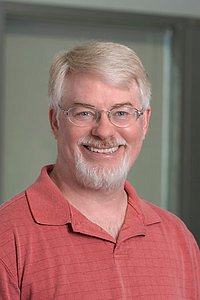
Jaideep Srivastava is a Professor affiliated with Qatar Foundation (Doha, Qatar), University of Minnesota (Minneapolis, USA), and holds a PhD from University of California Berkeley. His research spans data mining, social network analysis, time series modeling, and health informatics. Recent work focuses on clinical deterioration prediction, sleep research, and computational analysis of pandemic behaviors. Key contributions in clustering algorithms and graph neural networks Active in multimodal learning and misinformation detection His publications from 2024-2022 demonstrate expertise in hierarchical clustering , large language model applications , and health data analytics . Articles often integrate machine learning , social network dynamics , and clinical monitoring systems . Current projects involve Covid-19 in-hospital mortality prediction , virtual influencer analysis , and low-light imaging techniques . Collaborations span institutions in Qatar, USA, and India with applications in urban mobility and precision medicine.
Alireza Mohammadinodooshan is a Postdoctoral Fellow at Linköping University's Department of Computer Science (IDA), Sweden, working within the Database and Information Technology (ADIT) research group. He contributes to the Wallenberg AI, Autonomous Systems and Software Program (WASP) – Sweden's largest individual research initiative – focusing on data-driven analysis of social media engagement dynamics across Twitter, Facebook, and Instagram platforms. His research centers on quantifying how political bias, news reliability, and content-agnostic factors shape temporal user engagement patterns. Key interests include social media analysis, user engagement dynamics, data mining, information systems, network science, and artificial intelligence, with emphasis on cross-platform comparative studies and algorithmic amplification effects in news consumption. Analysis of his 15 most recent publications reveals consistent focus on temporal modeling of engagement decay, multi-format content interaction (photos/videos/albums), and the interplay between news source characteristics and user behavior. His methodological approach combines large-scale dataset analysis with network theory to identify virality predictors and platform-specific engagement mechanics. No scientific awards were documented in available sources. No advising roles or research grants were referenced in the provided materials. He operates within the ADIT research group at Linköping University, which specializes in advanced database and information systems for the digital society. This group forms part of IDA's broader WASP-affiliated ecosystem focused on AI-driven autonomous systems, enabling interdisciplinary collaboration on large-scale data challenges in social computing.
Dr. Carol Fung serves as Associate Professor and Gina Cody Research Chair in Cybersecurity and the Internet of Things at Concordia University's Institute for Information Systems Engineering. Education PhD in Computer Science, University of Waterloo, Canada Research Focus Her work centers on four interconnected domains: Cybersecurity : Secure architecture design, intrusion detection, and DDoS mitigation Internet of Things : Policy frameworks, user data privacy, and usable security implementations Network Management : SDN/NFV systems, cloud resource optimization, and collaborative networks Social Networks : Bot detection algorithms, data mining techniques, and behavioral profiling Honors & Recognition IEEE/IFIP IM Young Professional Award (2015) University of Waterloo Alumni Gold Medal (2013) Three Best Paper Awards at IM/NOMS conferences Google Anita Borg Scholarship NSERC Postdoc Fellowship David Cheriton Scholarship Academic Leadership Dr. Fung has organized IEEE/IFIP IM 2019 and IEEE CSNet 2022 conferences while serving as Associate Editor for IEEE TNSM and Elsevier COMNET. Her 100+ publications demonstrate sustained research impact across IoT security and network management domains, though specific grant details and student mentorship records aren't disclosed in source materials.
Sergio Segura is a Full Professor of Software Engineering at the University of Seville (Spain), where he leads the research line on Software Engineering within the SCORE Unit of Excellence. He is a member of the Applied Software Engineering research group and affiliated with the SCORE Lab at the I3US Institute. His research focuses on applied and tool-oriented software engineering, with particular emphasis on improving software quality and developers' productivity through automation. He actively collaborates with industry through research contracts and technical training initiatives. Segura's research interests include software testing, AI-driven software engineering, trustworthy AI, and software engineering education. His recent work shows a strong trend toward testing RESTful APIs, safety and fairness testing of large language models, and mutation testing in practice. His publications demonstrate a consistent focus on practical, tool-oriented solutions to real-world software engineering challenges. Docentia Teaching Accreditation - Excellence Mention (2025) Best Application Paper Award at AITest 2022 His student Alberto Martín won the SCIE/BBVA National Young Researcher Award 2023 Segura has supervised numerous PhD students, many of whom have achieved significant recognition including First and Second Place Winners in ACM SRC Grand Finals. He leads the TRUST4AI project focused on trustable AI-driven internet search and maintains close collaboration with industry partners such as Schneider Electric through industrial PhD programs.
Lisa-Maria Neudert is a Research Fellow at the Weizenbaum Institute and a Doctoral Candidate at the Oxford Internet Institute (University of Oxford). She holds an MSc in Social Science of the Internet from Oxford and a BA in Communication Science from Ludwig-Maximilians-University Munich, with additional studies as a Fulbright Scholar at Georgetown University and the National University of Singapore. Her research focuses on platform regulation, AI governance, and disinformation, with particular attention to content moderation and democratic processes. She leads core research for the Programme on Democracy and Technology and serves as Secretary to the Oxford Commission on AI & Good Governance. Her work bridges academic research and public policy, with commentary featured in outlets like The Guardian and MIT Tech Review. Education: MSc in Social Science of the Internet, University of Oxford (2017) BA in Communication Science, Ludwig-Maximilians-University Munich (2016) Fulbright Scholar Studies at Georgetown University (USA) and National University of Singapore (2016) Neudert’s research projects include DemTech (computational propaganda in public life), Computational Propaganda , and Political Communication, AI, and Data Diversity in the US . She co-founded Pattrn Analytics & Intelligence and actively advises on AI ethics and digital governance frameworks. Her work emphasizes global perspectives on misinformation risks and regulatory innovation. Awards: Fulbright Scholar Program (2016) Her research has informed policy discussions on AI in public services and democratic accountability, with recent contributions to frameworks like the Four Principles for Integrating AI & Good Governance and global studies on AI attitudes across 142 countries.
Prof. Dr. Heike Trautmann is a leading researcher in statistics and optimization at the University of Twente (2021-2026) and former Professor at WWU Münster (2013-2016). Her work bridges computational statistics, evolutionary optimization, and social media analytics. She has held visiting positions at TU Dortmund, Leiden University, and RWTH Aachen. Current affiliation: University of Twente (Data Science: Statistics and Optimization) Previous roles: WWU Münster (Professor for Information Systems and Statistics), TU Dortmund (Postdoctoral researcher) Research Focus: Multi-criteria optimization, automated algorithm selection, data stream mining, and disinformation detection in social media. Her methodological innovations in exploratory landscape analysis and evolutionary computation have transformed algorithm configuration practices. Developed COSEAL consortium for algorithm selection Co-founder of Benchmarking Network (2019) Principal investigator in projects like PropStop and MODERAT! Academic Contributions: Over 150 publications in top venues like GECCO, PPSN, and Evolutionary Computation journal. Pioneered feature-based landscape analysis tools (flacco, pflacco) and stream clustering frameworks.
Jeff Offutt is a Professor and Chair of the Department of Computer Science at the University at Albany, part of the College of Nanotechnology, Software, & Engineering. Previously, he was a Full Professor with Tenure in Software Engineering at George Mason University, where he led the MS in Software Engineering program and developed numerous courses in software testing, web engineering, and software analysis. His research has significantly influenced both academia and industry in software testing and engineering education. His research interests span software testing, mutation testing, model-based testing, automatic test data generation, web application testing, and software engineering education. He has pioneered techniques such as bypass testing and model-based testing, with applications embedded in tools like Selenium. His work emphasizes practical, impactful research—what he calls "science fiction"—with a clear path to real-world use by software engineers. His recent publications reflect a strong trend in cost-effective mutation testing, model-based testing strategies, educational innovations like self-paced learning models (e.g., SPARC), and security aspects of web applications. The keywords across his work include software testing, empirical studies, automation, and education, with subfields such as fault localization, test oracles, input partitioning, and scalable pedagogy. John Toups Presidential Medal for Excellence in Teaching (2020) George Mason University Faculty Member of the Year (2020) Virginia Outstanding Faculty Award (2019) George Mason Teaching Excellence Award (2013) 10-year Most Influential Paper Award, MODELS 2020 Best Paper Award, ICST 2021 Most Influential Paper, ISSRE (2019) Jeff Offutt has advised numerous students and collaborated internationally, including at Swedish universities. He has led major educational initiatives such as the NSF-funded SPARC project, aimed at improving scalability and diversity in introductory CS courses. He has also been actively involved in curriculum development, including co-authoring IEEE/ACM guidelines for software engineering programs. His leadership extends to founding and chairing major conferences like IEEE ICST and serving as Editor-in-Chief of Software Testing, Verification and Reliability . He leads research projects on smart test automation, minimal mutation, and K–5 computer science integration. His work has resulted in widely used tools including muJava, Mothra, and SpecTest. He frequently gives keynote talks on testing, education, and research methodology, and is known for his popular talk "How to Get Your Paper Rejected."
Professor Klaus Moessner holds dual roles as a Professor in Cognitive Networks at the University of Surrey’s Institute for Communication Systems (5GIC) and Head of the Professorship of Communications Engineering at Technische Universität Chemnitz since 2019. His research focuses on cognitive networks, IoT deployments, resource management in wireless systems, and dynamic spectrum access. He leads major EU-funded projects such as Speed5G and Clear5G, exploring advanced 5G architectures and capacity enhancement methods. Research Interests: Cognitive Networks and Reconfigurable Systems IoT Deployments and Sensor Data Analytics Dynamic Spectrum Sharing & DSA 5G/6G Network Architecture Machine Learning for Resource Optimization Publications highlight innovative work in 5G NR-V2X, URLLC HARQ protocols, and industrial IoT security. Awards include Senior Member status with IEEE. Active in mentoring PhD students across IoT, network resource management, and machine learning applications. Key projects include EU-Japan iKaaS and EU-Taiwan Clear5G collaborations. Labs & Affiliations: 5G Innovation Centre (5GIC) at Surrey, leading the IEEE DySPAN working group on spectrum interfaces. Extensive industry engagement through 20+ EU projects and advisory roles.
Professor Dali Kaafar is a leading academic and Executive Director of the Cyber Security Hub at Macquarie University's School of Computing. His work focuses on privacy-preserving technologies, web security, malware detection, authentication systems, and network modeling. He has contributed to over 187 research outputs and holds an h-index of 33. His projects span areas such as AI-driven anti-scam systems, blockchain applications, and privacy-preserving data sharing. Research Interests: His primary research areas include cybersecurity fundamentals, privacy-preserving machine learning, mobile application security audits, and the application of blockchain in secure systems. He explores cutting-edge topics like adversarial AI, IoT security, and differential privacy mechanisms to protect user data. Key Projects: Pitting AI Against Phone Scams (2024–2025) Central Bank Digital Currency Infrastructure (2023–2028) Cyber Security Workforce Training Program (2022–2024) Scientific Contributions: ACM AsiaCCS 2019 Best Paper Award Over 2000 citations across his publications Lab and Team Affiliations: He leads the Cyber Security Hub and collaborates with the Future Communications Research Centre, fostering interdisciplinary research in secure communications and emerging technologies.
Jonas Nordqvist is an Assistant Professor at the Department of Mathematics, Faculty of Technology, Linnaeus University. His research spans dynamical systems , discrete mathematics , and machine learning , with a focus on reinforcement learning and interdisciplinary applications.
Dr. Lucjan Hanzlik is a Professor at the CISPA Helmholtz Center for Information Security, where he leads research in applied cryptography. Prior to his current position since 2020, he served as a Visiting Assistant Professor at Stanford University (2018-2020) and as a Research Group Leader at CISPA (2017-2020). Dr. Hanzlik earned his Ph.D. in Computer Science from the Institute for Computer Science Polish Academy of Sciences in Warsaw in January 2016, completing his dissertation titled "Cryptographic Protocols for Modern Identification Documents" under the supervision of Prof. Mirosław Kutyłowski. His doctoral work focused on cryptographic solutions for identification systems, particularly for embedded devices like smart cards. Dr. Hanzlik's research centers on applied cryptography with particular emphasis on privacy-preserving protocols and cryptographic solutions for constrained environments. His work bridges theoretical foundations with practical implementations, focusing on real-world security challenges. Key areas include blind signatures, anonymous credentials, secure authentication protocols, and cryptographic solutions for blockchain and cryptocurrency systems. He has made significant contributions to the understanding and development of privacy-enhancing technologies that maintain security while preserving user anonymity. His extensive publication record demonstrates a consistent focus on advancing cryptographic techniques for practical applications. Recent work shows increasing attention to blockchain security, privacy-preserving authentication systems, and post-quantum cryptographic solutions. His research often addresses the tension between security, privacy, and usability in modern authentication systems. Dr. Hanzlik has received notable recognition for his work, including: IBM Great Minds Award (2014) As an academic advisor, Dr. Hanzlik currently supervises several doctoral students including Khue Do, Wei-Zhu Yeoh, and Eugenio Paracucchi. His research has been supported by various funding mechanisms including the DAAD Joint Australia–Germany Research Co-operation Scheme for "Secure Online Authentication with Attributes" and the DFG-NCN Weave project on "Identity Wallet in a Hostile Environment: Privacy and Trust By-Design." Dr. Hanzlik is an active member of the cryptographic research community, serving on program committees for major conferences including CRYPTO, EUROCRYPT, ACM CCS, and FC. He leads the Applied Cryptography research group at CISPA, which focuses on developing practical cryptographic solutions for real-world security challenges.
Skyler Jackson, PhD, is Assistant Professor of Public Health (Social and Behavioral Sciences) at Yale School of Public Health. His NIH-funded research programme integrates psychology, public-health, and data-science methods to examine how intersecting racial, gender, and sexual-orientation identities shape stigma stress and downstream mental-health and HIV disparities. He directs micro-longitudinal, experimental, and qualitative studies of “border-identity stress” among bisexual, multiracial, and non-binary populations and develops culturally attuned, LGBTQ-affirmative cognitive-behavioural interventions. Education: PhD, Psychology, University of Maryland, 2018 BA, Psychology, Stanford University, 2005 Research Interests: Jackson’s work centres on intersectional stigma, minority stress, and resilience among multiply marginalised communities. He uses mixed-methods and daily-diary designs to capture moment-to-moment stigma processes and pilots scalable CBT-based interventions to reduce mental-health and HIV-risk outcomes among LGBTQ+ people of colour. Recent Publication Trends: Across 2020-2025 his output advances three inter-related strands: (1) elucidating intersectional stigma mechanisms affecting Black LGBQ and transgender populations; (2) developing and pilot-testing affirmative, coping-skills interventions to mitigate these stressors; and (3) innovating methodological safeguards (e.g., bot detection) for high-quality online psychological research. Honours & Awards: Award for Yale Research Excellence (Finalist), 2023 Social Justice Award, Society of Counseling Psychology, 2022 Rising Star Award, Association for Psychological Science, 2022 APA Early Career Achievement Award, 2019 APA Presidential Citation – Citizen Psychologist, 2018 Grants & Projects: Jackson is principal investigator on an NIMH K01 Career Development Award (1K01MH122316-01A1) testing an intersectional stigma-reduction and HIV-prevention intervention for gay and bisexual men of colour. A 2023 $4 million Yale grant supports implementation of a new LGBTQ mental-health therapy across 90 US community centres. Affiliations & Advising: He holds a primary appointment in Social and Behavioral Sciences and is affiliated with the Janeway Society and the LGBTQ Mental Health Initiative at Yale. He mentors graduate students and post-doctoral associates in psychology, public-health, and data-science tracks.
Brahim Zarouali serves as Assistant Professor at KU Leuven's Faculty of Social Sciences, conducting research through the Media, Information & Persuasion Lab. His work focuses on digital society challenges including disinformation, algorithmic influence, and human-machine communication. Current institutional roles include membership in the Faculty Council, Diversity Team FSS, and POC Communicatiewetenschappen Curriculum Committee. Research interests center on disinformation susceptibility , political microtargeting , and social media effects on adolescents. Key projects examine online harmful discourse (2025-2029), social media addiction among teens (2025-2029), and disinformation countermeasures in Flanders (2024-2028). His work employs longitudinal designs, machine learning approaches, and experimental methods to analyze cognitive and behavioral impacts of digital environments. Publication trends reveal strong focus on Disinformation mechanisms in election contexts Platform interventions against social bots Adolescent privacy behaviors on TikTok Metaverse adoption drivers with methodologies spanning computational communication, survey experiments, and AI-driven analysis. As promotor or co-promotor, Zarouali leads eight major research initiatives totaling over €2.5M in funding, including Flemish-Dutch disinformation monitoring collaboration and migration conflict resolution through communication. His lab (Parkstraat 45, room 04.149) develops digital tools for data collection via conversational agents while addressing ethical challenges in digital society research.
Jan Mendling is a Professor at Humboldt-Universität zu Berlin, Germany, with a former affiliation at Vienna University of Economics and Business, Austria. His research focuses on Business Process Management (BPM), Process Mining, Decision Modeling, and Information Systems. Over 500+ publications highlight his contributions to advancing process-aware systems, including seminal work on process mining techniques, decision model comprehension, and systematizing BPM challenges. He actively participates in leading conferences like BPM, CAiSE, and EDOC, and collaborates with global researchers on topics ranging from sustainability compliance to AI-driven process automation. His work addresses both technical innovations (e.g., timeline-based process discovery, LLM integration) and organizational aspects (e.g., process redesign frameworks, audit risk perception). Recent trends in his publications emphasize interdisciplinary approaches combining AI, sustainability, and ethics with traditional BPM domains. He chairs sessions, delivers keynotes, and contributes to methodological advancements in visual analytics and process complexity measurement.
Oana Goga is a Research Director at Inria, affiliated with the CEDAR team and Laboratoire d'Informatique de l'École Polytechnique (LIX). She holds a Ph.D. from Pierre et Marie Curie University. Her research focuses on AI and Society, addressing risks in online platforms, privacy, disinformation, and child protection. She leads interdisciplinary projects with economists, legal scholars, and social scientists. Awards & Grants: CNRS Bronze Medal (2024) Lovelace-Babbage Award (2023) ERC Starting Grant (2022) Andreas Pfitzmann Best Student Paper Award (2024) Advising & Tools: Guides Ph.D. students and postdocs on projects like CheckMyNews and AdAnalyst . Developed tools for auditing political ads and measuring platform risks. Labs & Collaborations: Active in the Inria CEDAR team and collaborates internationally on EU initiatives like the European Panel for Disinformation Monitoring .