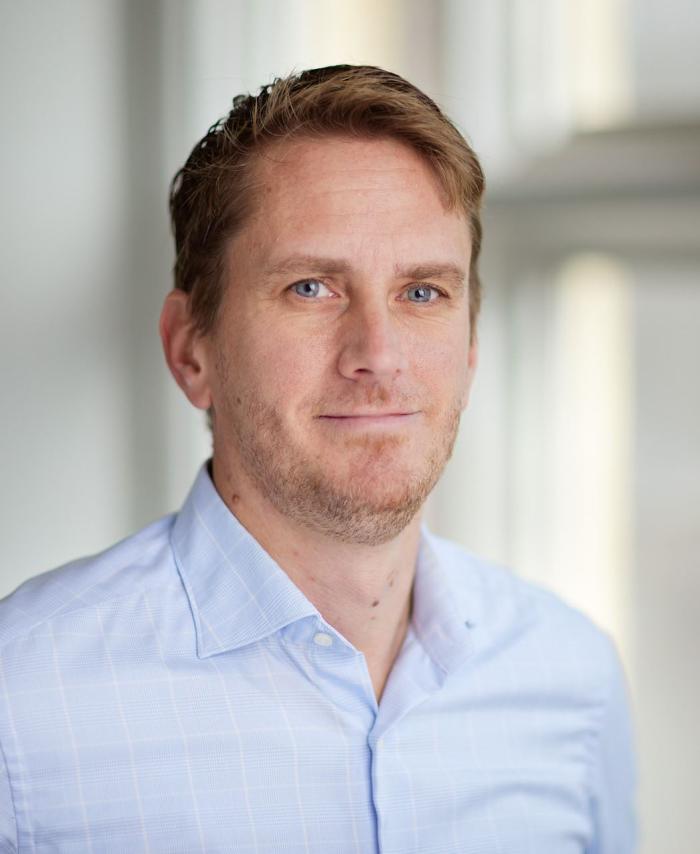
Dr Kingsley Edney is an Associate Professor in International Relations of China at the University of Leeds' School of Politics and International Studies. He holds a PhD (International Relations) and MA (Political Science) from the University of Melbourne, along with a BA(Hons) in Politics and Anthropology from Victoria University of Wellington. Fluent in Chinese and with experience living in Shanghai and Beijing, his research focuses on China's non-material international security dynamics, including cultural diplomacy, propaganda, and ideological strategies to manage global information flows. His expertise includes Chinese soft power, the role of ideology in foreign policy, and the intersection of domestic political cohesion with international security objectives. He teaches undergraduate and master's courses on China's domestic and international politics. Current postgraduate researchers under his supervision are Jinru Huang, Yanyu Lu, and Hengfeng Zhao. Edney's research outputs span topics like public perceptions of China in the Anglosphere, Chinese youth nationalism, and environmental governance. His work often bridges theoretical frameworks with empirical analysis of China's evolving global engagement strategies. He maintains active academic engagement through platforms like Google Scholar and ORCID.
Professor Elaine Fahey is a leading scholar in EU law and global governance at the City Law School, City St George's, University of London, where she serves as Professor of EU Law and Deputy Head of Department (academic programmes). She is co-convener of the Institute for the Study of European Law (ISEL) and the UACES James Madison Trust EUFUtures initiative (2022–2025). Her academic career includes visiting professorships at Washington College of Law (American University), Keio University, and NYU, as well as fellowships at the European University Institute and the University of Graz. LLB, Trinity College Dublin LLM, Sidney Sussex College, University of Cambridge PhD, Trinity College Dublin Barrister-at-Law, Honorable Society of King’s Inns, Ireland Attorney-at-Law, State of New York Senior Fellowship, Higher Education Authority UK Her research focuses on the intersection of EU law with global governance, digital regulation, transatlantic relations, and the Area of Freedom, Security and Justice. She explores how the EU navigates legal frameworks beyond the nation-state, particularly in digital trade, cybersecurity, and data protection. Her work critically examines the EU’s role as a global regulatory actor and its interactions with international institutions. Her extensive publication record includes the monograph The EU as a Global Digital Actor (Hart, 2022) and numerous articles on digital sovereignty, data transfers, and transatlantic cooperation. Recent research analyzes the EU–US Trade and Technology Council (TTC), the evolution of the Privacy Shield, and strategic litigation in digital rights. Her work reveals a strong trend toward understanding how soft law, institutional design, and judicial decisions shape EU external relations and digital governance. Erasmus+ Jean Monnet Chair in Law & Transatlantic Relations (2019–2022) Emile Noël Fellow, NYU Law School Max Weber Fellow, European University Institute Senior Land Steiermark Fellow, University of Graz Senior Fellowship, Higher Education Authority UK Professor Fahey has supervised multiple PhD students, including Isabella Mancini, Giulio Kowalski, and Christos Karetsos, on topics such as algorithmic collusion, digital markets, and investment law. She has led significant research projects, including the ESRC-funded TRILATTRADE grant and the Marie Curie ITN on EU and Transatlantic Investment and Trade (EUTIP). She previously held leadership roles as Associate Dean (International) and interim Associate Dean (Research) at the City Law School. She is an elected member of the EU Studies Association (EUSA) Executive (2021–2025). She has also contributed to public policy through briefings for the Welsh Parliament and reports on CJEU litigation in Ireland. She is associated with research initiatives such as the Institute for the Study of European Law (ISEL) and has collaborated on interdisciplinary projects on Facebook regulation, transatlantic relations, and EU technological sovereignty. Her work bridges legal scholarship, policy, and international academic collaboration.
Professor Jennifer Payne is Warden of Merton College, Oxford, and a leading authority in company law, corporate finance law, financial regulation, and corporate insolvency. She has authored numerous influential books and articles, and holds significant editorial and advisory roles in the academic and policy-making spheres. Research Interests: Company law and corporate governance Corporate finance and securities regulation Financial regulation and policy Corporate insolvency and debt restructuring Comparative and European financial law Her work spans both theoretical and practical dimensions, with a strong focus on regulatory frameworks, legal reforms, and cross-border financial issues. She has contributed extensively to policy debates and legal developments in the UK and EU. Scientific Awards & Honors: Elected to membership of the International Insolvency Institute (2016) Member of ESMA’s Securities and Markets Stakeholders Group (2016–2018) Member of ESMA’s Corporate Finance Standing Committee Consultative Working Group (2015–2017) Law Delegate of Oxford University Press (2020–present) Expert Advisory Panel member to the Law Commission on Intermediated Securities and Digital Assets Editorial & Advisory Roles: Founder editor, Journal of Corporate Law Studies Founder editor, Oxford Business Law Blog Review Articles editor, Oxford Journal of Legal Studies Contributor to Palmer’s Company Law Visiting Positions: She has held visiting professorships at Melbourne Law School, National University of Singapore, and the University of Auckland, reflecting her international academic influence.
Mariana Gkliati is an Assistant Professor of International and EU Law at Radboud University, Nijmegen. She holds a Graduate Diploma in Law (Magna Cum Laude) from the National and Kapodistrian University of Athens and a Legal Research Master (Summa Cum Laude) from Utrecht University. Her PhD from Leiden University focused on Frontex accountability, supervised by Professors Rodrigues and Besselink, and was supported by the Meijers Research Institute. Education: PhD in Immigration Law, Leiden University (2016-2020) Legal Research Master, Utrecht University (Summa Cum Laude) Graduate Diploma in Law, National and Kapodistrian University of Athens (Magna Cum Laude) Her research interests center on migration, refugee law, and human rights, particularly the accountability of the European Border and Coast Guard Agency (Frontex). She leads the externally funded project 'European Border and Coast Guard Agency: Systemic Accountability in Practice,' involving an 8-member team. Her work emphasizes evidence-based policy-making and anti-smuggling policies. Professional Activities: Research Affiliate, Refugee Law Initiative (RLI), University of London Teaches on the RLI MA in Refugee Protection and Forced Migration Studies Former visiting Research Fellow at the School of Advanced Study (2016) and Amsterdam Centre for Migration and Refugee Law (2019-2020) Awards: Magna Cum Laude, Graduate Diploma in Law Summa Cum Laude, Legal Research Master Her grants and projects include systemic accountability research on Frontex. She advises NGOs, law firms, and the European Parliament, and contributes to expert reports on migration and borders. Labs/Teams: Leads an 8-member research team for her funded project on Frontex accountability.
Linda Morrice is a Professor of Education and Migration at the School of Education and Social Work, University of Sussex. She specializes in the intersection of refugee/migration studies with education, focusing on informal learning, social integration, and exclusion. Her research spans both the Global North and South, emphasizing refugee access to higher education and policy implications. Current role: Co-Director, Centre for International Education (2021-2024) Education: BA(Hons) in Social Anthropology (University of Sussex), PgDip (Birkbeck, 2004), MA (University of Sussex, 2005), Doctorate in Education (University of Sussex, 2010) Her scientific work explores refugee education through participatory methodologies, creative/narrative methods, and life history approaches. Recent publications analyze racialized borders, digital technology’s role in refugee well-being, and sanctuary city frameworks. Supervision interests include refugee family dynamics, informal pedagogies, and gendered policy impacts. Key grants include UKRI funding for digital well-being of unaccompanied refugee children (2024-2027), ESRC projects on longitudinal qualitative studies (2023-2024), and AHRC research on refugee cultural values (2013-2014). She has led evaluations for the Home Office and Queen Rania Foundation. Professional roles: Co-Chair, Sussex University of Sanctuary group (2019-2024) Advisory member for Home Office integration frameworks and vulnerable persons resettlement schemes Labs/teams: Founding member of University of Sussex Sanctuary Group and Brighton & Hove Sanctuary on Sea. Her research emphasizes participatory practices with refugee communities and longitudinal tracking of social networks.
David Sneath serves as Director of the Mongolia and Inner Asia Studies Unit (MIASU) at the University of Cambridge, holding the position of Professor of Social Anthropology and Fellowship at Corpus Christi College. His work centers on Inner Asian societies, with extensive fieldwork among Mongolian pastoralist communities and leadership in major transnational research initiatives. Professor Sneath completed his PhD at Cambridge in 1991 and received a British Academy Postdoctoral Research Fellowship in 1994 for studies on environment-society dynamics in Inner Asia. His academic trajectory includes a Lectureship in Anthropology and Development at Oxford University (1998-2000) prior to returning to Cambridge. His research explores socio-political transformations in post-socialist Mongolia, examining intersections of kinship, state structures, environmental governance, and cultural identity. Current projects address water resource management across trans-border Asian rivers, climate histories, oral histories of 20th-century Mongolia, and Mongolian-Chinese border healing practices, reflecting his interdisciplinary approach to Inner Asian studies. His publications reveal evolving scholarly focus from foundational analyses of pastoral society-state relations (2000) through theoretical examinations of nomadic political orders (2007) to contemporary investigations of post-socialist cultural reconfiguration (2018), consistently emphasizing Mongolian agency within global systems. Academic recognition includes: British Academy Postdoctoral Research Fellowship (1994) Professor Sneath actively supervises PhD candidates in Social Anthropology while directing MIASU's collaborative research portfolio, which includes Climate Histories, Pathways to Understanding Climate Change, and the Mongolian Cosmopolitical Heritage project. His work integrates anthropological fieldwork with historical and environmental analysis across multiple international partnerships. As MIASU Director, he maintains the unit's role as a global hub for Inner Asian scholarship through the journal Inner Asia (which he co-edits), research seminars, and the Chinggis Khaan Grant program, fostering connections between Cambridge scholars and Mongolian research communities.
Dr. Thomas Brodie is an Assistant Professor in 20th Century European History at the Department of History, University of Birmingham. His academic career spans prestigious institutions including Oxford University, University of Leeds, and Jesus College, Oxford before joining Birmingham in 2018. Education: DPhil in History (The University of Oxford, 2014) MSt in Modern British and European History (The University of Oxford, 2010) BA in History (The University of Oxford, 2009) Fellowship of the Higher Education Academy (2020) Postgraduate Certificate in Higher Education (University of Birmingham, 2020) Dr. Brodie specializes in Modern European history with particular focus on Germany during the Nazi era and post-war periods. His research examines the intersection of religion, society, and war, with special attention to Catholic communities in Germany during WWII and the subsequent evolution of mourning practices and memory culture. His work combines theological analysis with social and cultural history using previously unused archival materials from church, state, and private collections. His recent publications demonstrate a clear trajectory from examining wartime religious communities to post-war memory practices, showing his evolving scholarly interests in how societies process mass bereavement and construct collective memory. The articles primarily focus on German religious history during and after WWII, with increasing attention to spatial dimensions of mourning and commemoration. Scientific Awards: Runner-up award for the Wiener Library's Fraenkel Prize (2014) AHRC award for doctoral research Hanseatic Scholarship for archival research in Berlin and German cities Dr. Brodie teaches a range of undergraduate and postgraduate courses including 'The Rise and Fall of the Third Reich' and 'Life After Death: Culture, Memory and Power in Postwar Europe.' He supervises BA dissertations and welcomes PhD students working on Modern German history or thematic interests in religion, war, and memory in European contexts since 1800. His current research project examines German society's responses to bereavement during WWII and its aftermaths through personal diaries, letters, artistic representations, and war memorials.
Ian Greer is a Research Fellow at Cornell University's School of Industrial and Labour Relations , with a career focused on marketisation , industrial relations , and transnational solidarity . He holds a PhD from Cornell University and has previously studied at Bard College. His work examines labor dynamics in globalised industries , welfare states , and multinational corporations , often through qualitative comparative methods . Education : BSc (Bard College), MSc/PhD (Cornell University) Greer's research spans marketisation of employment services , social movement unionism , and labour policy in crisis situations . His publications include studies on European welfare-to-work schemes , healthcare privatisation , and labour migration . He is associated with the Centre for Employment Relations, Innovation and Change (CERIC) at the University of Leeds. Greer's recent work analyses precarious labor and project-based employment in social services across Slovenia and France. He also contributes to debates on social dumping , work-first welfare states , and activist labor strategies in sectors like healthcare and automotive manufacturing. He has no listed scientific awards. His work often involves collaboration with scholars like Marco Hauptmeier , Charles Umney , and Nathan Lillie , though no formal advisees are named in the provided text. His email is icg2@cornell.edu .
Professor Kevern Verney serves as Associate Dean (Research) in the Arts & Sciences Faculty Office. His expertise lies in American political history, focusing on topics such as the African American Freedom Struggle, race and immigration, and U.S. presidential dynamics. He supervises PhD projects on the Trump and Obama administrations and has contributed to UN Sustainable Development Goals related to equality and justice. Academic Rank: Professor Primary Affiliation: Arts & Sciences Faculty Office Research interests include Barack Obama's presidency , Trump administration policies , historiography of civil rights , and border politics . His work intersects with global perspectives on U.S. political developments. Major publications analyze the Alt-Right movement, UK responses to Trump’s presidency, and the historiography of Black civil rights. Articles frequently explore themes of immigration, political rhetoric, and transnational political reactions. Grants/Advising: Actively supervising PhD candidates and contributing to research grants on U.S. political history.
Robert Newbery is a Professor and Head of Entrepreneurship and Innovation at Northumbria University's Entrepreneurship, Innovation and Strategy Department. He holds a PhD from Newcastle University, specializing in rural business associations, alongside an MBA and MSc in Rural Social Science. His research focuses on entrepreneurship's role in development, particularly in poverty-stricken regions of the Global North and Global South. He leads the Entrepreneurship Educator Foundation for East Africa (EEFEA) and evaluates entrepreneurship programs' impacts, including serious games and research commercialization. Education: PhD in Business and Management Studies, Newcastle University (2011) MSc in Rural Social Science, Newcastle University (2007) MBA, Newcastle University (2003) Research Interests: Entrepreneurship for poverty alleviation Rural business models in Europe and Africa Innovative supply chains in East Africa Social entrepreneurship in South America Impact assessment of entrepreneurship education Geographic Foci: UK/Europe: Farming entrepreneurship and rural business models East Africa: Entrepreneurship and poverty reduction West Africa: Business models and development South America: Social entrepreneurship Collaborations: Visiting roles at Kenyatta University and University of Nairobi (2022). Active in the Institute of Small Business & Entrepreneurship as Deputy President. Advising & Grants: Accepting PhD students in development-linked entrepreneurship. Research commercialization and serious games impact studies are current priorities. Labs/Teams: Leads the EEFEA, collaborates with interdisciplinary teams on rural development and global entrepreneurship challenges.
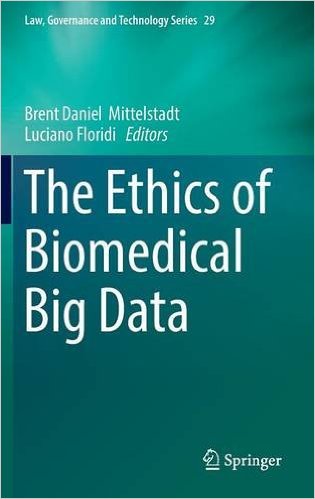
Professor Brent Mittelstadt is a leading academic in data ethics and AI governance at the University of Oxford's Oxford Internet Institute (OII), serving as Professor of Data Ethics and Policy and Director of Research. He coordinates the Governance of Emerging Technologies (GET) programme, focusing on ethics, law, and technology interplay. His work bridges academic research with policy impact, contributing frameworks like 'counterfactual explanations' and fairness metrics ('Conditional Demographic Disparity') used globally. He leads high-profile projects such as Trustworthiness Auditing for AI and A Right to Reasonable Inferences in Advertising and Financial Services. Research interests span AI ethics, medical ethics, technology governance, and non-discrimination law. He has pioneered ethical frameworks addressing algorithmic bias, GDPR compliance, and AI accountability. His work has influenced policy bodies like the UK Information Commissioner’s Office and the European Commission, and is implemented by tech giants such as Google and Microsoft. Awarded O2RB Excellence in Impact Awards (2018, 2021) and PLSC Best Paper (2019) Funded by Wellcome Trust, Sloan Foundation, and others Advisory roles for NHSx, GSK Consumer Healthcare, and regulatory bodies Recent work focuses on AI regulation (EU AI Act), generative AI ethics, and healthcare AI governance. He co-leads the OxonFair toolkit for algorithmic fairness and investigates societal impacts of deepfake proliferation and large language models.
Dr. Margaret O'Callaghan is a Professor in the School of History, Anthropology, Philosophy and Politics at Queen's University Belfast . Her research focuses on Modern Irish history, political thought, and the politics of commemoration. She has published extensively on British-Irish relations, partition, and gender studies in Irish politics. She holds a First Class Honours BA and MA from University College Dublin, and a PhD from the University of Cambridge. Research Interests: Irish political thought, British high politics, cultural identity in the Irish Free State, and the role of commemoration in historical narratives. She is currently researching figures like Conor Cruise O'Brien and Alice Stopford Green. Awards: Recipient of the Silver Medal for Oratory from the Literary and Historical Society UCD (1979). She has supervised over 40 MA dissertations and 17 doctoral theses. Activities: Active in academic conferences and media engagements, including talks on the politics of commemoration and partition. Collaborates with institutions like the Institute of Irish Studies.
Ana Marques is a Visiting Professor at Norwich Business School (University of East Anglia), specializing in accounting and quantitative methods. She previously served as head of research at the Nova School of Business and Economics in Lisbon and held visiting roles at the Indian Institute of Management Bangalore. Her academic background includes a PhD in Accounting from the University of Texas at Austin, a Master's in Management from Instituto Superior de Gestão (Portugal), and a 5-year Licenciatura in Management from the same institution. Her research focuses on non-GAAP earnings disclosures, corporate governance, ESG/CSR, and voluntary disclosures. Key funding includes a €80,000 Marie Curie grant and over €120,000 from Portugal's Foundation for Science and Technology. She has published in top journals like Review of Accounting Studies and European Accounting Review . Marques holds editorial roles at European Accounting Review and Accounting in Europe , and serves as Editor-in-Chief of the EAA's Accounting Research Center. She has organized major conferences like JIAR 2023 and the Lisbon Accounting Conference, and contributes to professional bodies such as the American Accounting Association (AAA) and European Accounting Association (EAA). Her work addresses disclosure strategies, sustainability assurance, and regulatory impacts, with recent focus on gender diversity policies and ESG-investment linkages. Research outputs emphasize global accounting practices and regulatory effectiveness across diverse sectors.
Ruben Andersson is Professor of Social Anthropology at the University of Oxford’s Department of International Development, where he researches migration, borders, security, and conflict. His work spans the West African Sahel, southern Europe, and global security dynamics. Current Leverhulme Major Research Fellow (2023-26) for 'Apocalypse soon: Security, subversion and the struggle for a human future' Author of three major monographs: Wreckonomics (2023), No Go World (2019), and Illegality, Inc. (2014) Co-edits special issues on remoteness and risk in global governance His research focuses on the unintended consequences of security interventions, including: How fear maps global danger zones Counterproductive border control industries Postcolonial risk economies in Mali and Afghanistan Security-fueled displacement cycles Profits from migration control systems Anthropology of the bioeconomy Recent publications (2016-2024) analyze: Security as subversion Border wall paradoxes Bioeconomic border technologies Digital danger mapping Interventionist 'bunker politics' Time as a control mechanism Scientific recognition: Leverhulme Major Research Fellowship (2023) Co-published in The Cambridge Journal of Anthropology , Political Geography , and Security Dialogue Doctoral supervision includes: Chloe Marshall-Denton Maggie Neil His fieldwork in Mali, Senegal, and the Mediterranean has produced critical insights about: Security industry feedback loops Risk aversion in academic/interventionist practices Colonial cartographic legacies in modern geopolitics Profit motives behind 'failed' interventions
Professor Emily So serves as Deputy Head of the School of Arts and Humanities at the University of Cambridge and directs the Cambridge University Centre for Risk in the Built Environment (CURBE). A chartered civil engineer with extensive field experience, she holds leadership roles in the Open-Oxford-Cambridge AHRC Doctoral Training Partnership and chairs the Faculty EDI Committee. Her research focuses on urban risk and resilience , particularly in earthquake-prone regions. Combining structural engineering with epidemiological approaches, she develops innovative casualty estimation models and engages directly with affected communities worldwide. Her work spans seismic safety, disaster epidemiology, and remote sensing applications for rapid damage assessment. Professor So's publication trends reveal strong emphasis on machine learning for disaster risk modeling , with recent work featuring graph neural networks, deep clustering for urban morphology, and LSTM-based population forecasting. Her research bridges engineering, social sciences, and data science to address resilience in developing nations. 2010 Shah Family Innovation Prize (Earthquake Engineering Research Institute) Fellow of the Institution of Civil Engineers (FICE) Scientific Advisory Group for Emergencies (SAGE) member advising UK government As Director of CURBE, she leads interdisciplinary collaborations with EEFIT, Global Earthquake Model (GEM), World Bank, and USGS. Her field investigations following major earthquakes inform practical solutions for vulnerable communities, notably contributing to the 2017 World Building of the Year design in China. Current work includes sabbatical research for 2025-2026 focused on decolonizing architectural approaches to disaster resilience. Professor So maintains active roles in professional organizations and international disaster response frameworks, with her CURBE team developing methodologies now implemented globally for seismic safety improvements.