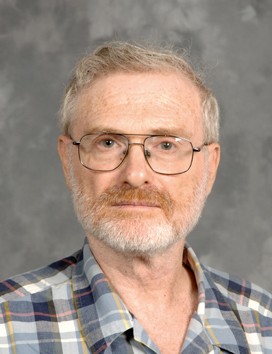
Paul Marriott is a Professor in the Department of Statistics and Actuarial Science at the University of Waterloo. His research focuses on integrating geometric principles, particularly differential and convex geometry, into statistical methodologies, with a recent emphasis on mixture models and information geometry. He has published extensively across diverse journals such as Biometrika, Annals of Statistics, and Psychological Medicine, bridging theoretical and applied statistics. Education: PhD, University of Warwick (1989) MA, University of Oxford (1984) Research Trends: His work explores geometric frameworks for statistical inference, mixture model parameterization, and robustness analysis. Recent publications highlight causal modeling, neural spike train analysis, and high-dimensional data applications. Contact: Office: Mathematics & Computer Building (M3) 4204, Phone: 519-888-4911 x35545, Email: pmarriot@math.uwaterloo.ca
Demba Ba is an Associate Professor of Electrical Engineering and Bioengineering at Harvard University's School of Engineering and Applied Sciences (SEAS). He serves as the Dean of Undergraduate Studies for Bioengineering since 2020 and joined SEAS in 2015 after a postdoctoral fellowship at MIT (2007-2014). His research bridges computational neuroscience and artificial intelligence, focusing on sparse signal representations, interpretable AI, and neural network theory. Fluent in Wolof, Fulani, French, Spanish, English, and Arabic, he also contributes to signal processing, statistical learning, and dynamic systems. PhD in EECS from MIT (2011) MS in EECS from MIT (2006) BS in Electrical Engineering from University of Maryland (2004) His work explores connections between sparse coding and neural networks through publications in top venues like NeurIPS, ICML, and IEEE Transactions. Articles emphasize convolutional dictionary learning, Bayesian frameworks, and applications to neural data analysis. He has received the 2016 Sloan Fellowship in Neuroscience and 2021 Roslyn Abramson Award for undergraduate teaching excellence. 2021: Gaussian process convolutional dictionary learning (Submitted) 2020: Deep residual auto-encoders for dictionary learning 2018: Multitaper time-frequency analysis for neuroscience Demba Ba leads the CRISP research group and holds advisory roles at Harvard. His awards include: 2021 Roslyn Abramson Award 2016 Alfred P. Sloan Foundation Fellow 2010 ICME Best Student Paper Award He teaches courses like ES 201 (Decision Theory) and ES 157 (Biomedical Signal Processing), while maintaining interdisciplinary collaborations in neuroscience, machine learning, and signal processing.
Anthony Cossari is a University Researcher in Statistics (SECS-S/01) at the Department of Economics, Statistics, and Finance "Giovanni Anania" (DESF) at the University of Calabria, where he has been employed since September 1, 2003. He holds a Laurea in Scienze Statistiche ed Attuariali from the University of Calabria (1995) with highest honors. Cossari is a member of the Italian Statistical Society (SIS) and the European Network for Business and Industrial Statistics (ENBIS). His research interests center on statistical experimental design methodologies: Screening designs for identifying significant factors in preliminary experimental phases Supersaturated designs for studying numerous factors with limited experimental runs Follow-up designs to enhance initial experimental analyses Robust designs for minimizing variability from environmental factors Cossari maintains active research collaborations across disciplines, particularly with medical researchers from the Catholic University of the Sacred Heart in Rome and mechanical engineering researchers from the University of Calabria. His publication record shows a transition from purely statistical experimental design research to increasingly collaborative medical research, especially in sepsis prognosis, alcoholic cardiomyopathy, and dental health in patients with alcohol use disorders. Recent publications (2021-2025) demonstrate strong interdisciplinary work while maintaining his core statistical expertise. His academic service includes membership on the Departmental Board (2004-2006) and the Scientific-Technical Committee of the Interdepartmental Library of Economic and Social Sciences "E. Tarantelli" (2007-present). He has served as thesis advisor for numerous undergraduate and graduate students across various statistical topics and was a member of the Doctoral Committee for the PhD program in "Economic History, Demography, Institutions and Society in Mediterranean Countries" (2007-2009).
Jörg Breitung is a Professor of Econometrics and Statistics at the Institute of Econometrics and Statistics within the Faculty of Management, Economics and Social Sciences (WiSo Faculty) at the University of Cologne since 2014. He also serves as a Research Professor of the German Bundesbank in Frankfurt since 2002. Research Focus: Panel Data Analysis Time Series Analysis Forecasting Financial Econometrics Scientific Contributions: Developed advanced GMM estimators for spatial regression models Innovative approaches for assessing causality in frequency domains Created robust tests for slope homogeneity in panel data Pioneered methods for serial correlation testing in fixed effects models Contributed to nonlinear panel data modeling and bootstrap techniques Honors and Editorial Roles: Associate Editor of International Journal of Forecasting (2019-) Associate Editor of Journal of Business and Economic Statistics (2017-) Associate Editor of Econometric Reviews (2014-) Contributed to leading journals like Econometrica and Journal of Econometrics
Ying Zhang is a Professor in the Department of Mathematics and Statistics at Acadia University, maintaining an office in Huggins Science Hall, Room 151. She earned her BSc from Shandong Normal University and advanced degrees (MA, MSc, PhD) from Western University, complemented by P.Stat. certification (Certificate #78) from the Statistical Society of Canada. Her educational background includes: BSc from Shandong Normal University MA, MSc, PhD from Western University Professor Zhang's research centers on Time Series Analysis and Applied Statistics , extending to Statistical Computing, Symbolic Algebra Computing, and Statistical Consulting in Biostatistics, Survey Design, and Research Methodology. Her work demonstrates significant applications in environmental science (water resources trend analysis), health sciences (drug safety and utilization studies), and ecological modeling (wildlife population dynamics), with methodological innovations in nonparametric testing and hierarchical modeling. Analysis of her 2013-2018 publications reveals a dominant focus on developing novel time series methodologies for environmental and health contexts, particularly seasonal trend detection, medication utilization patterns, and ecological data analysis. Her work consistently bridges theoretical statistics with practical applications across disciplines. She actively contributes through the Statistical Consulting Centre and the CANSSI Maritime Statistical and Health Sciences Collaborating Centre , holding P.Stat. designation from the Statistical Society of Canada. While her collaborative publications indicate interdisciplinary engagement, specific details of grant funding and student advising are not documented in available sources.
Benjamin Kedem is a Professor in the Department of Mathematics at the University of Maryland, College Park, with affiliations at the Institute for Systems Research (ISR). His academic career spans several decades with significant contributions to time series analysis, spatial statistics, and statistical methodology. Dr. Kedem's research focuses on time series analysis, space-time statistical problems, and combination of information from multiple sources. His work includes significant contributions to higher order crossings (HOC), contraction mapping methods in spectral analysis, Rice formula applications, threshold methods for rainfall estimation, partial likelihood approaches, Bayesian-transformed-Gaussian spatial prediction, and statistical data fusion. His research has practical applications in environmental statistics, meteorology, and public health. His recent publications demonstrate a continued focus on semiparametric methods, statistical data fusion, and computational approaches to time series and spatial analysis. The 15 most recent articles span from 2017 back to 1994, showing both contemporary relevance and foundational contributions to the field of statistics. Dr. Kedem has directed 15 PhD dissertations, with students completing between 1983 and 2007, indicating his long-standing commitment to mentoring the next generation of statisticians. His former students include George Reed, Donald E.K. Martin, Silvia R.C. Lopes, Haralabos Pavlopoulos, James Troendle, Ta-Hsin Li, John Barnett, Konstantinos Fokianos, Victor De Oliveira, Neal Jeffries, Boris Kozintsev, Richard Gagnon, Haiming Guo, Guanhua Lu, and Shihua Wen. He has authored or co-authored several books including 'Regression Models for Time Series Analysis' (2002), 'Time Series Analysis by Higher Order Crossings' (1994), and 'Statistical Data Fusion' (2017). His teaching portfolio includes graduate courses such as STAT 730 (Time Series Analysis), STAT 740 (Linear Models I), and STAT 741 (Linear Models II).
Nurul Huda is a Lecturer in the Nursing Faculty at Universitas Riau in Pekanbaru, Riau, Indonesia. Her research focuses on the intersection of nursing practice, mental health, and coping strategies, particularly in challenging healthcare contexts such as the COVID-19 pandemic and advanced cancer care. Dr. Huda's research interests center on mental health challenges faced by both healthcare providers and patients. She has conducted significant work on coping strategies among nurses during the COVID-19 pandemic, examining how fear of infection relates to mental health problems. Her scholarship also addresses psychological distress among patients with advanced cancer, with particular attention to cross-cultural adaptations of assessment tools in the Indonesian context. A substantial portion of her work involves quantitative analysis of mental health indicators and coping mechanisms in high-stress medical environments. Analysis of Dr. Huda's publications reveals a consistent focus on practical applications of psychological principles in nursing practice. Her work demonstrates expertise in quantitative research methods, particularly in measuring psychological constructs like coping strategies, anxiety, and depression. She frequently employs statistical techniques such as bootstrap resampling to test mediation effects. A significant portion of her research addresses frontline healthcare challenges in Indonesia, with implications for nursing education and practice in similar contexts across Southeast Asia. Dr. Huda frequently collaborates with international researchers, as evidenced by her work with colleagues from the United States, Taiwan, and other Indonesian institutions. This collaborative approach enriches her research and demonstrates her ability to work within global research networks while maintaining focus on local Indonesian healthcare contexts. Her work with Malissa Kay Shaw from the University of Health Sciences and Pharmacy and Hsiu Ju Chang from Taiwan highlights her international research partnerships.
Professor Tahani Coolen-Maturi is a faculty member in the Department of Mathematical Sciences at Durham University and Fellow of the Durham Research Methods Centre. Her research focuses on advanced statistical methodologies with applications across multiple domains. Her primary research interests include: Nonparametric predictive inference and statistics Reliability and survival analysis using survival signatures Diagnostic accuracy and ROC analysis Modeling dependence structures Uncertainty quantification through imprecise probability Statistical reproducibility frameworks Analysis of her recent publications reveals a strong trend toward statistical reproducibility research, particularly in hypothesis testing and educational trial methodologies. Her work bridges theoretical statistics with practical applications in reliability engineering, medical diagnostics, and educational assessment. A significant portion of her recent output develops nonparametric predictive inference frameworks for complex systems and censored data. Professor Coolen-Maturi actively supervises doctoral students, with ten current supervisees including Azza Alzahrani, Fatemah Alammar, and Hadeer Ghonem. Her collaborative research includes major educational trials funded by the Education Endowment Foundation, focusing on statistical power calculations and meta-analysis of intervention effectiveness.
Dr. Yeonwoo Rho is an Associate Professor in the Department of Mathematical Sciences at Michigan Technological University. His academic credentials include a PhD in Statistics from University of Illinois at Urbana-Champaign, an MS in Statistics from Seoul National University, and a BS/BA in Mathematics/Economics from the same institution. His research focuses on advanced statistical methodologies including: Time series modeling and econometrics Bootstrap/resampling techniques for inference Unit root testing for non-stationary data Spatio-temporal analysis of complex systems Statistical methods for p-value combination Modeling of heavy-tailed distributions Office: Fisher Hall 226C | Email: yrho@mtu.edu | Phone: 906-487-2220
Alan M. Polansky is an Associate Professor in the Department of Statistics and Actuarial Science at Northern Illinois University (NIU), where he has maintained a continuous faculty appointment since 1995. His research program centers on advancing nonparametric statistical methodologies with significant contributions to bootstrap theory, smoothing techniques, and observed confidence levels. His academic credentials include a Ph.D. from Southern Methodist University and M.S./B.S. degrees from the University of Texas at San Antonio. As an Honors Faculty Fellow (2022-2023), he developed and taught an innovative seminar on Data and Social Justice for the University Honors Program. Polansky's research spans several interconnected domains: Foundational work on bootstrap methodology and confidence interval construction Development of observed confidence levels as an alternative to multiple comparison techniques Asymptotic theory for statistical limit theorems Emerging research on network data analysis and Bayesian inference for stochastic processes His 25+ year publication record shows consistent evolution from core nonparametric methods toward contemporary applications, with recent work focusing on network statistics and Bayesian approaches while maintaining theoretical rigor. Publications appear in premier journals including the Journal of the Royal Statistical Society, Technometrics, and Computational Statistics and Data Analysis. Key recognitions include: Honors Faculty Fellowship (2022-2023) Authorship of two influential monographs: 'Observed Confidence Levels' (2007) and 'Introduction to Statistical Limit Theory' (2011) As an educator, Professor Polansky maintains regular office hours in DuSable Hall and has advised students across statistics and actuarial science programs. His research demonstrates sustained methodological innovation with practical applications in insurance, manufacturing, and emerging network-based domains, reflecting both deep theoretical expertise and commitment to real-world problem solving.
Prof. Dr. Johannes Krebs holds the Chair of Mathematics - Statistics at the Faculty of Mathematics and Geography, Catholic University of Eichstätt-Ingolstadt since 2021. His academic service includes membership on the editorial board of Statistics , the tenure track board, examination committees for B.Sc. Mathematics and Data Science programs, and the faculty council. His research focuses on topological data analysis, persistent homology, and spatial statistics with applications in stochastic geometry. Funded by Deutsche Forschungsgemeinschaft (KR 4977/2-1 and KR 4977/1-1), his work bridges theoretical statistics with computational topology to develop novel methods for analyzing complex data structures. His methodological contributions span wavelet analysis, functional data, and bootstrap techniques for dependent data. Analysis of his recent publications reveals strong emphasis on topological inference (persistent homology, Betti numbers), spatial statistics, and wavelet methods across multiple high-impact journals including Bernoulli , Annals of Statistics , and Stochastic Processes and their Applications . His work demonstrates consistent innovation in applying topological concepts to statistical problems with theoretical guarantees. Academic service highlights include: Editorial Board Member, Statistics journal Member of Tenure Track Board Examination Committee for B.Sc. Mathematics & Data Science Faculty Council Member His research program is supported by significant DFG funding for projects on Topological Data Analysis (2021-2023) and Dynamic Objects on Random Fields (2017-2020), reflecting sustained contribution to advancing statistical methodology through topological frameworks. He maintains active collaborations with researchers at UC Davis, KU Leuven, and Heidelberg University.