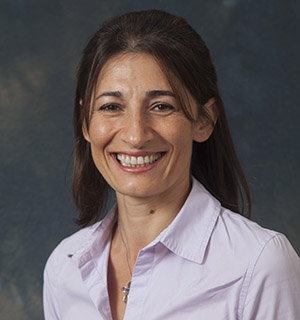
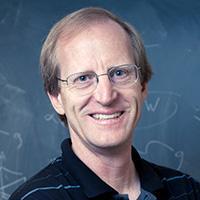
Dr Kaiying Ji is a Lecturer in the Discipline of Accounting at the University of Sydney Business School. Her research spans financial regulation, behavioral decision making, and work-integrated learning pedagogy. PhD in Accounting (University of Sydney) Chartered Financial Analyst (CFA) Member of CPA Australia Research Interests: Empirical analysis of corporate financial reporting and IFRS compliance Behavioral finance and dynamic decision-making frameworks Innovative pedagogical approaches in work-integrated learning Recent Research Trends: Combines quantitative financial modeling with qualitative educational interventions, focusing on asset impairment testing, employability skill development, and intraday market forecasting. Scientific Awards: Chartered Financial Analyst (CFA) Member of CPA Australia Teaching Contributions: Instructs courses on financial accounting, business fundamentals, and industry placements, including the China Placement Program.
Senyo Agbanyo is a Lecturer in Enterprise & Entrepreneurship at the Department of Business Entrepreneurship & Finance, Royal Docks School of Business and Law, University of East London. His academic journey includes a Doctoral Researcher in Business Management, MSc in Health Management, and BSc in Health Management. Research interests focus on organizational resilience in SMEs, financial literacy, digital capabilities, and human capital development in Africa. He employs qualitative and quantitative methods (e.g., Smart PLS) to investigate how managerial practices impact organizational performance in developing economies. Teaching responsibilities include leading modules like Entrepreneurship and Global Enterprise, with roles as associate course lead for Business Management. His publications explore SME financial resilience, digitization in African exports, and governance practices. No scientific awards are explicitly mentioned, though his research contributions highlight impactful work in African business ecosystems.
Christopher Cornwell is a Professor and Department Head of Economics at the University of Georgia's Terry College of Business, holding the Simon S. Selig Jr. Chair for Economic Growth. He also has an adjunct appointment in UGA's Department of Public Administration and Policy. His research focuses on applied econometrics, economics of education, and labor economics, contributing to policy-relevant insights on workforce productivity, educational outcomes, and labor market dynamics. Cornwell earned his Ph.D. and B.A. in Economics from Michigan State University and the University of North Carolina, respectively. His work spans topics such as structured management practices' impact on firm productivity, gender disparities in education, and merit-based scholarship effects on college enrollment. While no specific awards are listed, his extensive publications reflect recognition in academic circles. His research often bridges theoretical econometric methods with practical policy applications, particularly in education and labor markets. His advising and grants are not detailed here, but his leadership role suggests involvement in institutional initiatives. Cornwell's contributions span multiple disciplines, reflecting a commitment to interdisciplinary approaches in economics.
Philip Dixon is a University Professor of Statistics at Iowa State University's Department of Statistics. His research focuses on developing statistical methods for ecological and environmental challenges, including spatial data analysis, equivalence testing, and computer-intensive techniques like bootstrapping. Collaborative projects include tracking monarch butterflies and analyzing climate impacts on crop yields. He teaches advanced statistical courses and consults on experimental design, environmental data analysis, and statistical computing. Dixon is actively involved in software development for R and SAS, emphasizing reproducible research practices. His work spans ecological, agricultural, and public health applications, with a strong emphasis on methodological innovation and practical solutions.
Vilis O Nams is a Full Professor at Dalhousie University's Faculty of Agriculture, specializing in ecology, animal behavior, and conservation biology. His research integrates statistical modeling, fractal analysis, and field studies to explore animal movement patterns, habitat use, and ecological interactions. He has held visiting roles at institutions like James Cook University and the Spanish National Research Council. His work spans diverse taxa, including carnivores, pollinators, and agricultural systems. Key research interests include predator-prey dynamics, edge effects on animal dispersal, and the application of fractal geometry to ecological problems. He has pioneered methods for analyzing animal movement paths and their implications for habitat conservation. Collaborations with ecologists and biostatisticians have yielded influential studies on topics like blueberry pollination, wildlife telemetry, and the impacts of environmental management practices. His publications emphasize interdisciplinary approaches, such as combining movement data with behavioral sensors to detect cognitive changes in dementia patients, and developing cost-effective tools for studying arthropod behavior. Nams' work bridges theoretical ecology and practical conservation, with applications in both natural and agricultural ecosystems.
João Miguel Penedones is an Associate Professor at École Polytechnique Fédérale de Lausanne (EPFL), affiliated with the School of Basic Sciences, Institute of Physics, and leading the Fields and Strings Laboratory (FSL). He also holds a role in the School of Physics and Chemistry (SPH) and serves on the executive committee of the Center for Imaging (CIB). His research focuses on foundational aspects of theoretical physics, particularly in quantum field theory, string theory, and the AdS/CFT correspondence. His work emphasizes nonperturbative methods, including the S-matrix bootstrap, scattering amplitudes, and constraints from physical principles such as unitarity and analyticity. The article titled Nonperturbative aspects of scattering amplitudes (2023) reflects current research trends in his group, exploring deep analytical structures in quantum field theories, Landau singularities, anomalous thresholds, and connections to conformal field theories. This highlights a strong focus on rigorous mathematical frameworks for understanding quantum scattering beyond perturbation theory. He has supervised several PhD students, including Alves Da Silva João Pedro, Hebbar Aditya, Häring Kelian Philippe, Marucha Jan Krzysztof, Ribeiro Correia Miguel Alexandre, and Salehi Vaziri Kamran. His current doctoral candidates are Armanini Elisabetta, Loparco Manuel, Martina Adrien Philippe, and Vuignier Antoine. There is no mention of external grants, but his leadership of a dedicated research lab suggests active research funding. He is involved in academic leadership through his membership in the executive committee of the Center for Imaging (CIB), contributing to institutional governance at EPFL.
Cosma Shalizi is an Associate Professor in the Statistics Department and Machine Learning Department at Carnegie Mellon University, and an External Professor at the Santa Fe Institute. His work bridges statistics, machine learning, and complex systems theory, with applications spanning neuroscience, statistical mechanics, and social networks. Shalizi's research focuses on nonparametric prediction of time series, learning theory, information theory, and causal inference. He has made significant contributions to computational mechanics, developing algorithms like CSSR (Causal State Splitting Reconstruction) for identifying optimal predictive states in complex systems. His work extends to heavy-tailed distributions, network analysis, and the statistical foundations of complex systems. He has pioneered methods for quantifying self-organization and developing nonparametric approaches to spatio-temporal prediction. His recent publications reveal a trend toward increasingly interdisciplinary work, connecting network science with causal inference, statistical learning theory with macroeconomic forecasting, and information theory with biomedical applications. His work consistently emphasizes rigorous statistical methodology applied to complex, dependent data structures across diverse scientific domains. Winner of the Best Student Paper and Best Poster awards Shalizi has advised students including Georg Goerg, who extended spatio-temporal prediction techniques to continuous-valued fields, and George Montañez, who developed fast approximate algorithms for prediction and explored information-theoretic explanations for machine learning. His collaborative network spans statistics, physics, neuroscience, and social sciences, reflecting his interdisciplinary approach to complex systems. His work with collaborators has led to significant contributions in network analysis, causal inference in social networks, and the development of nonparametric methods for complex data structures. He maintains active research programs in statistical network modeling, time series analysis, and the application of information-theoretic approaches to diverse scientific problems.
Matthias Felleisen is a Professor in the College of Computer Science at Northeastern University. He is renowned for founding the PLT research group and pioneering the TeachScheme! educational initiative, which evolved into the Bootstrap project. His work spans programming languages, type systems, and educational tools. Affiliation: Northeastern University Academic Rank: Professor Research Interests: Programming Languages, Type Systems, Domain-Specific Languages, Concurrency Models His recent research includes type tailoring, effectful software contracts, and trace contracts. He has contributed extensively to programming language design and implementation, with a focus on gradual typing, language workbenches, and educational frameworks. Conference Contributions (2012-2025): ECOOP 2015-2025: Papers on gradual typing, contract systems ICFP 2016-2024: Research on Typed Racket, blame evaluation, concurrency SPLASH 2012-2023: OOPSLA papers on type migration, macros, visual syntax Mentoring Activities: Keynote speaker at PLMW 2016 ICFP 2020 mentoring sessions
Fang Xu is a Senior Lecturer in Economics at Brunel University London, Department of Economics and Finance, since 2018. Previously, she served as a Lecturer at the University of Reading (2011-2017) and was a Max Weber Fellow at the European University Institute (2008-2010). Her research spans three core areas: Time Series Econometrics: Specializes in bounded stationarity tests, functional coefficient models, and multivariate GARCH models. Empirical Macroeconomics: Focuses on current account imbalances, monetary policy impacts, and economic forecasting. Empirical Finance: Investigates stock market volatility, investor attention metrics, and asset pricing anomalies. She has secured grants from the British Academy (2022-2024) for analyzing news intensity impacts on financial markets, and from the Fritz-Thyssen Foundation (2008-2011) for studying current account sustainability. Her recent work explores: Time-varying monetary policy effects on stock markets News coverage's role in economic uncertainty Multi-lingual news analysis across countries High-frequency market risk assessment Price-to-dividend ratio determinants Scientific contributions appear in top journals including Journal of Econometrics , European Financial Management , and Journal of Money, Credit and Banking . She teaches: Quantitative Methods for Business Macro and Financial Econometrics Corporate Investment Research Methods in Economics and Finance
Volker Schomerus is a Professor of Mathematical Physics at the University of Hamburg and a Lead Scientist at DESY (Deutsches Elektronen-Synchrotron). His research focuses on the unification of string theory, quantum field theory, and mathematical physics, particularly through geometric quantization of spacetime and solving quantum theory challenges via geometric techniques. He coordinates the European RTN GATIS initiative and previously led the DESY Theory Group (2007–2010). Research Interests : Schomerus explores string theory's role in fundamental physics, including quantum geometry, holographic dualities, and integrable models. His work bridges particle physics, conformal field theory, and statistical mechanics, with emphasis on bootstrap methods, thermal correlators, and defect CFTs. Publications : Recent articles (2020–2025) demonstrate advances in multipoint conformal bootstrap, holographic interfaces, and thermal field theory. Key themes include integrability in CFT, lightcone limits, and applications of Gaudin models to higher-dimensional quantum systems. Academic Leadership : Heads research groups at DESY and Universität Hamburg, fostering collaborations in theoretical high-energy physics. No awards or students are explicitly listed in the sources.
Zulal Denaux is a Professor of Economics at the Harley Langdale Jr. College of Business Administration, Valdosta State University , where she has served since 2002. She coordinates study abroad programs (e.g., Business in Italy) and contributes to departments including Economics, Finance & Health Care Administration. Her academic journey includes a Ph.D. in economics (minor in statistics) from North Carolina State University , an MBA with International Business Certificate from Southern New Hampshire University , and a B.A. in economics and political science from the University of Ankara . Research Interests: Open-economy macroeconomics, international trade dynamics (exchange rate volatility, capital inflows), environmental economics (agricultural efficiency, pollution control), fiscal policy analysis, and data envelopment analysis (DEA). Article Trends: Focus on Turkey's macroeconomic responses to exchange rate shocks, energy-GDP causality in OECD/US, financial-development growth links in South Korea, and educational efficiency disparities in Georgia public schools. Awards: Recipient of 15+ grants (e.g., Steele Summer Research Grants, Georgia Gulf Sulfur Corporation funding) and 6 major teaching/service awards (e.g., 2018 Outstanding Teacher Award, 2013 Service Award).
Veronika Rockova is the Bruce Lindsay Professor of Econometrics and Statistics in the Wallman Society of Fellows at the University of Chicago Booth School of Business. She joined Booth after postdoctoral training at the Wharton School and has been internationally recognized for her work at the intersection of statistics and machine learning. Her research focuses on developing decision-centric statistical tools for large datasets, specializing in Bayesian computation Variable selection High-dimensional decision theory Hierarchical modeling Uncertainty quantification for generative AI Recent publications highlight trends in Bayesian CART mixing rates Generative posterior sampling Deep learning integration with Bayesian frameworks Tree-based bandit approaches for ABC Quantile methods for credible sets Scientific recognition includes COPSS President's Award (2024) COPSS Emerging Leader Award (2023) NSF CAREER Award (2020) She currently serves on editorial boards for Annals of Statistics Journal of the American Statistical Association Journal of the Royal Statistical Society (Series B) and mentors PhD students in econometrics and statistics.
Lance J. Dixon is a Professor at SLAC National Accelerator Laboratory , operated by Stanford University. His research focuses on theoretical elementary particle physics , particularly higher-order calculations in perturbative QCD, Standard Model Higgs physics, and gauge-gravity dualities. Current affiliation: SLAC National Accelerator Laboratory, Stanford University Email: lance@slac.stanford.edu Phone: (650) 926-2627 Research Interests include: Scattering amplitudes in quantum field theory Precision Higgs and Standard Model calculations Theoretical methods for collider physics Interconnections between gauge theory and gravity Early universe cosmology applications Publications span multi-loop amplitudes in N=4 SYM, Higgs boson phenomenology, and quantum gravity relations. Key contributions include: High-order QCD corrections for collider observables Hexagon function formalism for amplitude bootstrapping Antipodal duality in eight-loop amplitudes Multi-Regge limit analyses Software Tools developed: Vrap : NNLO Drell-Yan rapidity distributions Hexagon function libraries for amplitude calculations
Erhan Öztop is a Professor at Özyeğin University's Computer Science Department and Co-Director of the Ozyegin University Robotics Laboratory. He holds a Specially Appointed Professor position at Osaka University's Symbiotic Intelligent Systems Research Center. Previously, he worked at Advanced Telecommunications Research Institute International (ATR) in Japan from 2002-2011, leading as Vice Head of the Communication and Cognitive Cybernetics Department. He earned a Ph.D. in Computer Engineering (2002) from the University of Southern California, M.S. in Computer Engineering (1996) from METU, and B.S. in Computer Engineering + Mathematics (1993) from METU. His research focuses on computational modeling of intelligent behavior, human-robot adaptation, cognitive neuroscience, and machine learning. His work explores visuomotor learning , mirror neuron systems , grasp affordance learning , and human-in-the-loop robot control . Key projects include: Dexterous manipulation via human-robot body schema integration Mental state inference using visual control parameters Motor interference as a metric for human-like robot perception Sign representation of Boolean functions Recent publications emphasize human-robot co-adaptation , emotion modeling , and affordance-based architectures for collaborative systems. His work bridges robotics , cognitive neuroscience , and machine learning to develop biologically inspired intelligent systems.
Salvador Naya Fernández is a Full Professor in the Department of Statistics and Operational Research at the Higher Polytechnic School of the University of A Coruña (Spain). He leads statistical research projects in materials science, thermal analysis, and industrial quality control, with a focus on functional data analysis and reliability engineering. Affiliations: MODES research group, CITIC research center Education: Not explicitly stated in provided texts Research Interests span Statistics , Operational Research , and Materials Science , with specific applications to: Thermal degradation modeling of polymers and composites Functional data analysis for interlaboratory studies Statistical quality control in industrial processes Reliability engineering for mechanical systems Image analysis for defect detection in manufacturing Publication Trends show expertise in applying statistical learning to materials engineering , particularly through thermal analysis (TGA, DSC, DMA) and functional data methods . Collaborative work extends to biomedical scaffolds , energy efficiency , and maritime engineering . Teaching Contributions include advising 25+ graduate theses (2010-2024) in statistical applications to: Biopolymer degradation Credit risk modeling Industrial anomaly detection Maritime traffic analysis Energy efficiency Scientific Awards : No specific awards mentioned in provided texts. Labs & Collaborations : Works with the MODES research group and CITIC at University of A Coruña. Collaborates with universities in Ecuador, France, and Portugal, and participates in international conferences like ISI World Statistics Congress and NATAS .