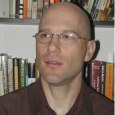
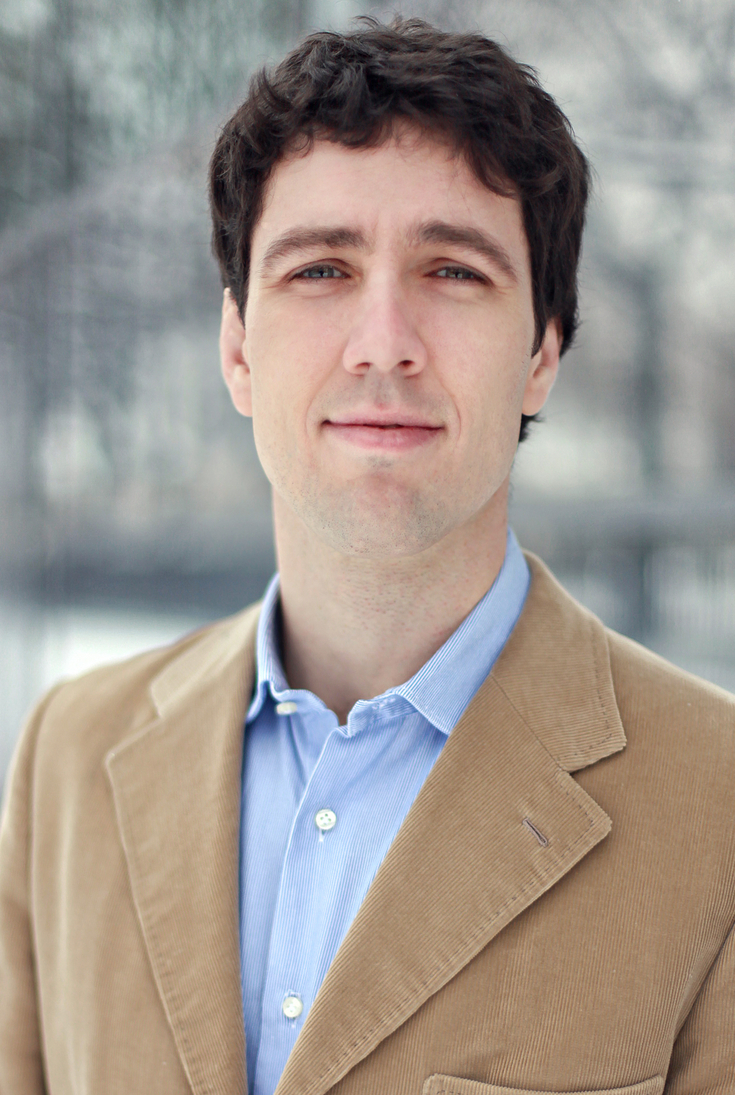
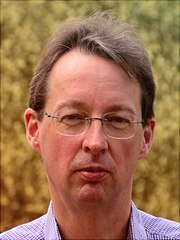
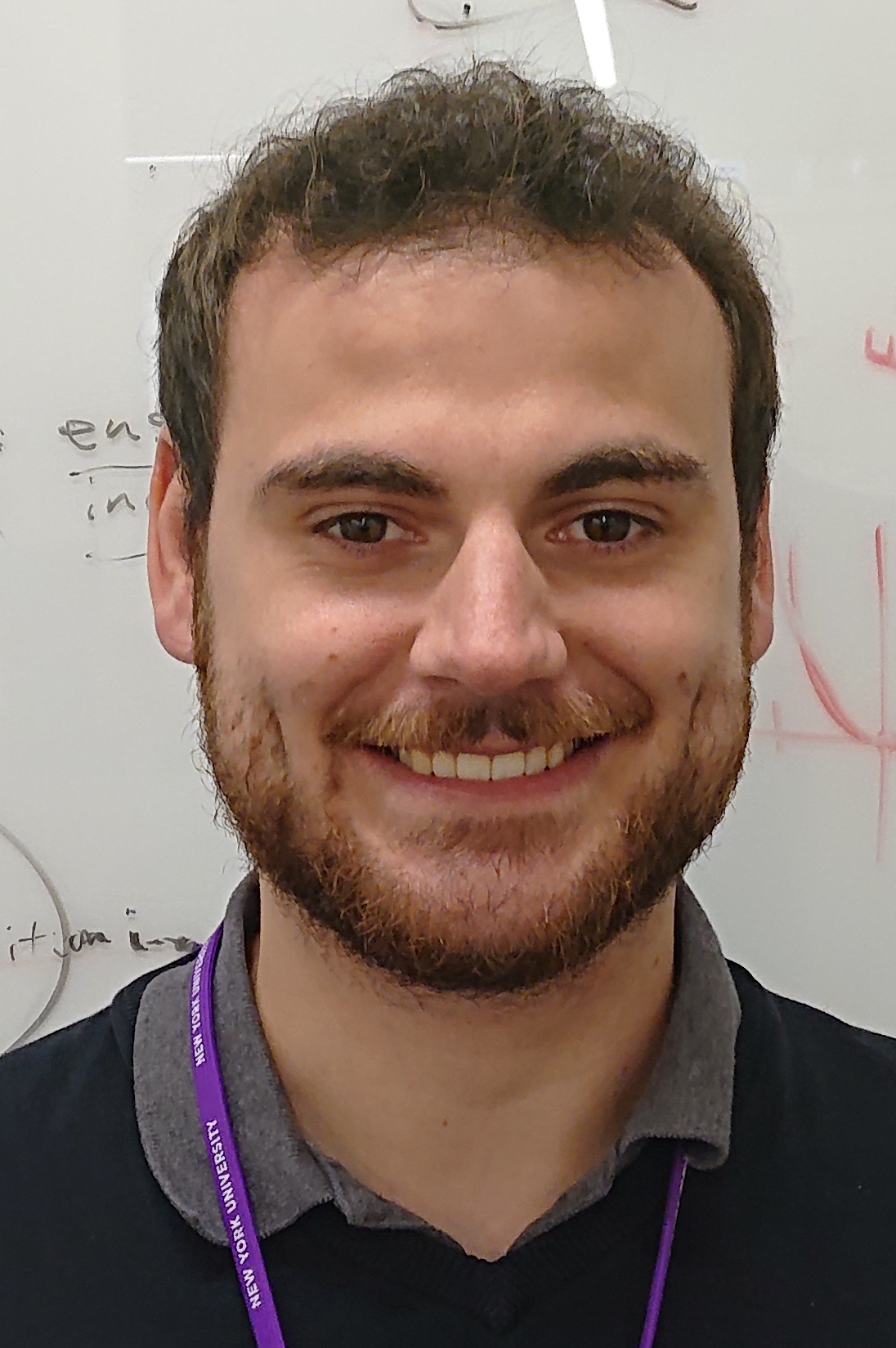
Christoph Breunig is a Professor in the Department of Economics at the University of Bonn. His work bridges theoretical econometrics with empirical applications, focusing on nonparametric methods, instrumental variable modeling, and causal inference. His research addresses challenges in high-dimensional data, missingness mechanisms, and treatment effect estimation. University: University of Bonn Department: Economics Academic Rank: Professor Email: cbreunig@uni-bonn.de Research Trends: Nonparametric and semiparametric estimation techniques Applications of instrumental variables in causal inference Handling missing data and measurement error High-dimensional statistical models with economic applications Specification testing in complex regression frameworks Connections between microeconomic theory and empirical methods
Saharon Rosset is a Professor and Chair in Modern Statistics and Data Science at the Department of Statistics and Operations Research, School of Mathematical Sciences, Tel Aviv University, since 2007. His expertise spans statistical learning theory, machine learning, and computational biology, with a focus on integrating statistical methods into biological and data science applications. Research Interests: Statistical Learning, Computational Biology, Genomics, Data Science Teaching: Statistics of Big Data, Statistical Genetics, Bootstrap Methods, Data Science His recent publications explore diverse applications including ATP production mechanisms, SARS-CoV-2 evolution, gene-environment interactions, and music structure analysis. He employs methodologies from high-dimensional statistics, random effects modeling, and multiple hypothesis testing. Scientific Awards : Best paper award at KDD-2011 KDD Cup 2007 Winner Best application paper award at KDD-02 He has mentored numerous PhD and MSc students, including Oren Yuval, Giora Simchoni, and Rajesh Karmakar. His collaborative work appears in journals like PNAS , Biometrics , and Journal of Machine Learning Research .
Matthias O. Franz is a Professor in the Department of Computer Science at Hochschule Konstanz University of Applied Sciences, Konstanz, Germany, since 2007. His academic work spans theoretical and applied research in Machine Learning, Computer Vision, and Computational Neuroscience. Research Interests His research focuses on interdisciplinary applications of computational methods, including: Machine Learning algorithms for image analysis and signal processing Computer Vision techniques in object recognition and 3D reconstruction Computational Neuroscience studies on echolocation and visual saliency Quantum Physics applications in space missions Notable contributions include kernel methods for image modeling, steganalysis frameworks, and biomimetic navigation systems inspired by biological processes. Publication Trends Dr. Franz’s 15 most recent publications (2022–2011) demonstrate a trajectory from foundational work in nonlinear system modeling to applications in space technology, computer vision, and acoustic signal analysis. Key trends include: 2022: Image novelty detection using mean-shift algorithms for sensor technology 2015: Dual-species atom interferometry for space-based physics and hybrid image registration 2014: Geometric primitive classification in point clouds and multi-camera stereo matching 2013–2011: Steganalysis, Gaussian process calibration, and computational models of echolocation 2008–2007: Early work on Wiener series and visual saliency prediction
Prof. Dr. Martin Biewen is a Full Professor of Statistics, Econometrics and Quantitative Methods at the University of Tübingen 's Faculty of Economics and Social Sciences. Since 2023, he serves as Scientific Director of the Institute for Applied Economic Research (IAW Tübingen) and is a member of the Cluster of Excellence - Machine Learning for Science. His research spans income distribution , labor economics , education economics , and microeconometrics , with recent work applying machine learning to inequality analysis. PhD, University of Heidelberg (2000) Habilitation, University of Mannheim (2005) His methodological innovations include bootstrap inference for inequality measurement and Stata implementations of decomposition techniques. He has served on multiple advisory boards including the German Federal Ministry of Labour and Social Affairs and the German Economic Association 's standing committees. Current grants include DFG Priority Programme 1764 and leadership roles in the LEAD Graduate School. Articles demonstrate expertise in minimum wage impacts , wealth inequality , and gender gaps in economic literacy . He has developed statistical software packages for Stata and R used in inequality analysis across 20+ journals.
Karsten Schweikert is a Professor at the Computational Science Hub (CSH) and an affiliate scientist at the Institute for Economics at Stuttgart University of Applied Sciences. He leads the Data and Statistical Consulting module and teaches the Financial Econometrics Seminar . Academic Rank: Professor Department: Institute for Economics Key Affiliation: Computational Science Hub (CSH) His research focuses on econometrics , financial economics , and time series analysis . He specializes in structural breaks, dynamic factor models, cointegration, and market microstructure. Recent work includes studies on integrated variance estimation, price discovery mechanisms, and urban crime forecasting. The 15 most recent publications highlight his expertise in econometric modeling for financial markets, macroeconomic nowcasting, and applied statistics. Key subfields include structural break detection, mixed-frequency data analysis, and market information share estimation. He leads statistical consulting initiatives and teaches advanced econometrics topics. No scientific awards or student advisement information were explicitly mentioned in the provided texts.
Carina Graw is a Scientific Associate at the Chair of Stochastics within the Faculty of Mathematics at Ruhr University Bochum. Her research specializes in differential privacy, focusing on developing mathematical frameworks for privacy-preserving statistical analysis. Her work bridges theoretical mathematics with practical data security applications, particularly in developing bootstrap methods under differential privacy constraints. Current projects investigate privacy guarantees in statistical learning and data anonymization techniques.
Prof. Dr. Benny Selle is a Professor of Hydrology and Water Protection at the Berlin University of Technology , affiliated with the Department of Civil Engineering and Geoinformation . His research focuses on hydrological system variables , process models , and causal interactions in water quality and management. Education: Diploma in Geography (University of Leipzig, 2001) with minors in Geology and Economics. Doctorate in Soil Physics (University of Bayreuth, 2005). Habilitation in Mathematics and Natural Sciences (University of Tübingen, 2014). Re-habilitation in Agriculture, Civil Engineering and Environment (University of Rostock, 2024). Research Interests include dissolved organic carbon mobilization , contamination processes in water bodies , and innovative water management solutions . His work often integrates bottom-up/top-down modeling approaches to address ecological and social relevance of hydrological relationships. Committee Activities: Active member of the Catchment Hydrology committee (European Geoscience Union, since 2008). Member of the Commission for the Opinion on Appointment Procedures at Berlin Tech (since 2017). Associate Editor of Hydrology and Water Management (HyWa) (since 2018). Member of the working group Deadwood in Water Management (DWA AG GB 2.20, since 2019). Member of the Academic Senate (Berlin Tech, since 2021). Teaching Philosophy emphasizes independent learning , student discussion , and supporting diverse academic potentials . He supervises theses on topics such as urban water management , cleaning urban drains , and remediation of contaminated sites . Professional Experience spans institutions like the University of Bayreuth , WESS (Tübingen) , and University of Potsdam , with a career in Australia as a Hydrologist & Systems Modeller (2005-2010).
Prof. Dr. Alois Kneip is a leading academic at the Department of Economics , University of Bonn, with affiliations to the Institute for Finance & Statistics and the Hausdorff Center for Mathematics . His research focuses on advanced statistical methodologies, particularly in Functional Data Analysis , Aggregation Theory , and Nonparametric Statistics . His work spans interdisciplinary applications, including econometric modeling, growth curve analysis, and high-dimensional regression. Key contributions include developing frameworks for Malmquist indices , DEA efficiency scores , and functional principal component analysis . Recent publications emphasize spatial regression, parameter cascading, and reconstruction of fragmented functional data. Alois Kneip’s research has been published in top-tier journals such as the Journal of the American Statistical Association , Annals of Statistics , and Econometric Theory . His methodological innovations bridge theoretical statistics with practical problems in economics, finance, and biomedical data analysis. He actively contributes to teaching and academic leadership at the University of Bonn.
Prof. Dr. Jürgen Franke is a renowned academic in statistics and applied mathematics. He held the position of Professor C4 (Chair) for Applied Mathematical Statistics at Technische Universität Kaiserslautern from 1988 to 2017. Since 2017, he has been a Consultant Researcher at the Fraunhofer Institute for Industrial Mathematics (ITWM) in Kaiserslautern. His research focuses on nonlinear time series analysis, stochastic processes, and their applications in finance, risk management, and biomedical data analysis. Education: - Diplom in Mathematics, Goethe-Universität Frankfurt a.M., 1974. - PhD (Dr. phil.nat.) in Mathematics, Goethe-Universität Frankfurt a.M., 1980. - Habilitation in Mathematics, Goethe-Universität Frankfurt a.M., 1985. Research Interests: Franke's research emphasizes the development of statistical methodologies for nonlinear time series, spatial data, and stochastic processes. Key areas include local smoothing techniques (kernel and wavelet-based estimates), functional data analysis, resampling methods (bootstrap), and nonparametric approaches in machine learning. His applied work addresses challenges in finance, risk management, and biomedical data analysis where traditional methods may be insufficient. Advising and Grants: While specific grants are not detailed, Franke has collaborated extensively with researchers in applied mathematics and statistics, contributing to numerous projects. His work often intersects with interdisciplinary applications, reflecting a commitment to bridging theoretical and practical domains. Labs/Teams: Affiliated with the Department of Mathematics at TU Kaiserslautern and the Fraunhofer Institute for Industrial Mathematics (ITWM), where he focuses on applied statistical research and collaboration with industry.
Prof. Dr. Holger Drees is a Professor of Actuarial Mathematics at the University of Hamburg, affiliated with the Faculty of Mathematics, Computer Science and Natural Sciences. He holds a position in the Department of Mathematics, specializing in the ST – Mathematical Statistics and Stochastic Processes research group. His office is located at Bundesstraße 55, Room T15 in Hamburg. He earned his diploma in mathematics from the University of Dortmund (1990), his PhD from the University of Siegen (1993), and his habilitation from the University of Cologne (1998). His research focuses on extreme value theory, actuarial mathematics, financial time series modeling, and non/semiparametric statistics. He is a member of the Hamburger Zentrum für Versicherungswissenschaft (HZV) and serves as an Associate Editor for *Bernoulli* and *Extremes* journals. His recent research emphasizes statistical inference on extreme value dependence structures, cluster-based methods for time series extremes, and dimension reduction techniques for multivariate extremes. His work bridges theoretical advancements in extreme value analysis with practical applications in finance and insurance. Teaching activities include advanced courses on extreme value theory and actuarial mathematics. Professional contributions include editorial roles and collaborative projects on statistical methodologies for extremes. His research has been supported by grants such as the DFG Heisenberg grant (2000–2002). He maintains an active international research network, collaborating with institutions like the University of Cologne and the University of Heidelberg.
Prof. Dr. Uwe Hassler is a Professor of Statistics and Econometric Methods at Goethe University Frankfurt, affiliated with the Department of Economic Policy and Quantitative Methods within the Faculty of Economics and Business Economics. His research focuses on time series analysis, econometric methodology, long memory processes, and unit root testing. He holds an office at RuW 3.214 on Theodor-W.-Adorno-Platz 4 in Frankfurt. Key research interests include statistical inference, hypothesis testing pitfalls, and applications in financial econometrics. Recent work addresses self-normalizing tests, spurious correlations in random walks, and historical mathematical problems like the Basel conjecture. His contributions span theoretical advancements and practical methodologies in time series analysis. Publications emphasize rigorous testing frameworks, addressing issues like sample size determination, significance testing pitfalls, and long memory properties in economic data. Notable collaborations include work on inflation dynamics and cointegration analysis. No academic awards or grants are explicitly listed in provided texts. His team includes researchers like Tanja Zahn and lecturers such as Balázs Cserna, contributing to the Hassler research group.
Heiko Schütt is Associate Professor for Computational Cognitive Science and Modeling at the Université du Luxembourg. His research focuses on developing mechanistic models of visual perception and cognition using deep neural networks, Bayesian inference, and efficient coding principles. He is also the developer of widely used toolboxes such as rsatoolbox for representational similarity analysis and Psignifit 4 for psychometric function fitting. His work lies at the intersection of cognitive science, computational neuroscience, and machine learning, with a strong emphasis on creating and evaluating models of human perception and decision-making. He investigates early visual processing, eye movement dynamics, and model evaluation methodologies, contributing both theoretical frameworks and practical tools to the scientific community. The recent publications reflect a strong trend toward developing rigorous statistical methods for comparing neural and cognitive models, particularly in the context of representational geometries and perceptual decision-making. His work increasingly bridges human cognition and artificial neural networks, exploring parallels in generalization and representation. Much of his research is image-computable and grounded in empirical psychophysics. He has previously held postdoctoral positions with Weiji Ma at New York University and Niko Kriegeskorte at the Zuckerman Institute, Columbia University. His PhD was jointly conducted with Felix Wichmann at Tübingen and Ralf Engbert at Potsdam, focusing on early visual processing and eye movements. No scientific awards are mentioned in the provided text. While no formal advisees are listed, his active research program and development of major scientific toolboxes suggest a role in mentoring students and collaborators. There is no mention of specific grants, but his work likely involves funded research given the scale and impact of his projects. He maintains active code repositories on GitHub for rsatoolbox, Psignifit 4, early vision models, and eye movement modeling, indicating leadership in open science and computational tool development. These resources support a broad community in cognitive and computational neuroscience.
Professor Ralf Brüggemann is a full-time faculty member at the University of Konstanz , holding the Chair of Statistics and Econometrics since October 2007. He completed his Habilitation in Time Series Econometrics at Humboldt-Universität zu Berlin in 2007 and received his Ph.D. in Economics in 2003 for work on VAR model reduction techniques. Education : Habilitation: "Topics in Time Series Econometrics", Humboldt University Berlin (2007) Ph.D.: Economics, Humboldt University Berlin (2003) Diplom: Economics, Humboldt University Berlin (1999) His research spans Time Series Econometrics with focus on Cointegrated VAR Models , Structural VAR/VECM , Forecasting Methods , and Empirical Macroeconomics . Key contributions include methodological work on structural identification, variable selection in high-dimensional VAR, and monetary policy analysis using microeconomic data. Recent publications address External instruments in SVAR identification (2022) Directed graphs for VAR variable selection (2022) Stochastic aggregation weights in forecasting (2023) Asymmetric impulse responses in European financial markets (2014) with methodological innovations in heteroskedasticity-robust inference and stochastic aggregation weights. Scientific Awards : Jean Monnet Fellow, European University Institute (2003-2004) He leads research on monetary policy transmission mechanisms and macroeconomic risk through collaborative projects with institutions like the German Research Foundation Collaborative Research Center 649 (2005-present) and serves as editor for the Journal of Economics and Statistics special issue on Economic Forecasts (2011).
Juliane Mai is a Research Associate Professor at the University of Waterloo's Department of Earth and Environmental Science and a former Research Scientist at the Helmholtz Centre for Environmental Research (UFZ) in Leipzig. Her work focuses on computational hydrology, model calibration, sensitivity analysis using high-performance computing, and data dissemination tools like HydroHub and CaSPAr. She develops blended hydrological models that combine multiple process implementations and leads large-scale intercomparison projects (GRIP-E, GRIP-GL) across North America's 3,000+ basins. Her research bridges environmental modeling with machine learning and data science, emphasizing open-access platforms for stakeholders. Key projects: GRIP-E/GRIP-GL model intercomparisons Methodological innovations: xSSA, EEE, MVA sensitivity techniques Created data portals: HydroHub for visualization, CaSPAr for climate data Her 2023 Journal of Hydrology paper outlines calibration strategies for environmental models, while 2022 Nature Communications work quantifies process sensitivities across North America. She received the 2023 ASCE-EWRI best case study award for GRIP-E research and serves on editorial boards like Journal of Hydrology .
Prof. Dr. Alexander Asteroth is a Professor of Computer Science at the Department of Computer Science , Hochschule Bonn-Rhein-Sieg (H-BRS). His work bridges Machine Learning , Surrogate Modeling , and Aerodynamic Analysis through interdisciplinary collaborations with the Institute of Technology, Resource Conservation, and Energy Efficiency (TREE) . Project leadership roles in GARRULUS (drone-based reforestation), eTa (sustainable mobility), and ELaBoR (EV charging infrastructure). Research themes: Quality Diversity Algorithms for design exploration, Bayesian Optimization , and AI in Sports Science . His publications (2017–2025) demonstrate expertise in evolutionary computation , generative models , and human-AI co-creativity . Collaborations with industry partners like GKN Driveline and academic peers (Houben, Sebastian; Hagg, Alexander) underscore his applied research focus on energy-efficient systems and sports performance modeling.