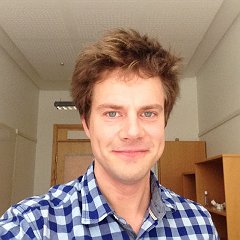
Friedrich Slivovsky is a researcher at the Institute of Logic and Computation within the Faculty of Informatics at Technische Universität Wien (Vienna University of Technology). His work focuses on theoretical and practical aspects of computational logic, with particular expertise in Quantified Boolean Formulas (QBFs), Propositional Model Counting (#SAT), and Knowledge Compilation. His research interests span the theoretical foundations and practical applications of computational logic. Slivovsky investigates the complexity of logical reasoning problems, develops efficient algorithms for solving them, and creates practical tools that implement these theoretical advances. His work bridges the gap between theoretical computer science and practical applications in areas like hardware verification, artificial intelligence, and electronic design automation. Analysis of his publication trends reveals a consistent focus on QBF solving techniques, with increasing emphasis on circuit minimization, proof complexity, and practical solver engineering. His recent work (2023-2024) shows a strong focus on circuit minimization techniques, combining QBF and SAT approaches to solve complex optimization problems in hardware design. Earlier work (2019-2021) emphasized dependency schemes, certification methods, and theoretical foundations of QBF solving. Slivovsky leads several significant software projects that have become important tools in the computational logic community: Qute : A dependency learning QBF solver with GitHub repository showing active development (latest commit December 2024) Unique : A preprocessor for (D)QBF that computes unique Skolem and Herbrand functions Pedant : A certifying DQBF solver These projects demonstrate his commitment to translating theoretical advances into practical tools that benefit the broader research community.
Alexey Ignatiev is an Associate Professor in the Optimisation research group at Monash University's Faculty of Information Technology. Previously, he was a postdoctoral researcher and researcher at the University of Lisbon's Faculty of Sciences, focusing on SAT/SMT-based decision procedures. He holds a Ph.D. from the Matrosov Institute for System Dynamics and Control Theory (Russian Academy of Sciences), where his thesis explored parallel CDCL-BDD integration. His research emphasizes formal methods in AI, including explainable AI (XAI), SAT-based reasoning, and optimization for applications like software upgradability, model-based diagnosis, and fault localization. His work spans over 100 publications, with notable contributions to MaxSAT solving (RC2 solver), neuro-symbolic frameworks (NEUSIS), and rigorous explanations for machine learning models. He has collaborated extensively with institutions like the University of Lisbon and Monash University, contributing to advancements in formal verification and interpretable machine learning.
Miki Hermann is a CNRS Researcher at the Laboratory of Computer Science (LIX) at École Polytechnique, France. He is affiliated with the Algorithms and Complexity research group and maintains an active research program in theoretical computer science and computational logic. His research interests span computational complexity, constraint satisfaction problems, satisfiability, and logic in computer science. Hermann's work focuses on the theoretical foundations of computational problems, particularly examining complexity classifications, counting problems, and algorithmic solutions for logical and combinatorial structures. His research bridges theoretical computer science with practical applications in artificial intelligence and data analysis. The analysis of his recent publications reveals a consistent focus on computational complexity across various logical frameworks. His work demonstrates expertise in classifying the complexity of constraint satisfaction problems, propositional logic systems, and graph-theoretic problems. Notable research directions include minimal inference problems, counting complexity, and applications of satisfiability to big data transformation through his MCP project. Hermann is part of the Algorithms and Complexity research group at LIX (CNRS, UMR 7161), where he contributes to theoretical computer science research. He has developed significant software projects including MCP (Multi-Classification Project) for transforming datasets into propositional formulas and GYT (Generalized Young Tableaux) for solving variadic polynomial equations over non-negative integers.
Alessio Mansutti is an Assistant Professor at IMDEA Software Institute, Madrid, where he conducts research in logic and formal methods in computer science. Prior to this, he was a Research Associate in the Automated Verification Group at the University of Oxford. His research focuses on decision procedures for arithmetic theories, separation logic, modal logics, and proof theory. Key areas include Presburger arithmetic with non-linear operations (exponentiation, GCD), quantifier elimination, complexity analysis, and logical expressiveness. He has made significant contributions to the decidability and complexity of extended arithmetic and spatial logics. The recent publications show a strong trend in developing quantifier elimination techniques for linear-exponential and counting extensions of arithmetic, analyzing reachability in separation logic, and designing internal calculi for modal and spatial logics. His work bridges theoretical logic with practical verification and optimization problems. Scientific Awards : None mentioned in the text. Advising and Grants : Alessio Mansutti is currently leading independent research funded by the Madrid Regional Government under the César Nombela grant 2023-T1/COM-29001. There is no mention of formal students or advisees, suggesting he may be early in his independent career. He was previously involved in the ERC project ARiAT (2020–2024) led by Christoph Haase, focusing on advanced reasoning in arithmetic theories. Labs and Teams : He is affiliated with the IMDEA Software Institute and was part of the Automated Verification Group at the University of Oxford. His research is deeply collaborative within the formal methods and logic communities, particularly in decision procedures and logical foundations for program verification.
Christoph Haase is an Associate Professor at the Department of Computer Science, University of Oxford, and a Fellow of St Catherine’s College. His research focuses on developing rigorous mathematical methods for algorithmic verification, automated reasoning, automata theory, and logic in computer science. University of Oxford, UK (Current) University College London, UK (Former) ENS Paris-Saclay, France (Former) Microsoft Research Cambridge, UK (Former) His work includes fundamental contributions to decision procedures for arithmetic theories, particularly in Presburger and Büchi arithmetic, and applications to verification of software and hardware systems. He leads the ARiAT project, funded by an ERC Starting Grant (2020–2025), aiming to advance quantifier elimination and complexity bounds for arithmetic theories. Key publication trends include verification , automata theory , arithmetic logic , computational complexity , and automated reasoning . Collaborations span institutions like University of Paris, UCL, and Microsoft Research. Scientific Awards : ERC Starting Grant (2019) EPSRC Doctoral Prize (during DPhil studies) He has supervised PhD and MEng projects on topics such as SAT solving, linear arithmetic, and matrix semigroups, often co-supervising with researchers like Stefan Kiefer and James Worrell. Teaching includes Logic and Proof at Oxford and Operating Systems at ENS Paris-Saclay.
Neng-Fa Zhou is a Professor of Computer and Information Science at Brooklyn College and the Graduate Center of the City University of New York (CUNY). He holds a BS from Nanjing University (1984), and MS and PhD from Kyushu University (1988, 1991). Before joining CUNY, he served as an Associate Professor at Kyushu Institute of Technology (1991-1999) and held visiting positions at Yale, Alberta, Tokyo Tech, and Melbourne. Specializes in programming languages, constraint logic programming, and compiler design Developed Picat and B-Prolog languages with constraint-based graphics libraries Contributed to SAT encodings, multi-agent pathfinding, and declarative programming Scientific Awards: Most Practical Paper Award at PADL 2017 Award in ASP Solver Competition for BPSolver (2011)
Radosław Klimek serves as a Professor at AGH University of Science and Technology in Kraków, affiliated with the Faculty of Electrical Engineering, Automatics, Computer Science and Biomedical Engineering within the Department of Applied Computer Science . His office is located in room C-2 404, and he maintains active contact through email and office hours (Thursdays 11:00-12:00). His research centers on formal methods and software verification , with significant contributions to context-aware systems , logical specifications , and process mining . Key areas include: Deduction-based verification of behavioral models Automatic generation of logical specifications Smart environment applications for rescue operations and tourism Temporal logic applications in software engineering His work bridges theoretical computer science with practical implementations in environmental monitoring and public safety systems. His publication record demonstrates consistent output in high-impact venues, with recent focus on LLM integration for model verification (2025) and context-aware systems for forest monitoring (2024). The research trajectory shows evolution from foundational work in temporal logic (1990s) to contemporary applications in smart environments and AI-assisted verification. No scientific awards were explicitly mentioned in the source materials. Professor Klimek maintains active teaching responsibilities with defined office hours for student consultations. His research spans multiple domains including smart city infrastructure, environmental monitoring systems, and formal verification frameworks. Current projects involve context-aware systems for mountain rescue operations and police interventions, leveraging sensor networks and real-time data processing. His laboratory work focuses on contextual data modeling and deduction-based verification systems , with practical implementations in: Forest monitoring networks Intelligent queue management Tourist assistance applications Smart contract validation These projects integrate formal methods with real-world environmental and public safety challenges.
Nutan Limaye is a Professor at the Department of Theoretical Computer Science , IT University of Copenhagen , specializing in Algorithms , Computational Complexity , and Algebraic Circuits . She actively contributes to research on polynomial complexity, quantum computation, and lower bound techniques. Key Research Areas : Algebraic Circuit Complexity, Polynomial Computation, Graph Isomorphism, Boolean Satisfiability Current Projects : FLows : Formula complexity and lower bounds (2024-2026) DIREC: OnlineAlgo : Digital research initiatives (2022-2025) BARC2 : Basic Algorithms Research Copenhagen (2024-2029) Scientific Recognition includes the FOCS Best Paper Award (2022) . Her work frequently appears in top conferences like CCC , FSTTCS , and SIGACT News , with recent collaborations in Denmark and international institutions. She contributes to public understanding through media appearances on topics like basic computer science research and BARC's initiatives .
Marcello Dalpasso is an Associate Professor of Computer Science at the School of Engineering, University of Padova, Italy, and a member of the Department of Information Engineering. He has held this position since 2004 after serving as a researcher and teaching assistant at the same university from 1998. Born in Ferrara, Italy (1965) Graduated with highest honors in Electronic Engineering (1990), University of Bologna PhD in Electronic Engineering and Computer Science (1994), Rome His research focuses on integrated circuit testing , fault simulation , and algorithm design . He has developed techniques for IDDQ testing , bridging fault modeling , and Boolean satisfiability applications in digital systems. Other contributions include optimization algorithms for Traveling Salesman Problem (TSP) and efficient data structures. Recent publications highlight his work on Answer Set Programming for timing analysis, Python programming education , and TSP neighborhood exploration . His research spans both theoretical and applied domains, from hardware testing to software development and computational biology. He has co-authored textbooks on Computer Networks , Software Design , and Programming in Java/Python/C++ , serving as a key contributor to educational materials in computer science.
Lakhdar Sais is a Professor of Computer Science at the Centre de Recherche en Informatique de Lens (CRIL), CNRS UMR 8188, at Université d'Artois, Faculty of Jean Perrin Sciences in Lens, France. His research focuses on search and representation problems in Artificial Intelligence, including propositional satisfiability, quantified boolean formulas, constraint programming, knowledge representation and reasoning, data mining, and AI applications in Social and Human Sciences. He has supervised numerous PhD students throughout his career, with recent students including David ING (2021-present) working on migration data knowledge extraction, and previously Ikram NEKKACHE (2021), Sofiane TOUATI (2021), and Kahina BOUCHAMA (2020). His research has been recognized with multiple awards including best paper awards at SAT'11 and ICTAI'2009, and first place in the International SAT 2009 competition. His current research projects include the ANR project HYCI (2023-2026) on Hyper-places, Crises, Migrations and Inequalities, Project ERA (2022-2025) on producing new knowledge in juvenile justice and mental health, and ANR project POSTCRYPTUM (2021-2023) on algebraic cryptanalysis for post-quantum cryptography. He has also edited the Handbook of Parallel Constraint Reasoning (Springer, 2018). Scientific Awards: Best paper award at SAT'11 for 'On freezing and reactivating learnt clauses' Best paper award at ICTAI'2009 for 'Learning for Subsumption' ManySAT - First rank at International SAT 2009 competition (Parallel Track) LySAT - Two bronze medals at International SAT 2009 competition (Sequential Track) ManySAT - First rank at SAT Race 2008 competition Professor Sais has taught numerous courses including Artificial Intelligence, Constraint Programming, Knowledge Representation and Reasoning, Expert Systems, Complexity Theory, Advanced Data Structures, Algorithmics, and Functional Programming. He has served as leader of the inference and decision process research group at CRIL (2002-2013) and as Delegate Director of the CRIL laboratory (2013-2018).
Dr. Jacek Krzaczkowski is a Lecturer in the Department of Computer Science Basics at the Faculty of Mathematics, Physics and Computer Science, Maria Curie-Skłodowska University. His research focuses on computational complexity, algebraic structures, and circuit satisfiability. Position: Lecturer Department: Computer Science Basics Key Research Areas: Computational Complexity, Equation Satisfiability, Algebraic Structures His recent work involves analyzing modular circuits, multi-valued logic systems, and equivalence problems in nilpotent and supernilpotent algebras. Scientific activity centers on satisfiability problems for algebraic structures, computational models, and algorithm optimization. Publications list includes 11 documented outputs with a focus on equation solving in algebraic systems and circuit complexity. Notable works include studies on finite automata over algebraic structures and equivalence problems in 2-nilpotent algebras. Research collaborations and citations demonstrate his contributions to theoretical computer science and mathematics. His current Hirsch index (GS Citations) is 6, with total impact factor 2.1 and SNIP 4.604.
Rolf Drechsler is a Full Professor and Head of the Group of Computer Architecture at the University of Bremen's Institute of Computer Science since 2001, and Director of the Cyber-Physical Systems Group at DFKI Bremen since 2011. He holds an adjunct professorship at the Indian Statistical Institute and has been affiliated with Duke University. Education: Diploma (1992) and Dr. phil. nat. (1995) in Computer Science from Goethe University Frankfurt Academic Leadership: Dean of Mathematics and Computer Science Faculty (2018-2025), Vice Rector for Research (2008-2013) His research focuses on formal verification , RISC-V architectures , and quantum/in-memory computing . Recent work explores LLM integration in hardware testing and polynomial-based verification techniques. Publications from 2024-2025 span IEEE Transactions , DATE , and DAC , emphasizing automated verification , quantum circuit mapping , and LLM-driven testbench generation . Scientific Awards IEEE/ACM Best Paper Awards (2013, 2018) Berninghausen-Preis for Innovative Teaching (2018) IEEE Fellow (2015) Founder Award for Solvertec (2013) He has served on program committees for DAC, ICCAD, DATE, and founded graduate schools in Embedded Systems and System Design under Germany's Excellence Initiative.
Magnus O. Myreen is a Professor in the Department of Computer Science and Engineering at Chalmers University of Technology, Sweden. He has been with Chalmers since 2014, becoming a tenured Associate Professor in 2015 and being promoted to full Professor in June 2023. Myreen has an extensive record of service to the programming languages and formal methods communities, including serving on program committees for major conferences like PLDI, POPL, ICFP, and CPP, and chairing the steering committee for the ITP conference series since November 2023. Myreen received his academic training at prestigious institutions: B.A. in Computer Science at the University of Oxford, tutored by Dr. Jeff Sanders Ph.D. on program verification in 2009 at the University of Cambridge, supervised by Prof. Mike Gordon Myreen's research focuses on program verification, interactive theorem proving, and compiler verification. He is best known for his work on the CakeML project, which is an ML-style language with a formal semantics and a growing ecosystem of proofs and tools that support construction of verified applications. As he states on his website, "My most recent work has focused on CakeML, which is an ML-style language with a formal semantics and a growing ecosystem of proofs and tools that support construction of verified applications. As far as I know, the CakeML compiler is the first verified compiler to have been bootstrapped." His research spans several key areas: Decompilation into logic — verification of machine code Proof-producing synthesis from logic Verified Lisp and ML runtimes Connecting things up: verified stacks Myreen's publication record shows a strong focus on verified compilation and theorem proving, particularly through the CakeML ecosystem. His work consistently bridges the gap between theoretical foundations and practical implementation, with numerous papers on verified compilers, program verification, and theorem proving. A significant trend in his recent work (2021-2024) has been extending CakeML's capabilities to handle more complex language features, improve performance, and verify increasingly sophisticated compilation techniques including bootstrapping and dynamic computation. Myreen has received several prestigious awards and recognitions: Winner of the BCS Distinguished Dissertation Competition 2010 for his PhD work Royal Society Research Fellow (UK) since 2012 ACM SIGPLAN Most Influential POPL Paper Award for the 2014 CakeML paper Amazon Research Award for his proposal "Compiling Dafny to CakeML" Myreen has advised several PhD students to completion, including Alejandro Gomez (Sep 2017 – Jun 2023), Oskar Abrahamsson (Aug 2017 – Dec 2022), and Andreas Loow (Sept 2016 – Sep 2021). He also collaborated with postdocs including Hira Syeda, Thomas Sewell, and Johannes Aman Pohjola. His research has been supported by various funding sources, though specific grants aren't detailed in the provided text. Notably, he received an Amazon Research Award for his work on compiling Dafny to CakeML, and his CakeML project has clearly attracted significant attention in the programming languages and formal methods communities. Myreen leads research on the CakeML project, which has grown into a substantial ecosystem for verified compilation. The project involves a team of researchers working on various aspects including compiler verification, program synthesis, and theorem proving. Myreen also collaborates with researchers at other institutions, as evidenced by his visits to EPFL (meeting Viktor Kuncak, Martin Odersky, and James Larus) and NUS (visiting Ilya Sergey's group). In October 2023, he began a ten-month sabbatical at Cambridge UK, where he worked part-time for Arm Ltd., indicating ongoing industrial collaboration.
Corinne LUCET-VASSEUR is a University Professor at Université de Picardie Jules Verne (UPJV), leading Research Unit UR 4290 (OCIA - Optimisation Combinatoire, Images et Applications). Her office (Room 302, Tel: 5900) serves as the hub for her research group focused on combinatorial optimization and artificial intelligence applications. Her research spans: Combinatorial Optimization : Developing metaheuristics for NP-hard problems Healthcare Logistics : Patient flow optimization, facility location, simulation training Logistics Engineering : Parcel distribution, vehicle routing with time windows Algorithm Design : Ant Colony Optimization, Adaptive Large Neighborhood Search, portfolio methods She applies these methodologies to solve complex real-world problems, particularly in healthcare systems where resource constraints and scheduling complexity demand innovative optimization approaches. Her work bridges theoretical advances with practical implementation through industrial partnerships. Current research projects include: SMILE PICK UP (CIFRE industrial partnership) Simusanté (healthcare simulation) LORH (logistics optimization) These projects secure ongoing funding and provide doctoral training opportunities through industry collaboration. Her publication record demonstrates consistent methodological innovation applied to healthcare and logistics challenges across multiple European conferences and journals. Professor Lucet-Vasseur actively mentors junior researchers through co-authorship on conference papers and journal articles. Her supervision style emphasizes practical problem-solving with industry relevance, preparing students for both academic and industrial careers in optimization. The OCIA research unit provides a collaborative environment for tackling complex combinatorial problems with real-world impact. The OCIA laboratory serves as UPJV's center for combinatorial optimization research, specializing in metaheuristic development for healthcare and logistics applications. The lab maintains strong industry connections through CIFRE contracts and applied projects, ensuring research relevance while providing students with exposure to real business challenges. Current focus areas include adaptive algorithm selection using reinforcement learning and fitness landscape analysis for optimization problems.
Rui SA SHIBASAKI is a Lecturer at the University of Picardie Jules Verne (UPJV), France, affiliated with research unit UR 4290. Her work bridges optimization theory and industrial applications, with a growing focus on sustainable manufacturing and robust decision-making under uncertainty. She maintains active collaborations across France, Brazil, and the USA. Her research spans optimization , artificial intelligence , and operations research , specializing in constraint programming applications for assembly line balancing, network design, and energy efficiency. Recent work innovates by applying MaxSAT solvers to combinatorial problems and developing robustness metrics for production systems. Analysis of her 13 publications (2020-2025) reveals three dominant trends: (1) Energy-aware manufacturing optimization (40% of recent work), (2) Advanced decomposition techniques for network problems (30%), and (3) Diversified solution approaches for satisfiability (20%). Her research increasingly addresses sustainability through energy peak minimization in production systems. Dr. Shibasaki actively supervises graduate students and collaborates internationally with researchers from Federal University of Minas Gerais (Brazil), CNRS (France), and IBM Research (USA). Her work is supported by competitive grants enabling participation in major conferences like ROADEF and IEEE ICTAI. As part of UPJV's UR 4290 research unit, she contributes to optimization and cryptography initiatives. While no formal lab name is specified, her work centers on developing practical AI-driven optimization tools for industrial challenges, particularly in manufacturing and logistics.