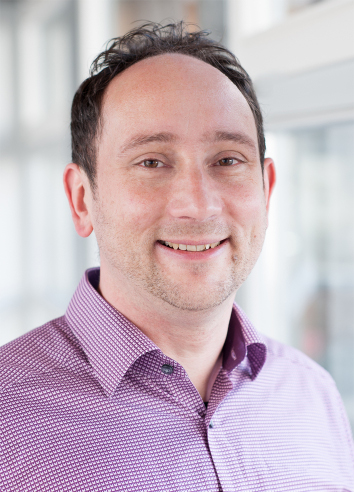
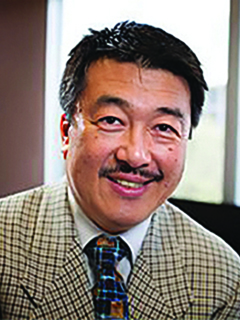
Markus Maucher is a Subject Advisor in the Department of Computer Science at the University of Ulm . He has taught exercises for courses like Einführung in die Informatik I (EidI 1) and Einführung in die Informatik II (EidI 2) across multiple semesters from 2004 to 2022. His research focuses on Computational Biology , Boolean Networks , and Ant Colony Optimization , with applications in Machine Learning , Gene Expression Analysis , and Evolutionary Algorithms . His publications span journals such as Bioinformatics , IEEE/ACM Transactions on Computational Biology and Bioinformatics , and Computational Statistics , as well as conferences like the Genetic and Evolutionary Computation Conference . He holds a PhD in Computer Science, evidenced by his 2009 dissertation and subsequent book on non-perfect randomness in probabilistic algorithms . Maucher has collaborated with researchers including H.A. Kestler , U. Schöning , and C. Müssel . The keywords from his recent work include Computational Biology , Boolean Networks , and Algorithm Design . His sub-fields encompass Probabilistic Algorithms , Correlation Analysis , and Feature Selection . Contact details: markus.maucher@uni-ulm.de
César Sánchez is a Full Professor at the IMDEA Software Institute , where he has been since 2007. He earned his Ph.D. in Computer Science (2007) and M.S. in Computer Science (2001) from Stanford University , and a M.Eng in Telecommunication Engineering from Universidad Politécnica de Madrid (1998). His academic career includes promotions to Associate Professor in 2012 and Full Professor in 2023. Research Interests Formal Methods Temporal Logics for Hyperproperties Reactive Synthesis Modulo Theories Blockchain and Smart Contract Reasoning Runtime Verification of Real-Time Systems Neurosymbolic Formal Methods His publications span 15 recent works (2023-2025) focusing on formal verification of systems using temporal logics , reactive synthesis , and blockchain applications . Key trends include asynchronous hyperproperty analysis , anticipatory monitoring , and shield synthesis for DRL and blockchain systems. Service & Collaboration Program Committee Member: CAV'25, ATVA'24, TACAS'24, DAPPS'23 Collaborations with institutions like Stanford, IMDEA, and Nature César actively recruits researchers (interns, PhD students, postdocs) for his group at IMDEA, focusing on hyperproperties, reactive synthesis, and blockchain verification.
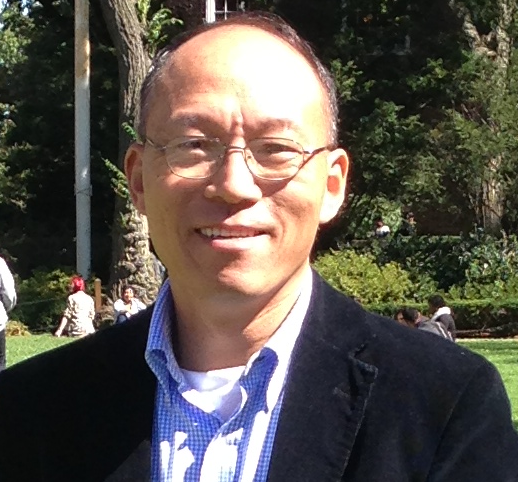
Neng-Fa Zhou is a Professor of Computer and Information Science at Brooklyn College and the Graduate Center of the City University of New York (CUNY). He holds a BS from Nanjing University (1984), and MS and PhD from Kyushu University (1988, 1991). Before joining CUNY, he served as an Associate Professor at Kyushu Institute of Technology (1991-1999) and held visiting positions at Yale, Alberta, Tokyo Tech, and Melbourne. Specializes in programming languages, constraint logic programming, and compiler design Developed Picat and B-Prolog languages with constraint-based graphics libraries Contributed to SAT encodings, multi-agent pathfinding, and declarative programming Scientific Awards: Most Practical Paper Award at PADL 2017 Award in ASP Solver Competition for BPSolver (2011)
Dan Mikulincer is the Brian and Tiffinie Pang Assistant Professor at the University of Washington in the Department of Mathematics, College of Arts and Sciences. He previously held a postdoctoral Instructor position at MIT Mathematics and earned his Ph.D. from the Weizmann Institute of Science under Ronen Eldan. He completed his B.Sc. in Mathematics and Computer Science at Ben-Gurion University, where he also studied Cognitive Neuroscience. B.Sc.: Ben-Gurion University (Mathematics, Computer Science, Cognitive Neuroscience) Ph.D.: Weizmann Institute of Science, Faculty of Mathematics Postdoc: MIT Mathematics Current: Assistant Professor, University of Washington, Department of Mathematics His research lies at the intersection of high-dimensional geometry, probability, statistics, information theory, and data science. He is particularly focused on normal approximations, Stein's method, stochastic analysis, and dimension-free phenomena. His work explores foundational aspects of learning theory, random matrices, transportation inequalities, and neural networks, often using probabilistic and analytic tools to derive sharp, robust results in high dimensions. The recent publications reflect a consistent focus on probabilistic methods in high-dimensional settings. Key themes include normal approximation via Stein's method, optimal transport, concentration and anti-concentration inequalities, random graph models, and theoretical aspects of machine learning such as learnability and neural network expressivity. The work spans both pure mathematics (e.g., GAFA, PTRF) and top-tier computer science venues (e.g., COLT, STOC, NeurIPS), highlighting interdisciplinary impact. Although no formal scientific awards are listed in the provided text, his publications in premier journals and conferences (Annals of Probability, STOC, NeurIPS, COLT) indicate significant recognition in the theoretical community. Dan Mikulincer has advised or collaborated with several researchers including Yair Shenfeld, Max Fathi, Ronen Eldan, and Sébastien Bubeck. He has served as a TA for 18.650: Statistics for Applications at MIT and taught programming courses (Java, Python, JavaScript) at the Interdisciplinary Center Herzliya. He is also a senior lecturer at WeCode, a nonprofit providing free programming education to underrepresented youth in Israel, indicating a strong commitment to education and outreach. He has been affiliated with research groups at MIT Mathematics, Weizmann Institute, and Microsoft Research AI, where he spent the summer of 2019 hosted by Sébastien Bubeck. These collaborations span theoretical machine learning, stochastic processes, and algorithmic foundations.
Debashis Sahoo is an Associate Professor in Pediatrics and Computer Science and Engineering at the University of California San Diego (UCSD). His research focuses on integrating computational methods with immunology and cell biology to study macrophage polarization, stem cell biology, and disease mechanisms in conditions like inflammatory bowel disease, Alzheimer's, and cancer. He holds joint appointments in both the School of Medicine and the Jacobs School of Engineering, reflecting his interdisciplinary work. Education: PhD in Electrical Engineering from Stanford University (2008). Research Interests: Boolean network modeling of biological systems Macrophage plasticity in infection and inflammation Computational approaches to identify disease biomarkers Stem cell differentiation pathways in cancer AI-driven precision therapeutics Key Projects: NIH R01AI155696: Macrophage Polarization in Response to Infections and Inflammation (Co-PI) NIH UG3TR003355: Precision therapeutics of inflammatory bowel disease guided by Boolean logic (PI) NIH R01GM138385: Annotation of cell types in human colon tissue using Boolean analysis (PI) Publications: Over 70 peer-reviewed articles spanning computational biology, immunology, and translational medicine. Recent work focuses on AI-guided discovery of therapeutic targets in chronic inflammatory diseases and cancer.
Mohammad Sadoghi is a Professor in the Department of Computer Science at University of California, Davis, where he leads the Exploratory Systems Lab. His research spans database systems, distributed computing, and blockchain technologies with over 54 publications from 2007-2025 and more than 900 citations. His primary research domains include: Distributed database transactions Byzantine fault tolerance Consensus protocols Event processing systems Blockchain applications Database indexing techniques Prof. Sadoghi's publication trajectory shows evolution from foundational work on boolean expression indexing and event processing to cutting-edge research on blockchain consensus mechanisms. His recent work (2023-2025) demonstrates significant contributions to understanding BFT protocols, with publications in top venues like VLDB, EuroSys, and IEEE TKDE. His research bridges theoretical analysis with practical implementations, particularly focusing on performance optimization and security in distributed environments. His notable recognition includes: ACM Senior Member (2020) Prof. Sadoghi has advised multiple doctoral students who have become active researchers in distributed systems, including Suyash Gupta and Thamir M. Qadah. His lab has secured research funding for projects spanning database engines, consensus protocols, and blockchain infrastructure. The Exploratory Systems Lab maintains strong industry and academic collaborations worldwide, with recent work focusing on edge-cloud consensus applications and high-performance data management systems.
Hans-Arno Jacobsen is a Professor at the Faculty of Computer Science (Technische Universität München, TU Munich) and affiliated with the Department of Electrical and Computer Engineering at the University of Toronto. His work spans Computer Science , Distributed Systems , and Artificial Intelligence . Research interests include Blockchain Technology , Consensus Algorithms , Graph Neural Networks , and Quantum Computing . Recent projects focus on decentralized consensus , energy-efficient databases , and federated learning in edge environments. His 15 most recent articles (2024–2025) explore topics such as dynamic resource orchestration , CRDT-based blockchains , and multimodal depression recognition . Collaborates with researchers like Ruben Mayer , Gengrui Zhang , and Shiqiang Wang on systems for federated computing , blockchain benchmarking , and distributed GNN training .
João Leite is a Professor of Computer Science at the Department of Computer Science, NOVA School of Science and Technology, NOVA University Lisbon. His career spans roles as Head of Department, Vice President of APPIA, Principal Investigator of the Intelligent Systems Group at NOVA LINCS, and Senior Visiting Fellow at CSE, UNSW, Sydney, Australia. He is an International Partner of Potassco Solutions and a member of IFIP TC-12 Artificial Intelligence. João's research focuses on Artificial Intelligence , Knowledge Representation and Reasoning , Neuro-symbolic AI , Answer-Set Programming , Argumentation Theory , and Multi-Agent Systems . 2002 : PhD in Computer Science, NOVA University Lisbon 1997 : MSc in Computer Science, NOVA University Lisbon 1994 : BSc in Electronic Engineering, University of Coimbra João's articles demonstrate a consistent focus on Answer-Set Programming (ASP), with applications in Knowledge Forgetting , Modular Reasoning , and Hybrid Knowledge Bases . His work bridges ASP with Ontologies , Multi-Context Systems , and Neural Networks , emphasizing Explainable AI and Dynamic Knowledge Evolution . Recent papers explore Provenance in Heterogeneous Systems , Efficient Reasoning with Intensional Concepts , and Stream Reasoning using neural architectures. Scientific Awards : Senior Visiting Fellow at CSE, UNSW, Sydney Award-winning collaborative project: The Politics of constraints: Discursive strategies in a three-level game João has led significant research projects such as FORGET (2018-2022) on information forgetting and RIVER (2018-2022) on knowledge-stream integration. He contributed to NEURASPACE (2022-2025) and Knowledge-Aware Cyber-Physical Systems (2015-2019). His software developments include NoHR (Hybrid Reasoning), EVOLP (Evolving Logic Programs), and SWARG (Social Abstract Argumentation Tool).
Gianmarco Cherchi is a Tenure-Track Assistant Professor and Computer Science Researcher in the Department of Mathematics and Computer Science at the University of Cagliari, Italy, where he also completed his PhD. He teaches courses in Data Visualization and Web Programming at the undergraduate level. His research lies at the intersection of Computer Graphics and Geometry Processing, with a strong focus on surface and volumetric mesh generation, optimization, digital fabrication, and polycube-based modeling. His work combines algorithmic innovation with practical applications in fabrication, visualization, and interactive systems. The recent publications highlight a consistent trend in advanced hexahedral meshing techniques (e.g., HexBox, VOLMAP), robust geometric computation (e.g., mesh booleans), and interactive tools (e.g., ProtoSketchAR, Py3DViewer). His research spans theoretical algorithm development, benchmark creation, and applied systems for VR/AR and simulation. His scientific accolades include the Young Investigator Award 2024 from the Shape Modeling International Organization, and prior Best Thesis Awards from the Eurographics Italy Association for both his M.Sc. and Ph.D. work. Cherchi actively collaborates with researchers such as Marco Livesu, Riccardo Scateni, and others, contributing to major surveys and state-of-the-art methods in hexahedral meshing. His work is supported by publications in top venues like ACM Transactions on Graphics (SIGGRAPH), Computer Graphics Forum (Eurographics), and IEEE VR. He has also developed practical software tools like Py3DViewer for geometry processing prototyping. He leads research in digital fabrication pipelines, as evidenced by publications on polycube decomposition for manufacturing and automated flat pattern generation. His lab work involves developing interactive and robust systems for 3D modeling and analysis.
Ahmed Khalid Kadhim Kadhim serves as a PhD Research Fellow at the Department of Information and Communication Technology, University of Agder (UiA), Norway. Based in office A2121 at Jon Lilletuns vei 9, 4879 Grimstad, he maintains active research contributions while pursuing doctoral studies under UiA's structured PhD program. His research centers on cutting-edge artificial intelligence methodologies, specifically investigating hyperdimensional computing applications within Tsetlin Machines. This work bridges theoretical computer science and practical machine learning, focusing on developing resource-efficient, interpretable AI systems through novel vector representations and Boolean logic frameworks. His approach emphasizes computational efficiency while maintaining model transparency—a critical advantage over traditional neural networks in constrained environments. Funded through UiA's competitive PhD Research Fellow position, his work contributes to the university's strategic research priorities in computational intelligence. Current projects explore how hyperdimensional vectors can optimize Tsetlin Machine performance in pattern recognition tasks, with potential applications in edge computing and IoT systems where processing power is limited.
Tomáš Helikar is a researcher at the Department of Mathematical and Statistical Sciences within the College of Arts and Sciences at the University of Nebraska at Omaha. His work focuses on computational modeling of biological processes, with a particular emphasis on dynamical systems and qualitative modeling frameworks. Helikar co-developed Bio-Logic Builder , a web-based tool for creating Boolean rule-based models of biological regulatory mechanisms The Cell Collective , an open platform for systems biology collaboration His research spans applications in signal transduction , cell cycle modeling , and viral replication (notably influenza A), combining mathematical formalism with biomedical inquiry. While no formal awards or student advisement information appears in the available text, Helikar's publications demonstrate strong technical expertise in discrete formalism and non-technical model construction for laboratory scientists. His work enables qualitative data conversion into Boolean expressions for simulating complex biological networks.
Radosław Klimek serves as a Professor at AGH University of Science and Technology in Kraków, affiliated with the Faculty of Electrical Engineering, Automatics, Computer Science and Biomedical Engineering within the Department of Applied Computer Science . His office is located in room C-2 404, and he maintains active contact through email and office hours (Thursdays 11:00-12:00). His research centers on formal methods and software verification , with significant contributions to context-aware systems , logical specifications , and process mining . Key areas include: Deduction-based verification of behavioral models Automatic generation of logical specifications Smart environment applications for rescue operations and tourism Temporal logic applications in software engineering His work bridges theoretical computer science with practical implementations in environmental monitoring and public safety systems. His publication record demonstrates consistent output in high-impact venues, with recent focus on LLM integration for model verification (2025) and context-aware systems for forest monitoring (2024). The research trajectory shows evolution from foundational work in temporal logic (1990s) to contemporary applications in smart environments and AI-assisted verification. No scientific awards were explicitly mentioned in the source materials. Professor Klimek maintains active teaching responsibilities with defined office hours for student consultations. His research spans multiple domains including smart city infrastructure, environmental monitoring systems, and formal verification frameworks. Current projects involve context-aware systems for mountain rescue operations and police interventions, leveraging sensor networks and real-time data processing. His laboratory work focuses on contextual data modeling and deduction-based verification systems , with practical implementations in: Forest monitoring networks Intelligent queue management Tourist assistance applications Smart contract validation These projects integrate formal methods with real-world environmental and public safety challenges.
Mitsunori Ogihara is a Professor of Computer Science at the University of Miami's College of Arts and Sciences, with secondary appointments in Electrical and Computer Engineering (ECE), Molecular and Microbiology (MMI), College of Arts (CoA), and Human Genetics and Genomics (HGG). He serves as Director of Workforce Development and Education at IDSC and Director of Graduate Studies for the Computer Science department. Education Ph.D. in Computer Science, Tokyo Institute of Technology (1993) Research Interests Professor Ogihara maintains a diverse research portfolio spanning multiple domains of computer science. His work demonstrates significant contributions to: Theoretical Computer Science - with publications on computational complexity and dynamical systems Bioinformatics and Medical Data Science - pioneering work on multi-omics data integration for Type 1 Diabetes biomarker discovery Data Mining and Machine Learning - developing novel algorithms for knowledge extraction from complex datasets Music Information Retrieval - editing the seminal book "Music Data Mining" and applying computational methods to music analysis Digital Humanities - advancing NLP techniques for historical Japanese text processing Publication Trends Professor Ogihara's recent publications reveal a strong interdisciplinary trajectory , increasingly connecting computer science with biomedical applications and cultural analytics. His work on computational data augmentation for small biomedical datasets represents a significant methodological innovation with potential clinical impact. Simultaneously, he continues to advance foundational work in computational complexity while expanding applications in entertainment analytics and historical text processing, demonstrating remarkable intellectual breadth. Teaching and Mentorship Professor Ogihara has supervised numerous PhD students who have secured positions at leading technology companies (Google, Amazon, IBM) and academic institutions worldwide. His commitment to education extends to textbook authorship, including "Exploring Data Science with R and the Tidyverse" and his upcoming "An Introduction to Theory of Computation," which aim to make complex computational concepts accessible to undergraduate students.
Venkat Anantharam is a Professor in the Department of Electrical Engineering and Computer Sciences at the University of California, Berkeley . His research spans Information Theory , Network Security , Coding Theory , and Stochastic Processes , with a focus on theoretical foundations and applications in communication systems, game theory, and data compression. He has supervised numerous PhD and Master’s students , including Soham Phade, Payam Delgosha, and Sudeep Kamath, and hosted postdoctoral fellows such as Lei Yu and Charles Bordenave. His recent publications address advanced topics like hypercontractivity in Boolean functions, universal compression of graphical data, and game-theoretic models for security. Articles from 2019-2021 highlight work on entropy power inequalities, error bounds for Markov chains, and distributed compression techniques. Venkat's research often bridges theoretical insights with practical applications, including LDPC decoders, network coding, and risk-sensitive control.
Konstantin Korovin is a Reader at the Department of Computer Science, The University of Manchester. He has held various academic roles including Senior Lecturer (2015-2023), Royal Society University Research Fellow (2007-2015), and Research Associate (2004-2007). Current research focuses on automated theorem proving , machine learning integration , and verification of hardware/software . His work includes developing systems like iProver , iProver-ML , and SMLP , which combine formal methods with ML techniques. Key contributions span non-linear constraint solving , quantified Boolean logic , and DNA computing . He has won over 20 international awards, including SMT-COMP and CASC categories. Scientific Awards : Ackermann Award, Best Thesis Prize, Best Paper at FroCoS'19, CASC and SMT-COMP prizes. He supervises PhD and postdoc researchers, with alumni working at Intel, Google, and MathWorks. His tools are applied in industry, notably by Intel for hardware optimization.