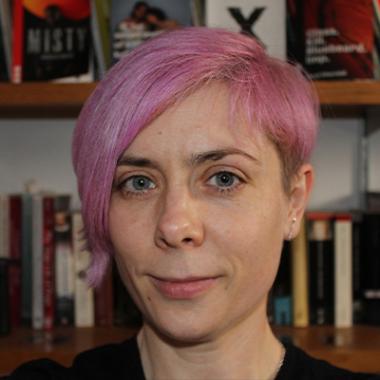
Lisa Velkoff is a Visiting Assistant Professor of Psychology at Reed College , with additional experience as an Adjunct Professor at Lewis & Clark College. Her expertise lies in clinical psychology, focusing on eating disorders, suicidality, and non-suicidal self-harm. Education: B.A. in Psychology and English, Northwestern University (2013) M.A. in Clinical Psychology, Miami University (2017) Ph.D. in Clinical Psychology, Miami University (2021) Research Interests include identifying proximal risk factors for eating disorders and self-harm behaviors, with emphasis on interoceptive deficits, negative affect, and agitation. She also studies body image, weight bias, and develops digital health interventions like just-in-time adaptive systems. Publication Trends show consistent focus on eating disorders, suicidality, self-harm, and their interrelationships, employing methodologies from experimental psychology to ecological momentary assessment. Teaching Approach prioritizes inclusivity and critical thinking in courses such as Abnormal Psychology, Health Psychology, and Psychology of Stress and Resilience.
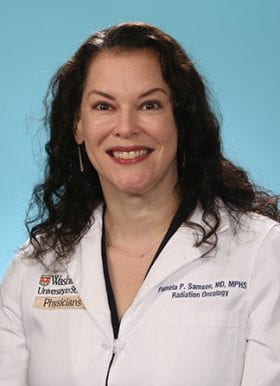
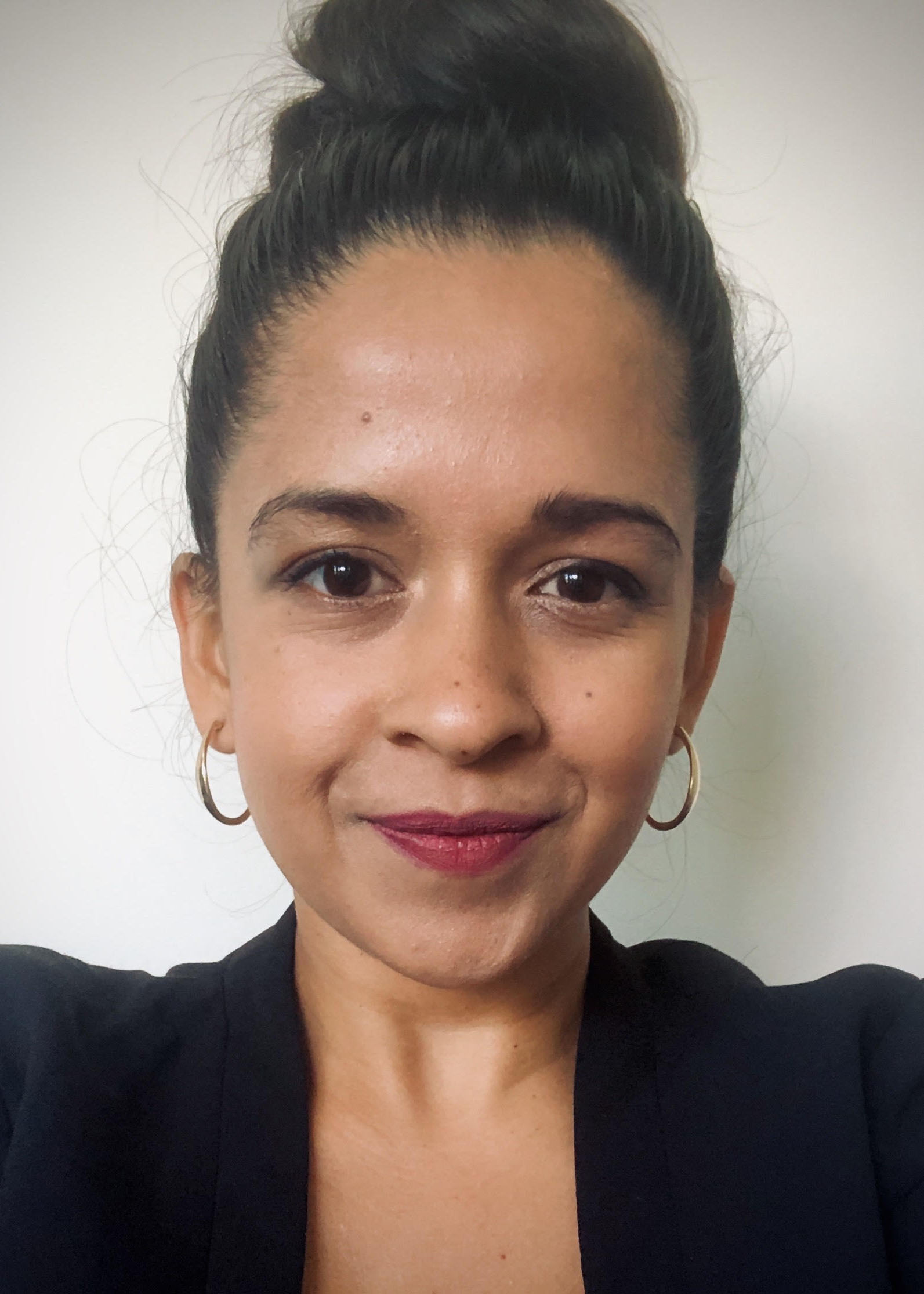
Pamela Samson is an Assistant Professor of Radiation Oncology at Washington University School of Medicine (WashU Medicine), with clinical interests in lung cancer , cardiac arrhythmias , GI malignancies , and esophageal cancer . She completed her MD and MPHS at WashU Medicine and holds advanced degrees in chemistry , anthropology , international studies , and molecular physiology . Her research focuses on lung and esophageal cancer outcomes , radiation therapy toxicities , and decision analysis for treatment allocation. She has authored over 94 publications, including peer-reviewed articles on stereotactic body radiation therapy (SBRT) , cardiotoxicity in thoracic radiotherapy, and 3D dose prediction using AI models. Notable awards include the Peter T. Klogour Salutatorian Prize , induction into Alpha Omega Alpha , and membership in the Arnold P. Gold Humanism Honor Society . She serves on the American Cancer Society National Lung Cancer Roundtable Committee and the Journal of Thoracic Disease editorial board. Her clinical work emphasizes multi-modality therapy for thoracic malignancies and cost-effectiveness analyses of radiation treatment strategies. She has conducted research fellowships in cardiothoracic surgery and maintains affiliations with the Institute of Clinical and Translational Sciences (ICTS) and Siteman Cancer Center .
Lone Friis Thing is Professor and Head of the Department of Sport and Social Sciences at the Norwegian School of Sport Sciences (NIH) in Oslo. She holds a master's degree (5-years) in Humanities and Social Sport Sciences and Biology (4 years) from the University of Copenhagen, where she also earned her PhD from the Department of Sociology. With extensive experience in academic leadership, she previously served as Head of the section 'Sport, Individual & Society' and Head of studies for graduate programs at the University of Copenhagen. Her research focuses on health promotion and prevention in relation to sport and physical activity, particularly examining heart disease and lifestyle interventions for the elderly, as well as innovative cultural strategies for organizational changes in Danish Upper Secondary Schools. Drawing inspiration from Norbert Elias's figurational sociology and Goffman's interaction theory, her work specifically addresses body and emotions within sports contexts. Her recent publications reveal consistent thematic patterns spanning sports sociology, health promotion, gender studies, and educational reform. Thing has served on the board of Norwegian School of Sport Sciences (NIH) in Oslo (2017-2019) and has been an external examiner for sport science and Public Health educations in Denmark. She brings significant expertise in managing academic mergers and organizational changes, with five years of experience as a section leader at NEXS, University of Copenhagen and ten years as study leader for master's degree programs in Sports at the Science Faculty. Her current research projects include The Doctoral Training Network in Sport Ethics and Integrity (DAiSI), reflecting her ongoing commitment to advancing ethical considerations in sports science. She has contributed to international journals such as the European Journal of Sport Science (EJSS) and the International Review for the Sociology of Sport (IRSS), demonstrating her international scholarly impact.
Dr. Timo Klein serves as an Assistant Professor in Competition Economics at Utrecht University's School of Law within the Department of International and European Law. He maintains this academic position while working as a senior economic consultant for Oxera Consulting LLP. Dr. Klein teaches Advanced EU Competition Law and Economics courses and conducts research at the intersection of economics and legal frameworks, specializing in contemporary competition policy challenges. Dr. Klein earned his BSc in Economics and Business (2013, University of Amsterdam), MSc in Political Economy of Europe (2014, London School of Economics), and MPhil in Economics (2016, Tinbergen Institute). He completed his PhD at the University of Amsterdam (2016-2020), during which he also worked at the Chief Economist Team at DG Competition, European Commission. His research focuses on economic dimensions of competition law with particular emphasis on algorithmic collusion, pricing algorithms, and digital markets regulation. He examines how emerging technologies challenge traditional competition policy frameworks through theoretical, empirical, and computational approaches. His work spans sports economics, dark patterns in consumer protection, merger control theories, and abuse of dominance cases, often analyzing European Court of Justice rulings and their economic implications. Dr. Klein's publication record demonstrates consistent engagement with cutting-edge competition policy issues, bridging theoretical economic models with practical legal applications. His research frequently appears in leading competition law journals, addressing topics from autonomous algorithmic collusion to ecosystem theories of harm in digital markets. While specific advising details aren't documented, Dr. Klein's academic position suggests involvement in student supervision. His dual role as academic and consultant indicates practical application of research to inform policy development and business practices in competition economics.
Dr. Yomna Abdelrahman is a Professor of Usable Security and Privacy at the Bundeswehr University Munich . Her research focuses on thermal imaging for security and privacy , virtual reality usability, eye tracking , and biometric authentication . She collaborates with researchers like Florian Alt and Albrecht Schmidt on projects exploring how thermal sensing can enhance user identification and privacy awareness . Key Research Areas : Thermal Imaging, Human-Computer Interaction, Virtual Reality, Password Security, Biometric Authentication, Eye Tracking, Privacy Her recent publications address VR emotion detection , password usability , and privacy implications of thermal imaging . She has contributed to conferences like CHI, MUM, and INTERACT, often examining security-privacy trade-offs and non-invasive biometric systems . Notably, her work on thermal attacks reveals vulnerabilities in mobile authentication through thermal residue. She holds a PhD in Computer Science from the University of Stuttgart (2018), where her thesis, "Thermal Imaging for Amplifying Human Perception," laid the foundation for her later work on thermal-based interaction and cognitive load estimation . Her collaborations span diverse domains, from smart home notifications to industrial worker assistance , reflecting her interdisciplinary approach to usable security and interactive systems .
Phil H Jones is a Senior Group Leader at the Wellcome Sanger Institute and Programme Leader at the MRC Cancer Unit, University of Cambridge. He leads the Jones Group which focuses on understanding how cancer-associated DNA changes in normal stem cells alter their behavior, allowing them to spread through normal tissues—the critical first step toward cancer development. Institution: MRC Cancer Unit, University of Cambridge Research Program: Cancer, Ageing and Somatic Mutation Programme Professional Recognition: Fellow of the Royal Society, Fellow of the Academy of Medical Sciences Dr. Jones's research centers on how mutations that alter the competitive fitness of normal stem cells give mutant stem cells the ability to spread through normal tissues. His current work employs deep sequencing, advanced imaging, gene editing, and single-cell analysis to define how oncogenic mutations alter stem cell behavior during aging and the earliest stages of cancer development in skin and esophagus. His lab-based studies complement his clinical work at Addenbrooke's Hospital, where he treats patients with non-melanoma skin cancer. Analysis of his recent publications reveals a consistent focus on somatic mutations in normal epithelial tissues, particularly examining how specific mutations (such as those in p53, Notch1, and PIK3CA) confer competitive advantages to cells, enabling clonal expansion. His work demonstrates that normal tissues become extensively colonized by mutant cells with age, with some mutations increasing cancer risk while others may actually decrease it. A key finding across multiple publications is that mutant clones can outcompete and eliminate early-stage tumors, suggesting novel approaches to cancer prevention. Fellow of the Royal Society Fellow of the Academy of Medical Sciences Multiple high-impact publications in Nature, Science, and Cell journals Dr. Jones collaborates extensively with Cancer Research UK, the Department of Oncology at the University of Cambridge, and the Wellcome Trust-Medical Research Council Cambridge Stem Cell Institute. His research is highly translational, aiming to apply fundamental discoveries about somatic evolution in normal tissues to develop rational interventions that reduce cancer risk in high-risk patients. The Jones Group employs a multidisciplinary approach combining experimental biology with computational modeling to understand the evolutionary dynamics of mutant clones in aging tissues. The Jones Group operates within the Cancer, Ageing and Somatic Mutation Programme at the Wellcome Sanger Institute, utilizing advanced 3D culture methods, gene editing, live imaging, and single-cell analysis capabilities. Their research infrastructure supports studies of both skin epidermis and esophageal epithelium, with particular focus on how lifestyle factors (sun exposure, alcohol consumption) and aging influence the somatic mutation landscape of normal tissues.
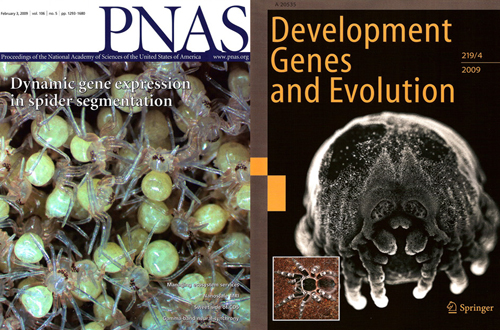
Dr. Matthias Pechmann is a researcher at the University of Cologne's Biocenter within the Faculty of Mathematics and Natural Sciences, specializing in developmental and evolutionary biology with a primary focus on spider embryology and arthropod evolution. His work investigates the mechanisms of segment and appendage formation in spiders, particularly using the common-house spider ( Parasteatoda tepidariorum ) and the Brazilian white-knee tarantula ( Acanthoscurria geniculata ) as model organisms, with additional research on cricket ( Gryllus bimaculatus ) development. Dr. Pechmann's research centers on understanding the evolutionary success of arthropods through their segmented body plans and articulated appendages. He investigates early embryonic development in spiders, with particular emphasis on the establishment of main body axes, dorsoventral axis patterning, and the genetic mechanisms underlying segment formation. His work combines molecular techniques including RNA interference, gene expression analysis, and comparative approaches to uncover conserved and divergent developmental pathways across arthropods. His most significant contributions involve the role of Ets4 in axis specification and cell migration, Toll genes in axis elongation, and Distal-less as a gap gene during spider segmentation. His publication record demonstrates expertise in developmental genetics and evolutionary biology, with numerous high-impact papers in journals such as eLife, BMC Biology, and Current Biology. His research has significantly advanced understanding of the genetic and cellular mechanisms that govern body plan development in arthropods, particularly revealing how conserved developmental genes have been co-opted for spider-specific morphological features. Dr. Pechmann has received research funding through a University of Cologne Postdoc Grant for his work on dorsoventral axis patterning in crickets, demonstrating his ability to secure competitive research funding. His collaborative approach is evident through extensive co-authorship with researchers across multiple institutions, particularly with Dr. Roth's research group at the University of Cologne as indicated by the website structure (Home > Research > Roth > Pechmann). His laboratory work involves advanced techniques including RNA interference, confocal microscopy, gene expression analysis, and comparative genomic approaches. The research group maintains spider cultures of Parasteatoda tepidariorum and Acanthoscurria geniculata as primary model organisms, with additional work on crickets for comparative studies of dorsoventral patterning.
Katherine M. Graham is a Senior Lecturer in English (Theatre) at the University of Westminster. She co-directs the Queer London Research Forum and convenes the School of Humanities EDI Working Group , focusing on social justice and queer historiography. Education: PhD in Theatre Studies (Birkbeck/RADA, 2015); MA in Text and Performance Studies (KCL/RADA, 2012); MA in Cultural & Critical Studies (Birkbeck, 2010); BA Hons in English Literature (University of Westminster, 2007). Her research bridges queer theory and Early Modern drama , particularly exploring: Queer grief and non-linear narrative structures Queer temporalities in London's history Revenge tragedy's gendered and temporal disruptions Contemporary reworkings of Jacobean texts Recent publications include a chapter in the forthcoming Palgrave Handbook of Literary Memory Studies (2025) and contributions to edited collections like Sex, Time and Place (2016). Her work frequently appears in Early Theatre and Critical Survey . She integrates academic practice with theatre reviewing for The Morning Star and podcast contributions, maintaining a public-facing intellectual presence.
Maria De Iorio is a Professor at the Yong Loo Lin School of Medicine and holds a joint appointment at the Faculty of Science , both at the National University of Singapore. Her work bridges statistics, epidemiology, and clinical sciences through advanced Bayesian modeling and computational methods. Key research areas: Statistics, Epidemiology, Genetics, Clinical sciences, Medical biochemistry Primary affiliations: Paediatrics department (YLLSoM) and interdisciplinary projects in Science faculty Recent publications focus on extreme value theory, digital numismatics, metabolomic simulations, and maternal-child health Her statistical innovations include: Repulsive mixture models for interpretable clustering Bayesian semi-parametric approaches for longitudinal studies Novel prior distributions for graphical models Application domains span: Pediatric oncology (ALL treatment response modeling) Metabolic syndrome analysis (obesity, diabetes, bone health) Digital humanities (coin distribution patterns, ceramic artifact analysis) Financial forecasting (discrete survival methods for invoice prediction)
Pascal O. Title serves as an Assistant Professor in the Department of Ecology and Evolution at Stony Brook University, leading the macroEEB Lab focused on large-scale evolutionary and ecological dynamics. His research integrates phylogenetic, trait, and spatial data to unravel biodiversity patterns across continents and through time. His educational background includes: Ph.D. from University of Michigan (2018) Dr. Title's work centers on four interconnected research pillars: Large-scale biodiversity patterns through analysis of museum collections and observational databases for Australian reptiles, marine fishes, and Neotropical birds Species responses to climate change via geographic range shift analyses linked to phylogenetic history Species distribution modeling methodology development addressing data biases and environmental variables Diversification rate quantification through simulation-based evaluation of macroevolutionary metrics His approach leverages global biodiversity networks and computational tools to address fundamental questions in evolutionary ecology. Analysis of his 2014-2025 publication record reveals consistent focus on macroevolutionary processes across diverse taxa, with increasing emphasis on climate change impacts and methodological innovations. Key thematic threads include latitudinal diversity gradients, adaptive radiation mechanisms, and computational tool development for integrating phylogenetic and spatial data. The macroEEB Lab operates as a collaborative hub for researchers investigating evolutionary dynamics across spatial and temporal scales, recently participating in the 2025 Evolution conference.
Dr. Max Stockdale is a Senior Lecturer at the School of Geographical Sciences of the University of Bristol. He holds an MSci and PhD, with research focused on paleontology, evolutionary biology, and biogeography. His work explores topics such as dinosaur osteoderms, species distribution modeling in fossil organisms, and body size evolution in crocodile-line archosaurs. Education: MSci and PhD (degrees details not provided explicitly). Research Interests: Dr. Stockdale’s research integrates paleontological data with ecological and evolutionary frameworks. Key areas include understanding sexual dimorphism in dinosaurs, reconstructing niche suitability across mass extinction events (e.g., Cretaceous-Paleogene boundary), and analyzing environmental drivers of body size evolution in archosaurs. He also develops statistical methods for studying extinct taxa and investigates locomotion correlates in carnivorous mammals. Publications: His recent work emphasizes macroevolutionary patterns in crocodylomorpha and critiques methodological approaches in body size analysis. Themes include the interplay between environmental pressures and morphological adaptations in prehistoric life. Awards: No scientific awards explicitly mentioned. Advising & Grants: No advising records or grants listed in available data. His research likely involves collaborations with paleontology and evolutionary biology teams.
Dr. V. Louise Roth is a Professor of Biology and Professor in the Department of Evolutionary Anthropology at Duke University's Trinity College of Arts & Sciences. She holds a Ph.D. from Yale University (1982). Her research focuses on evolutionary changes in mammalian size, shape, and functional morphology, particularly in cetaceans, elephants, and squirrels. She employs phylogenetic approaches, morphometric analyses, and molecular data to study macroevolutionary patterns and adaptation. Key research areas include the evolution of cetacean skull structures, island dwarfism in mammoths, and the ecological implications of Pleistocene carnivore extinctions. Dr. Roth has secured grants from the National Institutes of Health (NIH) and National Science Foundation (NSF), supporting projects on developmental biology and evolutionary processes. Her work has been featured in prominent outlets like *Proceedings of the National Academy of Sciences* and *Trends in Ecology & Evolution*. Teaching responsibilities include courses on mammalian biology, macroevolution, and research methodologies. Her contributions bridge paleontology, developmental biology, and ecology, advancing our understanding of evolutionary mechanisms across diverse taxa.
Dr. Mark Gormley is a Consultant Senior Lecturer and Programme Director in Oral Surgery at the Bristol Dental School, University of Bristol. He specializes in dental education and clinical research focusing on head and neck cancer, particularly through genetic epidemiology approaches. His academic credentials include a BDS (Hons), MMEd, MSt, PhD, MOral Surg, and he is a Fellow of the Higher Education Academy (FHEA) and the Royal College of Surgeons of Edinburgh (FDS(OS) RCSEd). His research interests span genetic epidemiology , head and neck cancer , dental education , and population health . He actively contributes to multidisciplinary national guidelines on head and neck cancer care and has pioneered risk prediction models for the disease. His work also addresses public health challenges like the impact of smoking, alcohol, and metabolic traits on cancer risk through advanced methods like Mendelian randomization. In education, Dr. Gormley emphasizes professionalism in dental training and has developed innovative curricula. His recent publications (2023–2025) highlight contributions to understanding HPV-related cancers, metabolic disorder influences, and surgical referral patterns. He collaborates internationally via initiatives like the VOYAGER consortium and maintains clinical relevance through studies on dental procedural safety and outcomes.
Dr. Desirée Valadares is an Assistant Professor in the Department of Geography at the University of British Columbia , with affiliations in Asian Canadian and Asian Migration Studies . Her research investigates the cultural memory and infrastructural imaginaries of Second World War landscapes in western Canada and former U.S. territories. EDUCATION PhD, University of California, Berkeley Master of Architecture, McGill University Master of Landscape Architecture, University of Guelph Bachelor of Arts & Science, McMaster University Her scholarship examines: Reparative justice through Pacific redress movements Settler colonialism and land dispossession Bi-national infrastructure maintenance (Alaska Highway) Dust as environmental indicator Community-based preservation methods Historical landscape archaeology This work intersects with her professional affiliations at the Canadian Association of Heritage Professionals and British Columbia Society of Landscape Architects . RECENT PUBLICATION TRENDS explore: Transoceanic migration patterns Toxic site remediation Transportation corridor governance Postcolonial monument interpretation Environmental memory practices Critical heritage theory SCIENTIFIC AWARDS 2022 SSHRC Insight Development Grant 2022 CCA Research Fellowship RESEARCH AND MENTORSHIP Dr. Valadares supervises MA students in environmental histories , infrastructural studies , and community-engaged research . She emphasizes creative research outputs from architects, designers, and artists.
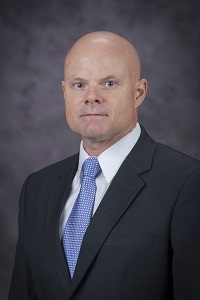
Phillip Vardiman, PhD, is an Associate Professor and Director of the Athletic Training Program at Kansas State University's College of Health and Human Sciences. His roles include teaching, research, and leadership in athletic training education. He holds certifications as a Licensed Athletic Trainer (Kansas, Missouri, Iowa) and strength and conditioning specialist. Education: PhD in Kinesiology (Exercise Science), University of Arkansas (2006) M.S. in Health/Exercise Science, Oklahoma State University (1998) B.S. in Athletic Training, Park University (1996) Research Interests: Focuses on exercise physiology, immunology, and musculoskeletal biology. Key areas include: Exercise-induced immune responses Therapeutic modalities (e.g., instrument-assisted soft tissue mobilization) Muscle damage and recovery mechanisms Military and athletic performance optimization Neuromuscular control and motor unit behavior Recent Article Trends: His work bridges exercise physiology with clinical applications, emphasizing immune modulation, muscle mechanics, and rehabilitation techniques. Notable studies explore T-cell activation post-exercise and the effects of martial arts training on moral cognition. Awards: 2019 National Athletic Trainers Association Most Distinguished Athletic Trainer 2019 Mid America Educator of the Year 2021 Nominee for Most Distinguished Athletic Trainer Advising & Grants: Supervised 18+ graduate students and secured over $1 million in external funding, including海军研究办公室资助的项目 on optimizing Marine Corps martial arts training. Co-authored 40+ peer-reviewed articles and 80+ presentations. Labs/Teams: Leads KSU's Athletic Training Program and collaborates with military and Olympic teams as a certified athletic trainer. Co-directs the Institute of Health and Safety of Military Families at KSU.