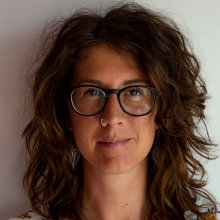
Katerina HilariView profile
Professor
Katerina Hilari is a Professor of Acquired Communication Disorders at the School of Health Sciences, City, University of London, within the Division of Language and Communication Science. She is a certified Speech and Language Therapist with a background in Psychology, specializing in aphasia and its impact on quality of life post-stroke. She leads the Trials for Aphasia Panel of the Collaboration of Aphasia Trialists and serves on the Board of Trustees for Aphasia Re-Connect. Her educational journey includes studies in Philosophy, Education, and Psychology at the University of Athens, followed by postgraduate training in Speech and Language Therapy in the UK. She has been a faculty member at City since 2002, after working in the NHS at St Mary's and Royal Free Hospitals. Hilari’s research centers on the psychosocial impact of stroke and aphasia, quality of life assessment, and the effectiveness of speech and language therapy. She developed the Stroke and Aphasia Quality of Life scale (SAQOL-39), now used internationally, and leads research on telehealth, virtual reality interventions (e.g., VESFA in EVA Park), and peer support models (e.g., SUPERB trial). She has published extensively in top journals and contributed to major clinical guidelines, including the European Stroke Organisation (ESO) guideline on aphasia rehabilitation. Her recent publications highlight a strong focus on patient-centered outcomes, digital health innovations, and psychosocial wellbeing. Themes include telehealth practices, virtual reality therapy, coping strategies, social support, and co-designed interventions. Her work bridges clinical practice and research, emphasizing accessibility, cultural adaptation, and fidelity in intervention delivery. Shortlisted for The Times Higher Education Award for Outstanding Research Supervisor of the Year (2016) Vice-Chancellor’s Award for Outstanding Doctoral Supervision (2015) City University London Staff Prize for Excellence in Research (2011) Teaching Recognition Prize (2010) Hilari actively supervises numerous PhD students and has served as Editor-in-Chief and Advisory Board member of the International Journal of Language and Communication Disorders . She is a grant reviewer for the Stroke Association and NIHR. Her leadership in aphasia research, commitment to patient involvement, and methodological rigor in developing and validating outcome measures underscore her significant contributions to the field. She is involved in multiple research labs and teams focused on aphasia rehabilitation, including the Collaboration of Aphasia Trialists, and leads projects on virtual environments (EVA Park), peer-befriending (SUPERB), and family-centered care (SEEM study). Her work consistently emphasizes co-design, accessibility, and real-world implementation of interventions.