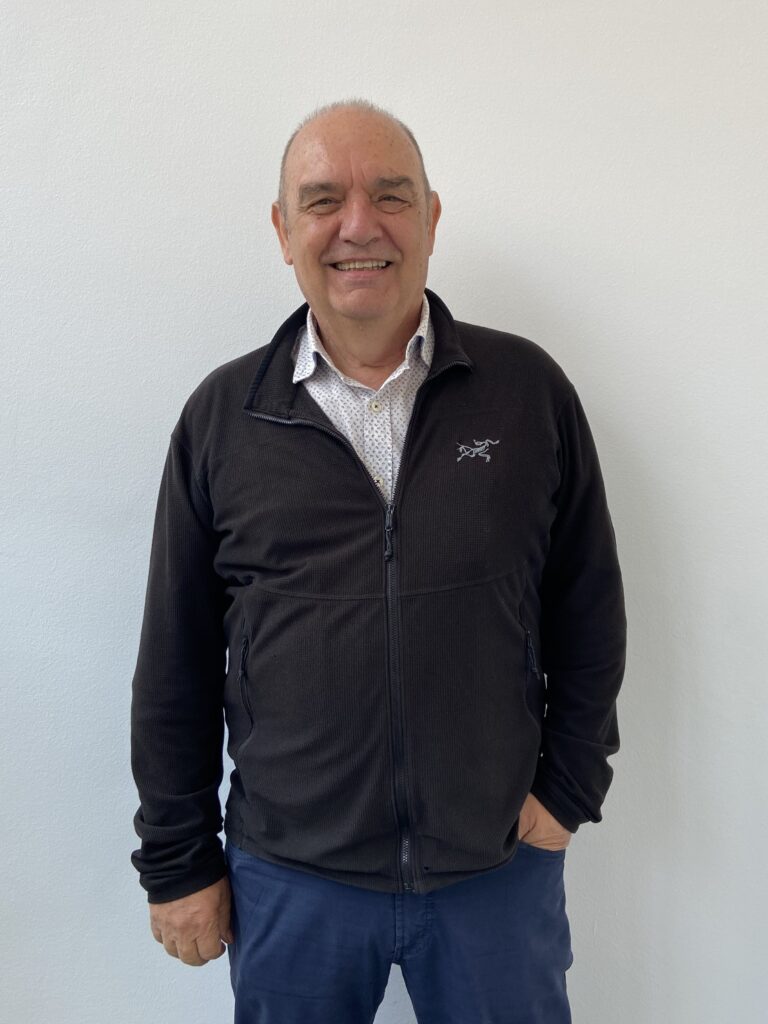
Josep Casanovas is a Full Professor at the Statistics and Operations Research Department of the Technical University of Catalonia (UPC), affiliated with the Barcelona School of Informatics. He previously served as head of inLab FIB (2012-2020) and as dean (1998-2004) and vice-rector (2006-2011) of UPC, leading strategic initiatives in university governance and ICT policies. His research focuses on Modelling and Simulation , Internet and Information Systems , and Urban Mobility . He has led projects for the European Union, including C-ROADS Spain, REMEDiAL, and ECHORD++, addressing intelligent transport, software automation, and robotic innovation. Recent publications highlight his work on agent-based simulation for urban health, deep learning applications in traffic and energy savings, and wildfire management tools . He co-directs LogiSim and coordinates the Severo Ochoa Research Excellence Program at the Barcelona Supercomputing Center (BSC-CNS).
Dahlia Kairy is an Associate Professor at the School of Rehabilitation, University of Montreal, with a focus on telerehabilitation , virtual reality , and innovative rehabilitation technologies . She leads interdisciplinary research through affiliations with the CRIR (Interdisciplinary Research in Rehabilitation), INTER (Interactive Technologies in Rehabilitation), and REPAR networks. Education: Physiotherapy graduate from McGill University (1997) Clinical experience: Specialized in vestibular and balance disorders since 2005 Her research explores implementation strategies for technology-driven rehabilitation, emphasizing health equity and knowledge translation . Recent work investigates AI integration , smart mobility devices , and virtual care policy development . Academic contributions include 15+ peer-reviewed publications and numerous funded projects from organizations like CIHR, FRQS, and AGE-WELL NCE. Key awards include: Royal Society of Canada College membership (2021) Fortissimo Jeune Chercheur Award (2018) She has supervised 7+ graduate students and co-led multidisciplinary grants totaling millions in funding. Current projects focus on metaverse-era rehabilitation , precision rehabilitation , and AI ethics in healthcare delivery.
Dan Casas is a Senior Applied Scientist at Amazon in Seattle and an Associate Professor (Profesor Titular) on leave from King Juan Carlos University in Spain. His research spans the intersection of Computer Graphics, Computer Vision, and Machine Learning with a focus on 3D reconstruction, modeling, and animation of virtual humans and clothing. He has authored over 40 high-impact publications in top venues including SIGGRAPH, CVPR, and NeurIPS, and holds 3 international patents. Dr. Casas received his M.Sc. degree (2009) from Universitat Autònoma de Barcelona (Spain), including a research visit at Carnegie Mellon University. He earned his Ph.D. in Computer Graphics (2014) from the University of Surrey (UK), supervised by Prof. Adrian Hilton. He completed postdoctoral research at the University of Southern California's Institute for Creative Technology (2014-2015) and the Max Planck Institute in Saarbrücken (2015-2016). His research interests center on creating realistic virtual humans and digital clothing through advanced techniques in computer vision and machine learning. Casas has pioneered methods for 3D reconstruction of humans and garments from video input, physics-based simulation of soft-tissue deformations, and data-driven approaches to character animation. His work bridges the gap between theoretical computer graphics and practical applications in virtual reality, digital fashion, and immersive communication. Analysis of his recent publications reveals a consistent focus on human digitization, with increasing emphasis on machine learning approaches. His work has evolved from traditional computer graphics techniques toward neural representations and diffusion models, particularly in the areas of 3D garment simulation and human avatar creation. The trend shows growing integration of physics-based modeling with data-driven approaches to achieve both realism and computational efficiency. Marie Skłodowska-Curie Individual Fellowship (2015) FBBVA Leonardo Fellowship (2021) Medal from the Royal Academy of Engineering of Spain for Young Researcher Award (2023) i3 certification (outstanding researcher) from Spanish Ministry of Universities (2022) Winner of 2021 IEEE Retail Digital Transformation Grand Challenge Multiple Outstanding Reviewer Awards at top conferences (CVPR, BMVC, 3DV) Dan Casas has successfully advised multiple PhD students including Suzanne Sorli, Cristian Romero, Raquel Vidaurre, and Igor Santesteban (now at Meta Reality Labs), with several ongoing students including Melania Prieto-Martin, Gonzalo Gómez-Nogales, and Andrés Casado-Elvira. He has secured significant research funding as Principal Investigator, totaling over €1.2 million from Spanish Ministry of Science projects, EU H2020 programs, and industry fellowships including the FBBVA Leonardo Fellowship. His leadership extends to conference organization as Area Chair for ICCV 2023 and General Chair for ACM i3D 2020. Dr. Casas leads research in digital human modeling with applications in virtual reality, fashion technology, and immersive communication. His team develops advanced techniques for creating personalized 3D avatars from minimal input (like smartphone videos), addressing challenges in geometry, appearance, and physical simulation of virtual humans and their clothing.
Fredrik Rusk is an Associate Professor in Pedagogy with a focus on digital interaction at Åbo Akademi University, Faculty of Education and Welfare Studies. He also holds a tenure-track Assistant Professor (level 2) position and has previously served as Associate Professor at Nord University (2016–2023). His research integrates ethnographic, ethnomethodological, and conversation analytic approaches to study learning, identity, and social organization in digital environments such as video games, social media, and hybrid classrooms. His research interests include: Pedagogy and digital interaction Ethnography and conversation analysis in digital contexts Identity formation in online communities Inclusion and diversity in educational gaming Collaborative learning and team coordination in virtual spaces Ethics of digital fieldwork His recent publications explore themes such as team coordination in first-person shooter games, inclusion in digital youth centers, and the sociocultural dynamics of esports. The body of his work reveals a strong trend toward understanding how digital interaction shapes learning and social behavior, particularly among youth and students. Notable scientific contributions include leadership in multiple research projects such as EduGaming, STEM Education in Newton Rooms, and CO-WRITE, funded by organizations like the Academy of Finland and the Swedish Cultural Foundation. He has also served on doctoral evaluation committees and contributed to public discourse on AI in education and digitalization in schools. Fredrik Rusk actively mentors and collaborates with researchers, though no formal PhD or Master’s students are listed. He is involved in interdisciplinary teams focusing on educational technology, digital ethics, and collaborative learning. His work contributes to the UN Sustainable Development Goals, particularly in quality education and inclusive societies.
Dr. Tingting Li is a Lecturer (Assistant Professor) in Cyber Security at Cardiff University's School of Computing and Informatics and a member of the Centre for Cyber Security Research. She also holds an Honorary Research Fellow position at Imperial College London, reflecting her ongoing research collaboration. Her work bridges artificial intelligence and cybersecurity, with a focus on protecting critical systems such as cyber-physical systems (CPS), industrial control systems (ICS/SCADA), and autonomous vehicles. BEng (Hons) in Information Security, Xidian University, China MSc in Computing, Imperial College London PhD in Artificial Intelligence, University of Bath Dr. Li’s research interests lie at the intersection of AI and cybersecurity, particularly in automated cyber defense , diversification/deception strategies , and symbolic AI for knowledge representation . She investigates how AI can enhance the resilience of critical infrastructures through intelligent, adaptive defense mechanisms. Her recent work explores quantum-inspired reinforcement learning and machine learning models for proactive threat mitigation in complex systems. Her recent publications demonstrate a strong trend in applying advanced AI techniques—especially deep reinforcement learning, LSTM networks, and Bayesian models—to cybersecurity challenges in industrial and autonomous systems. These works span domains like IoT malware suppression, network diversity for ICS resilience, and automated compliance checking, reflecting a multidisciplinary approach combining security, AI, and systems engineering. Dr. Li has secured significant research funding, including a grant from the Alan Turing Institute (2024–2025) on AI safety in autonomous cyber defense, a RITICS/NCSC-funded project on diversity-based cybersecurity (2021–2022), and an EPSRC-funded project on metric-driven cybersecurity frameworks for critical national infrastructure (2021–2023). She actively supervises PhD students in areas including cybersecurity for autonomous vehicles, moving target defense, and cyber-physical system security. Her team includes Iryna Bernyk, Sanyam Vyas, Victoria Marcinkiewicz, Ellis Doran, Stephen Morris, and Sam Braithwaite. She also leads teaching modules on databases (CM6125/CM6625) and cybersecurity (CM6224/CM6724). Dr. Li’s research is conducted within the Centre for Cyber Security Research at Cardiff University, where she collaborates with experts in AI, security, and critical infrastructure protection. Her work is highly interdisciplinary, involving partnerships with institutions like Imperial College London and funding bodies such as EPSRC, NCSC, and the Alan Turing Institute.
Professor Yuan Miao is a distinguished academic at Victoria University (VU), serving as Professor in the College of Arts, Business, Law, Education & IT and Head of the Information Technology Program. With a PhD from Tsinghua University's Automation Department, his academic journey spans prestigious institutions including the University of Melbourne and Nanyang Technological University in Singapore before settling at VU where he has been Professor since January 2010, following his Associate Professorship from August 2004 to December 2009. Education: BSc, Shandong University, China MEng, Tsinghua University, China PhD, Tsinghua University, Automation Department, China Professor Miao's research centers on Large Language Models (LLMs) and Generative AI, where he has identified critical barriers in practical applications including limited memory length in systems like ChatGPT and Gemini, contradictory explanations, lack of local knowledge integration, and significant errors in text-data hybrid reasoning (up to 38%). His innovative solutions involve cognitive map graphs and rational intelligence models to create customized AI systems. His work spans diverse application areas including human knowledge modeling, multimodal interaction, healthcare analytics (particularly dementia detection), cybersecurity, and robotics powered by rational intelligence. Analysis of Professor Miao's recent publications reveals a strong focus on integrating LLMs with specialized knowledge domains across healthcare, cybersecurity, and social media analysis. His research consistently addresses practical limitations of current AI systems while developing novel frameworks for more reliable and context-aware applications. The interdisciplinary nature of his work is evident in publications spanning medical informatics, cybersecurity analytics, and educational technology. Scientific Recognition: Two articles in fuzzy cognitive map modeling ranked among top 10 most cited works since 2000 (Google Scholar 2000-2016) Development of adversarial dataset based on SQuAD 2.0 that reduced BERT and ELECTRA accuracy from ~90% to ORCID identifier 0000-0002-6712-3465 with 138 peer-reviewed publications Professor Miao actively supervises PhD and Master's students across diverse research topics including access control systems, healthcare analytics, cybersecurity, and social behavior analysis. His research has secured substantial funding from both industry giants (Microsoft, Amazon, Oracle, Google) and government bodies (Australia Research Council, Data61, Singapore's NRF), with recent projects including Digital Transformation for Construction Industry ($1.258 million), Western Health SharePoint Development ($68,000), and Big Data Analysis for Domestic Violence Research (US$100,000). His current grant portfolio demonstrates strong industry-academia collaboration addressing real-world challenges. Professor Miao leads research teams focused on rational intelligence systems that overcome current LLM limitations, with particular emphasis on creating practical AI solutions for healthcare, cybersecurity, and smart city applications. His work with Maribyrnong City Council on the Smart City at Footscray Park project ($850,000) exemplifies his commitment to applying advanced AI research to community-level challenges.
Prof. Dr. Sabine Pfeiffer holds the Chair of Sociology (Technology – Work – Society) at the Nuremberg Campus of Technology, part of Friedrich-Alexander University Erlangen-Nuremberg. She is an active researcher and thought leader in the sociology of work, with particular expertise in digital transformation, Industry 4.0, and labor capacity. Her work bridges academic research and practical applications in industry, with significant collaborations including the Volkswagen study and advisory roles with government bodies. Professor Pfeiffer's research interests focus on how digitalization transforms work structures and qualifications across various sectors including mechanical engineering, office work, and critical infrastructure. She has developed the Labouring Capacity Index (AV-Index) as a tool to measure living labor capacity and experience as resources for Industry 4.0 transition. Her work examines the intersection of technology, work organization, and social inequality, with particular attention to how workers navigate digital transformation in different occupational contexts. Her recent publications reveal consistent research trends examining the dual transformation of digitalization and sustainability, with particular focus on Volkswagen as a case study. The work explores transformation experience, resources, and readiness across multiple dimensions. She also investigates how AI is perceived and integrated in workplaces, the evolution of office work in digital environments, and the measurement of work through wearables and digital assistance systems. Best Paper Award for keynote speech on 'Work 4.0' at VET Conference in Rostock (2017) Nominated for 'Influencer of the Year 2013' by the Strategy Circle for Mechanical and Plant Engineering Professor Pfeiffer serves on the Council of the World of Work appointed by the Federal Ministry of Labour and Social Affairs, and recently joined the board of directors at bidt (Bavarian Institute of Technology Assessment). She previously served on the Research Advisory Board of the Industry 4.0 Platform and advisory boards at CIDAS. Her research is frequently funded through collaborations with institutions including BIBB (Federal Institute for Vocational Training), WZB Berlin Social Science Center, and industry partners like VDMA. Her work is conducted through the Labouratory research group at the Nuremberg Campus of Technology, which focuses on empirical studies of work in the digital age. The team employs mixed methods approaches including representative surveys, qualitative case studies, and workplace observations to understand the changing nature of work. Recent projects include the diGAP project on good agile project work and studies on digital transformation in mechanical engineering and office work sectors.
Andreas Fender is a researcher at the Visualization Institute of the University of Stuttgart (VISUS), affiliated with the Schmalstieg Working Group. He has held postdoctoral positions at ETH Zurich (Switzerland) and the University of Sussex (England), following his PhD at Aarhus University (Denmark) with an internship at Microsoft Research (USA). His research focuses on Human-Computer Interaction, particularly in Augmented and Virtual Reality (AR/VR) and camera networks. He develops novel input methods for productivity and artistic expression in Mixed Reality environments, creating hybrid physical-digital systems like OptiBasePen, PressurePick, InfinitePaint, and DeltaPen. Recent work includes contributions to Mixed Reality input methods (UIST 2024, CHI 2022) and collaborative systems (Asynchronous Reality). Projects like GuitarPie (UIST 2025) and OptiBasePen (UIST 2024) demonstrate his focus on mobile interaction and ergonomic design. Scientific accolades include the Best paper award at CHI 2022 Best application paper award at ISS 2019 . At VISUS, he collaborates with Dieter Schmalstieg and leads hiring for PhD students and PostDocs exploring physical-digital workflows, artistic tools, and critical AI engagement. His work integrates machine learning, hardware prototyping, and spatial user interfaces to redefine future workplaces.
Professor Andreas Geiger leads the Autonomous Vision Group (AVG) at the University of Tübingen , heading the Department of Computer Science and serving as core faculty at the Tübingen AI Center . He is Principal Investigator in the ML in Science cluster of excellence and CRC Robust Vision , while coordinating the ELLIS PhD program . Develops machine learning models for computer vision, NLP, and robotics Focus on 2D/3D representations, geometry/material reconstruction, and robust AI Applications in autonomous vehicles, VR/AR, and document analysis His research has produced hundreds of publications with significant impact, including multiple best paper awards at top venues. The Scholar Inbox platform he co-created revolutionizes academic paper discovery, winning business model awards at Tübingen AI Center spinoff events. Key research areas include: Neural rendering and 3D scene understanding Self-driving perception and planning systems Simulation frameworks for autonomous validation Efficient reinforcement learning architectures Recent awards include: CVPR 2024 Best Paper Sage 10-Year Impact Award 2024 IEEE PAMI Young Researcher Award 2018 Active in CyberValley and ELLIS Institute Tübingen , he maintains strong industry collaborations through initiatives like the ML ⇌ Science Colaboratory . His group's work appears in journals like TPAMI and conferences including SIGGRAPH 2025.
Ramanathan Subramanian is an Associate Professor in the Department of Information Technology & Systems, AI and Robotics at the University of Canberra. His past affiliations include IIT Ropar and UIUC, Singapore. He has received notable awards including the IEEE Transactions on Affective Computing Best Paper Award (2019) and Multimedia Rising Star nomination (2015). His research focuses on Human-centered computing, AI systems leveraging non-verbal behavioral cues, and applications in health analytics and virtual reality. He actively supervises PhD and Master’s students in areas like Human-Computer Interaction, Data Science, and VR for healthy aging. Research interests: Human perception modeling, intelligent interfaces, health-focused VR, and applied machine learning Key projects: Driver sentiment prediction, distraction awareness campaigns, and robotics for waste management His work contributes to UN SDGs related to health and well-being, particularly through technologies improving aging care and mental health monitoring. Recent projects include developing explainable AI for emotion inference and multimodal data fusion systems. Awards: IEEE Best Paper Award, Multimedia Rising Star Grants: Lead or Co-Investigator on three major grants totaling over AUD 4M Labs/Teams: Collaborates extensively with the University's robotics and health tech groups, contributing to interdisciplinary projects in AI ethics and medical signal processing.
Cara Berger is a Senior Lecturer in Theatre and Performance at the University of Manchester's School of Arts, Languages and Cultures (SALC). From August 2025, she will serve as Associate Director for e-Learning and Teaching Innovation, focusing on digital pedagogy and inclusive education. Her research explores intersections between ecology, feminism, queer theory, and contemporary European theatre. Key projects include the Greening the Arts Curriculum initiative, which addresses climate crisis through arts education, and the upcoming MA Arts, Culture and the Environment programme. She holds a Senior Fellowship of the Higher Education Academy (SFHEA) and collaborates with cultural organizations like dancer Chris Brown on eco-somatic workshops. Her research monograph Feminism, Performance, Ecology: Challenging Western Capitalist Modernity 1962–2020 and co-edited volume The Cambridge Companion to Curating Performance reflect her expertise in ecofeminism and postdramatic theatre. She serves as External Examiner in Performing Arts at the University of East London (2025–2029) and previously led the Theatre and Performance Research Association's Directing and Dramaturgy Working Group (2017–2020). Areas of Expertise: Ecocriticism, feminist theory, performance pedagogy, postdramatic theatre Collaborations: Dance artist Chris Brown, SALC interdisciplinary projects Awards: Senior Fellow of HEA Her teaching innovations include integrating environmental sustainability into arts curricula and developing blended learning strategies. Current projects bridge performance studies with urgent ecological and social justice concerns.
Sarah E MacPherson is a Professor of Cognitive Neuropsychology at the University of Edinburgh, holding a Personal Chair in the Department of Psychology. She is affiliated with the School of Philosophy, Psychology and Language Sciences and Edinburgh Neuroscience. Her research focuses on frontal lobe functions in aging and neurodegenerative disorders, particularly examining memory, executive functions, and social cognition. Education: PhD in Psychology, University of Aberdeen (2001) MA (Hons) Psychology, University of Aberdeen (1998) Research & Teaching: Dr. MacPherson supervises current PhD students and has held roles such as Undergraduate Director of Teaching and Programme Director for the MSc in Human Cognitive Neuropsychology. She has contributed to over 190 publications and 18 research projects, including the GRASP initiative exploring social pragmatics in aging and collaborative learning studies. Her work integrates virtual reality (VR) for neuropsychological assessments, notably the Virtual Reality Everyday Assessment Lab (VR-EAL). Awards & Roles: She serves on editorial boards for journals like Cortex , chairs international conferences, and holds external positions at Canterbury Christ Church University. Her research has received funding from UKRI, Leverhulme Trust, and other bodies. Key Projects: Current grants include the GRASP initiative (social pragmatics in aging) and I'm Still Learning (collaborative learning in older adults). She investigates barriers in socio-cognitive assessment for neurocognitive disorders and explores technological advancements in clinical testing. Labs & Collaborations: Leads the VR-EAL development, collaborating internationally on social cognition assessment tools like the Edinburgh Social Cognition Test (ESCoT). Her work bridges cognitive neuroscience, clinical practice, and aging research.
Francesco Bianchini is an Associate Professor of Logic and Philosophy of Science at the University of Bologna's Department of Philosophy and Communication Studies. He serves as the scientific coordinator of the Knowledge and Cognition Research Center. His research focuses on artificial intelligence, cognitive science, and the philosophy of science, with emphasis on simulative cognitive modeling, biologically inspired architectures, and analogical reasoning. He holds a PhD in Philosophy from the University of Bologna (2007) and has held academic roles since 2008, including Senior Assistant Professor (2016–2019) and Junior Assistant Professor (2013–2016). Education includes a first-class degree in Philosophy (2001) and a specialization in History and Philosophy education (2003). His work bridges theoretical philosophy, ethics, and empirical studies, addressing topics like AI's ethical dimensions, cognitive architecture design, and historical perspectives on scientific thought. He coordinates university initiatives in AI and interdisciplinary research, such as roles in the ALMA-AI Center and Horizon Europe thematic groups. Research interests span AI philosophy, cognitive modeling, and the epistemology of mind. His articles analyze AI's conceptual foundations, robo-ethics, and the interplay between synthetic biology and artificial systems. Recent work includes studies on generative AI, large language models, and Cartesian influences on cognitive theories. Bianchini’s contributions reflect a commitment to interdisciplinary dialogue, integrating philosophical analysis with scientific methodologies. His articles frequently explore foundational questions about intelligence, knowledge representation, and the societal implications of emerging technologies.
María Magdalena Flores Quesada is a full-time lecturer and researcher at the University of Málaga's Department of English, French and German Philology. She holds a PhD in English Literature (2022) with outstanding cum laude , focusing on ethics and vulnerability in contemporary British fiction. Her academic roles include interim substitute teaching and participation in national/international conference organizing committees. Her research explores ethical dimensions of mother-daughter relationships, vulnerability representations, and gender dynamics in modern British literature. Key projects include collaboration on the Gender and Spiritism in Andalusia (2019–2021) and Orientation: A Dynamic Perspective on Contemporary Fiction (2018–2021). She is a member of the Contemporary Literature in Europe research group (HUM-858) and serves on ASYRAS's governing board since 2019. Publications span peer-reviewed articles in Oceánide , Études britanniques contemporaines , and ES Review , with thematic focus on vulnerability in works like Eleanor Oliphant Is Not That Fine and Hot Milk . Her work bridges literary analysis with pedagogical innovations, including pandemic-era digital education strategies. Awarded the 2018 Catalina Montes Award for literary research excellence, she actively contributes to academic governance through conference organization and editorial work. Ongoing research emphasizes ethical encounters in transnational narratives and postmodern literary ethics.
Jochen Baier is a Professor at the Pedagogical University of Schwäbisch Gmünd , serving as deputy head of the Institute for Language & Literature and head of the English Department . His academic work focuses on language and literature didactics , media education , interactive drama , and body language in virtual language learning . He has led research projects on dramatic methods in digital contexts, new media integration, and cross-cultural coaching, emphasizing bilingual teaching and intercultural communication. Current research includes Body Language in Virtual Language Learning Scenarios and practical implementation of EBU Unteaching Prejudices through student projects. He explores subfields like Neural Language Processing , Interactive Learning , and Cultural Awareness in digital environments. Baier’s publications span books on nonverbal communication, teaching literature with digital tools, and bilingual curricula (e.g., Abitur NRW preparation materials). His work also addresses Shakespeare pedagogy , digital edutainment , and intercultural studies .