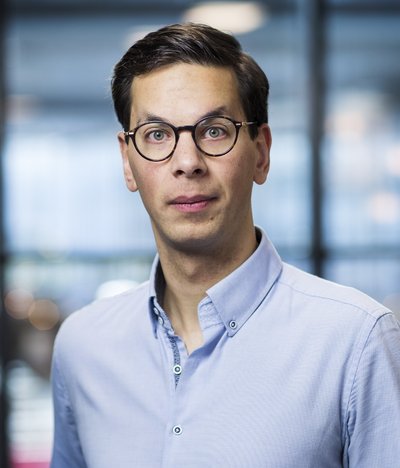
Pim de Vink is a doctoral researcher at Eindhoven University of Technology , affiliated with the Biomedical Engineering department and Chemical Biology group. Supervised by dr. L.-G. Milroy and prof. L. Brunsveld , his work bridges supramolecular chemistry and chemical biology , focusing on host/guest chemistry for protein complex modulation. Education: B.Sc. in Chemistry (2014) from University of Amsterdam M.Sc. in Biomedical Engineering (2016) from TU/e Internship at Max Planck Institute for Molecular Physiology (2016) on gold-catalyzed synthesis Research Themes: His research develops switchable cucurbituril-based systems for light-controlled enzyme activation and artificial signaling networks. Key areas include protein-protein interaction stabilization , thermodynamic modeling , and allosteric nuclear receptor modulation . Publication Trends: Across JACS , Chemical Science , and RSC Chemical Biology , his work from 2017–2023 emphasizes supramolecular tools for biochemical applications. Notable contributions include 100-fold affinity enhancement of 14-3-3 ligands and UV-responsive cucurbituril release mechanisms . Grants: Funded by Netherlands Organization for Scientific Research (NWO) through Gravity program 024.001.035 and VICI grant 016.150.366.
Daniel Redwood serves as Director of the MS in Nutrition & Functional Medicine at the University of Western States (UWS), a leading institution in integrated health care. With 25 years of clinical chiropractic experience emphasizing nutrition and acupuncture, he previously held a professorship at Cleveland Chiropractic College - Kansas City where he supervised student interns and taught clinical nutrition. His educational background includes: BA in English, State University of New York at Buffalo Doctor of Chiropractic, Palmer College of Chiropractic Dr. Redwood's research focuses on the integration of nutrition and functional medicine within chiropractic practice, advocating for evidence-based holistic models that prioritize prevention and self-care. His work bridges conventional and complementary medicine through clinical applications in pain management, chronic disease prevention, and lifestyle interventions. His scholarly output demonstrates a clear evolution from foundational chiropractic principles toward integrative approaches, with increasing emphasis on evidence-based nutrition protocols and interdisciplinary collaboration in health care delivery systems. Key recognitions include: Educator of the Year (Missouri State Chiropractic Association) Six-time Virginia Chiropractic Association Literary Award winner As an educator and academic leader, he has shaped curriculum development through editorial roles including founding editor of The Journal of Alternative and Complementary Medicine and current associate editor of Topics in Integrative Healthcare. His consulting work with WebMD and Integrative Medicine Consult extends his influence into digital health platforms. Dr. Redwood actively builds bridges between medical disciplines through his leadership at UWS and participation in the Research Agenda Conference (RAC), positioning functional medicine as central to the future of integrated health care systems.
Nancy J. Brown, M.D., is the Jean and David W. Wallace Dean of the Yale School of Medicine and holds the C.N.H. Long Professorship in Internal Medicine. Previously, she served as Chair of Vanderbilt Department of Medicine and Physician-in-Chief of Vanderbilt University Medical Center (2010–2020). Her academic career spans over three decades, with leadership roles in clinical care, research, and medical education. Education: MD, Harvard University (1986) AB in Molecular Biophysics and Biochemistry, Yale College (1981) Internship and Residency in Medicine, Vanderbilt University (1989) Fellowship in Clinical Pharmacology, Vanderbilt University (1991) Chief Resident, Vanderbilt University (1992) Research Interests: Dr. Brown’s work focuses on the renin-angiotensin-aldosterone system’s role in cardiovascular disease, hypertension, and thrombosis. Her lab has elucidated mechanisms linking aldosterone, bradykinin, and ACE inhibitors to inflammation, fibrosis, and cardiovascular risk. Current studies explore neprilysin inhibitors in heart failure and incretin-based therapies’ cardiovascular effects. Key Contributions: Identified genetic variants and African ancestry as risk factors for ACE inhibitor-associated angioedema Developed Vanderbilt’s Master of Science in Clinical Investigation program (2000) Advocated for physician-scientist development through leadership roles in NIH councils and professional organizations Recognition: Recipient of the Harriet Dustan Award, August M. Watanabe Prize, and Robert H. Williams Distinguished Chair of Medicine. Elected to the National Academy of Medicine and American Academy of Arts & Sciences. Labs/Teams: Leads the Yale School of Medicine’s cardiovascular research initiatives, focusing on translational studies of RAAS pathways and drug mechanisms.
James T. Enns is a Professor and Distinguished University Scholar in the Department of Psychology within the Faculty of Arts at the University of British Columbia. His research primarily focuses on the role of attention in human vision, with secondary interests in developmental psychology and human-machine interaction. Dr. Enns' research interests span perception, attention, vision, cognition, development, and human-machine interaction. His work explores how the human mind selects information, with particular emphasis on visual attention mechanisms. His laboratory research investigates the fundamental processes of visual perception and how attention modulates these processes across different contexts and developmental stages. Analysis of Dr. Enns' publication record reveals consistent engagement with visual perception, attentional mechanisms, and cognitive processing. His research demonstrates expertise in both theoretical frameworks and experimental methodologies related to visual attention, with applications spanning basic cognitive science to potential implementations in human-computer interaction systems. His work often bridges theoretical cognitive psychology with practical applications. Canadian Society for Brain, Behaviour and Cognitive Science Donald O. Hebb Distinguished Contribution Award (2013) Distinguished University Scholar, UBC (2004) Robert E. Knox Master Teaching Award (2004) Royal Society of Canada Fellow (2002) Killam Faculty Research Prize (1994) Killam Faculty Research Fellowship (1993) Society of Experimental Psychology Fellow Dr. Enns has served as Editor for the Journal of Experimental Psychology: Human Perception and Performance, and as Associate Editor for Psychological Science, Consciousness and Cognition, and Visual Cognition. His research has been supported by grants from NSERC, the Canadian Foundation for Innovation, the Australian Research Council, BC Health, and Nissan. He has authored textbooks on perception, edited research volumes on the Development of Attention, and published numerous scientific articles on vision, attention, and cognitive science. Dr. Enns is currently accepting graduate students and continues to mentor the next generation of cognitive scientists. Dr. Enns leads the UBC Vision Lab, which focuses on how the human mind selects information. The lab conducts research on visual attention, perception, and cognitive processes using a variety of experimental methodologies.
Ana Vives-Rodriguez, MD is an Assistant Professor of Neurology at Yale School of Medicine. She specializes in movement disorders and cognitive-behavioral neurology, caring for patients with Parkinson's disease, tremor, tics, dystonia, Alzheimer's disease, Dementia with Lewy bodies, and frontotemporal dementias. Based at Yale Physicians Building in New Haven, Connecticut, she provides both in-person and telehealth services to adult patients, accepting new patients without requiring referrals. Dr. Vives-Rodriguez's educational background includes: BS and MD from University of Costa Rica (2009), graduating Magna Cum Laude Residency at University Costa Rica/Calderon Guardia Hospital (2014) Clinical Fellowship in Movement Disorders at Yale New Haven Hospital (2018) Advanced Fellowship in Cognitive Behavioral Neurology at Boston University/VA Medical Center (2022) Her primary research interests focus on the behavioral and cognitive aspects of movement disorders and the early diagnosis of neurodegenerative disorders . Dr. Vives-Rodriguez examines structural and functional brain changes in conditions like Parkinson's disease, Wilson's disease, and Alzheimer's disease and their relation to clinical manifestations. Her work bridges clinical practice with translational neuroscience to improve diagnostic approaches and patient outcomes in complex neurological conditions. Analysis of her publications from 2017-2021 reveals a strong focus on movement disorders, cognitive impairment, and neuroimaging. Her research spans clinical observations of movement phenomena like index finger pointing and writing tremor, structural and functional brain changes in Wilson's disease, and innovative approaches to medical education in movement disorders. A recurring theme is the intersection between movement disorders and cognitive function, highlighting her dual expertise in both specialties. Dr. Vives-Rodriguez serves as a Sub Investigator for the Cognitive Training in Parkinson's Disease clinical trial (HIC ID 2000033352), which is recruiting participants aged 40+ through 2027. While specific grant funding isn't detailed in the available information, her active research program suggests ongoing support for her work in neurodegenerative disorders. She is affiliated with Yale's Movement Disorders and Neurodegenerative Disorders divisions, working within the Department of Neurology at Yale School of Medicine. Her clinical work at Yale Physicians Building integrates the latest research findings into patient care while contributing to the academic mission through teaching and scholarly activities.
Michele Matteini serves as Associate Professor in the Department of Art History at New York University's College of Arts and Science, specializing in Late Imperial Chinese painting and material culture (ca. 1400-1800) with focus on Qing dynasty antiquarianism, collecting practices, and eighteenth-century transnational artistic exchanges. His academic credentials include: Ph.D. (2012) in History of Art from the Institute of Fine Arts M.A. (2004) in History of Art from New York University B.A. (2000) summa cum laude from the University of Venice, Ca’ Foscari Research interests encompass Late Imperial Chinese painting, antiquarianism, collecting culture, Qing history, urban culture, inter-Asian artistic exchanges, eighteenth-century globalism, craft traditions, embodied knowledge, and art historical methodology. His interdisciplinary approach bridges anthropology, religious studies, and art history to examine material culture across East Asia. Recent publications reveal consistent thematic focus on eighteenth-century material practices, analyzing antiquarian objects, historical figure cults, and cross-cultural artistic production. Works integrate art historical analysis with anthropological perspectives on topics like rock collecting, filial piety, and sacred materiality, demonstrating how objects functioned within social and global contexts. His scholarly recognition includes: The Andrew Mellon Foundation Fellowship for Assistant Professors, Institute for Advanced Study, Princeton (2013-2014) Ittleson Fellowship, Center for Advanced Study in the Visual Arts, National Gallery of Art (2007-2009) Panofsky Distinguished Fellowship, Institute of Fine Arts, New York University (2002-2007) Matteini's research has been supported by major fellowships from the Andrew W. Mellon Foundation and National Gallery of Art. While current advising activities and grant projects beyond these fellowships are not detailed in available sources, his extensive publication record indicates sustained scholarly productivity focused on East Asian material culture.
Elly Konijn is a Full Professor at the Faculty of Social Sciences and Humanities and Network Institute of Vrije Universiteit Amsterdam, holding the Fenna Diemer-Lindeboom Endowed Chair. As chair of the Media Psychology Amsterdam program, her work bridges media psychology, social robots, affective processing, and adolescent media use . Research Pillars : Relating to media figures, virtual humans, and social robots Media-based reality perceptions and moral standards Adolescent media effects (cyberbullying, video games, body image) Recent Publications explore emotional bonding with robots, narrative complexity in film, and media's impact on adolescent cognition. Her 2025 Communication Theory article introduces a framework for human-artificial others relationships. Scientific Recognition : KNAW/NWO Eurekaprijs (2015) Computable Award (2021) Network Institute Competitive Research Funding (2025) She supervises 16 PhD students and leads projects like ROBOT-BOND (ERC Advanced Grant 2025-2029) and Communicating with Social Robots (2020-2025). Her documentaries (e.g., Alice Cares ) translate research into public discourse.
Kazushi Ueda is an Associate Professor at the Graduate School of Mathematical Sciences, The University of Tokyo, where he has been since April 2015. His research spans algebraic geometry, symplectic geometry, and mathematical physics, with a focus on homological mirror symmetry and its applications to moduli spaces, Calabi-Yau manifolds, and singularities. He previously held academic positions at Osaka University from 2006 to 2015, including roles as Assistant Professor and Associate Professor. Ueda has also had visiting appointments at institutions such as the University of Oxford, Max Planck Institute for Mathematics, and Korea Institute for Advanced Study. Bachelor of Science, Kyoto University (1997-2001) Master of Science, Kyoto University (2001-2003) Doctor of Science, Kyoto University (2003-2006) Ueda's research explores the deep interplay between complex and symplectic geometry through mirror symmetry, particularly in the context of Calabi-Yau varieties, toric degenerations, and dimer models. His work addresses derived categories, stability conditions, and moduli problems, with recent contributions to noncommutative algebraic geometry and applications in mathematical physics. He has collaborated extensively with researchers like Akira Ishii, Masahiro Futaki, and Shinnosuke Okawa. His publications highlight homological mirror symmetry for K3 surfaces, Grassmannians, and singularities, as well as studies on modular forms, cluster transformations, and the Grothendieck ring. Ueda is a member of the Mathematical Society of Japan and has contributed to educational programs, including graduate lectures on mirror symmetry and symplectic geometry.
Andrew Yonelinas is a Professor in the Department of Psychology at the University of California, Davis, where he directs the Human Memory Lab. He holds additional leadership roles as Associate Director of the Center for Mind and Brain and is an affiliated faculty member with the UC Davis Center for Neuroscience. His research bridges cognitive psychology and neuroscience to investigate fundamental memory mechanisms and their neural substrates. His educational background includes a Ph.D. in Experimental Psychology from McMaster University (1995) and a B.S. in Cognitive Science from the University of Toronto (1990). These foundational studies established his expertise in experimental methodologies and cognitive theory. Yonelinas specializes in dual-process models of memory, distinguishing between recollection (detailed contextual retrieval) and familiarity (vague recognition). His lab employs process dissociation, remember/know procedures, and ROC modeling alongside neuroimaging (fMRI, ERP) and clinical studies with amnesic and Alzheimer's patients. Recent work expands into auditory working memory, multisensory integration, and the impact of mental illness on cognitive processes, revealing hippocampal roles across memory systems. His research consistently addresses how memory fails in clinical conditions while developing unified theoretical frameworks. Analysis of his 2024-2025 publications shows a strong focus on memory mechanisms across sensory modalities, with increasing emphasis on clinical applications. Key trends include hippocampal contributions to visual/auditory working memory, EEG-based biomarkers for mental illness, and the interplay between schema knowledge and memory distortion in aging populations. His work demonstrates methodological innovation through model-based EEG phenotyping and multisite clinical collaborations. His scientific recognition includes: American Psychological Society’s Shahin Hashtroudi Memorial Award University of California Chancellor’s Fellow Award European Brain and Behavior Society International Lecture Award Yonelinas actively shapes his field through editorial roles at top journals including Proceedings of the National Academy of Sciences and Journal of Experimental Psychology, while serving as a grant reviewer for NIH, NSF, and international funding bodies. His Human Memory Lab trains next-generation researchers in memory theory and methodology, with recent projects examining stress effects on memory precision and neural mechanisms of action slips. The Human Memory Lab operates within UC Davis's neuroscience ecosystem, collaborating closely with the Center for Mind and Brain on projects involving clinical populations and neuroimaging. Current initiatives include the CNTRACS Consortium for EEG standardization in mental illness and investigations into how stress modulates memory binding through hippocampal mechanisms.
Santiago F. González is a Group Leader at the Institute for Research in Biomedicine (IRB) in Bellinzona, Switzerland, and an extraordinary professor at the University of Italian Switzerland (USI). He earned dual PhDs in microbiology (University of Santiago de Compostela, Spain) and immunology (University of Copenhagen, Denmark), followed by postdoctoral work (2007–2011) at Harvard Medical School's Immune Disease Institute under Michael Carroll. PhD in Microbiology, University of Santiago de Compostela PhD in Immunology, University of Copenhagen His research focuses on immune system dynamics during respiratory viral infections, vaccination, and cancer metastasis. Key areas include influenza recognition , lymph node inflammation , and immune cell behavior in vivo. He pioneered studies on C-type lectin receptors (e.g., SIGN-R1) in viral immunity and epigenetic modulators for inflammation. Recent publications highlight his work in epigenetic drug development , nanovaccines , and computational tools for immune cell tracking. His group uses two-photon intravital microscopy and spatial-temporal modeling to dissect immune responses. Scientific awards include three EU Marie Curie Fellowships (2004–2013), enabling his transition to independent research. His collaborations span Harvard, USI, and European institutions, with grants from the EU and Swiss research bodies. His lab at IRB, established via the 2013 Marie Curie Career Integration Grant , develops novel imaging approaches and therapeutic strategies for infectious and immune-mediated diseases.
Ashley M R Montanaro is a Professor of Quantum Computation at the School of Mathematics, University of Bristol . Active in quantum computing research since at least 2014, they lead projects at the intersection of quantum algorithms , computational complexity , and quantum information theory , affiliated with the Bristol Quantum Information Institute. Research interests focus on quantum algorithm design , computational complexity analysis , and quantum simulation . Key work includes developing variational quantum algorithms for phase transition detection, Hamiltonian simulation techniques, and quantum-classical hybrid methods for solving complex problems in physics and optimization. Recent publications demonstrate expertise in: Quantum phase diagram simulation with low-depth circuits Quantum speedups for constraint satisfaction problems Quantum communication complexity of machine learning tasks Quantum-enhanced optimization heuristics Hamiltonian simulation with time-dependent product formulas Quantum algorithm complexity analysis Scientific awards include: EPSRC Fellowship (2014-2019) - "New insights in quantum algorithms and complexity" Active in quantum software development through projects like: "Quantum Algorithms from Foundations to Applications" (ERC-2018-COG) "Quantum Computing and Simulation Hub" (2019-2024) "Prosperity Partnership in Quantum Software" (2019-2023)
Hanbyul Joo is an Assistant Professor in the Department of Computer Science and Engineering at Seoul National University (SNU). Prior to joining SNU, he was a Research Scientist at Facebook AI Research (FAIR) in Menlo Park. He completed his Ph.D. in the Robotics Institute at Carnegie Mellon University, working with Yaser Sheikh, and received his M.S. in Electrical Engineering and B.S. in Computer Science from KAIST, Korea. Dr. Joo's educational journey began at KAIST, where he earned both his Bachelor's and Master's degrees. He then pursued his Ph.D. at Carnegie Mellon University's Robotics Institute, completing his dissertation titled "Sensing, Measuring, and Modeling Social Signals in Nonverbal Communication." His doctoral work focused on developing the Panoptic Studio, a unique sensing system with over 500 synchronized cameras for capturing social interactions. Dr. Joo's research primarily focuses on endowing machines and robots with the ability to perceive and understand human behaviors in 3D . His goal is to build "social Artificial Intelligence" that can interact with humans using social signals (body languages). He pursues this direction using data-driven methods where data is collected by measuring the wide spectrum of social signals transmitted during interpersonal social interaction. His research spans computer vision, machine learning, computer graphics, and robotics , with particular emphasis on 3D human pose estimation, human-object interaction, and social signal processing. His recent publications demonstrate a clear trend toward leveraging diffusion models for 3D reconstruction and generation tasks, with a focus on human-centric applications. His work bridges the gap between 2D image understanding and 3D scene reconstruction, often utilizing pre-trained models to overcome data limitations. The research consistently addresses fundamental challenges in understanding human behavior, interaction with objects, and social dynamics in 3D space. Dr. Joo is a recipient of several prestigious awards including the Samsung Scholarship and the CVPR Best Student Paper Award in 2018 . His paper "Total Capture: A 3D Deformation Model for Tracking Faces, Hands, and Bodies" received this honor at CVPR 2018. His research has been widely recognized in top computer vision and AI conferences, with multiple oral presentations at venues like CVPR, ICCV, and ECCV. Dr. Joo actively mentors a large group of students, with approximately 15 current students working toward MS/PhD degrees under his supervision. His lab, the SNU VCLab, focuses on cutting-edge research in computer vision and graphics. He has secured significant research funding through his work, though specific grant details aren't provided on his website. Dr. Joo frequently serves as an area chair for major conferences including CVPR, ICCV, and NeurIPS, demonstrating his standing in the academic community. Dr. Joo leads the SNU VCLab, which has developed several notable datasets and tools including SNU ParaHome, FrankMocap, and the CMU Panoptic Studio Dataset. His lab maintains strong industry connections, with students interning at leading companies like Meta. The lab's research focuses on building the infrastructure and algorithms needed for social AI, with an emphasis on practical applications that can be deployed in real-world settings.
Jonathan Santo is a Professor of Psychology at the University of Nebraska at Omaha (UNO), where he serves as Director of the Graduate Developmental Psychology Program and as a faculty member in the Office of Latino/Latin-American Studies. His research explores peer relations, cultural differences in self-esteem, and classroom-level influences on child and adolescent development, with a focus on improving school environments and fostering positive social interactions. ORCA Faculty Fellow His research spans broad areas including Developmental Psychology , Social Support Systems , and Cross-Cultural Peer Dynamics , with specific attention to peer victimization , self-continuity , school climate , and developmental trajectories in Brazilian and Colombian youth . Recent publications analyze topics like hikikomori experiences , friendship security , and HPA axis dysregulation in adolescents. Scientific awards include the ORCA Faculty Fellow recognition. His work often involves longitudinal assessments of peer relationships cross-cultural comparisons (Brazil, Colombia, China, Nigeria, Singapore, U.S.) policy-focused blog posts on family separations and school interventions
Prof. Dr. Michael Klasen is a leading theoretical physicist at the Institute of Theoretical Physics at the University of Münster, where he heads his eponymous research group. His work bridges nuclear and particle physics, with significant contributions to quantum chromodynamics and physics beyond the Standard Model. His research focuses on Particle Physics , Quantum Chromodynamics , and Physics beyond the Standard Model , with particular emphasis on understanding the quark-gluon structure of atomic nuclei and dark matter phenomena. His innovative approach connects microscopic quark-gluon dynamics with nuclear binding phenomena, creating a crucial bridge between nuclear and particle physics. Prof. Klasen's recent work analyzing nucleon binding at the quark-gluon level was recognized as a "Breakthrough of the Year 2024" by Physics World. His research group's publication in Physical Review Letters demonstrated how quarks and gluons behave differently in nucleon pairs than in free nucleons, fundamentally advancing our understanding of nuclear binding. Breakthrough of the Year 2024 from Physics World Leadership of Research Training Group 2149 "Strong and weak interactions - from hadrons to dark matter" Supervision of award-winning doctoral research including the Infineon Dissertation Prize 2025 Prof. Klasen has successfully mentored numerous PhD students, with 20 of his group's graduates continuing their academic careers at prestigious institutions including CERN and Stanford University. His research has been supported by major funding bodies including the German Research Foundation (DFG), the Helmholtz Alliance for Astroparticle Physics, and BMBF collaborative research programs. The Klasen working group maintains active collaborations with international research networks including CTEQ, DM@NLO, and RESUMMINO.
George Perry is a Professor of Anthropology at Pennsylvania State University, with research intersections in Biology, Evolutionary Medicine, and Genomics. He is affiliated with the Huck Institutes' Center for Infectious Disease Dynamics, Ecology, Molecular Cellular and Integrative Biosciences, and Bioinformatics and Genomics programs. Perry directs the Anthropological Genomics Lab , focusing on paleogenomics and evolutionary adaptation. Research areas: anthropological genomics, parasite evolution, human body size transitions, and evolutionary medicine Key collaborations: international teams in Madagascar, Europe, and Africa Leadership: Bioinformatics and Genomics Chair (2019–2023) His 2025–2022 publications span evolutionary responses to invasive species, human migration health impacts, chemosensory gene adaptation, and primate genomic diversity. Notable methodological contributions include ancient DNA recovery and comparative paleogenomics. Perry advises graduate students like Vanessa Garcia and Annette Mercedes, with grants including NIH support for Cuban health disparity studies. Scientific leadership includes tenure-line promotions (2023) and NASA Space Grant collaborations.