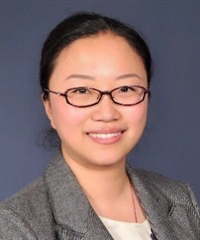
Lionel Pichon is a leading researcher at the Laboratory of Electrical and Electronic Engineering of the University of Paris. His primary affiliations include the Department of Electrical and Electronic Engineering of Paris, where he specializes in advanced electromagnetic research. His work focuses on Electromagnetics , Electromagnetic Compatibility (EMC) , and Wireless Power Transfer , with particular emphasis on composite materials, biomedical applications, and automotive systems. Expertise in numerical methods (FDTD, FIT, DGTD) for electromagnetic simulations Pioneer in shielding effectiveness analysis for composite materials Developer of AI-driven approaches for dielectric property characterization Over 70 publications since 2017 highlight his contributions to fields like inductive power transfer systems, medical device EMC, and GPR imaging techniques. Collaborates extensively with institutions globally, including research on antenna design for implantable medical devices and electromagnetic compatibility in healthcare facilities. Current research trends emphasize machine learning integration with traditional electromagnetic analysis to optimize system performance and safety standards.
Michael Vincent Vecchio serves as Assistant Professor in the School of Music at the University of Illinois Urbana-Champaign, contactable at vecchiom@illinois.edu. His academic profile centers on advancing music teacher education through innovative research frameworks. Dr. Vecchio's research specializes in Self-Study of Teacher Education Practices (S-STEP), examining music composition integration in secondary band programs, teaching artist professional development within community initiatives like YOLA, and social-emotional learning dynamics in instrumental music education. His collaborative work with scholars such as Conway and Weaver emphasizes practitioner inquiry and policy engagement in arts education. Analysis of his 2022-2025 publications reveals consistent focus on bridging scholarly research with classroom practice, particularly in teacher identity development and equity-oriented curricula. The body of work demonstrates growing emphasis on community-based arts education models and the evolving role of teaching artists in policy implementation, while maintaining core commitments to reflective practice and student-centered pedagogy in music.
Elizabeth Westrupp is an Associate Professor in Psychology and Associate Head of School (Research) at Deakin University's School of Psychology. She co-leads the Intervention Sciences Theme in Deakin's SEED Lifespan Strategic Research Centre. With a background as a registered child clinical psychologist, Westrupp has built a distinguished academic career at Deakin University, progressing from Research Fellow positions to her current role as Associate Professor since 2023. Her research focuses on how family life, parenting, and broader social environments shape children's mental health and development. Westrupp specializes in developing and testing evidence-based programs to support parents in real-world settings, with particular expertise in emotion regulation, parent-child interactions, and mental health prevention. She leads several major projects including Daily Growth (a smartphone app for parents of 2-5 year olds), the Child and Parent Emotion Study (CAPES), and the COVID-19 Pandemic Adjustment Survey - all longitudinal studies examining family wellbeing over time. Westrupp's scholarly work demonstrates a strong emphasis on translating research into practical applications, particularly through digital health interventions. Her recent publications reveal increasing focus on emotion socialization, parenting interventions, autism spectrum research, and the impacts of the pandemic on family mental health. She has received funding from the National Health and Medical Research Council to support her research initiatives. As a registered child clinical psychologist with a Masters/PhD in Clinical Psychology (Child Specialisation) from Melbourne University, Westrupp bridges academic research with clinical practice. Her work often addresses practical parenting challenges, as evidenced by numerous public-facing articles on topics ranging from child body safety to managing holiday stress for separated families. Westrupp maintains an active research program with numerous collaborators, evidenced by her extensive publication record that spans developmental psychology, clinical interventions, pandemic impacts on families, and autism research. She serves as Editor-in-Chief of Mental Health & Prevention and is affiliated with the Parenting and Family Research Alliance.
Dr. Ann Swartz is a tenured Professor in the Department of Kinesiology at the University of Wisconsin-Milwaukee. Her research program investigates the health impacts of physical activity and sedentary behavior across diverse populations including aging adults, schoolchildren, and individuals with chronic conditions. PhD in Exercise Physiology (University of Tennessee) MS in Exercise Science (Ball State University) BS in Kinesiology (University of Wisconsin-Madison) Her research focuses on: Linking physical activity patterns to metabolic and cardiometabolic health Developing novel assessment methodologies for activity monitoring Designing interventions to reduce sedentary behavior Examining mobility limitations in aging and disabled populations Recent publications emphasize wearable technology validation, sedentary behavior interventions, and functional assessment in aging adults. She has received multiple research awards including the European Journal of Sport Sciences Best Paper Award and has been recognized for her methodological contributions to activity measurement. KIN 330: Exercise Physiology KIN 530: Physiology of Performance KIN 531: Clinical Exercise Physiology KIN 532: Electrocardiography Interpretation KIN 930: Seminar in Exercise Physiology
John Derek Morgan is an Associate Professor in the Department of Earth and Environmental Sciences at the University of West Florida, within the Hal Marcus College of Science and Engineering. He serves as the primary faculty for the online Master of Science in GIS Administration program, contributing significantly to geospatial education and research. His work bridges urban environmental geography, GIS, cartography, and public policy. PhD in Geography, Florida State University MS in Management Information Systems, University of Central Florida BA in Economics (with Computer Science minor), University of Central Florida Dr. Morgan's research centers on the application of advanced geospatial methodologies to urban and environmental challenges. His work spans participatory mapping, crime mapping using time-geographic models, hazard modeling, land use planning, and cartographic visualization. He emphasizes user-centered design in Web GIS and explores how spatial tools can promote safer communities and equitable decision-making. His projects often integrate satellite imagery, social vulnerability indices, and community input to inform resilience and policy. The recent publications reflect a strong trend in applying GIS to social and environmental issues, including disaster response, urban park safety, illegal logging detection using GeoAI, and wildfire monitoring. His work combines technical innovation in geovisualization with real-world applications in public safety, environmental justice, and urban sustainability. Scientific Awards: NSF Doctoral Dissertation Research Grant #0927850 Dr. Morgan advises graduate students in the MS GIS program and has been involved in significant research grants, including the Florida Sea Grant 2024 project focused on training GIS graduates for coastal resilience. His collaborations span interdisciplinary teams, including environmental scientists, urban planners, and computer scientists. He has also contributed foundational content to the UCGIS Geographic Information Science & Technology Body of Knowledge. He leads research initiatives involving Web GIS development, hazard modeling post-hurricanes, and participatory mapping for community engagement. His lab work includes the use of satellite imagery, Bayesian networks for infrastructure failure, and deep learning for environmental monitoring. Future work continues to focus on transboundary viewshed changes, GeoAI applications, and improving spatial tools for public decision-making.
Lisa Ciresi is an Associate Professor of Art History in the Department of English, the Arts & Interdisciplinary Studies at the University of South Carolina Beaufort (USCB), affiliated with the School of Humanities & Social Sciences. She is based in Library Room 253 on the Bluffton campus and teaches a range of courses in Western art history. Her research focuses on sacred and devotional art of the High Middle Ages, particularly the liturgical use and symbolic significance of medieval reliquaries and their architectural contexts. She has conducted extensive research in Germany, including a post-doctoral fellowship with DAAD and a research associate position at the University of Hamburg. Her recent publication, 'Maria Ecclesia: The Aachen Marienschrein as an alternate body for the Virgin Mary,' explores the theological embodiment in medieval reliquaries. She is currently working on a manuscript titled 'Foundations of a sacred empire: the 13th Century Cerational site of Charlemagne in Aachen' under contract with Brill Academic Publishers. Lisa Ciresi earned her PhD in Art History from Rutgers University in 2003, following an MA (1997) and BA (1989) from the same institution. She was awarded a Fulbright Scholarship and a DAAD post-doctoral fellowship for her research in Germany. Scientific Awards: Fulbright Scholar (Germany) Post-doctoral Fellowship from German Academic Exchange Program (DAAD) She advises independent studies and mentors students through ARTH B299, and is actively involved in community outreach by delivering public lectures for the Osher Lifelong Learning Institute (OLLI) and local communities in Beaufort, Bluffton, and Hilton Head Island. She contributes to continuing education and public engagement in the arts. Her teaching includes foundational and advanced courses such as: ARTH B105 - History of Western Art I ARTH B106 - History of Western Art II ARTH B315 - History of Medieval Art ARTH B320 - History of Italian Renaissance Art ARTH B335 - History of 20th Century Art ARTH B390a - Topics in Art History: Beaufort Three Centuries ARTH B299 - Independent Study
Professor David Lubans, a renowned expert at the University of Newcastle's School of Education , leads groundbreaking research on school-based physical activity interventions. With over $30 million in competitive grants and recognition as a Clarivate Highly Cited Researcher for five consecutive years, he focuses on combating youth physical inactivity through behavioral science and socio-ecological models. His work includes large-scale programs like iPLAY (135 NSW schools) and Burn 2 Learn, utilizing MRI to study brain-body connections. Co-Director, Centre for Active Living and Learning Visiting Professor, University of Jyväskylä Research interests span physical activity promotion , mental health impacts , and teacher training programs . His team develops evidence-based interventions using SAAFE teaching principles (Supportive, Active, Autonomous, Fair, Enjoyable) and investigates neurobiological mechanisms linking fitness to cognitive outcomes. Key publications reveal associations between childhood lifestyle behaviors and adolescent mental health, HIIT implementation strategies, and mediators of school-based interventions. Awards include College Excellence Awards, NHMRC Fellowships, and multiple best paper honors. Supervised 40+ interventions Published >350 peer-reviewed articles Trained teachers globally through programs like iPLAY Collaborations extend to institutions in Australia , Canada , Hong Kong , and Finland , with current studies examining stress-reactivity and cognitive outcomes via MRI.
Petteri Muukkonen serves as Senior University Lecturer in Geography at the Department of Geosciences and Geography, University of Helsinki, where he also holds a Docentship in Biogeography since 2008. He directs the Master's Program in Urban Studies and Planning (USP) and leads the Geography of Well-being and Education research group. Muukkonen is actively involved in multiple research initiatives including the Equal Suburbs with Physical Activity (YLLI) project as Consortium director and the CRITICAL project as Workpackage leader. His institutional affiliations extend to the Institute for Urban Studies (Urbaria), Helsinki Inequality Initiative (INEQ), Teachers' Academy, and Institute of Sustainability Science (HELSUS). Dr. Muukkonen's educational background includes a PhD in Geography from the University of Helsinki (2006), MSc and BSc in Geography from the University of Turku (2002, 2000), and additional qualifications in Education (University of Helsinki, 2016), Business and Economics (University of Eastern Finland, 2014), Special Needs Education (University of Helsinki, 2014), and Nordic Languages and Cultures (University of Helsinki, 2020). His research spans geography education, urban studies, physical activity in suburban environments, and biodiversity in boreal ecosystems. Muukkonen's work bridges educational theory with practical applications in urban planning and environmental sustainability. He has published extensively across geography, environmental science, and educational fields with over 180 research outputs and 13 active projects. His recent publications demonstrate a strong focus on integrating geographical knowledge with contemporary societal challenges including climate justice, active transportation, and critical media literacy. Muukkonen has received multiple Outstanding Reviewer Awards from prestigious journals including Ecological Indicators, Ecological Informatics, Energy Ecology & Environment, and Journal of Cleaner Production. He also participated in the GALA2022 Serious Games Competition. With over 410 academic activities recorded, including 99 peer reviews and 92 oral presentations, he maintains an active scholarly presence. As an educator and researcher, Muukkonen supervises Master's theses and participates in doctoral education through the Doctoral Programme in School, Education, Society and Culture. His work on the YLLI project and CRITICAL initiative demonstrates his commitment to translating research into practical solutions for urban challenges and educational innovation.
Fredrik Rusk is an Associate Professor in Pedagogy with a focus on digital interaction at Åbo Akademi University, Faculty of Education and Welfare Studies. He also holds a tenure-track Assistant Professor (level 2) position and has previously served as Associate Professor at Nord University (2016–2023). His research integrates ethnographic, ethnomethodological, and conversation analytic approaches to study learning, identity, and social organization in digital environments such as video games, social media, and hybrid classrooms. His research interests include: Pedagogy and digital interaction Ethnography and conversation analysis in digital contexts Identity formation in online communities Inclusion and diversity in educational gaming Collaborative learning and team coordination in virtual spaces Ethics of digital fieldwork His recent publications explore themes such as team coordination in first-person shooter games, inclusion in digital youth centers, and the sociocultural dynamics of esports. The body of his work reveals a strong trend toward understanding how digital interaction shapes learning and social behavior, particularly among youth and students. Notable scientific contributions include leadership in multiple research projects such as EduGaming, STEM Education in Newton Rooms, and CO-WRITE, funded by organizations like the Academy of Finland and the Swedish Cultural Foundation. He has also served on doctoral evaluation committees and contributed to public discourse on AI in education and digitalization in schools. Fredrik Rusk actively mentors and collaborates with researchers, though no formal PhD or Master’s students are listed. He is involved in interdisciplinary teams focusing on educational technology, digital ethics, and collaborative learning. His work contributes to the UN Sustainable Development Goals, particularly in quality education and inclusive societies.
Dr Hazel Parry is a Senior Research Scientist at the Commonwealth Scientific and Industrial Research Organisation (CSIRO), with a focus on environmental drivers of pest and disease outbreaks. Her work integrates ecological and economic dimensions to advance Area-wide Integrated Pest Management (AW-IPM) and Digital IPM through spatiotemporal and simulation models. Education: PhD in Geography (Ecological Modelling), University of Leeds (2006) BA (Hons) in Geography, University of Cambridge (2002) Research Themes: Movement ecology of pests and beneficial species (e.g., Lepidoptera, fruit bats, fruit flies) AW-IPM in dynamic socio-agroecological systems Best practices in spatiotemporal and MLAI-based pest population forecasting Her work bridges multi-agent simulation , GIS , and ecological modelling to address food security and biosecurity challenges. Current Projects: Pest READI (Hort Frontiers funded, project leader) Canola Allies (GRDC funded, collaboration with Universities of Adelaide and Murdoch) Area-wide management of Queensland Fruit-fly (Rural R&D for Profit funded, project leader) Improved Management of Rutherglen bug (GRDC funded, project leader) Collaborations: University of Queensland, University of Wisconsin, Macquarie University, Queensland University of Technology, INRAE (France), Jagun Alliance Aboriginal Corporation, and industry bodies like GrowCom. Supervision: Co-supervised PhD student Jaye Newman (Graduated 2023, QUT) and currently supervises postdoctoral researchers in projects like Precision Pollination (ARC Linkage) and Winanga-y Fellowship .
Verónica Basilotta Gómez-Pablos is a Professor in the Department of Education at the Distance University of Madrid (UDIMA) with a recognized six-year research period. She holds a PhD in Educational Sciences from the University of Salamanca with international recognition and an extraordinary doctoral award. Her academic background includes a Diploma in Special Education Teaching, a Bachelor's in Psychopedagogy, and two Master's degrees (ICT in Education and Communication and Education on the Internet) from the University of Salamanca and UNED respectively. She currently directs the Official Doctorate in Education and Technology at UDIMA and is part of the Research Group on Digital Innovation and Education (eduDIG). Her research focuses on Educational Technology Collaborative Learning ICT Integration in Education Special Education Inclusive Pedagogy Digital Game-Based Learning She has contributed to projects like the EU's H2020 initiative on bullying prevention through serious games and has served as a court member in international doctoral evaluations. Her recent publications analyze films and digital tools for inclusion education, video game integration in pedagogy, and collaborative ICT projects. She has received multiple recognitions including the Outstanding Cum Laude qualification and international mention for her doctoral thesis at the University of Salamanca. Key awards include Extraordinary Doctoral Award from University of Salamanca International Mention in Doctoral Research Outstanding Cum Laude Qualification USAL Extraordinary Award She has conducted research stays at Sapienza University of Rome and presented at conferences like Open Education Italy and Evidence-Based Education meetings. Her work emphasizes practical implementation of digital tools in educational settings rather than purely theoretical approaches.
Mira Felner is a Professor in the Theatre and Performance Education department at Hunter College, City University of New York (CUNY) . She earned her Ph.D. in Drama from New York University and has dedicated her career to modern European drama, acting theories, and performance education. Research Interests: Felner specializes in Modern European Drama and Theatre , focusing on the intersection of traditional and innovative practices. Her work emphasizes Theories and Techniques of Acting , integrating physical expression and vocal training. She has explored mime traditions, circus arts, and cross-disciplinary methods to enhance actor training. Publications: Felner's major works include The World of Theatre: Tradition and Innovation (2006), Free to Act (2004), and the influential Apostles of Silence (1985). Her article Circus Techniques and the Actor's Craft (1972) pioneered the fusion of circus arts with theatrical performance. She also serves as the American Consultant Editor of the Bloomsbury Theatre Guide .
May S Farnsworth is a Professor of Spanish, Latin American, and Bilingual Studies at Hobart and William Smith Colleges, where she has been a faculty member since 2007. She holds a Ph.D. and M.A. in Spanish American Literature from the University of North Carolina, Chapel Hill, and a B.A. from The Evergreen State College. She is based in Smith Hall and teaches courses in bilingual education, gender studies, and Spanish language and literature. Ph.D., University of North Carolina, Chapel Hill – Spanish American Literature M.A., University of North Carolina, Chapel Hill – Spanish American Literature B.A., The Evergreen State College – Olympia, Washington Her research centers on feminism and social justice in Latin America and Spain, theatre and performance studies, and bilingual education. She is currently completing a book titled Feminist Rehearsals , which explores how performance culture intersected with women’s rights activism in Mexico and Argentina from 1900 to 1970. She is also actively involved in bilingual education advocacy through her work with Vamos Geneva 2030. Her publications span edited volumes, journal articles, and book chapters, focusing on feminist theatre, women playwrights, and gender in Latin American literature. Her recent works reflect a strong interdisciplinary approach, combining literary analysis with cultural and social activism. She has delivered invited lectures at institutions such as the Women's Rights Historic Park and Ohio University, and has developed digital teaching resources including the Galeria Hispana and Toys for Language Immersion Teaching (TILT). Her service includes leadership on the Geneva City Schools Board of Education and community-based language programs. Leader, Vamos Geneva 2030 Action Team (2020–present) Board of Education Member, Geneva City Schools (2016–2021) Language Consultant, Connect Geneva Children’s Library Volunteer Summer Spanish Teacher, Geneva Public Library (2009–present) She has also led study abroad programs in Chile and Ecuador and supervised independent studies on bilingual education, demonstrating a deep commitment to experiential and community-engaged learning.
Punam Mehta is an Instructor II in the Department of Community Health Sciences at the Max Rady College of Medicine, University of Manitoba. She is based at the Fort Garry campus in the Human Ecology Building and contributes to public health education and research with a feminist, community-centered approach. Her educational background includes: PhD in Applied Health Sciences, Faculty of Medicine, University of Manitoba (2014–2021) MSc in Community Health Sciences, Faculty of Medicine, University of Manitoba (2004–2007) BA (Honours) in Women and Gender Studies, University of Winnipeg (2004) BSc in Biology, University of Winnipeg (2004) Teaching and Learning Certificate, Centre for the Advancement of Learning, University of Manitoba (2023) Dr. Mehta's research focuses on enhancing wellness and improving lives through innovative, community-based interventions. Her work includes a yoga and body mapping initiative for mothers with addictions and a recent study on HIV stigma in Winnipeg. She emphasizes inclusive pedagogy, particularly in the required course Fundamentals of Health Promotion (FMLY 3750), aligning with her feminist teacher-scholar identity. She is currently accepting undergraduate thesis students and is actively engaged in teaching and research. While no specific publications or awards are listed, her work reflects a strong commitment to social justice, health equity, and experiential learning in public health. Dr. Mehta has no cross-appointments and is dedicated to her role within the Department of Community Health Sciences. She does not supervise graduate students at this time, based on available information.
Dr. Tingting Li is a Lecturer (Assistant Professor) in Cyber Security at Cardiff University's School of Computing and Informatics and a member of the Centre for Cyber Security Research. She also holds an Honorary Research Fellow position at Imperial College London, reflecting her ongoing research collaboration. Her work bridges artificial intelligence and cybersecurity, with a focus on protecting critical systems such as cyber-physical systems (CPS), industrial control systems (ICS/SCADA), and autonomous vehicles. BEng (Hons) in Information Security, Xidian University, China MSc in Computing, Imperial College London PhD in Artificial Intelligence, University of Bath Dr. Li’s research interests lie at the intersection of AI and cybersecurity, particularly in automated cyber defense , diversification/deception strategies , and symbolic AI for knowledge representation . She investigates how AI can enhance the resilience of critical infrastructures through intelligent, adaptive defense mechanisms. Her recent work explores quantum-inspired reinforcement learning and machine learning models for proactive threat mitigation in complex systems. Her recent publications demonstrate a strong trend in applying advanced AI techniques—especially deep reinforcement learning, LSTM networks, and Bayesian models—to cybersecurity challenges in industrial and autonomous systems. These works span domains like IoT malware suppression, network diversity for ICS resilience, and automated compliance checking, reflecting a multidisciplinary approach combining security, AI, and systems engineering. Dr. Li has secured significant research funding, including a grant from the Alan Turing Institute (2024–2025) on AI safety in autonomous cyber defense, a RITICS/NCSC-funded project on diversity-based cybersecurity (2021–2022), and an EPSRC-funded project on metric-driven cybersecurity frameworks for critical national infrastructure (2021–2023). She actively supervises PhD students in areas including cybersecurity for autonomous vehicles, moving target defense, and cyber-physical system security. Her team includes Iryna Bernyk, Sanyam Vyas, Victoria Marcinkiewicz, Ellis Doran, Stephen Morris, and Sam Braithwaite. She also leads teaching modules on databases (CM6125/CM6625) and cybersecurity (CM6224/CM6724). Dr. Li’s research is conducted within the Centre for Cyber Security Research at Cardiff University, where she collaborates with experts in AI, security, and critical infrastructure protection. Her work is highly interdisciplinary, involving partnerships with institutions like Imperial College London and funding bodies such as EPSRC, NCSC, and the Alan Turing Institute.