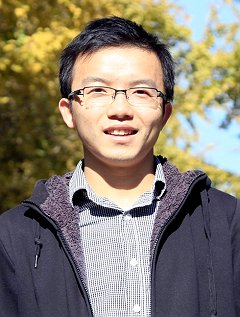
Saulius Grigaitis is an Associate Professor at the Faculty of Mathematics and Informatics, Vilnius University . His research and teaching focus on Blockchain Technology , with contributions to Distributed Systems and broader Computer Science disciplines. His scholarly work highlights critical trends and challenges in blockchain technology, including simulator development, platform evaluation, and systemic scalability issues. Key sub-fields of his research include decentralized ledger frameworks, consensus mechanisms, and future directions for blockchain applications.
Professor Jason Chuah (PhD, FRSA) is a leading academic in Commercial and Maritime Law at City, University of London (fractional basis since 2023) and holds a Chair at the University of Malaya, Malaysia. He has served as Head of Department and currently directs the London Universities Maritime Law and Policy Group. His career spans adjunct professorships at institutions in Canada, Sweden, Singapore, and 8 other countries. His research focuses on Maritime Law , Energy Law , Project Finance , Cybersecurity in Shipping , and Green Finance . He has contributed to landmark publications including the ICC-ECCO International Good Practice Guide for Offsets and advised on legislative frameworks for seafarer protections cited in the UK Queen’s Speech 2022. His 15 most recent publications (2023-2025) reveal trends at the intersection of AI in Maritime Trade , Blockchain-based Commerce , and Environmental Compliance . Articles frequently address Autonomous Shipping , Cybersecurity Risks for Offshore Units , and Modernization of Trade Instruments . Scientific recognition includes: Cambridge Commonwealth Trust Award Clive Schmitthoff Commercial Law Prize Fellow of the Royal Society of Arts Nomination for Oxford University Press Best Law Teacher Award (x3) He supervises 18 PhD students in topics ranging from Autonomous Shipping Regulation to Cryptoasset Money Laundering . His professional activities include editorial board roles at 5 journals and peer review for the Arts and Humanities Research Council, Polish National Science Centre, and South Africa National Research Foundation.
Dr. Sotirios Varelas serves as an Assistant Professor at the Department of Tourism Studies within the School of Economics, Business and International Studies at the University of Piraeus. His academic specialization focuses on Hospitality Business and Tourism Organization Strategy, where he contributes significantly to both undergraduate and postgraduate education through courses spanning tourism geography, international tourism markets, tourism development strategies, and strategic management of tourism businesses. Department of Tourism Studies, University of Piraeus School of Economics, Business and International Studies Teaches in Tourism Management programs at University of Piraeus and Hellenic Open University Student internship coordinator and academic advisors coordinator President of the Board of Directors of the Greek Branch of IFITT (World Organization for Technology in Tourism and Travel) Dr. Varelas's research interests center around strategic management in tourism, digital transformation in the hospitality industry, sustainable tourism practices, and innovative approaches to destination marketing. His scholarly work explores how emerging technologies like blockchain, big data analytics, and virtual reality platforms can revolutionize tourism enterprises and destinations. He has extensively studied the impact of economic crises on Greek hospitality businesses and developed strategic frameworks for tourism organizations to navigate challenging market conditions. His research portfolio demonstrates a consistent focus on strategic approaches to tourism development, with particular attention to sustainable indicators, performance measurement, and the integration of technology in tourism enterprises. Dr. Varelas's publications reveal an evolving research trajectory that increasingly incorporates digital innovation and sustainability metrics into traditional tourism management frameworks. Creator and coordinator of the Postgraduate Program in Tourism Business Administration Founder of the International Tourism Research Center of Neapolis University Former scientific consultant at the Ministry of Tourism, Hellenic Tourism Organization, and Peloponnese Region Collaborator with multiple research centers including the Institute of Regional Development and ELKE of the University of Peloponnese With over 12 years of professional experience as a scientific consultant in tourism organizations and as the creator of a virtual tourism startup company, Dr. Varelas brings practical industry insights to his academic work. His engagement with professional organizations and his role in connecting academic knowledge with industry practice demonstrate his commitment to advancing tourism education and practice in Greece and internationally.
Mallesh M Pai is the Lay Family Associate Professor in the Department of Economics at Rice University and a CEPR Research Fellow. His research bridges mechanism design, auction theory, and blockchain economics, with applications to decentralized finance (DeFi) and privacy economics. Prior to Rice, he was a Janice and Julian Bers Assistant Professor at the University of Pennsylvania. PhD in Managerial Economics and Strategy, Kellogg School of Management, Northwestern University Bachelor's in Computer Science and Engineering, Indian Institute of Technology, Delhi His work focuses on designing robust mechanisms in environments with information asymmetry, privacy constraints, and decentralized systems. Recent publications address dynamic transaction fees, blockchain centralization, and algorithmic collusion. He serves on program committees for major conferences in computer science and economics. Indirect Persuasion (Journal of Political Economy) Dynamic Transaction Fee Mechanism Design (with Max Resnick) Collusive Outcomes via Pricing Algorithms (Marketing Science) Mallesh has received significant recognition for his work, including the Best Paper award at the American Economic Journal: Microeconomics (2021) and Best Pricing Paper from the American Marketing Association RAPSIG (2023). His research is supported by NSF grants on fair data analysis and digital privacy foundations. He teaches graduate and undergraduate courses in microeconomic theory and market design at Rice, emphasizing practical applications of theoretical models. His Erdős number is 3, reflecting interdisciplinary collaborations.
Morteza Ghobakhloo is a Senior Lecturer and Researcher at Uppsala University , affiliated with the Department of Civil Engineering and Industrial Engineering (Industrial Engineering) and the Institute for Research on Conflicts of Goals in Sustainable Social Transition . His email is morteza.ghobakhloo@angstrom.uu.se . He focuses on digital transformation, sustainability, and human-centric technologies. Research Interests: Morteza’s work bridges Industry 4.0/5.0 , Sustainable Manufacturing , and Generative AI applications. His studies explore blockchain, big data analytics, and smart technologies in supply chain resilience, energy efficiency, and organizational innovation. Article Trends: Recent publications highlight Industry 5.0’s role in sustainable supply chains, AI-driven healthcare optimization, and blockchain for socioenvironmental solutions. He employs hybrid methodologies like PLS-fsQCA, ANN, and simulation modeling across sectors including energy, healthcare, and tourism.
Julian Müller holds the Professorship for Digital Industries at Friedrich-Alexander University Erlangen-Nuremberg (FAU), funded by Bosch Rexroth AG through the Stifterverband. He is part of the School of Business, Economics, and Social Sciences, specializing in digital transformation research within industrial contexts. His work bridges academic rigor with practical industry applications, particularly through his collaboration with Bosch Rexroth. Müller's research interests focus on three interconnected pillars: digital transformation in industry (Industry 4.0), sustainability and circular economy integration, and technology and innovation management. He examines how digital technologies reshape production, logistics, and industrial ecosystems while addressing ecological and social requirements. His work particularly emphasizes the integration of AI and digital platforms into business models across different company sizes. Analysis of Müller's recent publications reveals a strong focus on the intersection of digital technologies with sustainability and supply chain management. His work consistently addresses Industry 4.0 implementation challenges, particularly for SMEs, and explores how digital transformation can enhance resilience, sustainability, and business model innovation across global value chains. Scientific Recognition: 8th place in the 2024 Wirtschaftswoche ranking of most research-intensive business economists under 40 17th place in the overall ranking of most research-intensive business administration professors in DA-CH countries Board member of the European Operations Management Association (EurOMA) Müller's academic trajectory shows strong industry-academia connections, with his current professorship funded by Bosch Rexroth. His research demonstrates significant grant acquisition capabilities, particularly in the domain of digital industrial transformation. While specific students aren't listed in the provided materials, his position suggests active mentorship of junior researchers in digital business transformation. As part of FAU's 'Digitalization and Innovation' research focus, Müller collaborates with the Fraunhofer Institute for Information Systems and various German industrial companies. His work contributes to FAU's strong research profile in business administration, which ranks among Germany's top 20 faculties in business administration according to the Handelsblatt ranking.
Verena Tiefenbeck is a Professor and Chair of Digital Transformation at Friedrich-Alexander-Universität Erlangen-Nürnberg (FAU), leading a Bavarian Ministry-funded junior research group since 2019. Her work bridges digital transformation with behavioral science, focusing on high-resolution behavioral data to drive sustainability in energy, mobility, health, and human-AI collaboration. Education: MSc in Mechanical Engineering & Management (TU Munich, Ecole Centrale Paris) Doctorate: ETH Zurich (2014) Research explores how digital technologies shape human behavior through real-time feedback, algorithmic transparency, and nudges. Key areas include energy conservation, sustainable mobility, and AI adoption in organizational contexts. Her recent publications examine peer-to-peer energy markets, digital food labeling, and algorithmic fairness in HR. Core research themes across 2024-2025 publications include: Digital feedback mechanisms for energy/water conservation Algorithmic transparency in AI-driven recruitment Behavioral economics of renewable energy communities Digital nudges in health decisions and sustainable consumption Methodological transparency in design science research
Maarten van Steen is a Professor active in the fields of Distributed Systems , Artificial Intelligence , and Cybersecurity . With an h-index of 35 and over 5,400 citations, his work focuses on Edge AI , Privacy Preservation , and WiFi-Based Sensing . His research emphasizes non-intrusive authentication, anonymization techniques, and crowd monitoring without compromising individual privacy. Key research areas: Distributed Systems, Privacy Preservation, WiFi Security Recent projects: RoomKey, LocKey, FlowPrint Crowd-monitoring applications: Subway travelers, pedestrian dynamics Van Steen's work combines Machine Learning with Homomorphic Encryption to develop privacy-first solutions. He has contributed to mobile app fingerprinting , WiFi authentication , and blockchain scalability challenges. His 2024–2025 publications reveal trends in contextual security , crowd behavior analysis , and automated threat intelligence . Notable methods include Bloom Filters, automata learning, and WiFi beacon frame analysis. Dutch Cyber Security Best Research Paper Award 2024 Runner-up (shared prize) Van Steen supervises research teams and collaborates on datasets like Code for Threat Intelligence Processing and DeepCASE . His work spans 20+ years , with 208 total research outputs and significant contributions to decentralized systems, network traffic analysis, and urban mobility.
Matthias Lehmann is University Professor (Univ.-Prof.) at the University of Vienna, Faculty of Law, and Director of the Institute for European, International and Comparative Law. He teaches and researches in private international law, international business law, financial-market regulation, and the law of digital assets and blockchain technology. Education & Degrees: Dr. iur., Germany DEA, Université Panthéon-Assas (Paris II), France LL.M., Columbia Law School, USA J.S.D., Columbia Law School, USA Research Focus: Lehmann’s recent work concentrates on the intersection of private international law and financial technology. Major projects include the EU’s Markets in Crypto-assets Regulation (MiCAR), uniform prospectus-liability rules, blockchain-based arbitration, and the treatment of digital assets in insolvency proceedings. He coordinates several edited volumes and commentaries, such as the Münchener Kommentar zum BGB capital-markets volume and the Austrian standard treatise Grundriss des Bank- und Kapitalmarktrechts . Teaching & Moot Court Activities: He offers courses on U.S. law introduction, international financial law, comparative law, private international law, banking & capital-markets law, and runs the Willem C. Vis Moot as well as the PAX Moot Court on international civil procedure and private international law. Team & Supervision: Lehmann currently supervises six university assistants (prae- and post-doc) working on arbitration, banking-union completion, crypto-asset regulation, and comparative procedure. Former team members are listed as alumni without indication of emeritus status. Scientific Awards: No specific prizes or fellowships are mentioned in the supplied text. Contact & Office: Juridicum, Schottenbastei 10–16, Staircase I, 5th floor, Room 512, 1010 Vienna, Austria; phone +43 1 4277 35122; email matthias.lehmann@univie.ac.at.
Jin Li serves as Zhang Yonghong Professor in Economics and Strategy, Area Head of Management and Strategy, and Director of the Centre for AI, Management and Organization (CAMO) at Hong Kong University Business School. Previously, he held tenured positions at Kellogg School of Management and London School of Economics where he was Tenured Associate Professor of Managerial Economics and Strategy. Professor Li's research focuses on organizational economics, personnel economics, and labor economics, examining how firms design organizations to align incentives and build trust. His recent work explores digital economy topics including causality issues in machine learning algorithms, blockchain governance, and AI-organization interactions. This research demonstrates how organizational design creates competitive advantage through effective incentive structures and relational contracts. His publication portfolio shows consistent output in top-tier journals with recent emphasis on AI's organizational impact (2022-2023). Key thematic clusters include relational contracting dynamics (30% of recent work), digital transformation challenges (25%), labor market structures (20%), and blockchain governance mechanisms (15%). Management Department teaching prize at London School of Economics Associate Editor, Management Science Professor Li has advised numerous PhD students through courses like 'Economics of Organization for PhDs' at Kellogg. His service includes reviewing for 30+ top journals (AER, Econometrica, JPE, QJE, ReStud) and grant proposals for NSF and SSHRC. He serves as external PhD examiner for Norwegian School of Economics. As Director of CAMO, he leads research initiatives at the AI-organization interface, focusing on how artificial intelligence transforms workplace structures, managerial decision-making, and competitive dynamics in digital economies.
Dr. Mohammad Saidur Rahman is a Lecturer in Computing Technologies at RMIT University's School of Computing Technologies. His research focuses on Data Security and Privacy, Blockchain, IoT, and Machine Learning. He joined RMIT as a Lecturer in July 2023 and previously held a Postdoctoral Research Fellow position from January 2020 to August 2022. His academic work includes supervising projects such as Advanced Automotive Intrusion Detection and Prevention Systems and Privacy-Preserving Models in Edge-Cloud Interplay for Smart Systems . He teaches courses like Introduction to Cyber Security (INTE2625) and Computer and Internet Forensics (COSC 2301). His research emphasizes secure IoT integration, blockchain applications in supply chain and healthcare, and privacy-preserving machine learning frameworks. Rahman has published extensively on blockchain-based systems for smart cities, edge computing, and industrial IoT security. His contributions span technical innovations in consensus protocols, federated learning frameworks, and data integrity models. He is open to supervising Masters and PhD students in Cyber Security, IoT, and Blockchain domains.
Ali Dorri is an Associate Professor in the School of Computer Science at Queensland University of Technology's Faculty of Engineering. His research focuses on the intersection of blockchain technology, Internet of Things (IoT), and cybersecurity, with significant contributions to privacy-preserving systems and energy trading applications. He maintains an active research profile with consistent publications in top-tier venues including IEEE Transactions, ACM Computing Surveys, and various IEEE conferences. Dr. Dorri's research interests center on blockchain technology and its applications to real-world problems. His work addresses critical challenges in IoT security, privacy-preserving systems, energy trading mechanisms, and supply chain management. He has developed innovative solutions including Tree-Chain (a lightweight consensus algorithm for IoT-based blockchains), LSB (a lightweight scalable blockchain for IoT security), and various blockchain storage optimization techniques. His research bridges theoretical concepts with practical implementations, often targeting specific industry challenges in manufacturing, energy, and supply chain sectors. Analysis of his recent publications reveals a strong focus on optimizing blockchain for resource-constrained environments like IoT networks, developing privacy-preserving mechanisms for sensitive applications, and creating practical implementations for energy trading systems. His work shows increasing sophistication in addressing scalability challenges while maintaining security and privacy guarantees. The interdisciplinary nature of his research connects computer science fundamentals with applications in energy systems, manufacturing, and supply chain management. Dr. Dorri has established productive research collaborations with colleagues at QUT including Raja Jurdak, Salil Kanhere, and Gowri Ramachandran, as well as international collaborators. His publications demonstrate consistent productivity with multiple high-impact papers each year, including several that have received significant citations within the blockchain and IoT research communities.
Hans-Joachim Hof is a Professor and Vice President for Teaching and Students at Technische Hochschule Ingolstadt (THI), where he has been employed since 2016. He serves as Head of Bachelor Cybersecurity (since 2022), Project Manager for THIsuccessAI (since 2021), and Head of the Research Group 'Security in Mobility' at the CARISSMA Institute of Electric, Connected and Secure Mobility. Additionally, he chairs the Scientific Board of the Center of Entrepreneurship and serves on the Supervisory Board of AININ. Professor, Head of INSecurity - Ingolstadt Applied IT Security Research Group (since WS 2016) Professor of Secure Software Systems, Head of MuSe - Munich IT Security Research Group at HAW Munich (2011-2016) Research Scientist at University of Karlsruhe (2008-2011) Research Assistant at Institute for Telematics, University of Karlsruhe (TH) (2003-2007) Professor Hof holds a doctorate in engineering and completed studies in computer science with a specialization in telematics and reliability architectures of systems, with a minor in law. His research spans automotive security, network security, and IT security, with recent focus on security in the Internet of Things, development processes for Secure Automotive Software, Automotive Blockchains, and Future Automotive Security Architectures. His work bridges theoretical security frameworks with practical automotive applications, particularly in electric vehicle security and battery management systems. Hof's recent publications reveal a strong trend toward automotive cybersecurity, with particular emphasis on electric vehicle infrastructure security, battery management systems, and vehicle security operations centers. His research increasingly addresses the security challenges of connected and autonomous vehicles, with growing attention to trust management systems and the security implications of AI in automotive contexts. The interdisciplinary nature of his work connects computer security with automotive engineering, energy systems, and digital forensics. Professor Hof has received numerous prestigious awards for his research contributions: Multiple Best Paper Awards at SECURWARE (2015, 2016, 2017) Best Paper Awards at CENTRIC (2010, 2012) Best Speaker Award at ESE Congress 2015 IARIA Fellow recognition Best Paper Award at ICIW 2010 As Editor-in-Chief of the International Journal on Advances in Security and Chairman of the German Chapter of the ACM, Hof plays a significant role in shaping security research discourse. His leadership extends to the German Informatics Society where he serves on the Executive Board. His research group INSicherheit (http://insi.science) actively collaborates with industry partners on real-world security challenges. Professor Hof leads the INSecurity research group at THI, which focuses on applied IT security with particular expertise in automotive contexts. The group maintains strong industry connections and operates within the CARISSMA research institute, which specializes in electric, connected, and secure mobility. Their work includes practical security testing, development of security architectures, and analysis of emerging threats in automotive systems, with notable contributions to EV charging security, battery management systems, and vehicle forensics.
Yu Jiang is an Associate Professor at the School of Software, Tsinghua University, China. His research focuses on software security with emphasis on fuzz testing, embedded systems, and database security. He leads the Software System Security Assurance Group which has discovered over 1,000 bugs in major system software with 300+ CVEs registered. Dr. Jiang's research interests include Software Engineering , Embedded Systems Security , and Cross-Layer Fuzzing . His work addresses vulnerabilities in operating systems, databases, communication protocols, and IoT firmware through innovative fuzzing frameworks. Key contributions include semantic-aware fuzzing for heterogeneous software stacks and learning-based vulnerability detection for embedded systems. His recent publications demonstrate strong trends in database security (Hulk, PUPPY, THANOS), ransomware defense (Fawkes, Preventing Disruption), and web security (JANUS). Research spans both theoretical advances in fuzzing techniques and practical industrial applications, with significant impact evidenced by numerous distinguished paper awards. Career Award, NSFC: 2026 Distinguished Paper Award, ISSTA: 2025 First Prize for Technical Invention, CCF: 2024 Distinguished Paper Award, USENIX Security: 2024 SIGSOFT Distinguished Paper Award, FSE: 2022 Dr. Jiang has advised over 50 graduate students including 20 PhD candidates. His research is supported by major grants including NSFC projects ($600,000 for Software Trustworthiness Construction and $350,000 for Distributed Database Reliability), Huawei ($80,000 for LLM-Powered Fuzzing), and Tencent ($120,000 for LLM-Powered Unit Testing). The Software System Security Assurance Group maintains strong industry partnerships with Huawei, Alibaba, Tencent, and Webank. The group operates cutting-edge infrastructure for fuzz testing across multiple domains including database systems, operating kernels, blockchain platforms, and industrial control systems. Current projects integrate LLM technologies with traditional fuzzing techniques to enhance vulnerability detection in complex software stacks.
Alexandre Bartel is a Professor in the Department of Computing Science at Umeå University, Sweden, specializing in software security and software engineering. His research focuses on system security and analysis of permission-based software stacks, particularly Android. With numerous publications in top-tier security and software engineering conferences and journals, Bartel has established himself as a leading researcher in vulnerability analysis and software security. Bartel's research interests primarily center around software security, with a particular emphasis on Java and Android ecosystems. His work delves into vulnerability analysis, deserialization attacks, control flow integrity, and security mechanisms for complex software systems. He investigates how to verify security properties through efficient algorithms and examines existing software layers from a security perspective. His research bridges theoretical security concepts with practical implementation challenges in real-world systems. Analysis of Bartel's recent publications reveals a strong focus on Java deserialization vulnerabilities, control flow integrity mechanisms, and Android security. His work demonstrates a consistent trajectory from fundamental vulnerability analysis to developing practical security solutions and benchmarks. The research spans both theoretical frameworks and empirical evaluations, with significant contributions to understanding long-term security adoption patterns and developing tools for vulnerability detection. Scientific Awards: Most influential Paper ICSE N-10 Award for IccTA: Detecting Inter-Component Privacy Leaks in Android Apps Bartel actively contributes to the academic community through service roles, having served on program committees for major conferences including ASE, ESEC/FSE, ICSE, and FSE. His research has practical implications for software developers and security practitioners, particularly in the areas of vulnerability detection and security mechanism implementation. While specific grant information isn't detailed in the provided materials, his extensive publication record suggests successful funding for his research initiatives. Though not explicitly detailed in the provided information, Bartel's research likely involves collaboration with students and researchers on projects related to software security analysis. His work on benchmarks like Gleipner and CONFUZZION suggests involvement in developing tools and resources for the security research community.