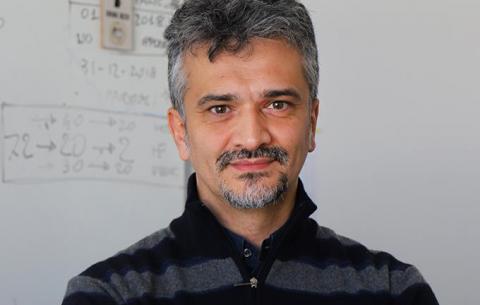
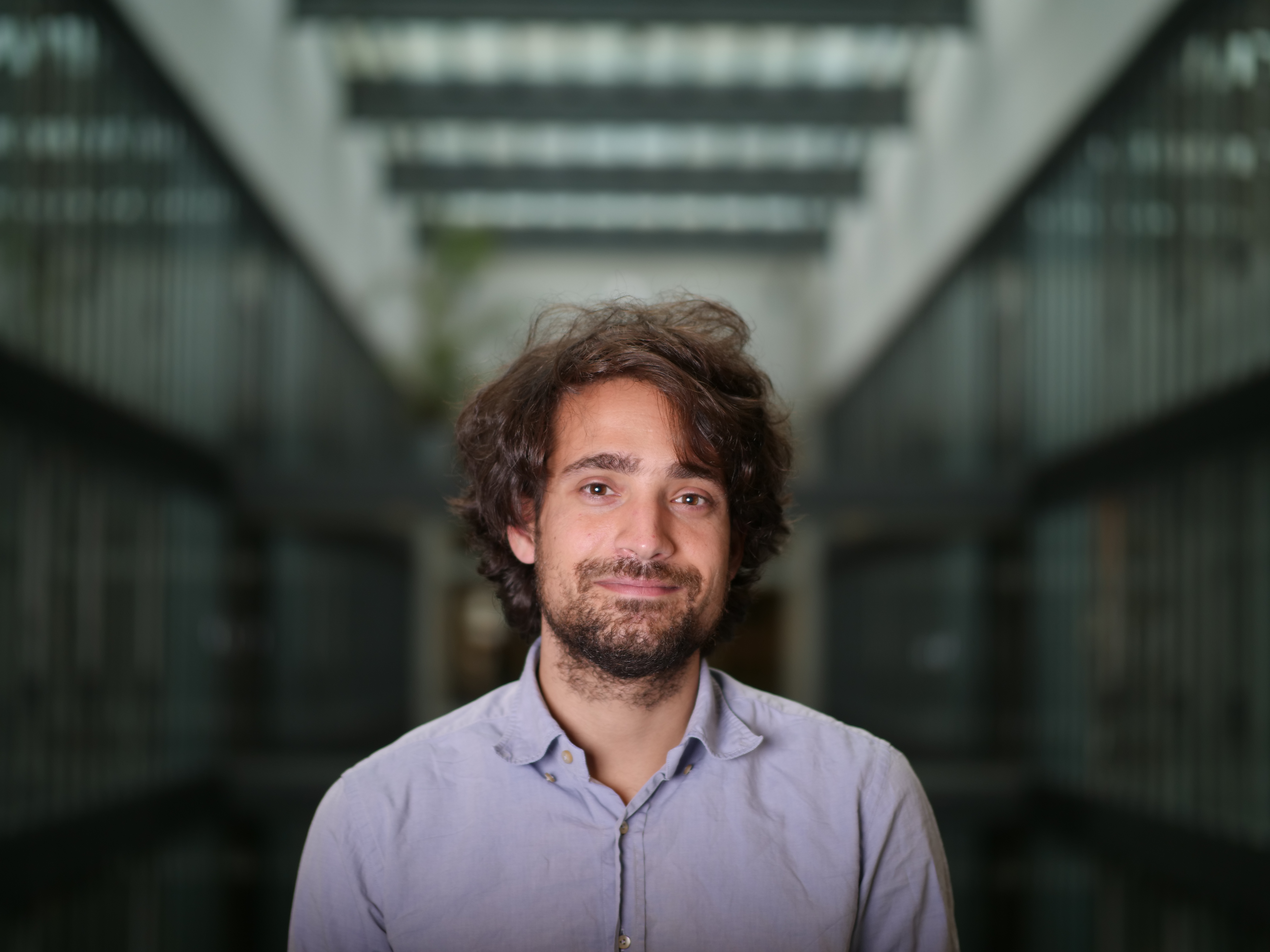
Dr Ripon Kumar Chakrabortty is a Decision Scientist at the School of Systems & Computing, UNSW Canberra . His research focuses on applying Artificial Intelligence and Optimization Models to complex systems, particularly in Global Supply Chains, Logistics, and Medical Informatics . He coordinates the Master of Decision Analytics program and leads the Artificial Intelligence Community of Practice at the Australian Institute of Project Management. PhD in Computer Science, UNSW (2017) M.Sc. & B.Sc. in Industrial Engineering, BUET Diploma in Logistics, Monarch Institute Certified by Chartered Institute of Logistics and Transport Australia His research portfolio includes over 5 million AUD in Category 1 grants from Australian Research Council , Department of Defence , and other government agencies. He has supervised 24 PhD/Master's students to completion or ongoing supervision, with expertise in Explainable AI , Healthcare Analytics , and Smart Manufacturing . Recent scientific recognitions include a Highly Cited Paper , Best Paper at IEEE IEEM , and Champion at IEEE CEC Competition . His editorial roles span prestigious journals like IEEE Transactions on Industrial Informatics and Mathematics (MDPI) .
Kung-Kiu Lau is a Senior Lecturer at the School of Computer Science, University of Manchester , specializing in Component-based Software Development and Computational Logic . He leads the Component-based Software Development research group and has supervised 11 PhD students. Research Focus: Component models, algebraic service composition, logic program synthesis, and IoT systems scalability. Key Contributions: Development of tools like X-MAN and D-XMAN for compositional software design, exploration of formal methods in software engineering, and foundational work on steadfast programs. Publications span IoT service composition, component certification, reverse engineering, and formal verification. His work addresses challenges in scalability, reusability, and automated synthesis of software components. Awards: ICIOT 2018 Best Paper Award
Andrea Polini is a Full Professor at the University of Camerino, focusing on interdisciplinary research at the intersection of blockchain technology, business process modeling, IoT systems, and software engineering. His work emphasizes formal methods for ensuring correctness in distributed systems, smart contract security, and model-driven approaches for IoT integration. Research interests include blockchain-based choreography execution, mutation testing strategies for smart contracts (e.g., ReSuMo and SUMO tools), and frameworks for IoT application portability (X-IoT). He also investigates process mining in public administration and humanitarian contexts, such as analyzing collaboration in crisis mapping platforms like the HOT Tasking Manager. Polini’s contributions span over 60 publications since 2014, with a strong focus on practical tools and methodologies (e.g., BProVe for business process verification, FloBP for IoT-enhanced processes). His work bridges theoretical computer science with real-world applications in healthcare, urban mobility (Tangramob framework), and disaster response systems.
Marco Viviani is a researcher affiliated with University of Milano-Bicocca (Italy) and University of Torino (Candiolo, Italy), focusing on information retrieval , health informatics , and social media credibility . His work spans multi-dimensional relevance assessment generative AI applications misinformation detection privacy-aware systems Research highlights include ROMCIR workshops on reducing online misinformation, Web2Vec for structural content analysis, and LLM reasoning capabilities evaluation. Key collaborations with Gabriella Pasi, Rishabh Upadhyay, and Marinella Petrocchi appear across 103 publications from 2004-2025. His work integrates machine learning and knowledge graphs for healthcare applications, with recent focus on blockchain social media dynamics and privacy-utility trade-offs . He contributes to ECIR WI/IAT CLEF eHealth MDAI conferences and journals like IEEE Access and Frontiers in Artificial Intelligence .
Sunita Ahlawat is a Professor of Accounting and Interim Dean of the School of Business at The College of New Jersey . Her expertise spans auditing, accounting ethics, blockchain applications in finance, and pedagogical innovation. She actively contributes to academic governance as Chair of the Accounting Department Promotions & Reappointment Committee and Faculty Advisor for the Beta Alpha Psi - TCNJ Chapter. Education: Ph.D. in Accounting, Pennsylvania State University (1992) M.B.A. in Business Administration, University of Massachusetts (1988) M.A. and B.A. in Commerce, University of Delhi (1983, 1981) Research Interests include auditor independence, blockchain technology in accounting, gender diversity in corporate governance, and remote learning pedagogy. Her work bridges traditional accounting practices with emerging technologies and ethical considerations. Article Trends highlight her focus on regulatory compliance (PCAOB), blockchain integration (2019–2021), gender diversity (2015), and educational innovation (2012–2014). She also explores fraud detection mechanisms and FATCA implications. Scientific Awards: Fulbright Scholar Award (2008) Advising and Grants: As a Fulbright grant recipient (2008), she has mentored students through Beta Alpha Psi and collaborated on interdisciplinary projects. Her teaching emphasizes experiential learning and writing-intensive research.
Dr. Elnaz Irannezhad (also known as "Elli") is a Senior Lecturer at the School of Civil and Environmental Engineering, University of New South Wales (UNSW Sydney). She leads research at the Research Centre for Integrated Transport Innovation and bridges transport engineering with blockchain technology, automated vehicles, and decarbonisation. PhD in Civil Engineering from the University of Queensland (2014-2017) Postdoctoral Research Fellow at UQ Business School (2017-2020) Principal Engineer at Australian Road Research Board (2020-2022) Her research spans cross-disciplinary domains including: Behavioral and agent-based freight transport modelling Logistics 4.0 and blockchain applications Automated heavy vehicles and hydrogen fuel cell technology Smart supply chains and IoT integration Circular economy in logistics Decision support systems for transport networks Recent publications focus on blockchain platforms like LogisitcChain for supply chain optimization, machine learning for GPS-based truck behavior analysis, and behavioral econometric studies of maritime transport demand. She also contributes to human rights discourse as Associate of UNSW's Australian Human Rights Institute and Equity, Diversity, and Inclusion (EDI) Officer for the School of Civil Engineering. Teaching activities include: CVEN9421: Transport Logistics Engineering ENGG1400: Infrastructure Systems Engineering CVEN3402: Transport Engineering and Environmental Sustainability She co-leads the JINA Program for refugee background female students and co-chairs the virtual Bridging Transport Researchers (BTR) conference to reduce academic travel emissions.
Sabrina Casucci is an Assistant Professor in the Department of Industrial and Systems Engineering at the University at Buffalo (SUNY). She holds a PhD in Industrial & Systems Engineering (2015), an MBA (2004), and a BS in Materials Science and Engineering (1998). Her research focuses on data-driven healthcare solutions, precision health, health disparities, and aging-related cognitive decline. She has pioneered methods for optimizing emergency department operations, blood product inventory management, and integrating behavioral health in underserved regions. Research Highlights Developed the TILE-12 index to predict living environment transitions in older adults Created the CoBIL framework for decentralized blood inventory management Advanced machine learning models predicting low-value healthcare utilization in heart failure patients Awards 2022 SUNY Chancellor’s Award for Excellence in Teaching 2022 UB Innovations in Teaching Award 2019 SEAS Best Teaching Faculty Her work bridges engineering methodologies with healthcare challenges, focusing on operational efficiency, equity, and technology-driven solutions for vulnerable populations. Active in policy advocacy, her research has influenced practices in emergency medicine, rural healthcare access, and chronic disease management.
Nicolò Vallarano is a Senior Research Associate at the University of Zurich , actively collaborating with Professor Claudio Tessone on blockchain technologies and decentralized finance (DeFi). His work bridges statistical mechanics of networks and distributed ledger technologies (DLTs), focusing on network structure analysis and consensus protocols in blockchain systems. Research Interests: Statistical Mechanics of Networks Distributed Ledger Technologies (DLTs) Consensus Protocols Decentralised Finance (DeFi) Bitcoin Transaction Network Modeling Exponential Random Graph Models (ERGM) Publications demonstrate expertise in applying network science to blockchain systems, analyzing network topology, price dynamics, and consensus mechanisms in IOTA and Bitcoin. Current work focuses on modeling consensus protocols and classifying cryptocurrency economic states with the Blockchain Observatory. Collaborations include the Blockchain Observatory and Professor Claudio Tessone's research group, with extensive contributions to conferences like Complex Networks, CCS, and Middleware.
Mirco Peron is an Assistant Professor at NEOMA Business School specializing in Operations and Supply Chain Management , with a focus on Additive Manufacturing and Hydrogen Supply Chains . His research examines the economic and environmental implications of decentralized production, carbon tax policies, and blockchain-enabled pharmaceutical supply chain transparency. Best paper award at MIM2022 conference Contributing editor for Sustainable Futures journal Participates in EU-funded decarbonization projects for aluminum/glass industries Recent work analyzes Industry 4.0 integration frameworks, zero-emission aviation behavior shifts, and digital twin applications in spare parts supply chains. His publications span high-impact journals like International Journal of Production Economics and IEEE Transactions on Engineering Management . Collaborations include European hydrogen supply chain planning matrix development and pandemic-era additive manufacturing resilience studies. Current research explores cloud material handling systems, age-based maintenance models, and immersive technologies for assembly line ergonomics.
Marzan Tasnim Oyshi is a Research Associate at the Leibniz Institute of Ecological Urban and Regional Development (IOER) and a Doctoral Candidate at the Chair of Computer Graphics and Visualization, Technische Universität Dresden, Germany. Her research focuses on immersive visualization, virtual reality, and data-driven decision-making for sustainability and environmental challenges. Education: Master of Science in Computer Science & Engineering, Daffodil International University, Bangladesh (2017–2019) Bachelor of Science in Computer Science & Engineering, Daffodil International University, Bangladesh (2013–2016) Erasmus Mundus Undergraduate Mobility Exchange, Information Technology, Lodz University of Technology, Poland (2015–2016) Her research interests include immersive visualization, virtual reality, IoT, machine learning, and environmental data analytics . She develops tools that support decision-making in climate resilience, flood risk, and urban sustainability using VR-based visual analytics. Her work bridges computer science with real-world environmental and societal challenges. The recent publications demonstrate a strong trend in immersive data visualization for environmental science and machine learning support . Oyshi’s work applies VR to visualize extreme weather, flood projections, and biological datasets, while also contributing to IoT-based monitoring and gamified education. The interdisciplinary nature of her research spans computer vision, sustainability, and human-computer interaction. Scientific Awards and Scholarships: 300 Army Scholarship (2017) Erasmus Mundus UG Mobility Scholarship (2015) Government District-Level Scholarship (2010) Best Debater, Transparency International Bangladesh (2010) Multiple Government Academic Scholarships (2005, 2008) Oyshi has actively contributed to academic advising, having supervised 2 Master’s theses, 2 Bachelor’s theses, 3 team projects (15 students), and 9 Hauptseminar students . She has also served as a reviewer for prestigious conferences including CHI, IEEEVIS, and ICAITA. Her research is supported by institutional affiliations with IOER and ScaDs.AI, focusing on systemic sustainability and data science. She is a key member of the Leibniz-Lab 'Systemic Sustainability' , where she contributes to developing dashboards that communicate science-society challenges related to climate change, biodiversity loss, and food security. Her projects like ExtremeWeatherVis, FloodVis, and VRCellLabeler exemplify her commitment to creating immersive, interactive tools for complex data understanding.
Francine Krief is a Professor with extensive research in network management , QoS optimization , and context-aware security across cognitive radio networks, IoT, and vehicular systems. Her work integrates blockchain and fuzzy logic for secure, efficient resource allocation. Key Research Areas : Network Security, Cognitive Radio, IoT, Edge Computing Collaborations : Active partnerships with researchers like Mohamed Aymen Chalouf, Badr Benmammar, and Tidiane Sylla Publication Trends : Over the past decade, Krief has focused on blockchain applications in IoT security (2021), energy-efficient cognitive radio (2019), and SDN-based vehicular networks (2019). Recent work (2025) addresses user-centric IoT service placement in edge infrastructures.
Enrico Tedeschi is a Postdoctoral Fellow at the Department of Informatics, UiT The Arctic University of Norway. His research bridges distributed systems, blockchain technology, and artificial intelligence. Research Focus: Blockchain efficiency, AI-driven transaction optimization, cybersecurity integration, and ethical implications of AI in healthcare. Applications: Finance and healthcare sectors, emphasizing trustless environments and patient data integrity. Recent Publications demonstrate expertise in Bitcoin mining economics, Avalanche consensus security, and deep learning models for transaction latency prediction. 2024: Quantified user-miner equilibrium in Bitcoin's proof-of-work systems. 2022: Analyzed AI-based fee optimization and Avalanche consensus vulnerabilities. 2019: Developed deep learning frameworks for latency prediction. 2018: Explored performance-cost trade-offs in Bitcoin networks. Collaborations include interdisciplinary work with the Cyber Security Group (CSG) and contributions to improving blockchain governance.
Sue Alman serves as Gateway PhD Program Coordinator at San Jose State University's School of Information. She joined SJSU as a part-time faculty member in 1999 and was appointed to the full-time faculty in 2012. Prior to SJSU, she taught library and information science at the University of Michigan and University of Pittsburgh, and held librarian positions at Mary Washington College and Salem College. She also served as Director of Distance Education Services and Outreach, Coordinator of Professional Development, and Assistant to the Dean at the University of Pittsburgh's School of Information Sciences. Dr. Alman earned her Ph.D. in Library Science from the University of Pittsburgh in 1985, following an MLS from the same institution in 1978. Her undergraduate degree in History and Education is from Washington & Jefferson College (1975). Her research interests span Administration and Management, Continuing Education in LIS, Distance Education in LIS, Information Needs and Behaviors, Libraries and Society/Culture, Strategic Planning/Marketing/Lobbying, Blockchain, Asynchronous Learning Management, and Cultural Diversity. Her work often bridges technology and library science, with a particular focus on innovative applications like blockchain for information management. Dr. Alman's publications since 2012 demonstrate a strong focus on emerging technologies in library science, particularly blockchain applications, MOOCs, and online learning design. She has edited several influential books and published numerous articles in journals like Journal of Education for Library and Information Science and Journal of Medical Library Association. Member of Beta Phi Mu Pi Chapter President of Beta Phi Mu Member of Beta Phi Mu's National Board of Directors Dr. Alman teaches courses including INFO 204 (Information Professions), INFO 281 and INFO 282 (Seminar in Contemporary Issues and Library Management focusing on Technology Issues & Trends), INFO 283 (Marketing of Information Products and Services), and INFO 286 (Interpersonal Communication Skills for Librarians). Her professional expertise includes Futures, Blockchain, Asynchronous Learning Management, Strategic Planning, Interpersonal Communications, Grant Writing, Marketing and Public Relations, Group Dynamics, and Cultural Diversity.
Renata Słota is a Professor at the Institute of Computer Science within the Faculty of Computer Science at AGH University of Science and Technology in Kraków, where she serves as Vice-Dean of the Faculty of Development. Her office is located at D-17, ul. Kawiory 21, room II, 3.34, with contact details including phone +48 12 328 33 35 and email rena@agh.edu.pl. She also contributes to academic governance as a member of the Disciplinary Council for Technical Information Technology and Telecommunications. Her research centers on distributed data management and cloud computing , with pioneering work in digital cultural heritage systems , blockchain-based decentralized authority , and scientific workflow automation . Notable contributions include integrated frameworks for 3D Cultural Heritage objects management, consensus mechanisms for collaborative data sharing, and multi-cloud data access solutions. Her work bridges theoretical advances with practical applications in cultural preservation and scientific computing. Analysis of her 2020-2026 publications reveals dominant trends in decentralized data governance , cultural heritage digitization , and hybrid cloud workflow management . Key themes include blockchain applications for organizational structures, semantic interoperability for quality-oriented data access, and reproducibility frameworks for computational experiments. Her research consistently addresses real-world challenges in global data accessibility and fault tolerance. Professor Słota actively participates in major research initiatives including the Onedata project for global data federation and the Scalarm platform for distributed parameter studies, demonstrating leadership in data-intensive computing environments and collaborative infrastructure development.
Dimitris Kalogeras is a Researcher at the National Technical University of Athens (NTUA) , affiliated with the School of Electrical and Computer Engineering and the EPISEY research institute. He has been a key contributor to advanced networking initiatives, including the NTUA Network, EDET optical network, and University School Network. His work spans national and European projects like GEANT, 6net, and NOVI, and he pioneered IPv6 and multicast deployment in Greece and Europe. His research focuses on Network security Internet of Things (IoT) Artificial intelligence in networking Cyber-physical systems Robotics Medical image processing Recent work involves federated learning, UAV-based localization, and privacy-preserving frameworks in IoT environments. An analysis of his 15 most recent publications reveals strong emphasis on applications of machine learning in network security, robotic infrastructure maintenance, and lightweight AI for IoT. His projects include thethingsNetwork deployment in Athens, the HERON robotic platform, and the FELICE collaboration framework. He has contributed to global IoT initiatives through multi-channel LoRAWAN gateways and 6LowPAN mesh networks. His work on blockchain-based DDoS mitigation and semantic-aware policy management demonstrates leadership in cyber infrastructure resilience.