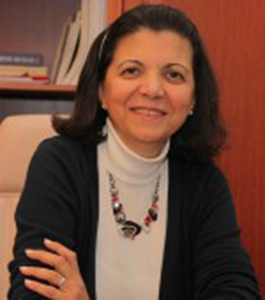
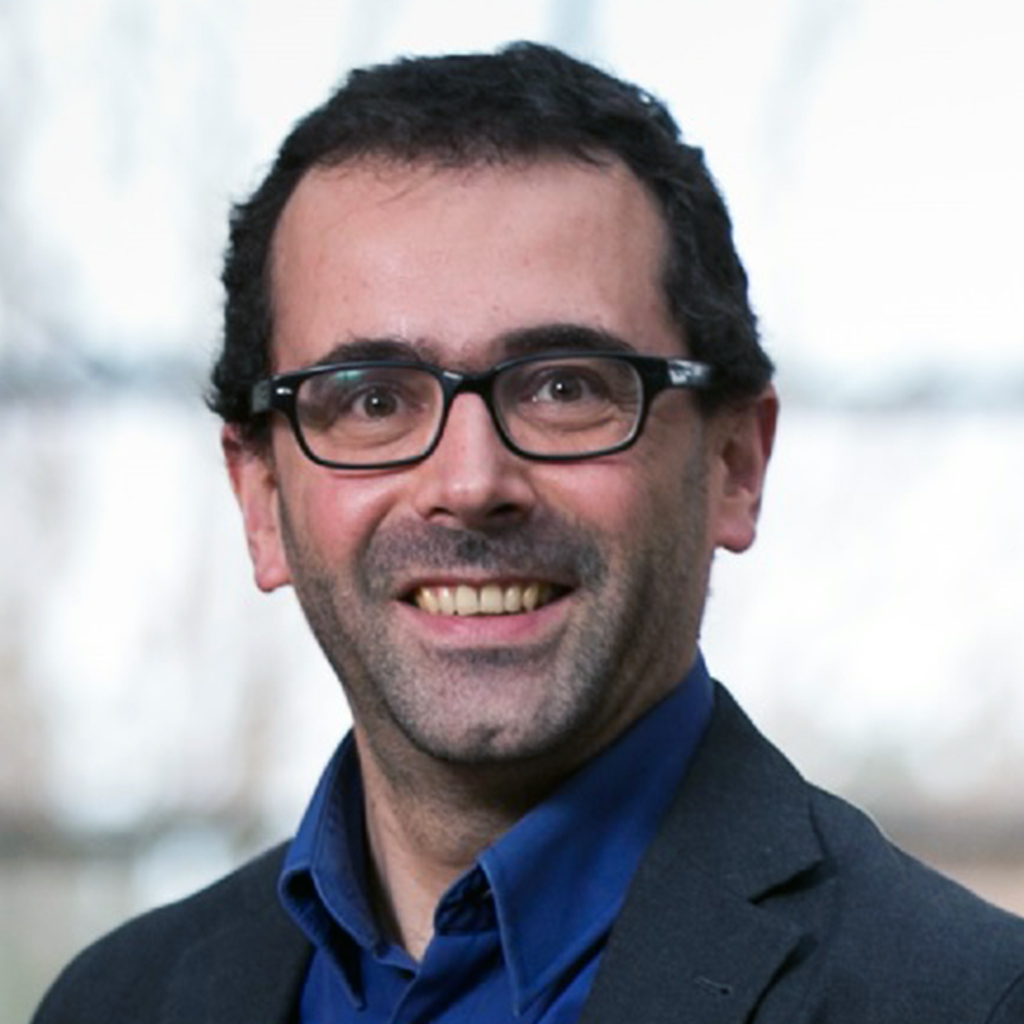
Enrico Mariconti is a Lecturer in the Department of Security and Crime Science at University College London (UCL). His research bridges computer science, statistics, and criminology to develop AI-driven tools for combating cybercrime, including malware detection, social engineering scams, and online harassment. He also explores applications of computational methods in forensic anthropology and cryptocurrency security. Current Appointment: Lecturer in Security & Crime Science, UCL Email: e.mariconti@ucl.ac.uk ORCID: 0000-0003-3005-8214 Mariconti’s research focuses on interdisciplinary cybersecurity, with specializations in AI-based fraud detection, social media privacy frameworks, and anomaly detection in autonomous vehicle systems. His recent work also addresses illicit drug marketing on digital platforms, forensic age estimation via auricular surface analysis, and the ethical challenges of deploying machine learning in sensitive security contexts. His publications span high-impact venues like IEEE Transactions on Intelligent Transportation Systems, Springer’s Crime Science, and ACM CCS. Key themes include federated security prediction, cryptocurrency scams, and behavioral modeling of malicious actors. He teaches Python programming to undergraduates and cybersecurity fundamentals at the postgraduate level.
Tina Loraas is the C. McKenzie Taylor, Jr. Professor of Accountancy at Auburn University's College of Business. She can be contacted at loraatm@auburn.edu or via phone at (334) 844-6203 in Lowder Hall. PhD in Accountancy from Texas A&M University (2004) MAcc and BSBA from Auburn University (1997, 1996) Her research focuses on technology acceptance , cognitive biases in investor/manager decisions, and accounting information systems . She teaches courses in cost/managerial accounting and technology-driven accounting . Her work examines AI (e.g., ChatGPT), blockchain, and Big Data impacts on auditing and investor behavior, as well as ethical and motivational factors in accounting practices. She is a member of the American Accounting Association and previously worked as an accountant at a small firm in Opelika, AL before returning to academia.
Meltem Özturan is a Professor at Boğaziçi University, specializing in information systems and digital transformation. Her research spans business process management, project management, and e-learning applications. High school: İstanbul Amerikan Robert Lisesi B.S. in Industrial Engineering, Boğaziçi University M.S. and Ph.D. in Numerical Methods, Istanbul University Her work integrates information systems with business processes, focusing on geographic information systems, artificial neural networks, and e-learning. She has explored blockchain readiness in banking and citizen satisfaction with e-government services. The 15 most recent articles highlight her expertise in digital governance (e.g., municipal information systems, e-government), financial technology (blockchain, stock market analysis), and educational technology (mobile class notes, student-computer interaction). Methodologically, she employs simulation, sentiment analysis, and IT maturity models. Her career lacks explicit mentions of scientific awards, advising roles, or lab/team affiliations.
Christine Morin is a Professor at INRIA - Institut National de Recherche en Informatique et en Automatique, focusing on advanced research topics in cloud computing, distributed systems, and high-performance computing. Fields of Research: Cloud Computing, Distributed Systems, Grid Computing, Virtualization, Parallel Computing, High Performance Computing, Fault Tolerance, Resource Management, Operating Systems, Autonomic Computing, Energy Efficiency Long-term Research Contributions: SLA management in cloud environments, self-adaptable systems, energy-efficient computing, distributed application deployment Her work has been particularly influential in the areas of cloud security, SLA verification, fault tolerance mechanisms, and energy-efficient computing. She has pioneered approaches to self-adaptable security monitoring in IaaS clouds and developed innovative frameworks for cloud bursting PaaS environments. Christine Morin has published extensively on topics related to: Autonomic cloud management systems like Snooze and Merkat Energy-aware resource allocation and consumption models Message logging and fault tolerance protocols Distributed application deployment under SLA constraints Virtual organization support in grid operating systems Her research has contributed significantly to the evolution of cloud computing infrastructure, particularly in the areas of security monitoring, resource management, and energy efficiency.
Dr. Khan Reaz is a Researcher in the Cybersecurity and AI group within the Department of Mathematics and Computer Science at Freie Universität Berlin. He has been with the university since August 2016, contributing to numerous research projects including UltraSec, PHY2APP, ONE5G, SecureFog, and AutoKEY. His work focuses on building quantum-ready security solutions with expertise spanning post-quantum cryptography, blockchain technologies, and Internet of Things security. Dr. Reaz holds a Dr. rer. nat. in Computer Science from Freie Universität Berlin, a Double M.Sc. in Information and Communication Technology and Innovation and Entrepreneurship from Technische Universität Berlin and Sorbonne Université, and a B.Sc. in Electronic and Telecommunication Engineering from North South University. He also participated in an exchange study in the USA as a recipient of the Global UGRAD scholarship administered by the U.S. Department of State. His research interests center around cybersecurity architecture with a particular focus on post-quantum privacy and security, next-generation communication networks, blockchain applications, Internet of Things security, formal verification of protocols, and ontology. Dr. Reaz designs security architectures that anticipate threats in the post-quantum world, bridging digital identity, quantum-safe protocols, and AI-powered security agents to build systems that defend, adapt, and scale under next-generation threat models. Dr. Reaz's publication record demonstrates consistent contributions to the fields of wireless security, blockchain applications for IoT, formal verification of security protocols, and UWB-based security solutions. His work shows a clear progression from foundational signal processing and direction of arrival algorithms to more applied cybersecurity solutions focusing on practical implementations for emerging technologies. CISPA Helmholtz-Zentrum für Informationssicherheit travel-grant (2023) Master scholarship from European Institute of Innovation & Technology (2013-2015) Fraunhofer FOKUS grant for Intelligent Services for Digital Cities (2013) Microsoft Student Partner award for outstanding contribution (2011) Runner-up at the Commercial Idea Contest, Grameenphone Ltd. (2010) ITU Youth Education Scheme grant for Bachelor study (2008-2011) Selected for Asia Youth Camp, South Korea (2008) Global UGRAD Exchange Program participant, U.S. Department of State (2007) Dr. Reaz has been actively involved in multiple European cybersecurity projects including AUTOKEY, SecureFog, PHY2APP, and UltraSec, contributing to advancements in privacy-preserving authentication, secure device onboarding, and post-quantum readiness. He participates in global discussions through NIST activities and EU-level working groups such as the 5G and 6G Security Working Groups. He regularly presents at top-ranked conferences including USENIX, ACM MobiSys, and IEEE GLOBECOM. As part of the Cybersecurity & AI Lab at Freie Universität Berlin, Dr. Reaz works within a team that focuses on AI, deep learning, and fundamental information theory for security, privacy, and identity with applications in IoT, 6G, blockchains, post-quantum codes, and deep fake detection.
Nicklas Holmberg serves as Senior Lecturer and Head of the Department of Informatics at Lund School of Economics and Management (LUSEM), Lund University. With a PhD in Information Systems specializing in Process and Service Design and Development, he leads the Department of Informatics while maintaining active research and teaching responsibilities. His professional roles include Director of Studies and Director of the Bachelor's Programme, demonstrating comprehensive leadership within the academic unit. Dr. Holmberg's research focuses on Business Process Service Orientation with significant applications in healthcare and banking sectors. His work on the business logic centric digital service VacSam demonstrates practical implementation of his research in vaccination coordination systems. Additional research areas include Service Oriented Architecture, Decision Modeling and Automation, Business Rules Approach, and Business Process Modeling. His research profile shows strong alignment with UN Sustainable Development Goals, particularly in areas related to technology for societal benefit. Analysis of his recent publication trends reveals a strategic evolution from foundational work in Enterprise Resource Planning Systems toward contemporary challenges in digital transformation, AI integration, and information systems education. His 2023-2024 publications increasingly address the impact of generative AI on IS education, decentralized web technologies, and enterprise social media applications, while maintaining continuity with his established research trajectory in business process management. Senior Associate at MIT Research School eGovernment Member DMN On-Ramp Review Group Member IBM Smarter Planet Reference Member Microsoft Certified Technology Specialist (MCTS) As an educator, Holmberg teaches Business Decision Management at the advanced postgraduate level and supervises both BSc and MSc Degree Project Essays. His supervision extends to PhD candidates, with Sinan Deniz listed as a current PhD student under his guidance. He has been involved in significant research projects including S-HELP (Securing Health.Emergency.Learning.Planning), funded by the European Commission FP7 program (2014-2017), and VacSam – Digital eService for Coordinated Vaccination Control (2008-2012). His departmental leadership role encompasses strategic direction for the Informatics department within LUSEM's broader academic framework.
Gianluca Miscione is a Professor at the University of Zurich, affiliated with the Digital Society Initiative. His career spans multiple institutions, including University College Dublin and the University of Twente, where he held academic roles. PhD in Information Systems and Organization, University of Trento Research collaboration with Sociology Department, Binghamton University Doctoral work at School of International Service, American University His research focuses on the intersection of information systems and organizational practices. Key areas include e-health, blockchain governance, mobile banking, and spatial data infrastructures. Gianluca investigates how technologies like digital authentication systems and telemedicine platforms are adopted and adapted in diverse socio-cultural contexts. Recent publications emphasize blockchain's organizational implications, data privacy narratives, and sustainable software infrastructures. His work bridges technical implementation with societal impact, particularly in developing regions. Gianluca actively collaborates with interdisciplinary teams across Europe and beyond, with fieldwork in Latin America, India, and Kenya. He explores how digital technologies reshape governance, economic systems, and social networks.
Prof. Dr.-Ing. Uwe Rüppel is an academic leader at the Institute for Numerical Methods and Informatics in Civil Engineering at Technische Universität Darmstadt. His work bridges civil engineering with cutting-edge digital technologies, focusing on Building Information Modeling (BIM) , Virtual Reality (VR) , and Digital Twins for construction and environmental applications. Research Interests: BIM, Digital Twins, VR/AR, GIS integration, IoT in construction, Blockchain applications, emergency response systems, structural data analysis, energy retrofit strategies. Teaching: Courses include Fundamentals of Engineering Informatics, Geometric Modeling, BIM projects, and Management procedures in construction. Recent Publications: 15+ works (2023-2025) on BIM-GIS integration, low-cost VR systems, blockchain for AEC, sensor data analysis, and digital construction logistics. Key Trends: His recent research emphasizes open-source solutions , multi-image documentation , and machine learning for automating BIM workflows and cross-domain data fusion. Collaborative platforms and extended reality (XR) are recurring themes in both academic and practical contexts. Collaborations: Active in international conferences (ICCCBE, eCAADe, ECPPM) with teams from TU Darmstadt, universities in Japan, Canada, and Switzerland. Projects span building safety, energy systems, and disaster management frameworks.
Yongluan Zhou is a Professor at the Department of Computer Science , University of Copenhagen , where he co-heads the Data Management Systems Lab (DMS Lab) and serves as Head of Studies for the MSc in Computer Science . His academic journey includes a PhD from the National University of Singapore (NUS) (2007), a postdoc at ETH Zürich (2007–2008), and prior roles as Associate Professor at University of Southern Denmark (SDU) (2008–2017). PhD in Computer Science, National University of Singapore (2002–2007) Postdoc, ETH Zürich (2007–2008) Zhou's research focuses on database systems and distributed systems , with recent emphasis on event-driven systems , scalable stream processing , and big graph analysis . His work bridges theoretical foundations and practical implementations, addressing challenges in data consistency, fault tolerance, and resource optimization in cloud and microservice environments. The trends in his 15 most recent publications (2025–2024) highlight advancements in asynchronous choreographies , blockchain consensus protocols , GPU-accelerated graph processing , and microservices data management . These works integrate formal methods with empirical validation, emphasizing scalability, security, and efficiency in distributed environments. He actively contributes to academic governance as a member of the DEBS Steering Committee (2024–), SSDBM Steering Committee (2022–), and the EDBT Association Executive Board (2020–).
Dr. Boris Düdder is an Associate Professor at the Department of Computer Science (DIKU), University of Copenhagen, focusing on Formal Methods, Programming Languages, and Trustworthy Distributed Systems. He leads the Software Engineering & Formal Methods research group and serves as Deputy Head of Department for Teaching, advocating for neurodiversity and inclusion. Primary Affiliation: Department of Computer Science, University of Copenhagen External Lectureship: Copenhagen Business School (CBS), University of Electronic Science and Technology of China (UESTC) Honorary Research Fellowship: Institute for Intelligent Production Systems, Qingdao, China His research bridges formal computer science foundations with industrial applications, including automated program generation for adaptive systems (Combinatory Logic Synthesizer), verifiable AI, blockchain for healthcare IT, and secure data ecosystems. Key projects involve Smart Factories, Data Markets, and Ethical AI assessment via Z-Inspection. Scientific recognition includes the 2022 SSIP Excellence In Service Innovation Award for Z-Inspection. He has secured international grants in blockchain, FinTech, and secure data sharing, operating in multinational consortia. Contact: boris.d@di.ku.dk | Phone: +4593565748 | Website: Research Profile
Tudor-Ovidiu Pal is a Lecturer at the Department of Computer Science , University of Copenhagen, contributing to teaching and research in programming language technology and theoretical computer science. He is affiliated with the Programming Languages and Theory of Computation Section (PLTC), which focuses on foundational and applied research spanning algorithmic programming, formal verification, computer security, and high-performance computing systems. His work intersects with key research groups within PLTC, including investigations into secure networked systems (blockchain, distributed ledger technology), software-based security techniques, functional programming optimizations, and probabilistic programming applications in bioinformatics and AI-driven vaccine design. He also engages with topics like program inversion, reversible computing, and quantum programming paradigms through collaborative efforts with other researchers in the section.
Bryan Parno is a Professor at Carnegie Mellon University in the College of Engineering, holding the Kavčić-Moura Chair in Electrical & Computer Engineering and Computer Science. His research focuses on designing secure systems with formal verification to ensure rigorous security guarantees in practical implementations. Key Research Areas : Formal verification of distributed/concurrent systems, secure cryptographic protocols, blockchain applications, and hardware-assisted security mechanisms. Awards : Distinguished Artifact Awards at USENIX Security (2025), SOSP (2024), CAV (2024) Jay Lepreau Best Paper Award (OSDI 2025) IEEE Cybersecurity Award for Practice (2024) Sloan Research Fellowship (2018) ACM Doctoral Dissertation Award (2011) Notable Contributions : EverCrypt cryptographic provider (Linux kernel integration 2020) Project Everest (formal verification of HTTPS ecosystem) Verus verification framework IronFleet verified distributed systems Students : Yi Zhou (PhD 2025), Elisaweta Masserova (PhD 2024), Travis Hance (PhD 2024), Abhiram Kothapalli (PhD 2024), Jay Bosamiya (PhD 2024), James Larisch (2023), Antoine Delignat-Lavaud (2021), and others. Collaborations : Microsoft Research, Amazon Web Services (Amazon Scholar 2025), Algorand Foundation (Technical Advisory Committee 2019).
Samer Hassan is an Associate Professor at Complutense University of Madrid and Faculty Associate at Harvard University's Berkman Klein Center for Internet and Society, with a multidisciplinary background spanning Computer Science, Social Sciences, and Artificial Intelligence. His work bridges academic research with grassroots activism to advance community-driven technological solutions. His research centers on decentralized collaboration systems including blockchain, DAOs, and fediverse platforms, specifically examining how open-source decentralized architectures can sustain the Collaborative Economy through Commons-based models. Notable projects include ERC-funded research on Blockchain-based DAOs and development of practical infrastructure like SwellRT (adopted by Apache Foundation) and Decentralized Science's peer review system. Scientific recognition includes: ERC Starting Grant (1.5M€) for DAO research in the Collaborative Economy Hassan secures substantial project funding (300K€ for Decentralized Science) while applying participatory teaching methods in cyber-ethics courses. His activist work spans grassroots initiatives in Madrid and Beirut where he operates as an accredited facilitator, connecting technical development with community organizing principles. Key technical contributions include founding the interoperable open peer review system for Decentralized Science and creating SwellRT—a federated backend-as-a-service adopted by the Apache Foundation—demonstrating his commitment to building practical decentralized infrastructure.
Prof. Wilhelm Stork is a Professor at the Department of Electrical Engineering and Information Technology (ETIT) at the Karlsruhe Institute of Technology (KIT). His research focuses on microsystems technology, optics, and the application of artificial intelligence in healthcare and automotive systems. He leads projects in holographic systems, sensor technology, and decentralized health data management. His work spans automotive camera systems, medical decision support systems, and innovative dementia interventions. Education details are not explicitly provided in the text, but his academic role suggests a doctoral background in natural sciences (Dr. rer. nat.). Research Interests: Development of holographic optical elements and augmented reality systems AI-driven healthcare applications including medical imaging, diagnostics, and patient data management Sensor systems optimization for automotive and environmental monitoring Blockchain-based solutions for health data sovereignty and security Recent publications emphasize AI in healthcare decision-making, holographic recording techniques, and automotive sensor reliability. His work bridges engineering innovation with clinical applications, particularly in dementia prevention and telemedicine. Awards/Funding: No specific awards mentioned, but active in EU-funded projects related to smart grids and medical AI. His lab, ITIV (Institute of Information Processing Technology), collaborates internationally on dementia intervention platforms and digital health solutions. He advises on interdisciplinary projects combining engineering and medicine, such as the 'Model-Driven Dementia Prevention Platform' and 'AI for Spectral Analysis' initiatives.
Dr. Balasubramaniam Ramesh is a Professor in the Department of Computer Science at Georgia State University. His research focuses on knowledge-intensive processes in software development, agile methodologies, and IT governance, with contributions to industry tools and over 20 research grants from institutions like NSF and DARPA. He has received numerous awards for teaching and research, including the Regents’ Teaching Excellence Award (2008), the top faculty award in the University System of Georgia. Education: Ph.D., New York University M.Phil., New York University P.G.D.M. (M.B.A.), Indian Institute of Management B.Engg., University of Madras, India Research Interests: Dr. Ramesh’s work bridges theory and practice in software engineering, exploring agile practices, requirements traceability, and ambidexterity in distributed development. He emphasizes the interplay between organizational processes and IT innovation, with recent work on AI ethics, blockchain applications, and cloud computing. Grants & Awards: Over 20 grants from NSF, ONR, Air Force Research Lab, and industry partners. Notable awards include the GSU Outstanding Faculty Achievement Award (2002), RCB Faculty Achievement Awards (Teaching, Research, Service), and multiple Top Professor recognitions (2014–2016). Labs & Teams: While specific lab names are not mentioned, his research collaborates with industry and academic partners to develop tools and frameworks for software process improvement and IT governance.