Steve Mann is a Professor in Applied Linguistics at the University of Warwick, where he has been affiliated since 2007. His work focuses on English Language Teacher Education (ELTE), teacher development, and qualitative research methodologies. He holds a PGCE from the University of Warwick (1984) and has extensive experience in ELT across Hong Kong, Japan, and Europe. Mann’s research group investigates reflective practice, teacher beliefs, mentoring, and technology integration in education. Notable contributions include co-editing the Routledge Handbook of English Language Teacher Education (2019) and pioneering studies on video-based teacher reflection. He has supervised numerous PhD students exploring aspects of teacher development, though he is currently not accepting new PhD candidates. Education: PGCE, University of Warwick (1984) Pre-service teaching in English and Drama in England (1980s) British Council Teaching Scheme in Hong Kong (1980s) Research Interests: Teacher education, reflective practice, qualitative interview methodologies, and the role of technology in professional development. His work emphasizes bridging theory and practice in ELT, particularly through collaborative dialogue and action research. Grants & Projects: Supporting Sustainable English Teacher Professional Development in Yunnan Province (British Council, 2022–2023) China Course Research: Postgraduate Curriculum Design (2019–2022) Video in Language Teacher Education (British Council, 2016–2018) Labs/Teams: Leads a research group focused on teacher development, mentoring, and blended learning strategies. Collaborates with institutions like the British Council on global teacher education initiatives.
Dr. Zara Ersozlu is a Senior Lecturer in Mathematics Education within the School of Education at the University of Newcastle, Australia. With a distinguished international career spanning multiple continents, she has held academic positions at prestigious institutions including North Carolina State University (USA), Gazi and Gaziosmanpasa Universities (Turkey), National Taiwan Normal University (Taiwan), The University of Western Australia, Murdoch University, and Deakin University. Her academic journey includes tenured positions as an Associate Professor and leadership roles as Department Head and Chair in teacher education disciplines. Currently, she teaches undergraduate and postgraduate courses in mathematics education, including Effective Pedagogies in Primary Mathematics, K-6 Mathematics, K-6 Numeracy, and Digitally Supported Learning. Dr. Ersozlu earned her Doctor of Philosophy from Firat University in Turkey and her Master of Art from Sakarya University. Her extensive academic preparation is complemented by five years of practical teaching experience in public schools prior to entering academia. This blend of theoretical knowledge and practical classroom experience informs her approach to teacher education and educational research. At the broadest level, Dr. Ersozlu's research investigates solutions to real-life problems impacting people's well-being, success, and capacity to achieve. Her scholarly work spans primary and secondary mathematics education, the psychology of mathematics (including metacognition, self-regulation, and anxiety), cross-cultural educational studies, teacher education, virtual simulated learning environments, and educational assessment. She has increasingly focused on the transformative potential of AI and machine learning in education, exploring how these technologies alter teaching, learning, and research processes. Her methodological expertise encompasses both quantitative and qualitative approaches, allowing her to effectively analyze both small and large educational datasets. Analysis of Dr. Ersozlu's recent publications reveals a strong emphasis on mathematics anxiety, teacher education, and the integration of technology in learning environments. Her work demonstrates a consistent focus on practical applications of educational research to address real-world challenges in mathematics education. The interdisciplinary nature of her research connects educational psychology, technology integration, and cross-cultural perspectives, with particular attention to how these elements intersect in teacher preparation and student learning outcomes. 2023 ATEA Research Recognition Award from the Australian Teacher Education Association 2021 Fellow of the Higher Education Academy (Advance HE, UK) 2010 Fellowship Program for Postdoctoral Researchers from the Council of Higher Education of Turkey Dr. Ersozlu is deeply committed to mentoring the next generation of scholars, currently supervising four PhD students and having successfully guided ten students to completion. Her grant portfolio includes significant funding for projects such as Best Practice Guidelines for RPL in Initial Teacher Education Programs ($60,000), Exploring the Reciprocal Relationship Between Mathematics Anxiety and Mathematical Resilience ($2,599), and multiple conference travel awards. She serves as an Associate Editor for several prominent journals including the International Electronic Journal of Mathematics Education and as Editor for Interdisciplinary STEM Education. Her editorial work reflects her standing as a respected voice in mathematics education research. Dr. Ersozlu's academic leadership extends to her role in developing innovative teaching approaches that integrate virtual simulation technology and learning analytics. Her work with TeachLivE™, a mixed-reality classroom simulation platform, demonstrates her commitment to creating authentic learning experiences for teacher education students. Through these initiatives, she bridges the gap between educational theory and classroom practice, preparing future educators to effectively implement evidence-based teaching strategies in diverse learning environments.
Dr James Lamb is a Lecturer in Digital Education at the Moray House School of Education and Sport, University of Edinburgh, where he is affiliated with the Institute for Education, Community and Society (IECS) and Edinburgh Futures Institute. He teaches on the MSc in Digital Education and MSc in Education Futures programs, and serves as course organiser for several key courses including 'Learning Spaces and Digital Technologies', 'The Future of Learning Organisations', and 'Education and Digital Cultures'. As an active researcher, he contributes to the Centre for Research in Digital Education and leads the Hybrid Pioneers research group. Dr Lamb's educational background includes a PhD from the University of Edinburgh (funded by ESRC), an MSc with distinction from the University of Edinburgh, and a BA degree with distinction from Edinburgh Napier University. His doctoral research focused on 'Space, Sociomateriality, Sound: the Learning Spaces of Higher Education,' reflecting his longstanding interest in the relationship between physical environments and educational experiences. Dr Lamb's research primarily investigates the relationship between learning spaces and digital technologies, with particular attention to how sound features within educational contexts and how multimodal approaches can enhance teaching and assessment. His work bridges theoretical frameworks from postdigital studies, sociomaterial theory, and spatial analysis to examine how digital technologies transform physical and conceptual learning environments. He has developed innovative methodologies for studying learning spaces, including the use of 'digital multimodal postcards' that capture both visual and auditory dimensions of educational experiences. His research is characterized by a strong commitment to practical applications that can inform educational design and improve student learning experiences in both physical and digital settings. Dr Lamb's extensive publication record demonstrates a clear evolution toward increasingly sophisticated explorations of postdigital learning spaces. His recent work integrates concepts from architecture, music, and mobility studies to create a more holistic understanding of how learners inhabit and transform educational environments. A notable trend is his growing focus on sustainability, equity, and well-being within learning space design, reflecting broader shifts in educational priorities toward more humane and socially responsible approaches to technology integration. Dr Lamb actively supervises PhD students Edward Martin and Nick Hood, and is open to supervising projects related to learning spaces, sound in education, and multimodal teaching and assessment in higher education. His supervision approach emphasizes connecting theoretical frameworks with practical educational applications, encouraging students to develop innovative methodologies for investigating complex educational phenomena. Dr Lamb leads the Elektronisches Lernen Muzik project, which explores the relationship between music and learning, and is a co-author of the influential Manifesto for Teaching Online. He is also a key member of the Hybrid Pioneers research group, which investigates the challenges and opportunities of hybrid teaching and learning environments. These initiatives reflect his commitment to exploring the intersections between traditional educational practices and emerging digital possibilities.
Esther Rolf is an Assistant Professor in the Department of Computer Science at the University of Colorado Boulder. Her research focuses on blending methodological and applied machine learning techniques to address social and environmental challenges, emphasizing usability, data-efficiency, and fairness. Her work includes developing algorithms for environmental monitoring with satellite imagery and advancing geospatial ML systems. Her research explores the multifaceted role of data representation in machine learning, particularly how spatial distribution and data acquisition impact model fairness and efficacy. Projects include formalizing representivity in training data and tackling evaluation challenges in geospatial ML applications. Recent publications highlight her expertise in satellite-based poverty mapping, multimodal data efficiency, and geospatial foundation models. She integrates specialized architectures and domain-specific benchmarks into her work. Best Paper Award, ICML (2018) Best Paper Award, NeurIPS Workshop on AI for Social Good (2019) NSF Graduate Research Fellowship Google Research Fellowship Esther's lab at CU Boulder recruits PhD students and postdocs interested in statistical/geospatial ML and context-driven research for real-world problems. She teaches graduate courses in machine learning and geospatial ML at CU Boulder.
Tal Simons is Professor of Organization Theory in the Department of Organisation and Personnel Management at Rotterdam School of Management (RSM), Erasmus University Rotterdam, and has been an ERIM Fellow since 2019. His research examines organizational responses to societal pressures through institutional and behavioral lenses. Simons' work centers on institutional theory applications in regulatory resistance, ideological dynamics, and organizational authenticity. He investigates how firms navigate social movements, media scrutiny, and moral legitimacy challenges across diverse sectors including tobacco, wine, and contemporary dance. His methodology blends historical analysis with qualitative case studies to uncover patterns in community cohesion, aesthetic innovation, and cross-cultural collaboration. Publication trends reveal an evolution from foundational studies on kibbutzim and Israeli wine industry transformation (1997-2010) toward contemporary analyses of CSR-media relationships, regulatory compliance, and authenticity construction (2015-2024). Recent work emphasizes ideological imperatives in news coverage and moral legitimacy frameworks, while maintaining consistent theoretical grounding in institutional logics and organizational ecology. Professional recognition includes: ERIM Fellow (2019–present) As an active doctoral supervisor, Simons mentors nine PhD candidates across organization theory and behavior domains. His advisees explore cross-cultural collaborations, multi-stakeholder organizing, sustainability-focused community enterprises, and societal change mechanisms. Supervision spans 2015 to present with roles as promotor and committee member, reflecting sustained commitment to developing organizational scholarship through next-generation researchers.
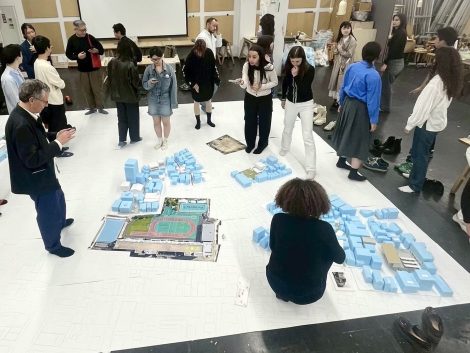
Keigo Kobayashi is an Associate Professor at Waseda University's Faculty of Science and Engineering, School of Creative Science and Engineering, Department of Architecture. He has served in this position since 2016, previously holding the rank of Assistant Professor from 2012 to 2016. His professional journey includes significant experience at the Office for Metropolitan Architecture (OMA) in Rotterdam, where he worked as a Senior Architect and Project Architect from 2007 to 2012. His educational background includes a Master of Architecture II from Harvard University's Graduate School of Design (2005), a Master of Architecture from Waseda University's Graduate School of Science and Engineering (2003), and a Bachelor's degree in Architecture from Waseda University's School of Science and Engineering (2002). Kobayashi's research focuses on architectural planning and city planning, with particular interests in food-related architecture, spatial behavior, and sustainable design. His work explores the intersection of architecture with everyday life, examining how spatial configurations influence human behavior and community formation. Recent research has investigated food systems in urban contexts, playful approaches to spatial design, and the relationship between architectural form and environmental performance. His publications demonstrate a strong focus on practical applications of architectural theory, with projects spanning from food truck design in Shodoshima to zero-energy housing solutions and innovative approaches to architectural education. His work shows a consistent interest in how architecture can respond to contemporary social challenges while maintaining theoretical rigor. Excellence in Concrete Construction Award 2019, American Concrete Institute (ACI), Qatar National Library / OMA Kobayashi actively contributes to architectural education through various committee memberships, including serving as Chief of the Subcommittee on Strategies for International Compatibility in Architectural Education at the Architectural Institute of Japan and leading the Caberra Accord Correspondence Subcommittee at the Japan Accreditation Board for Engineering Education. His teaching portfolio at Waseda University is extensive, covering architectural design studios from undergraduate to doctoral levels. He leads several research initiatives, including the Wakusei Project in Tosa, Kochi, NPO PLAT (Platform for Architectural Thinking), and the European Thinkbelt/McDonald's Radio University project which represents an innovative approach to architectural education and community engagement, particularly in contexts of migration and cultural exchange.
Shiva Nejati is a Professor at the University of Ottawa 's School of Electrical Engineering and Computer Science . He holds a PhD in Computer Science from the University of Toronto and previously worked as a Senior Scientist (2012-2019) and Scientist (2009-2012) at the SnT Centre (University of Luxembourg) and Simula Research Laboratory. Research focus: Software engineering for cyber-physical systems (autonomous vehicles, IoT), blending formal verification, machine learning, and search-based testing Key tools developed: ARIsTEO, SOCRaTEs, SimCoTest, EPIcuRus Editorial roles: Associate Editor for EMSE Journal (2025–), ASE Journal (2025–), IEEE Transactions on Software Engineering (2020–2024) His work combines formal methods , empirical software engineering , and AI/ML to address verification challenges in complex systems, particularly through evolutionary algorithms and surrogate modeling . Notable collaborations include industry partners in telecommunications, automotive, and aerospace sectors. Recent publications emphasize large language models for requirements analysis, adversarial testing of vision systems, and multi-objective optimization for test generation. His Sedna Research Lab actively trains graduate students in these cutting-edge methodologies.
Andy Hargreaves is an internationally recognized scholar and advisor in education, holding dual roles as Adjunct Professor at Boston College and Visiting Professor at the University of Ottawa. He advises governments including Ontario, Scotland, and New Brunswick on educational policy and system reform. His work focuses on leadership, well-being, student engagement, and systemic educational change. Hargreaves co-leads the ARC Education Project and founded CHENINE, a Canadian research initiative advancing pedagogical innovation. Research Interests: Leadership from the Middle Teacher Well-Being and Professional Capital Identity Development in Schools Play-Based Learning Crisis Management in Education Awards: 2023 Canadian EdTech Awards Educator of the Year 2023 RHSU Edu-Scholar #16 2022 National Academy of Education Member 2015 Grawemeyer Award Key Projects: ARC Education Project (7 nations collaboration) CHENINE (Canadian educational innovation hub) Canadian Playful Schools Network Labs/Teams: Directs CHENINE, collaborates through ARC networks, and leads research on global educational transformation.
Dr. Natalie Simpson is Professor and Associate Dean for Graduate Programs at the University at Buffalo's School of Management, Department of Operations Management and Strategy. She holds a PhD and MBA from the University of Florida, and a BFA from North Carolina School of the Arts. Her research explores emergency response systems , supply chain logistics , and educational technology , with particular focus on operational challenges in crisis management. She investigates hyper-project coordination in emergency contexts and resource allocation frameworks for incident commanders. Simpson's scholarly contributions show strong emphasis on: Modeling emergency response operations and supply chain vulnerabilities Developing pedagogical innovations for operations management education Analyzing healthcare workflow efficiency and disaster management systems Her extensive recognition includes: Decision Sciences Institute's Best Case Studies Award (2005) National Instructional Innovation Award (2004) SUNY Chancellor's Award for Excellence in Teaching (2002) Grinter Fellowship and Matherly Scholarship As Academic Director of Digital Access Education, she leads technology-enhanced learning initiatives and advises graduate programs. Administrative responsibilities include heading the Digital Access Working Group and serving on editorial boards for Decision Sciences.
Dr. Karen Cochrane is an Assistant Professor at the University of Waterloo, specializing in Human-Computer Interaction (HCI) with a focus on wearable and tangible computing for mental health and accessibility. Her research integrates soma design, autoethnography, and design fiction to address the needs of underrepresented communities, particularly those with disabilities. Key projects include developing assistive technologies for queer/crip identities, accessible gaming wearables, and tactile interfaces for sensory exploration. She explores embodied experiences through multidisciplinary approaches, blending traditional craft practices with modern computational tools. Her work prioritizes participatory design methodologies, collaborating with occupational therapists, disabled communities, and neurodivergent individuals to co-create inclusive technologies. Recent innovations include VARitouch (a haptic feedback device), Breathing Scarf (for emotional regulation), and adaptive switches for children with motor disabilities. Her research extends into sensory narratives, exploring how fabric and data can articulate bodily experiences through projects like Sensory Data Dialogues and Queer/Crip Body Mapping. While no formal grants or awards are listed, her publications reflect a strong focus on ethical technology, accessibility, and embodied interaction. Current projects emphasize the intersection of wearable tech with identity expression, mindfulness practices, and neuromotor rehabilitation. She actively designs prototypes that bridge clinical needs with creative technology solutions, though specific lab affiliations or team collaborations are not detailed in available texts.
Dr. Martha Sidury Christiansen is a Professor of Applied Linguistics/TESOL at the University of Texas at San Antonio , where she serves in the College of Education and Human Development . She is the Principal Investigator of Project RESPETO , a NSF-funded initiative exploring racial equity in engineering education. Her work spans sociolinguistics, digital literacies, and raciolinguistic analysis, with a focus on transnational multilingual communities. Born in Veracruz, Mexico Ph.D. in Foreign/Second Language Education (Ohio State University, 2013) M.A. in English Composition (Indiana University, 2007) B.A. in English Language Teaching (Universidad Veracruzana, 2002) Her research examines how transnational youth navigate digital spaces through multiliteracies , challenges Western academic writing norms via Mexican decolonial methodologies , and investigates raciolinguistic intersections in identity formation. The 15 most recent publications reveal a strong focus on digital communication , transnationalism , and critical pedagogy across journals like TESOL Quarterly and Language@Internet . 2023-2025: Expanding raciolinguistic frameworks in digital contexts 2021-2022: Analyzing multimodal identity construction 2019-2020: Exploring Mexican bilinguals' online language use She has received multiple honors including ACUE Fellow (2023), Fulbright Scholar (2017), and Faculty Leadership Fellow (2021-2022). Her presentations at conferences like ICOLLITE and DDVM Lab highlight her expertise in critical sociolinguistic awareness and digital discourse analysis . Dr. Christiansen actively consults for nonprofits on linguistic equity and multilingual education .
Catherine Stinson is an Assistant Professor and Queen’s National Scholar in Philosophical Implications of Artificial Intelligence at Queen's University. She holds joint appointments in the School of Computing and the Philosophy Department, blending technical and philosophical expertise to address ethical challenges in AI. PhD in History & Philosophy of Science, University of Pittsburgh (2013) MSc in Computer Science, University of Toronto (2013) Dr. Stinson's research focuses on methodological and ethical dimensions of artificial intelligence, including: Bias and explanation in machine learning Computational psychiatry Embodied intelligence Community-led design AI ethics education Her recent publications analyze corporate influence in NLP, privacy implications of large language models, and documentation practices in AI datasets. They explore intersections between technical performance, ethical responsibility, and societal impact. Scientific awards include: Queen’s National Scholar Finalist for Outstanding Certification at Transactions in Machine Learning Research As director of the Ethics and Technology Lab at Queen's, she leads interdisciplinary projects challenging algorithmic bias, investigating AI creativity, and developing tools to resist targeted violence. Current initiatives include: Critical evaluation of chatbots for mental health support Tracking (In)justice project on police-involved deaths in Canada
Mark Freeman is Professor of Social History and Education in the Department of Education, Practice and Society at the UCL Institute of Education, University College London, where he has worked since 2014. He also holds a Visiting Professorship at King's College London's Department of History. His academic focus centers on modern British history with specialized expertise in educational history and cultural studies. Freeman's research examines British adult education, youth organizations, and historical pageants through interdisciplinary lenses. His AHRC-funded project 'The Redress of the Past: Historical Pageants in Britain 1905-2016' produced the book Restaging the Past (UCL Press, 2020) and a documentary film. He co-led the 'Reading Aloud in Britain Today' project and chairs the advisory board for the 'Partitions of Identity' research on Bengali communities in Pakistan. His recent publications (2018-2023) reveal consistent thematic focus on historical pageants as cultural phenomena, St Albans' local history, and adult education evolution. These works demonstrate methodological innovation blending archival research with performance studies, highlighting pageants' role in shaping national identity and community memory across twentieth-century Britain. Scientific recognition includes: Fellow of the Royal Historical Society Major research grants demonstrate sustained funding success: Co-investigator on AHRC-funded 'The Redress of the Past' project (£750k) Co-leader of AHRC-funded 'Reading Aloud in Britain Today' initiative Advisory board chair for AHRC-funded 'Partitions of Identity' study He serves as co-editor of History of Education journal and supervises BA Education Studies dissertations at UCL. Freeman actively contributes to the International Centre for Historical Research in Education and maintains editorial roles with ECNU Review of Education and Spanish journals Tempora and Easpacio, Tempora y Educacion .
Professor Ruth Ahnert holds a Chair in Literary History & Digital Humanities at Queen Mary University of London, affiliated with the School of English and Drama and the Digital Environment Research Institute (DERI). Her research bridges early modern literary studies, digital humanities, and data science, focusing on epistolary culture, surveillance, and interdisciplinary collaboration. She leads the UKRI-funded Living with Machines project, exploring the social impact of 19th-century technology through computational methods. Educated at the University of Cambridge (BA, MPhil, PhD), she has published widely on topics including Tudor networks, prison literature, and quantitative history. Her work emphasizes collaborative methodologies, as seen in projects like Networking Archives (integrating early modern correspondence metadata) and the interactive Tudor Networks visualization. Awards include grants from the AHRC, Folger Shakespeare Library, and the British Library-Alan Turing Institute partnership. She supervises PhD students examining early modern communication networks and deviance, and her teaching reflects her commitment to blending traditional humanities with computational innovation. Ruht Ahnert’s interdisciplinary approach has been featured in documentaries, radio programs, and public engagement initiatives, including Niall Ferguson’s BBC/PBS series Networlds . Her recent publications include The Network Turn (2020, co-authored) and the forthcoming Tudor Networks of Power (2023). She co-edits the Text Technologies series at Stanford University Press, bridging book history and digital scholarship.
Dongwook Yoon is an Associate Professor at the Department of Computer Science , University of British Columbia , and serves as Director of the SOCIUS Lab . He actively contributes to research in Human-Computer Interaction, Human-AI Interaction, and Virtual/Augmented Reality as a member of the Designing for People (DFP) and CAIDA research clusters. Education : PhD in Computer Science from Cornell University (2017), MS (2009) and BS (2007) in Computer Science from Seoul National University Research Focus : Designing socio-technical systems that bridge the gap between technology and human social processes, with innovations in AR/VR, multimodal interaction, and inclusive design Article Trends show his work spans: Temporal and bichronous learning environments AI self-clones and ethical implications Income inequality in virtual platforms Enhanced multimodal collaboration in VR Eyes-reduced interfaces for situational impairments Speculative participatory design for gig economy challenges Scientific Awards include: Google Academic Research Award (2024) Best Paper Award at CHI 2024 High Impact Award in Educational Technology (2024) CHCCS/SCDHM Graphics Interface Early Career Award (2023) Multiple Honorable Mentions at CHI, DIS, and CSCW Students & Collaborators range from active PhD candidates (Anika Sayara, Yuri Kim) to notable alumni (Thitaree Tanprasert, Ashish Chopra) across his SOCIUS Lab projects. His research receives funding from NSERC , KIST , Adobe , Microsoft , and Google grants.