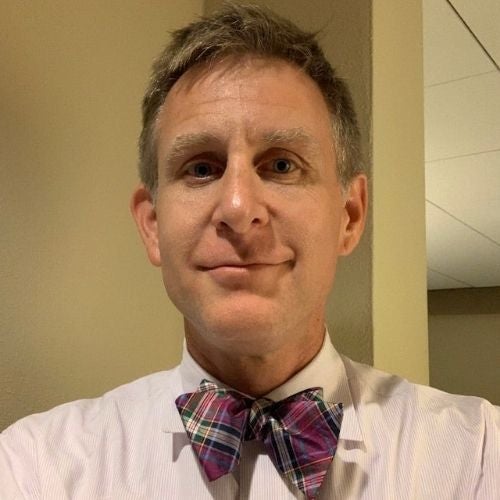
Professor Kevern Verney serves as Associate Dean (Research) in the Arts & Sciences Faculty Office. His expertise lies in American political history, focusing on topics such as the African American Freedom Struggle, race and immigration, and U.S. presidential dynamics. He supervises PhD projects on the Trump and Obama administrations and has contributed to UN Sustainable Development Goals related to equality and justice. Academic Rank: Professor Primary Affiliation: Arts & Sciences Faculty Office Research interests include Barack Obama's presidency , Trump administration policies , historiography of civil rights , and border politics . His work intersects with global perspectives on U.S. political developments. Major publications analyze the Alt-Right movement, UK responses to Trump’s presidency, and the historiography of Black civil rights. Articles frequently explore themes of immigration, political rhetoric, and transnational political reactions. Grants/Advising: Actively supervising PhD candidates and contributing to research grants on U.S. political history.
Ato Quayson is the Jean G. and Morris M. Doyle Professor of Interdisciplinary Studies and Professor of English and African and African American Studies at Stanford University, where he also chairs the Department of African and African American Studies. He previously held professorships at New York University (2017–2019) and the University of Toronto (2005–2017), where he was inaugural director of the Centre for Diaspora and Transnational Studies and became a University Professor (2016), the university's highest honor. His academic journey includes a B.A. (First Class Honors) in English and Arabic from the University of Ghana (1989) and a Ph.D. in English from the University of Cambridge (1995). He held a Junior Research Fellowship at Wolfson College, Oxford, and was a Reader in Commonwealth and Postcolonial Literature at Cambridge (1995–2005), concurrently directing the Centre for African Studies and serving as Pembroke College Fellow. Quayson’s research explores postcolonial literature, urban studies, disability studies, and cultural theory. His work bridges global and local contexts, with notable publications such as Oxford Street, Accra (Urban History Association Prize) and Tragedy and Postcolonial Literature (Warren-Brooks Prize). He co-edits the Cambridge History of Postcolonial Literature and chairs initiatives like Contours: The Cambridge Literary Studies Hour . His accolades include fellowships from the Ghana Academy of Arts and Sciences (2006), the Royal Society of Canada (2013), the British Academy (2019), and the American Academy of Arts and Sciences (2023). He has also served as President of the African Studies Association (2019–2020). Quayson curates the YouTube channel Critic.Reading.Writing , discussing literature and urban studies, and teaches courses on global Black diaspora studies and Toni Morrison’s work. His current projects include Accra Chic: A Locational History of Fashion and studies on exile in African literature.
London School of Economics and Political Science (LSE)United Kingdom
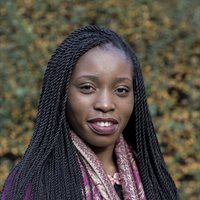
Dr. Imaobong Umoren is an Associate Professor of International History at the London School of Economics (LSE), specializing in race, gender, and political thought in the Caribbean, Britain, and the US. Her research focuses on the intersections of colonialism, imperialism, and activism in the 19th and 20th centuries. She is currently on maternity leave (2025-2026) and has been a Leverhulme Research Fellow (2020/21). Her acclaimed book Race Women Internationalists (2018) won the 2019 Women’s History Network Book Prize and explores Afro-Caribbean and African American women’s roles in global freedom struggles. Her recent work includes Empire Without End (2025), which reinterprets the British Empire’s enduring legacy in the Caribbean, and a political biography of Dominica’s former Prime Minister, Eugenia Charles. Umoren teaches courses such as HY246: The Global Caribbean and coordinates MSc dissertations. She has contributed to media projects like BBC Radio 3’s Essays and appeared on Fake or Fortune . Umoren’s awards include the British Library Eccles Centre/Hay Festival Writer’s Award (2020-2021) and Leverhulme Fellowship. Her research emphasizes systemic racism, decolonization, and the global impact of Caribbean histories.
Dr. Robert W. Widell, Jr. (he/him) is an Associate Professor at the University of Rhode Island, where he chairs the Department of History and directs the Oral History Lab. His work focuses on African American history, late-20th-century U.S. political movements, and the American South. Ph.D., Emory University, 2007 M.A., Emory University, 2003 B.A., Duke University, 1996 His research examines the Black Freedom Struggle, including his book Birmingham and the Long Black Freedom Struggle (2013) and ongoing work on capital punishment and mass incarceration in Alabama during the 1970s–1980s via the case of Johnny “Imani” Harris. He also contributes to oral history methodologies. Dr. Widell’s publications span topics such as the Alabama Black Liberation Front and the transnational influence of the Black Panther Party, reflecting his interest in radical politics and community activism. He resides in Wakefield, Rhode Island, and balances academic life with parenting, running, and supporting the Liverpool Football Club and Auburn University Tigers.
Amber M. Neal-Stanley serves as Assistant Professor of Curriculum Studies in Purdue University's College of Education, where her scholarship interrogates Black educational experiences through critical qualitative frameworks and faith-based liberation traditions. Her work centers on structural inequity, historical resistance, and humanizing pedagogical approaches grounded in Black radical thought. Education: Ph.D. in Educational Theory and Practice, University of Georgia M.S.W. in Social Work, University of Georgia B.S. in Human Development and Family Studies, Bowling Green State University Research Focus: Dr. Neal-Stanley's research synthesizes Black education studies, critical qualitative inquiry, and faith as transformative praxis. She examines historical Black women teachers' abolitionist traditions, the Black Church's role in early childhood education, and digital humanities for recovering marginalized educational histories. Her scholarship consistently centers re membering Black radical traditions while confronting anti-Blackness in educational systems through humanizing frameworks. Publication Trends: Recent publications (2021-2025) reveal three dominant trajectories: (1) Historical analyses of Black women educators' spiritual resistance, (2) Conceptual models for leveraging religio-spiritual capital against anti-Blackness, and (3) Digital methodologies for reconstructing Black educational history. Her work increasingly integrates Black feminist thought with critical race theory to address contemporary educational struggles. Scientific Recognition: Purdue University College of Education Outstanding Faculty Teaching Award (2023-2024) Research Fellow, The Crossroads Project at Princeton University's Center for Culture, Society, and Religion (2024-2025) Academic Leadership: Teaching graduate courses in critical theory, qualitative methods, and Black educational history, Dr. Neal-Stanley prepares educators to dismantle structural inequity. Her Detroit Public Schools background and social work experience inform community-engaged scholarship that bridges historical analysis with contemporary activism, particularly through faith-based resistance frameworks.
Dr. Wendell Nii Laryea Adjetey is an Associate Professor and William Dawson Scholar in the Department of History and Classical Studies at McGill University, specializing in post-Reconstruction U.S. history and the African Diaspora in North America and the Atlantic World. His research examines transnational Black freedom struggles, connecting social, cultural, intellectual, political, and military histories across geographical boundaries. His award-winning monograph Cross-Border Cosmopolitans: The Making of a Pan-African North America (UNC Press, 2023) has received multiple honors including the Governor General's History Award and CHA Best Scholarly Book Prize. The work pioneers integrated analysis of African American, African Canadian, and African Caribbean histories within broader Atlantic frameworks. Educational background includes: Postdoctoral fellowship at Harvard University Ph.D., M.Phil., and M.A. from Yale University M.A. from University of Toronto Honors B.A. from University of Toronto (St. Michael's College) Dr. Adjetey's scholarly distinctions include the H. Noel Fieldhouse Award for Distinguished Teaching and Principal's Prize for Excellence in Teaching at McGill. His extensive service includes advisory roles for SSHRC anti-racism initiatives and founding the Dr. Kenneth Melville Black Faculty and Staff Caucus. As a public intellectual, he contributes to The Washington Post , Globe and Mail , and Toronto Star , addressing historical consciousness and contemporary social justice issues. His humanitarian work includes gang prevention programs and educational equity initiatives.
University of Illinois Urbana-ChampaignUnited States
Erik S McDuffie is an Associate Professor in the Department of African American Studies and History at the University of Illinois at Urbana-Champaign. He also holds professorial appointments with the Program in Jewish Culture and Society, Center for African Studies (where he serves as Director), Lemann Center for Brazilian Studies, and Center for Latin American and Caribbean Studies. He earned his Ph.D. in History with a concentration in the African diaspora and U.S. history since 1865 from New York University, an M.A. in History from Temple University, and a B.A. in History from Hamilton College. Originally from Detroit, he is a sixth generation Midwesterner with family roots spanning the United States, Canada, and St. Kitts. Dr. McDuffie's scholarly work centers on the African diaspora, black feminism, black queer theory, black radicalism, and the significance of the Midwest in global Black freedom movements. His research reveals how Black political thought has developed through transnational connections between the American heartland and global liberation struggles, challenging conventional narratives that center only coastal urban centers. His publications demonstrate a consistent engagement with critical questions about Black political thought across time and space, with recent work focusing on Garveyism's global impact through the lens of the Midwest. This research trajectory shows increasing attention to transnational connections and the global dimensions of local Black political movements. Wesley-Logan Prize (2012) from the American Historical Association and ASALH Letitia Woods Brown Award (2011) from the Association of Black Women Historians Helen Corley Petit Award (2010) Outstanding Teaching Award in African American Studies (AY 2010-11) Outstanding Research Contribution in African American Studies Award (2017) National Endowment for the Humanities fellowship (2016) Richard and Margaret Romano Professional Scholar award (2014) American Council for Learned Societies fellowship (2017) Dr. McDuffie has secured significant research funding including major fellowships from the American Council for Learned Societies and National Endowment for the Humanities. As Director of the Center for African Studies, he leads initiatives promoting interdisciplinary research on Africa and the African diaspora. His current book project on Garveyism in the Diasporic Midwest represents a major contribution to understanding how Black political thought developed through connections between the American heartland and global liberation movements, drawing from original research across multiple continents.
Circe Sturm is Professor of Anthropology at the University of Texas at Austin's College of Liberal Arts and affiliate faculty in Native American and Indigenous Studies. With 25 years of teaching experience spanning the University of Oklahoma and UT Austin, her scholarship examines race-sovereignty-citizenship intersections in Native and African American communities through settler colonial frameworks. Education: Ph.D., University of California, Davis Her research critically analyzes racial formation , tribal sovereignty , and indigenous identity politics across Native North America, Central America, and Europe. Fieldwork with Cherokee and Freedmen communities informs her exploration of dominance-resistance dynamics and subjectivity within colonial structures, consistently bridging academic theory and social justice praxis. Recent publications (2016-2023) demonstrate evolving engagement with ontological anthropology, Black-Indigenous relations, and demographic politics of race. Key themes include sovereignty recognition struggles, racial classification systems, and the material consequences of settler colonial logics across legal, demographic, and cultural domains. Author of award-winning books Blood Politics (2002) and Becoming Indian (2011), her work is widely cited by scholars, tribal citizens, legal professionals, and journalists. Public intellectual contributions include New York Times features and NPR interviews. Sturm has mentored generations of students through courses including Cultural Anthropology, Mapping Indigenous Austin, and Oral History of Native Texas. Her public lectures for entities like the US Forest Service and New York Public Library demonstrate deep commitment to community-engaged scholarship beyond academia.
University of North Carolina at Chapel HillUnited States
Dr. Erik S. Gellman is Professor of History at UNC Chapel Hill and serves as the 2024-2025 Honors Thesis Director. His scholarship examines working-class life, visual culture, and social movements in modern America, with particular focus on civil rights and urban history. He is author of 'Death Blow to Jim Crow' and 'Troublemakers: Chicago Freedom Struggles', and is currently working on projects about New Deal-era agribusiness and Black Chicago histories. Gellman teaches courses on the Great Depression, labor history, and urban development.
Kellie Carter Jackson is the Michael and Denise Kellen '68 Associate Professor and Chair of Africana Studies at Wellesley College. She also serves as Historian-in-Residence for the Museum of African American History in Boston and as a commissioner for the Massachusetts Historical Commission representing the museum. Her research centers on the lived experiences of Black people with emphasis on slavery, abolitionism, the Civil War, political violence, Black women's history, and film. She examines how Black resistance—both nonviolent and violent—has shaped freedom struggles from the American Revolution to contemporary movements, with particular focus on Black women's contributions. SHEAR James H. Broussard Best First Book Prize Frederick Douglass Book Prize Finalist Museum of African American History Stone Book Award Finalist Washington Post's '13 Books to Read on African American History' As an advisor and public intellectual, she has mentored students in courses spanning Black women's history from Mumbet to Michelle Obama, American slavery through film, and Atlantic World slavery. Her expertise is frequently sought by major media outlets including The New York Times, Washington Post, The Atlantic, NPR, and broadcast networks like CNN, BBC, and PBS. She co-hosts the podcast 'This Day in Esoteric Political History' and hosts 'You Get a Podcast' (formerly 'Oprahdemics').
Thavolia Glymph is the Peabody Family Distinguished Professor of History and Law at Duke University, where she also serves as a Faculty Research Scholar at the Duke Population Research Institute (DUPRI). She is a prominent historian specializing in U.S. history, particularly focusing on slavery, emancipation, and the Civil War era with emphasis on Southern women's experiences. Glymph previously served as president of the American Historical Association (2024) and the Southern Historical Association (2019-2020). Ph.D. from Purdue University (1994) M.A. from Purdue University (1975) B.A. from Hampton University (1973) Professor Glymph's research centers on the intersection of gender, race, and power during the Civil War and Reconstruction eras. Her work particularly emphasizes the experiences of African American women, challenging traditional narratives that have centered white women's experiences. She examines how enslaved women navigated the plantation household as a "militarized space" and created resistance within the narrow confines allowed to them. Her scholarship reveals how black women's memories of past struggles informed their wartime rebellion and how the Civil War transformed domestic spaces and relationships. Her influential publications have reshaped understanding of women's roles in the Civil War, particularly highlighting how black women claimed freedom through refugee camps and other spaces of transition. Glymph's work demonstrates how the politics of black women in places like Gonzalez, Texas, emerged from antebellum antislavery ground, with their memories of past struggles concretely informing their wartime rebellion. Scientific Awards Albert J. Beveridge Award, American Historical Association Joan Kelly Memorial Prize, American Historical Association Julia Cherry Spruill Prize, Southern Association for Women Historians Tom Watson Brown Book Award 2021 John Nau Prize 2021 Civil War and Reconstruction Book Award 2021 Mary Nickliss Prize 2021 Darlene Clark Hine Award Philip Taft Book Prize (2009) Frederick Douglass Prize (Finalist, 2009) Jefferson Davis Award (Finalist, 2009) 2025 Award for Distinguished Service to Labor and Working-Class History 2025 Raymond Gavins Distinguished Faculty Award Professor Glymph has received significant research support for her work, including a National Institutes of Health grant for her book manuscript "African American Women and Children Refugees in the Civil War." She served as the 2023-24 Rogers Distinguished Fellow in Nineteenth Century American History at the Huntington Library. Glymph is an Organization of American Historians Distinguished Lecturer and serves on several editorial boards for historical journals. Glymph has held prestigious visiting positions including the John Hope Franklin Visiting Professor of American Legal History at Duke Law School in 2015 and 2018. She is an elected member of the American Academy of Arts and Sciences, the Society of American Historians, and the American Antiquarian Society, reflecting her significant contributions to the field of history.
Professor Mia Bay is the Paul Mellon Professor of American History at the University of Cambridge's Faculty of History and a Fellow of Jesus College. She specializes in American and African American intellectual, cultural, and social history, with a focus on race, black women's thought, transportation, and citizenship. Previously, she held roles at the University of Pennsylvania (Roy F. and Jeanette P. Nichols Professor of American History) and Rutgers University, where she directed the Rutgers Center for Race and Ethnicity. Bay earned her BA from the University of Toronto and advanced degrees (MPhil, MA, PhD) from Yale University under David Brion Davis. Her research explores the intersection of race, space, and mobility, including a current project on African American perspectives of Thomas Jefferson. She is an Organization of American Historians Distinguished Lecturer and serves on editorial boards for journals like the Journal of African American History and Modern Intellectual History . Awards include the Bancroft Prize and multiple book awards for her work on race and resistance. Bay teaches courses such as Race, Space, and Place in American History and Race, Rights, and Citizenship in the U.S. (1865–Present) . Her publications include Traveling Black (Harvard UP, 2021) and Freedom on My Mind (Bedford Books, 2021). She advocates for interdisciplinary approaches to history, emphasizing how marginalized voices shape historical narratives. Professional activities include advising doctoral students and contributing to public history initiatives. Her work bridges academic rigor with accessible scholarship, reflecting her commitment to expanding understanding of African American experiences.
David Justice is a Full-Time Temporary Lecturer in the Baylor Interdisciplinary Core program, which is part of Baylor University's Honors College in Waco, Texas. He teaches interdisciplinary courses combining theology, religious studies, African American studies, Women and Gender studies, and philosophy, including Examined Life I, World of Rhetoric, and Social World. Dr. Justice earned his Ph.D. in Christian Theology from Saint Louis University, with a Graduate Minor in Women's and Gender Studies. He also holds an M.A. in Theological Ethics from Saint Louis University, an M.A. in Philosophy from the University of Missouri—St. Louis, and a B.A. in Philosophy, Cum Laude, from Greenville University. His research focuses on the political theology of Martin Luther King Jr., particularly exploring the fundamental transformation necessary to realize the Beloved Community. Drawing on King's rootedness in the Black church, Dr. Justice places King in conversation with feminist, womanist, and decolonial thought to recover the radical dimensions of King's theology and connect it with contemporary activism. His publications reveal a strong engagement with themes of justice, racial capitalism, prophetic tradition, and the Beloved Community concept. His work spans academic journals, online publications like Sightings and The Bias Magazine, book reviews in Reading Religion, and regular contributions to Conciliar Post from 2019-2022. His writing demonstrates consistent attention to connecting theological concepts with practical social justice concerns. Saint Louis University Dissertation Fellowship Religion and Public Life Graduate Fellowship Culturally Responsive Graduate Fellow SLU College of Arts and Sciences Distinguished Thesis Award Henry Luce Foundation: Religion and Public Life Fellow Thulin Prize for Excellence in the Study of Religion Students' Choice 'Best Classes at GU' Dr. Justice has extensive teaching experience since 2013, with his Major Issues in Philosophy course named one of the Students' Choice 'Best Classes at GU.' He completed a year-long Culturally Responsive Teaching fellowship in 2020. His current work continues to explore how we can theorize a decolonized, holistic understanding of the Beloved Community and begin constructing that community in the present.
Crystal Eddins serves as an Associate Professor in the Department of Sociology at the University of Pittsburgh's Dietrich School of Arts & Sciences. Her academic work centers on historical analysis of race, gender, and resistance within the African Diaspora, with particular emphasis on revolutionary movements and structural oppression. Her research interests include: Historical Sociology of Slavery and Resistance Racial Capitalism and Black Social Movements Gender Studies and Reproductive Justice The Haitian Revolution and Black Internationalism Memory Politics of Civil Rights Movements She investigates how enslaved communities employed marronage, ritual practices, and collective action to challenge oppressive systems, especially focusing on Black women's experiences. Analysis of her recent publications reveals three dominant trends: (1) the Haitian Revolution as foundational to Black revolutionary consciousness across the Atlantic World, (2) intersections of racial capitalism with gendered oppression in reproductive justice and land dispossession contexts, and (3) political transformations of historical memory regarding civil rights struggles. Her work consistently centers diasporic resistance while connecting historical patterns to contemporary social justice issues. While no specific scientific awards are documented in the source material, Dr. Eddins' extensive publication record in high-impact journals demonstrates significant scholarly contribution. Information regarding student advising, grant funding, or laboratory affiliations was not provided in the available texts.
Dr. Chloe Ireton is a Lecturer in the History of Iberia and the Iberian World (1500-1800) at University College London and a British Academy Wolfson Fellow (2023-2026). Her research focuses on slavery, freedom, empire, and subaltern public spheres in the early Atlantic world, with a particular emphasis on Black intellectual and political thought. She holds a PhD from the University of Texas at Austin and has held fellowships from institutions including the John Carter Brown Library and the Leverhulme Trust. Her first monograph, Slavery & Freedom in Black Thought in the Early Spanish Atlantic (2024), examines how enslaved and free Black individuals conceptualized freedom and contested slavery through legal and cultural means. Current projects include Infrastructures of Black Political Knowledge and Plotting for Freedom , a dual biography of an enslaved couple. She teaches courses on Atlantic history, Black thought in the Iberian world, and methodologies for studying marginalized histories. Dr. Ireton’s work has appeared in leading journals like Renaissance Quarterly and Hispanic American Historical Review , and she actively engages in public scholarship through antiracist initiatives and community writing projects. She supervises PhD students in colonial Latin American history, Atlantic studies, and interdisciplinary methodologies.