Lillie Padilla is an Assistant Professor of Spanish Linguistics at Sam Houston State University's Department of World Languages and Cultures. Holding a Ph.D. and M.A. in Spanish Linguistics from Arizona State University alongside a Bachelor of Arts from the University of Ghana, her research explores interdisciplinary connections between: Afro-Latinx representation in educational materials Discourse analysis and language ideologies Sociolinguistic studies in Equatorial Guinea Critical race theory applications in language teaching Her work focuses on Spanish subject pronoun expression patterns in multilingual contexts and curriculum development for inclusive pedagogy. Recent publications examine: Representation gaps in Spanish language textbooks Methodological challenges in Equatorial Guinea research Critical discourse analysis of Netflix's Elite series Intersectional representation of Afro-Latinx women Scientific achievements include: Finalist for American Association of Linguistics 2025 award for co-edited volume Representation, Inclusion and Social Justice in World Language Teaching Padilla's research continues to shape conversations about linguistic diversity and marginalized voices in language education through both empirical studies and theoretical frameworks.
Crystal S. Rudds is an Assistant Professor in the Department of English at the University of Utah, specializing in African American literature and culture. Her research focuses on twentieth-century American and African American fiction, qualitative narratives about urban life and housing, Black Feminisms, and black geography/ecology. PhD in English from the University of Illinois at Urbana-Champaign (2016) MFA in Creative Writing from Indiana University-Bloomington (2004) BA in Communications with minors in French and Theatre from Wake Forest University (1999) Her scholarly work examines the intersection of literature and urban environments, particularly through public housing fiction. She uses interdisciplinary approaches combining qualitative research with literary analysis, emphasizing community engagement and the phenomenological experiences of residents in urban spaces. Her publications address topics like the historical context of public housing narratives and the concept of 'the black interior' as a framework for understanding spatial identity. Rudds has received prestigious honors, including the David D. Anderson Award for Midwestern Literary Studies and the Mary Blinn Poetry Prize. She is also a Faculty Research Fellow and Intersectionality Pedagogy Fellow at the University of Utah. Her teaching philosophy integrates experiential learning and community-focused methods, with courses such as African Amer Lit 2, Seminar in Lit. Study, and Studies Af Amer Lit. She emphasizes archival research, site visits, and performance-based learning to empower students as co-creators of knowledge.
Crystal S. Rudds is an Assistant Professor of African American literature and culture in the Department of English at the University of Utah, specializing in twentieth-century American and African American fiction, urban life narratives, Black Feminisms, and black geography/ecology. She earned her PhD in English from the University of Illinois at Urbana-Champaign (2016) and MFA in Creative Writing from Indiana University-Bloomington (2004). Her research explores intersections between literary analysis and community engagement, focusing on urban spatiality, public housing representation, and black interiority. She has published works analyzing Frank London Brown and Jasmon Drain's housing narratives, digital archiving practices, and pedagogical identity evolution. Key grant activities include: Gathering, Sewing, Giving: Chronopolitics and Black Women's Quilting (TRIC/Mellon Foundation, 2023) Utah Presidential Leadership Fellowship (2023) Recognitions: David D. Anderson Award for Midwestern Literary Studies (2023) Mary Blinn Poetry Prize (2022) University of Utah Fellowships (2022) Teaching activities feature: Experiential learning with archival documents Historic site visits Performance-based literary analysis Community-focused pedagogy
University of California, Los AngelesUnited States
H. Samy Alim is a Professor and David O. Sears Presidential Endowed Chair in the Division of Social Sciences at UCLA, holding a joint appointment in the Department of Anthropology. He serves as Associate Director of the Ralph J. Bunche Center for African American Studies and leads the UCLA Hip Hop Initiative. Alim’s research focuses on Hip Hop Culture, Black Language, and Culturally Sustaining Pedagogies, with over 25 years of scholarship in these areas. His work bridges academia and activism, emphasizing Hip Hop’s transformative role in global social justice movements. Alim earned his PhD in Anthropology from Stanford University (2003), following MA (2002) and BA (1999) degrees. His academic contributions include twelve authored/edited books, such as Freedom Moves (2023) and Articulate While Black (2012). His research spans Hip Hop’s linguistic innovations, racialized language politics, and its pedagogical potential in education. Key projects include ethnographic studies in Cape Town, South Africa, and collaborative initiatives like the UC Press Hip Hop Studies Book Series. He co-edits the Oxford Handbook of Language and Race and directs the Center for Race, Ethnicity, and Language. Alim has engaged with global Hip Hop artists (e.g., Chuck D of Public Enemy) to co-produce knowledge, emphasizing Hip Hop as a site of theorizing and activism. His teaching and research highlight intersections of language, race, and power, advocating for pedagogies that sustain cultural identities while fostering equity. Collaborations with organizations like Heal the Hood in South Africa reflect his commitment to community-driven scholarship.
London School of Economics and Political Science (LSE)United Kingdom
Clare Hemmings is a Professor of Feminist Theory at the Department of Gender Studies, London School of Economics and Political Science (LSE), where she has been since 1999. Her work bridges feminist theory, queer studies, and sexuality studies, with a focus on how these fields are institutionalized and narrated. She holds a PhD and has authored seminal works like Why Stories Matter (2011) and Considering Emma Goldman (2018), which explore feminist historiography and political ambivalence. Her research emphasizes interdisciplinary methods, including archival interventions and creative writing to challenge dominant narratives. Hemmings’ research interests include feminist epistemology, queer of color critique, and anarchist thought. She has been active in countering 'anti-gender' movements and is currently developing a project on 'Feminist Knowledge Struggles.' Her work is marked by attention to form, affect, and the intersection of nationalism, feminism, and sexuality. She supervises PhD students Senel Wanniarachchi and Rawda Elaskary and has received the FWSA Book Prize 2012 for Why Stories Matter . Hemmings’ articles span feminist theory, political mobilizations, and affect studies. Her recent work engages with family memory archives and decolonial methodologies. She is a prolific scholar, contributing to journals like Memory Studies , Feminist Studies , and Radical Philosophy . Her interdisciplinary approach integrates literary criticism, sociology, and activism, offering transformative frameworks for feminist praxis.
Rutgers, The State University of New JerseyUnited States
Emily C. Bartels is a Professor of English at Rutgers University specializing in early modern literature and culture, with particular expertise in Shakespearean and non-Shakespearean drama. She has served as director, and is now dean, of the Middlebury Bread Loaf School of English since 2010, a summer Master's program designed for K-12 English teachers. Professor Bartels received her BA from Yale University and both her MA and PhD from Harvard University. Her academic background positioned her to become a leading scholar in Renaissance literature studies. Her research examines questions of race, cross-cultural relations, gender, genre, and performance in early modern English drama. Professor Bartels is renowned for her groundbreaking work on Shakespeare's Othello and Christopher Marlowe's plays, analyzing how these texts represent cultural and racial difference. She has significantly contributed to postcolonial approaches to early modern literature, revealing how English drama engaged with global encounters and representations of the 'other' during the Renaissance period. Her scholarship demonstrates how early modern writers both reflected and shaped contemporary attitudes toward difference, particularly regarding race, religion, and national identity. Professor Bartels' publications reveal a consistent scholarly trajectory examining racial and cultural representation in early modern England. Her work spans from detailed analyses of specific plays like Hamlet and Julius Caesar to broader studies of how England conceptualized Africa and non-Christian cultures during the Renaissance. A recurring theme throughout her career is the analysis of how early English drama both reflected and shaped contemporary attitudes toward difference, particularly regarding race, religion, and national identity. Roma Gill Prize for Best Work on Christopher Marlowe (1993-94) for Spectacles of Strangeness: Imperialism, Alienation, and Marlowe Board of Trustees Fellowship for Scholarly Excellence (1993) School of Arts and Sciences Award for Distinguished Contributors to Undergraduate Education (2008 & 1993) Warren I. Susman Award for Excellence in Teaching (2008) Solmsen Fellowship at the Institute of Research in the Humanities, University of Wisconsin (1995) Black Atlantic Project fellowship from the Rutgers Center for Historical Analysis Professor Bartels has demonstrated exceptional commitment to both research and teaching excellence. She has developed innovative courses exploring the intersections of literature, history, and cultural studies, including undergraduate seminars on Othello and Hamlet, and graduate courses on Shakespeare Page and Stage. Her administrative role as dean of the Middlebury Bread Loaf School of English demonstrates her commitment to education beyond traditional university settings. Her fellowships from prestigious institutions indicate successful grant acquisition throughout her distinguished career. Professor Bartels has been actively involved with the Shakespeare Association of America and has collaborated with international scholars like Emma Smith of the University of Oxford. Her work has positioned her at the forefront of conversations about early modern literature, race studies, and postcolonial approaches to Renaissance drama, influencing how scholars understand the intersections of literature, race, and cultural identity in the early modern period.
Maile Arvin is a Kanaka Maoli feminist scholar and Assistant Professor at the Department of Ethnic Studies, University of Hawaiʻi at Mānoa. Her research and teaching focus on Indigenous relationships to land, histories of race and settler colonialism in Hawaiʻi, Oceania, and the United States. Previously, she was faculty in History and Gender Studies at the University of Utah and founding director of the Center for Pasifika Indigenous Knowledges. PhD in Ethnic Studies, University of California San Diego (2013) MA in Ethnic Studies, University of California San Diego (2009) BA in English, Swarthmore College (2005) Her research examines: Colonial production of racial categories, particularly Polynesians as an 'almost white race' in historical social science History of incarceration of Native Hawaiian children in government institutions (1865–1960s) Intersection of settler colonialism and Indigenous feminisms Critique of eugenics and genomic studies in the Pacific Community-engaged memorialization projects in Hawaiʻi Recent scholarly trends include analyses of Indigenous sovereignty, critiques of settler colonial whiteness, and interdisciplinary studies of race-gender dynamics. Arvin's publications explore Polynesian racialization, decolonial feminism, and the socioeconomic impacts of colonial institutions. NEH Chair's Grant for Nā Lei Poina ʻOle ACLS Digital Justice Seed Grant Arvin leads Nā Lei Poina ʻOle (Beloved Children Never Forgotten), a community history project about reformatories and industrial schools in Hawaiʻi. In collaboration with Kawela Farrant and the North Shore Community Land Trust, this project uses archival and oral histories to confront the legacy of child incarceration. She also critiques the nonprofit-industrial complex's role in limiting Indigenous sovereignty.
Jack Bowman is a Teaching Fellow in Modern History at the University of Warwick, School of Arts, Department of History. He teaches modules such as "Britain in the Twentieth Century" and "Race, Racism, and Resistance in Modern Britain," and serves as an Academic Writing Adviser and Teaching Representative for the Social Inclusion and Diversity Committee. PhD in History, University of Warwick (2019–2023) MA in Modern History, University of Warwick (2018–2019) BA (Hons) in History, University of Warwick (2015–2018) His research focuses on anti-colonial print cultures, particularly within the British Empire and the Pan-African movement. He specializes in book history, global histories of empire, queer histories, and visual media. His work explores the role of political publishing in anti-colonial activism and the intellectual networks of figures like V. K. Krishna Menon and Ras T. Makonnen. The recent publications and presentations reflect a strong engagement with transnational anti-colonial movements, Black radicalism, and the material culture of print. His work spans historical biography, archival research, and critical reviews of scholarship in visual culture, decolonization, and global knowledge systems. He frequently contributes to public history through outreach and digital media. University of Warwick, History Department Doctoral Scholarship (2019–2023) Jack Bowman advises undergraduate students and contributes to academic governance through committee roles. He is also involved in public engagement, including outreach to school children as the historian for George Padmore and creating educational resources for GCSE and A-Level students. He is a Convenor of the Modern British History Reading Group and a member of the Global History and Culture Centre and Manuscript and Print Cultures Research Group at Warwick. He is currently working on a new book project on the League Against Imperialism and maintains an active public presence through Twitter (@DrJackBowman) and podcast contributions, such as with Shoga Films on the Harlem Renaissance.
Heidi R. Lewis is the David and Lucile Packard Professor of Feminist & Gender Studies at Colorado College. She serves as President of the National Women's Studies Association (2023-25) and Editor-in-Chief of the Oxford Bibliography in Women's & Gender Studies. Her research focuses on Black Feminisms, Hip Hop discourse, and Critical Media Studies, with a current project challenging narratives around Mumble Rap's authenticity. Lewis holds a Ph.D. in American Studies from Purdue University and has taught interdisciplinary courses including Hip Hop & Feminism and Critical Media Studies. Education: Ph.D., American Studies, Purdue University (2011) M.A., English Literature, Ohio University (2005) B.A., English Studies, Robert Morris University (2003) Research Interests: Lewis interrogates intersections of race, gender, and media through projects like her forthcoming book on Mumble Rap and a documentary on her experiences during the crack cocaine epidemic. She employs discourse analysis to challenge dominant narratives in Hip Hop and feminist theory, emphasizing marginalized voices and transnational collaborations. Service & Leadership: As Director of Feminist & Gender Studies, Lewis secured funding for new faculty lines, student programs, and community partnerships. Nationally, she co-created the #FemSTEMSymposium to bridge feminist inquiry and STEM fields. Her service prioritizes equity, including roles on promotion committees and external reviews for academic centers. Community Engagement: Lewis collaborates with organizations like the Kampagne für Opfer Rassistischer Polizeigewalt and the U.S. Olympic Committee. Her work extends beyond academia through public talks, media contributions, and initiatives like the Marsha P. Johnson Professorship.
Nadia E. Brown is a Professor of Government and Director of the Women's and Gender Studies Program at Georgetown University's College of Arts and Sciences. She holds a Ph.D. in Political Science from Rutgers University and specializes in intersectional analyses of Black women’s politics, legislative studies, and identity politics. Her work emphasizes holistic approaches to understanding race, gender, and their intersections in political systems. Dr. Brown leads the #MeTooPoliSci Collective, focusing on eradicating sexual harassment in political science, and co-PIs a million-dollar NSF grant addressing systemic issues in the discipline. She is editor of Politics, Groups and Identities and contributes to The Monkey Cage blog. Her research spans Black women’s legislative representation, digital activism, and feminist methodologies, with award-winning books including Sisters in the Statehouse and Sister Style . Education: Ph.D. in Political Science, Rutgers University Key Affiliations: African American Studies Program, #MeTooPoliSci Collective Research Methods: Case studies, ethnography, interviews Her advocacy extends beyond academia, influencing public discourse on racial justice and gender equity through media engagement and policy-focused scholarship.
Tithi Bhattacharya is a Full Professor in the Department of History at Purdue University. She holds a PhD from the University of London and is renowned for her work in South Asian history, Transnational Gender, Colonialism, and Global History. Bhattacharya is the author of influential books including Ghostly Past, Capitalist Presence (Duke, 2024) and The Sentinels of Culture (Oxford, 2005), and co-author of the widely translated Feminism for the 99%: A Manifesto (Verso, 2019). Her educational background includes a PhD from the University of London. This foundational training has equipped her to critically engage with colonial and postcolonial histories, Marxist theory, and feminist praxis. Bhattacharya's research interests span Social Reproduction Theory, Marxist feminism, and the intersections of class, gender, and colonialism. She examines how capitalism relies on the social reproduction of labor, particularly through gendered and racialized exploitation. Her work also addresses Islamophobia and the politics of fear in colonial and contemporary contexts, as seen in her book Ghostly Past, Capitalist Presence . Analysis of her recent publications reveals a consistent focus on Social Reproduction Theory as a framework for understanding global capitalism and feminist resistance. Her articles frequently address the BRICS nations, anti-colonial movements, and the development of a feminism that centers the 99%. The multilingual nature of her work (appearing in over 30 languages) underscores its international impact. While specific scientific awards are not mentioned in the provided text, Bhattacharya's work has been published in prestigious journals such as the Journal of Asian Studies and South Asia Research , and she serves on the editorial boards of Studies on Asia and Spectre . Information regarding her advising of students and grant activities is not provided in the current text. Similarly, details about labs or research teams are absent.
Laura Maria Lojo Rodriguez is a Professor in the Department of English and German Philology at the University of Santiago de Compostela , specializing in British literature and modernist/postmodernist fiction. She leads the Discourse and Identity research group (GI DI-1924), focusing on English language, literature, and culture through interdisciplinary frameworks. Her work intersects with the Humanities Research Institute (iHUS) . Her research spans: Gender and identity in Woolfian studies Migration narratives in contemporary short fiction Postcolonial themes in British-Irish literature Ecocritical and posthuman anxieties in Johnson's works Recent publications examine border politics, maternal discourses, and cross-cultural literary bonds. She has also contributed to translation studies, particularly Woolf's Spanish reception. Her academic output bridges literary theory with socio-political analysis.
Michaela D.E. Meyer is a Professor in the Department of Communication Studies at Christopher Newport University (CNU), specializing in critical media studies, LGBTQ+ issues, and television/film analysis. Her research bridges interpersonal communication, gender and sexuality studies, and emerging adulthood narratives. Ph.D. in Communication, Ohio University M.S. in Journalism, Ohio University Ph.B. in International Studies, Miami University Her research focuses on intersectional representation in media , LGBTQ+ narratives , and relational aggression in film . She employs narrative and autoethnographic methods to critique political ideologies in popular culture, such as neoliberalism in Fixer Upper and feminist critiques in Glee and Shondaland . Michaela’s recent articles explore themes like disability discourses in Korean television , feminist film auteur theory , and nostalgia in streaming reboots . These works highlight identity politics , gender representation , and media’s role in social discourse . Paul Boaze Prize, Ohio University (2025) Outstanding Panel Award in Sexuality and Gender Identity, Central States Communication Association (2025) Faculty Excellence Award in Undergraduate Research Mentorship, CNU (2025) James W. Chesebro Award for Scholarly Distinction, Sexual Orientation and Gender Identity Caucus of CSCA (2021) She has mentored undergraduate research and contributed to critical media pedagogy , with grants and service awards reflecting her commitment to diversity and inclusion in academia. Her full scholarship and honors are detailed in the scientific_awards section.
Aisha Durham is a Professor of Communication at the University of South Florida's College of Arts and Sciences, with affiliations in Humanities & Cultural Studies and Women's & Gender Studies. She holds a Ph.D. from the University of Illinois at Urbana-Champaign (2007) and has held academic positions at Texas A&M University and the University of Georgia. Her research focuses on Black feminist thought, autoethnography, and media/cultural studies. She is the award-winning author of Home with Hip Hop Feminism: Performances in Communication and Culture and a co-editor of Home Girls Make Some Noise! Key research areas include Hip Hop Feminism, intersectionality, and qualitative methodologies. Durham has received prestigious awards such as the NCA Marsha Houston Award and the Ellis-Bochner Award for autoethnography. She contributes to public scholarship through podcasts, media analyses, and international talks for outlets like CNN and NPR. Her work emphasizes democratizing knowledge and addressing systemic inequities in academia and culture. Professional activities include editorial board roles, advisory positions (e.g., Smithsonian Anthology of Hip-Hop and Rap), and keynote speaking at institutions worldwide. Her recent publications explore pedagogical resistance, hiphop literacies, and Black feminist mentorship frameworks.
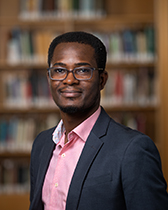
Dotun Ayobade is an Assistant Professor of Performance Studies and Black Studies at Northwestern University. His research focuses on how embodied popular culture shapes community, justice, and activism in postcolonial West Africa, particularly examining the interplay of aesthetics and social performance in Nigeria. He holds a joint appointment across disciplines and has taught at the University of Texas at Austin and Brown University prior to Northwestern. His academic interests include African/Black Performance Theory, African Popular Culture, and the intersection of performance with postcolonial politics. He is currently completing a book on Nigeria’s Afrobeat Queens, analyzing their role in Fela Kuti’s music subculture, under contract with Indiana University Press. This work has earned him prestigious awards, including the University of Texas Continuing Fellowship and Brown University’s Salomon Award. His scholarly contributions span peer-reviewed journals like Dance Research Journal and Journal of African Cultural Studies , with articles exploring topics such as sonic embodiment in Nigerian music and the spatial poetics of protest. He also engages with public discourse through platforms like Africa is a Country , addressing issues like neoliberalism and cultural netizenship. Ayobade’s work bridges performance ethnography, gender studies, and postcolonial theory, emphasizing the agency of marginalized voices in shaping cultural narratives. His research integrates interdisciplinary methods to unpack how performance mediates between individual creativity and collective socio-political realities in Africa and its diasporas.