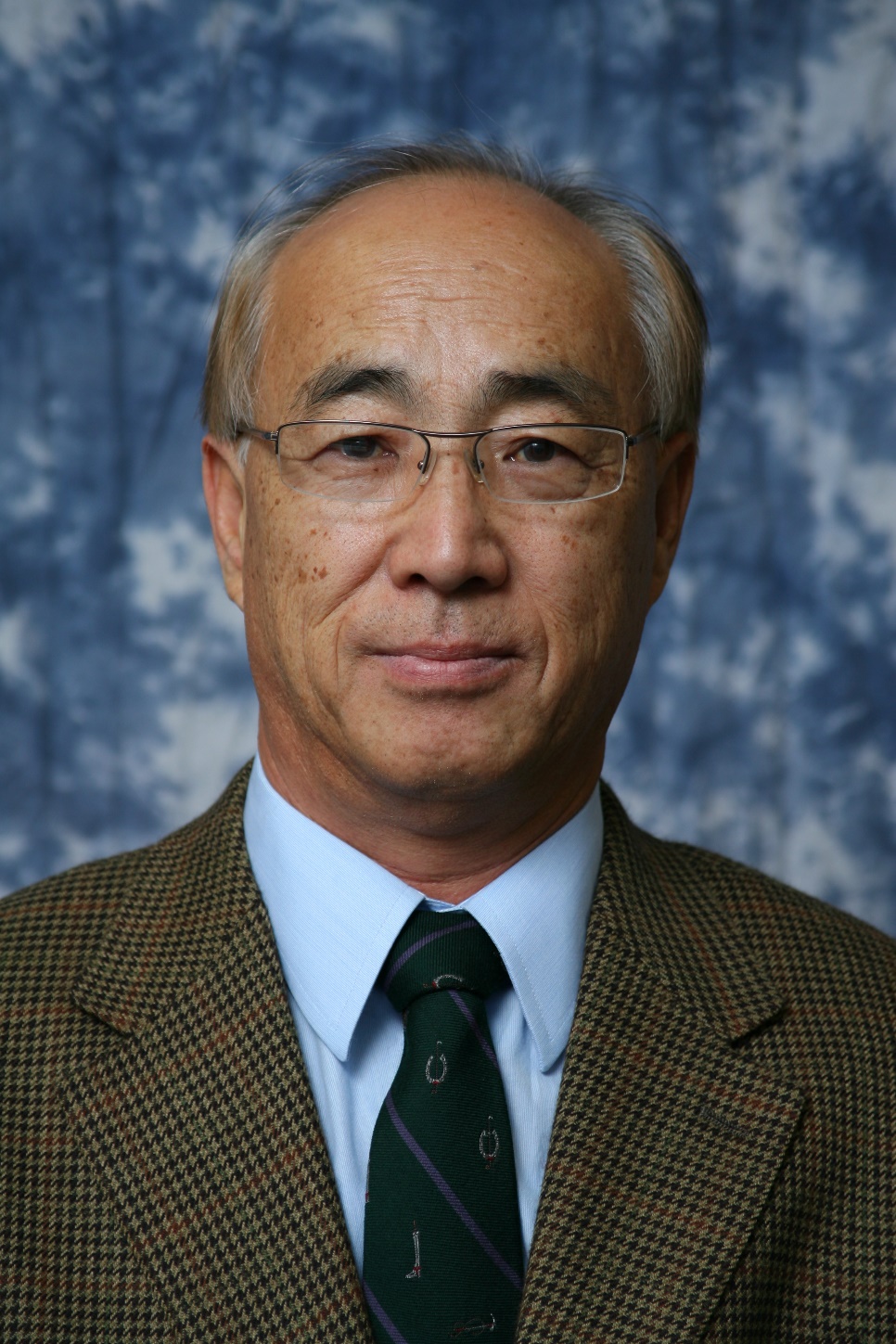
Junghwan Kim is a Professor in the Department of Electrical Engineering and Computer Science at the University of Toledo's College of Engineering. His research focuses on advanced communication systems, including satellite architectures, wireless sensor networks, and anti-jamming technologies. He also explores physical layer encryption and digital multimedia broadcasting (DMB). His work emphasizes practical applications such as improving bit error rate (BER) in wireless systems through innovative modulation techniques like APSK-TCM and LDPC coding. Recent contributions include secure physical layer key generation for autonomous vehicles and machine learning approaches to face detection in noisy channels. Publications highlight advancements in satellite communication synchronization, cooperative localization in cellular networks, and error correction techniques for CDMA systems. His research bridges theoretical foundations with real-world challenges in telecommunications and cybersecurity.
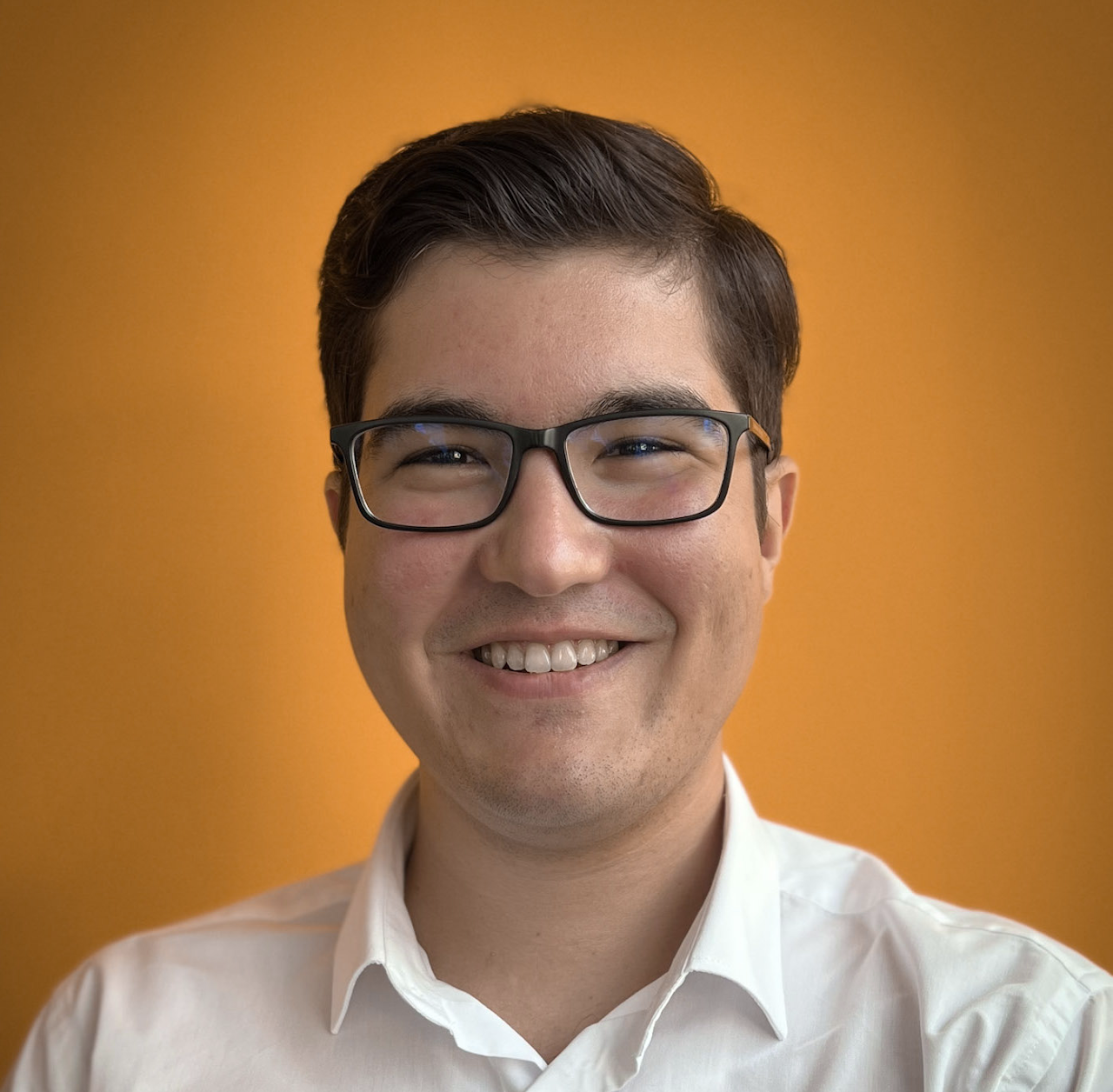
Ataberk Olgun is a Lecturer at the Department of Information Technology and Electrical Engineering at ETH Zürich, where he conducts research in the SAFARI Research Group under Professor Onur Mutlu. His work focuses on computer architecture with particular emphasis on memory systems, DRAM reliability, and security vulnerabilities such as RowHammer. His educational background includes BSc and MSc degrees from TOBB ETÜ (Ankara University of Economics and Technology) under Professor Oğuz Ergin's supervision. Prior to his doctoral work at ETH Zürich, he worked at Kasirgalabs until 2021, leading the design of a RISC-V system-on-chip manufactured using SKY130 technology, and previously developed authentication methods based on behavioral biometrics with Professor Kemal Bicakci. Olgun's research interests center on designing reliable and energy-efficient memory systems. He has developed FPGA-based testing platforms for DDR3/4 and HBM2 DRAM chips, created end-to-end systems for processing-in-memory techniques, and made significant contributions to understanding and mitigating the RowHammer problem. His work often combines hardware design with system-level considerations to address fundamental challenges in modern memory technology. His publication record shows consistent output in top-tier venues including ACM TACO, USENIX Security, ISCA, MICRO, and HPCA, with a clear trend toward increasingly sophisticated investigations of DRAM vulnerabilities and innovative mitigation strategies. Recent work focuses on fine-grained DRAM architectures, scalable RowHammer mitigation techniques, and experimental characterization of emerging memory technologies. As part of the SAFARI Research Group at ETH Zürich, Olgun collaborates extensively with Professor Onur Mutlu and other researchers on memory systems research. His technical expertise spans FPGA-based prototyping, DRAM characterization, hardware security, and memory controller design. Olgun maintains an active research presence with numerous ongoing projects investigating next-generation memory technologies, security vulnerabilities in modern DRAM, and energy-efficient memory system designs. His work bridges theoretical understanding with practical implementation through FPGA-based experimental platforms.
Dr. Muhammad Basit Shahab (Member, IEEE) is a Research Fellow at the School of Engineering, University of Newcastle, Australia. He received his B.S. in Electrical Engineering from the University of Engineering and Technology (UET) Lahore, Pakistan (2009), his M.S. in Electrical Engineering from the University of Management and Technology (UMT) Lahore, Pakistan (2011), and his PhD from Kumoh National Institute of Technology (KIT), South Korea (2019). Prior to joining Newcastle, he was a Postdoctoral Fellow at KIT, South Korea (2019). His research focuses on advanced wireless communication systems, with expertise in: Non-orthogonal multiple access (NOMA) and grant-free transmissions Internet of Things (IoT) connectivity and machine-type communication Cooperative communication and UAV network optimization Signal detection, channel estimation, and energy-efficient protocols His publications predominantly explore NOMA enhancements, IoT scalability, and machine-learning applications in 5G/6G networks. Recent work emphasizes low-complexity detection, clustering algorithms, and QoS-aware resource allocation. Awards/Honors: Best Researcher Award, Brain Korea 21 Plus Project (2017, 2019) Best PhD Thesis Award, Kumoh National Institute of Technology He serves as a reviewer for leading IEEE journals and conferences. No information is available regarding student advising, grants, or laboratory leadership.
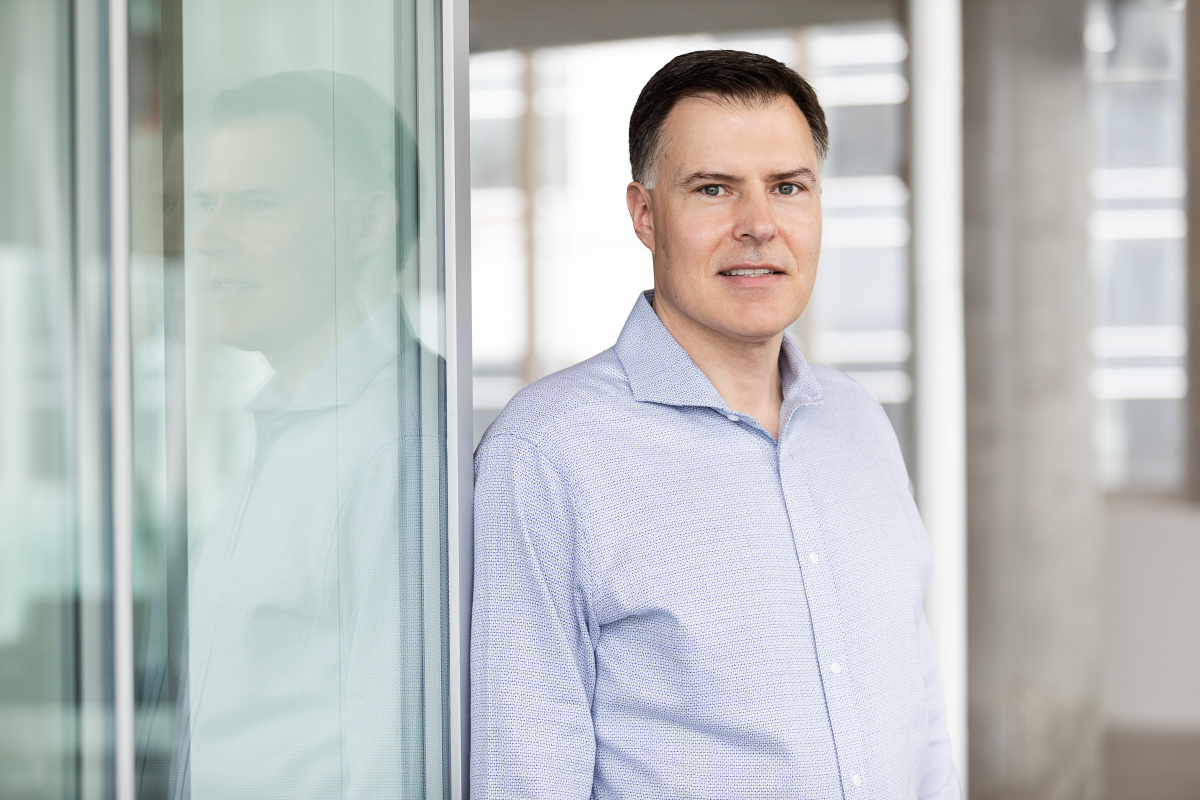
Juan Jose Vegas Olmos serves as an Adjunct Professor in the Department of Electronic Systems at Aalborg University's Technical Faculty of IT and Design, Denmark. His research and academic activities are centered in Copenhagen (Frederikskaj 12, 2450 København SV) with email contact olmos@es.aau.dk. His research spans Photonics, 5G networks, Network Security, High-Performance Computing, and Quantum Communications. Key contributions include Bit Error Rate optimization, Spectral Efficiency enhancement, and Multiuser Systems design, with fingerprint analysis showing strong emphasis on Photonics (89%) and 5G (79%). His work bridges theoretical concepts like Multiplexing with practical applications in data center infrastructure. Recent publications (2024) demonstrate a clear trajectory toward secure, high-speed data center technologies, focusing on DPU acceleration, quantum-resilient communications, and MPI optimization. These works reveal increasing integration of Hardware-Software co-design for network performance. He actively supervises PhD candidates including Jerónimo Sánchez García and Dimosthenis Iliadis-Apostolidis (since 2023). His project involvement includes the 2020 Danish-Japanese Network on Security and Cyber-security in Networks, addressing critical infrastructure challenges in Network Monitoring and Data Integrity.
Clemens-Konrad Müller is a Doctoral Researcher at the Institute of Communications Engineering , University of Rostock, since 2017. He holds a B.Sc. and M.Sc. in Information Technology with a specialization in Technical Computer Science from the University of Rostock. Education : B.Sc. (2012-2016), M.Sc. (2016-2017), both from University of Rostock. Teaching : Involved in exercises for Error Control Coding and Statistical Signal Processing and Inference. Research Interests include information theory, optimal signal processing, OFDM, and distributed quantization. His work applies the Information Bottleneck Method to address rate constraints in communication systems and explores neural networks for constrained hardware. He has supervised 12 student projects on topics like distributed compression and probabilistic shaping. Publications focus on FFT optimization in OFDM systems and distributed compression techniques. Key contributions involve iterative information bottleneck algorithms and convergence analysis.
Hui Liu is a Researcher in the Department of Electrical Engineering , actively contributing to quantum communication technologies and photonic systems. With affiliations spanning multiple projects, Liu collaborates on advancing quantum key distribution (QKD) solutions. Research Focus: Quantum Key Distribution, Silicon Nitride photonics, Optical Communication, Bit Error Rate analysis, and Terahertz Photonic Systems. Recent Publications highlight innovations in chip-scale QKD receivers and metropolitan network resource-sharing schemes. Liu’s work intersects Quantum Cryptography , Photonics , and Network Security , with citations in Physics and Computer Science domains.
Stéphane Coulombe is a Professor in the Department of Software Engineering and IT at École de technologie supérieure (ÉTS). He holds a B.Eng. from Polytechnique Montréal and a Ph.D. from INRS Telecommunications. His research focuses on video processing, compression, immersive video systems, and reliable video transmission. He co-leads the Summit Tech Research Chair in Immersive and Interactive Video, aiming to advance immersive video technologies through compression optimization, AI integration, and low-latency transmission methods. Key collaborations include the LABMULTIMEDIA and SYNCHROMÉDIA research laboratories. Research interests span video quality assessment, error correction, and real-time video delivery. Notable achievements include the 2012 Best Paper Award and the 1997 Director General’s Award of Excellence. He has advised numerous doctoral and master’s students, contributing to breakthroughs in HEVC transcoding, deep learning-based error correction, and immersive video standards. Publications highlight advancements in no-reference quality metrics, CRC-based error correction, and 360-degree video compression. Over 50 patents reflect his work on video encoding, transcoding systems, and adaptive multimedia messaging. Current projects address MPEG immersive video standards, VR streaming, and AI-driven video analytics.
Ji Song Zhou is a Researcher in the Department of Chemistry at the University of Bath. His work integrates computational methods and materials discovery, with a focus on accelerating screening processes using machine learning and Monte Carlo simulations. Active research projects include "Accelerating Materials Discovery: Integrating Machine Learned Force Fields (MLFF) with Monte Carlo Simulations" (EPSRC-funded, 2025–2025). Research interests span Materials Science, Digital Signal Processing (DSP), and Pharmaceutical Crystal Stability. His recent publication in Applied Sciences (2021) explores low-complexity DSP techniques for optical access networks, addressing challenges in high-speed communication and error rate reduction. The work aligns with broader trends in network engineering and optical power management. Zhou completed his Doctor of Science (DSc) thesis in 2025, titled "Developing Monte Carlo based high throughput screening tools for surface stability and dissolution of pharmaceutical crystals," supervised by Professors S. Parker, T. Underwood, and C. Wilson.
Margarida Amelia Freitas Pereira is a Doctoral Research Personnel at the Research Center for Telecommunication Technologies within the University of Vigo , affiliated with the School of Telecommunications Engineering and Department of Signal Theory and Communications . She is part of the SC7 Antennas, Radar and Optical Communications research group. PhD in Telecommunications Engineering (2021), University of Vigo Research focus on quantum key distribution security Specializes in mitigating device imperfections in quantum communication Her research focuses on Quantum Key Distribution (QKD) security analysis, particularly addressing source and detector imperfections , pulse correlations , and side-channel vulnerabilities . She develops security frameworks and finite-key analysis techniques while working on practical implementations that tolerate real-world hardware flaws. Her work combines theoretical security proofs with mathematical modeling for optical communication systems. The article analysis reveals consistent focus on QKD security improvements , with particular emphasis on source imperfections , phase-error estimation , and loss-tolerant protocols . Her work spans from foundational research in quantum channel modeling (2019) to advanced security frameworks (2023-2025) addressing practical implementation challenges. Margarida collaborates within the SC7 research group at the Research Center for Telecommunication Technologies , working on cutting-edge quantum communication projects. Her research directly addresses real-world implementation security for quantum cryptographic systems, focusing on practical deployment scenarios and device characterization.
Dr. Małgorzata Gajewska is an Assistant Professor at the Department of Radiocommunication Systems and Networks within the Faculty of Electronics Telecommunications and Informatics at Gdańsk University of Technology. She holds a doctoral degree in Telecommunications (Technology) obtained in 2010. Her research focuses on telecommunications with particular expertise in 5G networks, Internet of Things technologies, Narrowband IoT, Long Term Evolution, Machine-to-Machine communication, maritime communication systems, cellular systems, transmission quality, Wireless Body Area Networks, and Vehicle-to-Everything communication. Dr. Gajewska has been actively involved in several significant research projects including KODEŚ (as project manager), DUCH IoT, and VCS-MLAT. Her work demonstrates a strong connection between theoretical research and practical applications in telecommunications. Her recent publications show a clear trend toward applying IoT and 5G technologies to specialized domains such as maritime communication systems, power grid monitoring, and intelligent transport systems. She has made significant contributions to understanding transmission quality metrics in cellular systems and their practical applications. Scientific contributions: Over 100 publications in various telecommunications domains Multiple publications in reputable journals including Polish Maritime Research, Electronics, and Przegląd Telekomunikacyjny Research spanning from fundamental radio communication concepts to applied solutions in transport and maritime systems Dr. Gajewska has been actively involved in teaching activities at Gdańsk University of Technology, with approximately 200 teaching assignments recorded. Her research has been supported by the Intelligent Development Operational Program (Program Operacyjny Inteligentny Rozwój), indicating recognition of the practical value of her work. She is a key member of the research team working on the KODEŚ project, which focuses on power data concentrators with innovative decision functionality for various network environments. Her work bridges the gap between academic research and practical industry applications in telecommunications.
Dr. Andrzej Marczak is an Assistant Professor at the Department of Radiocommunication Systems and Networks within the Faculty of Electronics Telecommunications and Informatics at Gdańsk University of Technology. His research focuses on wireless communication systems, software-defined radio, and cooperative transmission techniques. Education Doctor of Engineering (obtained November 29, 2005) Research Interests Dr. Marczak's research spans several areas in wireless communication and telecommunications. His primary focus is on Software Defined Radio (SDR) technologies, where he has conducted extensive work on implementing OFDM transceivers using GNU Radio. He has also made significant contributions to cooperative communication in wireless networks, studying how mobile terminals can function as relay stations to improve transmission quality, network performance, and energy efficiency. Additional research areas include MC-CDMA radio interfaces, turbo codes for error correction, and Ad Hoc networks with various multiple access techniques like TDMA. His recent publications show a trend toward practical implementations of wireless communication systems, with applications in transportation (including vehicular networks and rail transport), military contexts, and IoT environments. Much of his work involves simulation studies to evaluate transmission quality metrics like Bit Error Rate (BER) and Frame Error Rate (FER) under various channel conditions. Scientific Awards No specific awards mentioned in available information Advising and Grants Dr. Marczak has been involved in research projects including "KODEŚ - Power data concentrator with innovative decision functionality and gate functionality in AMI, SCADA, HAN, IoT environments" (managed by Dr. Małgorzata Gajewska) and "VCS-MLAT - Innovative method of locating the aircraft in the distributed VCS system" (managed by Prof. Jacek Stefański). Both projects were realized through the Department of Radiocommunication Systems and Networks under the Intelligent Development Operational Program. Laboratories and Research Teams Dr. Marczak is associated with the Department of Radiocommunication Systems and Networks at Gdańsk University of Technology, where he contributes to research on wireless communication systems. His work often involves simulation environments and practical implementations of communication protocols, particularly focusing on software-defined radio platforms and cooperative transmission techniques.
Emna Zedini is an Assistant Professor of Computer Science in the College of Innovation and Technology at the University of Michigan–Flint , where she leads research at the intersection of optical wireless communications and autonomous driving technologies. Education Ph.D. in Electrical Engineering (2016) – King Abdullah University of Science and Technology (KAUST), Saudi Arabia M.Sc. in Telecommunications (2011) – École Supérieure des Communications de Tunis (SUP’COM), Tunisia Engineering Diploma (2010) – SUP’COM, Tunisia Research Focus Her work centers on channel modeling and performance analysis of optical wireless communication systems and the application of artificial intelligence and reinforcement learning to autonomous driving. She explores free-space optics (FSO), intelligent reflecting surfaces (IRS), visible-light communication (VLC), and underwater optical links, while also developing decision-making algorithms for safe intersection navigation. Publications & Trends Since 2014 she has published more than thirty IEEE journal and conference papers. Recent contributions (2024–2025) emphasize hybrid terrestrial/non-terrestrial FSO links, phase-error mitigation in optical IRS, and deep-learning-based precoding for multi-user VLC systems, demonstrating a clear trajectory toward integrating optics with AI-enabled networking. Scientific Awards MWIN Faculty Innovation Fellowship (2025) – Michigan Wolverine Innovation Network Grants & Funding Principal Investigator on the Integrated AI Module for Safe Navigation project funded by RCA, $20,000, 01 Sep 2025 – 31 Aug 2026. Laboratory & Teams She maintains an active research group within the Computer Science, Engineering, and Physics Department at the University of Michigan–Flint, focusing on experimental validation of optical links and real-world deployment of AI algorithms in connected-vehicle testbeds.
Muhammad Shafi serves as a Lecturer in the School of Computing at Ulster University, Belfast campus, with his office located in Room BA-02-005 at 2-24 York Street, Belfast, BT15 1AP. His research focuses on cutting-edge applications of artificial intelligence and machine learning across multiple domains. Dr. Shafi's research interests span Machine Learning , Neural Networks , and Computer Vision , with particular emphasis on medical applications. His work bridges computer science with healthcare through innovative approaches to ECG interpretation, pediatric radiology, and arrhythmia diagnosis. His fingerprint analysis reveals significant contributions to Convolutional Neural Networks (100%), Neural Networks (64%), Machine Learning (48%), and specialized areas like Vision Transformers and Gated Recurrent Units. Analysis of Dr. Shafi's recent publications (2023-2025) reveals a strong research trajectory with 11 total outputs, including multiple high-impact journal articles. His work demonstrates a consistent focus on applying advanced machine learning techniques to solve real-world problems, particularly in medical diagnostics and wireless communications. The research shows increasing publication output from 3 articles in 2023 to 6 in 2025, indicating growing research productivity. Dr. Shafi's work contributes to UN Sustainable Development Goals, particularly those related to good health and well-being through his medical AI research. His h-index of 3 with 93 citations (based on Scopus data) reflects his emerging impact in the field. As a Lecturer, Dr. Shafi maintains an active research program with collaborations across multiple institutions. His work on neuromorphic models for medical applications represents an innovative intersection of neuroscience-inspired computing and healthcare diagnostics. His recent publications in journals like PLoS ONE and IEEE Access demonstrate his ability to publish in reputable, high-impact venues. Dr. Shafi maintains research activity across multiple laboratories and teams focused on computer science and medical informatics. His work with neuromorphic models suggests involvement with specialized computing architectures that mimic biological neural networks, representing a cutting-edge research direction with significant potential for medical applications.
Marc Adrat is an Honorary Professor at RWTH Aachen University and Head of the Software Defined Radio research group at Fraunhofer Institute for Communication, Information Processing and Ergonomics (FKIE). His dual role combines academic teaching with cutting-edge industrial research in communications engineering. Education: Diplom-Ingenieur in Electrical Engineering (1997), RWTH Aachen University Dr.-Ing. (PhD) in 2003 from Institute of Communication Systems and Data Processing (IND), RWTH Aachen Research Focus: Prof. Adrat specializes in channel coding , modulation techniques , and iterative decoding with particular emphasis on polar codes , BICM-ID systems , and EXIT chart analysis . His work bridges theoretical foundations with practical implementations in software-defined radio systems. His recent research directions include applying machine learning techniques (particularly genetic algorithms) to optimize communication systems, developing autoencoder-based signal enhancement methods, and advancing spectrum monitoring technologies for cognitive radio applications. Awards & Recognition: Best Paper Award at ICMCIS 2022 for work on spectrum monitoring techniques Appointed Honorary Professor by RWTH Aachen University in June 2024 Teaching & Supervision: Since 2009, he has taught courses on Modern Channel Coding for Wireless Communications and Advanced Coding and Modulation at RWTH Aachen. His teaching covers both theoretical foundations and practical implementations of modern communication systems. Laboratories & Teams: At Fraunhofer FKIE, he leads the Software Defined Radio research group, focusing on developing flexible, reconfigurable radio systems for military and civilian applications. The group works extensively on real-time implementations of advanced coding and modulation schemes.
Ram Mohan Narayanan is a Professor in Electrical Engineering, actively contributing to radar systems, ultra-wideband technologies, and microwave engineering. His work spans theoretical and applied research, with a focus on frequency diverse arrays, coherent distributed arrays, and non-destructive testing using noise-based microwave systems. His research interests include Radar systems and waveform diversity Ultra-wideband signal processing Antenna design and optimization Applications in structural diagnostics and materials characterization Recent publications highlight advancements in gradient-based optimization of coherent distributed arrays and the integration of natural language processing in radar systems. He also explores frequency diverse arrays using Sudoku square designs for improved spectral efficiency. Grants from the U.S. Navy support his work on spectral coexistence, cognitive MIMO apertures, and detection of IEDs using ultrawideband waveforms.