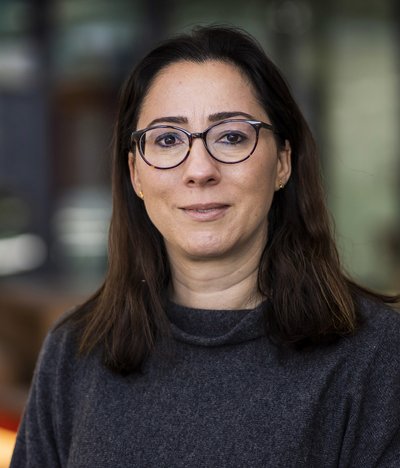
Dr. Salma Mohamed is a Lecturer in Cyber Security and Networks at Glasgow Caledonian University. She maintains an active research profile with publications spanning from 2011 to 2025, demonstrating expertise in both optical communications and cybersecurity domains. Her research interests include: Cyber Security and Network Security Orthogonal Frequency Division Multiplexing (OFDM) systems Optical Wireless Communications Machine Learning applications for security Free Space Optical Communications MIMO systems and atmospheric turbulence effects Dr. Mohamed's publication history reveals an evolution from optical communication systems (2011-2016) toward cybersecurity applications (2025), showing how her foundation in signal processing has transitioned to address contemporary security challenges. Her fingerprint analysis confirms strong expertise in Orthogonal Frequency Division Multiplexing Systems (100%), ACO-OFDM (100%), and related optical communication technologies. She currently leads the "WIN_CYBER: Empowering Women in Cyber Security" project (2025-2026), which focuses on women's empowerment in cybersecurity with specific attention to Egypt. This initiative demonstrates her commitment to both technical research excellence and creating broader social impact within her field.
Patty Stabile is an Associate Professor in the Department of Electrical Engineering at Eindhoven University of Technology (TU/e), specializing in Indium Phosphide (InP) photonic integrated circuits for next-generation optical networks and computing systems. She is affiliated with the Electro-Optical Communication group and EAISI High Tech Systems. MSc in Electrical Engineering (2004) from Politecnico di Bari PhD in Nanoscience (2008) from National Nanotechnology Laboratory, Lecce Her research focuses on integrating electronics and photonics for ultra-high-speed data routing, leveraging optical parallelism inspired by brain architecture. She also explores low-cost passive coupling concepts and novel materials like 2D materials to enhance photonic platforms. Key contributions include pioneering work on InP-based switch matrices and high-speed transceiver modules, with publications in Microsystems & Nanoengineering , IEEE Photonics Technology Letters , and Journal of Optical Communications and Networking . She received the Early Career Women in Photonics – Special Recognition in 2016. Active in academic communities, Patty serves on the IEEE Photonics Benelux Chapter board, is a member of the TU/e Young Academy of Engineering, and contributes to educational programs in automotive dynamics and brain-inspired optical computation.
ZGHAL Mourad is a Researcher-Lecturer at CESI LINEACT, holding an HDR (2008) from Sup’Com, Carthage University and a PhD in Electrical Engineering (2000) from University Tunis Manar. He specializes in Optimization, IoT, Sensors, and Smart Healthy Cities , with a strong focus on Photonic Crystal Fibers and Nonlinear Optics . Education: HDR in Engineering (2008), Sup’Com, Carthage University PhD in Electrical Engineering (2000), University Tunis Manar Engineering Degree in Telecommunications (1995), Sup’Com, Carthage University Research Interests: Mourad’s work bridges IoT sensor networks with optical communication systems . He pioneers mid-infrared supercontinuum generation in chalcogenide fibers and explores optical mode multiplexing for high-speed communications. His recent work integrates federated learning for intrusion detection in smart grids and optimizes photovoltaic energy systems for building decarbonization . Publications Trends: His 2023–2025 work emphasizes AI-driven energy management , cybersecurity for IoT , and federated learning frameworks . Earlier contributions (2016–2019) focused on nonlinear optical effects in photonic fibers and high-bit-rate networks . Awards: Elected Vice-Präsident of the International Commission for Optics Fellow Optica (ex OSA) and SPIE Associate scientist at ICTP (UNESCO Category 1 Institute) Advising & Grants: Supervised 9 PhD students (e.g., Z. MONLA’s work on BIM/VR in building maintenance). Active member of the LINEACT Scientific Council and CTI Commission des Titres d’Ingénieurs. Labs & Teams: Leads the Engineering and Numerical Tools research team at CESI LINEACT. Collaborates with IMT Télécom SudParis as an Adjunct Professor.
Gerhard R. Olbrich is a Research Professor and Director of Research at the Institute of High Frequency Engineering, Technische Universität München. He holds a Dipl.-Ing. (1974) and Dr.-Ing. (1979) in electrical engineering from TUM. His career includes roles as Assistant Professor (1975–1985) and leadership at Work Microwave GmbH (1986–1988). Current research focuses on RF/microwave measurement techniques, device modeling (active/passive), and low-phase-noise oscillators up to 110 GHz. He contributes to IEEE and ITG, and has pioneered advancements in SiGe HBT oscillators and microwave measurement systems. Education: Dr.-Ing., Electrical Engineering, Technische Universität München (1979) Dipl.-Ing., Electrical Engineering, Technische Universität München (1974) Research interests span microwave measurement methodologies, oscillator design, noise modeling, and integrated circuits. Notable achievements include the EEEfCOM Innovation Preis 2003 for a silicon Schottky diode demultiplexer. His work bridges academic and industrial applications, with contributions to high-frequency communication systems and material inspection via microwave techniques.
Martina Cardone is an Associate Professor in the Department of Electrical and Computer Engineering at the University of Minnesota, Twin Cities, leading the Cardone Research Group from her office in Keller Hall. Her work bridges theoretical frameworks with practical engineering solutions in next-generation communication systems. Her research focuses on developing fundamental theoretical frameworks and computationally feasible techniques for real-world problems. Primary areas include information theory foundations for wireless communications (particularly 5G/mmWave networks), network security protocols, privacy-preserving data publishing, distributed caching architectures, and optimization of network coding algorithms. She investigates high-data-rate transmission schemes, low-complexity scheduling for relay networks, and vulnerability mitigation strategies. Recent publications reveal strong thematic trends in mmWave network optimization for ultra-reliable low-latency communication, information-theoretic bounds in estimation theory, and secure distributed computing under adversarial conditions. Her work consistently connects theoretical limits with implementable solutions for emerging communication paradigms. Scientific Awards: NSF CAREER Award Professor Cardone directs multiple NSF-funded research initiatives including the CAREER project on secure mmWave communications, RINGS for network reliability, and projects on half-duplex wireless scheduling and privacy-preserving distributed computing. She actively mentors graduate students and recruits new researchers through her Cardone Research Group, emphasizing both theoretical depth and practical implementation. The Cardone Research Group operates at the intersection of information theory and network engineering, with current projects targeting mmWave reliability, secure communication frameworks, and distributed computing architectures that withstand adversarial attacks while maintaining privacy guarantees.
Marco Lanuzza is an Associate Professor in the scientific disciplinary sector ING-INF/01-Electronics at the Department of Computer Engineering, Modeling, Electronics, and Systems (DIMES) at the University of Calabria. He obtained his degree and Ph.D. in Electronic Engineering from the "Mediterranea" University of Reggio Calabria in 2000 and 2005, respectively, and has taught at the University of Calabria and other institutions since 2005-06. He holds the National Scientific Qualification for Full Professor in Electronics (2019) and is a Senior Member of IEEE (2016). Education: Electronic Engineering (110/110), Ph.D. in Electronic Engineering Research Focus: Low-power/high-speed CMOS circuits, reconfigurable circuits, nanotechnology optimization Editorial Roles: Associate Editor for Elsevier's 'Integration, the VLSI Journal' and Wiley's 'International Journal of Circuit Theory and Applications' His research spans circuit design, nanotechnology validation, and applications in signal processing and IoT. Recent publications highlight innovations in content-addressable memory, PUF architectures, and STT-MRAM for in-memory computing. Key subfields include energy-efficient memory systems, hardware security, and cryogenic electronics. Scientific Awards: Senior Member of IEEE (2016) National Scientific Qualification for Full Professor (09/E3 - Electronics, 2019) Associate Editor for two major journals Marco Lanuzza contributes extensively to international conferences as Program Chair and TPC Member. He is part of the Nanoelettronica e Microsistemi research group at DIMES, focusing on multidisciplinary electronic systems and sensor design.
Prof. Dr.-Ing. habil. Volker Kühn serves as Professor and Head of the Institute of Communications Engineering at the University of Rostock within the Faculty of Computer Science and Electrical Engineering. He concurrently holds the position of Vice Dean of the Faculty while directing academic operations as Chairman of both the Electrical Engineering and Medical Information Technology Examination Boards. His research integrates wireless communications theory with biomedical applications, specializing in spatial modulation techniques, information bottleneck optimization, and electrical impedance tomography signal processing. Current work focuses on machine learning-enhanced physiological monitoring systems and distributed compression algorithms for sensor networks, with significant contributions to bias-free spectral estimation from irregularly sampled data. Analysis of his 2021-2025 publications reveals three dominant research thrusts: (1) neural network applications for medical signal processing, (2) information-theoretic optimization of communication protocols, and (3) advanced spectral estimation methods for biomedical and sensor data. This interdisciplinary approach bridges communications engineering with healthcare technology development. Prof. Kühn actively mentors students as Study Advisor for Electrical Engineering and Academic Advisor for Medical Information Technology. His leadership extends to the ITG Technical Committee 5.1 on Information and Systems Theory and IEEE societies. The Institute of Communications Engineering under his direction maintains specialized laboratories for wireless communications testing, medical signal acquisition, and MIMO system prototyping, supporting both fundamental research and industry collaboration projects in 5G/6G technologies and healthcare IoT.
Benoît Geller is a Full Professor at IP Paris (Institut Polytechnique Paris)-ENSTA in the Computer Science and Systems Engineering Unit (U2IS). He heads the Specialized Master on autonomous systems for Defense (ILEMs) and has extensive experience in wireless communications research, particularly focusing on security and safety for defense applications. Accreditation to Lead Research (HDR) in Information Sciences from University of Paris (2004) PhD in wireless communication networks from INPG (1992) Engineering Master in Telecommunications from ENSERB (1988) Professor Geller's research focuses on wireless network security, with expertise in protecting communications against environmental interference and intentional attacks. His work spans from theoretical foundations in information theory and coding to practical applications in underwater acoustic channels, tactical communications, and IoT networks. He has developed innovative approaches using finite fields algebraic error correcting codes, turbo and LDPC codes, cryptography, and Bayesian inference techniques. His publication record shows a consistent focus on underwater communication systems, signal processing techniques, and security mechanisms. The research demonstrates a progression from theoretical foundations to practical implementations, with recent work emphasizing energy efficiency and resistance to jamming in tactical communication scenarios. His work has significant applications for the French Ministry of Defense. Knight of Academic Palms (2018) IEEE Senior member (2010) French Navy Reserve Superior Officer (2006) Professor Geller has led numerous European projects including Mast AIDA, Medea+ INCA, Medea+ MIDAS, Newcom++, Horizon 2020 Bridges, and MarTERA Bioglider. With approximately 100 international publications and 4 pending international patents, his research has made significant contributions to the field of secure wireless communications. He previously served as head of the Multisensor and Information Team at SATIE lab (Ecole Normale Superieure Paris Saclay) before joining ENSTA Paris in 2007-08.
Dr. N. Anand is an Assistant Professor at the School of Earth, Environmental and Sustainability Sciences, Indian Institute of Science Education and Research Thiruvananthapuram. His research focuses on atmospheric optics, aerosols, optical turbulence, and Free-Space Optical (FSO) communication systems. Ph.D. (2015–2020): Centre for Atmospheric and Oceanic Sciences, Indian Institute of Science, Bengaluru M.Tech (2012–2014): Optoelectronics and Optical Communication, University of Kerala B.Tech (2008–2012): Electronics and Communication Engineering, Government Engineering College, University of Kerala His research explores how atmospheric boundary layer dynamics and aerosol distribution affect optical communication systems, with a focus on: Aerosol-induced optical turbulence Radiative effects of black carbon Free-space optical communication impairment Climate change implications for atmospheric optics Stratospheric impacts of bushfire aerosols Multi-platform aerosol monitoring Publications highlight trends in aerosol-climate-communication interactions, with applications in: Radiative transfer modeling Black carbon assimilation Optical turbulence statistics Upper tropospheric aerosol measurements Polar stratospheric cloud enhancement Laser communication through the atmosphere Scientific awards include: DST INSPIRE Faculty Fellowship (2020) Best PhD Thesis Award from Optical Society of India (2021) Excellence in Teaching Award at IISER TVM (2023, 2024) SPIE Student Travel Grant (2019) Young Scientist Travel Grant (SERB, 2019) Teaching includes courses such as Introduction to Atmospheric Science , Atmospheric Radiation , and Climate Change Mitigation . Students include Devika (PhD), Ravikiran (PhD at Max Planck Institute), and others pursuing advanced studies in physics, data science, and earth systems.
Charbel ABDEL NOUR is a Research Teacher in the Department of Mathematical and Electrical Engineering (MEE) at IMT Atlantique, a leading French engineering school. His work focuses on the intersection of wireless communications, signal processing, and error correction coding. Based in Brest, France, he actively contributes to research in next-generation communication systems. Dr. ABDEL NOUR's research interests span wireless communications, 5G/6G technologies, Internet of Things applications, error correction coding, and massive MIMO systems. His work addresses critical challenges in modern communication systems including high-throughput requirements, low-latency constraints, and efficient spectrum utilization. His research demonstrates strong theoretical foundations with practical implementation considerations, often bridging the gap between algorithm design and hardware implementation. His recent publications (2023-2025) reveal a consistent focus on improving communication system performance through innovative coding techniques, particularly in turbo decoding architectures, FBMC systems, and spectrum access methods for IoT applications. His work shows progression from theoretical analysis to practical implementation, with several publications addressing both algorithmic improvements and hardware considerations. Multiple publications on turbo decoding architectures with performance improvements Research on FBMC/OQAM systems as alternatives to OFDM for 5G/6G Work on spectrum access techniques for massive IoT connectivity Studies on minimum distance estimation for error-correcting codes Application of machine learning techniques to communication problems Dr. ABDEL NOUR collaborates extensively with researchers across multiple institutions, including CNRS, INSA Rennes, and other French research organizations. His work often receives funding from significant national initiatives like the Beyond5G project and France Relance economic recovery plan. His research has practical applications in next-generation wireless systems, with potential impact on future communication standards.
Yuqing Jiao is an Associate Professor at Eindhoven University of Technology's Institute for Photonic Integration, where he leads research on nanophotonic integrated circuits. Holding dual PhDs from TU/e and Zhejiang University, his work focuses on manufacturable photonic technologies for applications in optical interconnects, terahertz photonics, and optical sensing. Research emphasizes advanced photonic integration platforms using silicon/silica and InP materials, with expertise spanning electromagnetic theory, semiconductor fabrication (10+ years cleanroom experience), and photonics/electronics co-design. Current projects include developing nanophotonic process design kits (PDKs) and exploring light-matter interactions in nanostructures. Publications feature innovations in InP membrane devices, grating couplers, and heterogeneous integration techniques. Recent work demonstrates breakthroughs in thermal management, modulator design, and tunable laser integration using deep-UV lithography techniques.
Tobias Prinz is a Researcher at the Institute for Communications Engineering, Technical University of Munich (TUM), where he has been a Research Assistant since July 2016. He holds a Master of Science (2016) and Bachelor of Science (2013) in Electrical Engineering from TUM. His research focuses on advanced communication systems, including neural network-based interference cancellation, optical fiber communications, polar codes, and modulation techniques. He has been awarded the Prof. Dr. Ralf Kötter Memorial Award (2018) and the Heinrich Hecht Award (2019). Prinz has contributed to teaching courses such as 'Nachrichtentechnik 2', 'Machine Learning for Communications', and laboratory courses in telecommunications. His work spans theoretical and experimental studies in communications engineering, with a strong emphasis on practical applications of coding theory and signal processing. His publications address challenges in bandlimited channels, direct detection systems, and asymmetric channel capacity using polar codes. Recent research includes neural network-based successive interference cancellation and PAM-6 modulation optimization for fiber-optic links.
Franz Lampel is a Research Fellow at Eindhoven University of Technology's Signal Processing Systems department. He holds a B.Sc. (2015), M.Sc. (2018) from Graz University of Technology, and a Ph.D. (2024) from TU/e. His research focuses on signal processing for joint communication and sensing, waveform design, and radar-communication integration, particularly in automotive applications. He contributes to projects like IT-JCAS (2024–2028) and DIGI-OPT (2018–2026). Education: Bachelor's in Electrical Engineering, Graz University of Technology (2012–2015) Master's in Electrical Engineering, Graz University of Technology (2015–2018) Ph.D. in Joint Radar and Communication Techniques for Automotive Applications, TU/e (2024) Research interests include waveform design for radar-communication coexistence, dispersive channel equalization (e.g., OTFS modulation via Zak transforms), and FMCW radar signal processing. His work bridges theoretical signal processing with practical automotive and communication systems. Recent publications address OTFS equalization, radar dispersion compensation, and OFDM waveform optimization. He collaborates on projects like the Integrated Cooperative Automated Vehicles initiative (2016–2021), focusing on automotive radar systems. His lab affiliations include the Information and Communication Theory Lab at TU/e.
Yaniv Plan is an Associate Professor of Mathematics at the University of British Columbia. His research focuses on applied probability, compressive sensing, matrix completion, and mathematical foundations of machine learning. He co-organizes the interdisciplinary group Mathematics of Information, Learning, and Data (MILD). His work bridges high-dimensional probability with applications in signal processing and data science. He teaches advanced courses such as Probability in High Dimensions and Compressed Sensing , emphasizing theoretical foundations like concentration inequalities, random matrix theory, and optimization. His research has led to advancements in 1-bit compressed sensing, matrix completion, and robust recovery algorithms. Notably, he received the NIPS 2018 Best Paper Award for contributions to learning Gaussian mixtures via sample compression. Plan’s publications address topics like sub-Gaussian matrices, weighted matrix completion, and non-smooth stochastic gradient descent. His work often combines rigorous mathematical analysis with practical applications in compressed sensing and sparse recovery. He collaborates widely, with co-authors including Roman Vershynin, Emmanuel Candès, and Mary Wootters. His research has been supported by grants exploring compressed sensing, high-dimensional data, and algorithmic robustness.
Ibrahim Altunbas is a Professor in the Department of Electronics and Communication Engineering at Istanbul Technical University (ITU), College of Engineering. He is actively involved in research on next-generation wireless communication systems, with a strong focus on satellite networks, terahertz and millimeter-wave communications, non-orthogonal multiple access (NOMA), spatial modulation, and hybrid RF/FSO systems. His work integrates theoretical modeling with practical design for high-efficiency and reliable wireless links. His research interests span a wide range of advanced topics in telecommunications, including antenna selection, full-duplex communication, index modulation for drone networks, and error performance analysis in fading environments. The fingerprint of his research highlights key areas such as Error Performance , Fading Channels , Antenna Selection , Outage Probability , and Transmit Antenna Selection , reflecting his deep expertise in physical layer communication design. The recent trend in his publications shows a strong emphasis on satellite-based communication using emerging technologies like Rate-Splitting Multiple Access (RSMA), NOMA, and HAPS-assisted networks. His work frequently addresses challenges in power allocation, decoding order optimization, I/Q imbalance, and pointing errors in high-frequency systems. These contributions demonstrate a consistent effort toward enhancing spectral efficiency, energy efficiency, and reliability in future wireless networks. Episode-Based Broadcast Performance Award (2021) ITU BAP International Scientific Cooperation Development Support (2015) ITU Rectorate Scholarship Program (2001) Project Performance Award (2017) Vehbi Koç Foundation Scholarship (1997) As Principal Investigator (PI), he has led multiple BAP-funded research projects at ITU, including studies on turbo and LDPC coding in THz channels, NOMA for satellite networks, index modulation for drone communications, and multi-hop spatial modulation systems. These projects highlight his leadership in driving innovation in wireless technologies. While specific grant amounts are not listed, the volume and continuity of funded projects indicate sustained research support. He is currently supervising 29 theses, reflecting his active role in mentoring graduate students in cutting-edge communication research. His research is conducted within the framework of ITU’s Department of Electronics and Communication Engineering, where he collaborates with students and researchers on projects involving simulation, performance analysis, and system design for future wireless networks. His lab focuses on physical layer innovations, particularly in multi-antenna systems, satellite-HAPS integration, and novel modulation techniques.