University of California, San FranciscoUnited States
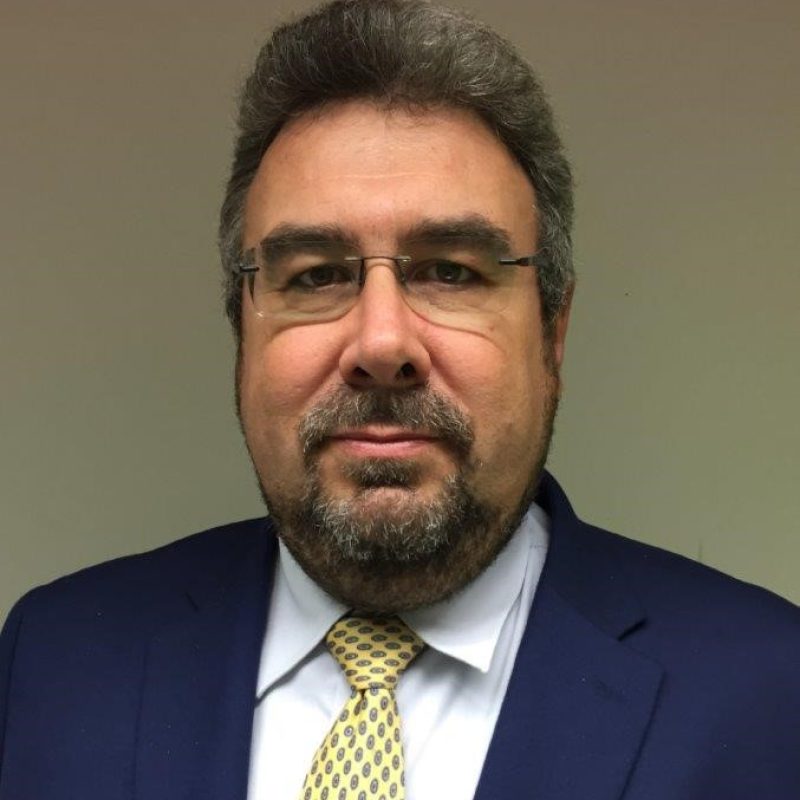
Mekhail Anwar, MD, PhD is an Associate Professor at the University of California, San Francisco (UCSF) in the Department of Radiation Oncology. His work bridges bioengineering and integrated circuit design to develop novel solutions for cancer treatment , particularly in precision radiotherapy . Dr. Anwar is a core member of the UC Berkeley and UCSF Bioengineering group , combining expertise from both institutions. Dr. Anwar’s research focuses on miniaturized radiation detection , intraoperative imaging , and label-free biosensing using computer chip technology . His innovations include millimeter-scale dosimeters , chip-scale imagers , and ultrasonic backscatter implants for real-time monitoring in oncology. NIH DP2 New Innovator Award (2020) AACR-Novocure Career Development Award (2019) NIH Trailblazer Award (2019) New Directions in Prostate Cancer Research Award (2018) His lab ( Anwar Lab ) develops implantable sensors , wireless imaging systems , and single-cell characterization tools to enhance cancer diagnostics and treatment precision.
Dr. Jeongwon Park is a Professor in the Department of Electrical and Biomedical Engineering at the University of Nevada, Reno. His research spans multiple disciplines including nanoelectronics, materials science, and biomedical engineering, with a focus on developing novel electronic devices and sensors for various applications. Dr. Park's research interests include nano-electronics, micro/nanodevice fabrication, flexible hybrid electronics, low-dimensional nanomaterials (1D/2D CNT, graphene, MoS2, etc), semiconductor, wide-bandgap materials, wearable devices and sensors, bio-sensors, energy materials and devices, MEMS/NEMS, and materials science. His work is highly interdisciplinary, combining electrical and optical technologies to investigate complex topics in materials physics and devices. He has three primary research focus areas: electronic materials research for 7nm technology node and beyond, novel electronic device applications with nano-scale 2D materials, and GaN electronics for power conversion applications. His recent publications (2022) demonstrate a strong emphasis on 2D materials, van der Waals heterostructures, and their applications in electronics, sensing, and energy. He has made significant contributions to understanding the properties of materials like boron nitride, silicon carbide, and transition metal dichalcogenides, as well as developing novel devices such as tunnel field-effect transistors, biosensors, and deep brain stimulation technologies. His work on Parkinson's disease combines engineering principles with medical applications to develop better diagnostic and therapeutic approaches. Dr. Park teaches undergraduate courses including Circuit Theory I & II and Fundamentals of Semiconductor Devices, and graduate courses including Nanoelectronics and Nanomaterials. His lab actively recruits motivated undergraduate and graduate students interested in cutting-edge research areas spanning nano-electronics, micro/nanodevice fabrication, flexible hybrid electronics, low-dimensional nanomaterials, semiconductor materials, wearable devices and sensors, bio-sensors, energy materials and devices, MEMS/NEMS, and materials science.
Professor Brian Rodriguez is a full-time faculty member in the School of Physics at University College Dublin, based at the Conway Institute in Belfield, Dublin 4. His research bridges nanoscale materials physics and biomedical applications, with expertise in scanning probe microscopy techniques. He maintains an active teaching schedule across multiple modules and can be contacted via brian.rodriguez@ucd.ie or phone at 01 716 6744. His academic credentials include: BS from University of North Carolina MS from North Carolina State University, USA PhD in Physics from North Carolina State University, USA (2003) Professional Certificate in University Teaching & Learning from University College Dublin Rodriguez specializes in piezoresponse force microscopy (PFM) and atomic force microscopy (AFM) for characterizing ferroelectric materials, polar nitride semiconductors, and biological systems. His work has expanded into bio-inspired nanomaterials development, including sustainable peptide semiconductors for sensing, amorphous alloys for antibacterial implants, and electrocatalysts for green hydrogen. He actively integrates machine learning with AFM data to advance cancer diagnostics, emphasizing translational applications in biomedicine and energy. Recent publications (2024-2025) demonstrate interdisciplinary momentum toward sustainable nanomaterials for energy conversion and biomedical sensing. Key trends include seawater electrolysis catalysts using MBenes/borides, metal-free SERS platforms with peptide semiconductors, and electric-field-activated pathogen detection. His group pioneers techniques like fluid-phase 3D printing for hydrogel patterning and high-voltage KPFM adaptations, with consistent focus on fundamental electromechanical property characterization. Award highlights include: UCD College of Science Women in Science Mentoring Award (2024) Alexander von Humboldt Fellowship (2007) RMIT Foundation International Research Exchange Fellowship (2010) Two UT Battelle Team Awards (2006) Rodriguez coordinates core modules including Bio-inspired Technologies (2016-2025), AFM for Bionano (2016-2025), and Nanomechanics (2017-2025), using active-learning pedagogies. His research is funded through Science Foundation Ireland's GROW Supplement (2017), the OBRSS Research Support Scheme (2016-2023), and the Resolve-NP project grant (2023-2025) targeting lipid nanomedicine characterization at single-particle resolution. He leads the NanoFunction research group (nanofunction.org) within UCD's Conway Institute, focusing on nanoscale functional materials. Current projects involve peptide-based sensors, antimicrobial coatings, and electrocatalyst engineering, supported by collaborations with Zhang, Bao, and Brennan on the Resolve-NP grant. Rodriguez also contributes to SIMUFER (Single- and Multiphase Ferroics with Restricted Geometries) and maintains active professional society memberships.
Dr. Nick Reynolds is a Vice Chancellor’s Senior Research Fellow at RMIT University's School of Science , focusing on interdisciplinary research in self-assembled nanomaterials. His work spans tissue engineering, regenerative medicine, biosensing, and understanding amyloid-related disease mechanisms. He collaborates with MedTech industry partners, clinicians, and government agencies to translate fundamental research into commercial therapies and devices, including partnerships with CELLINK for bioprinting applications. PhD in Chemistry & Biology (University of Sheffield, 2009) Previous roles at University of Zurich, CSIRO, Swinburne University, La Trobe University Research interests include: Self-Assembling Biomolecules Protein Aggregation in Viral Infections (e.g., SARS-CoV-2, influenza) Bioprintable Smart Bioinks Piezoelectric and Photonic Peptide Materials 3D Cell Culture Systems Recent publications highlight his expertise in: Engineering cross-α amyloid structures for piezoelectric applications Developing self-healing bioinks with tunable stiffness Investigating SARS-CoV-2 amyloid polymorphs and neurotoxicity Designing mechano-responsive biopolymers for cell recovery Scientific awards include: Swiss National Science Foundation Fellow (2012–2015) Nicholas Hoogenraad Fellow at La Trobe University (2019–2025) Dr. Reynolds leads an ARC Discovery Project (DP250101215) on viral protein aggregation and contributes to the ARC Research Hub MOBIUS (IH240100013) as a co-chief investigator. His lab explores applications in cartilage regeneration, neural tissue engineering, and point-of-use biosensor development.
Thomas Nelson Jackson is a Professor in the Department of Electrical Engineering at Pennsylvania State University's College of Engineering. He holds the Robert E. Kirby Chair and is affiliated with the Materials Research Institute (MRI). His research spans materials science, semiconductor devices, and biomedical engineering with a focus on thin-film transistors, ferroelectric materials, and neural interfaces. His recent work includes advancements in boron-doped aluminum nitride ferroelectric transistors (2024), GaN amplifiers for extreme temperatures (2025), and fully wireless flexible neural implants (NCS-FO grant, 2022-2026). Key research areas include: Thin-film transistor materials (ZnO, GaAs) Ferroelectric and piezoelectric devices Biophotonic sensors using microtubules Self-powered integrated sensor systems (ASSIST Center) High-resolution neural stimulation/recording arrays With 351 research outputs and 21,251 citations, Jackson's work contributes to UN Sustainable Development Goals through: Advanced biomedical implants Energy-efficient sensor systems Flexible electronics for health monitoring Current projects funded by the National Science Foundation include: 2D crystal deposition (EFRI 2-DARE, 2014-2020) Self-powered sensor integration (ASSIST Center, 2012-2024) Wireless neural implants (NCS-FO, 2022-2026)
Virginia Polytechnic Institute and State UniversityUnited States
Ryan Senger serves as Associate Professor in the Department of Biological Systems Engineering at Virginia Tech's College of Engineering, with courtesy appointments in Chemical Engineering (Virginia Tech) and Surgery (Virginia Commonwealth University School of Medicine). His research bridges metabolic engineering, synthetic biology, and biomedical diagnostics through innovative applications of Raman spectroscopy. Education: Ph.D., Chemical Engineering, Colorado State University, 2005 M.S., Chemical Engineering, Colorado State University, 2002 B.S., Chemistry, Millikin University, 1999 Senger's research focuses on developing bio-based technologies for sustainable chemical production, disease detection through urine analysis, and synthetic biology containment. His lab pioneers Raman spectroscopy-based chemometric urinalysis (Rametrix) for detecting diseases including bladder cancer, chronic kidney disease, Lyme disease, and Long COVID. Current projects involve bioelectrical system engineering in microbes, electron harvesting from waste biomass, and secure synthetic genetic material containment. His work integrates AI/ML for spectral analysis and genome-scale metabolic modeling. His recent publications demonstrate strong trends in veterinary diagnostics (canine cancer detection), neurological disease monitoring, and renal dysfunction profiling using Raman chemometrics. The research consistently applies spectral fingerprinting to translate complex biological data into clinical diagnostic tools. Awards: 2022-24: Celebrating Innovation Recognition (x4) 2023: Dean’s List of Instructors 2016: VT Knowledgeworks Innovation Challenge Winner 2009: The Gaden Award for Metabolic Engineering Senger actively mentors students through laboratory research and teaches courses including Thermodynamics of Biological Systems, Metabolic Engineering, and Bio-Raman Chemometrics. His funding portfolio includes NSF grants for metabolic modeling workshops and commercial projects with Rametrix Technologies (where he serves as CTO), focusing on dialysis patient monitoring, renal disease management, and aquaculture feed development. He directs the Rametrix Technologies research team that develops urine-based diagnostic devices and spectral analysis software, maintaining strong industry-academic partnerships for technology commercialization.
Dr. Antonio J. Paleo is a Researcher at the Centre for Textile Science and Technology (2C2T) within the School of Engineering, University of Minho (since 2021). His work focuses on smart polymers/textiles for energy harvesting/storage , with emphasis on carbon nanomaterials and transition metal oxides in textile electrodes for electrochemical devices. Education: PhD in Polymer Science (University of A Coruña, 2012; Mención Doctor Internacional , Cum Laude ), DEA in Polymer Science (University of A Coruña, 2005), Bachelor in Physics (Universidad Alfonso X El Sabio, 2002). His research explores thermoelectric properties of polymer-carbon nanofiber composites, dielectric spectroscopy , and flexible biosensors . Recent projects include WP3-EnerTex (€500,000 funding) for photovoltaic textile development. Collaborations span CNR-ITAE (Italy) and ICB-CSIC (Spain) . Selected publications highlight trends in textile-based energy systems and conductive composites . He has supervised 1 PhD student , 2 master’s students , and co-supervised 1 bachelor’s project . Awards include the 2022 Scientific Publication Merit Diploma .
Rajeev Ahuja is a Professor at the Department of Physics and Astronomy at Uppsala University , specializing in Materials Theory . His research spans computational materials science with a focus on superconductivity , hydrogen storage , and 2D materials for energy and electronic applications. Current affiliations: Uppsala University Key research areas: Condensed matter physics, thermoelectrics, battery materials, and photocatalysis His recent work explores topological states in 2D materials , sensor design using boron rings , and adsorption behaviors of MXenes for biomedical and environmental applications. Collaborative studies with international teams have produced high-impact publications on superconducting hydrides and strain-engineered nanomaterials . Emerging trends in his publications reveal increasing emphasis on twisted heterostructures , transition metal oxides , and environmental remediation via boron nitride and graphene -based systems. Research also extends to planetary material physics (Jupiter/Saturn interiors) and biocompatible nanomaterials .
Steve Cho is a Teaching Professor at the Department of Technology, Entrepreneurship and Management within The Polytechnic School at Arizona State University. He is also affiliated with the Barrett's Honor Faculty and the Herberger Institute for Design and the Arts. Education: Ph.D. in Electrical Engineering (University of Michigan, 1991), M.S. in Electrical Engineering (Ohio State University, 1987), B.S. in Electrical Engineering (MIT, 1985), and M.B.A. (UCLA, 2001). His research spans technology entrepreneurship , digital marketing , and MEMS , with a focus on IoT , drug delivery , and energy harvesting . Publications reflect interdisciplinary work in biomedical engineering , semiconductor packaging , and microfluidics . While not explicitly named, his scientific awards include 10 unspecified honors. He has taught courses like Technology Entrepreneurship and Data-Driven Decision Making and holds 31 patents. Industry experience includes roles at NCR Corp, Draper Laboratory, and Candescent Technologies, with titles ranging from Process Development Engineer to COO/CTO .
Dr. Mohammad A. Ahad is an Associate Professor and Interim Department Chair in Electrical & Computer Engineering at Georgia Southern University, where he has been faculty since 2011. His research focuses on bioinstrumentation, biosensors, and biomedical signal processing, particularly in Electrical Impedance Myography (EIM) for non-invasive medical diagnostics. Education: Ph.D. Electrical and Computer Engineering, University of Tennessee, Knoxville (2007) M.S. Electrical and Computer Engineering, University of Tennessee, Knoxville (2002) B.S. Electrical and Electronic Engineering, Bangladesh University of Engineering and Technology (1998) Research Focus: Dr. Ahad's work spans biomedical instrumentation development, FPGA-based system design, and computational modeling of biological systems. His EIM research enables novel diagnostic approaches for muscle pathologies and cancer detection through finite element analysis and electrode optimization. Grant Leadership: Secured competitive funding as PI for multiple NIH and NSF projects focusing on human-robot interfaces, non-invasive instrumentation, and early cancer detection techniques using impedance methods. Teaching: Specializes in hands-on engineering education including digital design with DE2 boards, embedded systems programming, and signal processing laboratories.
Prof. Dr. Andreas Hennig is a Professor of Medical Sensor Systems at the Institute of Measurement and Sensor Technology, Ruhr West University of Applied Sciences since 2022. He serves as Program Director for the Master's program in Sustainable Health Technologies and previously held leadership roles at Fraunhofer IMS from 2006-2022 as Group Leader for Wireless Sensorics and Program Manager for Sustainable Production. He earned his Master of Science in Electrical Engineering from Bergische Universität Wuppertal (2001-2006) and completed his PhD at the University of Duisburg-Essen (2006-2009) on optimizing transmission methods for implantable telemetry sensor systems. His research pioneers non-contact sensing through inductive techniques, quantum magnetometry, and machine learning for medical diagnostics (neonatal vital monitoring, biomagnetic sensing), Industry 4.0 applications (predictive maintenance, sustainable production), and Smart City infrastructure. Current projects focus on quantum sensors for electromagnetic tracking and inductive methods for industrial process monitoring in steel manufacturing. Publications reveal an evolution from biomedical wireless sensors (2010-2015) toward industrial quantum sensing (2018-2024), with recent work emphasizing microscale electromagnetic tracking and magnetic property evaluation in hot-rolling mills. Prof. Hennig supervises theses on vital parameter monitoring for newborns, quantum biomagnetic sensing, and sustainable industrial process monitoring. He has secured funding for projects including SmartNeonatalCare, GenSATIon-EDGE, INNERVATE, and FabLab collaborations (QuFabLab, QuMiniLabs), demonstrating strong grant acquisition capabilities. He directs the LASIMM research laboratory equipped for PCB prototyping (reflow/SMD assembly), 3D printing, and advanced measurement (Impedance/Network Analyzers). His team comprises six scientific staff members including Anika Nietert, Christine Bremer, and Thomas Thuilot, supporting both academic research and student projects.
Rabia Tugce Yazicigil is Assistant Professor of Electrical and Computer Engineering and Biomedical Engineering at Boston University, leading the WISE-Circuits Laboratory. Her research develops energy-efficient microchips and living bioelectronic sensors for human health, environmental monitoring, and sustainable manufacturing challenges through interdisciplinary collaboration. Undergraduate: Sabanci University, Istanbul, Turkey Ph.D.: (Institution not specified in source) Her work pioneers 'Cyber-Secure Biological Systems'—integrating genetically engineered organisms with ultra-low-power microchips for real-time molecular sensing in harsh environments like the human gut and wastewater. Key innovations include battery-free devices harvesting environmental energy, with applications in disease diagnosis, closed-loop therapy, and sustainable biomanufacturing. Current projects span ingestible gut sensors and progesterone biosensors for women's fertility tracking. Professor Yazicigil mentors students while collaborating with MIT, Capra Biosciences, and BioSens8. Partnerships enable real-world validation through pig-model testing, wastewater facility deployments, and bioreactor trials for industrial scaling. The WISE-Circuits Laboratory unites electrical engineers and biologists to advance end-to-end bioelectronic systems, focusing on women's health technology expansion and sustainable manufacturing solutions.
Dr. Peter K Petrov serves as Principal Scientist in the Department of Materials and Royce Technology Platform Lead for Diverse thin film device manufacture at the Henry Royce Institute. With over 25 years of specialized expertise in thin film deposition and nanostructuring, he directs a high-impact research program focused on advanced functional materials. His multidisciplinary research spans: Plasmonic materials for optical applications Nano enclosures enhancing vaccine stability and delivery Engineered antimicrobial surfaces for medical devices Energy harvesting systems and biosensing platforms This work bridges fundamental materials science with critical applications in healthcare and sustainable technology. Dr. Petrov's scholarly contributions include over 100 publications in high-impact journals and five granted patents, two commercialized through Ericsson AB. His research group comprises 3 Postdoctoral Research Associates, 5 PhD students, and 3 MSc students, operating within the collaborative framework of the Henry Royce Institute's national materials research infrastructure.
Alvo Aabloo is a Full Professor at the University of Tartu's Institute of Technology, where he leads the Intelligent Materials and Systems Laboratory (IMS Lab). His affiliations include a postdoctoral position at Uppsala University (1995–1996) and ongoing roles at the University of Tartu since 2005. The IMS Lab, accessible via www.ims.ut.ee , specializes in electroactive polymers, biomimetic robotics, and sustainable materials. His research integrates Advanced Materials , Nanotechnology , and Soft Robotics , with emphasis on: Biomimetic actuators (e.g., spider-leg exoskeletons, plant-inspired fluid transport) Ionic polymer-metal composites for precision manipulation Acoustic metamaterials for noise control Green sensors using bacterial cellulose and bio-derived ionic liquids Recent publications (2022–2025) reveal trends in: Robotics education tools (ROS2 web labs, 3D-printable robots) Programmable metamaterials for environmental applications Textile-based encoding and wearable compliance modulation He pioneers sustainable tech, such as all-printed micro-supercapacitors and biodegradable artificial muscles, while collaborating globally on projects spanning Italy, China, and Sweden.