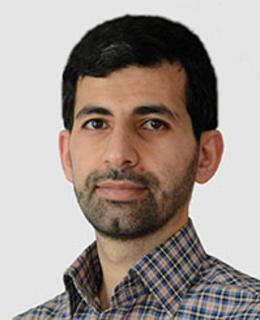
Dr. Joseph Wang is the Distinguished Professor of Nanoengineering and the SAIC Endowed Chair at UC San Diego. He leads the NBE Lab and directs the Center of Wearable Sensors and the Center for Mobile-health Systems. With over 50 researchers in his team, his work focuses on nanomachines, wearable sensors, electrochemistry, and analytical chemistry. His global citation ranking places him #13 in Chemistry and #31 in Materials Science, with an H-index of 217 and over 180,000 citations. He has been a Highly Cited Researcher since 2014 and ranks #4 in Nanoscience & Nanotechnology in the 2025 World Top 100 Scientists list. His research has led to groundbreaking innovations, including microrobots for lung cancer treatment, multiplexed microneedle sensors, and wearable devices for real-time health monitoring. He has been honored with prestigious awards such as the 2024 ACS Award in Analytical Chemistry, IEEE Sensors Council Award, and IUPAC Medal. He holds honorary doctorates from Comenius University and Charles University, and Woxsen University named its Chemistry Department after him. Key contributions include pioneering work in biohybrid microrobots, self-healing wearable devices, and sweat-based health monitoring systems. His lab’s work has been featured in Nature, Science, and The Economist. He co-authored influential books like Analytical Electrochemistry (4th ed.) and Nanomachines , and his research spans clinical applications, environmental sensing, and personalized medicine.
Indian Institute of Technology Hyderabad (IITH)India
Dr. Shiv Govind Singh is a Professor in the Department of Electrical Engineering at the Indian Institute of Technology Hyderabad (IITH). His research spans interdisciplinary areas at the intersection of Micro/Nanotechnology , Biomedical Devices , and Wireless Communications , with a focus on advanced electronics and sensing systems. Education: PhD (IIT Bombay, 2008), MTech (IIT Kanpur, 1999) Research Interests: Dr. Singh’s work emphasizes cutting-edge technologies such as 3D-ICs , Nano-Biosensors , RF MEMS , and Lab-on-Chip systems , alongside applications in Biomedical diagnostics , Energy Harvesting , and Semiconductor Device Modeling . Advising: He has supervised or is currently supervising 25+ PhD students across diverse topics in Microelectronics , Nanotechnology , and Healthcare Devices , including both current and graduated scholars.
Matteo Nardello is a researcher affiliated with the Department of Industrial Engineering at the University of Trento. His work focuses on embedded systems, IoT, and energy harvesting technologies for sustainable applications. Current academic affiliation: Department of Industrial Engineering, University of Trento Research interests: IoT, embedded systems, energy harvesting, machine learning, cyber-physical systems Contact: matteo.nardello@unitn.it His research integrates hardware-software co-design for batteryless IoT systems, with applications in smart agriculture, industrial monitoring, and autonomous vehicles. Recent work explores deep learning at the edge, energy-efficient sensor networks, and microbial fuel cells for self-powered devices. Key article trends highlight a focus on sustainable power solutions, wireless sensor networks, and machine learning optimization for constrained environments. He contributes to courses on embedded systems, IoT, and AI-powered industrial applications at the University of Trento.
Renny Edwin Fernandez is an Associate Professor in the Department of Engineering at Norfolk State University's College of Science, Engineering and Technology. His multidisciplinary research focuses on microsensing platforms for healthcare, pollution control, and agriculture applications. Education: PhD in Electrical Engineering (2010) from Indian Institute of Technology Madras His research integrates microfabrication, microfluidics, and machine learning to develop wearable biosensors, disposable electrodes, and IoT-enabled soil monitoring systems. Key trends in his recent publications include: Real-time health monitoring via flexible nanosensors Machine learning integration in agricultural IoT Plasma-aided printing of conductive nanomaterials Smart PPE systems with NFC technology Scientific Awards: Research Initiation Award (2020) for cognitive monitoring systems in extreme environments Dr. Fernandez mentors graduate and undergraduate researchers at NSU, with prior teaching experience at University of Indianapolis and Florida International University. He holds a patent for biosensor technology and has developed innovative solutions for: Salivary cortisol detection Soil nutrient analysis Cell viability assessment Smart irrigation systems
Dr. Ioannis Zeimpekis is an Associate Professor in the Department of Electronics and Computer Science at the University of Southampton. His research focuses on advanced materials for electronic and photonic applications, including chalcogenides, 2D materials, and phase-change materials. He leads a team developing wafer-scale processes for optoelectronics and energy storage solutions. Zeimpekis holds a PhD in microelectronic systems design from the University of Southampton (2012) and has over 16 years of nanofabrication experience. His work spans interdisciplinary fields such as photonics, material science, and MEMS technology. Key projects include the development of flexible thermoelectrics for wearable systems and scalable synthesis of MoS 2 heterostructures. Research Group Affiliations: Institute for Life Sciences, Sustainable Electronic Technologies, Silicon Photonics External Roles: Invited speaker at conferences on chalcogenide materials (2019) With over 60 publications, his recent work emphasizes low-loss phase-change materials and neuromorphic switching dynamics. He actively supervises multiple PhD students across disciplines like photonics, energy storage, and nanomaterials.
Prof. Dr. Gerald Urban is a distinguished Professor at the Institute for Microsystems Technology (IMTEK) within the Faculty of Engineering at the University of Freiburg, Germany. With over three decades of academic and research experience, he has established himself as a leading expert in biomedical microtechnology and sensor systems. His career spans prestigious institutions including the Vienna University of Technology and collaborations with major research centers worldwide. His educational journey includes: 1973: Graduated from Sigmund Freud Gymnasium in Vienna 1979: Completed studies in Technical Physics at Vienna University of Technology 1985: Earned Doctorate (Dr.-Ing.) with distinction (Summa cum Laude) from Vienna University of Technology 1994: Completed habilitation in Sensorics Prof. Urban's research focuses on the development and application of miniaturized integrated sensors for clinical and industrial applications. His work bridges the gap between fundamental materials science and practical medical devices, with particular emphasis on biomedical microtechnology , electrochemical biosensors , and organ-on-chip systems . His team has pioneered innovations in point-of-care diagnostics, therapeutic drug monitoring, and micro energy harvesting technologies. The research group maintains strong collaborations with clinical partners to ensure translational impact of their technological developments. Analysis of Prof. Urban's recent publications reveals a clear trajectory toward increasingly sophisticated multiplexed sensing platforms that integrate CRISPR-based diagnostics with electrochemical detection systems. His work demonstrates growing emphasis on point-of-care applications, with particular focus on making complex diagnostic capabilities accessible outside traditional laboratory settings. The integration of additive manufacturing techniques with sensor technology represents another significant trend in his recent work, enabling customized microreactor and organ-on-chip platforms. Among his notable scientific achievements: Stefan Schuy Prize for Biomedical Engineering (1990) AVL-List Prize (1993) Best Poster at Eurosensors (1993) Hoechst-Price (1994) Corresponding member of the Austrian Academy of Sciences (2010) EAMBES-Fellow (2018) Prof. Urban has successfully secured substantial research funding throughout his career, with accumulated third-party funding reaching approximately 5 million euros between 1986-1995. He has established multiple spin-off companies including Otto Sensorenfabrikationsgesellschaft (1985), Biosensor GnbR (1994), and Jobst Technologies GmbH (2002), demonstrating his commitment to translating research into practical applications. His leadership extends to major research initiatives including the excellence initiative "µMAT" and the graduate school "PolyMIC". At the University of Freiburg, Prof. Urban leads a vibrant research group within the Institute for Microsystems Technology, which forms part of the larger BrainLinks-BrainTools and BIOSS research clusters. His laboratory maintains state-of-the-art facilities for microsensor fabrication, including cleanroom access through the WebFab service center. The research environment benefits from strong connections with the Freiburg Material Research Center (FMF) and the Freiburg Institute for Advanced Studies (FRIAS), where he served as an Internal Fellow (2008-2010).
Dr. Hadis Zarrin is an Associate Professor in the Department of Chemical Engineering at Toronto Metropolitan University. Her research focuses on multifunctional nanoengineered materials for clean energy storage, environmental remediation, and wearable biosensors. PhD, University of Waterloo (2014) MSc, Iran University of Science and Technology (2008) BSc, Azad University (2004) Dr. Zarrin’s research spans Clean Energy Storage and Conversion , leveraging 2D nanomaterials (e.g., MXene, hBN, rGO) to advance Hydrogen Production , Fuel Cells , Supercapacitors , and Water Treatment . Her work integrates Nanotechnology with Electrochemistry to develop Smart Coatings and Flexible Electronics . Her recent publications (2024–2025) highlight innovations in MXene-hBN composites for energy devices, self-healing coatings , and environmental remediation via nanofibers. These studies emphasize scalable solutions for hydrogen generation , thermal management , and biomedical sensors . NSERC Alexander Graham Bell Canada Graduate Scholarship (2012–2014) Waterloo Institute of Nanotechnology Fellowship (2012–2014) Waterloo President Graduate Scholarship (2012–2014) As a mentor, Dr. Zarrin encourages students to embrace creativity and risk in problem-solving. She leads the Nano-Engineering Laboratory for Energy and Environmental Technologies , fostering interdisciplinary innovation.
Professor Jana Zaumseil is a distinguished academic at Heidelberg University, holding the position of Professor for Applied Physical Chemistry at the Faculty of Chemistry and Earth Sciences since 2014. She also maintains a co-opted position with the Faculty of Physics and Astronomy since 2016. Currently serving as Executive Director of the Institute for Physical Chemistry and Spokesperson for the DFG Research Training Group GRK 2948, she leads the Zaumseil research group (also known as the Nanomaterials for Optoelectronics group) at Heidelberg University's Institute for Physical Chemistry. Her educational background includes a PhD in Physics from the University of Cambridge (2003-2007) with a Gates Cambridge Trust Scholarship, and a Diplom (equivalent to M.Sc.) in Chemistry from the University of Leipzig (1997-2022). Prior to her position at Heidelberg, she served as Professor for Nanoelectronics at Friedrich-Alexander-Universität Erlangen-Nürnberg (2009-2014), and completed postdoctoral work at Argonne National Laboratory (2007-2009) following an internship at Bell Laboratories (2002-2003). Zaumseil's research program focuses on the optical and electronic properties of carbon-based nanomaterials, particularly single-walled carbon nanotubes (SWCNTs) and organic semiconductors. Her group specializes in processing, functionalization, characterization and application of these unconventional semiconductors for optoelectronic devices and sensors. They investigate charge transport and light-matter interaction using a wide range of experimental techniques including synthesis, optical spectroscopy, atomic force microscopy, device fabrication, and electrical/optical device characterization. Their work bridges fundamental understanding with potential applications in sensing, imaging, circuits, and energy conversion. Analysis of her recent publications reveals a strong trend toward defect engineering in carbon nanotubes, particularly creating and optimizing luminescent sp 3 defects for near-infrared applications. Her research increasingly integrates fundamental studies of charge transport with practical device applications, especially in neuromorphic computing, biosensors, and thermoelectrics. The interdisciplinary nature of her work is evident in the combination of chemistry, physics, and materials science approaches across her publication record. Dan Maydan Prize for Nanoscience and Nanotechnology (2024) Jahrespreis der Universität Heidelberg (2023) ERC Consolidator Grant (2019) ERC Starting Grant (2012) Alfried-Krupp-Award for Young University Professors (2010) Professor Zaumseil has secured substantial research funding including multiple ERC grants and leads several major collaborative projects such as the ERC Advanced Grant SCALE-NT, Collaborative Research Center SFB 1249, Cluster of Excellence 3D Matter Made to Order, and Research Training Group GRK 2948. She has mentored numerous doctoral and master's students, with her group recently receiving recognition including a Student Poster Presentation Award for Niklas Herrmann. As Dean of the Faculty of Chemistry and Earth Science (2019-2021) and current Vice Dean (2021-), she has played significant leadership roles within the university structure. The Zaumseil research group operates within Heidelberg University's Institute for Physical Chemistry, utilizing advanced facilities for nanomaterial synthesis, optical spectroscopy, and device characterization. The group participates in several major collaborative initiatives including the Cluster of Excellence 3D Matter Made to Order and the Collaborative Research Center SFB 1249, reflecting its integration within Heidelberg's broader research ecosystem focused on molecular systems and materials science.
Vikram Iyer is an Assistant Professor at the Paul G. Allen School of Computer Science and Engineering and holds an Adjunct Appointment in Mechanical Engineering at the University of Washington. He co-directs the CS for Environment Initiative , focusing on interdisciplinary solutions that bridge computing, biology, and physical systems for environmental sustainability. Education : Ph.D. in Electrical & Computer Engineering (University of Washington), B.S. in Electrical Engineering and Computer Sciences (UC Berkeley) Research Interests revolve around bio-inspired wireless systems , environmentally sustainable electronics , and miniaturized autonomous robotics . His work includes: Biodegradable circuit boards Battery-free wireless sensors Insect-scale vision systems Wind-dispersed environmental monitors AI tools for sustainable design Article Trends highlight contributions to green hardware , energy-autonomous robotics , and environmental sensing networks , often integrating machine learning with physical world interaction . Awards include: NSF CAREER Award SIGMOBILE Dissertation Award Marconi Society Paul Baran Young Scholar Best Paper Awards (SIGCOMM 2016, Sensys 2018) Google/Amazon Research Awards Students advised include Kyle Johnson (NSF Fellow), Vicente Arroyos (GEM Fellow), and Qiuyue Xue (co-advised with Shwetak Patel). His lab collaborates with the Networks & Mobile Systems Lab and Urban Innovation Initiative .
Mohammad Rostami is a Research Assistant Professor at the University of Southern California (USC) in the Department of Computer Science and Electrical and Computer Engineering, with a joint appointment at the USC Information Sciences Institute (ISI). He holds a PhD in Electrical and Systems Engineering from the University of Pennsylvania and additional degrees in Robotics, Philosophy, Electrical Engineering, and Pure Mathematics from prestigious institutions including the University of Waterloo and Sharif University of Technology. His research focuses on machine learning in data-scarce environments, particularly transfer learning, domain adaptation, low-shot learning, and improving learning efficiency through continual and collective learning. He incorporates symbolic logic and neuro-symbolic approaches to address challenges in catastrophic forgetting and knowledge retention. Applications span medical imaging, computer vision, and explainable AI. Rostami has received several accolades including the UPenn Best PhD Dissertation Award, IJCAI Distinguished Student Paper Award, and University of Waterloo Outstanding Achievement Award. His work bridges theoretical advancements with practical implementations, emphasizing real-world applications in healthcare and autonomous systems. He teaches graduate courses in applied natural language processing and knowledge graph construction. Rostami advises students at all academic levels and collaborates with remote researchers, emphasizing motivated, long-term project commitments.
Naomi J. Halas is a University Professor at Rice University, holding appointments in the Department of Electrical and Computer Engineering, Biomedical Engineering, Chemistry, and Physics & Astronomy. She is the Stanley C. Moore Professor in Electrical and Computer Engineering and serves as Director of both the Smalley-Curl Institute and the Laboratory for Nanophotonics. As a University Professor, she holds Rice's highest faculty rank, a distinction awarded to only 10 individuals (and only the second woman) in Rice's 111-year history. Halas is a pioneering researcher in the field of plasmonics, having created the concept of the "tunable plasmon" and invented a family of nanoparticles with resonances spanning the visible and infrared regions of the spectrum. Her research spans fundamental studies of coupled plasmonic systems as well as applications in biomedicine, optoelectronics, machine learning-enabled chemical sensing of environmental toxins, and plasmon-based photocatalysis. She is the author of more than 400 refereed publications, has over 30 issued patents, has presented more than 600 invited talks, and has been cited more than 130,000 times. Her recent publications demonstrate a strong focus on practical applications of plasmonics, particularly in water purification, environmental toxin detection, and cancer treatment. Her work combines nanotechnology with machine learning approaches to create innovative solutions for pressing global challenges in healthcare, environmental sustainability, and energy. The interdisciplinary nature of her research is reflected in publications spanning journals from Nature Water and PNAS to ACS Catalysis. Benjamin Franklin Medal in Chemistry (2025) - For the creation and development of nanoshells for biomedical and chemical applications Mildred Dresselhaus Prize in Nanoscience and Nanomaterials (2024) American Physical Society Frank Isakson Prize for Optical Effects in Solids Willis E. Lamb Award Wood Prize of Optica National Security Science and Engineering Faculty Fellow (Vannevar Bush Fellow) of the U.S. Department of Defense Halas has co-founded two companies based on her research: Nanospectra Biosciences, developing photothermal therapies for prostate cancer (nearing FDA approval), and Syzygy Plasmonics, a deep decarbonization platform. She has advised numerous students who have gone on to successful careers in academia and industry. Her research has been supported by significant grants from NSF, DoD, and other funding agencies. She serves as an advisor to the Mathematical and Physical Sciences Directorate of the National Science Foundation. Halas leads the Laboratory for Nanophotonics at Rice University, where her team focuses on designing new optically active nanostructures, developing nanofabrication strategies, characterizing physical properties of these materials, and prototyping applications of technological and societal interest. Her group is dedicated to producing PhD research scientists with expanded skill sets who can develop solutions beyond traditional disciplinary boundaries.
Vitor Sencadas is an Associate Professor at the Department of Materials and Ceramic Engineering, University of Aveiro, Portugal. His research focuses on advanced materials for biomedical, energy, and environmental applications, with a strong emphasis on nanotechnology and additive manufacturing. He leads projects such as 3S4Leather, addressing leather waste valorization and sensorized additive manufacturing solutions. He has supervised multiple PhD students and contributed to over 150 publications in journals like Advanced Functional Materials and ACS Applied Materials & Interfaces. His research interests include biomimetic materials, flexible electronics, wearable sensors, and sustainable materials. Notable achievements include developing piezoelectric and luminescent solar concentrators, and contributions to Stanford’s 2022/2024 World Top 2% Scientists list. His work bridges materials science with practical applications in healthcare, energy harvesting, and environmental biorefinery processes. He collaborates extensively with CICECO – Aveiro Institute of Materials, contributing to interdisciplinary research and innovation in smart materials and biomedical devices. His group explores multifunctional materials for healthcare monitoring, energy systems, and sustainable manufacturing.
Dr. Sudha Mokkapati is an Associate Professor in the Department of Materials Science and Engineering at Monash University. Her research focuses on semiconductor nano-photonics, nano-lasers, and nanostructured solar cells. She holds a PhD from the Australian National University (2008) and has held academic positions at Cardiff University (2016–2019) and postdoctoral roles at ANU's Centre for Sustainable Energy Systems and Research School of Physics and Engineering. Education: M.Sc. Physics, University of Hyderabad M.Tech. Materials Science and Engineering, Indian Institute of Technology Kanpur Ph.D. Physics, Australian National University Research Interests: Semiconductor nanostructures for optoelectronics Nanowire-based lasers and solar cells Photon management in thin-film solar cells Plasmonic and nanophotonic device engineering Her recent publications emphasize advancements in gas sensing technologies, photonic resonators, and nanoscale optoelectronic devices. She leads projects on chemical detection platforms and wafer-scale 2D heterostructure synthesis. Collaborations span international institutions, addressing sustainable energy and nanotechnology challenges aligned with UN Sustainable Development Goals. Grants/Projects: All-electronic platform for real-time toxic gas detection (2024–2025) Low-cost wireless sensors for chemical hazards (2021–2023) van der Waals Epitaxy for flexible optoelectronics (2017–2020) Labs/Teams: Engaged in nanophotonics and materials engineering research groups at Monash, focusing on device fabrication and characterization for energy and sensing applications.
Dr. Amir Sanati Nezhad is a Full Professor in the Department of Biomedical Engineering and Mechanical and Manufacturing Engineering at the University of Calgary's Schulich School of Engineering. He leads the BioMEMS and Bioinspired Microfluidic Laboratory and holds memberships in the Hotchkiss Brain Institute, Snyder Institute for Chronic Diseases, and Arnie Charbonneau Cancer Institute. With a PhD in Mechanical Engineering from Concordia University (2013) and postdoctoral training at Harvard and McGill, he specializes in bioinspired microfluidics, tissue engineering, biosensors, and organ-on-chip technologies. His research focuses on developing point-of-care devices for cancer, brain injury, and infectious disease diagnostics, alongside bioinspired microdevices for disease modeling. He has published over 350 peer-reviewed works and holds prestigious awards like the Canada Research Chair and Governor General’s Gold Medal. His educational background includes degrees from Isfahan University of Technology (B.S., 2006), Amirkabir University (M.S., 2009), and Concordia University (PhD, 2013). Research interests include biosensing, microfluidics, and digital health technologies. Recent articles highlight innovations in wearable biosensors, molecularly imprinted polymers, and self-powered microfluidic systems. His awards reflect contributions to both research and teaching excellence. Grants and collaborations include licensing technologies to diagnostic companies. His lab emphasizes translational research, integrating microfluidics with AI for healthcare applications. He teaches advanced biomedical engineering courses and oversees interdisciplinary projects in organ-on-chip and biomaterials.
Christian Nielsen is a Professor of Materials Chemistry and Head of the Department of Chemistry at Queen Mary University of London (QMUL). He leads the Nielsen Lab, focusing on designing semiconducting materials for organic electronic and bioelectronic applications. His research spans organic solar cells, field-effect transistors, and biosensors, emphasizing structure-property relationships to advance device performance. He holds a PhD from the University of Copenhagen (2004) and has held academic and industrial roles in the US and UK. Key roles include Reader in Organic Materials (2022), and leadership in the Centre for Chemical Research and School of Physical and Chemical Sciences. Research interests include organic bioelectronics, semiconducting polymers, and thermoelectric materials. Notable achievements include EPSRC grants for graphene defect design, Leverhulme Trust funding for sequence-defined pi-conjugated materials, and an Academy of Medical Sciences award for bioelectronic sensors in epilepsy diagnosis. Supervision includes PhD students Dilara Gunturkun, Roman Halaksa, and others. Awards include the 2017 Higher Education Academy Fellowship and the Academy of Medical Sciences Springboard Award. His lab collaborates globally, with projects in EU consortia like ICONIC and MITICS.