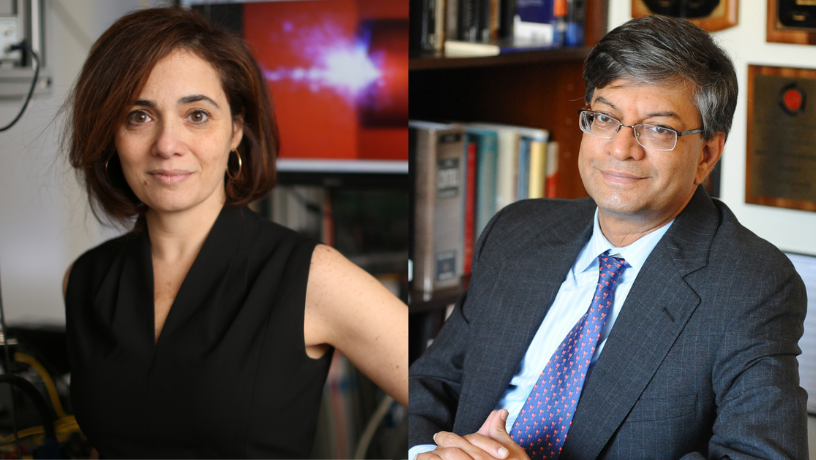
Anja Boisen is a Professor and Head of the Drug Delivery and Sensing Section at the Department of Health Technology, Technical University of Denmark (DTU). Her research focuses on advanced drug delivery systems, sensing technologies, and nanotechnology applications in biomedical engineering. She leads a multidisciplinary team developing innovative devices such as microcontainers, microneedles, and lab-on-a-disc platforms for targeted drug delivery and diagnostics. Her work contributes to UN Sustainable Development Goals, particularly in improving health and reducing inequalities. Key research areas include surface-enhanced Raman spectroscopy (SERS), microfabrication for medical devices, and biomaterials for tissue engineering. She has supervised multiple PhD students, including projects on oral drug delivery systems, gastrointestinal retention devices, and energy-harvesting materials for biomedical applications. Boisen’s team has pioneered technologies like self-unfolding foils for oral delivery and smart drug delivery microparticles. Their innovations aim to enhance therapeutic efficacy while minimizing side effects. She has been recognized with the Sensor Division Outstanding Achievement Award (2022) for her contributions to sensor technology. Her lab actively collaborates internationally, advancing applications in cancer therapy, antibiotic monitoring, and gut microbiota research. Current projects explore high-throughput 3D tumor modeling, SERS-based diagnostics, and biodegradable materials for bone fixation.
Steven A. Soper is a Foundation Distinguished Professor in the Department of Chemistry and Mechanical Engineering at the University of Kansas. He serves as Director of the NIH-funded Center for BioModular Multi-Scale Systems for Precision Medicine and leads international collaborations with institutions like UNIST in South Korea. His career spans faculty roles at LSU, UNC, and KU, with interdisciplinary research bridging chemistry, biomedical engineering, and materials science. Ph.D. in Bioanalytical Chemistry, University of Kansas (1989) Postdoctoral Fellow, Los Alamos National Laboratory (1991) B.S. in Chemistry and Psychology, University of Nebraska (1980-1982) Research Interests focus on micro-/nanofabricated biochemical analysis systems for clinical diagnostics, particularly circulating tumor cell analysis , cell-free DNA detection , and single-molecule fluorescence applications. His work integrates polymer microfabrication, FRET-based assays, and thermoplastic nanofluidics for cancer, stroke, and infectious disease diagnostics. Scientific Awards include: R&D 100 Award (2010) Shannon Award (NIH) (1994) Distinguished Research Master, LSU (2002) Fellow, AAAS/RSC/SAS (2010) Sutton Family Research Impact Award (2021) Teaching & Collaboration involves mentoring 39 professional-degree recipients, organizing multidisciplinary research teams, and co-teaching courses in Biofluid Mechanics and Nanotechnology . His lab partners with institutions in South Korea and UNC/NCSU, while hosting international students and professionals. Labs & Centers : Leads the Soper Research Group and the Center for BioModular Multi-Scale Systems , which provides access to state-of-the-art nanofabrication tools and collaborative expertise across 12 institutions.
Michal Lipson serves as the Eugene Higgins Professor of Electrical Engineering and Professor of Applied Physics at Columbia University's Fu Foundation School of Engineering and Applied Science. Elected to both the National Academy of Engineering and National Academy of Sciences, she pioneered critical building blocks in silicon photonics that have transformed the field, with over 50,000 related publications annually. Her research has generated more than 250 scientific publications and 45 issued patents. Lipson's research focuses on nanophotonics and silicon photonics, where she demonstrated the ability to tailor electro-optic properties of silicon in landmark 2004 and 2005 Nature papers. Her work has enabled the development of photonic devices and circuits that now form the foundation of over 1,000 papers published yearly. She investigates novel optical phenomena while developing practical applications that address major bottlenecks in microelectronics. Her research spans fundamental physics to practical device implementation, with particular emphasis on integrated photonic systems. Analysis of her recent publications reveals a strategic expansion from foundational silicon photonics into emerging applications including quantum information processing, machine learning acceleration, biomedical sensing, and topological photonics. While maintaining core expertise in silicon-based devices, her work increasingly incorporates 2D materials, heterogeneous integration, and novel optical phenomena to push performance boundaries. The research demonstrates consistent progression from fundamental device physics to system-level implementations with practical applications. National Academy of Engineering (2025) National Academy of Sciences MacArthur Fellowship Blavatnik Award Optica's R.W. Wood Prize IEEE Photonics Award John Tyndall Award NAS Comstock Prize in Physics Thomson Reuters Top 1% Highly Cited Researcher (annually since 2014) Professor Lipson has mentored an exceptional research group, graduating 40 PhD students and 2 MS students, with numerous postdocs and visiting researchers. Her alumni occupy prominent positions including professorships at major universities (Rochester, Ottawa, UNICAMP, Johns Hopkins), leadership roles at Intel, Bell Labs, and startups she co-founded (HyperLight, Voyant Photonics). Her laboratory has received substantial research funding supporting cutting-edge work in nanofabrication, optical characterization, and device development. Current research directions include quantum photonics, AI-accelerated optical systems, and novel materials integration. The Lipson Research Group operates state-of-the-art facilities for nanophotonic device design, fabrication, and characterization. The team comprises principal investigators, postdoctoral researchers, PhD students, and administrative staff working collaboratively across disciplines including electrical engineering, materials science, physics, and applied physics. The group maintains strong industry partnerships while pursuing fundamental scientific advances in light-matter interactions at the nanoscale.
Associate Professor Arnold Lining Ju is a biomedical engineer at the University of Sydney's School of Biomedical Engineering, affiliated with multiple institutes including the Heart Research Institute and Sydney Nano Institute. He holds academic positions in both the Faculty of Engineering and Faculty of Medicine & Health. Education: BSc from Peking University, PhD from Georgia Tech and Emory University (USA). Honors include Snow Fellowship, Heart Foundation Future Leader Fellowship, and multiple awards for cardiovascular research innovation. Research focuses on mechanobiology and biomechanics of thrombosis, developing microfluidic devices and organ-on-chip systems. Key projects include AI-driven single-cell nanotools, 3D biofabrication, and anti-thrombotic peptide design. Leads interdisciplinary teams and collaborates internationally with institutions like Harvard and University of Texas. Teaching roles include coordinating advanced cellular biomechanics courses and supervising PhD/Masters students in biomedical engineering and physiology. Over 50 peer-reviewed publications, with contributions to Nature Materials, Nature Communications, and other top journals.
Pengyu Chen is Francis Family Associate Professor and Ginn Faculty Achievement Fellow in Materials Engineering at Auburn University. His NIH-funded research develops nanoplasmonic biosensors for rapid disease diagnosis and immune monitoring, with applications in precision medicine and cancer immunotherapy. Research focuses on: Rapid diagnostic technologies for COVID-19 and other diseases Single-cell analysis platforms Nanoparticle-based cancer therapies Food/environmental safety monitoring Recent publications demonstrate innovations in nanoplasmonic sensing, targeted drug delivery, 3D-printed implants, and tumor microenvironment analysis. His work integrates nanotechnology, immunology, and microfluidics for biomedical applications.
Dr. Basak Tas is a Research Fellow at King's College London, based in the Institute of Psychiatry, Psychology & Neuroscience within the Department of Addictions Sciences. She has been working at King's since 2014, initially as a PhD student and then as a Post-doctoral Research Associate, before taking up her current role in 2021. Her work focuses on opioid overdose and related interventions, collaborating with Professor Sir John Strang and Dr. Will Lawn. Her educational background includes an undergraduate degree in Neuroscience from King's College London and an MSc in Neuroscience from the University of Edinburgh. She completed her PhD at King's College London under the supervision of Professor Sir John Strang, Dr. Caroline Jolley, and Dr. James Bell. Her PhD thesis was titled "Clinical and Laboratory Investigation into Heroin and Opioid Overdose Risk". Dr. Tas's research centers on opioid overdose mechanisms, opioid use disorder treatments, and health interventions to reduce drug-related deaths. She investigates experimental drug studies and develops wearable technologies for overdose detection. Her work aims to understand the physiological underpinnings of overdose and create practical tools for real-world overdose prevention, particularly in high-risk populations. Her recent publications (2020-2025) focus on innovative approaches to prevent opioid overdose deaths, including wearable biosensors (e.g., PneumoWave) and mHealth technologies. She explores risk factors for respiratory depression and the acceptability of detection devices among people who use opioids. Her work bridges laboratory models of overdose with clinical applications in supervised injecting facilities and community settings. Dr. Tas was awarded the following scientific award: Addictions Clinical Academic Group (CAG) Early Career Research Prize (2022) She contributes to teaching by supervising MSc Addiction Studies projects and teaching in the BSc Psychology "Addictions" and "Choices" modules. Additionally, she has been involved in public engagement, including school workshops and the art-science project "Heroin Bodies". Dr. Tas is part of the Drugs Research Group within the Addictions Department at King's, led by Professors John Strang and John Marsden. Her current work involves collaboration on projects related to opioid overdose and wearable technologies.
Hai-Feng (Frank) Ji is Professor of Chemistry and affiliated faculty in Materials Science at Drexel University. He earned his PhD from Chinese Academy of Sciences and has published over 215 papers spanning nanomaterials, sensors, and drug design. His research develops phosphorus-based 1D/2D nanomaterials for energy applications, microcantilever biosensors for medical diagnostics, plasma-treated polymers for biomedical use, and structure-based cancer therapeutics. Recent breakthroughs include high-mobility amorphous red phosphorus films and ultra-long crystalline phosphorus nanowires. He authored the ACS book 'Fundamentals and Applications of Phosphorous Nanomaterials' and holds patents in sensor design and nanomaterial synthesis.
Professor Hanadi Sleiman is a renowned academic in the Department of Chemistry at McGill University, specializing in DNA-based nanomaterials and their applications in drug delivery and supramolecular chemistry. She holds leadership roles, including Director of the NSERC CREATE training program in Nucleic Acids and President of the International DNA Nanotechnology Society (ISNSCE). Her research focuses on engineering DNA nanostructures for targeted therapies, such as cancer treatments, and advancing materials chemistry through DNA-functionalized systems. Education: Ph.D. in Chemistry, Stanford University (1990) Postdoctoral Fellow, University of Louis Pasteur (1993) Research Interests: Professor Sleiman’s work combines synthetic chemistry with DNA self-assembly to create programmable materials. Her lab designs DNA cages for drug encapsulation, explores DNA-minimal approaches to scalable materials, and integrates DNA with nanoparticles, polymers, and metals for biomedical applications. Key areas include cancer therapy, biosensors, and enzyme mimics. Awards & Honors: Fellow of the Royal Society of Canada (2017) Killam Research Fellowship (2018) R. U. Lemieux Award in Organic Chemistry (2018) William Dawson Scholar Award (2004–2012) Grants & Collaborations: She directs the NSERC CREATE program and collaborates with institutions like the Quebec Centre for Advanced Materials (QCAM) and the McGill Centre for Structural Biology (CRBS). Her training initiatives emphasize nucleic acid therapeutics and diagnostics. Labs & Teams: Her Sleiman Group at McGill develops innovative DNA architectures in the Otto Maass laboratory, with a focus on translational research for clinical applications.
Prof. Dr. rer. nat. Lothar Elling is a University Professor and director at the Helmholtz Institute for Biomedical Engineering, RWTH Aachen University, Germany. His research focuses on biomaterials, glycoengineering, and enzymatic synthesis of carbohydrates and glycoconjugates. Institution: RWTH Aachen University Research Unit: Helmholtz Institute for Biomedical Engineering Academic Rank: Full Professor Prof. Elling's research interests include: Glycoengineering of biomaterials Enzymatic synthesis of glycans Glycosyltransferase immobilization Glycan-protein interactions Biocatalytic cascade reactions Biomedical applications of glycomaterials His recent publications demonstrate strong expertise in: - Automated enzymatic glycan synthesis - Multi-enzyme cascade systems for nucleotide sugar production - Glycosyltransferase engineering - Galectin-targeted glycomaterials - Microgel-based biosensors
Dr. Oluwasesan Adegoke is a Senior Lecturer in the School of Science and Engineering at the University of Dundee, UK. He holds a PhD in Chemistry from Rhodes University (2014) and has held postdoctoral fellowships in South Africa, Japan, and the UK. His expertise lies in developing advanced nanomaterials-based optical and electrochemical biosensors for environmental, biomedical, and forensic applications. Education: PhD in Chemistry, Rhodes University (2014) MSc in Nanoscience, University of Nottingham (2008) BSc in Chemistry, University of Agriculture, Abeokuta (2006) Research Interests: Synthesis of functional nanomaterials (e.g., quantum dots) Development of aptamer-based and nanozyme biosensors Applications in drug detection, environmental monitoring, and virus diagnostics Awards & Funding: Royal Society Research Grant (2023–2025) EPSRC New Investigator Award (2023–2026) Medical Research Council Future Leaders Fellowship (2024–2028, Co-I) Key Projects: Developing nanobiosensors for illicit drugs and explosives Heavy metal-free quantum dots for SARS-CoV-2 detection Surface-enhanced Raman scattering probes for disease diagnostics Labs & Teams: Leads the research group on optical/electrochemical nanobiosensors within the Leverhulme Research Centre for Forensic Science.
Wai Pang Ng is a Professor and Head of the Department of Mathematics, Physics and Electrical Engineering at Northumbria University. He holds a BEng (Hons) in Communications and Electronic Engineering from the University of Northumbria and a PhD in Electronic Engineering from the University of Wales, Swansea. His research focuses on radio-over-fiber systems, distributed fiber sensing, high-speed optical communications, and adaptive signal processing. Ng has held leadership roles in IEEE chapters and conferences, including chairing the IEEE UK&RI Communications Chapter (2011–2015) and serving as publicity chair for IEEE ICC 2015 and 2016. His research interests include innovative fiber optic sensor designs, acoustic wave devices for biomedical applications, and hybrid communication systems combining radio-over-fiber and free-space optics. Recent work emphasizes ultra-sensitive pressure/temperature sensors using microstructured fibers and acoustofluidic platforms for lab-on-a-chip applications. Ng has supervised seven PhD/MSc projects and actively contributes to standards development in optical communication systems. Ng’s publications span advanced sensor technologies, nonlinear compensation in optical systems, and turbulence-resistant free-space optical links. His work bridges academic research with practical applications in telecommunications, environmental monitoring, and healthcare diagnostics. Professional affiliations include IEEE technical committees (SPCE, TCGCC, ONTC) and guest editorships for IET Communications.
Georg Fantner is an Associate Professor at the Swiss Federal Institute of Technology Lausanne (EPFL) with dual appointments in the School of Engineering (STI) within the Institute of Bioengineering and the School of Life Sciences (SV) for teaching. He directs the Laboratory for Bio- and Nano-Instrumentation (LBNI) and holds leadership roles including President of the Open Science Strategic Committee and the Association des Professeurs de l'EPFL. Research Focus: Bioinstrumentation, Nanotechnology, Scanning Probe Microscopy, and Metrology Teaching: Structural Mechanics for Life Sciences, Metrology, and Metrology Practicals His research pioneers advanced instrumentation for nanoscale characterization, emphasizing data-driven approaches to enhance microscopy techniques. Recent work integrates deep learning with scanning probe microscopy for real-time biological imaging and develops novel MEMS devices for fluid-compatible nanoscale manipulation. Key innovations include hermetically sealed sample chambers for pathogen studies and deterministic nanotopography engineering. Professor Fantner actively mentors 7 current PhD students and has supervised 14 graduates. His laboratory fosters interdisciplinary collaboration across engineering, physics, and life sciences to advance nanoscale measurement technologies and instrumentation development.
Dr. John Reynolds is a Professor of Chemistry and Biochemistry at the Georgia Institute of Technology with a 40-year legacy in polymer chemistry. He serves as founding Director of the Georgia Tech Polymer Network (GTPN) and a member of the Center for Organic Photonics and Electronics (COPE). Research spans conjugated polymers, electrochromism, organic LEDs, photovoltaics, and bioelectronics Expert in optoelectronic and redox properties of electroactive materials Co-editor of the Handbook of Conducting Polymers His group has published over 450 peer-reviewed papers and holds ~45 issued patents. Recent research focuses on: Advanced electrochromic materials for visible and infrared applications Next-generation organic solar cells with green processing techniques Supercapacitor and electrochemical transistor materials Space exploration polymer applications Scientific recognition includes: ACS Cope Scholar Award (2020) ACS Florida Award (2019) ACS Applied Polymer Science Award (2012) Fellowships from Royal Society of Chemistry, Materials Research Society, and PMSE (2013) His editorial contributions include serving on boards for multiple prestigious journals including ACS Central Science and Chemistry of Materials . The Reynolds Group actively trains PhD and postdoctoral researchers, with recent members advancing to positions at University of Michigan, ExxonMobil, Northwestern, and Intel.
Boris Murmann is Professor at Stanford University, specializing in integrated circuit design, mixed-signal computing, and energy-efficient AI hardware. His research advances neural interface technologies, analog design automation, and tinyML systems. Recent work develops ultra-low-power neural recording ICs for brain-computer interfaces, RRAM-based memory systems, and open-source semiconductor design frameworks. Publications demonstrate innovations in compressive sensing for neural data, hardware-algorithm co-design, and reinforcement learning for analog circuit synthesis. Significant contributions include Medusa (TinyML processor), EMBER (RRAM macro), and methodologies for coarsely-quantized computer vision and analog design automation.
Dr. Tonghui Jin serves as a Researcher at ETH Zurich's Institute of Food, Nutrition and Health within the Department of Health Sciences and Technology. Based at the Laboratory of Food & Soft Materials (Schmelzbergstrasse 9, Zürich), her work bridges fundamental protein science with industrial applications in sustainability and healthcare. Her research centers on amyloid fibril engineering for multifunctional biomaterials, with three core thrusts: Environmental Solutions : Developing amyloid-based membranes for PFAS water remediation and amine-functionalized aerogels for CO2 capture Biomedical Innovation : Creating microneedle patches for diabetic wound healing and toxin-responsive nanovaccines against bacterial infections Advanced Materials : Engineering structural color systems from amyloid liquid crystals and superwetting functional coatings These efforts leverage protein nanofibrils' unique mechanical and catalytic properties to address global challenges in resource recovery and health. Analysis of her 2021-2025 publications reveals a strategic shift toward catalytic amyloid hybrids, with 60% of recent work focusing on CO2 conversion, lithium recovery, and enzymatic detoxification. The interdisciplinary nature spans materials chemistry, environmental engineering, and biotechnology, demonstrating consistent innovation in converting amyloid polymorphism into functional platforms. No scientific awards were documented in available sources. Dr. Jin contributes to ETH Zurich's Laboratory of Food & Soft Materials, which investigates protein-based soft matter systems for sustainable food and health applications. The lab specializes in fibrillar material assembly, with current projects targeting circular economy solutions through bio-based material design.