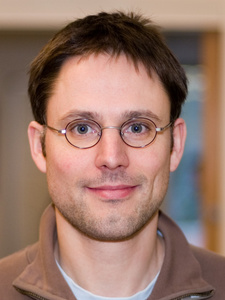
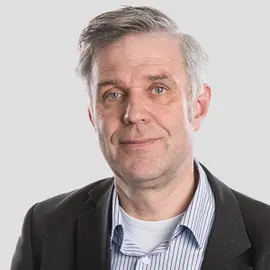
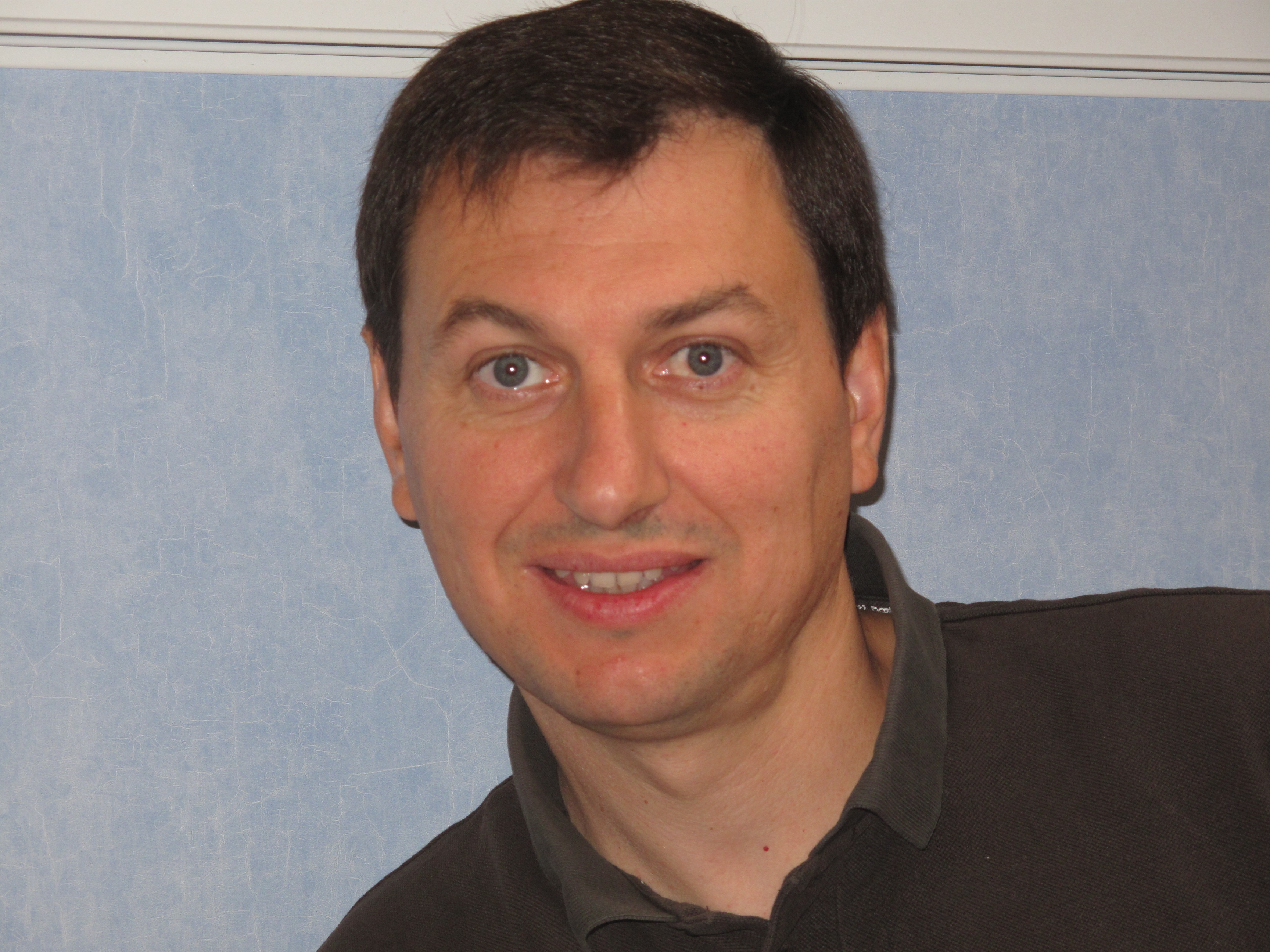
Gordon G is a researcher with a focus on neuroscience, neurobiology, and neurovascular coupling. His work explores astrocyte function, cilia signaling, and stress impacts on synaptic plasticity, as evidenced by publications in journals like Nature Neuroscience and Nature Communications . Collaborations span institutions in Canada, the U.S., and Germany. Research Interests Neuroscience Neurovascular Coupling Astrocyte Signaling Metabolic Regulation Stress-Induced Neurological Impairment Computational Antibody Design Recent Article Trends His 2024-2025 studies highlight primary cilia in astrocytes, lactate biosensors for brain imaging, and computational antibody humanization. Earlier works (2020-2023) address stress-related synaptic plasticity and cerebrovascular dysfunction linked to CD2AP deficiency.
Laura Fabris is a Full Professor in the Department of Applied Science and Technology at the Polytechnic University of Turin. She serves as a member of the Interdepartmental Center PolitoBIOMed Lab - Biomedical Engineering Lab and leads research activities in the ERC Instrumental Chemical Analysis Laboratory. Her academic career spans cutting-edge research at the intersection of physics, chemistry, and biomedical engineering. Professor Fabris's research expertise focuses on plasmonic nanomaterials and their applications in advanced diagnostics. Her work centers on developing innovative biosensors using surface-enhanced Raman spectroscopy (SERS) with specialized metal nanoparticles. She investigates how light-matter interactions at the nanoscale can be harnessed for ultrasensitive detection of biological molecules, with particular emphasis on viral RNA detection and cancer biomarker identification. Her interdisciplinary approach combines principles from experimental physics, colloidal chemistry, and biomedical engineering to create next-generation diagnostic tools. Her publication record demonstrates significant contributions to the field of plasmonics and nanosensing, with influential review articles and original research on gold nanostar substrates, SERS mechanisms, and nanoparticle synthesis. Her work spans fundamental studies of plasmonic phenomena to applied research in medical diagnostics, establishing her as a leading expert in the field. STELLAR - SERS-based Technology for EarLy Liquid biopsy Analysis and Recognition (2025-2026) PHROGS - Hot Spot-Mediated Plasmonic Modulation of Viral RNA Polymerase Activity (2022-2027) ANFIBIO - ERC-2019-COG (2021-2026) NATIONAL TECHNOLOGY TRANSFER CENTER FOR ADVANCED TECHNOLOGIES FOR SUSTAINABILITY (2023-2035) Professor Fabris actively mentors six PhD students working on diverse projects related to plasmonic nanoparticles, biosensor development, and medical diagnostics. She also teaches Physics I for Automotive Engineering students across multiple academic years and participates in doctoral programs in Photoinduced Processes and Technologies and Bioengineering at both the Polytechnic University of Turin and the University of Perugia. Her laboratory research focuses on synthesizing and characterizing plasmonic nanomaterials, particularly gold nanostars, and applying them to solve critical challenges in medical diagnostics. Her team develops innovative approaches to modulate biological processes using light-activated nanomaterials, with potential applications ranging from early cancer detection to antiviral therapies.
Dr. Zhiling Guo is an Assistant Professor in the School of Geography, Earth and Environmental Sciences at the University of Birmingham, where she has been working since March 2018. Her research focuses on environmental toxicology with a particular emphasis on understanding human exposure to various pollutants and their lifelong health impacts. Dr. Guo earned her BSc in Biotechnology in 2008 from Shanxi Normal University, followed by a PhD in Marine Ecology in 2014 from the South China Sea Institute of Oceanology, Chinese Academy of Sciences. She also completed studies at the University of Connecticut in Marine Biology from 2011-2013. Prior to joining the University of Birmingham, she held postdoctoral positions at the Research Center for Eco-Environmental Sciences (Chinese Academy of Sciences) and McGill University. Her research interests span environmental toxicology, nanotoxicology, molecular toxicology, neurotoxicology, and aquatic toxicology. Dr. Guo investigates the connection between human exposure to pollutants (including nanomaterials, micro/nano-plastics, air pollutants, organic pollutants, heavy metals, viruses, pollen, and emerging pollutants) and lifelong health, along with the underlying mechanisms. She also develops 3R alternatives (in vitro barrier models, organ-on-chip) to facilitate investigation of human and environmental impacts of pollution. Her work extends to understanding pollutant effects on terrestrial, aquatic, and marine ecosystems, and developing biosensors for pollutant detection. Dr. Guo's recent publications (2023-2025) demonstrate strong focus on environmental nanoscience, particularly nanomaterial transformations, pollutant remediation technologies, and nanomaterial-biological interactions. Her work spans water treatment applications, soil-plant systems, and human health implications, with significant contributions to understanding nanoplastic behavior, nanomaterial biocoronas, and the development of green remediation technologies. Her scientific recognition includes: Outstanding reviewer for Environmental Science: Nano Associate Editor for Frontiers in Toxicology Guest Editor for Ecotoxicology and Environmental Safety Editorial Board member for Ecotoxicology and Environmental Safety Dr. Guo is actively engaged in professional societies including the Society of Toxicology (Full Member), Society of Environmental Toxicology and Chemistry (Member), and Chinese Society of Toxicology (Full Member). Her research has resulted in over 50 publications in top-tier journals including Nature Protocol, Nature Plants, Nature Communication, PNAS, Water Research, Environmental Science & Technology, and Nano Today.
Chan-Young Park is a Professor in the School of Software at Hallym University, South Korea. He holds a Ph.D. from the Korea Advanced Institute of Science and Technology (KAIST) and brings significant industry experience from his tenure at Samsung Electronics between 1991 and 1999. His academic career is centered on interdisciplinary research at the intersection of software, sensors, and biomedical applications. His research interests include Bio-IT convergence , intelligent transportation systems , and sensors , with a strong emphasis on practical implementations in healthcare and civil infrastructure. These interests are reflected in his recent work on real-time PCR systems, biochip development, and structural monitoring of concrete bridges using deep learning. The recent publications highlight a consistent trend in developing compact, intelligent, and sensor-based systems for biomedical diagnostics and infrastructure safety. His work frequently involves machine learning integration, signal detection, and miniaturized hardware, demonstrating a multidisciplinary approach across engineering and computer science domains. While no formal scientific awards are listed in the provided text, his sustained publication record in reputable journals such as Sensors and Applied Sciences indicates active research contributions. He collaborates extensively with colleagues at Hallym University and other institutions, suggesting a strong research network. There is no explicit mention of student advising or grant funding in the text, but his professorial role and publication output imply involvement in mentoring and research leadership. No specific lab or research team is named, but his work suggests affiliation with a research group focused on embedded systems, sensor technologies, and Bio-IT applications within the School of Software.
Dr. Ga-young Kelly Suh is an Assistant Professor in the Department of Biomedical Engineering at California State University, Long Beach (CSULB), with a secondary appointment as an Adjunct Professor in the Department of Surgery – Vascular at Stanford University. She joined CSULB in Fall 2019 after completing her Ph.D. in Mechanical Engineering at Stanford University and a postdoctoral fellowship in Stanford's Department of Surgery – Vascular (2011–2016). Her multidisciplinary research bridges engineering and clinical practice, focusing on computational modeling and medical imaging to optimize endovascular surgeries. Her research integrates computational fluid dynamics, geometric analysis, and clinical data acquisition to study vascular biomechanics. Key interests include: Dynamic behavior of aortic endografts under physiological stresses Medical imaging techniques for 3D vascular reconstruction Predictive modeling of surgical outcomes for aneurysms and dissections Development of low-cost diagnostic tools and educational methodologies Recent publications (2021–2025) emphasize aortic pathologies, stent mechanics, and educational innovations. Over 70% of articles involve computational analysis of vascular dynamics, with emerging work in wearable biosensors and microfluidics. Awards are not documented in available sources. She advises undergraduate and graduate students through scheduled office hours and course guidance (BME 200/311/490B). No grants or lab details are mentioned, though her institutional website references the Cardiovascular Research Center (CVRC).
Mariagrazia Graziano is an Associate Professor at the Department of Applied Science and Technology (DISAT) at Politecnico di Torino, where she also serves as Director of the Teaching and Language Lab (TLLab). Her academic career spans multiple institutions, including her involvement with doctoral colleges at the University of Palermo for 'Technologies and Methods for University Education' from 2022-2025. Her research interests are at the forefront of nanotechnology and quantum computing, focusing on areas including: Molecular field-coupled nanocomputing Logic-in-memory computing architectures Quantum hardware design and optimization Single-molecule devices for logic and memory applications Nanomagnetism and spintronics Micro-for-Nano (M4N) Systems for Single Molecule Sensors Dr. Graziano's work bridges fundamental physics with practical applications in electronics, with particular emphasis on next-generation computing paradigms that address the memory-wall problem and explore alternatives to traditional von Neumann architectures. Her research has significant implications for fields ranging from molecular electronics to quantum information processing. Her recent publications demonstrate a strong focus on molecular field-coupled nanocomputing, quantum optimization techniques, and single-molecule device modeling. These works reveal a consistent research trajectory toward developing novel computing architectures that leverage quantum effects and molecular-scale phenomena to overcome limitations of conventional semiconductor technology. Dr. Graziano has received notable recognition including the prestigious Marie Curie Intra-European Fellowship for Career Development from the European Commission (2014). She serves as Associate Editor for FRONTIERS IN ELECTRONICS (since 2022) and JOURNAL OF COMPUTATIONAL ELECTRONICS (since 2019), and has participated in program committees for major conferences including the IEEE Design Automation and Test Conference Europe. As an advisor, Dr. Graziano mentors numerous PhD students working on cutting-edge research in quantum computing, molecular electronics, and nanotechnology. Her supervision spans multiple doctoral programs at Politecnico di Torino, with students exploring topics from quantum algorithms for urban traffic optimization to single-molecule junctions for next-generation electronics. Additionally, she leads several research projects including TENS (Toward Excellence in Nanocharacterisation of single-molecule Sensors) and previously served as Scientific Leader for the Quantum Computing e Quantum Networking project. Dr. Graziano is actively involved in the VLSILAB research group, where she contributes to advancing the state-of-the-art in electronic design and nanoscale computing technologies. Her work on patents, particularly the 'Device for Realizing Boolean Logic Functions XOR XNOR Inside Racetrack Memory,' demonstrates her commitment to translating theoretical research into practical technological innovations.
Jin W. Choi is Professor of Electrical and Computer Engineering at Michigan Technological University's College of Engineering, having previously held the Mark and Carolyn Guidry Professorship at Louisiana State University where he served as ABET coordinator and graduate program advisor. Education: PhD, Electrical and Computer Engineering, University of Cincinnati MS, Electrical Engineering, Seoul National University BS, Electrical Engineering, Seoul National University His research centers on BioMEMS , Biosensors , Microfluidics , and Flexible Electronics for biomedical applications. Notable achievements include a 2020 US patent for a wireless implantable neural stimulator to improve quality of life in neurodegenerative disease patients and leadership of the BioMEMS and Bioelectronics Laboratory. Recent publications demonstrate expertise in PCB-based electrochemical sensors, portable fluorescence systems, and impedimetric probes with applications spanning cryobiology, environmental monitoring, and healthcare diagnostics. Scientific recognition includes: US Patent for wireless implantable neural stimulator (2020) Editor of Micro and Nano Engineering (Elsevier) Dr. Choi mentors graduate students in micro/nanofabrication and sensor development while teaching specialized courses including Chemical and Biological Sensors and BioMEMS, with research projects focused on biomedical IoT sensor systems and biomolecular devices.
Associate Professor Jiangtao Jason Xu is a faculty member at the School of Chemical Engineering, University of New South Wales (UNSW Sydney). He leads a research group in the Centre for Advanced Macromolecular Design (CAMD) and the Australian Centre for NanoMedicine (ACN), focusing on green and precision polymer synthesis and hydrogel-based artificial skin for wearable electronics. Dr. Xu received his BS and PhD Degrees in Polymer Science from Fudan University. He was awarded an ARC Future Fellowship in 2016 and joined UNSW as a Lecturer in 2017. He was promoted to Senior Lecturer in 2019 and to Associate Professor in 2022. His educational background includes: BS in Polymer Science, Fudan University PhD in Polymer Science, Fudan University Dr. Xu's research focuses on green chemistry and sustainable polymer synthesis, precision polymer synthesis mimicking natural perfection, photoredox catalysis for living polymerization, and polymer hydrogel-based artificial skin for wearable sensors and soft electronics. His work bridges fundamental polymer chemistry with practical applications in biomedical and electronic fields. His research group develops innovative technologies including PET-RAFT for green polymer synthesis, SUMI technology for precision polymer synthesis, and functional double network hydrogels for wearable devices. His publication record includes over 140 peer-reviewed journal articles in high-impact journals such as JACS, Angewandte Chemie, Energy & Environmental Science, and Advanced Science, with more than 12,000 citations and an H-index of 60 (as of December 2023). His work has been recognized through 13 Highly Cited Papers in the last decade. Dr. Xu has received numerous awards and honors including: Pioneering Investigator by Chemical Communications (2023) Rising Star in Polymer Science by Progress in Polymer Science (2022) ARC Discovery Projects (2019, 2020) Pioneering Investigator by Polymer Chemistry (2020) ARC Future Fellowship (2016) Multiple Emerging/Pioneering Investigator recognitions Dr. Xu has successfully secured over $2 million in research funding, including an ARC Future Fellowship and two ARC Discovery Projects. He currently supervises a research group including postdoctoral researchers and graduate students working on polymer synthesis and applications. His laboratory is involved in developing innovative materials for biomedical applications and wearable electronics.
Professor Till Boecking leads the Molecular Machines Group at the EMBL Australia Node for Single Molecule Science , affiliated with the Faculty of Medicine & Health at the University of New South Wales (UNSW). Originally trained in biochemistry at the University of Bonn, Germany, he earned his PhD in Biophysics at UNSW in 2004 and conducted postdoctoral research at Harvard Medical School (2006-2009). His research spans interdisciplinary domains, focusing on single-molecule biophysics , protein dynamics , and self-assembly chemistries to study biological processes at the molecular level. He has supervised PhD and Honours students in areas including HIV infection , innate immunity , and fluorescence spectroscopy . Scientific Awards & Grants: ARC Future Fellowship (2011-2014) NHMRC Career Development Award (2011-2014) HFSP Cross-Disciplinary Fellowship (2007–2010) Young Investigator Awards (Lorne Protein Conference, Australian Society for Biophysics) UNSW/AINSE Scholarships (2001–2003) Boecking's work bridges physical and biological sciences, emphasizing mechanistic resolution through single-molecule techniques and biosensor development . He currently operates from the Lowy Cancer Centre , with ORCID 0000-0003-1165-3122 .
Prof. Dr. Christoph Georg Stamm is a faculty member at the Zurich University of Applied Sciences (ZHAW) School of Engineering , specializing in Applied Optics . His research focuses on optical biosensors, diagnostic devices, and adaptive optical systems for diverse applications including veterinary diagnostics, forensic science, and biomedical engineering. Current projects: NMR-based drug discovery, IoT solutions for foodservice, tunable lenses for AR/Medical devices Completed projects: Self-learning optical sensors, 3D-printed lens systems, miniaturized gas sensors Patent: Optical axis shifting device (2016) His work combines optical engineering with practical device development , demonstrated through publications in journals like Biosensors and Bioelectronics and BioMed Research International . While scientific awards aren't explicitly mentioned, his leadership in multiple projects and membership in the Optical Society of America (OSA) highlight his academic engagement.
Dr. Hanbin Mao is a Professor in the Department of Chemistry & Biochemistry at Kent State University. His research bridges analytical chemistry and single-molecule biophysics, pioneering the field of mechanoanalytical chemistry through innovative techniques like lab-on-a-chip, laser tweezers, and magnetic tweezers. Mechanoanalytical Chemistry Single-Molecule Biophysics Biosensor Development His lab developed the Single-Molecule Mechanochemical Sensing (SMMS) method, which detects trace biomarkers and environmental toxins with high sensitivity. Collaborative projects with materials and biosciences groups highlight the interdisciplinary nature of his work. Key Scientific Awards Top 2% Most-Cited Scientists Worldwide (Stanford University, 2023) Excellence in Graduate Research Mentorship Award (2023) Dr. Mao mentors numerous graduate students and has trained over 25 alumni. His lab fosters global collaboration and integrates advanced technologies to transform traditional chemical and biological research approaches.
Olivier Buriez is a CNRS Research Director at École Normale Supérieure (ENS) in Paris, where he leads research in the Department of Chemistry. His work bridges electrochemistry with biological applications, focusing on understanding the metabolism and transport of therapeutic molecules through lipid membranes. As an active researcher since the 1990s, he has established himself as a leading figure in molecular electrochemistry with over 130 publications spanning more than two decades. Buriez obtained his PhD from ENS under the supervision of Drs. Christian Amatore and Jean-Noël Verpeaux, followed by postdoctoral work at the Berkeley Lab with JB Kerr and RH Fish. His career path includes a CNRS position at LECSO lab from 1999-2005 before returning to ENS in 2006. Since 2015, he has served as Officer of the Molecular Electrochemistry Division of the International Society of Electrochemistry (ISE), demonstrating his leadership in the field. His research program centers on developing innovative electrochemical approaches to study biological systems, particularly the chemical transformations (metabolism) and transmembrane passages of therapeutic molecules. Buriez's lab is known for pioneering the combination of electrochemistry with fluorescence microscopy, creating powerful tools for observing molecular behavior at membrane interfaces. His work has significant implications for drug development, particularly in understanding how therapeutic compounds interact with cellular membranes and undergo metabolic transformations. Analysis of his recent publications reveals a strong trajectory in developing electrochemical imaging techniques for studying liposome dynamics, membrane permeability, and cellular processes. His work increasingly integrates electrochemistry with fluorescence-based methods to create multimodal analytical platforms that provide unprecedented spatial and temporal resolution of molecular events at biointerfaces. This approach has proven particularly valuable for studying drug-membrane interactions and the metabolic activation of therapeutic compounds. Buriez maintains an active research program with numerous collaborations across France and internationally, as evidenced by his consistent publication record through 2024. His work demonstrates the critical role of electrochemistry in advancing our understanding of biological processes and developing new analytical methodologies for biomedical applications.
Marie-Aude Plamont is a CNRS Study Engineer affiliated with PASTEUR UMR8640 at ENS-PSL University, Sorbonne University, and CNRS. Her research focuses on Biochemistry, Cell Biology, and Bioimaging, with a particular emphasis on protein engineering and fluorogenic probe development for live-cell applications. Institutional Affiliations: ENS-PSL University (Department of Chemistry), Sorbonne University, CNRS Research Themes: Fluorogenic biosensors, bioorthogonal labeling, membrane protein trafficking, and advanced fluorescence microscopy techniques Publication Trends: Developments in tunable fluorescent tags (FAST system), red chromophore design for bioimaging, biofilm dynamics quantification, and ambient light-compatible macroscale imaging Her work bridges chemical biology and imaging technology, enabling precise detection of endogenous molecules and dynamic protein processes in living systems.
Young-Teck Kim serves as an Associate Professor in the Department of Sustainable Biomaterials within Virginia Tech's College of Natural Resources and Environment. A co-founder of the packaging B.S. degree program since joining in 2010, he holds a Ph.D. in Packaging Science from Clemson University (2005) following his B.S. (1997) and M.S. (1999) from Korea University. His research focuses on developing sustainable packaging solutions through biopolymer innovation, with expertise spanning: Biodegradable films using cellulose, lignin, and polysaccharides Smart packaging systems with quality indicators Nanocomposites incorporating carbon-based nanomaterials Zero-waste production from agricultural residues Lightweight fiber-reinforced pallet materials Pharmaceutical packaging with barrier enhancement His work bridges fundamental polymer science with industrial applications in food, healthcare, and consumer goods sectors. Analysis of his 15 most recent publications reveals strong emphasis on biopolymer film engineering (60%), chemiluminescence-based sensors (27%), and sustainable material synthesis (13%). Key trends include the shift toward nano-cellulose composites (2010-2011), increased industry collaboration with packaging manufacturers, and methodological advances in rapid detection systems for food safety applications. Dr. Kim actively advises the packaging student club and has secured research funding including a $96,962 grant from the Bent Creek Institute (2013-2014) for strengthening regional feedstock production. His laboratory (https://sustainablepackaging.sbio.vt.edu/) develops next-generation packaging solutions focusing on gas barrier enhancement and biodegradation control.
David Naranjo Hernández is a Permanent Professor in the Signal Theory and Communications department at the University of Seville. His work focuses on biomedical engineering with emphasis on bioimpedance analysis, wireless body sensor networks, and e-health systems. Principal Investigator: Development and Clinical Validation of a Non-Invasive Glucometer for e-Health (P18-TPJ-3074) Researcher: e-EPOC (PI15/00306), e-Nefro (PI11/00111), Id3am (P10-TIC-6214), Pimetrans (P08-TIC-04069) Research interests span wearable technology for chronic disease management, including COPD and chronic kidney disease. He has developed smart sensors for respiratory rate monitoring, muscle function assessment, and glucose level estimation. His methodological contributions include distributed processing architectures and antenna design optimization. Patents include non-invasive glucose monitoring (2019), real-time body composition analysis (2017), and wireless sensor platforms (2013). Key publications address: Wireless body networks for frailty patient monitoring (2021) Smart bioimpedance devices (2020) Intrabody communication protocols (2018) Portable fall detection systems (2009)