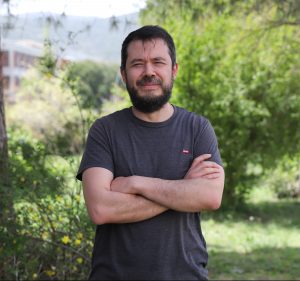
Dr. Morteza Ghorbani is a researcher and faculty member at Sabancı University's Faculty of Engineering and Natural Sciences (FENS), specializing in fluid mechanics and environmental engineering. He leads the AquaCav project, a collaborative effort with Oxford Brookes University, focused on developing sustainable water treatment solutions using hydrodynamic and acoustic cavitation. His research addresses global challenges such as PFAS pollution and wastewater management, with applications in biomedical devices and energy-efficient technologies. Key collaborations include projects funded by the International Science Partnership Fund (ISPF), leveraging his expertise in microfluidic systems and cavitation dynamics. Dr. Ghorbani's work combines experimental and numerical methods to optimize cavitation-based processes for environmental and biomedical applications. His contributions span from fundamental fluid dynamics studies to applied technologies like flexible cystoscopes and clot-on-a-chip platforms. Scientific achievements include the ISPF Research Collaboration Grant (2024) and advancements in PFAS removal, graphene exfoliation, and microalgae cultivation. His research group at Sabancı University explores interdisciplinary solutions at the intersection of engineering, nanotechnology, and sustainability.
Dr. Yasemin Dilşad Yılmazel is an Associate Professor in the Department of Environmental Engineering at Middle East Technical University (METU) in Ankara, Turkey, with a concurrent position as Assistant Professor at Rochester Institute of Technology. She earned her PhD from Villanova University in 2014 and has built a distinguished career in environmental biotechnology. Her educational background includes: Ph.D. in Civil and Environmental Engineering from Villanova University (2014) M.S. in Environmental Engineering from Middle East Technical University (2009) Dual B.S. degrees in Chemical Engineering and Environmental Engineering from Middle East Technical University (2007-2008) Dr. Yılmazel's research focuses on developing innovative bioprocesses that integrate anaerobic digestion with bioelectrochemical systems for sustainable wastewater management and bioenergy production. Her work with hyperthermophilic microorganisms represents a unique niche in the field, as these high-temperature processes offer advantages over conventional mesophilic systems. She investigates microbial electrochemical processes, biohydrogen production, environmental microbiology, and nutrient recovery from waste streams. Her laboratory work spans from fundamental microbial studies to applied engineering solutions for real-world environmental challenges. Her publication record demonstrates consistent contributions to the fields of bioelectrochemical systems and anaerobic digestion, with a particular emphasis on utilizing hyperthermophilic microorganisms for enhanced biohydrogen and biomethane production. Recent publications focus on carbon-based conductive materials for enhancing biomethane recovery, nutrient recovery through struvite precipitation, and the role of electroactive microorganisms in anaerobic processes. Her scientific achievements have been recognized through several awards: Grant Writer's Boot Camp, Rochester Institute of Technology University (2017) Honorable Mention, Link Foundation Energy Fellowship (2012) A&WMA Graduate Student Scholarship (2010) M.Sc. Scholarship from TÜBİTAK (2007-2009) First-ranking Graduate in Environmental Engineering at METU (2007) Dr. Yılmazel actively mentors a diverse group of students, including PhD candidates, MSc students, and undergraduates. Her research group BIOERG has secured substantial funding from organizations including TÜBİTAK, METU, and international partners. Current projects focus on utilizing electrostatically flocked electrodes for hydrogen and methane production, enhanced biohydrogen production from agro-industry wastes, and sustainable urbanization through innovative technologies. She also serves as a board member at METU's Climate Center, contributing to national sustainability initiatives. Her laboratory, the Bioprocess Engineering Research Group (BIOERG), conducts cutting-edge research on bioenergy systems, with particular expertise in integrating anaerobic digestion and bioelectrochemical systems for more efficient methane production from agro-wastes. The group investigates the utilization of hyperthermophilic microorganisms for biohydrogen production and studies the role of direct interspecies electron transfer in anaerobic processes.
Barış Çallı is a Professor at the Department of Environmental Technology, Faculty of Engineering, Marmara University (Turkey). He earned his Ph.D. in Environmental Technology from Boğaziçi University (2003) and received the Marie Curie Intra European Fellowship (2006) for his work on fermentative hydrogen production in Belgium. Since 2008, he has served as a full-time professor, leading 20 research projects focused on environmental bioprocesses, anaerobic digestion, biogas technology, resource recovery, and solid waste management. Ph.D. in Environmental Technology, Boğaziçi University (2003) Marie Curie Intra European Fellowship (2006) His research integrates bioprocess engineering with sustainable waste management, emphasizing biogas production, membrane technologies, and circular economy principles. Recent publications (2025-2021) address energy-neutral wastewater treatment, heavy metal recovery from sludge, and VFA-driven fermentation. Key subfields include anaerobic digestion , bioleaching , membrane reactor design , and agricultural waste valorization . Marie Curie Intra European Fellowship (2006) With 116 WoS publications and an H-index of 33 (Scholar), he has supervised 17 thesis advisories and contributed to 20 projects. His work aligns with UN Sustainable Development Goals (6, 7, 11, 12).
Prof. Erdem Günay is a full Professor in the Department of Energy Systems Engineering at Istanbul Bilgi University, where he has been serving since 2013, rising through the academic ranks. He holds a Ph.D. in Chemical Engineering from Bogazici University, where he also completed his B.S. and M.S. degrees, and conducted postdoctoral research. His academic journey reflects a deep commitment to energy systems and sustainable technologies. B.S. in Chemical Engineering, Bogazici University, 2002 M.S. in Chemical Engineering, Bogazici University, 2005 Ph.D. in Chemical Engineering, Bogazici University, 2012 Postdoctoral Research Associate, Catalyst Design and Reaction Engineering Laboratory, Bogazici University, 2013 Prof. Günay’s research centers on the integration of machine learning and artificial intelligence with energy systems engineering. His work spans renewable energy (solar, wind, bioenergy), hydrogen production, CO₂ utilization, fuel cells, and energy demand forecasting. He employs advanced data mining, neural networks, and explainable AI to model, simulate, and optimize complex energy processes, contributing significantly to sustainable energy solutions. His interdisciplinary approach bridges chemical engineering, environmental science, and computational modeling. His recent publications demonstrate a strong trend in applying machine learning to sustainable bioenergy, catalysis, and environmental management. From optimizing biochar production to forecasting global temperature anomalies and enhancing microbial fuel cells, his research leverages AI to address pressing energy and environmental challenges. The articles reflect a consistent focus on sustainability, efficiency, and innovation in energy technologies, with a growing emphasis on explainability and real-world applicability of AI models. Prof. Günay has not been mentioned to have received any specific scientific awards, but his extensive publication record in high-impact journals indicates strong recognition in his field. He has advised several Master’s students, including Muaaz Jnani, Duru Akalın, and co-advised Ahmet Coşgun and Meltem Baysal. He actively supervises senior design projects in areas such as biogas production, biodiesel from shea butter, pyrolysis, and solar desalination, fostering hands-on learning and innovation among students. While no external grants are explicitly mentioned, his research output suggests active involvement in funded projects. His teaching portfolio includes core courses such as Thermodynamics, Fluid Mechanics, Fuels and Combustion, and Energy Systems Modeling and Simulation. Although specific lab or research team names are not provided, his frequent collaborations with researchers like Ramazan Yıldırım, N. Alper Tapan, and Ahmet Coşgun suggest active participation in a research group focused on AI-driven energy and catalysis research at Istanbul Bilgi University.
Berat Z. Haznedaroğlu is an Assistant Professor at Bogazici University's Institute of Environmental Sciences since 2014. His education includes postdoctoral training at Yale University and a Ph.D. from University of California-Riverside. Research expertise spans environmental biotechnology, microalgae engineering, and sustainable bioprocess development. Current projects focus on microalgae applications for wastewater treatment, bioenergy production, and high-value compound extraction. Publications demonstrate work on algae-bacteria consortia, microalgal metabolic engineering, and algal biomass processing. Recent book chapters cover wastewater bioremediation and industrial metabolite production from microalgae. He leads major initiatives including the INDEPENDENT biorefinery project and MICRO-JET biofuel development. Additional research examines algal-based SARS-CoV-2 inhibitors and space life support systems.
Prof. Dr. Ahmet Zafer ŞENALP is a Professor at the Department of Mechanical Engineering (English Program) at Doğuş Üniversitesi. He holds a PhD in Mechanical Engineering from ODTÜ (1998) and has extensive experience in CAD/CAM Robotics and metal forming processes. His academic career includes roles at Gebze Yüksek Teknoloji Enstitüsü (1999–2012 as Assistant Professor, promoted to Associate Professor by 2012) and Gebze Teknik Üniversitesi (until his retirement as an Associate Professor in 2019). His research focuses on finite element analysis, metal forming, plasticity theory, and ergonomic design. Education: BSc (1989), MSc (1991), and PhD (1998) in Mechanical Engineering from ODTÜ. He worked at ODTÜ CAD/CAM Robotics Center (1989–1998) and served in the military on the Panter Obüs project (1998–1999). Research Interests: Finite Element Analysis (FEA) applied to biomechanics, pressure vessels, prosthetics, and manufacturing processes. He also explores metal forming techniques, CAD/CAM integration, and material deformation mechanics. Publications span FEA-based studies on human joint forces, pressure vessel buckling, prosthetic design, and manufacturing optimization. His work often bridges computational methods with practical engineering challenges. Teaching includes courses on FEA fundamentals, mechanical vibrations, and design methodologies in both Turkish and English.
Prof. Süleyman Övez is a renowned academic in environmental engineering at Istanbul Technical University (ITU) , specifically within the Department of Environmental Engineering under the Faculty of Civil Engineering . His research focuses on Marine Pollution , Environmental Microbiology , and Environmental Biotechnology , with a strong emphasis on wastewater treatment, membrane bioreactor technologies, and bioremediation. He has held leadership roles including Professor (2014–2018), Environmental Biotechnology Department Coordinator (2013–2018), and various administrative committees. His career spans over 30 years, starting as a Technician in 1981, progressing to Research Assistant and Doctorate at Atatürk University and the University of Northern Colorado. He has received awards such as the College of Arts and Sciences Out of State Tuition Assistance Award (1995) and has been a member of organizations like TÜBİTAK and the Turkish National Committee for Water Pollution Research. His research interests revolve around advancing sustainable wastewater treatment solutions, particularly using membrane bioreactors, microalgae cultivation for leachate remediation, and combating antibiotic resistance through environmental biotechnology. His work integrates cutting-edge technologies like anti-biofouling membrane modifications and predictive modeling for geotechnical challenges in waste management. Articles Trends: Prof. Övez’s recent publications (2017–2023) highlight innovations in membrane bioreactor optimization , bioremediation strategies for wastewater , and biotechnology applications in pollution control . Key themes include landfill leachate treatment, biofouling mitigation, and leveraging microorganisms for environmental protection. Awards: College of Arts and Sciences Tuition Award (1995), ITU Doctoral Scholarship (1990). Advising/Grants: He has advised multiple academic committees and contributed to projects on Istanbul’s wastewater infrastructure. His involvement in the TÜBİTAK/İTÜ Environmental Biotechnology Research Unit underscores his role in collaborative environmental research. Labs/Teams: Active within ITU’s Environmental Engineering department and affiliated with TÜBİTAK’s research initiatives, focusing on bioprocess engineering and sustainable waste management solutions.
ERCAN YATMAZ is an Assistant Professor at Akdeniz University's Göynük Cuisine Arts Vocational School, Department of Hotel, Restaurant and Catering, where he has served since 2015. He currently holds the position of Head of Department (2019-Present) and previously served as Assistant Director of the Vocational School (2017-2020). His educational background includes a Doctorate (2012-2016), Postgraduate (2010-2012), and Undergraduate (2005-2010) degrees, all in Food Engineering from Akdeniz University. His doctoral dissertation focused on "Mannan Production and Purification Techniques". Dr. Yatmaz's research spans multiple disciplines including Food Engineering , Food Science , Food Microbiology , and Food Biotechnology . His work demonstrates particular expertise in enzyme production (especially mannanase and inulinase), fermentation optimization, and utilization of alternative substrates like carob. He has developed innovative approaches using 3D printing for bioreactor design and microparticle technology for controlling fungal morphology during fermentation processes. His publication record shows consistent output with 76 Web of Science publications and an h-index of 8. Recent work (2021-2025) reveals a strong focus on mathematical modeling of bioprocesses, xylitol production, kombucha tea characterization, and enzyme applications in food processing. Dr. Yatmaz has secured multiple competitive grants including several TUBITAK projects focusing on xylitol production from alternative sources, biotechnological production of protein substitutes, and inulinase production from Stevia Rebaudiana. He also teaches courses including Molecular Gastronomy, Quality Management Systems, Entrepreneurship, and World Kitchen Cultures.
Burcu Gökkaya Erdem is a Researcher at Gaziantep University, Faculty of Engineering, Department of Food Engineering. She specializes in food science and technology with a focus on edible films, food packaging, and preservation techniques. Her academic background includes: Doctorate in Food Engineering from Gaziantep University (2015-2021) Master's degree in Food Engineering from Gaziantep University (2012-2015) Bachelor's degree in Food Engineering from Çukurova University (2006-2011) Dr. Gökkaya Erdem's research primarily focuses on edible films and food packaging , with particular emphasis on protein-based materials, especially whey and soy protein isolates combined with various oils. Her work explores how these materials can improve food preservation while being environmentally sustainable. She investigates the physicochemical properties, water barrier capabilities, and antimicrobial characteristics of these novel packaging solutions. Her research also extends to traditional food products and processing methods in the Gaziantep region of Turkey, examining their quality, safety, and consumer acceptance. Her publication record shows a consistent focus on developing biodegradable and functional food packaging materials, with recent work exploring the incorporation of natural antimicrobials like essential oils into edible films. She has published in high-impact journals including Food Chemistry and Food and Bioprocess Technology, demonstrating the significance of her contributions to the field. Her scientific achievements include: University Master's Thesis Special Award (2014, Gaziantep University) University First Place in Faculty and Department (2011, ÇUKUROVA UNIVERSITY) Dr. Gökkaya Erdem has been actively involved in multiple research projects related to food engineering and packaging technology. She has served as a researcher on national projects supported by Higher Education Institutions and as a scholarship holder for a TÜBİTAK project focused on protein-lipid based edible coatings. Her current research includes developing bioactive and biodegradable food packaging materials using nanofiber technology and studying the effects of freeze-drying on cheese physical structure. She teaches laboratory courses including FE 111, FE 315, and FE 483, indicating her role in both research and education at Gaziantep University.
Dr. Ali Kosar is a Professor at Sabanci University's Mechatronics Engineering Program , with affiliations in Materials Science & Nanoengineering and Molecular Biology, Genetics & Bioengineering. As Co-Director of the Center of Excellence for Functional Surfaces and Interfaces for Nano Diagnostics (EFSUN) and Senior Researcher at SUNUM Nanotechnology Center, he leads a multidisciplinary research group spanning 30+ members. His work bridges microfluidics, heat transfer , and biomedical device design , focusing on cavitation-on-a-chip systems and microscale thermal management. Key research themes: Micro/Nanoscale Heat Transfer, Cavitation Dynamics, Biomedical Microdevices, Energy Applications Labs: Microfluidics and Microthermal Systems Laboratory, EFSUN, SUNUM His 175+ journal articles (h-index: 33) appear in journals like Physics of Fluids and Lab on a Chip , with recent work featured in Advanced NanoBioMed Research and Biosensors . He serves as Associate Editor of Applied Thermal Engineering and Subject Editor for Advanced Materials Interfaces . Scientific awards include ASME Fellow , TÜBA Membership , and multiple conference honors. His team has secured substantial national/international grants and developed technologies like the SUTAB (Sabanci University Tissue Ablating Bubbles) system.
Gülizar Çalışkan Bilgin serves as a Lecturer in the Department of Genetics and Bioengineering at Izmir University of Economics, Turkey, where she has been employed since 2016. Her academic foundation includes comprehensive training in bioengineering disciplines with direct applications to sustainable biotechnological solutions. Education: B.Sc. in Bioengineering, Ege University (2011) M.Sc. in Bioengineering, Ege University (2014) Ph.D. in Bioengineering, Ege University (2020) Dr. Çalışkan Bilgin's research centers on sustainable bioprocess engineering with particular emphasis on microalgal applications. Her work bridges fundamental biological processes with industrial-scale implementation through advanced bioreactor systems and optimization methodologies. She investigates how microalgae can serve as biological factories for producing high-value nanomaterials while minimizing environmental impact. Her laboratory focuses on developing closed-loop systems where waste streams become nutrient inputs, creating economically viable and ecologically responsible production pipelines. This research has significant implications for pharmaceuticals, environmental remediation, and sustainable materials science. Analysis of her publication record reveals a consistent trajectory in microalgal nanobiotechnology, with increasing sophistication in experimental design from basic growth optimization (2020) to machine learning-integrated synthesis protocols (2024). Her work demonstrates progressive integration of computational methods with wet-lab experimentation, particularly in nanoparticle synthesis optimization. The research consistently targets both fundamental mechanisms (e.g., metabolic responses to environmental stressors) and practical applications (e.g., antibacterial/anticancer properties of synthesized nanoparticles). Dr. Çalışkan Bilgin actively secures research funding through Turkey's national scientific infrastructure. She served as both scholar and consultant on multiple TÜBİTAK-supported projects in biotechnology and bioengineering, and currently leads a scientific research project focused on sustainable microalgal utilization. Her work in the NanoBioprocess and Process Analytical Technology Laboratory during her doctoral studies established the foundation for her current research direction, combining biological systems with advanced engineering principles to create next-generation bioproduction platforms.
Müslüm ALTUN is an Assistant Professor at Adıyaman University's Faculty of Engineering, Department of Environmental Engineering since 2023, previously in the Department of Metallurgical and Materials Engineering from 2014. He holds a BSc (2006) from Yıldız Technical University's Chemistry Department, and MSc (2009) and PhD (2013) from Hacettepe University's Chemistry Department. His master's thesis focused on cation-exchange monolithic columns for catecholamine analysis under Prof. ÇAĞLAR, while his PhD investigated sulfate-reducing bacteria for heavy metal remediation under Prof. BEKTAŞ. Educations: BSc: Yıldız Technical University - Chemistry MSc: Hacettepe University - Chemistry PhD: Hacettepe University - Chemistry Research interests span bio-based materials, polymer composites, environmental bioremediation, and waste valorization. Notable projects include developing micro-TAS systems for catecholamine detection, producing PHA from poultry waste, and creating pistachio shell-reinforced biocomposites. Publications focus on sustainable materials development and environmental applications, including articles on PHA composites (2023), UV-stabilized polypropylene composites (2022), and chromium remediation (2012-2014). He served as Deputy Director of Adıyaman University's Research Center (2017-2019) and Department Head (2018-2021). Current projects include 3D printer filament development from agricultural waste and bio-based materials research.
Nigar Kantarci Çarşibasi is an Assistant Professor at Üsküdar University, Faculty of Engineering and Natural Sciences, Department of Chemical Engineering . Her research focuses on bioinformatics, protein modeling, protein-protein interactions, computer-aided drug design , and molecular dynamics simulations . B.Sc. (2001), M.Sc. (2003), and Ph.D. (2009) in Chemical Engineering from Boğaziçi University. Academic career: Assistant Professor at Üsküdar University (2019–present), Research Assistant at Boğaziçi University (2003–2009). Her work integrates computational biology and chemical engineering , targeting Alzheimer's disease and cancer therapeutics . She employs molecular dynamics simulations , elastic network models , and pharmacophore modeling to study protein conformational changes and drug interactions. Recent publications analyze heat transfer in electrolyte solutions , multi-target drugs for Alzheimer's , and MDM2 protein inhibition for cancer. Her 14 peer-reviewed articles (Scopus and other indices) explore interdisciplinary themes linking chemistry, biology, and engineering . She supervises research projects on Alzheimer's and cancer funded by BAP and TÜBİTAK . Current projects include in silico formulation optimization for nutraceuticals and neuroprotective agent development .
Dr. Burcu Şirin Kaya is a Lecturer in the Department of Bioengineering at Yeditepe University's Faculty of Engineering, specializing in bioprocess design and biotechnology. Her research focuses on yeast metabolism, stress response, and fermentation processes. Education: PhD in Biotechnology (2016-2022) from Yeditepe University; BSc in Bioengineering (2011-2016) from Marmara University Research Interests: Systems biology of yeast metabolism, bioseparation & purification, functional food production using non-conventional yeasts, and optimization of bioprocesses under microaerobic conditions. Recent Research Trends: Analysis of amino acid responses to oxidative stress in yeast species, metabolic modeling of cheese starter cultures, and transcriptomic studies of redox regulation in Saccharomyces cerevisiae. Projects: 2024–: Principal Investigator for "Postbiotic applications of non-conventional yeasts" (TUBITAK 1001) 2024–: Researcher for "Coffee fermentation safety" (Isa Boletini University) 2020–2022: Scholar for "Functional food fermentation" (Newton-Katip Çelebi Fellowship) 2018–2020: Researcher for industrial enzyme production (TAGEM AR-GE18/26)
Altan Özkan is an Associate Professor of Environmental Engineering at Izmir Institute of Technology with a PhD from University of Texas at Austin (2012). His research develops algal biorefinery systems for simultaneous biofuel and high-value bioproduct production. Using marine diatoms like Cyclotella sp., his team optimizes photobioreactor conditions for lipid and chitin nanofiber synthesis. Recent work evaluates techno-economic viability of co-producing glucosamine and biofuels, emphasizing resource efficiency and circular economy principles.