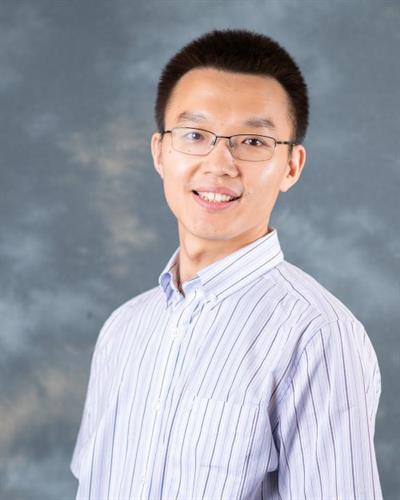
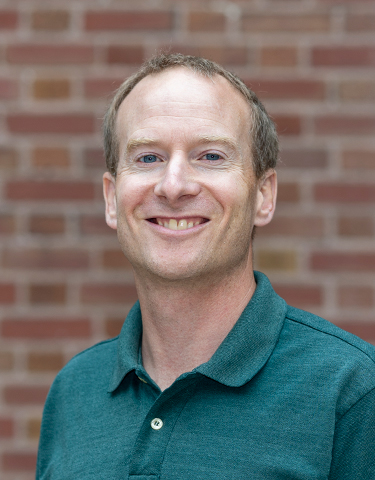
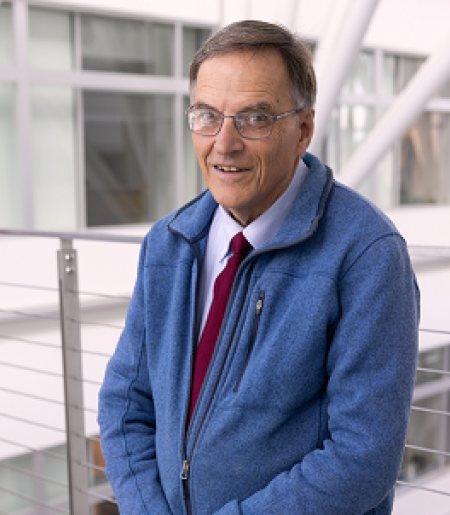
Xinqiang Ding is an Assistant Professor of Chemistry at Tufts University, holding the Dr. Charles W. Fotis A37, AG39 Junior Professorship. He leads the Ding Group, focusing on computational methods integrating statistical mechanics, molecular dynamics, and machine learning. His research addresses challenges in computational drug design, force field development, and biomolecular simulations. He earned a Ph.D. in Chemistry from the University of Michigan (2018) and dual B.S. degrees in Pharmaceutical Science and Mathematics from Peking University (2012). Research Interests : Computational drug design via protein-ligand binding free energy calculations Coarse-grained force field development for biophysical systems Multiscale modeling of biomolecular condensates Molecular simulation techniques enhanced by machine learning Teaching : Teaches courses including Biophysical Chemistry and special topics in Machine Learning & Molecular Dynamics. Advises graduate students and postdoctoral researchers in computational chemistry and biophysics. Labs/Teams : Directs the Ding Group at Tufts, collaborating on software tools like BayesMBAR and OpenABC for free energy calculations and biomolecular simulations.
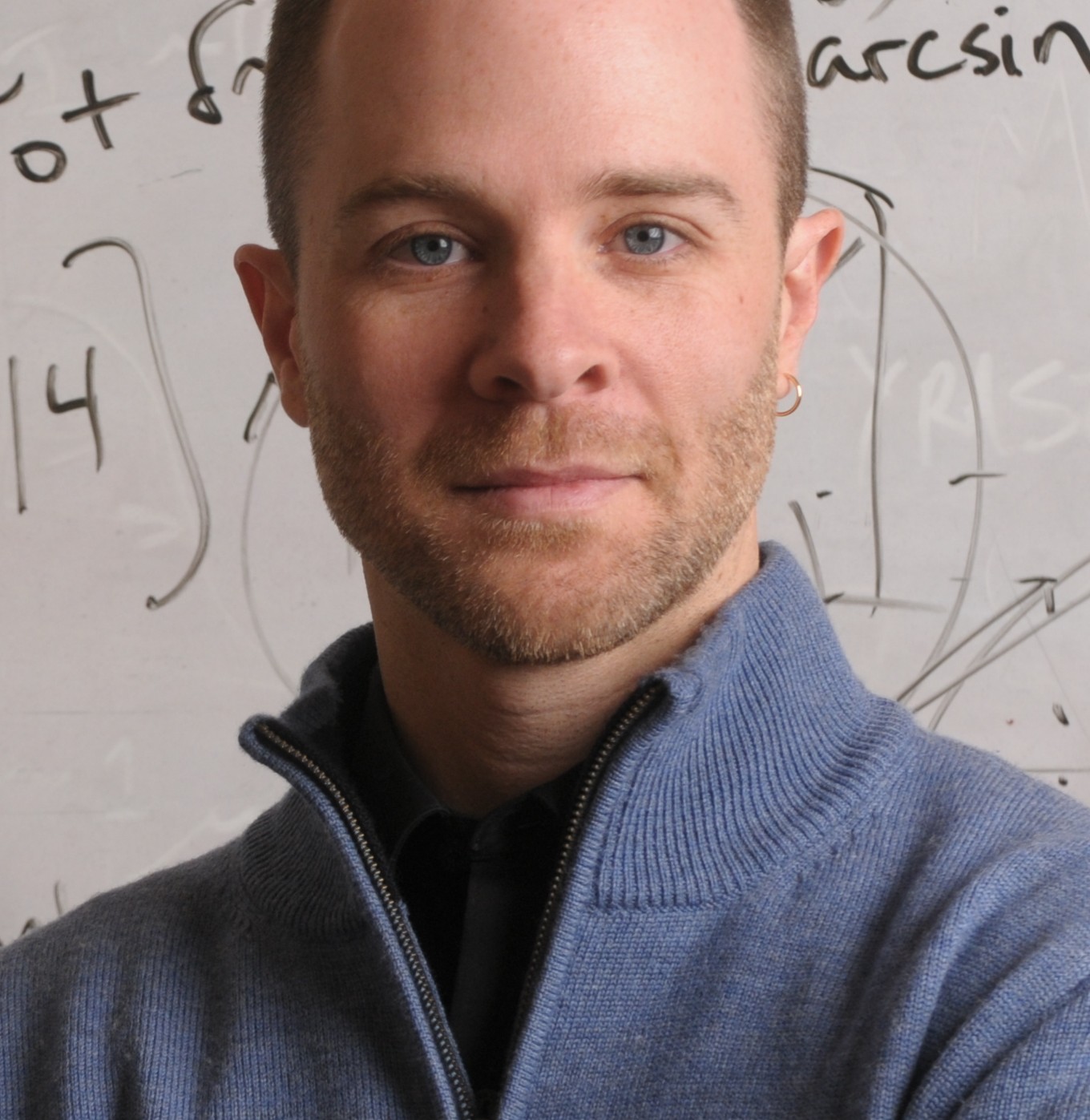
Lincoln D. Carr is a Professor in the Department of Physics at the Colorado School of Mines, where he investigates fundamental questions at the quantum-classical boundary, novel quantum computing paradigms beyond standard models, and interdisciplinary STEM education approaches. His work bridges theoretical physics with real-world problem-solving for global challenges like energy systems and political stability. His research spans critical domains: Quantum Information Science and Engineering Complexity Sciences and Emergent Phenomena Condensed Matter and Atomic Molecular Optical Physics Applied Mathematics and Computational Science Science Policy and Diplomacy Initiatives Humanities-STEM Integration Frameworks Analysis of his 2023-2025 publications reveals dominant themes in fractional quantum mechanics (Schrödinger/Ising models), Goldilocks quantum cellular automata, multiscale quantum media, and quantum optimization via oscillating fields. His numerical work achieves unprecedented precision in modeling anomalous transport, while his quantum education leadership drives national workforce development strategies. No specific scientific awards are documented in the source material. As a core faculty member, Carr mentors graduate students in quantum information and complexity science, though individual advisees aren't listed. His national workshop leadership indicates active grant involvement in quantum education infrastructure. He spearheads national quantum education policy through workshops establishing centers for quantum workforce development, demonstrating commitment to science diplomacy and interdisciplinary training frameworks that connect quantum physics with societal challenges.
Dr. Viktor Dremin is a Research Fellow at the Aston Institute of Photonic Technologies (AiPT), part of the College of Engineering and Physical Sciences at Aston University. He holds a PhD and is a Fellow of the Higher Education Academy (FHEA). His research focuses on biophotonics, biomedical optics, and optical imaging technologies. Key areas include laser Doppler flowmetry, fluorescence spectroscopy, and hyperspectral imaging for medical diagnostics. Dr. Dremin leads projects on cerebral blood flow monitoring, singlet oxygen generation for theranostics, and wearable medical sensors. Education: PhD (details unspecified), FHEA qualification Research Interests: Biomedical engineering applications, non-invasive diagnostics, optical sensors, machine learning integration His work spans collaborations in neurovascular dynamics, liver cancer detection, and 3D skin model analysis. He has authored 144+ research outputs, including peer-reviewed articles and datasets. Notable contributions include a hyperspectral imaging system for skin diagnostics and wearable devices for cardiovascular monitoring. Dr. Dremin's lab develops optical tools for minimally invasive surgery and metabolic assessments. Recent studies emphasize transcranial cerebral blood flow analysis, singlet oxygen's role in cellular bioenergetics, and AI-driven maxillary sinus diagnostics. His datasets explore skin polarization and intestinal perfusion under ischemia. Collaborations include institutions in Russia and the UK, focusing on translational medical optics.
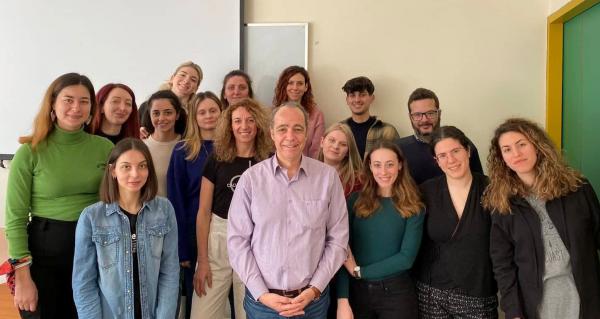
Ioannis Trougakos leads the "Ageing and Age-Related Diseases" research group at the Department of Cell Biology and Biophysics, Faculty of Biology, National & Kapodistrian University of Athens (NKUA). His work focuses on aging biology, proteostasis, and systemic disease mechanisms using multidisciplinary systems biology approaches. Founded in 1932 and reformed in 1990, NKUA's Faculty of Biology is Greece's top-ranked biology faculty, offering cutting-edge postgraduate programs. The lab utilizes advanced facilities including cryo-electron microscopy, confocal imaging, and high-throughput screening platforms. Research spans: Proteostatic and mitostatic regulatory networks Metabolic-genomic cross-talk Tissue-organismal communication in aging Small molecule discovery for anti-aging/anti-cancer applications Mechanisms of proteasome inhibitor toxicity Vaccination responses in comorbid populations Recent publications highlight expertise in NRF2 signaling, oxidative stress, and molecular aging. The lab employs 4 postdocs, 3 PhD, 3 MSc, and 6 BSc students. Funding comes from European Union programs, Hellenic foundations, and industry partnerships.
Julien Berro is an Associate Professor at Yale University, affiliated with the Yale School of Medicine's Departments of Molecular Biophysics & Biochemistry and Cell Biology. He leads the Berro Lab, focusing on mechanistic and quantitative studies of cellular force generation and sensing, particularly in clathrin-mediated endocytosis. His research integrates experimental, computational, and theoretical approaches. Education: PhD in Mathematical Modeling in Biology (Université Joseph Fourier, France), Postdoc at Yale University. Key affiliations include the Nanobiology Institute and the Center for Biomedical Data Science. Research interests center on actin cytoskeleton mechanics, endocytic force production, and membrane tension regulation. Notable achievements include NIH High-Risk/High-Reward Awards and recognition as a 'Cell Scientist to Watch' (2019). Lab Focus: Coiled-coil force sensors, CRISPR/Cas9 genome editing, and quantitative imaging. Grants: NIH funding for mechanobiology studies. Labs/Teams: Collaborates with the Pollard Lab and the Yale Systems Biology group.
Dr. Filippidis George is a Senior Staff Scientist at the Institute of Electronic Structure and Laser (IESL) of FORTH, leading the Non-linear Microscopy (NLM) group. He holds a B.Sc. in Physics (1995) and a Ph.D. in Biophysics (2000) from the University of Crete. His research focuses on biophotonics, non-linear microscopy, and their applications in biological processes and cultural heritage studies. Education: Ph.D. in Biophysics, University of Crete, 2000 B.Sc. in Physics, University of Crete, 1995 Research Interests: Dr. Filippidis develops advanced optical techniques such as multiphoton microscopy and nonlinear spectroscopy to study molecular mechanisms in biological systems and analyze cultural heritage materials. His work includes collagen analysis, cancer diagnosis, and nondestructive imaging of artworks. He has pioneered applications of third-harmonic generation (THG) and second-harmonic generation (SHG) for biomedical and heritage diagnostics. Recent Trends in Publications: His articles emphasize integration of machine learning with microscopy for diagnostic precision, deep-learning enhanced cancer detection, and cross-laboratory validation of collagen analysis. His work bridges biophotonics with practical applications in medicine and art conservation. Lab & Teams: He leads the Non-linear Microscopy Lab at IESL-FORTH, collaborating on projects involving tissue characterization, nanosurgery, and heritage material analysis. His group actively engages in interdisciplinary research with medical and art institutions.
Antonio Brunetti is an Assistant Professor (RTD-a) at Politecnico di Bari, focusing on deep learning applications in biomedical engineering. His research bridges artificial intelligence with medical imaging and neurological signal analysis, particularly for disease diagnosis and rehabilitation. Research Interests Deep learning for multimodal medical imaging (MRI, CT, EEG/fNIRS) Neurological disorder analysis (Alzheimer's, Parkinson's) Radiomics and explainable AI in oncology Virtual reality interventions for cognitive decline Publication Trends Recent work emphasizes AI-driven segmentation of tumors, attention mechanisms in neurological classification, and fusion techniques for multimodal data. Applications span from pancreatic cancer radiomics to hyposmia assessment post-COVID-19.
Nicolas C. Pégard is an Assistant Professor at the University of North Carolina at Chapel Hill, jointly affiliated with the School of Medicine's Biomedical Engineering department and the Applied Physical Sciences program. He directs the Computational Biophotonics Laboratory, which develops advanced optical instrumentation for neuroscience and medical applications. His research integrates physics, engineering, and computer science to create novel optical tools for interrogating biological systems. Key interests include computational microscopy, holography, machine learning approaches to neural imaging, optogenetics, and high-speed optical systems for monitoring neural activity. The lab focuses on task-based optical systems rather than traditional imaging. Dr. Pégard's publications demonstrate a consistent focus on advancing optical techniques for neuroscience. Recent work (2023-2025) shows strong trends in developing holographic methods, compressive imaging techniques, and integrated systems for multimodal neural recording. His team frequently publishes on applications of deep learning to optical problems and creates open-source tools for the research community. Sloan Fellowship in Neurosciences (2023) Kavli Innovation Grant (2022) Beckman Young Investigator Award (2021) Burroughs Wellcome Career Award (2018) The lab actively trains PhD students in interdisciplinary research, with recent graduates including Dr. Hossein Eybposh. Current projects explore holographic optogenetics, voltage imaging, and integrated systems for behavioral neuroscience. The group maintains collaborations with Janelia Research Campus and receives funding from NSF, NIH, and private foundations for developing next-generation neurotechnology platforms.
Maggie Chung, MD is an Assistant Professor in the Department of Radiology and Biomedical Imaging at the University of California, San Francisco (UCSF), specializing in breast imaging. She holds affiliations with UCSF’s Center for Intelligent Imaging (ci²) and the Clinical Trials Committee. Her roles include membership in key institutional committees such as the Radiology Residency Admissions Committee and Quality Assurance Committee. Education: Medical degree from Warren Alpert Medical School of Brown University, internship at Scripps Mercy Hospital (San Diego), diagnostic radiology residency and breast imaging fellowship at UCSF. Dr. Chung’s research focuses on advancing artificial intelligence (AI) tools for breast imaging, including simulated contrast-enhanced MRI via deep learning, breast cancer risk prediction models, and improving mammography assessment through AI-driven risk stratification. Her work bridges clinical translation of AI technologies with personalized screening strategies. Her publications reflect expertise in AI applications, breast imaging techniques, and oncologic imaging challenges. Key trends include optimizing AI accuracy in mammography/tomosynthesis, enhancing early cancer detection, and addressing incidental findings in MRI. Recent studies also explore AI’s role in risk assessment and clinical decision-making. Awards: Bakar Fellows Spark Award (2024-2027), RSNA Research Scholar Award (2024-2026), Jaws Award (2024), and multiple resident/fellow awards recognizing her research excellence. In grants, she serves as Co-Principal Investigator for NIH-funded AI research and leads initiatives like the Radiological Society of North America’s deep learning-based MRI project. Her service roles reflect leadership in academic radiology and policy development for imaging guidelines. She contributes to UCSF’s ci² group, advancing intelligent imaging technologies, and collaborates on clinical trials integrating AI into breast cancer screening workflows.
Simone Latini is a Tenure Track Assistant Professor in the Department of Physics at the Technical University of Denmark (DTU). His research focuses on quantum materials engineering, 2D materials, and cavity quantum electrodynamics (QED), with emphasis on excitonic systems and light-matter interactions. He holds a PhD in Physics from DTU (2013–2016), where he studied transition metal dichalcogenide heterostructures. His work bridges theoretical physics and computational modeling, contributing to advancements in electronic structure calculations via tools like GPAW. Recent projects include exploring cavity-enhanced superconductivity, phonon-mediated phenomena, and ultrafast charge transfer dynamics in van der Waals heterostructures. Research Interests: 2D Materials Engineering, Quantum Materials, Cavity QED, Excitonic Systems, Condensed Matter Physics, and Nanophotonics. His studies address topics like exciton polaritons, strain-tunable properties of monolayers, and quantum phase transitions in materials such as Ta2NiSe5. He collaborates on developing theoretical frameworks for light-matter interactions in extended systems and applies first-principles quantum electrodynamics (QEDFT). Grants and Advising: Supervises PhD student Jan Krogh Svaneborg on low-energy model Hamiltonians for materials science. Leads projects on automated generation of Hamiltonians and has contributed to DTU’s initiatives in electronic properties of 2D materials. His research aligns with DTU’s broader goals in sustainable and advanced material science. Labs/Teams: Affiliated with the 2D Materials Engineering and Physics group at DTU Physics, collaborating internationally on quantum materials and optoelectronic applications.
Nathan Davis is an Associate Professor of Art and Design Foundation at VCUQatar, part of Virginia Commonwealth University. He holds an MFA in Design from California College of the Arts (2007) and a BFA in Applied Visual Arts (Sculpture) from Oregon State University (2004). His research focuses on typography, cultural identity, and participatory design methodologies, exemplified by the Type of Place project, which explores vernacular typography's role in shaping cultural identity globally. He has been awarded grants from VCU and recognition such as the Graphis Design Annual Silver Award and Creative Quarterly Runner-up for his work. Teaching roles include Assistant Professorships at Montana State University and Ohio University, where he developed curricula and advised graduate theses. He co-founded Arcadian Studio, a design consultancy addressing brand strategy and visual communication. Key exhibitions include Type of Place installations in Reykjavik and Zurich, and collaborative projects like -162° Trading Power in Tokyo and Doha. His presentations span international conferences like ATypI and TypeCon, emphasizing design's intersection with cultural heritage and pedagogy. Grants include funding for a user-generated typography archive app and undergraduate research initiatives. Nathan’s work bridges academic research, professional design practice, and community engagement, with a focus on Qatar’s evolving cultural landscape.
Dr. Jeff Potratz is Professor of Biochemistry at Wisconsin Lutheran College, where he researches RNA folding mechanisms and develops innovative educational approaches for biochemistry instruction. His laboratory investigates the kinetic processes of RNA folding using fluorescence techniques, building on his graduate work with the DEAD-box helicase protein family. Educational background includes a B.S. in Chemistry from Wisconsin Lutheran College and Ph.D. in Biochemistry from University of Texas at Austin. Potratz teaches foundational courses including General Chemistry and Biochemistry, integrating technology-enhanced learning methods like Desmos-based activities for visualizing molecular interactions. Research focuses on: RNA folding kinetics of Tetrahymena ribozymes using fluorescence assays DEAD-box helicase functions in RNA processing Technology integration in biochemistry education Recent publications include method development for tracking RNA folding and educational research on interactive classroom technologies. His work consistently involves undergraduate researchers, providing hands-on experience in biophysical techniques and experimental design. Professional service includes coordinating chemistry outreach workshops for high school teachers and maintaining memberships in the American Chemical Society and American Society for Biochemistry and Molecular Biology.
Carl Franck is an Associate Professor of Physics at Cornell University, affiliated with the College of Arts and Sciences. He has maintained a continuous faculty position since 1982, progressing from Assistant Professor (1982-1988) to Associate Professor (1988-present), with a Visiting Professorship at the University of Bristol in 1991. His research bridges experimental physics and biological systems, employing quantitative approaches to complex phenomena. Dr. Franck's academic foundation includes: A.B. from Harvard College (1974) Ph.D. from Princeton University (1978) His research program focuses on biological physics and experimental condensed matter physics. Dr. Franck's group has pioneered the application of x-ray techniques to study photon-electron interactions and correlated electron dynamics, while simultaneously exploring microbial collective behavior—particularly Dictyostelium discoideum's transition from unicellular to multicellular life. His laboratory employs microfluidic technology, light scattering experiments, and advanced microscopy to quantify cellular signaling processes and population dynamics. The group has developed innovative automated cell counting systems and specialized equipment for measuring cell growth kinetics, contributing significantly to understanding how cells process information through chemical signaling. Dr. Franck's publication record shows consistent output across two major research domains, with recent work (2020-2022) continuing to advance both x-ray physics and microbial behavior studies. His research demonstrates a distinctive pattern of maintaining parallel investigations in condensed matter and biological physics while identifying common principles of collective behavior across different scales. His scientific contributions have been recognized through membership in the American Physical Society: Member, American Physical Society Dr. Franck has mentored an extensive network of students across multiple generations, currently advising Christopher Donohue, Rowan Hess, Yasmine Meziani, Gwendolyn Parks, and Daren Chen. His former students include Igor Segota, Elijah Bogart, Kayvon Daie, Albert Bae, and numerous undergraduate researchers who have contributed to his work on microbial signaling and condensed matter systems. His mentoring approach emphasizes interdisciplinary collaboration and the development of novel experimental techniques. The Franck Group operates at the physics-biology-engineering interface, maintaining specialized facilities for light scattering experiments and microfluidic research. The laboratory has developed unique methodologies for measuring cell population dynamics at low densities using laser-based detection systems, and continues to explore the quantitative bases of communication and computation in living matter through both experimental and theoretical approaches.
Ila Fiete is a Professor in the Department of Brain and Cognitive Sciences at MIT, an Associate Investigator at the McGovern Institute for Brain Research, and Director of the K. Lisa Yang Integrative and Computational Neuroscience (ICoN) Center. Her research focuses on understanding neural mechanisms underlying memory, navigation, and learning through computational and theoretical neuroscience approaches. Education: B.S. in Physics and Mathematics from the University of Michigan; Ph.D. in Physics from Harvard University. Research Interests: Grid cell function, spatial cognition, neural network dynamics, cognitive mapping, and the interplay between neuroscience and artificial intelligence. Her work has elucidated theoretical frameworks for grid cell activity stabilization, developmental emergence, and their roles in spatial and episodic memory. She pioneered studies connecting neural error correction codes to fault-tolerant networks and developed computational models of hippocampal-entorhinal circuits. Awards: 2022 Swartz Prize for Theoretical and Computational Neuroscience (Society for Neuroscience). Labs/Teams: Leads the Fiete Lab and directs the ICoN Center, fostering interdisciplinary research at the interface of neuroscience, computation, and AI. Her work bridges biological plausibility with machine learning innovation. Current Projects: Exploring modular neural architectures, fault tolerance in biological systems, and the cognitive foundations of spatial navigation. Active in developing neuro-inspired AI models and studying neural dynamics across scales.
Paul Wiseman is a Professor of Chemistry and Physics at McGill University, holding the Otto Maass Chair in Chemistry. He earned a B.Sc. (Hons) in Chemistry from St. Francis Xavier University (1989) and a Ph.D. in Chemistry from the University of Western Ontario (1995). His research focuses on biophysical chemistry, particularly measuring macromolecular interactions in living cells using advanced microscopy techniques like image correlation spectroscopy (ICS) and image cross-correlation spectroscopy (ICCS). His work addresses cellular adhesion mechanisms, receptor dynamics, and the development of novel imaging methods such as third harmonic generation (THG) microscopy and quantum dot labeling. Wiseman’s research group employs cutting-edge equipment, including light sheet, TIRF, multiphoton, and STED microscopes, to study protein transport, signaling, and membrane organization. His contributions have been recognized with awards like the Biophysical Society Young Fluorescence Investigator (2005), Leo Yaffe Award for Teaching (2007), and the Keith Laidler Award (2009). He currently advises PhD students in interdisciplinary fields spanning biophysics, cell biology, and microscopy. His lab explores topics such as CFTR protein dynamics in cystic fibrosis, mechanosensing in immune cells, and the role of cholesterol in membrane receptor regulation. Collaborations with the NIH Cell Migration Consortium and editorial roles at Biointerfaces and Biophysical Journal highlight his leadership in the field. The Wiseman Group’s innovations in microscopy techniques enable unprecedented insights into cellular processes at the molecular level.