Karin Lingnau is an Assistant Professor at the exMedia Lab (School of Media and Fine Art) at the Academy of Media Arts Cologne (KHM). Her work bridges digital art, speculative design, and science fiction through interdisciplinary research projects like IDiA (Institute for Diachronic Artifacts) and Materiathek , exploring future artifacts, material processes, and anthropogenic transformations. Research Themes : Speculative materials, utopian/dystopian architectures, bionic systems, and geopolitical implications of technological mining. Exhibitions : Globale_Global Games (ZKM, 2015), Schwindel der Wirklichkeit (Berlin, 2014), Chaos – Komplexität in Kunst und Wissenschaft (Munich, 2012), and international installations. Scientific Engagement : Collaborations with institutions such as the Fraunhofer Institute and ETH Zurich, integrating artistic practice with scientific discourse. Awards : Danfoss Art Award Gold, Special Prize for Paradoxien des Öffentlichen, Honorary Mentions at Transitio_MX and Digital Sparks. Her recent publications and artifacts, including Aquilithochitonaria and GeomYne , interrogate synthetic biology, nanogeometric mining, and the legacy of science fiction in shaping societal visions.
Prof. Dr. Konrad Stadler serves as Professor and Programme Director for the Master of Science in Engineering Education at Zurich University of Applied Sciences (ZHAW), School of Engineering, Department of Engineering Education. His work bridges academic research with industrial and medical applications of wearable robotics, focusing on exoskeleton systems for physical assistance. Stadler holds a Dr. sc. techn. (1999-2003) and Dipl. El. Ing. ETH (1993-1999), both from ETH Zurich. His educational background in electrical engineering underpins his technical approach to biomechanical systems. His research centers on wearable robotics with dual industrial and medical applications. Stadler investigates soft exoskeletons for reducing physical workload in manufacturing and assisting mobility-impaired individuals through pneumatic actuation, string-based mechanisms, and modular designs. Key focus areas include human-robot interaction modeling, biomechanical load assessment, and real-world validation of assistive systems in both workplace ergonomics and rehabilitation contexts. Analysis of his 15 most recent publications reveals an evolution from rigid industrial exoskeletons (2014-2016) toward soft, modular systems (2017-2020). Early work emphasized upper-limb gravity compensation and workplace ergonomics, while recent research focuses on lower-limb rehabilitation with pneumatic actuation and unsupervised monitoring systems. Common threads include user-exoskeleton interaction modeling, sensor integration for contextual awareness, and feasibility studies for specific mobility impairments, demonstrating consistent translation of engineering principles into practical human-centered solutions. No scientific awards were documented in the provided sources. While no formal PhD/Master's students are listed, Stadler's leadership of multi-institutional projects (Robo-Mate, XoSoft, HumanTech) indicates mentorship of research teams. These projects, likely funded through European and Swiss grants, address industrial exoskeleton development and rehabilitation technology, with emphasis on human-robot interaction and practical implementation. Stadler collaborates within international consortia including European partners in the Robo-Mate project (industrial exoskeletons) and XoSoft initiative (soft modular exoskeletons), working with institutions across Switzerland, Italy, Ireland, and Germany. His teams integrate mechanical engineering, biomechanics, and control systems expertise to develop validated exoskeleton prototypes for real-world deployment.
Dr. Otar Akanyeti is a Senior Lecturer in the Department of Computer Science at Aberystwyth University. His research integrates engineering, physics, computer science, and biology to advance underwater robotics and health informatics. He holds a BSc in Electronic Engineering, an MSc in Embedded Systems and Robotics, and a PhD in robot learning from the University of Essex. He co-founded the Aberystwyth Stroke Research Group and leads projects on AI-driven healthcare interventions. His research focuses on two primary strands: 1) Bio-inspired Robotics , developing sensors and control systems for underwater autonomy using biological principles; and 2) Health Informatics , employing wearable technology and AI to improve stroke rehabilitation and chronic disease management. Current investigations include hydrodynamic imaging, collective intelligence for data mining, and predictive tools for neurorecovery. Akanyeti's recent publications emphasize interdisciplinary approaches, with articles spanning gait analysis using smartphone sensors, clinical outcome prediction in stroke, and biomimetic robotics. His work consistently bridges biomechanics, machine learning, and clinical applications. He leads multiple funded projects including 'Miscanthus AI' (plant phenotyping for Net Zero), 'Intelligent Exercise Practitioner for Stroke Survivors', and 'iNavigate' (brain-inspired navigation technologies). His lab utilizes advanced equipment like instrumented treadmills and eye-tracking systems.
Chunying Li serves as an Assistant Professor in the Department of Electronic and Electrical Engineering at the College of Engineering, Southern University of Science and Technology (SUSTech). Recognized as a 2024 Shenzhen Pengcheng Peacock Program Distinguished Talent and Ocean Power Young Scientist nominee, her research pioneers spherical underwater robotics and multi-agent systems for complex marine environments. Her educational foundation includes: Ph.D. in Intelligent Mechanical Systems Engineering from Kagawa University, Japan (2021-2023) M.S. in Control Engineering from Tianjin University of Technology, China (2017-2020) Dr. Li's research integrates biomimetic principles with advanced engineering to solve underwater navigation challenges. Her work on multi-sensor fusion enables robust environmental perception, while adaptive control algorithms allow spherical robots to operate in turbulent conditions. Key applications include ocean monitoring, resource exploration, and collaborative multi-robot missions where traditional systems fail. Recent publications (2020-2024) reveal a strong focus on performance optimization and biomimetic sensing , with 7 of 11 representative papers appearing in Q1 journals like Information Fusion (IF=17.564). A notable trend is the development of artificial lateral line systems inspired by fish, significantly improving obstacle recognition in murky waters. Her accolades include: 2024 Young Scientists Nomination for Ocean Power 2024 Shenzhen Pengcheng Peacock Program Distinguished Talent 2023 Chinese Society of Automation Natural Science Award (Second Prize) 2022 CSC National High-Level University Scholarship Dr. Li leads the Shenzhen Outstanding Science and Technology Innovation Talent Program while contributing to international projects: Shenzhen Grants: Pengcheng Peacock Program (Principal Investigator) International Collaboration: Japan SPS KAKENHI Program (Key Researcher) Regional Projects: Tianjin Science and Technology Innovation Cooperation Program Her laboratory develops spherical underwater robot platforms featuring hybrid thrusters and multi-sensor arrays, emphasizing father-son robot coordination and jellyfish-inspired swarm behaviors. Through IEEE ICMA conference leadership roles (Finance Chair 2025, Publication Co-Chair 2024), she actively shapes robotics research standards in Asia-Pacific.
Professor Rod Barrett serves as Deputy Head of School (Research) in the School of Health Sciences and Social Work at Griffith University. With over 140 international refereed journal articles in Musculoskeletal Biomechanics and more than $5 million in competitive research grants, he has established himself as a leading researcher in his field. His work bridges engineering principles with clinical applications to address musculoskeletal disorders. Deputy Head of School (Research), School of Health Sciences and Social Work Member, The Australian Centre for Precision Health and Technology (PRECISE) 2025-present Former Member, Disability & Rehabilitation (2018-2024) Office: G02 1.06, Gold Coast Campus Contact: +61 (0)7 5552 8934, r.barrett@griffith.edu.au Professor Barrett's educational background includes a Bachelor of Education from KCAE (1989), a Master of Science from Wollongong (1992), and a PhD from the University of Queensland. His academic journey reflects a strong foundation in both education and scientific research, enabling his interdisciplinary approach to biomechanics. Bachelor of Education, KCAE (1989) Master of Science, Wollongong (1992) PhD, University of Queensland, Brisbane, Australia Professor Barrett's research primarily focuses on the use of medical imaging and computational methods to prevent and better manage musculoskeletal conditions including tendinopathy and lower limb osteoarthritis. His work spans Achilles tendon mechanics, hip osteoarthritis biomechanics, and the development of advanced biomechanical methods incorporating artificial intelligence. He has pioneered techniques for assessing muscle and tendon function using cutting-edge technologies, with applications in both sports medicine and rehabilitation. His research group has developed innovative approaches to analyzing movement patterns and tissue mechanics that have significant clinical implications for injury prevention and treatment. Analysis of Professor Barrett's 15 most recent publications reveals a strong emphasis on computational biomechanics, with particular focus on lower limb mechanics, surgical outcomes modeling, and AI applications in movement analysis. His work increasingly integrates advanced imaging techniques with machine learning algorithms to develop predictive models of tissue loading and injury risk. The research spans basic science investigations of tissue mechanics to applied clinical studies addressing specific patient populations including athletes and individuals with osteoarthritis. Professor Barrett has received significant recognition in his field, having served as President of the Australian and New Zealand Society of Biomechanics and as an editorial board member for leading journals in biomechanics. His leadership in the field extends beyond his institutional roles to national and international professional organizations. President, Australian and New Zealand Society of Biomechanics Editorial Board Member, Leading Journals in Biomechanics With an impressive record of supervising 20 PhD students to completion and currently overseeing multiple doctoral candidates, Professor Barrett has made substantial contributions to academic training in biomechanics. His $5+ million in competitive research funding includes major grants from NHMRC, ARC, and international collaborators, supporting projects ranging from bionic limb development to digital athlete modeling. Current flagship projects include the Next Generation of Bionic Limbs initiative (NHMRC, $954,255), BioSpine 2.0 (MAC, $3.87 million), and The Digital Athlete collaboration with Stanford University. Professor Barrett leads research within Griffith University's Health Group, particularly through The Australian Centre for Precision Health and Technology (PRECISE). His work involves close collaboration with clinical partners and industry, translating biomechanical research into practical applications for patient care and athletic performance. His research entity operates at the intersection of engineering, medicine, and data science, developing innovative solutions for musculoskeletal health challenges.
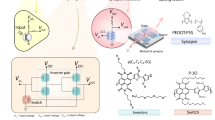
Cunjiang Yu is a Founder Professor at the University of Illinois Urbana-Champaign (UIUC), affiliated with multiple departments including Electrical and Computer Engineering, Mechanical Science and Engineering, Materials Science and Engineering, and Bioengineering. He holds a part-time faculty position at the Beckman Institute for Science and Technology. His research focuses on soft electronics, bio-integrated devices, and neuromorphic systems. He earned his Ph.D. in Mechanical Engineering from Arizona State University (2010) and holds M.S. and B.S. degrees from Southeast University, China. Yu is a founding editor of Soft Science and serves on editorial boards of journals like Bioactive Materials and IEEE Transactions on Nanotechnology . His work integrates materials science, engineering, and biology to develop innovative solutions for healthcare and neuroprosthetics. Educations: Ph.D., Mechanical Engineering, Arizona State University, USA (2010) M.S., Electronic Engineering, Southeast University, China (2007) B.S., Mechanical Engineering, Southeast University, China (2004) Research Interests: Neuroprosthetics and neuromorphic engineering Soft, stretchable, and biocompatible electronics Biodegradable and implantable medical devices Materials science for biomedical applications Affiliations: Beckman Institute for Advanced Science and Technology (Part-time) Materials Research Laboratory Nick Holonyak Micro and Nanotechnology Laboratory Yu’s lab designs cutting-edge devices such as bio-optoelectronic stimulators, stretchable neural interfaces, and flexible health monitoring systems. His contributions bridge gaps between fundamental materials research and translational medical technologies.
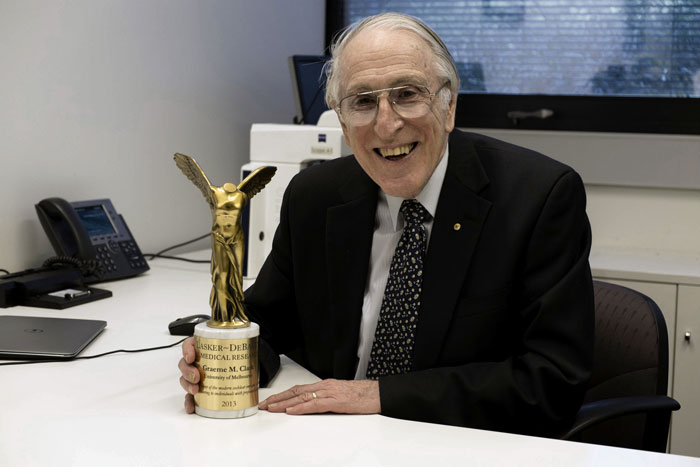
Professor Graeme M. Clark is a renowned biomedical engineer and academic at the University of Melbourne, celebrated for pioneering the multi-channel cochlear implant ("Bionic Ear"). As the namesake and founding figure of the Graeme Clark Institute for Biomedical Engineering, he holds the title of Lasker Laureate and has been honored globally for his transformative work in sensory neural prosthetics. His research focuses on restoring hearing through cochlear implants, advancing bionics, and medical implant safety. Clark's innovations have enabled speech and language development for thousands of deaf individuals worldwide. He leads the Institute with a vision to bridge engineering and clinical needs, fostering MedTech translation. His work extends to insights in neuroscience and regenerative medicine. Awards include the Lasker Award (considered a precursor to the Nobel Prize) and recognition by prestigious institutions like the Royal College of Surgeons in Ireland. Clark’s legacy includes collaborations with Cochlear Ltd and the development of clinical standards minimizing meningitis risks post-implantation. Director of the Graeme Clark Institute for Biomedical Engineering Key contributions to personalized implants and tissue engineering Recipient of over 100 international honors
Steven T Walston, PhD, is an Assistant Professor of Research Ophthalmology at the University of Southern California. As a retinal electrophysiologist and biomedical engineer, he specializes in neural interface technologies aimed at restoring vision through advanced prostheses and understanding retinal degeneration pathologies. Research Focus: His work spans three core domains: 1) Developing electrical stimulation strategies for retinal prostheses, 2) Investigating neural alterations during retinal degeneration, and 3) Engineering nanomaterial-based electrodes integrated into flexible microelectrode arrays to enhance neural-electrode communication. This interdisciplinary approach bridges biomedical engineering, nanotechnology, and clinical ophthalmology. Awards & Honors: Artificial Vision Symposium Travel Grant (2015) William Hansen Sandberg Memorial Foundation Scholarship (2015) NEI EY022931-S1 Research Grant (2013-2016) NIH Intramural Research Training Award (2009) Publication Trends: His 15 most recent articles (2016-2025) demonstrate a strong focus on neural interface innovation, particularly graphene-based microelectrodes for high-resolution neural recording/stimulation. Key themes include retinal electrophysiology characterization, advanced calcium imaging techniques, and translational applications for visual restoration. Nanomaterial engineering and in vivo validation dominate his recent methodological contributions.
Professor Gregg Jørgen Suaning is a leading academic in biomedical engineering at the University of Sydney, where he serves as the Inaugural Head of the School of Biomedical Engineering. His career spans over 25 years, combining industrial and academic expertise in sensory bionics, particularly cochlear implants and visual prostheses. He earned his PhD in visual prosthesis from the University of New South Wales (UNSW) in 2003. His research focuses on restoring sensory functions through neuromodulation, including vision and hearing restoration, and facial nerve paralysis interventions. Education: BSc and MSc (California State University, 1986–1988), PhD (UNSW, 2003). Research Interests: Development of implantable neuroprostheses, facial reanimation systems, and improving bionic devices' biocompatibility and efficacy. His work emphasizes translating innovations into clinical applications, such as the Nucleus CI24M cochlear implant. Publications: Over 150 peer-reviewed articles, focusing on topics like retinal ganglion cell stimulation, surgical approaches to facial paralysis, and suprachoroidal visual prostheses. Awards: Bartimaeus Award (2019), Innovation Awards (UNSW Technology Transfer), Senior IEEE membership. Recognized for contributions to prosthetic vision and advancing collegiality in the field. Grants: Led a AU$50M ARC Special Research Initiative (2010–2015) and secured over AU$60M in competitive funding. Current projects include facial nerve paralysis interventions and advanced cochlear implants. Labs/Teams: Member of the University of Sydney Nano Institute and the Brain and Mind Centre. Collaborates with industry partners like Cochlear Limited and academic institutions globally. Future Work: Expanding research on high-resolution visual prostheses, optimizing neural stimulation strategies, and advancing facial nerve rehabilitation technologies.
Tatiana Kameneva is an Associate Professor at Swinburne University of Technology's School of Engineering, specializing in biomedical engineering, computational neuroscience, and neural prosthetics. She holds a PhD from The University of Melbourne and degrees from Kazakh National University. Her research focuses on neural stimulation strategies for medical bionics, including retinal prosthetics and vagus nerve stimulation, with emphasis on understanding neural response mechanisms in health and disease. Research Interests: - Neurophysiological basis of cardiovascular regulation under stress - Optogenetic and electrical neuromodulation techniques - Computational modeling of visual and auditory prosthetics - Machine learning applications in medical diagnostics and assistive technologies - Translational research in retinal ganglion cell stimulation - Sympathetic nervous system dysfunction in obesity and hypertension Recent work includes studies on stress-induced brain activity using MEG and tVNS, nanoparticle-based retinal neuromodulation, and seizure forecasting algorithms. Key publications span high-impact journals like Journal of Neurophysiology , Neuromodulation , and ACS Nano . Awards: Travel Awards from Swinburne University and the Organization for Computational Neuroscience. Grants include projects on tVNS for dementia and hypertension, and visual acuity quantification for prosthetic devices. She is an Associate Editor for IEEE Transactions on Neural Systems and Rehabilitation Engineering , and actively reviews for multiple neuroscience and biomedical engineering journals.
Simon X. Yang is a Professor and Head of the Advanced Robotics and Intelligent Systems Laboratory at the University of Guelph, School of Engineering. He holds a Ph.D. in Electrical and Computer Engineering from the University of Alberta and is a Fellow of the Canadian Academy of Engineering. His expertise spans robotics, intelligent systems, control systems, sensors, and bio-inspired intelligence. Dr. Yang has authored numerous publications and serves as Editor-in-Chief/Associate Editor for international journals, as well as a grant panel member for NSERC and CIHR. Prof. Yang’s research focuses on real-time sensing, robotic teleoperation, neural networks, fuzzy systems, and applications in agriculture, transportation, and environmental monitoring. He has pioneered bio-inspired algorithms for path planning, multi-robot systems, and industrial automation. His work includes innovations in underwater robotics, drone coordination, and smart agriculture technologies. Dr. Yang teaches graduate-level courses on advanced control systems, soft computing, and robotics, as well as undergraduate courses in neuro-fuzzy systems and engineering design. He actively participates in organizing international conferences and has developed the PIGRGB-Weight dataset for livestock monitoring. Professional Highlights: Editor-in-Chief roles, NSERC grant panel, and leadership in robotics research Labs: Advanced Robotics and Intelligent Systems Lab Awards: Fellow of Canadian Academy of Engineering His lab’s innovations include a biomimetic gecko-inspired robot for microgravity environments and a bionic ray robot with high motion performance. Current projects address challenges in smart farming, infrastructure health monitoring, and autonomous systems safety.
Dr. Qi Hao is an Associate Professor and Deputy Director of the Department of Computer Science and Engineering at Southern University of Science and Technology (SUSTech) in Shenzhen, China. He also serves as Executive Director of the SUSTech & Haylion Intelligent Transportation Center and Head of the SUSTech & FengXiangBiao ICV Education Joint Laboratory. Prior to joining SUSTech in 2014, he was an Assistant Professor at the University of Alabama (2007-2014) following postdoctoral training at the University of Kentucky. Dr. Hao received his PhD in Electrical and Computer Engineering from Duke University in 2006, with Master's and Bachelor's degrees from Shanghai Jiaotong University (1997 and 1994). His academic journey includes research positions at Singapore's Data Storage Institute (1998-2001) and engineering experience at Shanghai Electric Tool Research Institute (1997-1998). As an expert in intelligent sensing and unmanned autonomous systems, Dr. Hao's research spans bionic intelligent sensor design, machine learning applications, and autonomous vehicle technologies. His work demonstrates a strong integration of theoretical frameworks with practical implementations, particularly in pyroelectric infrared sensing, UAV systems, and distributed sensor networks. His research has evolved to address increasingly complex challenges in autonomous navigation, multi-robot coordination, and edge computing for intelligent transportation systems. Dr. Hao's publication trend reveals a strategic shift toward integrated autonomous systems, with recent work emphasizing robotics, machine learning, and wireless communication. His research bridges computer vision, sensor fusion, and deep learning to solve practical challenges in autonomous vehicle perception, wireless energy transfer, and human activity recognition. The interdisciplinary nature of his work connects electrical engineering principles with cutting-edge AI techniques. US National Science Foundation Research Awards (2009, 2011) Multiple IEEE conference best paper awards and finalists (2012-2021) Shenzhen Overseas High-level Talents Peacock Plan Category C (2017) Advanced Educators in Shenzhen (2017) Outstanding Teacher of Guangdong Province (2021) SUSTech Outstanding Research and Service Awards (2017-2021) Dr. Hao has secured significant research funding as Principal Investigator for projects from NSFC, Shenzhen Nanshan District, and industry partners including Huawei, Intel, and Haylion Technology. His current projects focus on intelligent binary sensing, next-generation camera systems, autonomous driving safety frameworks, and federated learning for vehicle perception. He has also contributed to educational initiatives through Guangdong Province and Shenzhen City education reform projects. Leading the SUSTech & Haylion Intelligent Transportation Center and the SUSTech & FengXiangBiao ICV Education Joint Laboratory, Dr. Hao oversees research teams developing solutions for intelligent transportation challenges. His labs integrate expertise across computer science, electrical engineering, and mechanical engineering to advance autonomous vehicle technologies, sensor networks, and robotics applications for real-world implementation.
Peter Janssen is a Full Professor at KU Leuven's Faculty of Medicine, affiliated with the Department of Neuroscience. He leads the Neurophysiology Research Group at the Laboratory for Neuro- and Psychophysiology and holds memberships in interdisciplinary institutes including the KU Leuven Brain Institute (LBI), Institute for Artificial Intelligence (Leuven.AI), and Institute for Integration of Micro- and Nano-scale Technologies (LIMNI). His administrative roles include membership in the Faculty Council of Medicine and Departmental Council of Neurosciences. His research focuses on: Neural mechanisms of visual perception and action processing Intracortical brain-machine interfaces for visual prosthetics Neurophysiology of primate frontal and parietal cortices High-resolution neural implants and stimulation techniques Epileptic network dynamics using multimodal intracranial recordings Current projects include developing flexible retinal implants for vision restoration (2025-2028), decoding neural activity for navigation (2022-2026), and studying mirror neuron connectivity in primates (2023-2027). He teaches advanced courses including Neurophysiology (E0E76A), Consciousness and Sleep (E0N60A/U00L9A), Neuroscience (E05Y5A), and Nervous System Morphology/Pathophysiology (E0I69A). As primary supervisor, he mentors PhD candidates in neuroprosthetics, brain-machine interfaces, and neural coding research. Recent student projects involve intracortical visual prostheses, action observation in motor cortex, and human intracranial decoding. His laboratory utilizes cutting-edge techniques including intracortical recordings in primates, human electrocorticography, high-density electrode arrays, and AI-driven neural modeling.
Professor Adrian Fung is a distinguished clinician-researcher specializing in retinal diseases and vitreoretinal surgery at the University of Sydney's Faculty of Medicine and Health and Macquarie University Hospital. As Head of the Westmead Hospital Vitreoretinal Unit, he maintains dual academic appointments as Clinical Associate Professor at the University of Sydney and Clinical Professor at Macquarie University Hospital. His research spans three key domains: Clinical: Epiretinal membrane, macular hole, retinal detachment, macular degeneration, diabetic retinopathy, retinal vascular occlusions, white dot syndromes, retinal and choroidal tumours, and rare retinal diseases Clinical Research: Retinal Imaging and Rare diseases Basic Science Research: Bionic Vision, Proliferative vitreoretinopathy, and Vitreous substitutes Professor Fung's scholarly contributions include over 140 international peer-reviewed journal articles and 7 book chapters, including the widely recognized "Westmead Eye Manual" and "Vitreoretinal Surgery Online." His research portfolio features leadership in major clinical trials such as the Bionic Eye Project, Golden Geographic Atrophy trial, UNITY Vitrectomy, VOYAGER, and Velodrome/Portal Port Delivery System trials. He was the first surgeon outside the USA to implant the Port Delivery System and perform a refill-exchange injection. His scientific achievements have been recognized with numerous awards including the RANZCO Teacher of Excellence Award (2019) and the Macula Society International Travel Grant (2020). He serves as Editor for Retinal Cases and Brief Reports and Medical Retina Section Editor for Clinical and Experimental Ophthalmology. Professor Fung is an active educator, serving as Vitreo-retinal Fellowship Director at Westmead Hospital and convenor of Ophthalmology Updates!, one of Australia's largest ophthalmology conferences with 200 delegates. His international collaborations span 11 countries through the International Retinal Group, and he maintains extensive professional affiliations with organizations including RANZCO, ASO, ANZSRS, AAO, ASRS, ARVO, Euretina, Macula Society, and Retina Society.
Massimo Sartori is a Professor at the University of Twente's Department of Biomechanical Engineering within the Faculty of Engineering Technology. He leads the Neuromechanical Modelling & Engineering Lab and has secured over €4 million in research funding, including an ERC Starting Grant for his INTERACT project. His work bridges basic movement neuromechanics and applied robotics , focusing on developing predictive models of the neuromuscular system to enhance rehabilitation technologies like exoskeletons and prosthetics. His research combines electrical stimulation , wearable sensors , and computational models to personalize robotic assistance. Key challenges include automating adaptive processes, enabling smartphone integration, and translating lab findings into everyday applications. He has taught a master course on Biomechanics of Human Movement and mentored numerous students through his expanding team of 10 PhD and postdoctoral researchers. ERC Starting Grant (€1.5M) Marie-Skłodowska-Curie Fellowship OpenSim Outstanding Research Award As Associate Editor for IEEE Transactions on Neural Systems and Rehabilitation Engineering , he contributes to advancing wearable robotics and neuromuscular rehabilitation standards. His work spans consortium projects like H2020-ITN SimBionics and NWO-TTW ExoAid.