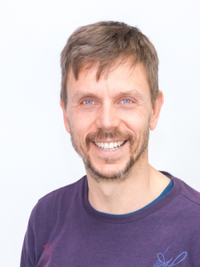
Prof. Dr.-Ing. Thorsten Brandt is a Professor at the Faculty of Technology and Bionics, Rhein-Waal University of Applied Sciences, where he specializes in Mechatronics and System Dynamics. He works at the Kleve Campus in office 06 03 007 and can be reached at 02821/80673 670. Research Interests: His academic focus spans Mechatronics System Dynamics Bionics Robotics Automation Engineering Mechanical Systems which reflect his role in the Department of Mechatronics and system dynamics.
Daniele Bernardini is a researcher at the School of Engineering and Design, Technical University of Munich (TUM), contributing to Healthcare and Rehabilitation Robotics under Prof. Cristina Piazza. He co-founded and leads Cognivix, a startup focused on industrial automation for high-variability/low-volume production. Education : M.Sc. in Theoretical Physics, University of Florence (1997) Ph.D. candidate in Computation, Information and Technology, TUM (since 2022) Research Focus : Robotic perception for manipulation tasks Deep learning in grasping systems 6D pose estimation techniques Photovoltaic energy management frameworks Recent Publication Trends : His 2022-2024 work spans robotics (6D pose estimation, bionic hands), machine learning (deep reinforcement learning), and energy systems (photovoltaic optimization), reflecting interdisciplinary efforts between AI and industrial applications.
Professor Martin Maß is a faculty member at the Westphalian University of Applied Sciences, where he has been working since March 2011. He is affiliated with the Department of Mechanical Engineering Bocholt (FB 6) and serves as the head of the Westphalian Institute for Bionics. Professor Maß's research focuses on the interdisciplinary field of bionics, combining principles from biology with engineering solutions. His work spans several key areas: Physics applications in biological systems Bionics and biomimetic design Electronics and sensor technology for biological applications Lightweight construction inspired by nature Biorobotics and robotic systems modeled after biological organisms Robotics development with biological inspiration Throughout his career, Professor Maß has built expertise in both theoretical and applied aspects of his fields. His work bridges the gap between fundamental physics and practical engineering applications, particularly in creating systems that mimic biological processes. Professor Maß's professional journey demonstrates a progression from fundamental physics research to applied engineering, with a particular focus on how biological systems can inform technological development. This interdisciplinary approach is increasingly important in fields ranging from robotics to materials science. Based in room C1.0.10 at the Bocholt campus, Professor Maß leads the Westphalian Institute for Bionics, which appears to be a research center focused on developing engineering solutions inspired by biological systems.
Prof. Dr. Josef Schmitz is a faculty member at Bielefeld University, holding a position in the Faculty of Chemistry with specialization in Physical Chemistry I. His academic profile demonstrates a unique interdisciplinary approach bridging traditional chemistry with advanced robotics and cybernetics. His research interests focus on the intersection of physical sciences and robotics, particularly in bionics and movement systems. As a recognized expert in robotics , walking robots , and movement systems, his work contributes to Bielefeld's Socio-Technical World research focus area which examines capabilities enabling agents like humans, robots and AI to act in complex environments. Prof. Schmitz serves as a Responsible Investigator within the Center for Cognitive Interaction Technology (CITEC), specifically in the Biological Cybernetics research group. This affiliation places him within one of Bielefeld University's Central Academic Institutes that pursue interdisciplinary research by combining expertise from multiple faculties. His work aligns with Bielefeld University's strategic research direction in the Socio-Technical World, where researchers investigate how agents including robots can interact intelligently with complex environments. The university's research profile emphasizes transcending disciplinary boundaries, which matches Prof. Schmitz's cross-departmental engagement between chemistry and robotics.
Prof. Dr.-Ing. Ivo W. Boblan is a Professor at the Department of Electrical Engineering at Berlin University of Technology. His research focuses on compliant robotics, bionics, human-robot interaction, and actuator systems. He leads the Compliant Robotics Lab (CoRoLab), developing advanced robots like the ZAR5 humanoid muscle robot and the BionicMotionRobot. Boblan has contributed to numerous conferences and serves on editorial and review boards for journals like Actuators and Advanced Robotics. He actively participates in interdisciplinary initiatives, including the Bionics Competence Network (BIOKON), and has organized international conferences such as BIOKON2004. His work emphasizes safe human-robot collaboration and biologically inspired designs, with applications in healthcare, industry, and exoskeleton development. Boblan's academic background includes a PhD in Prozesswissenschaften from TU Berlin (2009), with prior technical reports on evolutionary methods and robotic control systems. He has presented at institutions like the University of Kiel, Volkswagen AG, and the Berlin Senate Administration, advocating for robotics in modern work environments. His research spans pneumatic actuators, compliant mechanisms, and interdisciplinary approaches to robotics ethics and societal impact.
Raúl Rojas is a Professor of Artificial Intelligence at the Department of Mathematics and Computer Science, Freie Universität Berlin. He leads research initiatives at the Dahlem Center for Machine Learning and Robotics. His work focuses on robotics, autonomous systems, and AI applications. Notable projects include autonomous cars, robotic bees, and humanoid robots (FU-Fighters). Research Interests : Autonomous Vehicles (2006-2015) Brain-Computer Interfaces Biology-Inspired Robotics Humanoid Robot Design Accessibility Technologies for the Blind Awards : Popular Science Award of FCE Tony-Sale-Award "Hochschullehrer des Jahres 2014" (Teacher of the Year 2014) Labs/Teams : Robotic Model Cars for Teaching FU-Fighters: Autonomous Soccer Robots Zuse Archiv Project (reconstructing historic computers)
Dr. Stefan Schiller is a Research Fellow at the Institute of Pharmaceutical Technology within the Department of Biochemistry, Chemistry and Pharmacy (FB 14) at Goethe University Frankfurt am Main. He previously held a junior research fellowship at the Freiburg Institute for Advanced Studies (FRIAS). His research focuses on bionic chemistry, combining synthetic organic chemistry, biotechnology, and nanobiotechnology to create biohybrid materials and expand genetic code applications. Education: Bachelor/Master in Chemistry from Justus Liebig University Giessen, University of Massachusetts Amherst, and Johannes Gutenberg University Mainz PhD in Biomimetic Supramolecular Membrane Architectures from MPI for Polymer Science Postdoctoral Fellow at The Scripps Research Institute (La Jolla, CA) Research Interests: Bioorthogonal protein functionalization Genetic engineering of proteins for biohybrid materials Development of nano-structured biomaterials for regenerative medicine Unnatural amino acid incorporation into proteins Biomimetic systems for energy dissipation and adaptive materials Grants & Projects: Principal Investigator for DFG-funded livMatS projects on mechano-adaptive metamaterials Postdoc supervision in hierarchical programmable materials Labs & Teams: Leads the Schiller Lab focused on bionic chemistry and biohybrid material development.
Prof. Dr. Didier Stricker is a distinguished Professor of Computer Science at Rhineland-Palatinate University of Technology Kaiserslautern-Landau (RPTU) and serves as Scientific Director and Head of the Augmented Reality Research Department at the German Research Center for Artificial Intelligence (DFKI) in Kaiserslautern. He leads the Augmented Vision Group, which comprises approximately 30 researchers working across various domains of computer vision and augmented reality. His work bridges academic research with industrial applications through collaborations with major companies including Sony, Google, and John Deere. His educational background includes electrical engineering studies at the Polytechnic Institute of Grenoble and the Technical University of Karlsruhe. He earned his doctorate from the Technical University of Darmstadt in 2002 with a dissertation on "Computer Vision-Based Calibration and Tracking Methods for Augmented Reality Applications." Prof. Stricker's research spans virtual and augmented reality, computer vision, human-computer interaction, cognitive interfaces, and on-body sensor networks. His work focuses on developing practical applications that enhance human capabilities through advanced visual computing technologies. He has pioneered approaches in video and sensor analytics, particularly in creating cognitive interfaces that respond intelligently to user needs and environmental contexts. His recent publications reveal a strong emphasis on 3D scene understanding, real-time processing for augmented reality applications, and the integration of large language models with spatial reasoning capabilities. There's a clear trend toward more sophisticated multimodal approaches that combine vision, language, and spatial understanding to create more natural and intuitive human-computer interactions. Among his notable achievements: Innovation Prize of the German Society of Computer Science (2006) Organized the first IEEE & ACM International Symposium on Mixed and Augmented Reality (ISMAR) in 2002 Member of the ISMAR steering committee from 2000-2007 Multiple best paper and demonstration awards at major conferences Several registered patents in tracking and augmented reality technologies Prof. Stricker has supervised numerous PhD and Master's students through his leadership of the Augmented Vision Group. His research is supported by significant funding from both European and national research organizations, as well as through industrial partnerships. He serves as an expert reviewer for various research funding bodies and contributes to the academic community through editorial roles for journals and conferences in VR/AR and computer vision. The Augmented Vision Group under his direction maintains strong connections with industry partners and participates in numerous collaborative research projects including LUMINOUS, SHARESPACE, I-Nergy, BIONIC, and VIDETE. These projects span applications in language-augmented XR systems, social experiences in hybrid spaces, AI for energy systems, personalized body sensor networks, and 4D scene analysis.
Prof. Cristina Piazza is an Assistant Professor at the Technische Universität München (TUM), leading the Healthcare and Rehabilitation Robotics Professorship within the TUM School of Computation, Information and Technology. Her research focuses on developing soft robotics technologies for prosthetics and assistive devices, emphasizing human movement analysis, control algorithms, and clinical integration. She holds a PhD in Robotics (summa cum laude, 2019) from the University of Pisa and completed postdoctoral work at Northwestern University and Shirley Ryan AbilityLab in Chicago. Prof. Piazza’s academic leadership includes roles as co-chair of IEEE/RAS Technical Committees for Robotic Hand, Grasping and Manipulation (2022–present), and Editor-in-Chief for the IEEE BioRob 2024 conference. She has authored over 50 publications and earned awards such as the IEEE Humanoid Best Paper Award (2012) and the Dr. Kanako Miura Award (2016). Education: B.Sc. and M.S., Biomedical & Robotics Engineering, University of Pisa PhD in Robotics (summa cum laude), University of Pisa Key Research: Soft prosthetic hands, myoelectric control, virtual reality for rehabilitation, and adaptive bionic systems. Professional Roles: Co-chair of IEEE/RAS Technical Committees Editorial roles for IEEE journals and conferences Global Edition Cybathlon competition participation (2020) Her work bridges robotics and clinical practice, with a focus on improving prosthetic embodiment and user-centered design. The IN-HAND Lab at TUM/Siemens Technology Center serves as her research hub, advancing technologies for natural integration of bionic limbs.
Prof. Dr.-Ing. Ivo Boblan holds a professorship at the Berlin University of Technology within the Department of Electrical Engineering . He leads the Compliant Robotics Lab (CoRoLab) and teaches modules in Cognitive Robotics , Pneumatic Robotics , Soft Robotics , and Bionics . His research focuses on biologically inspired robotics, human-robot interaction, and compliant actuator systems. Key research themes include: Development of bionic robotic systems like ZAR5 and BROMMI-TAK Integration of pneumatic muscles and fluidic actuators Biologically motivated control systems for compliant robotics Applications in rehabilitation devices and exoskeletons Human-robot interface design with variable stiffness Exploration of anthropomorphism and ethics in robotics His work emphasizes interdisciplinary collaboration across robotics, bionics, and human factors, with significant third-party funding exceeding €8.9 million. He actively contributes to international conferences and standardization efforts in bionic robotics.