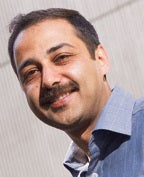
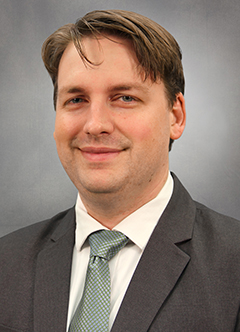
Associate Professor Mohammad Saadatfar is affiliated with the School of Civil Engineering at The University of Sydney. His research focuses on meso-scale materials, combining experiments with simulations to address challenges in environmental science, biomedical engineering, and advanced materials design. Key areas include the study of cellular solids, granular materials, and meta-materials. His work integrates physics, engineering, and biology, with applications to CO₂ geo-sequestration, bone implants, and mechanical meta-materials. He uses X-ray tomography, FE simulations, and topological analysis to explore material behavior. Recent publications span topics like additive manufactured foams, CO₂ flow dynamics in sandstone, and biomimetic wood structures. His contributions highlight interdisciplinary approaches to material science and engineering challenges. No scientific awards or student advisement details are explicitly mentioned in the provided text.
Michalis Vazirgiannis is a Professor at LIX, École Polytechnique (France) leading the Data Science and Mining (DaSciM) group. With academic backgrounds in Physics (Athens University), AI (Heriot-Watt University), and Informatics (Athens University), he has conducted research at Fraunhofer, Max Planck MPI, and INRIA/FUTURS while teaching at institutions across Greece, France, China, and Spain. His research spans Machine/Deep Learning for Graphs (GNNs, graph kernels, embeddings) Text Mining & NLP (Graph-of-Words, biomedical text analysis) Combinatorial Optimization for pandemic forecasting and energy systems Event/Anomaly Detection in time series and sensory data Industrial collaborations with Airbus, Google, Tencent, and BNP . He has supervised 29 completed PhD theses, published over 250 papers, and received prestigious awards including Marie Curie and Tencent Rhino-Bird Fellowships. His team leads the ANR-HELAS Chair (2020-2025) focusing on heterogeneous data deep learning.
Alexa Siddon, MD, is an Assistant Professor in the Department of Laboratory Medicine at Yale School of Medicine, with secondary appointments in Pathology. She serves as Hematopathology Fellowship Director, Director of the Molecular Diagnostics Laboratory, Director of Flow Cytometry, and Associate Director of the Hematology Laboratory. She is also affiliated with the Yale Cancer Center, Clinical Flow Cytometry Laboratory, and the Hematopathology Laboratory at the Veteran Affairs Connecticut Healthcare System. Dr. Siddon's research focuses on hematopathology, particularly myeloid malignancies, acute leukemias, and post-transplant monitoring. Her work integrates molecular diagnostics, flow cytometry, and genomic analysis to improve patient diagnosis and outcomes. She has co-authored over 10 peer-reviewed articles in recent years, frequently collaborating with leading hematologists and pathologists such as Christopher Tormey, Henry Rinder, and Rory Shallis. Her publications reveal a strong trend in translational research, emphasizing the clinical implications of genetic mutations (e.g., TP53, NPM1, IDH1/2), chimerism testing post-transplant, and immunophenotypic characterization of hematologic malignancies. The research spans disciplines including oncology, molecular biology, immunology, and clinical pathology, with a clear focus on precision diagnostics and prognostic modeling. Scientific Awards: ASCP Distinguished Educator Award Paul J. Strandjord Young Investigator Award Donald H. Buchholz Research Prize Dr. Siddon is actively involved in medical education, directing fellowship programs and mentoring trainees. She has no reported grants listed in the text, but her leadership in diagnostic laboratories and active publication record suggest ongoing research funding. She is not part-time, not retired, and remains a current, active faculty member. She is affiliated with multiple research entities including the Cancer Immunology Center, Center for Biomedical Data Science, and the Yale Cancer Center, contributing to interdisciplinary teams focused on hematologic malignancies and diagnostic innovation.
Thomas Grenier is an Associate Professor in the Department of Electrical Engineering at INSA Lyon and a member of the CREATIS laboratory (CNRS UMR 5220, INSERM U1294). He obtained his HDR (Habilitation à Diriger des Recherches) in 2023 and his Ph.D. in Image Processing from INSA Lyon in 2005. His research focuses on medical image segmentation, clustering, and filtering using feature space, scale-space, and deep learning approaches. Doctoral School: EEA (Electronics, Energy, and Automatics) Research Affiliation: CREATIS Lab (CNRS/INSERM/INSA Lyon/Université Lyon 1/Université Jean Monnet Saint-Etienne) He has contributed to 20 papers and co-supervised 5 PhD students, including Léo Dumortier and Florent Guépin. Grenier leads the annual Deep Learning for Medical Imaging (DLMI) school, which he co-founded, and has organized five editions across Lyon and Montreal since 2019. The school emphasizes practical deep learning applications in medical imaging for participants of all expertise levels. His work spans interdisciplinary domains such as medical imaging , deep learning , and image processing , with recent publications on generative AI for MRI synthesis, explainable networks, and segmentation of neurological pathologies in preclinical models. He manages pedagogical platforms, coordinates LabEx PRIMES project activities, and oversees lab room infrastructure for 200 hours/year across 10 training programs. Grenier also leads the MUSIC transversal project on Multiple Sclerosis since 2019.
Professor Kathryn Murphy is an Associate Professor in the Faculty of English Language & Literature at the University of Oxford and a Fellow and Tutor at Oriel College. Her research focuses on seventeenth-century literary and intellectual culture, blending literature, philosophy, theology, and art. She explores the interplay between form (poetic, rhetorical, and artistic) and thought, with a particular interest in essays, still-life painting, and the relationship between form and idea. Her recent projects include a biography of Robert Burton (author of The Anatomy of Melancholy ) and a study of metaphysical prose in the seventeenth century. She has also edited On Essays: Montaigne to the Present and writes essays on art, including analyses of still-life painting and devotional imagery. Her work frequently bridges literary studies and medical humanities, collaborating with the Oxford Health Biomedical Research Centre and the TORCH Medical Humanities Hub. She has curated exhibitions such as Melancholy: A New Anatomy (2021) and is preparing a 2026 exhibition on natural history. Murphy is a series editor for Edinburgh Critical Studies in Renaissance Culture and serves on the editorial boards of Cambridge Quarterly and Edinburgh Critical Studies . She contributes art criticism to Apollo and reviews Czech literature for the Times Literary Supplement . Her research emphasizes interdisciplinary exploration, examining how form—from sentences to paintings—serves as an instrument of thought. Current projects include a book on still-life painting and the immanence of meaning in objects, alongside ongoing studies of attention, distraction, and decision-making in early modern texts.
Dr. John D. Osborne is an Assistant Professor in the Department of Computer Science at the University of Alabama at Birmingham (UAB), with a secondary appointment in the same department. He specializes in Natural Language Processing (NLP), particularly in biomedical text analysis and clinical phenotyping. His work focuses on applications such as drug repurposing and identifying patient cohorts for research and clinical care. Dr. Osborne’s research interests include the relationship between genotype and phenotype, microbial bioinformatics, and developing NLP systems to support healthcare. He previously contributed to the Disease Ontology at Northwestern University and worked at the CDC and UAB’s Viral Bioinformatics Resource Center. His lab at UAB develops integrated registry systems to identify patients with conditions like reportable cancers, multiple myeloma, delirium, and opiate use disorder. No scientific awards or specific grants are mentioned in the provided text.
Oisin Mac Aodha is a Reader (Associate Professor) in Machine Learning at the School of Informatics, University of Edinburgh. He is also an ELLIS Scholar and founder of the Turing interest group on biodiversity monitoring and forecasting, having previously served as a Turing Fellow from 2021-2025. Mac Aodha completed his undergraduate degree in electronic engineering from the University of Galway in Ireland, followed by his MSc and PhD at University College London (UCL). His academic journey includes postdoctoral positions at UCL (2013-2016) working with Prof. Gabriel Brostow and Prof. Kate Jones, and at Caltech (2016-2019) in Prof. Pietro Perona's Computational Vision Lab as part of the Visipedia team. His research centers on computer vision and machine learning with emphasis on 3D understanding, human-in-the-loop methods, and AI for conservation and biodiversity monitoring. He has made significant contributions to monocular depth estimation (including the influential Monodepth2 paper), fine-grained visual categorization, and biodiversity monitoring systems. His work bridges theoretical machine learning with practical ecological applications, developing tools for species identification, range estimation, and conservation efforts. Recent publications reveal a strong trend toward ecological applications while maintaining fundamental contributions to 3D vision and representation learning. His major scientific achievements include: Turing Fellow (2021-2025) ELLIS Scholar Founder of the Turing interest group on biodiversity monitoring and forecasting Co-organizer of the Fine-Grained Visual Categorization (FGVC) workshop series at major vision conferences Mac Aodha advises multiple PhD students and postdocs working on computer vision for biodiversity monitoring, 3D understanding, and human-in-the-loop learning. His team has developed practical tools like Whombat (an open-source annotation tool for bioacoustics) and contributed to field-deployed biodiversity monitoring systems. He has served as Area Chair for top conferences including NeurIPS, CVPR, ICCV, and ICML, demonstrating his standing in the computer vision community. His research group collaborates extensively with ecologists at University College London, particularly with Prof. Kate Jones' team, bridging machine learning expertise with ecological domain knowledge. The Vision at Edinburgh group he contributes to focuses on developing practical AI tools that address real-world conservation challenges while advancing fundamental computer vision research.
Prof. Dr.-Ing. Selin Kara is a Professor at the Institute of Technical Chemistry, Faculty of Natural Sciences, Leibniz University Hannover. She leads research in biocatalysis and bioprocessing, with a focus on sustainable and innovative enzyme-based technologies. Her leadership roles include Spokesperson of the Curriculum and Teaching Committee for Life Science and Chairperson of the Admissions Board for MSc Life Science. Full Name: Selin Kara Institution: Leibniz University Hannover Faculty: Faculty of Natural Sciences Department: Institute of Technical Chemistry Academic Rank: Professor Email: selin.kara@iftc.uni-hannover.de Her research interests center on biocatalysis and bioprocessing , particularly in redox biocatalysis , enzyme immobilization , non-conventional media such as deep eutectic solvents, biocatalytic cascades , and flow biocatalysis . She explores enzyme kinetics and process engineering to enhance efficiency and sustainability in chemical synthesis. Her group develops novel reactor systems and materials, including hydrogels and 3D-printed microfluidics, for advanced biocatalytic applications. She emphasizes green chemistry principles, aiming to replace traditional chemical processes with eco-friendly enzymatic alternatives. The most recent publications (2024–2025) demonstrate a strong trend in deep eutectic solvents , fusion enzymes , immobilization techniques , and sustainable synthesis of bio-based chemicals . Her work integrates experimental and computational methods to understand enzyme behavior and optimize reaction systems. Key themes include process intensification, solvent engineering, and industrial scalability, with applications in pharmaceuticals, fragrances, and sustainable materials. She holds leadership positions in academic governance, including: Spokesperson, Curriculum and Teaching Committee, Life Science (BSc/MSc) Chairperson, Admissions Board for MSc Life Science Executive Board Member, Institute of Technical Chemistry Deputy Representative for Professors in Faculty Council and Examination Boards Her research is highly collaborative, involving interdisciplinary teams and international partners, and is consistently published in high-impact journals such as Green Chemistry , ACS Catalysis , and ChemSusChem . While specific scientific awards and student advisees are not listed in the provided text, her extensive publication record and leadership roles reflect significant academic contributions.
Dr. Changyou Chen is an Associate Professor in the Department of Computer Science and Engineering at the University at Buffalo, State University of New York. His research focuses on Multi-Modal Learning Foundation Models Deep Generative Models Large-scale Bayesian Sampling with applications in document understanding, music-AI integration, and molecular representation learning. Research Trends revealed through his recent publications include Optimizing Multimodal Large Language Models Developing Novel Retrieval-Augmented Generation Frameworks Creating Benchmark Datasets for Visual Text Understanding Advancing Diffusion Models with Domain-Specific Constraints across domains from music sheets to biomedical documents. Scientific Contributions : UB Young Investigator Award (2020) Architect of LoCAL Framework for Long Document Understanding Co-developer of MusiXQA Benchmark Pioneering Work in Probability Contrastive Learning Academic Leadership includes mentoring 10+ graduate students and serving as Area Chair for major AI conferences (ICML, NeurIPS, AAAI, IJCAI). His Labs develop scalable solutions for multimodal reasoning, with recent work demonstrating practical GPU memory optimization through LoRA adapter sharing.
Hamid Mansoor is an Assistant Professor in the Department of Computer Science at the University of Manitoba. He holds a PhD in Computer Science from Worcester Polytechnic Institute under Prof. Emmanuel Agu, and was part of the DARPA-funded WASH project. His research focuses on data visualization, digital health, and smartphone-based behavioral analysis. He previously served as a Postdoctoral Fellow at the VIXI Lab, University of Victoria, Canada, under Prof. Miguel Nacenta. Education: PhD in Computer Science, Worcester Polytechnic Institute Research Interests: Interactive data visualization frameworks for health monitoring Mobile and ubiquitous computing for behavioral analysis Smartphone-sensed human behavior and health informatics Visual representation of text-based and sensor data Publications highlight trends in visual analytics for healthcare, including tools like ARGUS and INPHOVIS for detecting bio-behavioral disruptions and smartphone-based phenotyping. His work integrates machine learning with visualization to address challenges in health data interpretation. Awards: Best short paper honorable mention (EuroVis 2020) His contributions span academic collaborations in health informatics and mobile computing, with a focus on bridging theory and practical applications in healthcare technology.
Jodi Schneider is an Associate Professor at the University of Illinois Urbana-Champaign , with affiliate appointments at the Beckman Institute , Health Care Engineering Systems Center , European Union Center , and Center for Health Informatics . She directs the Information Quality Lab and focuses on the science of science through argumentation and evidence analysis. PhD in Informatics (National University of Ireland, Galway) M.S. in Library and Information Science (UIUC) M.A. in Mathematics (UT-Austin) B.A. in Liberal Arts (St. John's College) Her research examines how scientific controversies persist through citation patterns, the role of knowledge brokers in public policy, and information quality in biomedical contexts. She has developed semantic frameworks for micropublications and knowledge maintenance in digital libraries. Recent publications include citation integrity studies in Scientometrics , retraction indexing in STI Conference , and argumentation mining in Human Language Technologies . Collaborative projects span institutions like Harvard Radcliffe Institute and RWTH Aachen . NSF CAREER Award IMLS Early Career Award Senior Member, Association of Computing Machinery Marie Curie Fellow She advises graduate students in information quality and knowledge representation , with funding from the Alfred P. Sloan Foundation , NIH , and European Commission . Her lab develops tools to combat scientific misinformation and improve public health informatics .
Prof. Dr. Wolfgang Nejdl is a Professor at the Institute for Data Science within the Faculty of Electrical Engineering and Computer Science at Leibniz University Hannover. He serves as Executive Director of the L3S Research Centre and Leibniz Forschungszentrum Inclusive Citizenship. Web Science Information Retrieval Artificial Intelligence Deep Learning His recent research focuses on AI applications in medicine , multimodal data fusion , and ethical AI systems . Projects include CAIMed (AI in Causal Medicine) and DAISEC (AI & Cybersecurity). His publications span conferences like AAMAS, WWW, and SIGIR. Notable awards include membership in the National Academy of Science and Engineering (acatech) . Former students hold positions at institutions like Stanford, TU Dresden, and ETH Zürich. Current projects involve climate resilience AI , federated learning for healthcare , and quantum-inspired data science .
Agnes Horvat is an Associate Professor of Communication (with a courtesy appointment in Computer Science) at Northwestern University. She directs the Technology and Social Behavior (TSB) joint doctoral program between the McCormick School of Engineering and the School of Communication, and leads the Lab on Innovation, Networks, and Knowledge (LINK). Her research focuses on human-centered computing, network science, and AI's impact on information production/sharing in digital platforms. She has received NSF CAREER, CRII, and collaborative awards as PI. Her work examines algorithmic bias in online spaces, AI-assisted creativity (e.g., LLMs in biomedical writing and music), and collective intelligence dynamics. Media coverage includes Nature , Washington Post , and Le Monde . Her advisees have won prestigious fellowships like the Northwestern Presidential Fellowship and best paper awards at top conferences. Research interests include: (1) algorithmic bias in social media and crowdfunding, (2) AI-driven creativity expansion, (3) network structures of scientific attention, and (4) opinion dynamics in online discussions. Current projects explore LLMs' role in scientific writing and music composition, while past work analyzed gender disparities in scholarly self-promotion and retraction paper attention patterns. Grants: NSF CAREER Award (202?), NSF CRII (202?), Collaborative Grant (202?) Labs/Teams: LINK Lab (focusing on innovation networks), TSB Program (interdisciplinary engineering/communication PhD)
Ali Ghodsi is a Professor at the University of Waterloo and Director of the Data Science Lab, with affiliations at the Vector Institute. His research spans machine learning, deep learning, and artificial intelligence, with applications in natural language processing, bioinformatics, and computer vision. His group develops theoretical frameworks and algorithms for analyzing large-scale datasets, focusing on neural network architectures, knowledge distillation, and model efficiency. Current projects include deep learning for identity control, computational antibody design, and generative AI/large language models. Ghodsi has authored influential tutorials on diffusion models, graph neural networks, and large language models. Notable research contributions include computational methods for de novo peptide sequencing from mass spectrometry data, green simulation-assisted reinforcement learning, and efficient natural language processing models. His lab maintains collaborations with industry partners including Google, Amazon, and Roche.
Kirk Roberts, PhD, is an Associate Professor in the Department of Health Data Science and Artificial Intelligence at the McWilliams School of Biomedical Informatics, UTHealth Houston. He specializes in Natural Language Processing (NLP), with a focus on clinical information extraction, spatial information extraction, and medical information retrieval. His work bridges computer science, medicine, linguistics, and machine learning to improve accessibility and usability of biomedical data. Education: PhD (2013) and MS (2009) in Computer Science from the University of Texas at Dallas; BS (2005) in Computer Science from Georgia Institute of Technology. Research emphasizes NLP applications for healthcare, including question-answering systems, EHR analysis, and spatial relation extraction. He leads the TREC Clinical Decision Support track and has been recognized with a National Library of Medicine Career Development Award. His contributions span over 20 peer-reviewed publications in journals like JAMIA and conferences such as ACL and AMIA. Key areas include: advancing clinical decision support via NLP, optimizing biomedical literature retrieval, and improving health data dissemination through natural language systems.