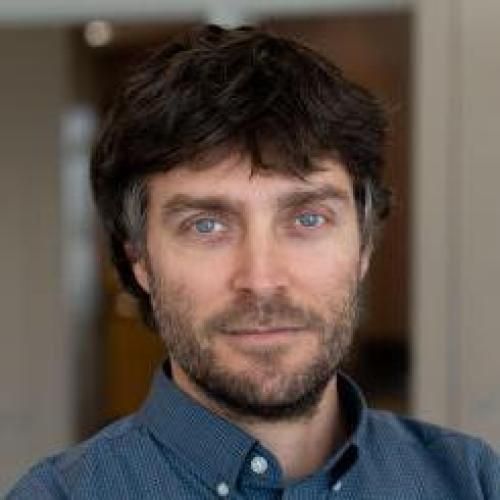
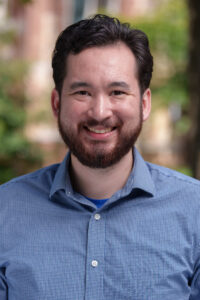
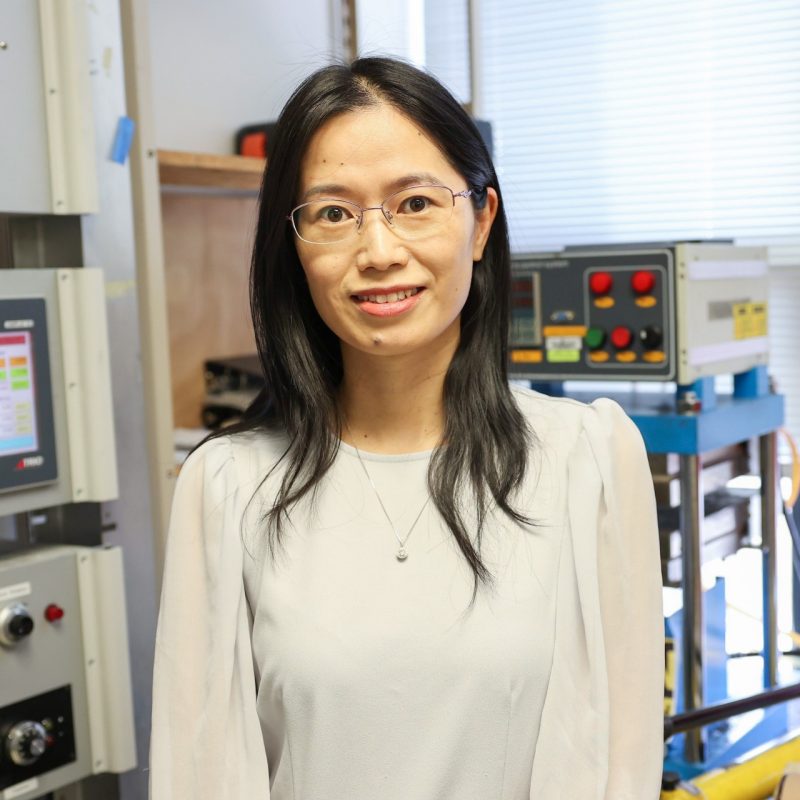
Vivian Feig is an Assistant Professor in the Department of Mechanical Engineering at Stanford University, with a courtesy appointment in Materials Science and Engineering. Her research focuses on developing low-cost, noninvasive medical technologies that integrate seamlessly with the human body. The Feig Lab leverages chemistry and physics insights to engineer functional materials and devices with dynamic mechanical properties at multiple length scales. Key areas include conductive hydrogels, ingestible robotics, and gas-entrapping materials for therapeutic applications. The lab's publications (2025–2022) span biomedical engineering , materials science , and bioelectronics , with subfields like hydrogel mechanics , drug delivery , and targeted activation . Vivian emphasizes integrity, diversity, and holistic growth in her team. Contact: vfeig@stanford.edu | Stanford Profile
Dr. José Luis Calvo Rolle serves as a Professor in the Department of Industrial Engineering at the School of Engineering, Universidade da Coruña (UDC), specializing in Systems Engineering and Automation. His research focuses on intelligent control systems, fault detection, and virtual instrumentation within the Cybernetic Science and Technology Research Group. Teaches across multiple programs including Master's in Industrial Computing and Robotics, Textile Technology, and Occupational Risk Prevention Coordinates thesis supervision across Industrial Engineering and related disciplines His research spans intelligent control systems and optimization, with significant contributions in virtual sensors, fault detection, and AI-driven modeling for industrial applications. Current projects integrate machine learning with industrial processes for naval construction, wastewater treatment, and precision livestock farming, demonstrating cross-disciplinary impact from energy systems to agricultural technology. Recent publications reveal strong trends in applying deep learning to industrial metaverse frameworks, wastewater optimization, and livestock monitoring systems. His work bridges theoretical control engineering with practical implementations in energy management, naval manufacturing, and sustainable agriculture, frequently utilizing dimensionality reduction and one-class classification techniques. Dr. Calvo Rolle actively mentors students through thesis supervision across multiple engineering disciplines and coordinates research projects with diverse funding sources including the European Commission, Spanish National Research Agency, and industrial partners like Navantia and Telefónica. His laboratory work centers on the Cybernetic Science and Technology Research Group, developing testbeds for industrial automation, virtual instrumentation, and AI-driven monitoring systems. Current initiatives include digital twin implementations for naval manufacturing and smart energy management systems.
Dr. Cungang Yang serves as an Associate Professor in the Department of Electrical, Computer, and Biomedical Engineering at Toronto Metropolitan University, specializing in cybersecurity for emerging technologies. His work addresses critical vulnerabilities in robotics, cloud infrastructure, and wireless communications, driven by the proliferation of IoT devices and e-commerce platforms where data privacy remains paramount. Academic credentials include: PhD in Computer Science from University of Regina (2003) MS from Jilin University (1992) Research focuses on developing efficient authentication mechanisms and security protocols across three core domains: AI-integrated robotics security, cloud computing vulnerabilities, and wireless network protection. Yang emphasizes that "security always follows new technologies," with current projects targeting power system networks and smart grid infrastructures where sensor communication exposes consumer data to potential breaches. His approach balances cryptographic rigor with practical implementation for real-world systems. Publication analysis reveals consistent emphasis on lightweight authentication and key management solutions between 2017-2018, spanning power systems, IoT, and cloud environments. These works demonstrate strategic adaptation to evolving threats in mission-critical infrastructure, particularly optimizing security protocols for resource-constrained devices while maintaining robust data protection standards across heterogeneous networks. Award recognition includes: New Opportunities Fund grant from Canada Foundation for Innovation (CFI) Departmental Teaching Excellence Awards Dr. Yang actively supervises graduate researchers and secures external funding for security infrastructure development. His teaching portfolio covers advanced network security (COE 817, EE 8213) and software systems (COE 318), with research grants specifically enabling experimental validation of authentication protocols for industrial control systems. Within the department, Yang leads a specialized research collective investigating sensor communication security across IoT ecosystems. The team develops novel cryptographic methods for mission-critical wireless networks, with current projects focused on securing energy grid communications and cloud-based data sharing architectures through efficient group authentication frameworks.
Xiaoyue Ni is an Assistant Professor at Duke University’s Thomas Lord Department of Mechanical Engineering and Materials Science, with additional appointments in Biostatistics & Bioinformatics and Electrical and Computer Engineering. They lead the Ni Lab, developing human-oriented materials intelligence through soft electronics and digital metamaterials. PhD, California Institute of Technology (2018) Research focuses on flexible electronics , mechanical metamaterials , and machine learning to create dynamic materials that sense and adapt to human physiology. Key innovations include soft wireless sensors , liquid metal actuation , and non-invasive biomarker monitoring . Recent publications (2022–2019) highlight expertise in wearable health technology , mechanical-acoustic interfaces , and programmable materials . Collaborative work spans reconstructive surgery , athlete monitoring , and thermal expansion control .
Philip Romero, Ph.D., is an Associate Professor in the Department of Biomedical Engineering at Duke University. He earned his doctorate from the California Institute of Technology in 2012 and leads the Romero Lab, which relocated to Duke in 2023. His research focuses on developing computational and experimental methods for protein engineering, with applications spanning therapeutics, biocatalysis, and synthetic biology. Research Interests: Romero's work integrates machine learning, microfluidics, and high-throughput experimentation to study protein fitness landscapes. Key areas include: Self-driving laboratories for autonomous protein optimization Neural network models for predicting protein functions Therapeutic enzyme engineering (ACE2, caspases, lysins) Microfluidic platforms for deep mutational scanning His recent publications demonstrate a strong emphasis on machine learning-guided protein design, with 80% of post-2022 publications involving AI/ML methods. Therapeutic applications against infectious diseases (particularly SARS-CoV-2) and microbiome engineering represent emerging directions. Lab & Advising: The Romero Lab develops novel technologies for protein engineering, including custom gene library assembly platforms and droplet microfluidics systems. Romero mentors graduate students (e.g., Nishit, who recently defended a thesis on transcription factor engineering) and has collaborated with researchers across computational biology, metabolic engineering, and virology.
Associate Professor Suhasa Kodandaramaiah serves in the Department of Mechanical Engineering at the University of Minnesota, where he holds the position of Director of Student Recruitment. He maintains additional Graduate Faculty appointments in the Department of Neuroscience and Department of Biomedical Engineering, demonstrating cross-disciplinary engagement. His research expertise spans critical neuroengineering domains: Neural Engineering Neuromodulation Optical Engineering Neurotechnology and Instrumentation Robotics and Automation Precision Engineering As Head of the Biosensing and Biorobotics Laboratory within the Minnesota Discovery Team (MDT) and Co-Leader of the Imaging Cells during Behavior Core at the Minnesota Center for Addiction Research, he develops advanced instrumentation for neural interface systems and behavioral neuroscience applications. His work bridges engineering precision with biological complexity to create novel neurotechnological solutions.
Nick Bassiliades is a Professor at the School of Informatics , Aristotle University of Thessaloniki , Greece. His academic roles include serving as President of the Digital Governance Committee and the Digital Transformation of Greek Universities Committee, as well as Director of the Web, Data, and Knowledge Engineering Sector. Education: B.Sc. in Physics, Aristotle University of Thessaloniki (1991) M.Sc. in Applied Artificial Intelligence, University of Aberdeen (1992) Ph.D. in Parallel Knowledge Base Systems, Aristotle University of Thessaloniki (1998) His research focuses on Semantic Web , Ontologies , Knowledge Graphs , and applications in Artificial Intelligence , eGovernment , and Intelligent Agents . Recent publications emphasize ontological frameworks for requirements engineering, explainable AI, and electric vehicle knowledge graphs. He actively contributes to scientific communities as a Senior Member of IEEE and ACM , and serves as Co-Editor-in-Chief for the International Journal of Artificial Intelligence in Business and Management . His work involves collaborations with the Intelligent Systems laboratory and projects like XR4DRAMA for disaster management.
Kevin De Pauw is a postdoctoral researcher at the Department of Physiotherapy, Human Physiology and Anatomy at Vrije Universiteit Brussel (VUB). He actively contributes to 12 research projects with a focus on robotics, mental fatigue, brain physiology, and sports physiotherapy. Current projects include Brubotics, APEX, and TBrainBoost Collaboration network spans Belgium, Germany, and Netherlands Key research themes: Mental Fatigue (100%), Robotics (100%), and Prosthetics (52%) Research Interests: His work explores the intersection of brain physiology, fatigue mechanisms, and robotics applications in rehabilitation. He develops predictive musculoskeletal simulations and investigates inter-limb asymmetry in athletes. Article Trends: Recent publications show increasing focus on robot-assisted rehabilitation , brain neuroplasticity , and mental fatigue quantification . Research combines AI-driven wearable robotics with neurophysiological monitoring . Student Supervision: He mentors Master's students in topics related to Lower limb asymmetry analysis Adolescent cognition-fitness relationships Exoskeleton interface design Laboratory Affiliation: Member of Brubotics and TBrainBoost teams at VUB, working on sustainable human-centered robotics and neurocirculation enhancement technologies.
Minsu Liu serves as a Senior Research Fellow at Monash University's Suzhou campus under the Office of the Pro Vice-Chancellor and President, actively supervising PhD students and maintaining a robust research profile with 40+ publications since 2014. His academic foundation includes a PhD in Chemical Engineering (awarded March 2018) and a Bachelor of Engineering (Honours) in Chemical Engineering (awarded March 2013), establishing expertise in advanced materials development. Dr. Liu's research spans Materials Science and Chemical Engineering , focusing on sustainable technologies that advance UN Sustainable Development Goals. Key contributions include: Thermal management solutions using 2D materials for energy-efficient buildings Electrochromic smart windows enabling dynamic radiative cooling Graphene-based neural interfaces for biomedical applications Innovative battery and hydrogen storage technologies Analysis of his 2023-2025 publications reveals a strategic emphasis on boron nitride and graphene composites, with fabrication breakthroughs in 3D printing and wet-spinning techniques driving applications in energy conservation and healthcare diagnostics. He currently contributes as Associate Investigator to the $5$-year project 'Development of direct reduction technologies based on fluidized bed systems' (2024-2029), while mentoring the next generation of researchers through PhD supervision. Though specific laboratory infrastructure isn't detailed in source materials, his extensive collaborations across materials engineering and sustainable technology domains indicate leadership in multidisciplinary research teams addressing global energy challenges.
Salvador Pané Vidal is a Lecturer at the Department of Mechanical and Process Engineering at ETH Zurich, affiliated with the Institute for Robotics and Intelligent Systems. His work focuses on robotics, intelligent systems, and biomedical engineering applications. Contact: vidalp@ethz.ch
Ali Tavallaei serves as an Assistant Professor at Toronto Metropolitan University since 2019 and concurrently holds a Visiting Scientist position at Sunnybrook Research Institute. He is also the President and Co-founder of Magellan Biomedical Inc. (2018-present) and Vital Biomedical Technologies Inc. (2012-present), demonstrating strong industry engagement in medical device commercialization. His academic foundation includes: Ph.D. in Biomedical Engineering from Western University (2010-2015) Medical Innovation Fellowship at University of Minnesota/Western University (2015-2016) Postdoctoral Fellowship at Sunnybrook Research Institute, University of Toronto (2016-2019) Dr. Tavallaei's research centers on image guided therapy with emphasis on solving unmet clinical needs in minimally invasive interventions. His core focus areas include: Cardiovascular device innovation and evaluation Medical imaging instrumentation for real-time guidance Robotic systems for catheter navigation Mechatronic solutions for therapeutic delivery His work bridges engineering design with clinical translation through preclinical and clinical validation. Recent publications (2023-2026) reveal a concentrated effort in developing next-generation catheter technologies, including steering mechanisms (CathPilot), imaging tools (CathEye, CathCam), and specialized devices for vascular interventions. The research consistently emphasizes performance validation, mechanical characterization, and clinical feasibility across peripheral artery disease, aneurysm repair, and cardiac ablation applications. As director of the Medical Devices and Systems Lab, Dr. Tavallaei leads a translational research program focused on fundamental advances in cardiovascular disease management. The lab's workflow integrates solution design, system verification, preclinical testing, and technology transfer to address global healthcare challenges posed by cardiovascular diseases—the leading cause of death worldwide.
Alice Haynes is a Digital Futures Postdoctoral Fellow at KTH Royal Institute of Technology, working on the Felt Connections project under the Division of Media Technology and Interaction Design . She collaborates with Prof. Kristina Höök and Associate Prof. Iolanda Leite to create shape-changing textile interfaces that foster meaningful bodily interactions for children and adults. Education PhD in Engineering Mathematics, University of Bristol (2022) Specialization in Soft Robotics and Haptic Interfaces Her research blends soft robotics, e-textiles, and soma design to develop tactile technologies that prioritize bodily engagement over traditional visual/auditory interfaces. Current work explores: first-person design for scoliosis, symmetry-asymmetry dynamics in bodily interactions, and soma-driven methods that emphasize felt experiences. Key article trends include shape-changing textiles (SMA-actuated smocking, machine embroidery), emotional/therapeutic applications (anxiety relief, social touch), and multisensory integration (audio-tactile mappings, biosignal interaction). Scientific Contributions Recipient of Digital Futures Postdoctoral Fellowship Co-design methodologies for child-centered technology Material-driven evaluation frameworks for e-textiles Embodied interaction paradigms through haptic cushions Alice teaches Human-Computer Interaction Research Seminars (DH2632) and Media Technology and Interaction Design (DM2601) , while actively seeking Master's students for collaborative thesis work.
Dr. Xiaoguang Dong is an Assistant Professor in the Department of Mechanical Engineering at Vanderbilt University , School of Engineering. He received his Ph.D. (2019) and M.S. (2016) from Carnegie Mellon University, and B.S. (2013) from Harbin Institute of Technology. His research focuses on miniature soft robotics , swarm robotics , and intelligent soft materials for biomedical, microfluidic, and biomechanical applications. Design of shape-morphing soft robots for minimally invasive medicine Development of magnetic microrobot swarms for cooperative tasks Integration of machine learning with mechanics for smart material design Recent publications highlight advancements in wireless medical robots for drug delivery, biofluid pumping, and tissue sensing, with works in Science Advances , Nature Communications , and PNAS . He has received significant recognition including the 2025 NSF CAREER Award and 2024 Med-X Young Investigator Award . 2022 Spring: Dynamics (ME 2190) 2023 Fall: Miniature Robotics 2014-2015: Teaching assistant at Carnegie Mellon University
Jon Heiselman is a Research Assistant Professor in the Department of Biomedical Engineering at Vanderbilt University School of Engineering. He serves as Associate Director of the Master of Engineering in Surgery and Intervention Program and leads research in image-guided surgical technologies. His work focuses on soft tissue deformation modeling, augmented reality applications, and computational frameworks for precision surgery. Education: PhD in Biomedical Engineering (Vanderbilt University, 2020) Advisor: Michael Miga, Harvie Branscomb Professor Research interests span image-guided surgical navigation, deformable registration algorithms, and digital twin modeling for therapeutic forecasting. Articles highlight advancements in soft tissue deformation correction, augmented reality integration, and machine learning approaches for real-time surgical guidance. Current affiliations include Vanderbilt's Biomedical Modeling Laboratory (BML) and the VISE Steering Committee. He contributes to NIH-funded training programs and has received recognition for his work in surgical data science and computational oncology.
Xiaoting Jia is a Professor in the Bradley Department of Electrical and Computer Engineering at Virginia Tech. Her research focuses on advanced functional fibers with applications in biomedical devices, optoelectronics, and neurotechnology. She holds affiliations including the Virginia Tech College of Engineering and maintains an active scholarly profile with collaborations in materials science and neural interfacing. Education : Ph.D., Massachusetts Institute of Technology (2011) M.S., Stony Brook University (2006) B.S., Fudan University (2004) Research Interests : Development of multifunctional fibers for neural recording and stimulation Optically and magnetically controlled power electronics Bio-inspired flexible materials and wearable sensors Neuropharmacological studies using fiber-based probes Her recent work emphasizes hybrid fiber systems combining electrical, optical, and chemical functionalities for biomedical applications. Over 150 peer-reviewed articles demonstrate contributions to neural interfaces, energy harvesting, and advanced fiber fabrication techniques. Awards and service roles are pending specific documentation. Grants & Labs : Led projects in National Science Foundation-funded neural engineering initiatives Collaborated with industry partners on fiber-optic sensor commercialization