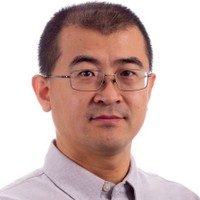
Zhibo Pang is an Adjunct Professor at KTH Royal Institute of Technology's Department of Intelligent Systems (EECS) and Senior Principal Scientist at ABB Corporate Research Sweden. His work focuses on digital transformation in industry and healthcare, spanning robotics, AI, control systems, and wireless communication. He leads projects in embodied intelligence, Industry 4.0, and Healthcare 4.0, with 23 granted patents and over 120 journal papers. Education: PhD in Electronic and Computer Systems (KTH, 2013), MBA in Innovation & Growth (University of Turku, 2012). Key Roles: IEEE Technical Committee Chair, Editor of 6 IEEE journals, ABB Inventor of the Year (2016, 2018, 2021). Research Interests: Robotics safety, wireless automation, federated learning, digital twins, and IoT security. Recent Projects: Cloud-fog automation frameworks, robot skin systems for healthcare, and latency-aware industrial control. His work bridges academia and industry through cross-functional collaborations.
Gert Helgesson is a Professor of Medical Ethics at the Department of Learning, Informatics, Management and Ethics (LIME), Karolinska Institutet, since 2015. He previously held an associate professorship (docent) at KI from 2008. His academic background includes a PhD in ethics from Uppsala University (2002), focusing on value assumptions in microeconomics. His research spans clinical and research ethics, emphasizing interdisciplinary collaboration. Key interests include authorship issues, patient-centered care, ethical dilemmas in psychiatry, and the ethics of compulsory care for patients with borderline personality disorder. He leads the Medical Ethics group at the Stockholm Centre for Healthcare Ethics (CHE), addressing topics like healthcare prioritization, patient rights, and research integrity. Education: PhD in Practical Philosophy (Ethics), Uppsala University (2002); Docent in Medical Ethics, Karolinska Institutet (2008). Research Interests: Medical ethics (clinical and research), authorship ethics, palliative care ethics, compulsory treatment ethics, and interdisciplinary ethics. Current projects include studying the 'best interest of the child' in social care decisions and analyzing non-standard plagiarism cases. Teaching: Research ethics for master’s and doctoral students, physician training in clinical ethics, and ethics for doctoral supervisors. Grants: Includes a Swedish Research Council grant (2024–2026) on child welfare decisions and a VINNOVA grant (2014–2018) on person-centered care in psychiatry and pediatrics. Labs/Teams: Co-founder of the Stockholm Centre for Healthcare Ethics (CHE), collaborating with KTH and Stockholm University. His group includes researchers like Niklas Juth, Manne Sjöstrand, and Antoinette Lundahl.
Ioannis Sourdis is a Full Professor at the Department of Computer Engineering, Chalmers University of Technology, Sweden. His research focuses on computer architecture, reconfigurable computing, network-on-chip (NoC) design, memory systems, and fault-tolerant embedded systems, with applications in biomedical informatics and hardware security. Current projects include EUMMSS (Efficient Uncore Mechanisms for Multicore Space Systems, funded by the Swedish National Space Board) and eProcessor (European Processor Ecosystem, funded by the European Commission). Past initiatives include the DeSyRe project (on-demand system reliability), ECOSCALE (exascale reconfigurable computing), and SHARCS (secure hardware-software architectures). His work spans NoC router design (e.g., FastTrackNoC, DDRNoC), memory compression (MemSZ, L2C), and biomedical security applications (heartbeat-based protocols). He has published extensively in venues like DATE, ICS, PACT, and IEEE Transactions on Networking. Key research areas: Chiplet-based systems , hybrid memory architectures , FPGA acceleration , and real-time stream aggregation .
Edith C. H. Ngai is an Associate Professor in the Department of Information Technology at Uppsala University, Sweden. She leads the Smart City Arena initiative and serves as project leader for the national GreenIoT project on energy-efficient IoT for sustainable city development funded by Vinnova. Her academic career spans multiple prestigious institutions including Chinese University of Hong Kong, Imperial College London, Simon Fraser University, UCLA, and Tsinghua University. Dr. Ngai's research focuses on Internet-of-Things, mobile crowdsensing, network security and privacy, cloud computing, and data analytics, with particular applications in smart cities and healthcare. Her work bridges theoretical foundations with practical implementations for sustainable development. She has pioneered research in energy-efficient IoT systems, data privacy in participatory sensing, and mobile health monitoring applications. Her recent publications demonstrate strong trends in IoT for smart cities, privacy-preserving techniques in social sensing, and energy-efficient data collection systems. The research spans both theoretical contributions and practical implementations, with applications ranging from urban environmental monitoring to healthcare solutions. Her work consistently addresses the tension between functionality and privacy in connected systems. Professional recognition includes: ACM Senior Member (2016) IEEE Senior Member (2015) ACM/IEEE IPSN Best Paper Runner-Up (2013) IEEE IWQoS Best Paper Runner-Up (2010) VINNMER Fellow from Swedish government agency (2009) Dr. Ngai actively mentors PhD and Master's students, with numerous graduates working at leading technology companies including Google. She serves as Associate Editor for IEEE Access, IEEE Transactions on Industrial Informatics, and IEEE Internet-of-Things Journal. Her current research projects include EU SimpliCITY, EU CRUNCH, and the GreenIoT platform for sustainable development, with funding from European Commission, Swedish Research Council, and Vinnova. She leads the Uppsala Urban Computing Lab, which focuses on IoT and mobile crowdsensing for smart cities, network security and data privacy, and smart sensing for healthcare applications. The lab develops integrated decision support tools for smart cities and citizen engagement platforms.
Joakim Lindblad is a Professor at the Department of Information Technology, Uppsala University , and holds affiliated roles as Senior Research Associate at the Mathematical Institute of the Serbian Academy of Sciences and Arts, and Head of Research at Topgolf Sweden AB. With over two decades of expertise in image analysis and machine learning , his work bridges computational methods with biomedical applications. Key affiliations: Uppsala University, Serbian Academy of Sciences, Topgolf Sweden Specializations: Deep Learning, Multimodal Image Registration, Quantitative Microscopy His research focuses on reliable image processing frameworks that integrate intensity and spatial information , particularly for biomedical applications . Recent publications highlight innovations in autofluorescence-based cancer detection , self-supervised one-class learning for sparse instance identification, and rotation-equivariant CNNs for robust analysis of cytology images. Recent article trends demonstrate expertise in multimodal image analysis (2024: 3 papers), oral cancer detection (2025: 2 papers), and multiscale biomedical imaging . His 2025 work on the Uppsala Storytelling Dataset introduces novel frameworks for multimodal dataset creation in AI research. While no scientific awards are explicitly mentioned, his extensive publication record (2000-2025) across top venues like Pattern Recognition , PLOS ONE , and IEEE Transactions indicates significant academic impact. His methodological contributions span stochastic distance transforms , fuzzy set defuzzification , and multimodal image registration techniques. Collaborative work with researchers like Nataša Sladoje and interdisciplinary teams has produced innovations in automated cytology analysis , TEM image enhancement , and AI-driven medical diagnostics . His 2021-2022 projects introduced contrastive learning approaches for multimodal image registration and explainable AI frameworks for infant engagement analysis.
Martin Ingvar is a Senior Professor at Karolinska Institutet's Department of Clinical Neuroscience, affiliated with the Pain and Brain Imaging research group led by Karin Jensen. He holds a Medical Degree from Lund University (1984) and a Doctor of Medical Science degree (1982), specializing in experimental neurological research. His research focuses on knowledge processes in healthcare, integrating cognitive science, information theory, and medical informatics to develop clinical information systems that enhance patient care. He leads the Vinnova Demonstrator project (2023–2027) on multi-use health data and has held prominent roles such as Dean of Research at Karolinska Institutet (2010–2013) and Board Chair of Swelife (2013–2017). Ingvar’s academic career includes leadership positions like Deputy Head and Head of the Department of Clinical Neuroscience (2004–2010), and directorships of facilities like the Karolinska MR Center (1998–2022). His grants span topics like psychiatric prediction systems, chronic pain mechanisms, and healthcare data innovation. He has contributed to over 400 publications, emphasizing brain imaging, psychiatric disorders, and health informatics. Key contributions include pioneering work on the National MEG Center and advancing integrative medicine. His research bridges clinical neuroscience with societal health challenges, emphasizing data-driven solutions for healthcare systems.
Lennart Svensson is a Professor at Chalmers University of Technology in the Signal Processing research group. His work focuses on nonlinear filtering, multi-object tracking, Bayesian statistics, and deep machine learning with applications in autonomous systems and sensor fusion. Research Interests Nonlinear Filtering and Bayesian Inference Multi-Object Tracking and Sensor Fusion Deep Learning for Autonomous Systems Performance Metrics (GOSPA, T-GOSPA) Lidar-Camera Fusion and Radiance Fields 5G SLAM and mmWave Sensing Publications Trends Recent work emphasizes uncertainty-aware multi-object tracking metrics, trajectory estimation using Poisson Multi-Bernoulli Mixtures, and sensor fusion techniques for autonomous driving. His research integrates Bayesian methods with deep learning for applications in automotive radar, lidar, and 5G positioning systems. Contact Email: lennart.svensson@chalmers.se
Fredrik Johansson is an Associate Professor in the Department of Data Science and AI at Chalmers University of Technology. His research focuses on developing machine learning methods for healthcare applications, causal inference, and handling imperfect data. He leads multiple funded projects including WASP AI/MLX and research on causal machine learning for healthcare applications. Johansson's core research interests include: Machine learning for clinical decision support and healthcare analytics Causal inference methods for observational data Handling missing values and data quality issues Interpretable and robust ML models Domain adaptation and transfer learning Reinforcement learning for treatment policies His recent publications demonstrate strong focus on clinical ML applications (dermatology, rheumatology, Alzheimer's) and methodological work on causal inference. Frequent themes include handling missing data, model interpretability, and healthcare policy optimization. Collaborative work spans multiple medical domains using registry data, proteomics, and medical imaging. He leads significant research projects including: Kausalitet och sidoinformation för effektiv maskininlärning (VR-funded) Maskininlärning för kausal inferens från observationsdata (Wallenberg) Förutsättningar för inlärning av överförbara koncept (Wallenberg) Fattigdomsfällor i Afrika (Formas-funded)
Stephan Schönecker is a Researcher and Associate Professor (Docent) at KTH Royal Institute of Technology, specializing in computational materials science and electronic structure theory. He holds key administrative roles including Studierektor (since January 2025) and Lokalt skyddsombud (2021–2024). His research focuses on multicomponent alloys, superconductivity, magnetism, and energy materials, with applications in nanotechnology and materials design. His academic background includes a strong foundation in theoretical physics and materials science. Research interests span bulk/interfacial properties of alloys, strain engineering in thin films, and ab initio treatments of magnetism and lattice vibrations. Notable contributions involve predicting novel materials through computational methods and exploring high-entropy alloys for magnetic refrigeration and structural applications. Recent publications highlight advancements in data-driven alloy design, magnetocaloric materials, and the mechanical behavior of refractory alloys. Collaborations with institutions like the Technical University of Denmark and Chinese universities reflect his international research network. His work bridges theoretical predictions with experimental validation, emphasizing both fundamental physics and practical engineering applications. Professional service includes roles in academic governance and union representation (Saco-S styrelseledamot, 2022–2025). His lab focuses on computational modeling and materials informatics, though specific lab names are not explicitly mentioned in the text.
Ylva Böttiger is a Professor at Linköping University, affiliated with the Department of Biomedical and Clinical Sciences and the Division of Clinical Chemistry and Pharmacology. Her research focuses on clinical pharmacy, medication safety, and medical education, with a particular emphasis on optimizing drug use and managing adverse effects. She leads studies on deprescribing, clinical decision support systems, and the impact of medications on oral health. Her academic contributions include work on rational drug use, pain management in endometriosis, and developing a European list of key medicines for medical education through consensus methods. She has collaborated on projects involving interdisciplinary teams across multiple European institutions. No scientific awards are explicitly mentioned in the provided texts. Her advising and grant activities remain unspecified. Her work is closely tied to clinical practice, aiming to bridge pharmacological research with practical healthcare applications.
Godfried van Agthoven is a part-time PhD student at Barnafrid, Linköping University (2022-2030), a researcher at Skaraborg Hospital, and a Consultant in Adolescent Medicine at Child Protection Team Västra Götaland. He co-founded Barnahus Skaraborg and Child Protection Team Västra Götaland, focusing on vulnerable children exposed to abuse and neglect. He chairs the Ethics Committee at the Swedish Paediatric Society (2025) and previously served on the board of the Association for Children Abuse and Neglect (2016-2023). Education & Teaching He teaches specialized courses including: Violence Against Children (Linköping University, 2023-2025) Pediatric Obesity Management (Karolinska Institutet, 2025) Child Protection Curriculum (University of Gothenburg, 2025) Research Focus His research examines health disparities among children in state care, ICD coding practices for maltreatment documentation, and systemic improvements for child protection services. He employs interdisciplinary approaches spanning clinical pediatrics, social work, and health policy. Affiliations & Collaborations He works within Barnafrid—a national center on violence against children—and collaborates with researchers including Laura Korhonen (Professor), Gabriel Otterman (Adjunct Associate Professor), and doctoral candidates at Linköping University's Department of Biomedical and Clinical Sciences.
Wagner Ourique De Morais is a Lecturer at the Academy of Information Technology , Halmstad University, with a focus on Smart Home Systems and Healthcare Technology for elderly populations. Doctoral Thesis : Architecting Smart Home Environments for Healthcare: A Database-Centric Approach (2015) Key Research Areas : Ambient Assisted Living (AAL), Graph Neural Networks for Clinical Prediction, IoT-Edge-Cloud Offloading, and Wearable Health Monitors His work spans 15+ years , including publications on Zero-Day Attack Detection in Vehicular Networks (2025), Graph Neural Networks for Clinical Risk Prediction (2024), and Smart Medication Organizers (2017). Research trends emphasize sensor integration , context-aware computing , and security in smart environments . He contributes to projects like the "Safe at Night" initiative and has developed middleware for heterogeneous sensor networks (2008). Current teaching and research at Halmstad University prioritize technology-enabled elderly care and cyber-physical system design .
Atiye Sadat Hashemi is a Research Fellow at the Academy of Information Technology, Halmstad University. Her work bridges machine learning and healthcare innovation, with a focus on developing secure and interpretable AI models for medical applications. She maintains an active research profile through publications and collaborative projects in data-driven healthcare solutions. Research Focus: Her expertise spans machine learning applications in disease surveillance, precision medicine, and adversarial robustness. Key areas include: Optimizing ML for real-time disease outbreak detection using anomaly detection Advancing personalized treatment strategies through data-driven models Enhancing model security against adversarial attacks in critical domains Developing privacy-preserving synthetic health data generation techniques Publication Trends (2022-2024): Her recent works demonstrate a consistent focus on healthcare-AI integration, with emphasis on: Anomaly detection systems for epidemiological monitoring Privacy-enhancing technologies for medical data Explainable AI methods for clinical decision support Robustness improvements for safety-critical ML applications Methodologies frequently involve generative adversarial networks, graph neural networks, and time-series analysis.
Susanna Pozzoli is a doctoral student at the Division of Software and Computer Systems (SCS) within the School of Electrical Engineering and Computer Science (EECS) at KTH Royal Institute of Technology. She also serves as the vice chairperson of the EECS PhD Council, representing doctoral students at the school level. Education: Bachelor of Science in Engineering of Computing Systems from Politecnico di Milano (2017) EIT Digital Master's Programme in Data Science (2017–2019), completed first year at Politecnico di Milano and second year at KTH in Stockholm, Sweden Research Interests: Susanna’s work focuses on advancing graph-based machine learning techniques, including community detection, graph clustering, role discovery, and unsupervised learning. She explores how graph representation learning can enhance performance evaluation in complex networks, with applications ranging from social network analysis to biomedical data science. Publications: Her recent work highlights innovations in graph embedding techniques and diffusion-driven role recognition, alongside interdisciplinary research in domain-agnostic feature selection for breast cancer analysis. These studies reflect her expertise in bridging theoretical computer science with practical data-driven solutions. Awards & Grants: No specific awards or grants mentioned in the provided information. Labs & Teams: While no specific lab affiliations are listed, her research is embedded within the collaborative environment of KTH’s SCS division.
Håkan Örman is an Associate Professor at the Department of Biomedical Engineering, Linköping University, within the Faculty of Science and Engineering. He is actively engaged in teaching, research, and academic leadership, including serving as Chairman of the Board of Studies for Electrical Engineering, Physics, and Mathematics. His work bridges engineering and healthcare through digital innovation. His research focuses on health informatics and e-health , particularly in developing information models, ontologies, and knowledge representation systems to create interconnected, learning healthcare ecosystems. He advocates for rational use of digital tools to enhance accessibility, safety, and personalization in healthcare. The recent publications highlight a strong trend in digital health infrastructure , interoperability standards (e.g., openEHR, SNOMED CT), and educational development in engineering and health informatics. His work spans technical architecture, semantic modeling, and pedagogical innovation. Håkan is passionate about pedagogical development and views students as co-creators of knowledge. He teaches in the Master’s program in Biomedical Engineering, the Medical Program, and interdisciplinary eHealth courses. He collaborates with Didacticum for educational advancement and emphasizes dialogue, reflection, and sustainable skill development. He is involved in interdisciplinary initiatives at Linköping University, where students from medicine and engineering jointly develop digital health solutions. This reflects his commitment to collaborative, real-world problem solving and institutional investment in e-health education and research.