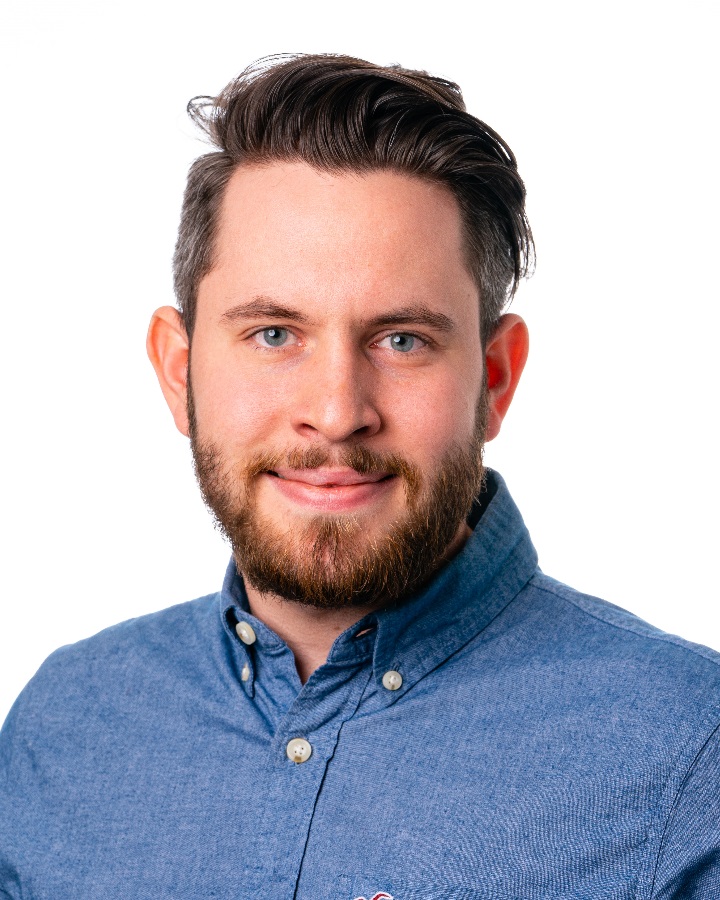
Robert Jenssen is a Professor in the Machine Learning Research Group at UiT The Arctic University of Norway and serves as the Director of Visual Intelligence , an 8-year Research Council of Norway-funded SFI center. His research focuses on solving societal challenges in healthcare, marine mapping, energy, and Earth observation through collaborations with industry and public stakeholders. Director, Visual Intelligence (SFI) Center Professor, UiT Adjunct Professor, Pioneer Centre for AI (University of Copenhagen) and Norwegian Computing Center His methodological expertise spans neural networks, information-theoretic learning, self-learning, and explainable AI (XAI). Recent work emphasizes multimodal learning, uncertainty estimation, and medical image analysis. Scientific awards include: Best Paper, Pattern Recognition Letters (2024) Dissertation Award, Norwegian AI Society (2023) Best Paper, Color and Visual Computing Symposium (2022) IEEE GRS Society Letters Prize (2013) Prize for Young Researchers, University of Tromsø (2007) He contributes to international leadership as a member of the Scientific Advisory Board (SAB) for the Max Planck Institute for Intelligent Systems, France's SequoIA AI Excellence Cluster, and Denmark's DIREC center.
Michael Riegler is a Researcher at the AI Department, Simula Research Laboratory , focusing on interdisciplinary applications of Artificial Intelligence in healthcare, sports analytics, and multimedia systems. His work bridges Machine Learning , AI Alignment , and Applied AI across clinical and real-world domains. Key Affiliations: Simula Research Laboratory (AI Department Head) Research Themes: Explainable AI in medicine, multimodal data analysis, and AI-driven health monitoring Research Interests include: Developing AI/ML algorithms for medical imaging (e.g., polyp detection, embryo analysis) Addressing missing data challenges in healthcare through novel imputation techniques Creating multimodal virtual avatars for investigative interview training Designing edge AI systems for sports analytics and sustainable fishing Recent Publications highlight collaborations with institutions in Norway and globally, with a focus on: Medical Applications: Polyp segmentation, ECG analysis, and explainable models for disease detection Sports Analytics: Athlete performance prediction and soccer video processing Data Infrastructure: Lifelogging datasets (ScopeSense), semantic representation frameworks Labs & Teams include leadership in Simula’s AI Department and participation in projects like Medico Multimedia Task , ImageCLEF , and MediaEval workshops. His work emphasizes responsible AI innovation in public sectors and privacy-preserving systems for edge environments.
Bettina Sandgathe Husebø is a Professor and Head of the Center for Geriatric and Nursing Home Medicine at the Department of Global Health and Community Medicine, Faculty of Medicine, University of Bergen (UiB). She also serves as Innovation Manager at IGS, UiB since 2019. Her extensive career spans clinical practice, research, and leadership roles in geriatric and palliative care. Dr. Husebø completed her medical education at the University of Bonn, Germany in 1988, followed by specialization in Anaesthesiology and Intensive Care in 1995. Her Norwegian qualifications include Medical Specialization in Palliative Medicine (2012) and Nursing Home Medicine (2014) from UiB, along with a PhD from the Faculty of Medicine Dentistry at UiB in 2008. She further enhanced her expertise with a Postgraduate Safety, Quality, Informatics and Leadership (SQIL) Program from Harvard University in 2021. Her research focuses on critical geriatric issues including pain assessment and management in dementia patients, behavioral disturbances in dementia, palliative care in nursing homes, and digital phenotyping applications for elderly care. She has pioneered work on the relationship between pain, agitation, and neuropsychiatric symptoms in dementia patients, particularly through the COSMOS trial and LIVE@Home.Path study. Her recent publications (2023-2025) demonstrate a strong emphasis on digital health solutions for dementia care, with particular focus on activity monitoring, pain assessment through technology, and community-based interventions for aging populations. Her work bridges clinical geriatrics, technology innovation, and patient-centered care models. Among her notable recognitions are the National Dementia Award by His Majesty King Harald of Norway (2022) and multiple awards for research excellence in pain management and palliative care. Her work has significantly influenced Norwegian healthcare policy regarding dementia care and end-of-life practices. As an educator, she lectures in English, German, and Norwegian on dementia, pain in dementia, innovation technologies for older adults, symptom management at end-of-life, systematic medication review, and advance care planning. She has received teaching awards including 'Teacher of the Year' from the Faculty of Medicine and Dentistry at UiB. Dr. Husebø leads the Center for Geriatric and Nursing Home Medicine (SEFAS) and has been instrumental in establishing Norway's first palliative care ward in a nursing home. Her research group focuses on translating evidence into practice to improve quality of life for elderly patients, particularly those with dementia.
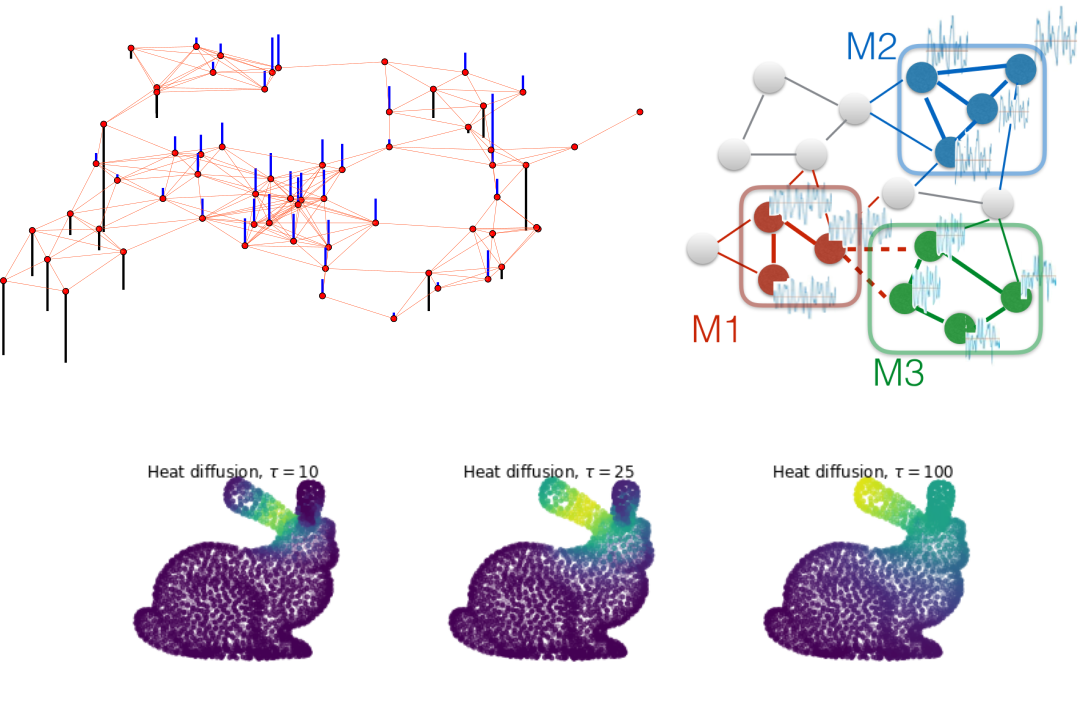
Benjamin Ricaud is an Associate Professor and Group Leader in Machine Learning at UiT The Arctic University of Norway's Department of Physics and Technology. His core affiliations include membership in the Machine Learning Group, Visual Intelligence center, and co-directorship of the Digital Technology Innovation Lab focused on Arctic-region tech startups. He also co-chairs the annual Northern Light Deep Learning conference. Ricaud's research spans: Fundamental ML : Graph signal processing, explainable AI, and generative models Applications : Microfossil classification, medical diagnostics (retinal aging), drug analysis, and climate data interpretation Emerging domains : Self-supervised learning and biological data analysis using Raman spectroscopy His recent publications (2020-2025) cluster in three domains: Graph ML methodologies (35%) Biomedical/biological applications (40%) Geoscience/climate informatics (25%) with consistent focus on interpretability and real-world data challenges. Teaching includes Image Processing (FYS-2010), Pattern Recognition (FYS-3012), and Machine Learning (FYS-2021). He leads outreach initiatives developing AI exhibits for Tromsø Science Centre.
Joao Carlos Amaro Ferreira is a Professor at the Faculty of Logistics, Molde University College (HiMolde), Norway. He holds PhDs in Computer Engineering and Industrial Engineering from the Technical University of Lisbon and the University of Minho, respectively. His research focuses on Artificial Intelligence (AI) applications in healthcare, energy, transportation, IoT, blockchain, and smart cities. He has led over 40 projects, including 6 as Principal Investigator, and contributed to international conferences like OAIR and INTSYS. He served as IEEE CIS President (2016-2018) and is an IEEE Senior Member since 2015. His academic contributions span AI-driven solutions for public sector informatics, healthcare data quality, and cybersecurity. He actively participates in European projects such as e-Hospital4Future and explores blockchain applications in supply chains and medical records. Ferreira leads the ABC-AI research group, emphasizing ethical and applied AI. His work bridges academia and industry through projects like gamification systems for eco-driving and AI in fisheries traceability. Recent publications highlight AI's role in cardiovascular disease detection, emergency department optimization, and blockchain-enhanced healthcare interoperability. He collaborates internationally, co-editing journals like Applied Sciences , and has authored patents in edge computing for maritime monitoring.
Lilja Øvrelid is a Professor at the Department of Informatics, University of Oslo, leading the Language Technology Research Group. Her research focuses on syntactic and semantic text processing using machine learning techniques such as dependency parsing, negation analysis, and sentiment analysis. She teaches courses including IN1140: Introduction to Language Technology , IN5550: Neural Methods in NLP , and INF5830: Natural Language Processing . Her academic interests span natural language processing, machine learning, and computational linguistics, with a particular emphasis on Norwegian language technology. Recent publications highlight work in sentiment analysis (including patient feedback), event extraction from Norwegian news, benchmarking language models, emotion analysis for under-resourced languages (Pashto, Farsi-Dari), and bias detection in multilingual models. She actively contributes to the development of Norwegian language resources such as NorBench, NorQuAD, and NoReC. Current projects include BigMed and SIRIUS , focusing on biomedical text mining and AI infrastructure. Collaborations with colleagues like Erik Velldal, David Samuel, and Vladislav Mikhailov are frequent in her work. Despite no explicit mention of scientific awards, her contributions to NLP and computational linguistics are substantial through publications, datasets, and tool development.
Elisabeth Wetzer is an Associate Professor in Machine Learning at the Department of Physics and Technology, UiT The Arctic University of Norway. Her research bridges artificial intelligence with healthcare applications, focusing on multimodal image registration, bias mitigation in AI, and physics-informed learning models. Current Role: Associate Professor, Machine Learning Group Research Themes: AI ethics, medical imaging, cross-modal representations, algorithmic fairness Her recent work explores technical challenges in PET imaging analysis and societal implications of AI bias. Collaborative projects span medicine, mathematics, and computer science disciplines. Key scientific contributions include: Physics-informed deep learning for PET image data Studies on multi-task learning efficacy in medical classification Research on gender bias in algorithmic systems She actively participates in diversity initiatives and public outreach, including presentations at Nobel laureate conferences and media engagements on AI ethics.
Neil Martin Davies is a Researcher at the Department of Public Health and Nursing , Norwegian University of Science and Technology (NTNU) . His work bridges epidemiology, genetics, and public health, with a focus on causal inference, Mendelian randomization, and socioeconomic health disparities. His research explores the intersection of genetic epidemiology , developmental psychology , and clinical outcomes . Key themes include the impacts of antiseizure medications in pregnancy , cardiometabolic risks in psychiatric populations , and health policy implications of Mendelian randomization . Recent publications highlight methodological advancements in directed acyclic graphs (DAGs) , instrumental variable analysis , and family-based sampling . His work frequently addresses parental education effects , sleep patterns , and genetic correlations in large cohorts like UK Biobank. Neil Martin Davies contributes to scientific reporting standards , co-authoring the STROBE-MR guidelines for Mendelian randomization studies. His collaborations span neurology , mental health , and health economics , emphasizing causal relationships over correlational findings.
Jon Andoni Duñabeitia is a Full Professor at the School of Languages and Education of Universidad Nebrija in Madrid. He serves as Director of the Centro de Investigación Nebrija en Cognición (CINC) and the International Chair in Cognitive Health . With an h-index of 43 (Scopus), he has published 170+ articles across psycholinguistics, multilingualism, cognitive training, and virtual reality applications in education. His research examines how language processing interacts with cognitive load, emotional modulation, and technological innovation. Principal Investigator for 8+ projects funded by Spanish Government, Basque Government, BBVA Foundation Associate Editor and Editorial Board Member of high-impact journals Recognized among Spain's top 3% scientists across all disciplines Recent publications span topics including: Second-language reading dynamics in VR environments Multilingual cognitive interactions in neurological conditions Emoji/typographic effects on word processing Computerized cognitive assessment and training systems He actively contributes to scientific meetings as invited speaker across Europe, Asia, and Americas. His work bridges basic research in psycholinguistics with applied technologies for cognitive health.
Andres Soler is a Lecturer at NTNU's Department of Engineering Cybernetics within the Faculty of Information Technology and Electrical Engineering. His research focuses on EEG signal processing for applications in brain-computer interfaces (BCI), stress/health monitoring, and low-density electrode systems. He has published extensively on topics including EEG source imaging, artifact removal, and optimized channel selection techniques. His work bridges biomedical engineering and machine learning, with notable contributions to driver alcohol detection systems and motor imagery classification for neurorehabilitation. Teaching roles include serving as Guest Lecturer for Biomedical Instrumentation and Control (TTK4270) and Adaptive Data Analysis (TTK7), while acting as main lecturer for Industrial Electrotechnics (TTK4240). His research group collaborates internationally on projects like FlexEEG and has presented at conferences such as IEEE EMBC and Brain Informatics. Key research directions include advancing EEG-based systems for clinical and automotive applications, developing algorithms for real-time brain activity decoding, and optimizing EEG hardware configurations for cost-effective implementations. Current trends show focus on enhancing signal quality through artifact mitigation strategies and improving BCI communication systems for locked-in patients.
Eric Mörth is a PhD Scientist in Multimodal Medical Visualization at the University of Bergen's Department of Informatics, collaborating with the Mohm Medical Imaging and Visualization Center (MMIV). His research focuses on innovative medical data visualization techniques, such as MuSIC and ICEVis, which enhance clinical decision-making. Currently on a research stay at Harvard University's VCG Group, he holds a Master's in Medical Informatics from the Medical University of Vienna and a degree in Biomedical Engineering from the Technical University of Vienna. His awards include the Best Paper Honorable Mention (VCBM2022) and Best Short Paper (VINCI2022). Mörth's work spans cancer imaging, scrollytelling narratives, and interactive visualization tools, supported by grants from Trond Mohn Stiftelse. He advises through Team Smit and has contributed to projects like RadEx and ParaGlyder, advancing medical data exploration and communication.
Kåre Moen is an Associate Professor at the Department of Community Medicine and Global Health, University of Oslo. His primary research interests include qualitative research methods, medical anthropology, global health, and HIV with a focus on issues of gender, sexuality, and homosexuality. He holds a PhD in Community Medicine from the University of Oslo, a Master of Public Health from UCLA, and a Doctor of Medicine from the University of Bergen. His work emphasizes vulnerable populations such as female sex workers, men who have sex with men (MSM), and people who inject drugs, particularly in East African contexts like Tanzania and Zimbabwe. Recent studies include the efficacy of mHealth interventions for HIV prevention, socio-structural barriers to healthcare access, and the sociocultural dimensions of HIV/AIDS. Key collaborations: Muhimbili University of Health and Allied Sciences (Tanzania), Addis Ababa University (Ethiopia), and the Center for Social Research in Health (Australia). Grants/Projects: BIO (Biomedicalization from the Inside Out), TRUST (Transdisciplinary Research for Sustainable Health), and DOCEHTA (Strengthened Doctoral Education for Health in Tanzania). Research highlights include conceptual frameworks for biomedical HIV prevention and participatory design of digital health tools targeting at-risk groups. His work frequently employs qualitative methodologies to explore structural inequalities and healthcare system challenges in low-resource settings.
Lill-Tove Rasmussen Busund is a Professor and Consultant Pathologist at the Department of Medical Biology, UiT The Arctic University of Norway. Her research focuses on translational cancer studies with emphasis on cancer biomarkers in tissue and blood, combining molecular biology with artificial intelligence applications in pathology. She leads the Translational Cancer Research Group (TCRG) and contributes to projects like the TNM-Immune Cell Score Trial and AI–Pathology initiatives. Role: Professor/Consultant Pathologist University: UiT The Arctic University of Norway Department: Department of Medical Biology Email: lill.tove.rasmussen.busund@uit.no Rasmussen Busund's work spans epidemiological cancer research , multi-omic data integration , and machine learning applications for cancer diagnostics. She develops prognostic and predictive biomarkers using population-based cohorts like the NOWAC study, with particular attention to hormone-dependent cancers and immune microenvironment analysis . Recent publications highlight her expertise in digital pathology and AI-driven tumor classification , including studies on microRNA expression patterns in breast and colon cancer, immune cell score development for NSCLC, and computational approaches to lymphocytic infiltration assessment. Her research directly impacts precision oncology and immunotherapy response prediction . She contributes to teaching as leader of the Musculoskeletal System course at the Medical School, and maintains active participation in scientific knowledge migration projects like the transition to the National Science Archive (NVA). Her ORCID identifier is 0000-0001-8235-6163 .
Dr. Hongbin Liu is a Senior Lecturer at the Department of Informatics, King’s College London, UK, affiliated with the Centre for Robotics Research. His work focuses on robotic tactile sensing, soft robot design, and haptic exploration. Research Interests: Robotic tactile sensing Learning objects by touch Soft and flexible robot design Modelling of soft interactions Dr. Liu’s recent publications highlight advancements in robotics and sensor technology , particularly in tactile perception, medical device design, and continuum robot navigation. His work integrates Bayesian classifiers for autonomous object recognition, polymer-based optical waveguides for triaxial tactile sensors, and deep learning for medical diagnostics. Collaborations span institutions like Imperial College London, The University of Hong Kong, and Medical University of Vienna. Professional Affiliation: King’s College London Department of Informatics Centre for Robotics Research (research group)
Frode Eika Sandnes is a Professor at the Department of Information Technology , Faculty of Technology, Art and Design , Oslo Metropolitan University , focusing on Human-Computer Interaction and Universal Design of ICT . His research spans innovative interaction techniques, skill reuse, pattern recognition, image analysis, and intelligent systems. Current research trends include accessibility in digital education, lightweight deep learning models, and physical interface usability Recent publications analyze color picker efficiency, 3D-printed prosthetics, and authentication technologies His work integrates interdisciplinary approaches to enhance usability and inclusivity in technology. Notable projects involve automated readability assessments and AI applications in diverse domains like aquaculture and medical diagnostics.