Daniele Apiletti is an Associate Professor at the Polytechnic University of Turin , affiliated with the Department of Control and Computer Engineering (DAUIN). He serves as a member of the Interdepartmental Center SmartData@PoliTO and acts as Academic Advisor for the Master's degree program in Data Science and Engineering. Research Groups: DBDM - Database and Data Mining Group (DAUIN) ERC Sectors: Algorithms, Artificial Intelligence, Machine Learning, Web and Information Systems Research Interests span Big Data Analytics, Data Science, Machine Learning, Computer Vision, and Quantum Computing. His work focuses on integrating data-driven and theory-guided approaches for heterogeneous data querying, cloud continuum machine learning, and spatio-temporal models for crisis management. Recent Publications highlight trends in medical image segmentation, predictive industrial modeling, and fault-tolerant data systems. Key subfields include AI in healthcare, scalable manufacturing analytics, and vision-language models for game tutorials. Teaching roles include course ownership of Big Data: Architectures and Data Analytics and Internships across multiple academic years. He has collaborated on courses in Data Science, Database Technologies, and Data Management. PhD Students Supervised: Etibar Vazirov (Cloud Continuum Machine Learning) Gabriele Scaffidi Militone (Cloud Storage Microservices) Daniele Rege Cambrin (Spatio-Temporal Ecology Models) Simone Monaco (Theory-Guided Data Science) Research Projects include commercial contracts on: - Natural language querying of corporate research archives - National tourism ecosystem platforms - AI for thermotechnical system design - Machine Learning in clinical trials and supply chains
Dr. Sueda Saylan is an Assistant Professor at the Faculty of Engineering, Özyeğin University, since 2024. Her academic journey includes a Ph.D. in Interdisciplinary Engineering (2016) from Masdar Institute (now Khalifa University), postdoctoral research at Khalifa University (2016-2022), and an MSCA Postdoctoral Fellowship at Bilkent University (2022-2024). She has also held visiting researcher positions at MIT (2014) and the University of Tokyo (2016). Education Doctorate: Interdisciplinary Engineering, Masdar Institute of Science and Technology (2016) Master's: Microelectronic Manufacturing Engineering, Rochester Institute of Technology (2004) Bachelor's: Mechanical Engineering, Middle East Technical University (2002) Dr. Saylan's research focuses on memristive devices , photovoltaics , and light-matter interactions at micro/nanoscale . Her work bridges materials science and electronic engineering, with recent publications on memristor-based sensors, spectral filtering in silicon, and machine learning integration for biomedical diagnostics. Key trends from her 15 most recent articles (2013-2025) include: Advancing memristor technology for radiation sensing and vacuum monitoring Optimizing photovoltaic efficiency through light management and antireflection coatings Developing compact, low-power diagnostic devices for pathogen detection Exploring nanoscale electrode materials and switching mechanisms Applying Fourier transforms and interferometry in optical systems Scientific Awards Marie Skłodowska-Curie Actions (MSCA) Postdoctoral Fellowship (2022-2024) Dr. Saylan has received research support from prestigious programs and has contributed to interdisciplinary projects involving semiconductor physics, optical engineering, and biomedical diagnostics. Her collaborations span institutions like Khalifa University, MIT, and the University of Tokyo.
Travis B. Thompson, Ph.D. is an Assistant Professor in the Department of Mathematics and Statistics at Texas Tech University, leading the TM4 (Texas Tech Translational and Theoretical Mathematical Modeling and Machine Learning in Medicine) research group. His academic journey includes postdoctoral work at Rice University, Simula Research Laboratory, and the University of Oxford, focusing on mathematics applied to neurodegenerative diseases. Education: Ph.D. in Mathematics from Texas A&M University (2013) Dr. Thompson develops theoretical mathematical models and applies scientific computing and machine learning to study neurological pathologies, particularly Alzheimer’s disease. His work explores complex biological processes on networks, translational healthcare applications, and nutritional security implications. Current research trends integrate neuroimaging data with finite element simulations to model tau progression , amyloid beta dynamics , and glymphatic clearance in age-related diseases. Scientific awards and honors were not explicitly mentioned in the provided materials. Dr. Thompson’s interdisciplinary approach connects computational neuroscience with biomedical engineering , utilizing techniques like diffusion tensor imaging and level set methods to analyze pathological protein spread and brain tissue mechanics . The TM4 research group focuses on network neurodegeneration , personalized medicine , and machine learning diagnostics . Their work spans from microfluidic cancer detection to computational modeling of brain clearance mechanisms , addressing challenges in both neurodegenerative diseases and biomedical engineering through rigorous mathematical frameworks.
Laura E. Martin, PhD, is a Professor in the Department of Population Health at the University of Kansas Medical Center (KUMC) and serves as the Executive Associate Director at Hoglund Biomedical Imaging Center. Her academic journey began with undergraduate training in psychology and dance at the University of Kansas, followed by a Ph.D. in psychology with an emphasis in cognitive neuroscience from Rice University, and a postdoctoral fellowship at KUMC. Dr. Martin is a cognitive neuroscientist whose research focuses on applying neuroimaging methods to understand health behaviors, particularly addictive behaviors such as smoking and eating. Her work examines self-regulation, impulsivity, reward processing, and decision making through functional neuroimaging techniques. As Executive Associate Director at Hoglund Biomedical Imaging Center, she provides technical expertise to investigators and trainees interested in incorporating neuroimaging into their research programs. Her collaborations span diverse areas including aging, depression, obesity, gambling, social neuroscience, decision-making, resting state fMRI, and neuroeconomics. Her research is currently funded by the National Institutes of Health, with a recent focus on using guided episodic future thinking to increase physical activity adherence and promote healthy brain aging among mid-life adults. Dr. Martin is passionate about mentoring students at all levels and sharing her enthusiasm for research methodology, critical evaluation of research, and appropriate method selection for specific research questions. Current research emphasizes health neuroscience examining how health behaviors change the brain and how the brain can be changed to change health behaviors Leads and contributes to team science approaches addressing complex research questions Helps conceptualize research projects and brings specialized data collection and analytic tools to interdisciplinary teams Dr. Martin has published extensively in high-impact journals, with recent work focusing on dementia prevention, neuroimaging methodology, eating disorders, addiction research, and physical activity interventions. Her approach combines cognitive neuroscience with practical applications for improving health behaviors across the lifespan. As an educator and mentor, Dr. Martin works with trainees from high school to faculty level, emphasizing the integration of neuroimaging research with broader research questions and training students in research methodology and critical thinking.
George M. Church is a Professor of Genetics at Harvard Medical School and affiliated with MIT, where he directs PersonalGenomes.org, providing open-access genomic, environmental and trait data. His laboratory focuses on transformative technologies for reading and writing 3D/4D biological structures with attention to ethics, safety, and equitable access. Church has co-initiated major scientific initiatives including the BRAIN Initiative (2011) and multiple Genome Projects (GP-Read-1984, GP-Write-2016, PGP-2005). Church's research spans multiple cutting-edge domains including genome engineering, synthetic biology, aging reversal, and space genetics. His lab pioneered foundational methods for direct genome sequencing, molecular multiplexing and barcoding in 1984, leading to the first genome sequence in 1994. His innovations contributed to nearly all next-generation DNA sequencing methods and companies. Current research directions include machine learning for protein engineering, tissue reprogramming, organoids, gene therapy, and in situ 3D DNA/RNA/protein imaging. His work bridges fundamental biology with therapeutic applications across diverse fields from Alzheimer's disease to de-extinction biology. Church's recent publications reveal a remarkable breadth of scientific inquiry, spanning from fundamental genome editing techniques to applications in aging research, neuroscience, and space biology. His work increasingly integrates artificial intelligence with biological systems, as seen in papers on machine-guided cell-fate engineering and automation of systematic reviews with large language models. His research maintains a strong translational focus, with numerous papers addressing therapeutic applications in cancer immunotherapy, gene therapy, and diagnostics. The consistent theme across his diverse publications is the development and application of transformative technologies to address fundamental biological questions and medical challenges. National Academy of Sciences (NAS) membership National Academy of Engineering (NAE) membership Franklin Bower Laureate for Achievement in Science Co-initiator of the BRAIN Initiative (2011) Director of multiple NIH Centers for Excellence in Genomic Science (2004-2020) Church directs numerous research centers including the NIH-CEGS, Personal Genome Project (PGP), Lipper Center for Computational Genetics, and Wyss Institute Synthetic Biology center. His laboratory has trained PhD students across multiple Harvard and MIT programs including Biophysics, BBS, Biomedical Informatics, ChemBio, Chemistry, SSQB, MCO, Virology, HST, EE/CS, Physics and Applied Math. His commercial impact is extensive through companies spanning medical diagnostics (Knome/PierianDx, Alacris, Nebula, Veritas) and synthetic biology/therapeutics (AbVitro/Juno, Gen9/enEvolv/Zymergen/Warpdrive/Gingko, Editas, Egenesis). Church also pioneered new privacy, biosafety, ELSI, environmental and biosecurity policies. The Church Lab operates across multiple research domains including molecular multiplexing, next-generation sequencing, nanopore technology, and genome engineering. The lab maintains strong connections with the Personal Genome Project, Wyss Institute, and multiple commercial ventures. Current research directions include the Spatial Atlas of Human Anatomy (SAHA), human skin rejuvenation via mRNA, and space genetics research through the Consortium for Space Genetics and BioAstra. The lab's mission focuses on transformative technologies for reading and writing 3D/4D structures at any scale, inspired by but not limited by biology.
Kenneth A. Barbee is a Professor and Senior Associate Dean for Research at the School of Biomedical Engineering, Science and Health Systems at Drexel University . His research focuses on cellular biomechanics, particularly the response of neural and vascular tissues to mechanical loading and trauma. Education : PhD in Bioengineering from University of Pennsylvania (1991), MS in Bioengineering from University of Pennsylvania (1988), BS in Engineering Science and Mechanics from University of Tennessee (1986) Barbee's research explores mechanotransduction in the cardiovascular system, including how endothelial cells respond to shear stress and vascular smooth muscle cells adapt to cyclic stretching. He employs advanced techniques such as Atomic Force Microscopy (AFM) , Computational Fluid Dynamics (CFD) , and fluorescence microscopy in his work. His studies also address cellular injury criteria under traumatic loading conditions to aid protective equipment design and therapeutic evaluation. Publications highlight his contributions to understanding shear stress gradients in atherogenesis, calcium signaling in endothelial cells, and deformation models for vascular smooth muscle. These works span disciplines including biomechanics , cell biology , and bioengineering .
Elizabeth Brainerd is the Robert P. Brown Professor of Biology and Professor of Medical Science in the Department of Ecology and Evolutionary Biology at Brown University. She has been a leading figure in vertebrate biomechanics and evolutionary morphology since joining Brown in 2005, where she directs the Keck XROMM Core Facility. Previously, she served as Assistant Professor (1994-1999) and Associate Professor (2000-2005) at the University of Massachusetts Amherst. Her research focuses on biomechanics and evolutionary morphology, combining anatomical studies with engineering principles to understand animal movement. Brainerd is a pioneer of X-ray Reconstruction of Moving Morphology (XROMM) technology, which enables 3D visualization of skeletal movement in living animals. Her work spans diverse vertebrate groups including fish, amphibians, reptiles, birds, and mammals, with applications to feeding, breathing, and locomotion mechanics. Brainerd's research has been consistently supported by major NSF grants, including the development of microXROMM for high-resolution imaging of small animals. Her publications reveal a trajectory from foundational work on breathing mechanics to innovative applications of XROMM technology across multiple vertebrate systems, particularly in suction feeding mechanics and skeletal kinematics. Her scientific recognition includes: Fellow of the American Association for the Advancement of Science (2004) Distinguished Research Achievement Award from Brown University (2019) Fellow of the American Association for Anatomy (2020) Joseph S. Nelson Lifetime Achievement Award in Ichthyology (2021) Bidder Prize Lecture from the Society for Experimental Biology (2023) Brainerd has mentored 7 doctoral students and 5 MS students to completion, plus over 50 undergraduate researchers. She has served as President of both the International Society of Vertebrate Morphology (2016-2019) and the Society for Integrative and Comparative Biology (2019-2021). Her teaching includes undergraduate courses in Comparative Anatomy, Comparative Physiology, and Human Physiology, graduate courses in Muscle Architecture and Biomechanics, and medical education in Human Anatomy.
Jay P. Gore is the Vincent P. Reilly Professor in Combustion Engineering at Purdue University's School of Mechanical Engineering, with courtesy appointments in Aeronautics & Astronautics and Chemical Engineering. He holds positions at the West Lafayette campus and leads the Gore Research Group, focusing on combustion, radiation heat transfer, and sustainable energy systems. Education: B.E. from University of Poona (1978), M.S. and Ph.D. from Penn State (1982, 1986), and a Postdoctoral Certificate from University of Michigan (1987). His research spans combustion fundamentals, CO2 recycling via char gasification, laser diagnostics, and propulsion systems. He pioneered the Summer Undergraduate Research Fellowship (SURF) program at Purdue. Research interests include turbulent reacting flows, biomedical heat transfer, and global energy policy. Key subfields are combustion diagnostics, flame structure analysis, and hydrogen storage. His work integrates experimental and computational methods, with applications in aerospace, energy, and environmental sectors. Awards: Purdue Innovator Hall of Fame (2014) Fellowships: AIAA (2009), ASME (2006) Reilly Chair Professor (2000) Presidential Young Investigator Award (1991) Grants & Collaborations: Supported by DoE, NASA, and industry partnerships. Leads interdisciplinary projects on CO2 utilization and renewable energy systems. Labs/Teams: Gore Research Group specializes in combustion diagnostics, laser-based measurements, and sustainable energy solutions. Collaborations include international conferences and policy initiatives.
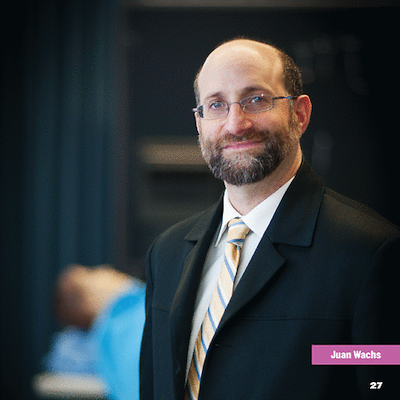
Juan Wachs is the James H. and Barbara H. Greene Professor at the Edwardson School of Industrial Engineering, Purdue University. He holds a courtesy appointment in Biomedical Engineering and is an Adjunct Professor of Surgery at the IU School of Medicine. His research focuses on the intersection of robotics, human-AI interaction, and healthcare systems, with a particular emphasis on surgical robotics, assistive technologies, and telemedicine. Education: PhD in Industrial Engineering (Intelligent Systems), Ben-Gurion University of the Negev MSc in Industrial Engineering (Information Systems), Ben-Gurion University of the Negev BEdTech in Electrical Education, ORT Academic College in Jerusalem Research interests include surgical telementoring via augmented reality, gesture-based interfaces for sterile environments, and semi-autonomous robotic systems for healthcare. His ISAT Lab develops solutions like the STAR telementoring system and robotic assistants like Gesturenurse and FIST-D for explosive ordnance disposal. Recent work emphasizes AI-driven medical decision support (Trauma THOMPSON), burn wound characterization, and robotic ultrasound automation. Key contributions include over 100 publications in robotics, medical AI, and human factors. Scientific Awards: James H. and Barbara H. Greene Professorship Purdue University Faculty Scholar Advising & Labs: Guides over 10 PhD/Master’s students in robotics and healthcare tech ISAT Lab fosters interdisciplinary projects in surgical robotics, human-robot interaction, and accessibility
Wendy M. Murray is a Professor of Biomedical Engineering and Physical Medicine and Rehabilitation at Northwestern University's McCormick School of Engineering. She leads the ARMS Lab, focusing on biomechanical models of upper limb muscles to improve rehabilitation and prosthetic design. Her work addresses spinal cord injury, stroke, and orthopedic interventions. Education: Ph.D. and M.S. in Biomedical Engineering from Northwestern University, B.S. in Mathematics (summa cum laude) from University of Notre Dame. Research interests include musculoskeletal modeling, prosthetics control, and surgical simulations. Key contributions include widely cited anatomical databases and models for hand/wrist function. Current projects explore neuromuscular control, exoskeletons, and injury prevention in sports like baseball. Publications (selected 2024-2017) highlight advancements in motion capture, ultrasound imaging, and computational models for clinical applications. Her work bridges bioengineering with clinical practice to enhance functional recovery. Labs/Teams: Directs the ARMS Lab, collaborating with clinicians and engineers to translate biomechanical insights into real-world medical solutions.
Mehmet Eren Ahsen is an Assistant Professor at the University of Illinois at Urbana-Champaign, holding dual appointments in Business Administration and Biomedical and Translational Sciences . He is also the Deloitte Scholar in Accountancy and an affiliate at the Carl R. Woese Institute for Genomic Biology. His research bridges artificial intelligence, healthcare analytics, and biomedical informatics, focusing on applications in medical decision-making, disease diagnosis, and drug development. Key research interests include: AI-driven healthcare workflows, particularly in mammography screening and radiology Machine learning for biomarker discovery and genomic analysis Economics of AI adoption in clinical settings Unsupervised ensemble learning for biomedical problems His work has been recognized by the CHITA Young Researcher Award (2024) . Notable collaborations involve interdisciplinary teams addressing challenges in cancer genomics, supply chain resilience, and pandemic response. Recent studies highlight: Economic impact of AI-human task sharing in mammography Optimizing screening mammography recall strategies Analysis of social media's role in pandemic information dissemination Development of ensemble models for disease prediction Dr. Ahsen's research also explores: Extracellular vesicle RNA signatures for early cancer detection Correlated drug action models for combination therapies Algorithmic fairness in healthcare AI systems His lab integrates computational methods with clinical and genomic data to advance precision medicine and healthcare efficiency.
Shantanu Chakrabartty is the Clifford W. Murphy Professor and Vice Dean for Research and Graduate Education at the McKelvey School of Engineering, Washington University in St. Louis. He holds affiliations with the Institute of Materials Science & Engineering . His research focuses on analog and neuromorphic computing, energy-efficient sensors, and biomedical instrumentation. Education: PhD, Johns Hopkins University, 2004 MS, Johns Hopkins University, 2002 BTech, Indian Institute of Technology, 1996 Research Interests: Professor Chakrabartty explores frontiers in neuromorphic integrated circuits, leveraging silicon and hybrid substrates to achieve energy efficiency and high-resolution sensing. His work includes self-powered sensors, machine learning processors, and biomedical tools. Recent projects involve neuro-inspired quantum optimization and low-power radar systems funded by a $1.9M grant. Awards: National Science Foundation CAREER Award (2010) MSU Teacher-Scholar Award (2011) MSU Innovation of the Year Award (2012) Labs & Teams: Former Director of the Adaptive Integrated Microsystems Laboratory at Michigan State University. Current projects emphasize interdisciplinary collaborations in materials science and biomedical engineering.
Dr. Gavin McArdle is an Associate Professor at the University College Dublin (UCD) School of Computer Science, specializing in spatial data analysis and smart cities. He holds academic affiliations with the National Centre for Geocomputation (Maynooth University) and CeADAR (Data Analytics Centre). His research focuses on urban dynamics, geovisual analytics, smart transportation, and remote sensing applications. He has received a College of Science Teaching Excellence Award for his contributions to education. McArdle earned his BSc, PhD, and a Prof Dip in University Teaching & Learning from UCD. His work bridges academia and industry through collaborative grants, including those from Science Foundation Ireland and EU funding. Notable projects include the Dublin Dashboard (urban analytics platform) and DubSim (traffic simulation using digital footprints). His research outputs span over 147 publications, with recent work addressing Airbnb's impact on urban gentrification, sustainable mobility, and environmental monitoring via satellite data. He actively contributes to professional committees, including roles in the UCD Data Protection Impact Assessment Committee and international conferences like Web and Wireless GIS. McArdle coordinates courses such as Research Practicum and Computer Programming II, emphasizing practical research and technical skills. His interdisciplinary approach integrates machine learning, spatial statistics, and urban informatics to address real-world challenges in smart cities and environmental sustainability.
Prof. Dr.-Ing. H. Siegfried Stiehl is a retired Senior Professor (until Sept 2021) at the Department of Informatics, University of Hamburg. He previously held roles including Dean of the Faculty of Mathematics, Computer Science, and Natural Sciences (2001–2006), Vice President for Research (2007–2013), and Head of the Image Processing Research Group. His academic journey includes a PhD from TU Berlin (1980) and a Habilitation in Computer Vision (1987). Education: 1973: Ing. Degree in Ingenieur-Informatik, Fachhochschule Furtwangen 1976: Diploma in Computer Science, TU Berlin 1980: Dr.-Ing. Dissertation on medical image processing, TU Berlin Research focuses on Computer Vision , Computational Neuroscience , and Cognitive Science , with contributions to medical image registration, 3D landmark detection, and biomechanical modeling. Key projects include the EU-funded 'COVIRA' consortium (1989–1995) and leadership in the SFB 950 'Manuscript Cultures' project (2015–2019). His 110+ publications span biomedical image registration, elastic deformation algorithms, and real-time signal processing. Notable collaborations include work with institutions like the University of Pennsylvania, University of Birmingham, and Philips Research. Leadership roles include organizing scientific events, serving on editorial boards (e.g., Biological Cybernetics), and founding the Interdisciplinary Nanoscience Center Hamburg (INCH) in 2001. His research has addressed challenges in neurosurgical interventions, VLSI implementation of neural networks, and interdisciplinary education.
Wei Ding is a Professor in the Department of Computer Science at the University of Massachusetts Boston (UMass Boston). She earned her Ph.D. in Computer Science from the University of Houston in 2008. From 2019 to 2023, she served as a Program Director at the National Science Foundation's Division of Information and Intelligent Systems (IIS), overseeing programs in Information Integration, Smart Health, Deep Learning Foundations, and Scalable Systems. Her research integrates knowledge discovery, data mining, and machine learning with applications spanning health sciences, astronomy, geosciences, and environmental sciences. She employs advanced techniques like spatio-temporal modeling, deep neural networks, and semantic analysis to address complex real-world problems such as disease subtyping, physical activity prediction, and environmental forecasting. Her work emphasizes interdisciplinary collaboration and societal impact. Analysis of her recent publications reveals a focus on AI-driven healthcare solutions (e.g., neuroimaging biomarkers, disorder diagnosis), fundamental ML advancements (e.g., generalization, GAN stability), and cross-domain applications (e.g., climate forecasting, animal behavior analysis). Recurring themes include low-data learning, interpretability, and scalable algorithms. Awards & Honors: IEEE Fellow (2023) NSF Director's Award (2022) WISAY Distinguished Woman in Science Award, Yale University (2019) AI for Earth Award (2018) Best Paper Awards (ICTAI 2011, ICCI 2010) Advising & Grants: She mentors PhD and Master’s students in the Knowledge Discovery Lab (KDLab), with alumni at institutions like Facebook, Google, and McKinsey. Her research is funded by NSF, NIH, NASA, and DOE, including: NIH R01: Predicting youth physical activity (2016) NSF EAGER: Machine learning for cancer subtyping (2017) NIH R01: Accelerometer/gyroscope data for activity estimation (2022) Leadership: She directs the KDLab and co-founded the Women in Sciences Club (WINS). She serves as Associate Editor for ACM TKDD, TIST, and KAIS journals.