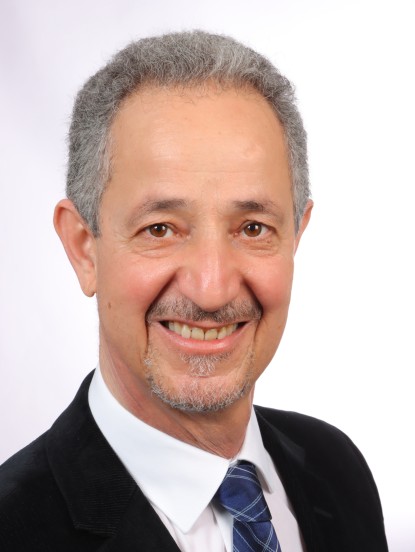
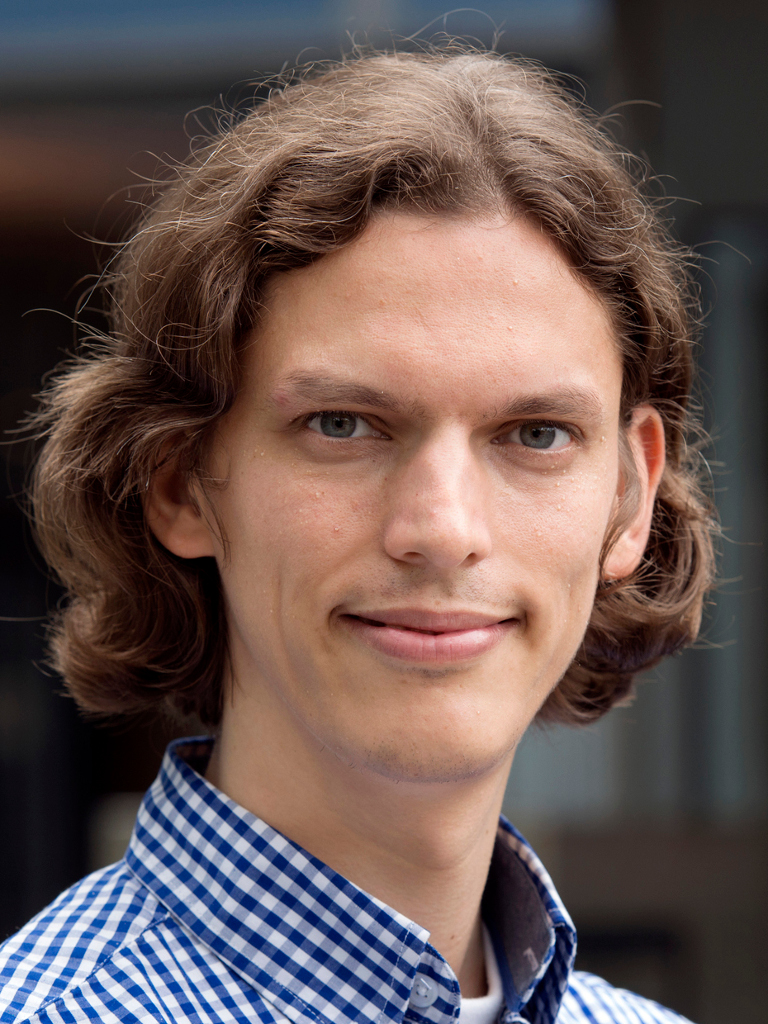
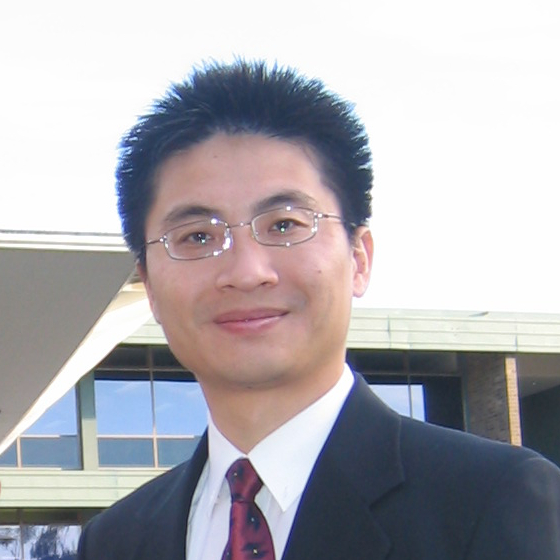
Georgios Bardis is a permanent Assistant Professor at the Department of Informatics and Computer Engineering , School of Engineering , University of West Attica . He holds a PhD in Informatics from University of Limoges (2006), an MSc in Software Systems from University of California, Santa Barbara (1994), and a Diploma in Computer Engineering & Informatics from University of Patras (1992). His career spans multiple academic roles, including Lecturer at University of West Attica (2018-2021) and Professor of Applications at TEI of Athens (2010-2018). Research Interests : Focus on Intelligent Computer Graphics , Declarative Modeling , and Multicriteria Decision Analysis . His work integrates AI into 3D scene synthesis, urban planning, and semantic decision systems. Awards : Master Microsoft Office Specialist (MOS), 2003 NAT Scholarships for Academic Excellence (1989-1992) 1984 Monetary Prize from Hellenic Mathematical Society Leadership : Member of AKIIS Research Lab (University of West Attica), Editorial Board of International Journal of Systems Biology and Biomedical Technologies , and Reviewer for International Journal of Digital Earth . Publications : 5 peer-reviewed journals, 2 books, 8 book chapters, and 22 conference papers. Key areas include WebGL avatars, urban data analysis, and 3D modeling with AI.
Jorge Manuel M. C. Pereira Batista is an Associate Professor at the Department of Electrical and Computer Engineering , University of Coimbra, Portugal. He serves as a senior researcher at the Institute for Systems and Robotics (ISR-UC) and leads the Computer Vision Group. His career spans academic roles, research coordination, and industry collaboration. Academic Affiliation: University of Coimbra (Electrical & Computer Engineering Department) Research Institute: Institute for Systems and Robotics (ISR-UC) His research focuses on Computer Vision , Pattern Recognition , and applications of Differential Geometry in these fields. Key subdomains include facial analysis, visual surveillance, real-time vision systems, and machine learning integration. From 2010–2023, his recent publications highlight advancements in probabilistic models , transformer architectures , multi-branch learning , and biomimetic robotics . He has coordinated multiple funded projects such as: STORK : Avian protection systems NeuroCity : Intelligent street lighting 4D Facial Dynamics : Identity recognition iTRAFFIC : BRISA highway traffic monitoring His work bridges theoretical innovation (e.g., Riemannian manifold applications) with practical deployments in transportation, energy, and healthcare sectors.
Sandra Geisler is a Junior Professor for Data Stream Management and Analysis at the Department of Computer Science, RWTH Aachen University, a position she has held since September 2021. She is also the leader of the Digital Health Spaces group at the Fraunhofer Institute for Applied Information Technology (FIT) in St. Augustin, reflecting her dual expertise in academic research and applied digital health solutions. Bachelor/Master: Diploma in Computer Science, RWTH Aachen University (2008) PhD: Doctoral degree in Computer Science, RWTH Aachen University (2016) Her research focuses on data stream systems, real-time analytics, data quality, and their applications in digital health and industrial processes. She has made significant contributions to ontology-based data quality management, edge computing for stream processing, and FAIR data principles. Recent work explores the integration of large language models into data management workflows and the development of privacy-preserving platforms for industrial data exchange. Her recent publications demonstrate a strong trend in distributed and edge-based stream processing, interdisciplinary applications in healthcare and supply chains, and the use of AI for data discoverability and quality. Topics include in-network computing, simulation of edge queries, self-tonometry for glaucoma, and cross-company data sharing with privacy awareness. She has served as Associate Editor for the Data & Knowledge Engineering Journal (Elsevier), Public Relation Chair for QDB Workshop (VLDB 2016), and Workshop Chair for IMMoA and HIMoA workshops. She has also edited a special issue on Information Management in Mobile Applications in the Pervasive and Mobile Computing Journal. Geisler has supervised multiple theses on topics including LLM-based ontology integration, edge anomaly detection, and data ecosystem modeling. She has been actively involved in research grants and projects related to industrial data processing, digital health, and sustainable production. She teaches courses such as Data Stream Management and Analysis and Data Ecosystems Lab. She leads the Digital Health Spaces research group at Fraunhofer FIT, focusing on innovative solutions for health data management and patient-centric digital tools. Her work bridges computer science, healthcare, and industrial applications, promoting secure, efficient, and intelligent data ecosystems.
Abdelhak M. Zoubir is a Professor of Signal Processing and Head of the Signal Processing Group at Technische Universität Darmstadt, Germany. He has held leadership roles including Head of the Department of Electrical Engineering and Information Technology (2012–2014 and 2020–2022), and President of the European Association for Signal Processing (EURASIP, 2017–2018). His research focuses on statistical signal processing with applications in radar imaging, biomedical engineering, and automotive systems. Zoubir has authored over 500 publications and is a Fellow of IEEE and EURASIP. He currently leads projects on radar communication integration, robust signal processing algorithms, and radiation-hardened sensor development. Education: Dipl.-Ing. (BSc/MSc) from Fachhochschule Niederrhein and Ruhr-Universität Bochum, followed by a Dr.-Ing. (PhD) in Electrical Engineering from Ruhr-Universität Bochum (1992). Research Interests: Bootstrap techniques, robust detection/estimation, cooperative sensor networks, radar for landmine detection, and automotive safety systems. He has pioneered methods in robust statistical signal processing, including low-rank matrix completion and sparsity-aware algorithms. Recognition: Recipient of the IEEE Meritorious Service Award (2018), IEEE Signal Processing Magazine Best Paper Award (2017), and the M. Barry Carlton Award (2014). He has been a keynote speaker at major conferences such as ICASSP and EUSIPCO, and served as Editor-in-Chief of the IEEE Signal Processing Magazine (2012–2014). Current Projects: Focus on automotive radar signal processing, radiation-hardened sensors (MALTA), and distributed learning robustness. His work bridges theoretical advancements with practical applications in defense, healthcare, and automotive industries.
Pedro Faria Lopes is an Associate Professor at the Department of Information Science and Technology (ISTA), School of Technologies and Architecture, ISCTE – Instituto Universitário de Lisboa. He is also an Associate Researcher at ISTAR-Iscte, contributing to the Digital Living Spaces research group. His academic roles involve teaching and supervising students in digital multimedia, human-computer interaction, and game design. His educational background includes: PhD in Electrical and Computer Engineering, Higher Technical Institute - UTL (1996) Master's degree in Electrical and Computer Engineering, Higher Technical Institute - UTL (1989) Bachelor's degree in Electrical Engineering, Higher Technical Institute - UTL (1985) Pedro Faria Lopes's research interests focus on digital multimedia, human-computer interaction, computer games, sound and video for multimedia, computer animation, and digital content creation for lifelong and e-learning contexts. His work bridges technology and education, emphasizing interactive and engaging digital experiences. He has contributed extensively to the development of serious games, multimedia applications, and educational technologies. His recent publications highlight trends in educational video games, procedural content generation, interactive storytelling, and digital inclusion through mobile applications. These works reflect a strong commitment to applying computing technologies in educational, social, and cultural domains, particularly through game-based learning and accessible design. He has supervised numerous graduate students, with 15 completed and 3 ongoing Master’s dissertations, as well as 1 completed and 1 ongoing doctoral theses, primarily at ISCTE. His teaching activities include courses such as: Human-Computer Interaction Digital Game Design and Production Sound, Video and Digital Content Authoring Visualization and Human-Computer Interaction Multimedia Management Although no specific scientific awards are listed in the provided text, his sustained research output and academic leadership suggest recognition within his fields. His work in digital living spaces and educational technologies indicates active engagement in interdisciplinary research projects.
Donald E. Brown is the W.S. Calcott Professor in the Systems and Information Engineering Department at the University of Virginia, serving as Founding Director of the Data Science Institute and Co-Director of the Translational Health Institute of Virginia. He holds a B.S. from the United States Military Academy (1973), M.S. and M.E. from UC Berkeley (1979), and a Ph.D. from the University of Michigan (1985). His research focuses on data fusion, knowledge discovery, and predictive modeling with applications in healthcare, security, and safety. Dr. Brown leads over 90 federal/state/private research projects, publishes extensively (120+ papers, 2 books), and is a Fellow of the IEEE. He has received prestigious awards including the Norbert Wiener Award and IEEE Millennium Medal. His work bridges academia and industry through Commonwealth Computer Research, Inc., providing data analysis services. He advises on national committees including the National Research Council and the NRC Committee on Transportation Security. His teaching excellence was recognized by students three times as 'best undergraduate teacher' (2001–2003). Research Interests: Data Fusion, Knowledge Discovery, Simulation Optimization, Machine Learning, Predictive Analytics Publications: Focus on healthcare analytics (e.g., Long COVID, tuberculosis, histopathology), AI-driven medical imaging (capsule endoscopy, eosinophil segmentation), and cybersecurity applications. Awards: IEEE Joseph Wohl Career Achievement Award (2017), Governor's Technology Award (1999), Norbert Wiener Award (2002). Grants/Projects: Over 90 funded projects on data science, healthcare tech, and security systems. He leads interdisciplinary initiatives like the iTHRIV Commons for health data sharing and develops AI tools for medical diagnostics at UVA. Current work includes AI in cardiovascular disease prediction, perioperative data digitization for LMICs, and real-time anomaly detection in healthcare systems.
Minh Huynh is a Senior Lecturer in the Department of Econometrics & Business Statistics within the Faculty of Business and Economics at Monash University. His work bridges statistical methodology with practical applications in sports science, biomechanics, and health research. Position: Senior Lecturer Institution: Monash University Department: Econometrics & Business Statistics School: Faculty of Business and Economics Dr. Huynh's research focuses on the application of statistical models to real-world problems in sports performance and human health. His primary interests include sports analytics, biomechanics of cricket and football, sleep science, and the impact of lifestyle factors on athletic recovery. He employs advanced quantitative methods to analyze player performance, injury risk, and recovery strategies. His recent publications reveal a strong trend toward interdisciplinary research, particularly in validating new technologies (such as AI-based speed tracking), meta-analyses on sleep and alcohol, and biomechanical assessments in cricket. The articles span high-impact journals in sports science and medicine, indicating a rigorous, peer-reviewed research trajectory with practical implications for coaching and athlete management. While no specific scientific awards are listed in the provided text, his work has been widely disseminated, appearing in 45 research outputs with significant media and academic attention, including coverage by over 100 news outlets and engagement on social platforms. Dr. Huynh collaborates extensively with researchers in sports science and medicine, suggesting active involvement in research teams and potential supervision of students, though no advisees are explicitly named. His research likely involves data-driven projects in sports performance labs or collaborative health studies. He has not indicated any part-time status, retirement, or former staff designation, and remains an active academic contributor.
Siegfried Nijssen is an Assistant Professor of Data Mining and Artificial Intelligence at the Catholic University of Louvain (UCLouvain) in Belgium, working within the ICTEAM research institute's Artificial Intelligence and Algorithms group. He has been at UCLouvain since 2016, previously serving as an Assistant Professor at University Leiden (2012-2016) and completing postdoctoral work at KU Leuven (2006-2015). He earned his PhD in Computer Science from University Leiden in 2006. His research focuses on making data analysis simpler through intersections between pattern mining, exploratory data analysis, and programming paradigms in Artificial Intelligence, particularly constraint programming and probabilistic programming. He has developed techniques for analyzing diverse data types including graphs, networks, and multi-relational data. His work bridges theoretical foundations with practical applications in decision tree learning, probabilistic networks, and source code analysis. Nijssen's recent publications demonstrate a strong focus on optimal decision trees, constraint-based pattern mining, and applications in bioinformatics and education. His research shows consistent evolution from foundational graph mining work (including the Gaston algorithm developed in 2004) to current work integrating machine learning with constraint programming for interpretable AI solutions. As an educator, he teaches courses including Mining Patterns in Data, Databases, and Artificial Intelligence and Machine Learning seminars at UCLouvain. He has advised numerous PhD students and postdocs, primarily in collaboration with Pierre Schaus, with former students like Tias Guns now holding professorships.
Michelle M. Ward is a Teaching Associate Professor and Director of Undergraduate Analytical Chemistry Laboratories at the University of Pittsburgh's Department of Chemistry. She joined the faculty in 2009 to teach analytical chemistry and coordinate laboratory courses for undergraduates. Education: B.S.Chem. (1994) and B.S.Ed. (1996) from University of North Dakota; M.S. (2003) and Ph.D. (2008) from University of Pittsburgh. Her research focuses on analytical chemistry, sensor development, and educational methodologies. She has pioneered experiments involving Raman spectroscopy, graphene characterization, photonic crystal sensors, and environmental contaminant detection. Her pedagogical work includes integrating statistics into undergraduate chemistry labs and innovating instrumental analysis curricula. Recent publications highlight her expertise in 2D nanomaterials , electrochemical sensors , and photonic crystal-based detection systems for glucose, metal cations, and environmental pollutants like perchlorate. Scientific Awards: J. Kevin Scanlon Award for the Promotion of Science 2013 Students’ Choice Award (Pitt College of General Studies) 2013 Outstanding Service Award (Pitt Chemistry Department ACS Affiliates) As laboratory coordinator, she bridges advanced chemical research with hands-on undergraduate education, emphasizing practical skills and innovative teaching techniques.
Gwen Marchand, Ph.D. is the Associate Vice President for Research and a Professor of Educational Psychology at the University of Nevada, Las Vegas (UNLV) . She formerly served as Associate Dean of Research and Sponsored Projects in the UNLV College of Education and as Director of the UNLV Center for Research, Evaluation, and Assessment . Education: Ph.D. in Systems Science: Psychology, Portland State University, 2008 – emphasis in human development, student motivation & engagement, and quantitative research methods Research Interests: Professor Marchand’s scholarship applies complexity theory and mixed-methods designs to study student motivation and engagement , classroom systems , student mobility , and collaborative team processes . Her interdisciplinary work emphasizes research-practice partnerships and systems-level understanding of educational phenomena. Current focal areas include: Motivational development of school-aged children Social and personal determinants of student engagement Teacher instructional supports for motivation in science classrooms Program evaluation and evidence-based educational innovation Publications & Scholarly Impact: Across 40+ peer-reviewed works since 2004, Marchand’s research spans complex dynamic systems , mixed-methods innovations , motivational theory , and science education reform . Recent outputs (2020-2024) converge on applying systems perspectives to classroom dynamics and translating motivational theory into scalable teacher professional-development programs. Professional Service & Leadership: Program Chair & Treasurer, Division 15 (Educational Psychology), American Psychological Association (APA) Secretary/Treasurer, Complexity Theories in Education SIG, American Educational Research Association (AERA) President, Scholarly Consortium for Innovative Psychology in Education (SCIPIE) Editorial Boards: Journal of Educational Psychology , Contemporary Educational Psychology Guest Co-Editor, special issues on complex systems ( Journal of Experimental Education ) and mixed-methods ( Contemporary Educational Psychology ) Teaching & Mentoring: Marchand regularly teaches graduate courses in advanced research methods , program evaluation , motivation theory , and quantitative analyses . Her interdisciplinary mentorship spans educational psychology, systems science, and STEM education research. Administrative Oversight: Office of Sponsored Programs Office of Clinical Trials Office of Research Integrity Interdisciplinary research development initiatives and strategic planning Funding: Her research has been supported by the National Science Foundation , the National Institute of General Medical Sciences , and numerous state and local agencies, evidencing broad recognition of her expertise and translational impact.
Miiamaaria Kujala is an Academy Research Fellow at the Department of Psychology, University of Jyväskylä. Her research focuses on social cognition and emotionality in humans and non-human animals, particularly domestic dogs, through interdisciplinary collaboration across psychology, cognitive science, biology, veterinary medicine, and biomedical engineering. Academy Research Fellow (2024) Docent in Comparative Cognitive Neuroscience Her work employs non-invasive physiological methods such as eye gaze tracking, EEG/ERPs, thermal imaging, and fMRI to study emotional expressions, cross-species interaction, and the neural basis of social perception. Key themes include the development of expertise in decoding nonverbal cues, human-animal bond dynamics, and One Health/One Welfare frameworks. Recent publications highlight interdisciplinary approaches to canine emotionality, pharmacological behavior management in pets, and advanced sensor technologies for behavior classification. Her 2024 articles explore olfaction, empathy, and activity tracking in dogs, while older works examine contagious behaviors, social brain circuits, and developmental psychology in human-animal interactions. Scientific awards include the Academy Research Fellow fellowship. She leads the "Interaction of Dogs and Humans" research group, integrating expertise from psychology, veterinary medicine, and engineering to advance understanding of emotional and cognitive processes across species.
Gang Chen is an Associate Professor in the Department of Pharmaceutical Sciences at Washington State University, College of Pharmacy. He holds a PhD in Cancer Biology from Wayne State University and a graduate degree in Biochemistry from CalPoly State University, with additional postdoctoral training in Epidemiology at Fred Hutchinson Cancer Research Center. His research focuses on pharmacogenetics, nicotine metabolism, and cancer susceptibility, particularly through the lens of enzymatic glucuronidation and genetic polymorphisms. PhD in Cancer Biology, Wayne State University MSc in Biochemistry, CalPoly State University BSc in Chemistry, Jilin University Chen's work involves studying metabolic pathways of tobacco carcinogens, the role of UDP-glucuronosyltransferase (UGT) enzymes in drug metabolism, and implications of genetic variations in UGT genes for cancer risk and treatment. His recent publications highlight collaborations on analytical methodologies, clinical trial impacts, and interdisciplinary approaches to understanding metabolic phenotypes and DNA repair mechanisms. Key trends across his publications include the biochemical analysis of UGT enzyme activity, the genetic basis of metabolic variation in cancer susceptibility, and applications of chromatography-mass spectrometry in metabolomics. Subfields span tobacco carcinogenesis, pharmacokinetics, and computational modeling of genomic instability. Chen has not been explicitly associated with any listed scientific awards in the provided data. However, his extensive research output suggests ongoing contributions to pharmacogenetics and cancer biology through peer-reviewed publications and collaborative studies. His laboratory collaborates on projects involving drug metabolism, environmental carcinogens, and nutritional impacts on DNA damage, often employing biochemical assays, genetic modeling, and clinical trial data analysis. Detailed information about specific grants, teaching roles, or future research directions is not included in the provided text.
Lei Wang is an Assistant Teaching Professor in the Department of Information Science at Drexel University's College of Computing & Informatics (CCI). Her work bridges AI, data science, and healthcare through interdisciplinary research. Education: PhD in Biomedical Engineering, Drexel University MS and BS in Biomedical Engineering, Shanghai Jiao Tong University Her research and teaching focus on machine learning, deep learning, neuroimaging analytics, and natural language processing, with applications in biomedical data science and simulation modeling. Wang has contributed to pediatric concussion studies through cognitive workload analysis at Drexel's CONQUER Collaborative. She is affiliated with CCI's Department of Information Science, which emphasizes human-centered computing, data science, and library/information science. The department produces impactful research in top journals and collaborates with industry partners.
Judith Josupeit (Dr. rer. nat.) is a Lecturer at the Faculty of Psychology, Technische Universität Dresden, Germany. She specializes in human factors research within virtual reality environments, focusing on interindividual differences in cybersickness susceptibility and physiological indicators of VR-induced discomfort.
Dr. Xiongcai Cai is an Adjunct Associate Professor at the School of Computer Science and Engineering, University of New South Wales (UNSW). With expertise in Artificial Intelligence , Machine Learning , and Computer Vision , he contributes to advancing Recommender Systems , Natural Language Processing , and Health Informatics . His work bridges theoretical and applied research in technology for human-centric applications. Current roles: Adjunct Associate Professor, UNSW School of Computer Science and Engineering Key research areas: Machine Learning, Recommender Systems, Computer Vision, Generative AI Dr. Cai's research portfolio demonstrates a consistent focus on recommender systems and machine learning over the past decade. His technical contributions span graph convolutional networks , temporal bilinear models , and embedding techniques for collaborative filtering. Recent work in 2025 addresses knowledge distillation for GCNs-based recommenders, while earlier studies tackled cold-start transitions and matrix factorisation boosting. His publication history (2 book chapters, 7 journal articles, and 36 conference papers) reveals a strong emphasis on real-time applications in domains like gait recognition (2020), health data analytics (2016), and social network recommendation (2010-2015). The research applies mathematical rigor to practical challenges in online dating platforms , medical decision support , and object tracking systems . Contact details: Email: x.cai@unsw.edu.au Phone: +61 2 9385 8858