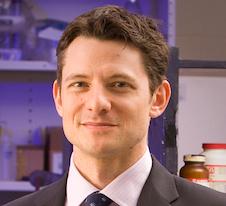
Lyndon Jones is an Adjunct Professor in the Department of Chemical Engineering at McMaster University. He is a leading expert in biomaterials for ophthalmic applications, with a focus on contact lens technology, dry eye disease, and ocular drug delivery systems. His research spans material science for ocular devices in vitro ocular models biocompatibility testing protein and lipid deposition dynamics on contact lenses. His scholarly work highlights trends in 3D printing for ophthalmic devices nanoparticle-based drug delivery microbial adhesion mechanisms environmental impact on tear film stability . His publications emphasize improving diagnostic methodologies and therapeutic interventions for ocular surface disorders. Lyndon Jones has contributed extensively to evidence-based clinical guidelines through leadership roles in initiatives like TFOS (Tear Film & Ocular Surface Society) and BCLA (British Contact Lens Association) CLEAR (Contact Lens Evidence-Based Academic Reports) projects. His collaborations bridge engineering and clinical optometry, addressing challenges in contact lens wear, presbyopia correction, and myopia management.
Dr. Hualu Zhou is an Assistant Professor in the Department of Food Science & Technology at the University of Georgia's College of Agricultural & Environmental Sciences. She leads the Laboratory of Future Foods and Biomaterials at the UGA Griffin campus, where her research focuses on developing innovative plant-based food systems and sustainable biomaterials through advanced scientific principles. Dr. Zhou earned her undergraduate degree from Nanchang University (2010-2014), completed her Master's at Xiamen University (2014-2017), and obtained her Ph.D. from the University of Massachusetts Amherst (2017-2021), followed by postdoctoral research there (2021-2023) before joining UGA faculty in 2023. Her research program integrates experimental food science techniques including nanotechnologies, emulsion technologies, and INFOGEST in vitro digestion models with computational approaches such as molecular modeling and data analysis. Current projects focus on: (1) developing plant-based food alternatives using low-energy methods; (2) creating standardized assessment methods for plant-based foods; and (3) exploring food nanotechnology applications for enhanced bioactive compound delivery. Her work emphasizes sustainability, health benefits, and practical food system applications. Analysis of Dr. Zhou's recent publications reveals a strong emphasis on pH-driven processing technologies, plant protein functionality, and innovative delivery systems for bioactive compounds. Her research bridges fundamental food chemistry with practical applications, particularly in developing plant-based meat and dairy alternatives. She maintains extensive collaborations, especially with Dr. D.J. McClements, demonstrating an interdisciplinary approach to solving complex food science challenges. Dr. Zhou has served as a reviewer for numerous scientific journals and has contributed to over 50 reviewed papers in prestigious publications including Food Chemistry, Food Hydrocolloids, and Trends in Food Science & Technology. She also serves on the Early Career Advisory Board for the Journal of Agricultural and Food Chemistry and as an Editorial Board member for Grain & Oil Science and Technology. As an advisor, Dr. Zhou currently mentors Master's student Anthony Suryamiharja, Ph.D. student Minghe Wang, and collaborates with postdoctoral associate Xiping Gong. She has served on graduate committees and trained numerous undergraduate researchers. Her extension work through FoodPIC connects her research with industry partners developing plant-based products like pecan milk and polyphenol-enriched peanut butter. The recently renovated Laboratory of Future Foods and Biomaterials maintains state-of-the-art equipment for food chemistry analysis, including instrumentation for microscopy, HPLC, laser diffraction, and rheometry.
Charlotte Martin is a postdoctoral researcher at the Department of Chemistry, Faculty of Sciences, Vrije Universiteit Brussel (VUB), Belgium. With a PhD in Organic Chemistry (2013) and Master of Science in Biomolecular Engineering (2010) from Université de Montpellier, she specializes in peptide chemistry, hydrogel synthesis, and GPCR signal transduction. Her work bridges biomaterials and pharmacology for advanced drug delivery systems. Research Interests: Peptide hydrogels for controlled drug release GPCR allostery and peptidomimetic development Neuropeptide-based pain treatment Biomaterial engineering via self-assembly Molecular design of agonists/inhibitors Applications in nanomedicine and immuno-PET imaging Scientific Contributions: Developed injectable supramolecular hydrogels (FWOSB194 project) Engineered β-arrestin peptidomimetics for GPCR modulation (FWOTM1170) Collaborated on single-domain antibody applications with VUB-UGent and VUB-EPFL alliances Scientific Awards: Dr. Bert & Elizabeth Schram Award (2022) ESMI Best Oral Presentation (2020) 3× Poster Presentation Awards (2018–2022) MOCS Conference 3rd Place Best Poster (2021) Expertise Trends: Publications (113+) focus on peptide hydrogels (49%), GPCR peptidomimetics (44%), and nanomaterial applications. Collaborations span Belgium (VUB, UGent), France (Université de Montpellier), Switzerland (EPFL), and Japan (Kanazawa University).
Kris Kim is an Associate Professor, Teaching Stream in the Department of Physical & Environmental Sciences at the University of Toronto Scarborough (UTSC). His academic role focuses on undergraduate teaching and curriculum development in chemistry, particularly in analytical chemistry and introductory chemistry courses such as CHMB16H3 and CHMA11H3. His research interests span multiple disciplines including polymer chemistry, nanomaterials, and chemical education. He has contributed to advancements in block copolymer self-assembly, nanoscale material characterization, and the development of virtual laboratory tools for remote education. His work also intersects with biomedical applications, such as studying integrin roles in cancer progression and exploring biopesticides for sustainable aquaculture. Kim’s publications reflect a strong focus on merging educational innovation with cutting-edge research, including the design of open-source laboratory equipment and collaborative initiatives like the Chemistry Teaching Fellowship Program. His interdisciplinary approach bridges chemistry with environmental science, materials engineering, and biomedical research.
Professor Dwight Seferos is a faculty member in the Department of Chemical Engineering & Applied Chemistry at the University of Toronto. His research focuses on designing electronic and redox-active organic materials, particularly conjugated polymers for energy applications like solar cells, batteries, and thermoelectrics. His group explores novel polymer architectures, including degradable plastics and CO₂ capture materials, emphasizing sustainability and functional design. Notable collaborations include work with Prof. Edward Sargent on perovskite materials and battery technologies. The Seferos Research Group also develops innovative binders and electrode materials for next-generation energy storage systems. Education: Ph.D. in Chemistry (likely from a top institution, inferred from career trajectory) Affiliations: Lash Miller Chemical Laboratories, Downtown Toronto Campus Research interests span conjugated polymer synthesis, energy storage materials, and environmentally conscious polymer design. Key projects include the development of rigid diamine templates for perovskites, bio-inspired electrodes, and programmable self-assembly of polymers. The group emphasizes interdisciplinary approaches, combining synthetic chemistry, electrochemistry, and materials characterization. Publications highlight advancements in organic materials for batteries, solar cells, and sustainable polymers. Recent work includes studies on aqueous zinc-ion batteries using vitamin K-derived cathodes and mussel-inspired binders, as well as novel insights into exciton-polaron dynamics in perovskites.
Prof. Benedetta Bottari is an Associate Professor at the Department of Food and Drug Science, University of Parma. She specializes in food microbiology, focusing on lactic acid bacteria, fermented foods, and microbial dynamics in dairy products like Parmigiano Reggiano cheese. Her research employs molecular techniques like PCR analysis and fluorescence microscopy to study microbial viability and biodiversity. Educational Background: PhD in Food Science and Technology (2006–2009), University of Parma MSc in Food Science and Technology (2004), University of Parma BSc in Agricultural Studies, Diploma from G. Marconi High School (1994–1999) Research Interests: Prof. Bottari’s work centers on microbial ecology in food systems, probiotic development, food safety, and the application of advanced molecular methods to study cheese microbiota. She has contributed to projects on prebiotic effects, UV treatment for microbial abatement, and the role of microbial communities in food quality. Grants & Projects: Co-led projects on Parmigiano Reggiano microbiota and probiotic strain selection Scientific coordination of EU-funded dairy science education initiatives Collaborations with industries like Tetra Pak and CIPACK for food safety solutions Teaching: She teaches courses in Food Microbiology, Probiotics, and Functional Foods across undergraduate and graduate programs in Food Engineering, Gastronomy, and Nutrition. Labs & Teams: Her research group focuses on food microbiology, collaborating with institutions like SIMTREA and the Parmigiano Reggiano Consortium to advance food technology and safety.
Adrian Figg is an Assistant Professor in the Department of Chemistry at Virginia Tech's College of Science. His research focuses on developing advanced polymer architectures inspired by biological precision, with applications in disease study, sustainable materials, and recycling technologies. He completed his B.A. in Chemistry at the University of California, Santa Barbara (2013), earned his Ph.D. from the University of Florida (2018), and conducted postdoctoral research at Northwestern University (2018–2021). Research interests include programmable polymer synthesis using controlled radical techniques, protein-polymer conjugates for therapeutics, and stimuli-responsive materials. His work bridges organic chemistry, materials science, and biological systems to address challenges in healthcare and sustainability. The Figg Group actively explores applications such as biodegradable plastics and targeted drug delivery systems. Education: B.A. in Chemistry, University of California, Santa Barbara (2013) Ph.D. in Chemistry, University of Florida (2018) Postdoctoral Research Fellow, Northwestern University (2018–2021) Key awards include the ACS PMSE Division Future Faculty Scholar (2019) and the Weinberg Family Postdoctoral Fellowship (2020). His research has been published in high-impact journals like Journal of the American Chemical Society and Chemical Science . Advising and grants: While specific student names are not listed here, the Figg Group engages in collaborative research projects. Active collaborations include work on photopolymerization techniques and DNA-programmed materials. Lab and team information: Visit the Figg Group Website or Google Scholar for current projects and publications.
William Gramlich is an Associate Professor at the Graduate School of Biomedical Science and Engineering, University of Maine. He holds a B.S. in Chemical Engineering from the University of Maine (2006), a Ph.D. in Chemical Engineering from the University of Minnesota (2012), and completed a postdoctoral fellowship at the Department of Bioengineering, University of Pennsylvania. His research focuses on developing advanced biomaterials, particularly hydrogels, to control cell fate and study protein interactions in biomedical contexts. His research interests include: Hydrogel systems for spatial/temporal control of cell behavior 3D-printed biomaterials and sustainable materials integration Understanding glycan-glycan binding protein interactions in 3D environments Developing novel hydrogels to mimic extracellular matrix mechanics Recent work emphasizes orthogonal chemistry for independent patterning of hydrogel mechanical properties and chemical cues. His lab also investigates recyclable polymer composites and eco-friendly materials through cellulose nanofibril integration. Over 10 peer-reviewed publications since 2023 highlight advancements in hydrogel design, polymer composites, and sustainable material science. Affiliations include the Department of Bioengineering (via prior postdoctoral work) and the Graduate School of Biomedical Science and Engineering at UMaine. His lab is located in the Ferland EEDC Bldg, with ongoing collaborations in biomedical engineering, polymer science, and sustainable materials development.
Evelyne Knapp is a Researcher at the ZHAW School of Engineering, Zurich University of Applied Sciences, within the Organic Electronics & Photovoltaics research focus area. Her work centers on advanced materials science, semiconductor physics, and machine learning applications in energy systems. She has led major projects such as 'Uncertainty quantification in ML Prediction for PV Quality Assurance' and contributed to innovations in perovskite solar cell optimization, organic semiconductor characterization, and device simulation models. Her research interests span photovoltaic technologies, charge transport phenomena, and optoelectronic device development. Key areas include: Perovskite solar cell performance analysis and degradation mechanisms Machine learning-driven parameter extraction for semiconductor materials Electro-thermal modeling of organic light-emitting devices Frequency-domain analysis of large-area solar cells Knapp's publications (over 30 peer-reviewed articles) demonstrate expertise in device simulation, material characterization, and interdisciplinary approaches merging computational methods with experimental data. Recent work highlights include: Advancing ML techniques to identify limiting parameters in perovskite solar cells Developing inverse models for solar cell parameter estimation Quantifying charge transport dynamics in organic semiconductors Her contributions have been presented at leading conferences including the IEEE Photovoltaic Specialists Conference and the Society for Information Display Symposium.
Stephen O'Brien is a Professor of Chemistry and Biochemistry at The City College of New York, affiliated with the Center for Advanced Technology, Chemical Engineering, and the Energy Institute. His research focuses on nanocrystal synthesis, biomedical applications of nanomaterials, batteries, and capacitors, with emphasis on energy storage and clean technology. He leads a research group exploring nanomaterials for applications in photonics, catalysis, and medical devices. His work integrates chemical solution processing and self-assembly techniques to develop high-performance nanocomposites and devices. Key research areas include lithium metal batteries, multiferroic oxides, and meta-capacitor projects. He has pioneered studies on nanoparticle self-assembly and transition metal oxide nanomaterials. His group collaborates on projects funded by various sponsors, aiming to bridge nanotechnology with practical industrial applications. Recent publications span advancements in magnetic sensor design, alkaline battery anodes, and biomedical imaging techniques. He has advised numerous graduate students in materials science and engineering. Notable collaborations include work on fibrotic tissue recovery and biomaterials characterization. His research has implications for sustainable energy systems, medical diagnostics, and nanoscale device fabrication.
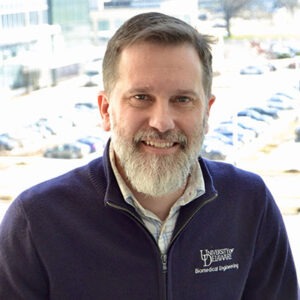
Christopher Price is an Associate Professor at the Ammon Pinizzotto Biopharmaceutical Innovation Center, University of Delaware. His research focuses on musculoskeletal biomechanics, bone adaptation, and cartilage degeneration, with a particular emphasis on mechanotransduction and fluid flow dynamics in tissues. He holds a Ph.D. in Biomedical Sciences from Mount Sinai School of Medicine (2008) and a B.Sc. in Biomedical Engineering from Boston University (2000). Dr. Price’s research interests include the role of load-induced fluid flow in bone and cartilage health, advanced bioimaging techniques, and the development of disease-modifying therapies for osteoporosis and osteoarthritis. His work has received national/international recognition, including the Orthopaedics Research Society’s New Investigator Recognition Award (2010) and multiple Young Investigator Awards (2009–2010). Research focuses on mechanobiology, mechanosensory pathways, and tissue adaptation in musculoskeletal systems. Key areas: post-traumatic osteoarthritis, cartilage lubrication, and aging-related bone fragility. Utilizes cross-disciplinary methods: biomechanics, imaging, cell biology, and animal models. Publications span topics like solute transport in bone, cartilage tribology, and genetic influences on bone healing. His lab explores translational applications of mechanotransduction research to develop therapies targeting musculoskeletal diseases.
Dr. Eva Crook is an Adjunct Senior Lecturer at the University of Sydney's Faculty of Medicine and Health, within the Medical Sciences Administration. Her work focuses on interdisciplinary biomedical research, particularly in 3D bioprinting, stem cell biology, and regenerative nanomedicine. She collaborates extensively with colleagues on projects involving neural tissue engineering, organoid development, and biomaterial applications for clinical therapies. Her research interests emphasize the development of functional 3D tissues using bioprinting techniques, electrical stimulation of stem cells for directed differentiation, and the ethical implications of organoid research. She also explores tissue regeneration strategies for bone, cartilage, and corneal defects, leveraging hydrogels and scaffold-free constructs. Recent publications highlight advancements in glioma modeling, corneal epithelial engineering, and the use of periosteum in bone regeneration. Her conference contributions include studies on 3D printed medical devices in radiotherapy. While no formal academic awards are listed, her extensive publication record underscores her significant contributions to biomaterials and stem cell research. Collaborations with groups like those led by Professors Wallace and Clark indicate involvement in cutting-edge biomedical engineering initiatives.
Xenofon Strakosas is an Assistant Professor at Linköping University's Department of Science and Technology (ITN), affiliated with the Laboratory of Organic Electronics (LOE) within the Faculty of Science and Engineering. His research focuses on organic bioelectronics, particularly the integration of electronic systems with biological tissues. Key projects include developing conductive hydrogels for 3D bioprinting, enzymatic polymerization of organic conductors on lipid membranes, and in vivo fabrication of soft electrodes for electronic medicine. Recent breakthroughs include growing electrodes in living tissue using injectable gels and achieving precise drug delivery via proton-trapping ion pumps. Supported by a SEK 10 million donation from the Stig Wadström Foundation, his work bridges technology and biology to address neurological diseases and human-machine interfaces. His lab collaborates across disciplines, leveraging organic electronics for biosensors, neural interfaces, and sustainable energy solutions. Publications emphasize advanced materials, electrochemical platforms, and biomedical applications. Current research trends prioritize biocompatibility, in vivo compatibility, and precise control of electronic-ionic interactions. Awards and recognitions include Physics World's 2023 major breakthrough designation for electrode growth in living tissues. Future directions include scalable bioelectronic systems and next-generation medical therapies.
Prof. Ulrich Schwaneberg serves as a University Professor at RWTH Aachen University's Faculty of Mathematics, Computer Science and Natural Sciences within the Institute of Biotechnology. His research group operates from the Biology Sammelbau facility (Worringerweg 3, Aachen) and maintains strong ties with the DWI - Leibniz Institute for Interactive Materials. His primary research focuses on protein engineering and biocatalysis , with significant contributions to plastic degradation technologies (particularly PET hydrolases), material-binding peptide development , and high-throughput screening methodologies . Key research thrusts include engineering enzymes for plastic recycling, developing anchor peptides for industrial applications, and creating novel biocatalytic systems for sustainable chemistry. Recent publications reveal a strong trend toward computational-guided enzyme design (using MD simulations and machine learning) combined with practical applications in environmental remediation . His team actively develops solutions for microplastic detection, phosphate recovery, and textile functionalization using biohybrid systems. The 2025 article portfolio demonstrates particular emphasis on PET degradation technologies and enzyme immobilization strategies. Prof. Schwaneberg leads the recently launched Materials Lab Incubator (MerLIn) funded with over 7 million euros from BAFA, and coordinates the Bio4MatPro competence center connecting industry partners with academic research. His group actively recruits Chinese students through CSC fellowships and organizes the annual Aachen Protein Engineering Summer School (AcES2) . The Schwaneberg group maintains state-of-the-art facilities for directed evolution, high-throughput screening, and biocatalytic process development, with strong industry partnerships focused on sustainable material innovations. Current initiatives include the development of flame-retardant textile coatings using biohybrid anchor peptides and scalable systems for plastic upcycling.
Zandrie Borneman is an Associate Professor at Eindhoven University of Technology's Department of Chemical Engineering and Chemistry, specializing in membrane materials and processes. His research focuses on designing sustainable polymer membranes for molecular separation and process applications, emphasizing 'recycle, reuse, reduce' principles. He holds a PhD from the University of Twente (2006) and previously worked at Wageningen University (1995–2001) and the University of Twente's Membrane Technology Group (2001–2016). Education: BSc in Laboratory Engineering, Saxion University of Applied Sciences (1991) PhD in Membrane Technology from University of Twente (2006) Research Interests: Membrane chemistry, morphology optimization, sustainable separations, and applications in energy storage (e.g., flow batteries) and waste valorization. His work aligns with UN SDGs on clean energy and sustainable consumption. Recent Trends in Articles: Focus on recyclable membranes, advanced separation technologies (e.g., organic solvent nanofiltration), and energy storage systems like acid-base flow batteries. Collaborations highlight interdisciplinary approaches in materials science and environmental engineering. Grants/Projects: Active in EU-funded projects like NEWBAT (2023–2027) for cost-effective redox flow batteries and PHA recovery initiatives (2022–2026). Manages the Membrane Materials and Processes group, contributing to 87+ research outputs. Labs/Teams: Leads the Membrane Materials and Processes research group, collaborating with EIRES (Eindhoven Research on Energy and Sustainability). Engages in cross-disciplinary teams for membrane innovation and sustainable process development.