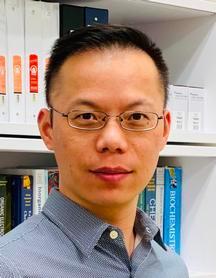
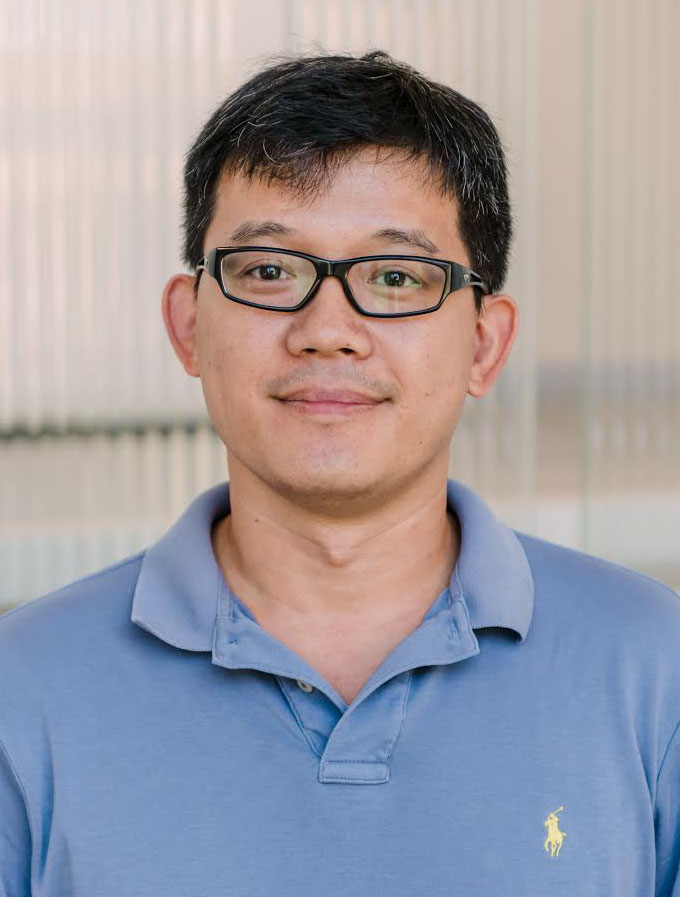
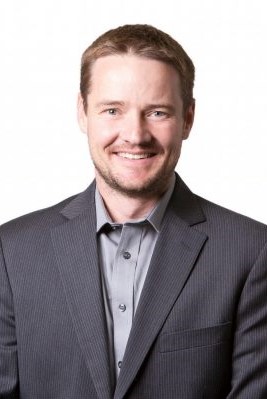
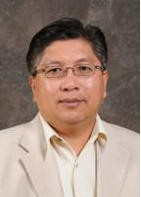
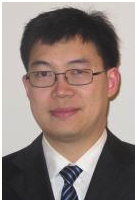
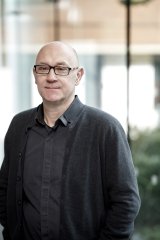
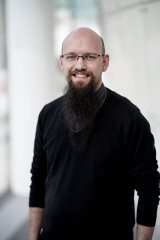
Richard G. Blair is a Research Professor at the University of Central Florida's Florida Space Institute and Cluster for the Rational Design of Catalysts for Energy Applications and Propulsion. His current research focuses on energy-efficient catalytic processing, d10 metal fluorescent indicators, biodiesel characterization, and mechanochemistry. Education: Ph.D. in Materials Chemistry, UCLA M.S. in Physical Chemistry, UC Berkeley B.S. in Chemistry and Mathematics, Hope College Honors: NASA Certificate of Recognition (2007) Distinguished Teaching Award, UCLA (2003) Pew Research Fellowship (1993)
Konstantinos Goulas is an Assistant Professor in the Department of Chemical, Biological, and Environmental Engineering at Oregon State University's College of Engineering. His research focuses on catalytic materials, particularly investigating structure-reactivity relationships through operando spectroscopy and kinetic analysis to develop sustainable catalysts for applications like biofuel production, plastic upcycling, and automotive emissions control. He leads the Goulas Research Lab, which collaborates on projects such as PVC-to-wax conversion and low-temperature CO oxidation. His research groups include Materials and Catalysis, Computation and Simulation, and Water and Environment. Notable advisees include Dr. Scott Svadlenak (startup Renewcat, Inc.), Dr. Tanmayi Bathena (PNNL), and Dr. Stephen Kristy (Idaho National Lab). His work has been featured in Nature Catalysis and media outlets like KATU News. He also engages in outreach, leading sessions at the Migrant Engineering Summer Camp. Key projects include PVC upcycling via hydrodechlorination, bismuth molybdate catalysts for propylene oxidation, and PdCu alloy catalysts for CO oxidation. His lab emphasizes interdisciplinary approaches to sustainability challenges, with funding from agencies like VentureWell and the Vinyl Institute.
Dr. Julia Jones is a Distinguished Professor and Program Head for Geography at Oregon State University's College of Earth, Ocean, and Atmospheric Sciences. Her research focuses on climate change impacts, hydrology, and ecosystem responses in mountainous regions. She leads the H. J. Andrews Experimental Forest Long-Term Ecological Research (LTER) program, investigating spatio-temporal patterns in forest ecosystems and water resources. Education: BA in Economic Development (Hampshire College, 1977), MA in International Relations (Johns Hopkins SAIS, 1979), PhD in Geography/Environmental Engineering (Johns Hopkins University, 1983). Research Interests: Land use changes, forest hydrology, disturbance effects on water quality, and climate change adaptations. She has published extensively on watershed dynamics, volcanic impacts, and global forest-water nexus challenges. Grants: Over $14 million in funding from NSF, USFS, and international agencies for projects like LTER8 and the Global Forest Experts Panel. Advised over 20 graduate students in geography, environmental science, and water resources engineering. Labs/Teams: Leads the H. J. Andrews LTER and collaborates with the Ecosystem Informatics initiative, integrating geospatial data with ecological processes. Active in policy-relevant research on sustainable forest management and climate adaptation strategies.
Woodam Chung serves as Professor and Stewart Professor of Forest Operations in the College of Forestry at Oregon State University. He leads research in forest operations planning and management, specializing in harvesting systems, biomass utilization, and wildland fire management. His work integrates engineering solutions with sustainable forestry practices. Research interests include forest management planning, steep slope harvesting, tethered equipment applications, biomass logistics, and fuel treatment optimization. Current projects focus on reducing wildfire risks through strategic fuel break networks and enhancing operational efficiency in challenging terrains. Publications demonstrate consistent focus on operational efficiency, environmental impacts, and technological innovation in forestry. Recent work emphasizes tethered harvesting systems, soil disturbance mitigation, computer vision applications, and wildfire risk management strategies. Currently advises seven graduate students on topics spanning forest operations, biomass utilization, and wildfire management. Maintains active collaborations with industry partners and land management agencies.
Hossein Jahromi is an Assistant Professor in the Department of Biosystems Engineering at Auburn University, located in Auburn, Alabama. His research focuses on catalytic processes for biofuel production, environmental engineering, and sustainable materials development. He leads projects involving waste-to-energy conversion, catalytic pyrolysis, and advanced biochar applications. His work addresses challenges in renewable energy systems, including the valorization of biomass, plastics, and industrial byproducts. Recent studies emphasize hydrothermal liquefaction, catalytic depolymerization, and novel materials for CO₂ capture and nutrient recovery. Dr. Jahromi collaborates with industry and government agencies to advance technologies for sustainable resource management. Key research directions include optimizing catalyst performance for biomass gasification, developing low-sulfur fuels from waste tires, and improving bio-oil upgrading processes. His laboratory integrates chemical engineering principles with environmental science to create scalable solutions for energy and environmental sustainability.
Teresa Cardoso Grilo is an Assistant Professor and Pro-Rector at Iscte, affiliated with the Marketing, Operations and General Management Department. She serves as an Integrated Researcher at BRU-Iscte - Business Research Unit (Management Group). Her academic background includes a PhD in Engineering and Management (2009-2013) and an Integrated Master's degree in Biomedical Engineering (2004-2009), both from the University of Lisbon's Higher Technical Institute. Her research focuses on: Healthcare systems planning and long-term care optimization Supply chain management using mathematical modeling Operations research with multi-criteria decision-making Stochastic optimization for resource allocation Lean management implementation Healthcare workforce planning methodologies Publications (2011-2024) demonstrate consistent focus on healthcare operations, supply chain optimization, and sustainable systems. Recent work shows increased emphasis on digital transformation in healthcare, electric fleet planning, and integrating Six Sigma methodologies. Her research employs advanced techniques including stochastic programming, location-allocation modeling, and multi-objective optimization to address complex operational challenges in healthcare and logistics. As Pro-Rector, she has led institutional initiatives including scholarship programs for PhD students, demonstrating commitment to academic development. She maintains active research collaborations across Europe and participates regularly in operations research and healthcare management conferences.
Yujie Sun is a Professor in the Department of Chemistry at the University of Cincinnati. His research focuses on energy catalysis and biomedical applications, combining expertise in coordination chemistry, materials science, electrochemistry, and photochemistry. He holds a B.S. from Fudan University (2005) and a Ph.D. from The Ohio State University (2010), followed by postdoctoral training at UC Berkeley. His work addresses sustainability challenges through innovative catalyst design and renewable energy systems. Research interests include electrocatalytic biomass valorization, photocatalytic organic transformations, and biomedical imaging probes. Notable grants include NSF CAREER Awards and DOE funding for CO2-to-ethylene conversion. He advises multiple PhD students and has authored over 100 publications. Key achievements: NSF CAREER Award (2017), Emerging Investigator (2016), and over $5M in grant funding. His lab develops low-cost materials for energy storage and health diagnostics.
Dr. Zhibo Zhang is a Professor in the Department of Physics at UMBC and serves as Associate Director of Academics at the Joint Center for Earth Systems Technology (JCET). He holds a Ph.D. (2008) and M.S. (2004) in Atmospheric Sciences from Texas A&M University and a B.S. (2001) in Atmospheric Sciences from Nanjing University. His research focuses on aerosol-cloud-radiation interactions, climate modeling, and remote sensing applications. Key areas include quantifying aerosol effects on Earth's energy budget, analyzing low-level cloud dynamics in the Southeast Atlantic, and improving climate model representations of aerosol-cloud processes. Research is supported by NASA, DOE, NSF, and JCET. His group, the Aerosol, Cloud, Radiation-Observation and Simulation (ACROS) Group, employs satellite data (e.g., NASA's A-Train, DOE's ARM) and global/regional models to study climate change, air quality, and weather impacts. Recent work examines African biomass burning aerosols' interactions with marine boundary layer clouds and the role of cloud diurnal cycles in regional warming. Dr. Zhang has received prestigious awards including the UMBC Mid-Career Award (2022) and the IRC Young Scientist Award (2016). He has held leadership roles such as UMBC Physics Graduate Program Director (2014–2019) and has authored over 100 peer-reviewed publications. His work addresses critical gaps in climate model parameterization, aerosol radiative effects, and satellite data interpretation. Current research priorities include developing the CAMRO-Dust database, improving dust aerosol retrievals using thermal infrared methods, and leveraging machine learning for cloud detection and classification. Collaborations emphasize multi-sensor data fusion and bridging observational and modeling communities to advance Earth systems understanding.
Dr. Jason Quinn is a Professor in the Department of Mechanical Engineering at Colorado State University and Operating Director of the Energy Institute. His research focuses on techno-economic assessment, life cycle analysis, and optimization of emerging energy technologies including microalgae biofuels, nuclear systems, and electrified transportation. He holds a Ph.D. in Mechanical Engineering from Colorado State University and an M.S. in Nuclear Engineering from the University of Wisconsin-Madison. Research spans sustainability methodology, biofuel systems, and energy optimization, with emphasis on engineering models validated through experimentation to guide R&D priorities. Current projects address desert agriculture, waste valorization, and grid storage solutions. Honors include the Walter Scott, Jr. College of Engineering Rockwell-Anderson Professorship (2019) and Colorado State University's Mechanical Engineering Energizer Bunny Award (2019).
Gregg Beckham is a Senior Research Fellow at the National Renewable Energy Laboratory (NREL) and Affiliate Faculty in the Department of Chemistry at Colorado State University's College of Natural Sciences. He leads an interdisciplinary team working on biomass conversion, plastics upcycling, and sustainable bioproduct development. Education: 2007: PhD in Chemical Engineering, Massachusetts Institute of Technology 2004: MS in Chemical Engineering Practice, Massachusetts Institute of Technology 2002: BS in Chemical Engineering, Oklahoma State University Research Focus: Beckham's work integrates biochemistry, metabolic engineering, and catalysis to address sustainability challenges. Key areas include lignin valorization for renewable chemicals, enzymatic plastic degradation, development of performance-advantaged bioproducts, and bioprocess optimization for circular economy applications. Publication Trends: His recent articles emphasize enzymatic plastic recycling, lignin conversion to aviation fuels, machine learning-guided enzyme discovery, and catalytic biorefinery processes. This reflects a consistent focus on interdisciplinary solutions for plastic waste and biomass valorization. Professional Roles: Group Leader at NREL (2011-2018) Senior Lecturer at MIT (2007) Fellow at Renewable and Sustainable Energy Institute (2016-present)
Lope G. Tabil, Ph.D., P.Eng., is a Professor in the Department of Chemical and Biological Engineering at the University of Saskatchewan. He holds a half-time faculty appointment as of July 2024 and has transitioned to reduced student advising. His career includes roles as Department Head (2008–2010) and academic promotions from Assistant Professor (2000) to Associate Professor (2004) and full Professor (2008). Prior to academia, he worked as a Research Engineer at the Agricultural Value-added Engineering Centre in Alberta (1997–2000), focusing on postharvest technology and agricultural product processing. Dr. Tabil’s research emphasizes biomass valorization, biofuel production, and agro-industrial byproduct utilization. Key areas include biomass pelleting, torrefaction, microwave-assisted processing, and enzymatic saccharification of lignocellulosic materials. He has pioneered studies on flax straw reinforcement for biocomposites and lentil milling optimization. Current projects address biofuel pellet densification, microbial pretreatment of biomass, and techno-economic analysis of bioenergy systems. He is a Professional Engineer in Saskatchewan and Alberta, and serves on the editorial board of the International Journal of Agricultural and Biological Engineering. His work spans 30+ years, with over 100 peer-reviewed publications and collaborations in biorefinery design, agricultural waste recycling, and sustainable energy systems. Notable contributions include optimizing cannabis drying, improving pulse protein applications, and advancing microwave-thermal hybrid technologies. Though no longer accepting graduate students, Dr. Tabil actively collaborates on projects involving biojet fuel production, circular economy models, and lignocellulosic waste conversion. His research bridges engineering, agriculture, and environmental science to address global challenges in sustainable resource management.
Lifeng Zhang is a Professor in the Department of Chemical and Biological Engineering at the University of Saskatchewan's College of Engineering. His work focuses on fluidization systems, clean energy, biomass utilization, and electrostatics in particulate handling. He holds a PhD from the University of Waterloo, with prior degrees from Zhejiang University and the Singapore-MIT Alliance. Research interests include advanced multiphase flow analysis, air pollution control, and process intensification techniques. Current projects involve enhanced fluidized bed drying, PEM fuel cell optimization, and green polymer development. His lab explores applications in sustainable energy and environmental engineering. Education highlights: B.Eng. (Zhejiang University), MSc. (Zhejiang University), MSc. (Singapore-MIT Alliance), PhD (University of Waterloo). Office: Room 1C122 Engineering Building, contact via lifeng.zhang@usask.ca or (306) 966-4799.
Dr. Zoran Visak is Senior Lecturer in Chemical Engineering at Aston University. His research focuses on sustainable solvents for lignocellulosic biomass treatment and thermodynamic properties of industrial mixtures. He has published over 50 papers on ionic liquids and phase equilibria. Visak teaches heat transfer and process design, and directs the Chemical Engineering program. His recent work explores ionic liquid/graphene composites for energy storage applications.
Professor Alan Goddard is a Professor of Biotechnology at the School of Biosciences, Aston University. He is affiliated with the Aston Institute for Membrane Excellence (AIME) as Training and Industry Lead, and the Biosciences Research Group. His research focuses on membrane proteins, lipid membranes, and bioinspired membrane technologies. He holds a BSc and PhD from the University of Warwick and a PGCE from the University of Lincoln. Research interests include GPCRs, transporters, membrane biogenesis, antimicrobial effects on membranes, and industrial biotechnology collaborations. He has supervised over 20 PhD/MSc students and postdoctoral researchers, many now in academic and industrial roles. Key grants include £500k Wolfson Foundation funding for the Wolfson Centre for Membrane Excellence and a £1.7M BBSRC Midlands Integrative Biosciences Training Partnership. He leads projects on bioinspired filtration membranes and membrane protein production optimization. Scientific achievements include developing lipid-based assays, advancing membrane protein purification methods, and characterizing microbial membrane adaptations. A Principal Fellow of the Higher Education Academy, he also contributes to editorial boards for journals like Antibiotics and Membranes.
Sanjay Mishra serves as Professor in the Department of Marketing and Business Law at the University of Kansas School of Business, where he integrates quantitative methodologies with consumer behavior research. His academic foundation includes a Ph.D. and MBA from Washington State University, an M.S. from Ohio State University, and a B.S. from the Indian Institute of Technology, establishing technical rigor across his career spanning four decades. Ph.D., Washington State University MBA, Washington State University M.S., Ohio State University B.S., Indian Institute of Technology Professor Mishra's research centers on consumer preference modeling, choice inconsistencies, advertising processing, and conjoint analysis applications, with significant contributions to new product development and innovation management. His work bridges theoretical marketing frameworks with practical business strategy, particularly examining cognitive processes in consumer decision-making and methodological validation in survey research. Recent expansions demonstrate interdisciplinary reach while maintaining core marketing science principles. Analysis of his 2022-2025 publications reveals strategic diversification into medical research (ophthalmology, immunology), environmental science (sustainable materials, biomimicry), and sociopolitical studies, yet consistently applies his expertise in choice architecture and quantitative modeling. Key trends include repulsion/attraction effect investigations, cross-cultural consumer behavior, and translational applications of marketing science to health and sustainability challenges. His scholarly impact is evidenced through publications in premier outlets including the Journal of Marketing Research, Journal of Business Research, and Marketing Letters, though specific awards remain unlisted in source materials. Professor Mishra's teaching portfolio spans Business in India, Marketing Management, New Product Development, Categorical Data Analysis, and multiple entrepreneurship courses, reflecting his commitment to bridging academic theory with real-world business applications. While student names and grant details are unspecified, his extensive publication record across marketing, engineering, and medical journals suggests active research mentorship and cross-disciplinary collaboration. Current work indicates growing engagement with health sciences and environmental sustainability through methodological innovations in consumer behavior analysis.