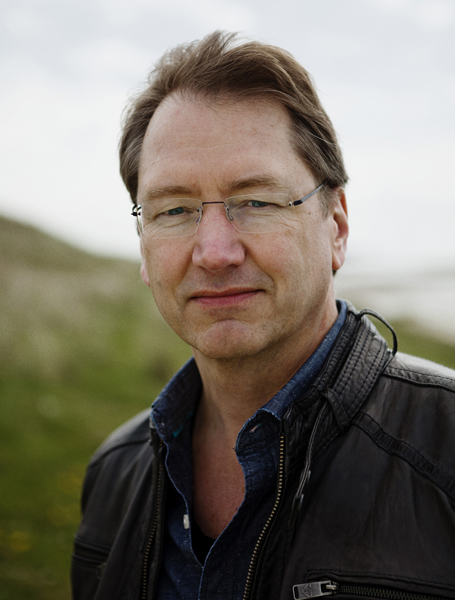
J. S. Sinninghe Damsté is a Professor of Organic Geochemistry at Utrecht University and a Senior Scientist at the NIOZ Royal Netherlands Institute for Sea Research. His research bridges biology, geology, and chemistry, focusing on microbial ecology, paleoclimate proxies, and lipid biomarkers. He pioneered techniques like the TEX86 sea surface temperature proxy and MAT index for continental paleothermometry. Education: PhD in Organic Geochemistry from TU Delft (1988), specializing in organically-bound sulfur in the geosphere. Key roles include department headships at NIOZ and leadership in major grants like ERC Advanced Research Grants (2008, 2016) and Dutch Gravitation Awards (2013). Research highlights include discovering archaeal nitrification, tetraether/ladderane lipids, and biomarkers for Thaumarchaeota. His work has transformed understanding of oceanic nitrogen cycles and diatom evolution. Awards include the Heineken Prize (2014) and Treibs Medal (2005). Advising: Supervised PhD students such as Wuchter C., Abbas B., and Witkowski C.R., contributing to studies on archaeal nitrification and paleoclimatic CO2 trends. Grants include €28M for the Netherlands Earth System Science Centre. Labs/Teams: Leads the Marine Microbiology & Biogeochemistry group at NIOZ, integrating lipidomics with environmental and evolutionary studies.
Jaap Sinninghe Damsté is a Professor of Organic Geochemistry at Utrecht University and a Senior Scientist at the Department of Marine Microbiology and Biogeochemistry, NIOZ Royal Netherlands Institute for Sea Research. He has held these positions since 2009 and 2018 respectively, and previously served as Head of Department at NIOZ from 2003-2015 and as Professor of Molecular Palaeontology at Utrecht University from 2004-2009. Dr. Sinninghe Damsté received his PhD in organic geochemistry in 1988 from the Technical University of Delft, where he studied the origin of organically-bound sulfur in the geosphere. His research demonstrated that early diagenetic reactions of inorganic sulfur and organic matter, rather than biogenic organic sulfur in biomass, was the source for fossil organic sulfur. His research focuses on the interface of biology, geology and chemistry, with three main areas of investigation: Intact polar and core membrane lipids of archaea, bacteria and algae using novel analytical approaches and their application in microbial ecology Development of proxies based on organic compounds for paleoclimate studies Application of organic proxies in palaeoenvironmental and palaeoclimatic reconstruction of the past 200 million years Throughout his career, Dr. Sinninghe Damsté has developed several novel analytical methods that led to the recognition of new classes of biomarkers, such as tetraether lipids and ladderane lipids. His identification of crenarchaeol as a specific biomarker for Thaumarchaeota revolutionized understanding of ocean nitrification processes. He has also developed important paleoenvironmental reconstruction tools including TEX86 (for sea surface temperature), BIT index (for soil organic carbon input in marine sediments), and MAT index (for mean annual air temperature). His scientific contributions have been widely recognized through numerous prestigious awards: 2020: Membership of Academia Europaea 2016: ERC Advanced Research Grant (2.5 M€) and Membership of Koninklijke Hollandsche Maatschappij der Wetenschappen 2014, 2016, 2018: ISI Highly Cited Researcher in Geosciences 2014: Dr. A.H. Heineken prize for Environmental Sciences 2013: Co-applicant of Gravitation Award (23 M€) for the Soehngen Institute of Anaerobic Microbiology and Main applicant of Gravitation Award (28 M€) for the Netherlands Earth System Science Centre 2008: ERC Advanced Research Grant (2.5 M€) 2007: Vernadsky Medal from the European Geosciences Union 2005: Treibs Medal for lifetime achievements and Membership of Royal Netherlands Academy of Arts and Sciences 2004: Spinoza award (1.5 M€) and ISI Highly Cited Researcher status 1993: First Schenck Award and PIONIER-award (0.9 M€) 1988: Best paper award from the American Geochemical Society Dr. Sinninghe Damsté has secured significant research funding throughout his career, including multiple ERC Advanced Grants and large Gravitation Awards from the Dutch Ministry of Science and Education. His work has established him as a leading figure in organic geochemistry and paleoclimate research, with his biomarker development and application fundamentally changing how scientists reconstruct past environmental conditions. His research group at NIOZ has been instrumental in advancing the understanding of microbial ecology through lipid biomarkers, particularly in marine environments. The group's work on Thaumarchaeota and anammox bacteria has provided critical insights into ocean nitrogen cycling processes.